
US Tariff Section 301 on Chinese Caps: Import Cost Planning for 2026 - 2026 Buyer's Guide
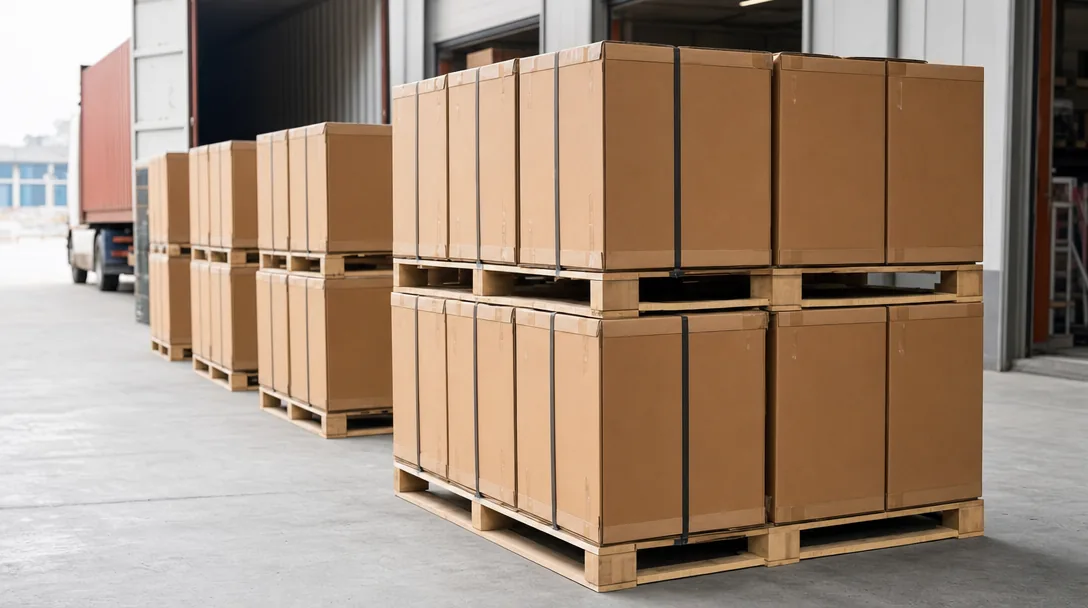
Every week, our sales team answers detailed questions about us tariff section 301 on chinese caps: import cost planning for 2026 - 2026 buyer's guide. We wrote this guide so that wholesalers, streetwear brands, corporate buyers and promotional resellers can compare options with full information, and avoid the traps that show up only after production has started.
The Section 301 landscape and 2026 updates
Misclassification is a bigger 2026 cost risk than freight volatility. Caps fall under HTS Chapter 65, but the duty outcome changes fast based on construction details CBP actually cares about: knit versus woven, panel-built versus formed body, cotton twill versus polyester microfiber, braid content, and whether the visor is integral or attached. A brushed cotton 6-panel baseball cap, a 75D perforated polyester running cap, and a paper-straw sun hat can land in different tariff lines with very different MFN rates, and Section 301 only applies where the exact HTS line is covered. Buyers who budget all US tariff Chinese caps as one flat surcharge usually get burned when the entry summary description, fiber breakdown, or sample photos do not support the declared code. Our standard practice is to lock classification at proto stage using shell composition, visor insert material, sweatband fiber content, and assembly method from the tech pack, then keep that language identical on PO, invoice, and packing list to reduce post-entry corrections and CBP queries.
The lazy shorthand that “China hats are 25%” is usually wrong. Section 301 has always been line-specific, shaped by USTR Annex lists, exclusions, and extensions, so the only number that matters is the current treatment for the exact 8-digit or 10-digit HTS number your broker will file. For 2026, assume the policy remains administratively messy rather than disappearing: continued line-by-line exposure, tighter origin scrutiny, and more requests for support when brands claim non-China origin based on minor finishing in Vietnam or Cambodia. CBP applies substantial transformation, not cosmetic processing; embroidery, labeling, pressing, or repacking will not usually move origin if the cap body was cut and sewn in China. The landed-cost impact is not theoretical. A $2.40 FOB structured cap facing 20% MFN duty plus 7.5% or 25% Section 301 adds about $0.18 to $0.60 per piece from the additional tariff alone, or $3,600 to $12,000 on 20,000 units before MPF of 0.3464%, HMF on ocean entries, brokerage, and drayage. Build a style-by-style matrix with HTS, MFN, Section 301 status, origin rationale, and any binding ruling before PO approval.
HTS code 6505 explained
HTS 6505 is where most caps and beanies from China land, but 6505 is a heading, not a usable duty answer. CBP classifies headwear by construction and chief weight fiber first: knit versus woven, cotton versus man-made fiber versus wool, and whether the article is made from braid, lace, felt, or standard cut-and-sew panels. A six-panel 260 gsm cotton twill cap, a 180 gsm recycled polyester performance cap, and a 100% acrylic 2x2 rib-knit beanie can all fall under 6505 while carrying different subheadings and different MFN rates. For US tariff Chinese caps planning, that difference directly changes landed cost and whether your broker files with confidence or with caveats. If your commercial invoice says only “cap” or “hat,” expect a broker query, a possible CBP CF28, or a conservative classification that bakes in more duty than the product actually supports.
The cleanest way to avoid misclassification is to lock customs data at tech-pack stage, not after the goods are packed. A broker needs a description like: “woven cap, 65% polyester/35% cotton shell by chief weight, six-panel structured crown, curved peak, plastic snapback closure, embroidered front logo, origin China.” Fiber content by component matters when the shell, sweatband, underbill, binding, and lining differ, because CBP looks at chief weight, not the fabric your designer highlights on the mood board. Our standard practice is to freeze shell composition, knit-versus-woven construction, and visor insert material during sampling, then keep mill declarations on file. A late swap from cotton chino to polyester microfiber, or from woven panels to knit jersey, can move the HTS breakout enough to erase margin on a large FOB order.
For budgeting, use duty ranges only as an early screen. Woven cotton caps under 6505 are often modeled in the high-single-digit to low-teen MFN range; many man-made fiber caps run higher, commonly in the mid-teens and sometimes around 20% depending on the exact breakout. Then test the China-origin layer separately. A 25% Section 301 charge on a $2.80 FOB cap adds $0.70 per unit before MPF, customs brokerage, drayage, and domestic freight. Add a 14% MFN rate and the same cap can carry roughly $1.09 in duty before the other import costs are counted. On 50,000 units, a classification error of even 6 percentage points is $8,400 in duty variance. That is why any serious China hat tariff model should tie the BOM, fiber declarations, and prior broker rulings to the exact 6505 subheading before you quote DDP or approve production.
Duty calculation example for a 1,000-piece order
For a 1,000-piece order, build the duty model off the entered customs value, not the delivered price to your U.S. warehouse. Take a realistic SKU: structured 6-panel cap, 100% brushed cotton twill shell at 280 gsm, buckram-backed front, PE visor board, flat embroidery on a Tajima 2-head run, woven loop label, care label, and hangtag. If the supplier quotes FOB Ningbo at $4.20 per piece, the entered value is $4,200. If the price is EXW Yiwu at $3.95, add the China-side charges you would actually incur to reach FOB terms: truck to port, export declaration, THC, and document fees. On a shipment this size, that is typically $140 to $180 total, so your planning customs value lands around $4,090 to $4,130, not the raw EXW subtotal. That distinction is where many first-pass US tariff Chinese caps models go wrong, because CBP assesses duty on customs value; U.S. brokerage, domestic freight, and fulfillment are outside that base.
Assuming the cap falls under a tariff line carrying 7.5% regular duty plus 25% Section 301, the combined rate is 32.5%. On a $4,200 entered value, duty is $1,365. Then add MPF at 0.3464% of entered value, or $14.55, plus HMF at 0.125% for ocean cargo, or $5.25. Those line items are small, but they show up on every broker statement and should be in the first landed-cost sheet. A single-entry bond at this value usually costs $75 to $110, and routine customs clearance is commonly $95 to $145 when the invoice is clean, the HTS classification is settled, and the fiber declaration matches the packing list and commercial invoice. Before inland delivery, a 1,000-piece order moving LCL normally lands at roughly $6,050 to $6,390 all-in: $4,200 goods value, $1,365 duty, $19.80 MPF/HMF, plus about $540 to $660 in origin, ocean, destination CFS, bond, and brokerage charges. That puts the import cost at about $6.05 to $6.39 per cap, which is the only number worth comparing against Vietnam or Bangladesh quotations.
The expensive mistakes usually come from misclassification or an inaccurate bill of materials, not from decoration count. A woven cotton twill cap can classify differently from a knit polyester cap, and CBP will care more about shell fiber content, mesh-back construction, lining, and visor composition than whether the logo ran on Barudan or ZSK heads. If your approved BOM says 100% cotton shell but production changes to a 65/35 poly-cotton blend to tighten shrinkage or hit a Pantone TCX shade with lower Delta-E variance, the broker needs that update before entry filing. At CrownsForge, we freeze BOM, carton count, and invoice description at pre-production approval for exactly that reason. For 2026 budgeting, I would still carry a 3% to 5% contingency on small Chinese cap programs under 3,000 pieces. One CBP exam, one corrected entry, or one discrepancy between invoice description and actual fiber content can erase the margin faster than any embroidery surcharge.
First-Sale-for-Export and other optimization strategies
First Sale for Export is only worth using when the paperwork is strong enough to survive a CBP Focused Assessment. For custom headwear, the legal benefit is simple: duty is assessed on the factory-to-trader price instead of the higher trader-to-importer resale price, provided the first sale is bona fide, at arm’s length, and the caps were clearly destined for the U.S. at the time of that sale. On a typical structured cap program, a trader margin of 12% to 18% can lower entered value by $0.22 to $0.48 per cap. On 50,000 pieces, that cuts customs value by roughly $11,000 to $24,000 before applying MFN duty and Section 301, which is why First Sale matters when US tariff Chinese caps exposure is already squeezing landed cost. The record set has to line up cleanly: factory PO, trader PO, commercial invoices, wire transfers, packing lists, production reports, booking confirmation, export declaration, and SKU-level proof that the same goods moved through both sales without substitution. The mistake buyers make is thinking the declared value is just cut-and-sew plus embroidery. CBP valuation also includes assists supplied free or below market value, prorated across the shipment: custom metal clasp tooling, PVC patch molds, proprietary woven labels, buyer-funded Tajima or Barudan digitizing, and even artwork charges if they are part of getting the goods produced. If a U.S. buyer provides Korean 260 gsm brushed cotton twill, Taiwanese 3 mm 3D embroidery foam, or PE visor inserts sourced in Vietnam, those inputs are still dutiable assists even though they were not bought from the Chinese factory. For cap programs with multiple trims, the defensible approach is a line-item cost build: shell fabric by gsm, buckram spec, closure hardware, sweatband, visor board, embroidery stitch count, and packaging. That level of detail is what keeps a first-sale claim from collapsing during a CBP review.
Most valuation errors are not aggressive customs planning; they are sloppy invoices and blurred commercial roles. If the seller in Hong Kong or the buying office is related to the importer, CBP will test whether the first-sale price reflects normal industry pricing under 19 CFR 152.103. In practice, that means transfer-pricing support, comparable factory margins, and evidence the mill and sewing cost are commercially credible. For a mid-range six-panel snapback with 3D embroidery on a ZSK or Tajima line, a claimed ex-factory value of $0.95 will not pass the smell test if the fabric, visor, closure, labor, and trim bill alone is already $1.05. Cleaner files usually show a separately stated buying commission of 3% to 7%, distinct tooling and trim charges, and no vague all-in FOB number that buries design, sample courier, consolidation, or storage costs that may require different customs treatment. The overlooked savings are often outside customs value altogether. Non-dutiable post-import charges such as U.S. drayage, domestic LTL freight, third-party warehousing, and stateside relabeling should never be folded into the commercial invoice used for entry. Freight planning also matters because carton inefficiency can erase a big part of any First Sale benefit. On high-crown truckers and structured 6-panel caps, tightening carton dimensions and brim nesting typically reduces cubic volume by 6% to 12%, which directly lowers ocean cost per dozen. Keep stock blanks separate from fully custom caps on both invoices and packing lists; mixing them muddies valuation, weakens First Sale documentation, and raises exam risk when CBP asks for proof of who sold what to whom. At CrownsForge, we treat valuation support as a production-control issue, not just a finance issue, because once the paperwork is wrong at shipment stage, fixing it after arrival is expensive and sometimes impossible.
Should you diversify outside of China?
If your only reason to leave China is US tariff Chinese caps exposure, price the decision at SKU level, not by country headlines. Caps are not a self-contained sewing product; the ecosystem matters. A Vietnam or Cambodia factory may still import 210D/420D polyester taping, PE visor boards, buckram, acetal snaps, hook-and-loop, woven labels, PVC or TPR patches, and even master cartons from Zhejiang or Guangdong. That usually adds 7 to 18 days for trim transit, one extra customs entry, and another chance for shade drift between component lots. On washed cotton twill and brushed chino dad caps, relocation can pencil out once you are above roughly 3,000 to 5,000 pieces per colorway and the decoration is simple. On 3D puff embroidery, felt applique, chain stitch, or side-back multi-position logos, China still has a measurable execution advantage because the best lines combine in-house digitizing with mature Tajima, Barudan, or ZSK multi-head setups and experienced trimming teams. In practice, that means lower remake rates, cleaner thread cleanup, and tighter panel alignment on structured crowns.
Vietnam is the strongest diversification candidate, but buyers should expect a real cost for that stability. On mid-complexity 5-panel and 6-panel caps, FOB pricing is typically 8% to 18% above comparable China output, and lead time often moves from 25 to 35 days in China to 40 to 60 days when trims are imported. Vietnam is more dependable than Bangladesh or Cambodia on export documentation, sedex-audit-cap-supplier-guide.html">BSCI 2.0 and Sedex SMETA 4-Pillar audit readiness, and communication discipline with nominated trim suppliers. Bangladesh can be competitive on large, simple programs such as brushed chino or enzyme-washed twill with flat embroidery, but many factories want higher MOQs and are less efficient on fragmented branded orders below 10,000 pieces. Cambodia can handle straightforward cap sewing, yet the local support base for molded visors, metal hardware, retail packing, and color-controlled finishing is thinner. The sensible 2026 play is dual-sourcing by complexity: keep high-SKU, decoration-heavy programs in China, and test stable basics elsewhere for at least two production cycles while tracking Delta-E against Pantone TCX approvals, crown symmetry, visor curvature, and final AQL 2.5 pass rates.
Why China still wins on small-batch custom orders
For small-batch custom caps, the deciding cost is usually setup loss, not the tariff line. A 144-piece order split across 6 SKUs can punish a low-duty origin faster than buyers expect: six embroidery files to clean up, six thread maps, multiple closure trims, low-volume visor sandwich colors, and carton assortments that do not fit a basic blank-cap workflow. In Yiwu and Dongguan, most cap factories buy buckles, snaps, sweatbands, seam tape, woven labels, hangtags, and insert cards from suppliers within the same industrial cluster, so they can run mixed bills of material without adding a week of sourcing lag. On actual landed models we see, China FOB on a fully custom 5-panel or 6-panel cap often lands around $3.90 to $4.60, while equivalent non-China offers come in closer to $4.80 to $5.40 once trim substitutions and higher MOQs are priced honestly. That gap absorbs more of the US tariff Chinese caps burden than many spreadsheets assume before freight, customs bond, and inventory carrying cost are added.
The bigger reason China keeps winning is execution on decorated styles where mistakes are expensive. A front 3D puff logo on 300 gsm polyester twill, brushed cotton twill, or 11-wale corduroy is not plug-and-play; the digitizer has to adjust underlay, pull compensation, foam height, stitch density, and satin width for each fabric. We routinely see columns widened from roughly 4.5 mm to 5.0-5.3 mm on puff files to avoid edge collapse, and left-chest artwork often has to be rebuilt entirely for cap curvature. Factories running Tajima, Barudan, or ZSK multi-head lines with in-house digitizing can produce strike-offs in 24 to 48 hours, check thread against Pantone TCX, and hold visible shade variance near Delta-E 1.5-2.0 under D65 light. Add inline QC and final inspection at AQL 2.5, and the real savings become obvious: one failed 288-piece remake from poor registration, crooked seam alignment, or unstable crown structure can erase the theoretical duty advantage of another origin in a single PO.
Speed and mixed-material flexibility are the last two reasons China still leads on short runs. Serious custom-cap factories are comfortable combining 7-hole plastic snaps, antique-brass buckle straps, rope trims, woven loop labels, seam tape print, inside taping, and retail packaging on one order without forcing buyers into 500-piece color minimums. That matters when a program mixes washed chino, 210 gsm cotton ripstop, acrylic wool blend, 600D heather polyester, and RPET across the same season. Clean artwork can usually move to a pre-production sample in 5-7 days and bulk in roughly 18-28 days, even with barcode labels, carton marks, suffocation warnings, and carton-weight limits below 15 kg. CrownsForge follows that same discipline because custom headwear is really a coordination business: if trims, embroidery, sewing, finishing, and packing are not synchronized, the tariff is only one of several cost leaks. For 2026, that is why many importers keep commodity blanks in lower-duty countries but leave high-mix, low-MOQ decorated orders in China.
Frequently Asked Questions
How long does production take?
Sampling takes 7 to 12 days. Bulk production runs 20 to 30 days depending on quantity, fabric availability and decoration complexity. Inspection and packing adds another 3 to 5 days before shipment.
Do you support sustainability certifications?
Yes. We work with GOTS organic cotton, GRS-certified recycled polyester, OEKO-TEX Standard 100 fabrics, and are BSCI and Sedex audited. Certification documentation can be provided per order.
What is the minimum order quantity (MOQ) for custom hats?
Our standard MOQ is 100 pieces per design and color, with sampling available from 1 piece. For complex multi-color logos or premium fabric upgrades, the MOQ can be lowered with a small per-piece surcharge.
What logo decoration techniques do you offer?
3D puff embroidery, flat embroidery, woven patch, leather patch, PVC patch, screen printing, sublimation, applique and laser etching, all in-house with no subcontracting.
Can I order a sample before bulk production?
Yes. We strongly recommend approving a pre-production sample before mass production. Samples are charged at 35 to 60 USD each plus express shipping, fully refundable against confirmed bulk orders over 500 pieces.
What should I know about wholesale baseball caps made in usa?
When evaluating wholesale baseball caps made in usa, the key considerations are construction quality, decoration capability, MOQ flexibility and lead time. Standard duty rates for cotton, wool, synthetic caps. Tariff list status and outlook for hat HTS codes.
How does ordering custom made trucker hat work?
When evaluating custom made trucker hat, the key considerations are construction quality, decoration capability, MOQ flexibility and lead time. Tariff list status and outlook for hat HTS codes. Standard duty rates for cotton, wool, synthetic caps.
How does ordering baseball cap custom embroidery work?
When evaluating baseball cap custom embroidery, the key considerations are construction quality, decoration capability, MOQ flexibility and lead time. Speed, embroidery quality, supplier flexibility outweigh tariff differential for high-mix orders. Tariff list status and outlook for hat HTS codes.
How does ordering custom embroidered baseball caps work?
When evaluating custom embroidered baseball caps, the key considerations are construction quality, decoration capability, MOQ flexibility and lead time. Standard duty rates for cotton, wool, synthetic caps. Tariff list status and outlook for hat HTS codes.
Did the US cut tariffs on Chinese goods?
The US then raised its tariffs to 145%, and China responded by raising its tariffs to 125%. On May 12, both countries reached a truce in a bid to reduce tensions. The US reduced tariffs on Chinese goods to 30% while China responded by reducing tariffs on US products to 10%.
Is China's tariff 10% or 35%?
Under the agreement, the United States and China reduced the tariffs imposed in April 2025 from 125% to 10% on each other's goods (other U.S.-China tariffs remain in place).
What is the US tariff threshold for China?
The de minimis provision allowed many goods valued at or under $800 to enter the U.S. duty free and via an expedited entry process known as Entry Type 86. The $800 de minimis threshold was per person per day. On May 2, 2025, the U.S. suspended the de minimis exemption for China and Hong Kong.
Ready to start your custom hat project?
Send us your tech-pack, sketch or even just an inspiration photo. We will respond with a detailed quotation and digital mock-up within 24 hours.
Request a free quoteRelated guides
Custom Leather Patch Hat Low Minimum: A 2026 B2B Sourcing Guide
Read article →
Mens Beanies: Properties, Costs and How to Spec It Right
Read article →
Custom Rope Hats: Manufacturing, Materials and Bulk Pricing (2026 Update)
Read article →Sourcing custom hats does not have to be complicated. With the right manufacturing partner, clear specifications and a small upfront investment in sampling, you can launch a retail-quality product in 30 to 45 days.