
Custom Cap MOQ Explained: How Small Brands Can Order in Bulk Without Wasting Capital
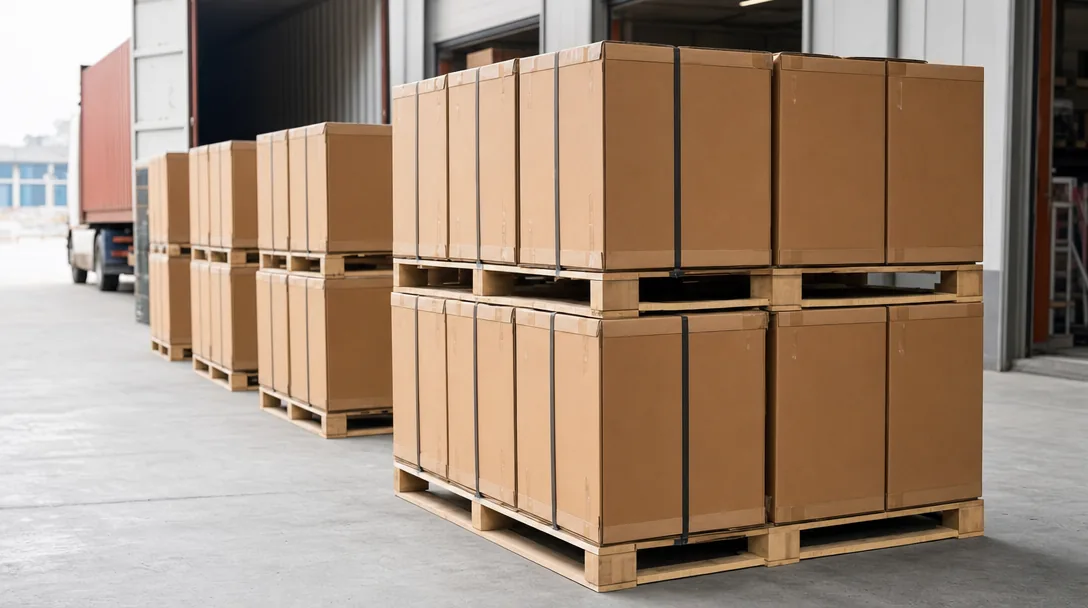
Every week, our sales team answers detailed questions about custom cap moq explained: how small brands can order in bulk without wasting capital. We wrote this guide so that wholesalers, streetwear brands, corporate buyers and promotional resellers can compare options with full information, and avoid the traps that show up only after production has started.
Why MOQ exists in cap manufacturing
MOQ exists because a cap is not a single-piece craft item; it is a line setup problem. Before the first hat is sewn, we still have to digitize the logo for embroidery, test stitch density, confirm thread trims, set the crown panels, and calibrate the sewing and pressing stations. A 500-piece order and a 5,000-piece order both need the same basic prep: file checking, sample approval, color matching against Pantone TCX, and machine changeover. On embroidery alone, a proper digitizing file can cost $15 to $40 depending on stitch count and 3D puff complexity, and a first-run setup can easily add another hour or two of operator time. That is why the custom cap MOQ exists: the fixed cost per design is real, and on a small run it gets spread over fewer units.
Fabric and print setup adds more hidden cost than most new buyers expect. A cutter cannot just “start cutting” a new style; the marker layout has to be planned for panel yield, shrinkage allowance, and grain direction, especially on brushed cotton twill, nylon, or recycled polyester. If the order uses screen print, each color needs its own plate or screen, plus registration testing and curing checks. Even for low MOQ hat manufacturer quotes, the machine calibration time does not disappear: needle tension, bobbin balance, bar tack positions, and sweatband attachment settings all need a first-pass check. That is why wholesale caps minimum order numbers are usually tied to the style and decoration method, not just the fabric.
For startup hat brand sourcing, the math is simple: a small batch custom hats order can be financially smarter than chasing wholesale custom hats no minimum claims that look cheap on paper but hide setup fees elsewhere. A realistic production floor quote might include $25 to $60 in embroidery digitizing, $30 to $80 in sampling, and a higher unit price for 100 to 300 pieces because the line cannot absorb the setup cost efficiently. Once you understand that structure, custom cap MOQ stops looking arbitrary. It is really the factory’s way of making sure each run covers labor, waste, and calibration without turning the order into a loss leader.
Typical MOQ tiers in China hat factories
In China hat factories, the custom cap MOQ is usually tiered by how much manual work you’re asking the line to do. At 50 pcs, you’re basically on a handmade sampling line: one operator cutting panels, one person doing embroidery or patch application, and a lot of stop-start setup. That’s fine for prototype runs, influencer seeding, or testing a colorway, but the unit price is high because the factory still has to open files, make tapes or digitize, and absorb fabric waste. For small brands, this is where a low MOQ hat manufacturer earns its keep, but it is not economical if you expect full production efficiency. At 100 pcs, you move into entry production, which is where many startup hat brand sourcing projects start to make sense. This is still a small batch custom hats situation, but the factory can at least stabilize thread tension, confirm sweatband placement, and repeat the same panel stack without changing the machine layout every few dozen pieces. The wholesale caps minimum order at this level is usually driven by labor, not materials, especially on structured caps with buckram fronts, curved bills, or 3D puff embroidery. If you need wholesale custom hats no minimum, you should expect the factory to quote a premium that covers setup risk and excess material buffer.
At 300–500 pcs, pricing usually becomes materially better because the factory can buy fabric, tape, eyelets, and closures in standard cartons instead of piecemeal. This is the sweet spot for most custom cap MOQ discussions: enough quantity to lock in consistent dye lots and embroidery registration, but still low enough to avoid tying up too much cash in inventory. On a run like this, we can usually keep color variance within a practical Delta-E range if the fabric is sourced against Pantone TCX references, and the per-unit cost drops because the same Tajima or Barudan heads stay on one setup longer. The difference between 100 and 500 pieces is often bigger than buyers expect, especially when the design includes woven labels, seam taping, or multiple back closures. Once you get to 1,000+ pcs, you’re finally buying the factory’s most efficient lane. Material purchasing improves, cutting waste drops, and embellishment prices fall because the embroidery digitizing, applique setup, and trim sourcing are amortized across a larger order. This is where custom cap MOQ stops being a constraint and starts becoming a cost lever. If the design is stable, the factory can also hold tighter tolerances on crown shape, visor curve, and logo placement, which matters for sports licensing and retail programs. For brands deciding between low MOQ hat manufacturer quotes, the real question is not just unit price; it’s whether the wholesale custom hats no minimum offer is masking extra fees that disappear once you move into the 300–500 or 1,000+ tier.
If you’re trying to protect capital, don’t chase the absolute lowest wholesale caps minimum order unless you genuinely need market testing. A 50-piece run can be a smart first step, but it behaves like a custom job shop order, not a scalable manufacturing plan. The cheaper path is often a 300-piece order with one main colorway and one simple embellishment method, then a second production wave after sell-through data comes back. That approach usually gives better cash conversion than splitting the same money into several tiny small batch custom hats runs. In practice, the best custom cap MOQ is the smallest quantity that still lets the factory run the line efficiently and keeps your landed cost low enough to leave margin after freight, duty, and rework allowance.
MOQ negotiation tactics that actually work
If you want a lower custom cap MOQ, the cleanest leverage is to stop treating every colorway as a separate production run. One 10,000-yard woven polyester or cotton twill order can often be split across three to five SKUs if the body pattern stays identical and only the crown panel, sandwich brim, or eyelet color changes. That is how a low MOQ hat manufacturer can keep cutting and sewing efficient: same fabric roll, same thread chart, same trim package, fewer changeovers on the cutting table. For startup hat brand sourcing, that matters more than chasing wholesale caps minimum order language on a website, because the real savings come from reducing downtime, not from arguing over the brochure number. On a typical 6-panel cap, every extra setup can add 0.15-0.30 USD per piece before decoration. Mix-and-match works best when the mill lot is stable and the shade tolerance is controlled. I would only approve shared fabric rolls across SKUs if the buyer accepts one Pantone TCX target for the main body and a Delta-E tolerance under 2.0 for reorders, otherwise the second batch will look “close” on paper and wrong in daylight. The same logic applies to trim: if you can keep sweatband, visor insert, and closure hardware fixed, you can move volume between small batch custom hats without blowing up the sewing schedule. That is why some wholesale custom hats no minimum offers are not actually no-minimum production; they are just flexible on how the same materials are allocated across styles. Longer lead times and deposits are the other two tactics that actually move the needle. If you can tolerate 25-35 days instead of 15-20, the factory can slot your order behind a larger cutting run and absorb your volume into the next fabric lay, which usually lowers the effective custom cap MOQ by 15-25 percent. Prepaying a 50 percent deposit also helps because it lets the mill reserve yarn-dyed fabric, blank snapbacks, or Buckram before prices shift; in 2024 I saw black twill swing 8-12 percent between monthly buys. Our standard practice is to reward buyers who commit early with one consolidated production block, because it avoids broken lots, reduces AQL 2.5 inspection risk, and keeps the wholesale caps minimum order from becoming a cash trap for a small brand.
Hidden cost traps below MOQ
The real cost trap below MOQ is not the quoted unit price; it is the deadweight you absorb when a factory has to break its normal production rhythm. If a 500-piece custom cap MOQ is built around full carton packing, 12-yard dye lots, and standard embroidery runs, dropping to 100 or 200 pieces often triggers per-piece surcharges that are never obvious in the first email. I routinely see a $0.80 to $2.50 add-on per cap for short-run handling, plus extra fees for art setup, thread changes, and manual sorting. For startup hat brand sourcing, that can erase the savings you thought you got from a low MOQ hat manufacturer.
Fabric waste is the other hidden bill. Headwear trim is sold in rolls, and most mills do not cut to your dream quantity. If your crown fabric needs a 55-inch lay and the remaining roll after your order is only enough for 18 more panels, the factory may have to open a second roll or leave unusable offcuts. That waste gets priced somewhere, usually into your quote. On structured six-panel caps, I have seen partial-roll inefficiency add 3% to 8% to fabric cost, especially with custom colors that are not standard stock. In small batch custom hats, that penalty matters more than the headline price because the labor and trim waste do not scale down cleanly.
Embroidery is where small orders lose the most efficiency. A single-head Tajima or Barudan machine is fine for sampling, but once you are past 200 to 300 pieces, multi-head production is what keeps labor under control. If a supplier offers wholesale caps minimum order pricing but plans to run your logo on one head, your stitch time may be 30% to 50% slower than a multi-head line, and every thread change becomes a stop-and-start event. That is why wholesale custom hats no minimum sounds attractive and then turns expensive: the factory is paying for machine downtime, not just thread. A serious custom cap MOQ should reflect real line efficiency, not marketing language about flexibility.
A realistic 100-piece launch plan for new brands
If you are launching with a realistic custom cap MOQ, 100 pieces is enough to test sell-through without turning your cash into dead inventory. The cleanest setup is one silhouette, one logo treatment, and one neutral base fabric: a 6-panel unstructured dad cap or a low-profile structured trucker, because both are easy to fit, easy to sew, and easy to reorder. For startup hat brand sourcing, I’d keep the first batch to no more than three colorways total — usually black, washed navy, and stone or khaki — because every extra SKU adds its own thread trim, carton label, and QC burden. On a 100-piece run, the difference between 1 SKU and 4 SKUs is often the difference between an efficient production line and a line constantly stopping to swap panels, thread cones, and embroidery files.
For the logo, single-color 3D puff embroidery is the best compromise between perceived value and factory efficiency. A 3D logo on a 55- to 60-gsm front panel with a 1.5 to 2.0 mm foam layer looks premium, but only if the art is simple: no tiny counters, no thin script, no gradients. In practice, a low MOQ hat manufacturer will quote lower digitizing and setup risk on one-color embroidery than on mixed fill stitches, and the same applies to sampling. If you are comparing wholesale caps minimum order terms, ask for the landed cost at 100, 300, and 500 pieces using the same spec sheet; that shows you whether the factory is inflating the unit price to compensate for a small batch custom hats run. A decent benchmark for a basic 100-piece order is usually $4.80 to $7.50 FOB depending on fabric, stitch count, and closure.
Keep the bill of materials tight: cotton twill or brushed cotton at 260 to 300 gsm, matching underbill, self-fabric strap or plastic snap, and one woven care label. Do not split the first batch across too many trims just because wholesale custom hats no minimum sounds attractive on paper; the hidden cost is time lost in approvals, color matching, and packing complexity. If the factory is quoting Pantone TCX colors, lock them before sampling and approve against a physical swatch, not a screen. I also recommend asking for a pre-production sample with Delta-E under 2.0 on the crown fabric and under 1.5 on the embroidery thread if color accuracy matters to your brand. CrownsForge’s standard practice is to keep the first production window simple, then expand only after sell-through data confirms which color and silhouette actually moves.
When to scale to 1,000+ pcs
The point where you should scale to 1,000+ pcs is not emotional; it is arithmetic. If your sell-through is under 60 days and your reorder lead time is 30 to 45 days, smaller runs start costing more in missed sales than they save in cash. A custom cap MOQ of 300 or 500 pieces can work for testing silhouettes, but once a style is proving stable, the overhead per unit drops fast at 1,000+ because embroidery setup, pattern grading, and color matching are spread across more pieces. On a $6.20 FOB cap, moving from 300 to 1,000 pcs can cut your landed cost by roughly $0.40 to $0.90 per unit just from efficiency, even before carton and freight optimization. That is the difference between a product that survives one season and one that can support real margin after retail discounts.
A low MOQ hat manufacturer is useful for validation, but it is not the right tool for every stage of startup hat brand sourcing. Once you have repeat SKUs, you want a replenishment cycle tied to actual sell-through, not guesswork. The clean model is to hold 8 to 12 weeks of stock in the destination country, then reorder when inventory hits a 4-week trigger point. That protects you from port delays, customs holds, and embroidery queue congestion, which can add 10 to 20 days on a busy season. Warehousing in the destination country also changes the math: pallet storage might run $8 to $15 per pallet per month, but it is cheaper than air-freighting emergency top-ups because you underbought. At that point, wholesale caps minimum order becomes less important than consistent fill rate and controlled cash conversion.
If you are still selling one-off colors or testing graphics, small batch custom hats and wholesale custom hats no minimum make sense, but they are not a scaling strategy. The moment a style has clear repeat orders, you should move it into a planned production calendar with forecasted color runs, carton allocations, and replenishment by size or closure type. In practice, the brands that scale cleanly are the ones that treat MOQ as a procurement variable, not a barrier: they use smaller initial runs to prove demand, then jump to 1,000 or 3,000 pcs when reorders become predictable. CrownsForge’s standard practice is to separate true test styles from core carryovers, because once a hat is moving monthly, the real cost is stockout risk, not unit price.
Frequently Asked Questions
What logo decoration techniques do you offer?
3D puff embroidery, flat embroidery, woven patch, leather patch, PVC patch, screen printing, sublimation, applique and laser etching, all in-house with no subcontracting.
Can I order a sample before bulk production?
Yes. We strongly recommend approving a pre-production sample before mass production. Samples are charged at 35 to 60 USD each plus express shipping, fully refundable against confirmed bulk orders over 500 pieces.
What is the minimum order quantity (MOQ) for custom hats?
Our standard MOQ is 100 pieces per design and color, with sampling available from 1 piece. For complex multi-color logos or premium fabric upgrades, the MOQ can be lowered with a small per-piece surcharge.
How long does production take?
Sampling takes 7 to 12 days. Bulk production runs 20 to 30 days depending on quantity, fabric availability and decoration complexity. Inspection and packing adds another 3 to 5 days before shipment.
What file format should I send for my logo?
Vector files (AI, EPS, PDF) are ideal. High-resolution PNG or JPG at 300 dpi on transparent background works as a fallback. Provide Pantone color references for accurate reproduction.
What's the MOQ for custom embroidered baseball caps no minimum?
When evaluating custom embroidered baseball caps no minimum, the key considerations are construction quality, decoration capability, MOQ flexibility and lead time. Setup costs for digitizing embroidery files, fabric cutting tables, screen-print plates and machine calibration time. 50 pcs (handmade sampling line), 100 pcs (entry production), 300–500 pcs (most efficient pricing), 1,000+ pcs (best unit cost & customization).
What's the MOQ for custom leather patch hats no minimum?
When evaluating custom leather patch hats no minimum, the key considerations are construction quality, decoration capability, MOQ flexibility and lead time. Setup costs for digitizing embroidery files, fabric cutting tables, screen-print plates and machine calibration time. 50 pcs (handmade sampling line), 100 pcs (entry production), 300–500 pcs (most efficient pricing), 1,000+ pcs (best unit cost & customization).
What's the MOQ for custom embroidered trucker hats no minimum?
When evaluating custom embroidered trucker hats no minimum, the key considerations are construction quality, decoration capability, MOQ flexibility and lead time. Setup costs for digitizing embroidery files, fabric cutting tables, screen-print plates and machine calibration time. 50 pcs (handmade sampling line), 100 pcs (entry production), 300–500 pcs (most efficient pricing), 1,000+ pcs (best unit cost & customization).
How does ordering custom leather patch trucker hat work?
When evaluating custom leather patch trucker hat, the key considerations are construction quality, decoration capability, MOQ flexibility and lead time. Setup costs for digitizing embroidery files, fabric cutting tables, screen-print plates and machine calibration time. 50 pcs (handmade sampling line), 100 pcs (entry production), 300–500 pcs (most efficient pricing), 1,000+ pcs (best unit cost & customization).
Looking for a reliable hat manufacturer in China?
CrownsForge has produced custom hats for 800+ brands across 40 countries. From 100-piece launches to 100,000-piece retail programs, we deliver on time and on spec.
Get in touchRelated guides
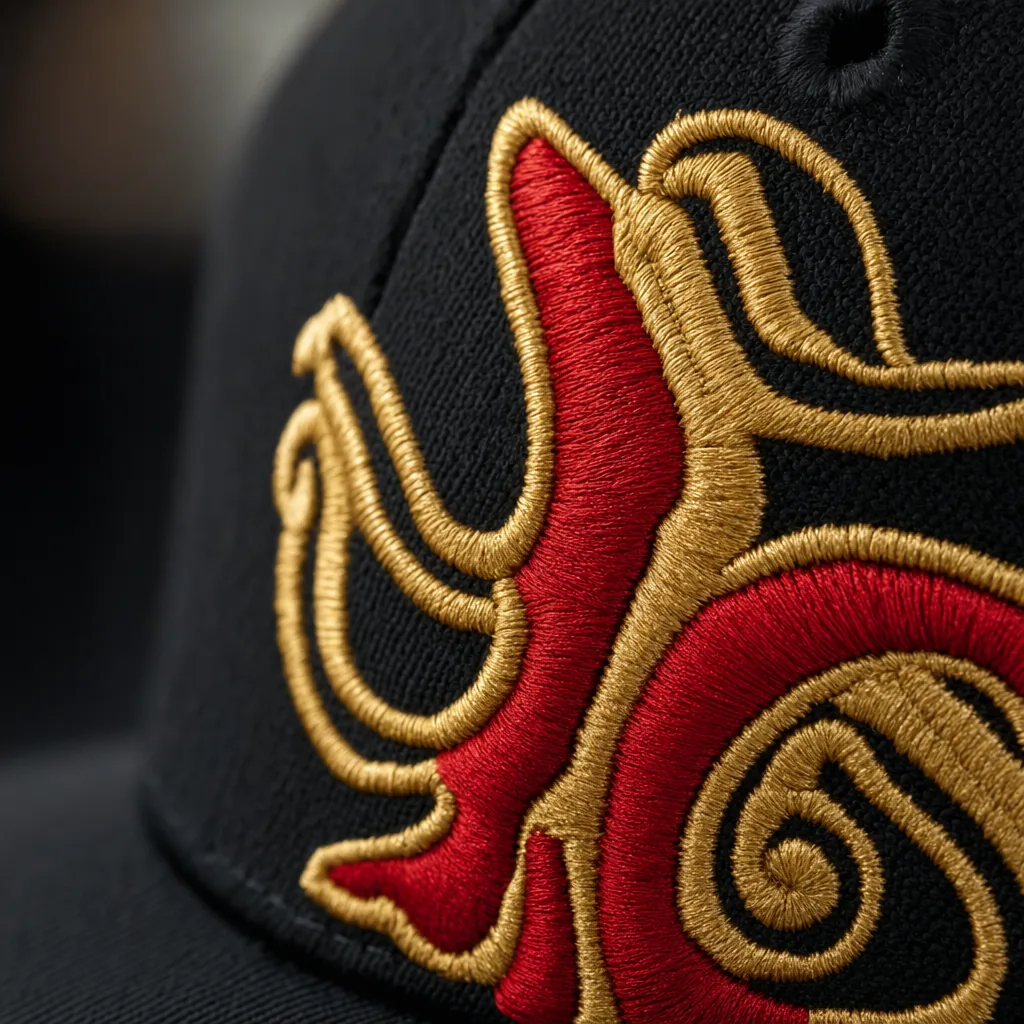
Custom Embroidered Patches: When to Use It, Costs, and What to Ask Your Factory
Read article →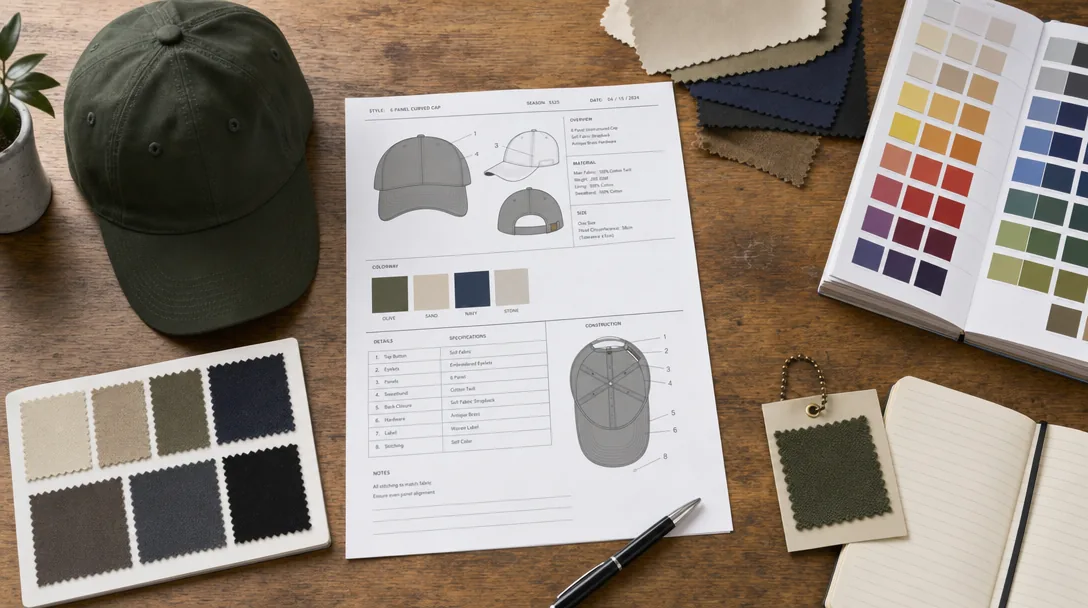
Switching Hat Manufacturers Mid-Program Without Losing Quality
Read article →
Ball Caps for Men: A 2026 Sourcing Playbook for International Buyers
Read article →Sourcing custom hats does not have to be complicated. With the right manufacturing partner, clear specifications and a small upfront investment in sampling, you can launch a retail-quality product in 30 to 45 days.