
Pantone Color Matching for Custom Caps: A Manufacturer's Reference
For brand owners, wholesalers and procurement teams entering the custom headwear category, pantone color matching for custom caps: a manufacturer's reference is one of the highest-leverage decisions you will make. Get it right and your unit economics, retail story and reorder cycle all improve. Get it wrong and you carry the cost for years.
Pantone TCX vs TPX — which reference do hat factories actually use?
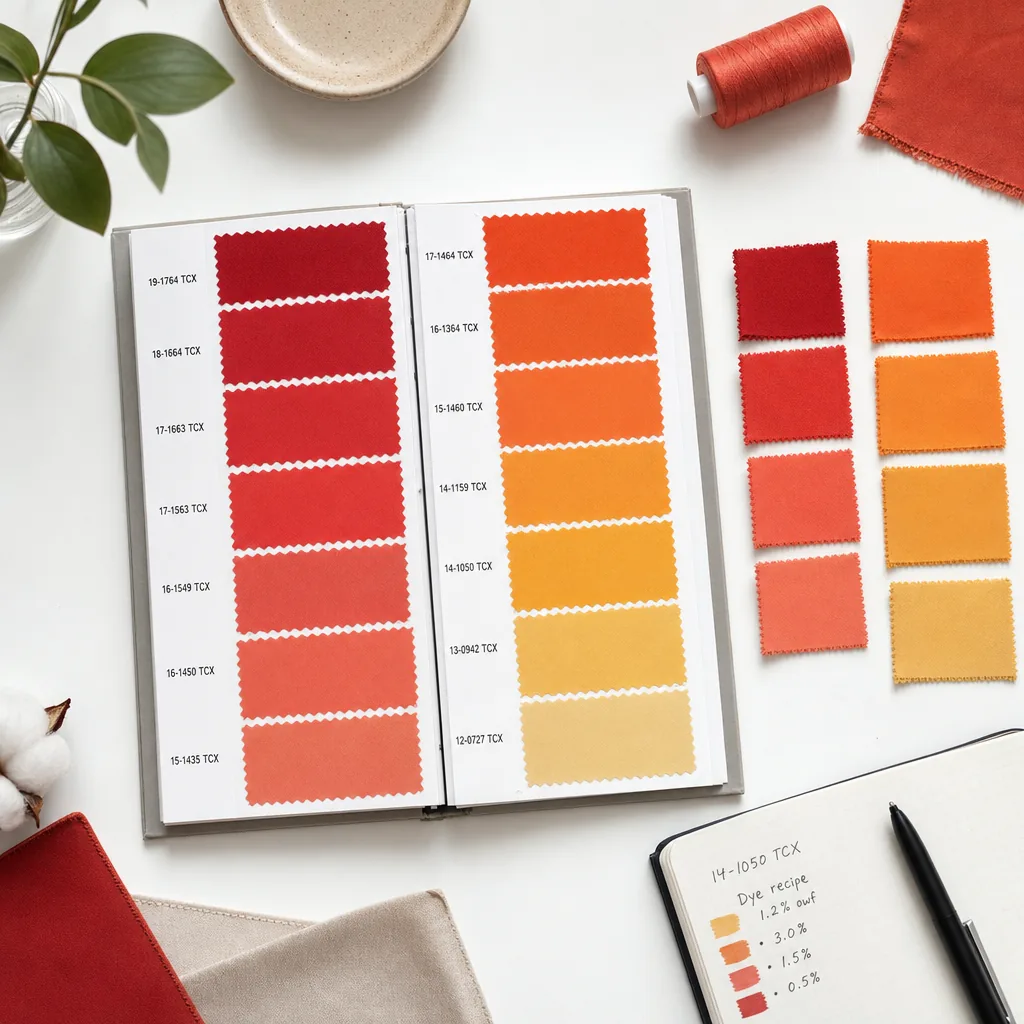
In cap production, TCX is the reference that matters because it is built for textiles, not paper. TPX is useful when a buyer is looking at a print deck on a desk, but once that color gets translated onto brushed cotton twill, wool blend, or washed chino, the surface reflection changes and the match drifts. A pantone matching hat job should start from the TCX book, then be cross-checked under D65 light and a standard light box against the actual fabric lot. On a real line, we treat TPX as an early communication tool, not the dye target. If a buyer sends only TPX, the risk is predictable: the cap may look right in a proofing room and off by eye on the finished crown, especially in mid-tone reds, navies, olives, and dusty neutrals.
The practical difference is in the substrate. Textile dye penetrates fibers and interacts with weave density, nap, and finishing chemistry, so a pantone cap factory has to account for the fabric before it ever touches the dye house. Cotton twill at 240 gsm will read differently from acrylic wool or polyester ripstop, even when the lab recipe is identical. That is why custom hat color accuracy depends on a physical strike-off and a measured delta E cap dye target, usually kept within Delta E 1.5 to 2.0 for repeat programs and under 3.0 for promotional volume orders. At CrownsForge, our standard practice is to approve against TCX swatches, then confirm the bulk lot after washing and pressing, because heat and finish can shift the final tone more than buyers expect.
The most common mistake is assuming one Pantone code equals one universal color. It does not. A color matching cap manufacturer has to translate the visual target into a fabric recipe, then control batch-to-batch variation across yarn lot, dye concentration, and curing temperature. If the brief only says TPX, we usually push back and ask for the closest TCX reference, or we build a lab dip from the physical sample and record the delta against that sample for future runs. For a pantone tcx hat order, that discipline matters more than the book number itself. Once the production line is locked, the real goal is repeatability: same crown, same brim, same sweatband trim, same read under retail lighting and daylight. That is the difference between a color that passes inspection and one that looks consistent on reorder six months later.
Delta-E: what tolerance should you specify?
Delta-E is the number that tells you whether a color match is actually close or just close on paper. In cap production, a Delta-E under 1.5 is excellent; most people will not see the difference unless they are comparing swatches side by side under controlled lighting. Between 1.5 and 3.0 is usually acceptable for promotional programs where speed and price matter more than exact brand fidelity. Once you get past 5.0, the mismatch is obvious on a finished panel, especially on twill, brushed cotton, or washed denim where the fabric texture changes how the color reads. For a pantone matching hat, I would specify the tolerance on the contract, not in an email thread, because color disputes usually happen after bulk cutting when the fabric lot is already committed.
On a real production floor, the tolerance has to account for dye lot drift, substrate absorption, and the fact that thread, crown fabric, and underbrim rarely behave the same way. A color matching cap manufacturer should measure with a calibrated spectrophotometer, compare against the agreed Pantone TCX reference, and check samples under D65 light, not just room light. Our standard practice is to hold bulk runs to Delta-E under 1.5 on Pantone-matched orders, which is tight enough for most brand work without driving scrap rates through the roof. For a pantone cap factory, that means separating approval sampling from bulk production, verifying every new dye bath, and rejecting panels that would push custom hat color accuracy outside the agreed window. If the buyer wants a delta e cap dye tolerance above 3.0, they should say so up front, because that changes both cost and inspection criteria.
Dye-lot batch consistency for repeat orders
On a pantone matching hat order, the first 1,000 pieces usually come from one dye lot, so the shade looks stable across cartons. The problem starts on the repeat order: the mill may run the same base cloth on a different jet, with a different dispersing curve, water hardness, or fixation temperature, and that is enough to move the color. On caps, the drift is usually visible first on deep navy, forest green, maroon, and any Pantone TCX shade that sits near a gray or brown undertone. A delta E cap dye change of 0.8 to 1.5 can be hard to catch on screen, but it shows up immediately under warehouse LED or daylight in a 500-lux receiving area. As a color matching cap manufacturer, we treat lot control as a procurement issue, not just a lab issue.
The clean fix is to book future-bulk fabric at the first order, even if the second shipment is not scheduled yet. That locks the greige-to-dyed fabric path, gives the mill a reserve lot, and cuts the risk that a pantone cap factory will have to chase a near-match later. Our standard practice is to hold a shade band reference, strike off against the approved lab dip, and keep a physical swatch with the production file. For CrownsForge, the practical step is simple: if the buyer wants repeatability across multiple drops, reserve the same fabric base, the same dyehouse, and the same finishing route before the first bulk is cut. That matters more than arguing over a one-point Delta-E on a monitor, because the actual fabric hand and light reflectance change the perceived color on the finished crown and visor.
If the customer will not book future bulk, then the buyer-receiving spec needs to define the tolerance in writing. For custom hat color accuracy, we usually recommend a target of Delta E 1.0 for critical brand colors and a maximum acceptable range of 1.5 to 2.0 only when the fabric base is consistent and the product is low-risk promotional stock. The spec should state the approved reference, light source for inspection, whether the comparison is against loose fabric or sewn panels, and what happens if the repeat lot lands outside tolerance. Without that document, the dispute becomes subjective at the dock. With it, both sides know whether the shipment is a rework, a concession, or a clean pass, which is the only way to keep a pantone matching hat program under control on repeat orders.
The five-color trap: when too many Pantones blow up your unit cost
The five-color trap shows up fast in a pantone matching hat program. Every extra shade usually means another dyeing setup, another lab dip cycle, and another small dye-lot minimum, which is rarely worth it unless the color is doing real commercial work. On woven and brushed cotton programs, the practical floor is often 200 to 300 yards per color just to keep the mill interested, and that is before you account for shade approval, ticketing, and segregation in cutting. A color matching cap manufacturer has to track each lot separately, because one off-shade roll can contaminate a whole production run and turn a clean approval into a sorting problem. If a brand wants six or seven colors for a first capsule, the cost does not rise linearly; it jumps because setup time, recordkeeping, and leftover inventory all stack on top of each other.
The mistake is treating every color as equally important. In practice, the best pantone cap factory workflow is to choose 3 to 4 hero colors that cover most SKUs, then use an accent color only where it actually changes the sell-through. That keeps cutting efficient and lets the mill run longer, cleaner lots with fewer shade breaks. For custom hat color accuracy, we usually anchor approvals to Pantone TCX references, then verify against the actual substrate under controlled light, because the same code can read differently on twill, corduroy, or pigment-dyed cotton. A delta e cap dye tolerance under 2.0 is realistic on solid fabric, but it gets harder once the base cloth has texture or a washed finish. Pushing beyond that rarely helps the customer; it mostly creates arguments over samples that looked fine in the office and wrong on the factory floor.
CrownsForge’s standard practice is to push clients toward a tighter palette before sampling, because the economics are obvious once you model them. One extra Pantone can add a few hundred dollars in setup and waste on a small run, and that number grows when you need multiple trims, lining, or embroidery threads to stay coordinated. The better move is to build one main body color, one dark neutral, one light neutral, and one accent, then reserve special shades for limited drops. That approach also reduces shade drift across reorders, which matters more than people admit when a program is built over six months. If a brand insists on a broad color wall, the result is usually slower approvals, higher MOQ pressure, and weaker margin on the SKU that was supposed to be the volume driver.
What to send your factory for first-time color matching
For a first-time pantone matching hat order, the best thing you can send is a physical Pantone TCX chip, not a screenshot and not a phone photo. A TCX swatch gives the color lab and the sewing floor a stable target under controlled light, which matters because cap fabrics do not read color the same way paper does. A twill crown, washed cotton, brushed canvas, or recycled poly will all shift the perceived value and chroma slightly, so the factory needs the real reference before it starts lab dips or yarn booking. If your target is a pantone tcx hat color, send the exact chip code and specify whether you want the match checked under D65 or TL84, because a color that looks clean in daylight can go dull under store lighting.
If you already approved a production cap, shipping that physical sample is the second-best option for a color matching cap manufacturer. The factory can compare the real textile surface, thread sheen, and panel seam behavior instead of guessing from a printed swatch. This is especially useful when the reference color is close to navy, burgundy, forest green, or heather tones, where a small shift is obvious once the cap is sewn and topstitched. A good pantone cap factory will still pull a lab dip or fabric strike-off against the sample, then verify the result with a Delta-E target, usually around 1.5 to 2.5 for customer acceptance depending on fabric type and order volume. The sample should be clean, unworn, and labeled with the approval date so nobody confuses it with a random pre-production piece.
Digital images are the least reliable reference for custom hat color accuracy because every screen, camera sensor, and compression step changes the color. White balance errors are common: fluorescent office light pushes blues greener, warm indoor light makes whites beige, and outdoor shade can flatten saturated reds. If you must send a photo, include a neutral gray card in the frame, shoot in daylight if possible, and avoid filters or beauty modes, but treat it only as a backup reference. For a pantone matching hat program, the factory should use the physical chip or sample for confirmation and keep the image only as context for the intended finish, such as matte cotton, glossy polyester, or washed pigment dye. That prevents expensive rework when the first bulk run comes in technically close but visually wrong on the actual cap fabric.
Sustainable dyeing: can you Pantone-match recycled fabric?
Yes, but only if you treat recycled substrates as a controlled range, not a fixed white sheet. Recycled polyester, recycled cotton, and blended yarns all carry base-color noise from previous use, melt history, or fiber contamination, so a pantone matching hat on virgin fabric will usually hold a tighter target than the same shade on recycled cloth. In practice, a color matching cap manufacturer should convert the buyer’s Pantone TCX reference into a lab dip target, then set a realistic Delta-E window before bulk. On recycled materials, I would expect a Delta-E cap dye tolerance closer to 2.5 to 4.0 depending on fabric structure and finish, while cleaner virgin lots can sit tighter. That difference matters more on light grays, off-whites, and saturated reds, where the eye catches drift immediately. A pantone cap factory that claims exact repeatability on recycled fabric without discussing base cloth variation is overselling it.
The correct process is to pre-dye sample swatches, not go straight to bulk strike-off approval. Our standard practice is to show at least two or three lab dips against the same fabric base so the buyer can pick the closest achievable target, then lock that result before yardage is ordered. On a pantone matching hat program, this step usually saves money because the first acceptable swatch becomes the production reference instead of chasing an impossible ideal. For recycled polyester, disperse dye behavior can shift with heat history and carrier load, so shade depth often changes after steaming and final shaping. For recycled cotton, reactive dye uptake depends on fiber length and trash content, which is why the same Pantone TCX code can read warmer or duller from lot to lot. If the buyer wants custom hat color accuracy, the swatch approval needs to happen under D65 light, not just on a monitor.
The practical answer is yes, sustainable dyeing can hit Pantone, but the commercial terms should reflect the wider band. I would write the PO with the approved lab dip code, the reference fabric lot, and an agreed tolerance note so nobody argues later when the bulk shade lands slightly softer than the virgin-fiber standard. For outer panels, the result is usually good enough for retail and teamwear if the crown, visor, and embroidery thread are managed as a system; matching one component while ignoring the others is where most complaints start. On mixed materials, a pantone matching hat with recycled fabric should also be checked after post-sewing heat and blocking, because that can pull color darker by a visible half-step. CrownsForge’s approach is to treat the swatch as the contract sample and keep a record of the accepted delta, dye bath formula, and fabric supplier lot so repeat orders do not drift when the recycled feedstock changes.
Frequently Asked Questions
What is the minimum order quantity (MOQ) for custom hats?
Our standard MOQ is 100 pieces per design and color, with sampling available from 1 piece. For complex multi-color logos or premium fabric upgrades, the MOQ can be lowered with a small per-piece surcharge.
Which shipping methods do you support?
We support FOB, CIF and DDP shipping. Air express for samples and small orders, sea LCL for 100 to 500 pieces, sea FCL for 5,000+ pieces. Door-to-door DDP available for US, EU, UK, Canada and Australia.
What logo decoration techniques do you offer?
3D puff embroidery, flat embroidery, woven patch, leather patch, PVC patch, screen printing, sublimation, applique and laser etching, all in-house with no subcontracting.
Do you support sustainability certifications?
Yes. We work with GOTS organic cotton, GRS-certified recycled polyester, OEKO-TEX Standard 100 fabrics, and are BSCI and Sedex audited. Certification documentation can be provided per order.
What file format should I send for my logo?
Vector files (AI, EPS, PDF) are ideal. High-resolution PNG or JPG at 300 dpi on transparent background works as a fallback. Provide Pantone color references for accurate reproduction.
How does ordering best custom baseball cap work?
When evaluating best custom baseball cap, the key considerations are construction quality, decoration capability, MOQ flexibility and lead time. A physical Pantone TCX chip is best. A printed cap with the approved color, sent in the post, is second-best. A digital image is least reliable — monitor color casts and lighting both distort the reference. TCX (Textile Cotton) is the fabric standard; TPX (Textile Paper) is the printer-friendly version. Most cap factories dye to TCX. Buyers who supply only TPX often…
How does ordering bucket hat custom work?
When evaluating bucket hat custom, the key considerations are construction quality, decoration capability, MOQ flexibility and lead time. TCX (Textile Cotton) is the fabric standard; TPX (Textile Paper) is the printer-friendly version. Most cap factories dye to TCX. Buyers who supply only TPX often discover small but visible color drift between paper proof and finished cap fabric. Delta-E quantifies the perceived color difference between target and actual. Under 1.5 is excellent (most observers cannot see the…
How does ordering custom hat embroidery near me work?
When evaluating custom hat embroidery near me, the key considerations are construction quality, decoration capability, MOQ flexibility and lead time. TCX (Textile Cotton) is the fabric standard; TPX (Textile Paper) is the printer-friendly version. Most cap factories dye to TCX. Buyers who supply only TPX often discover small but visible color drift between paper proof and finished cap fabric. Delta-E quantifies the perceived color difference between target and actual. Under 1.5 is excellent (most observers cannot see the…
How does ordering custom baseball cap motorcycle helmet work?
When evaluating custom baseball cap motorcycle helmet, the key considerations are construction quality, decoration capability, MOQ flexibility and lead time. TCX (Textile Cotton) is the fabric standard; TPX (Textile Paper) is the printer-friendly version. Most cap factories dye to TCX. Buyers who supply only TPX often discover small but visible color drift between paper proof and finished cap fabric. A physical Pantone TCX chip is best. A printed cap with the approved color, sent in the post, is second-best. A digital image is…
Ready to start your custom hat project?
Send us your tech-pack, sketch or even just an inspiration photo. We will respond with a detailed quotation and digital mock-up within 24 hours.
Request a free quoteRelated guides
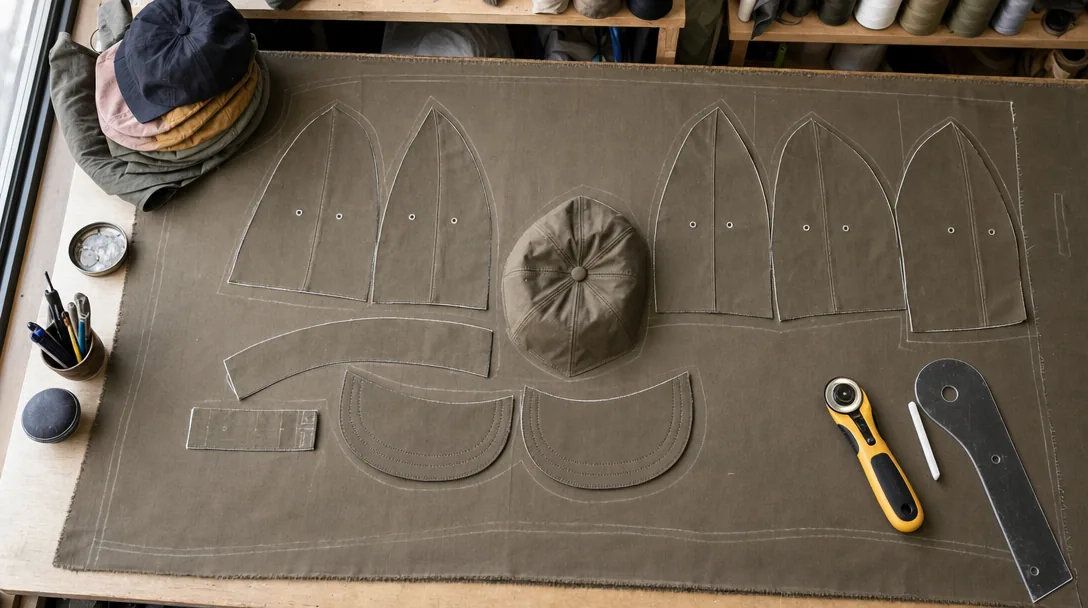
What's in a Cap Tech-Pack: A Specification Template for Buyers
Read article →
Compliance Documentation Checklist for First Hat Import to US/EU
Read article →
Wool Blend Caps: Manufacturing, Sourcing and Buyer Specifications
Read article →We hope this guide demystifies pantone color matching for custom caps: a manufacturer's reference and helps you move forward with confidence. If you have questions specific to your project, our English-speaking sales engineers are one message away.