
Compliance Documentation Checklist for First Hat Import to US/EU
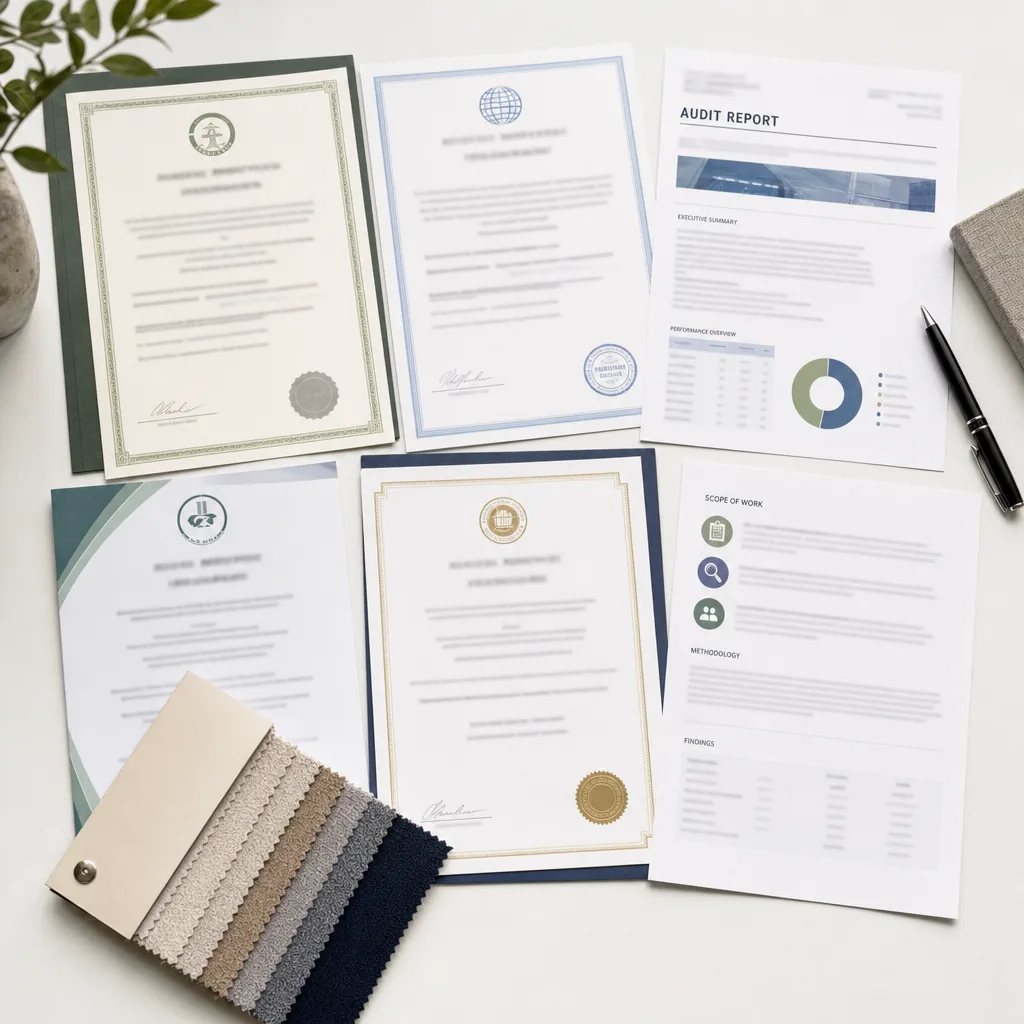
Compliance Documentation Checklist for First Hat Import to US/EU is one of the most-asked questions we receive from international buyers, and for good reason. With dozens of factories competing for your order and an alphabet soup of technical terms in every supplier quote, even experienced importers can feel lost. This guide consolidates what we have learned producing custom hats for clients in 40+ countries.
The 7 documents every hat import shipment needs
The seven documents that make or break a first hat import are not optional paperwork; they are the minimum customs package for moving product into the US or EU without avoidable holds. For import documentation hats, the commercial invoice and packing list must match the physical shipment line by line: style name, SKU, fiber content, crown construction, brim type, quantity, unit price, total value, currency, and Incoterms. If your carton count says 120 and the B/L says 118, someone at the port will notice. The bill of lading for ocean freight or air waybill for air cargo proves carriage, and the certificate of origin matters when claiming preferential duty treatment or simply answering origin questions from customs. A clean first hat import checklist starts here, because customs will treat sloppy paperwork as a higher-risk entry than the product itself.
For US import documents hats, the compliance test reports matter as much as the trade paperwork. If the cap is for children 12 and under, CPSIA requirements apply, including lead and phthalates limits; for adult headwear, REACH applies in the EU if there are trims, coatings, prints, or synthetic components that can trigger restricted-substance questions. The insurance certificate is only required when the deal is on CIF or CIP terms, but many buyers still ask for it because freight damage claims are easier when the shipment is insured on paper. The customs entry summary is filed by your broker, not the factory, but it must align with the invoice, origin, and product classification. This is where a lot of first-time buyers learn that the difference between dad hat and baseball cap can matter for description consistency, even if both are usually classified under the same HTS heading.
In practice, a solid customs documentation cap file is built before production finishes, not after the container is booked. Our standard practice is to keep the invoice description, packing list, test report scope, and origin statement identical so the broker is not guessing how to declare the goods. For EU import compliance hats, the worst mistake is assuming the certificate of origin replaces test reports; it does not. One document proves where the goods came from, the other proves what is in them and whether they meet chemical and safety rules. If you are shipping mixed styles, such as cotton twill dad caps and structured polyester baseball caps in one carton set, split the descriptions cleanly by style and material so the broker can classify them correctly and avoid a post-entry amendment.
Commercial invoice — what customs checks
The commercial invoice is the first document customs officer actually reads, because it tells them who sold what, to whom, under which terms, and at what declared value. For import documentation hats, the invoice should show the legal buyer and seller names exactly as they appear on the purchase order, the INCOTERM, HTS classification, country of origin, unit price, total value, and currency. If the shipment is going to the U.S., this is part of the US import documents hats package; for the EU, it is the backbone of EU import compliance hats as well. I have seen first-time importers get delayed because they wrote “FOB China” on one invoice and “CIF Los Angeles” on another, or used a trading company name on the invoice while the wire transfer came from a different entity.
HTS classification is where people create avoidable pain. A dad hat is not always treated the same way as a structured baseball cap, and the difference between dad hat and baseball cap can matter if the crown construction, visor type, or fiber content changes the tariff line. Customs does not care about your product name; they care about the physical facts, so the HTS code must match the actual cap specification. If you overstate or understate the duty rate, you invite reclassification, back duties, and possible penalties. For textiles and headwear, I also watch for unit prices that are implausibly low versus market reality, because anything below fair market value can trigger anti-dumping scrutiny or valuation questions, especially when the declared price looks detached from fabric cost, embroidery, packaging, and freight.
The invoice value must reconcile with the payment trail, full stop. If the commercial invoice says $18,400 but the letter of credit or wire transfer shows $16,900, customs brokers will ask why, and sometimes the bank will ask first. That mismatch is one of the most common failures in a first hat import checklist because buyers treat the invoice as a formality instead of a legal valuation document. The safer practice is to align the invoice, packing list, purchase order, and payment record before shipment leaves port. Also make sure the currency is explicit — USD, EUR, or RMB — because a clean customs documentation cap file has no room for “roughly” or “about.”
Packing list — granularity that prevents inspections
A useful packing list for hats is not a summary sheet; it is a carton-level control document. For each carton, list SKU, style code, size breakdown, color, quantity per carton, net weight, gross weight, and exact carton dimensions in centimeters. If you are shipping mixed styles, do not hide them under one line item. Customs brokers and freight forwarders use the packing list to reconcile the commercial invoice, bill of lading, and physical cargo, and vague data is exactly what triggers a hand inspection. In practice, a clean first hat import checklist should treat the packing list as part of the core import documentation hats set, not a warehouse afterthought.
The inspection risk drops when the packing list matches the labels on the cartons and the factory order line by line. Every carton should carry the same SKU reference, color name, and quantity stated on the paperwork, with no shorthand that only the factory understands. If one carton is 48 pieces of navy dad hats and another is 36 pieces of structured baseball caps, write that difference out clearly; the difference between dad hat and baseball cap matters when the officer checks construction, style code, and declared value. Our standard practice is to print the packing list after final cartonization so the factory, forwarder, and buyer all use the same counts, which is basic customs documentation cap discipline.
That level of detail is worth real money. A random inspection in the US or EU often means 3 to 7 days of hold time, plus terminal handling, broker amendment fees, and sometimes reweighing charges if the carton data looks inconsistent. For US import documents hats, the packing list should support the commercial invoice down to carton count and weight; for EU import compliance hats, it should also align cleanly with the EORI filing and any VAT entry summary. If the shipment has 500 cartons, a single inaccurate gross weight can create enough doubt for customs to pull the entire lot, so the packing list needs to be boring, exact, and identical across all export documents.
Certificate of origin — when it lowers your duty
Form A is mostly a historical footnote for China-origin cap shipments now. Since the U.S. GSP preference was suspended for China in 2018, it usually does not reduce duty for a first hat import checklist into the American market, so buyers should not build landed-cost assumptions around it. What still matters is a clean certificate of origin that ties the goods to China with the right factory and exporter details, because customs brokers, buyer-side compliance teams, and marketplace auditors often ask for support beyond the commercial invoice. For import documentation hats, the practical value is proof, not a tariff break: it helps answer questions about where the cap was made, whether the bill of materials matches the declared origin, and whether the shipment description lines up with the packing list and HS code.
Form CO, the basic certificate of origin, is still useful in EU import compliance hats files even when it does not lower duty by itself. Some EU regulators and importers want origin evidence on file, especially when there is a customs audit, a claims review, or a dispute over whether components were substantially transformed in China. For a customs documentation cap package, I’d treat CO as backup evidence that should match the invoice, export declaration, and carton marks exactly: style name, PO number, quantity, fabric content, and country of origin. If the buyer later asks whether a five-panel cap and a dad hat are being treated differently, the difference is usually construction details, not origin status, so the paperwork needs to describe the product accurately rather than loosely.
For a first hat import to the U.S. or EU, the safest approach is to file the origin certificate with the commercial invoice, packing list, and any lab test or material declaration if the buyer requested it. Do not assume a certificate of origin will fix weak descriptions or missing tariff data; customs reviewers care more about consistency than fancy forms. On the shipping side, the document set should support the declared HS classification, especially if the cap has embroidery, a laminated patch, or unusual fabrics like washed twill, acrylic wool, or 100% polyester mesh. In practice, the import documentation hats package should read like one story from factory to port: who made it, what it is, what it is made from, and why the origin claim is credible. If those details conflict, the certificate becomes useless in an audit.
CPSIA test report (US imports for children)
For any children’s cap sold in the US, the CPSIA paperwork is not optional and it is not the same as adult headwear clearance. If the product is intended for 12 and under, your import documentation hats file needs a Children’s Product Certificate (CPC) tied to a third-party test report from a CPSC-accepted lab. In practice, the labs buyers see most often are SGS, Bureau Veritas, Intertek, and TÜV. Expect lead and phthalates testing on every relevant material component: shell fabric, printed graphics, sweatband, plastic snaps, decorative cords, and any trim that a child can mouth or chew. For a basic cotton twill cap, a proper compliance package usually runs about $200 to $400 per SKU, depending on how many components need to be tested and whether the factory already has a bill of materials locked.
The part many first-time buyers miss is the small-parts requirement. A metal clasp, a loose applique, a sewn-on patch with weak stitch density, or a decorative button can turn a simple cap into a choking risk if it fails the small-parts cylinder test after abuse. That means your first hat import checklist should include an inspection report showing the cap stayed intact after pull, torque, and tension checks, not just a lab certificate sitting in a folder. If you are comparing a difference between dad hat and baseball cap for compliance, the style name does not matter; the actual construction does. A soft unstructured dad hat with a slide buckle and stitched patch can be lower risk than a structured six-panel baseball cap with metal hardware, but both still need the same CPSIA evidence if marketed to children.
Tracking-label compliance is another item Customs and CPSC reviewers look for immediately. The sewn-in label or permanent marking must identify the manufacturer or private labeler, production location, and date code or batch code that ties back to the test report. Without that traceability, even a valid lab result can become useless during a hold or market surveillance review. In a real US import documents hats file, I would keep the CPC, full test report, product photos, component list, and carton markings together so the broker can answer questions fast. For EU import compliance hats, the paperwork logic is similar but the standard set changes; for US children’s products, your customs documentation cap should be built around CPSIA first, then commercial docs second.
REACH SVHC declaration (EU imports)
For EU shipments, the REACH SVHC declaration is not a formality you can bury in the folder. Customs and downstream importers want a clean statement that the cap does not contain Substances of Very High Concern above the applicable threshold limits, and for textile headwear the practical route is usually a valid OEKO-TEX Standard 100 certificate tied to the exact fabric or trim. In a real first hat import checklist, I want the certificate ID, scope, issue date, and the lab name so the buyer can verify it against the public database. If the crown fabric is certified but the sweatband, closure tape, or print ink is not, the declaration is weak and may be rejected during EU import compliance hats review.
The part that gets people burned is assuming one certificate covers every component. It does not. A cotton twill dad hat with polyester mesh back, PU patch, nickel-free buckle, and polyester thread is a different compliance picture than a 100% cotton baseball cap with a metal slide closure. The difference between dad hat and baseball cap matters because the trim stack changes, and so do the test results and the customs documentation cap file. For import documentation hats, I usually advise buyers to match the declaration to the exact SKU, colorway, and factory production run, not just the style name on the PO.
France adds another layer: AGEC traceability. If the shipment goes into France, the importer may need data on fiber composition, country of origin, repairability or sorting information depending on the product category and platform requirements. That means your US import documents hats set is not enough for the EU side; you need supplier declarations, material breakdowns, and traceability records that can survive a spot check. Our standard practice is to keep the REACH statement, OEKO-TEX certificate ID, carton list, and production batch records together, because when a broker asks for backup, piecing it together after the vessel has sailed costs time and money.
Customs broker handoff: who does what
The customs broker is the party that actually makes the entry, not the freight forwarder in most lanes, and buyers who mix those two roles usually get burned on release timing. Your first hat import checklist should treat the broker as the destination-side operator: you hire them in the U.S. or EU, then they receive the core import documentation hats packet plus the factory MID code and any product details needed to classify the shipment correctly. In the U.S., the broker files through ABI; in the EU, the equivalent is usually CDS or the local customs system tied to the member state. Their job is not to “handle shipping” in the broad sense, but to translate your paperwork into a customs entry that can clear without delay.
The broker typically needs the commercial invoice, packing list, bill of lading or airway bill, HTS or HS classification support, country of origin, declared value, importer of record details, and the factory MID. If you are importing promotional SKUs, the customs documentation cap often looks simple, but small errors matter: a wrong fiber split, a bad unit price, or inconsistent carton counts can trigger a hold. For US import documents hats, the broker will calculate duty based on the declared tariff line, then ask the importer to fund estimated duties, taxes, MPF or HMF where applicable, and brokerage fees before release. In the EU, EU import compliance hats can also involve VAT accounting and, depending on the country, local guarantee arrangements.
Do not assume your freight forwarder is the broker unless it is explicitly written in the contract and the service scope. In many markets, the forwarder only books cargo, issues transport documents, and coordinates the move; the broker is a separate licensed function with separate liability and separate filing access. Confirm before shipment who is filing, who is paying duties, who is the importer of record, and who will answer customs questions if the entry gets queried. That matters even for something as basic as the difference between dad hat and baseball cap, because style names mean nothing to customs; construction, fiber content, origin, and declared value are what drive clearance.
Frequently Asked Questions
Which shipping methods do you support?
We support FOB, CIF and DDP shipping. Air express for samples and small orders, sea LCL for 100 to 500 pieces, sea FCL for 5,000+ pieces. Door-to-door DDP available for US, EU, UK, Canada and Australia.
How long does production take?
Sampling takes 7 to 12 days. Bulk production runs 20 to 30 days depending on quantity, fabric availability and decoration complexity. Inspection and packing adds another 3 to 5 days before shipment.
Can I order a sample before bulk production?
Yes. We strongly recommend approving a pre-production sample before mass production. Samples are charged at 35 to 60 USD each plus express shipping, fully refundable against confirmed bulk orders over 500 pieces.
Do you support sustainability certifications?
Yes. We work with GOTS organic cotton, GRS-certified recycled polyester, OEKO-TEX Standard 100 fabrics, and are BSCI and Sedex audited. Certification documentation can be provided per order.
What file format should I send for my logo?
Vector files (AI, EPS, PDF) are ideal. High-resolution PNG or JPG at 300 dpi on transparent background works as a fallback. Provide Pantone color references for accurate reproduction.
What should buyers know about cotton twill army cap kangol?
When evaluating cotton twill army cap kangol, the key considerations are construction quality, decoration capability, MOQ flexibility and lead time. Per-carton breakdown: SKU, size, color, quantity per carton, gross weight, net weight, carton dimensions. The more granular the packing list, the lower the chance customs randomly inspects (saves you fees and 3-7 days hold time). Always send packing list with cap labels matching factory order. Any cap intended for children 12 and under needs: Children's Product Certificate…
How does ordering custom made trucker hat work?
When evaluating custom made trucker hat, the key considerations are construction quality, decoration capability, MOQ flexibility and lead time. Commercial invoice (CI), packing list, bill of lading (B/L) or air waybill (AWB), certificate of origin (CO or Form A), compliance test reports (CPSIA/REACH as applicable), insurance certificate (for CIF/CIP terms), customs entry summary (filed by your broker). These appear on every shipment regardless of size. Buyer, seller, INCOTERM, HTS classification, country of origin,…
What should buyers know about kangol bucket hat mens?
When evaluating kangol bucket hat mens, the key considerations are construction quality, decoration capability, MOQ flexibility and lead time. Commercial invoice (CI), packing list, bill of lading (B/L) or air waybill (AWB), certificate of origin (CO or Form A), compliance test reports (CPSIA/REACH as applicable), insurance certificate (for CIF/CIP terms), customs entry summary (filed by your broker). These appear on every shipment regardless of size. Buyer, seller, INCOTERM, HTS classification, country of origin,…
How does ordering baseball cap custom made work?
When evaluating baseball cap custom made, the key considerations are construction quality, decoration capability, MOQ flexibility and lead time. Per-carton breakdown: SKU, size, color, quantity per carton, gross weight, net weight, carton dimensions. The more granular the packing list, the lower the chance customs randomly inspects (saves you fees and 3-7 days hold time). Always send packing list with cap labels matching factory order. Any cap intended for children 12 and under needs: Children's Product Certificate…
Ready to start your custom hat project?
Send us your tech-pack, sketch or even just an inspiration photo. We will respond with a detailed quotation and digital mock-up within 24 hours.
Request a free quoteRelated guides
Custom Logo Hats: When to Use It, Costs, and What to Ask Your Factory
Read article →Custom Embroidered Patches: When to Use It, Costs, and What to Ask Your Factory
Read article →
Custom Hats for Men: A 2026 B2B Sourcing Guide
Read article →If you are ready to take the next step on compliance documentation checklist for first hat import to us/eu, our team can put a tailored quotation and digital mock-up in your inbox within 24 hours. Send the inquiry form on our contact page or message us directly on WhatsApp.