
Hat Quality Inspection Checklist: 32 Points Every Importer Should Verify
Every week, our sales team answers detailed questions about hat quality inspection checklist: 32 points every importer should verify. We wrote this guide so that wholesalers, streetwear brands, corporate buyers and promotional resellers can compare options with full information, and avoid the traps that show up only after production has started.
Why a written QC standard prevents disputes
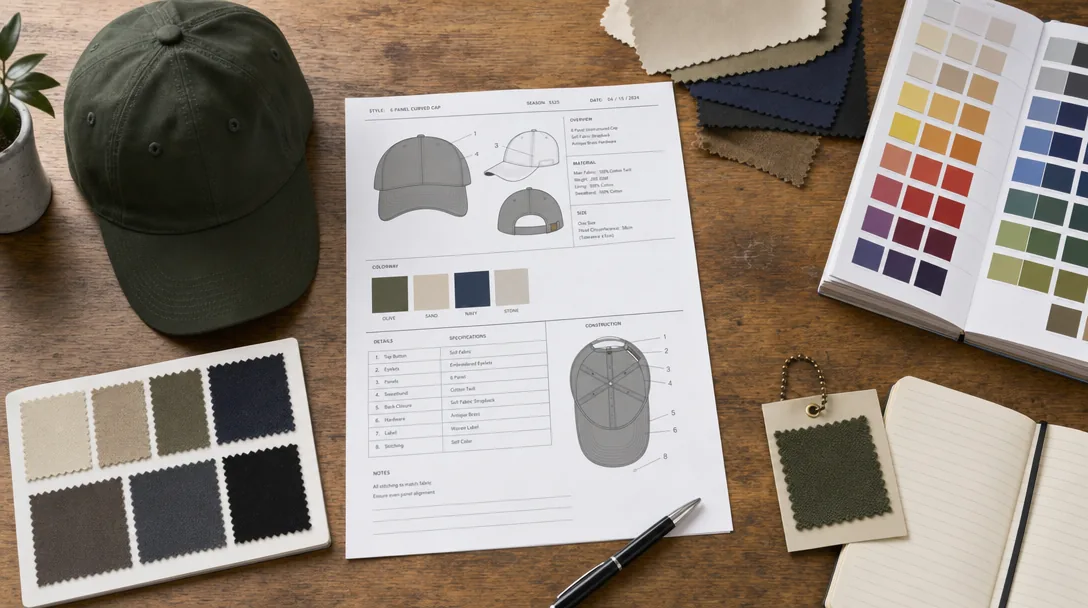
A written QC standard is the only way to keep a hat order from turning into a post-shipment argument. If acceptable trim height, panel symmetry, crown depth, thread tension, and logo placement are not fixed on paper before production, every mistake becomes a debate about intent. In practice, the factory may think a 2 mm shift on a front logo is within tolerance, while the buyer expects dead-center consistency across 5,000 pcs. That gap is exactly where claims get messy. For hat quality inspection, define the critical-to-quality points before cutting fabric: approved artwork file, Pantone TCX color reference, bill curvature, seam alignment, sweatband spec, and packaging method. A QC checklist caps the argument because it turns opinions into measurable limits.
A good standard also needs defect severity, not just a yes/no approval. Cap defect classification should separate critical, major, and minor defects with clear examples. A broken stitch at the visor edge, wrong shade on the underbill, or a misaligned woven label may each have different commercial impact, and they should not all be treated the same. For high quality custom baseball caps, I would put tolerances in writing for embroidery density, puckering, crown shape, and size variance by style; otherwise one buyer accepts a slight variance and another rejects the same lot. That is why AQL inspection custom hats works best when paired with a signed sample and a written defect table, not just a verbal promise from sales.
Third-party inspection hats only help if the inspector is checking against the agreed standard, not their personal judgment. A factory can pass one inspector and fail another if the acceptance criteria are vague. The cleanest method is to lock the golden sample, tech pack, and QC sheet before bulk production, then use the same language in incoming material checks, in-line checks, and final packing inspection. Our standard practice is to align the production team and the buyer on the same reference sample before bulk sewing starts, because once 10,000 panels are cut, you are no longer debating quality—you are debating scrap cost, rework time, and who pays freight on the rejects.
AQL 2.5 sampling explained for caps
For cap programs, AQL 2.5 is the most common sampling plan buyers use when they want a defensible hat quality inspection without opening every carton. On a 1,000-piece order, inspectors typically pull 80 pieces; for 5,000 pieces, 200 pieces; and for 10,000 pieces, 315 pieces, using ISO 2859-1 single sampling. That sample size is not arbitrary. It is built to catch real production drift, especially when the line has multiple sewing operators, different embroidery heads, or one bad fabric roll feeding the cutter. If you are buying high quality custom baseball caps, this is the point where color, stitching, and shape problems start showing up before they reach your warehouse.
The defect split matters more than buyers usually realize. Under an AQL inspection custom hats program, major defects are the ones that make a cap unsellable or likely to trigger a customer complaint: wrong panel count, bad crown shape, broken stitching, visible oil stains, off-center logo placement beyond tolerance, or a brim that is warped enough to fail fit. Minor defects are cosmetic issues that do not stop sale but still reduce acceptance: loose threads, tiny puckering, slight label skew, or small shade variation inside the same Pantone family. In a proper cap defect classification, major defects usually have a tighter allowable number than minor defects, and inspectors will stop the lot if the major count crosses the acceptance limit even if the overall sample looks decent.
A good QC checklist caps program should not rely on a single visual pass. Third-party inspection hats teams should verify workmanship, measurements, packaging, carton markings, barcode accuracy, and carton drop condition, because a cap can pass sewing and still fail retail if the inner polybag is wrong or the carton crushes in transit. In practice, I tell buyers to ask for the sampling table, the exact AQL level used for major and minor defects, and photo evidence for every reject. CrownsForge’s standard practice is to align the inspection lot against the PO breakdown first, then inspect by colorway and size lot, because mixed lots hide defects fast. If the supplier cannot explain why the acceptance number changes between 1,000 and 10,000 pieces, that is usually a sign the inspection was guessed rather than controlled.
Construction inspection points
Crown stitching is the first place I look because sloppy needle control shows up fast on caps that passed a casual line check but fail a real hat quality inspection. On a decent custom baseball cap, topstitching should sit 2.5 to 3.0 mm from the edge, with no skipped stitches, no loose thread tails longer than 3 mm, and no seam puckering around the front panels. For structured 6-panel caps, check that the front crown shape is symmetrical left to right and that seam intersections at the top button are centered within 1–2 mm. In a QC checklist caps review, I also classify defects by severity: broken stitches and open seams are major defects, while minor thread snags are acceptable only if they do not affect wear or washing performance.
Brim curvature is another issue that gets missed in third-party inspection hats because it looks fine at a glance until the buyer compares cartons. The visor should match the approved sample radius and hold its curve after hand flexing; I usually spot-check 10 pieces per size lot and compare them against the golden sample using a simple template or caliper reference. In high quality custom baseball caps, the visor sandwich should be evenly filled, with no soft spots, delamination, or hard edges that telegraph through the fabric. If the brim shifts more than 2 mm between left and right samples, I treat that as a process problem, not a cosmetic one, because it usually means poor mold control or inconsistent steam shaping on the line.
Sweatband attachment and hardware function decide whether the cap survives use, not just inspection photos. The sweatband stitching should be continuous, typically 4 to 5 stitches per cm, with no skipped tack points where the band joins at the seam or where labels are inserted; loose attachment here becomes a comfort complaint and a return risk. Eyelets need to be evenly spaced and centered within a 1.5 mm tolerance on a production lot, especially on embroidered crowns where needle holes can distort the panel layout. For closures, I test every style differently: plastic snaps should lock firmly with one hand, Velcro should meet full overlap without fraying, and metal buckles must cycle cleanly without sharp burrs. That level of hat quality inspection is what keeps an AQL inspection custom hats report from turning into a dispute later.
Embroidery inspection points
Embroidery is where most cap disputes start, because buyers judge it by eye and factories judge it by machine count. For hat quality inspection, start with Pantone matching on the thread card and confirm the approved shade against the actual embroidered sample under D65 light, not phone flash. In practice, a good tolerance is Delta-E under 2.0 for core brand colors, though some promotional programs will accept 2.5 if the yarn catalog is limited. Stitch density should stay uniform across all panels and sizes; a dense front logo on a structured six-panel cap usually lands around 10 to 12 stitches per centimeter, while fine script work may need a tighter underlay to avoid gaps. If the density changes between production heads, you will see it immediately in the satin columns and fill areas.
Backing material is another point that gets missed in a QC checklist caps review. Merrowed patches, fusible backing, and tear-away stabilizer all behave differently, and if the backing is too heavy it telegraphs through the front panel on high quality custom baseball caps. Check for loose thread tails, puckering, glue bleed, and backing visibility at the edge of the logo; any exposed stabilizer above 1 mm is usually a reject in a clean retail program. We also verify that the embroidery path is balanced on Tajima, Barudan, or ZSK heads, because a bad digitizing file can pull the logo off-center even when the sewing looks neat.
Logo centering tolerance should be set before production, not argued after packing. On a standard front panel, I use ±2 mm left-right and top-bottom from the approved midpoint for most third-party inspection hats reports; for premium licensed programs, some buyers tighten that to ±1.5 mm. Measure from fixed cap references like the center seam, eyelets, and visor break, not from the embroidery outline itself, because thread build can fool the eye. In an AQL inspection custom hats lot, the inspector should classify a shifted logo as a major defect if it affects brand symmetry, especially on bold front graphics where even 3 mm of drift reads as sloppy. That is the kind of cap defect classification that separates acceptable bulk from returns.
Fabric inspection points
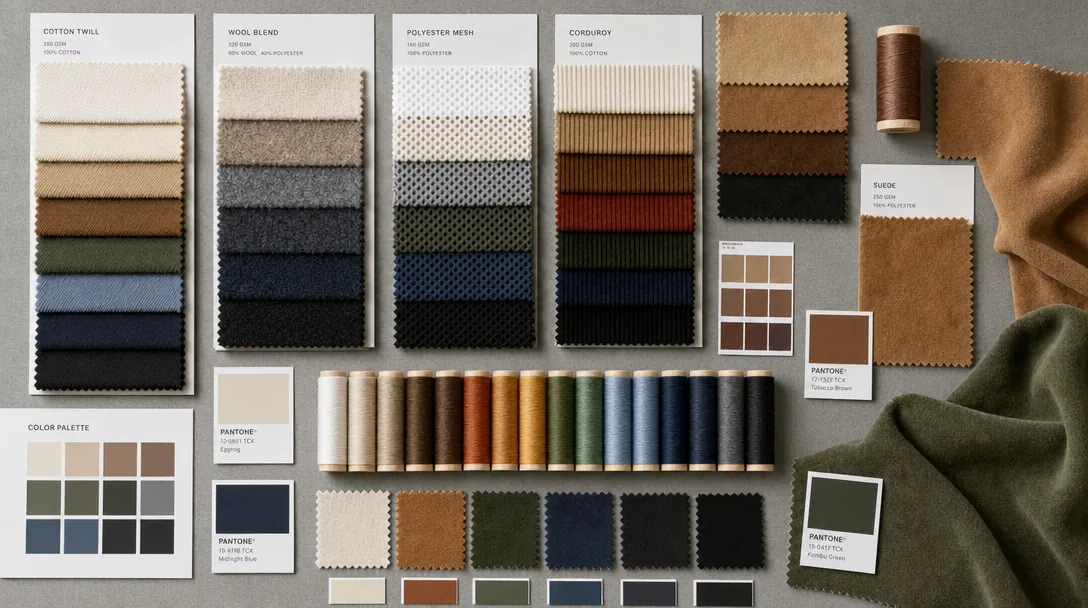
Color consistency is the first thing I check under daylight D65, because panel-to-panel shade variation will get blamed on embroidery later if you miss it here. For a proper hat quality inspection, compare all crown panels against the approved Pantone TCX standard and record any visible delta by panel position, especially on darker cotton twill and brushed chino where shade drift is common after dyeing and cutting. A usable QC checklist caps should also include a quick check for lint, oil marks, and storage bruising, since a lot of fabric defects show up after cartons sit in a humid warehouse for two or three weeks. In AQL inspection custom hats, I treat any obvious shade mismatch across the front panels as major, because it ruins the visual symmetry buyers expect from high quality custom baseball caps.
Weaving defects need to be caught before embroidery or seam closing, not after. I look for broken ends, slubs, reed marks, skipped picks, and uneven yarn tension on the crown fabric, especially on poly-cotton blends and coarse canvas where the weave structure telegraphs through the finished cap. For third-party inspection hats, the inspector should rub the fabric once with a white cloth and note fiber shedding, then run a hand-feel test for stiffness, pilling, or waxy finishing residue; those issues usually indicate poor finishing control, not just cosmetic variation. In cap defect classification, I separate minor surface fuzz from structural weave faults, because buyers of custom promotional caps often accept slight hand-feel variation but will reject any weak spots that could open at the crown seam after wear.
Hand-feel matters more than most importers admit, because it tells you whether the fabric will hold shape after steam, wash, and shipping compression. On structured front panels, the shell should feel firm but not boardy, with no crunchy resin spots or uneven stiffness between panels; on unstructured dad caps, the hand should stay soft without feeling thin or underfinished. During a hat quality inspection, I also check whether the fabric recovers after finger pressure, since poor recovery often means low-grade interlining or uneven coating on the base cloth. If you are buying through a factory like CrownsForge, ask for fabric cuttings from both bulk and pilot lots and compare them side by side, because a 0.5 oz difference in gsm or a small change in brushing can alter the finished look more than most people expect.
Packaging inspection points
For weight control, do not accept rounded guesses from the packing line. A finished carton of 48 cotton twill caps usually lands around 9.5–12.5 kg depending on crown structure, brim insert, and whether each unit is polybagged with a hangtag, silica gel, or carton divider. If the actual gross weight is off by more than 3–5 percent from the shipping document, I flag it immediately and recheck the count by carton opening, not by paperwork. That is standard practice in hat quality inspection because weight drift is often the fastest sign of shortage, mixed packing, or an unexpected material substitution like heavier buckram or thicker sweatband tape. Good buyers use this as a simple cross-check before release, especially when the order is moving under FOB terms and the freight charge depends on the final billable weight.
For a serious QC checklist caps audit, packaging should be judged as part of product protection, not just presentation. If cartons are single-wall when the route requires double-wall, or if the inner polybag seal fails after compression testing, the hats arrive with crushed fronts, bent sandwich brims, and scuffed embroidery. A competent factory should run a basic drop test, corner crush check, and carton shake test before shipment; that is especially important for third-party inspection hats on export orders to the U.S. and EU. My rule is simple: if the packaging cannot survive one week in a humid warehouse and three transfers by hand truck, it is not suitable for high quality custom baseball caps, no matter how good the embroidery looks on the line.
Third-party inspection services
For high-volume orders, seasonal launch deadlines, or any program with tight brand standards, third-party inspection hats is not optional; it is cheaper than a chargeback, a markdown, or a warehouse return. SGS, Bureau Veritas, Intertek, and QIMA are usually brought in at the pre-shipment stage, after factory QC but before the goods leave for port. A normal AQL inspection custom hats under ISO 2859-1 is done against your agreed sampling plan, typically AQL 2.5 for major defects and 4.0 for minor defects on appearance-heavy product like caps. On a 5,000-piece order, an inspection fee of roughly USD 250 to 450 per man-day is insignificant compared with airfreight rework, relabeling, or rejecting an entire container because of bad embroidery density, crooked patches, or off-spec panels. For high quality custom baseball caps, the inspection report is often the only objective proof that the lot matches the PO.
The real value of a third-party inspection is defect control, not just paperwork. A proper hat quality inspection should force clear cap defect classification: major defects like broken stitches, wrong Pantone TCX color, misaligned logos, oil stains, and incorrect closure hardware; minor defects like loose threads, slight crown asymmetry, or imperfect packing folds. If your QC checklist caps is not translated into measurable standards, an inspector will only tell you the lot looks “acceptable,” which is useless when you are responsible for resale. Our standard practice is to give the inspector the approved sample, trim card, embroidery file, and tolerance sheet, then require point-by-point verification under strong light, size gauge, and measurement of crown height, brim curve, and seam allowance. That is where the risk reduction comes from: one report can catch a bad embroidery run from a Tajima head set at the wrong stitch density, or a closure issue before the shipment lands.
Use a third party when the order value is high enough that one bad shipment would hurt cash flow, when the factory is new to you, or when the design has multiple risk points such as washed cotton, structured fronts, 3D puff embroidery, or mixed trim packs. The fee usually makes sense once the inspection cost is below 0.5% of the PO value, which is common for caps moving FOB or DDP into the US and EU. If the supplier already runs sedex-audit-cap-supplier-guide.html">BSCI 2.0 or Sedex SMETA 4-Pillar and has a stable internal QC team, you can still inspect selectively on first production, before shipment, or after any change in material lot. But if you are buying promotional programs, licensed sports inventory, or any order with strict retail penalties, do not skip the independent check; it is the cheapest insurance you will buy all season.
Frequently Asked Questions
How long does production take?
Sampling takes 7 to 12 days. Bulk production runs 20 to 30 days depending on quantity, fabric availability and decoration complexity. Inspection and packing adds another 3 to 5 days before shipment.
What is the minimum order quantity (MOQ) for custom hats?
Our standard MOQ is 100 pieces per design and color, with sampling available from 1 piece. For complex multi-color logos or premium fabric upgrades, the MOQ can be lowered with a small per-piece surcharge.
Can I order a sample before bulk production?
Yes. We strongly recommend approving a pre-production sample before mass production. Samples are charged at 35 to 60 USD each plus express shipping, fully refundable against confirmed bulk orders over 500 pieces.
Which shipping methods do you support?
We support FOB, CIF and DDP shipping. Air express for samples and small orders, sea LCL for 100 to 500 pieces, sea FCL for 5,000+ pieces. Door-to-door DDP available for US, EU, UK, Canada and Australia.
Do you support sustainability certifications?
Yes. We work with GOTS organic cotton, GRS-certified recycled polyester, OEKO-TEX Standard 100 fabrics, and are BSCI and Sedex audited. Certification documentation can be provided per order.
What's the MOQ for custom embroidered baseball caps no minimum?
When evaluating custom embroidered baseball caps no minimum, the key considerations are construction quality, decoration capability, MOQ flexibility and lead time. Define acceptable in writing before production; avoid 'I thought we agreed' arguments. How many pieces are sampled from a 1,000 / 5,000 / 10,000 piece order; major vs minor defects.
What should I know about wholesale baseball caps made in usa?
When evaluating wholesale baseball caps made in usa, the key considerations are construction quality, decoration capability, MOQ flexibility and lead time. Define acceptable in writing before production; avoid 'I thought we agreed' arguments. How many pieces are sampled from a 1,000 / 5,000 / 10,000 piece order; major vs minor defects.
What's the MOQ for custom embroidered trucker hats no minimum?
When evaluating custom embroidered trucker hats no minimum, the key considerations are construction quality, decoration capability, MOQ flexibility and lead time. Define acceptable in writing before production; avoid 'I thought we agreed' arguments. How many pieces are sampled from a 1,000 / 5,000 / 10,000 piece order; major vs minor defects.
How does ordering custom made trucker hat work?
When evaluating custom made trucker hat, the key considerations are construction quality, decoration capability, MOQ flexibility and lead time. Define acceptable in writing before production; avoid 'I thought we agreed' arguments. How many pieces are sampled from a 1,000 / 5,000 / 10,000 piece order; major vs minor defects.
Ready to start your custom hat project?
Send us your tech-pack, sketch or even just an inspiration photo. We will respond with a detailed quotation and digital mock-up within 24 hours.
Request a free quoteRelated guides
Bucket Hat Women: Properties, Costs and How to Spec It Right
Read article →
Ball Caps for Men: A 2026 Sourcing Playbook for International Buyers
Read article →
Fitted vs Snapback vs Adjustable: A Closure-Type Buyer's Guide
Read article →If you are ready to take the next step on hat quality inspection checklist: 32 points every importer should verify, our team can put a tailored quotation and digital mock-up in your inbox within 24 hours. Send the inquiry form on our contact page or message us directly on WhatsApp.