
Custom Rope Hats: Manufacturing, Materials and Bulk Pricing (2026 Update)
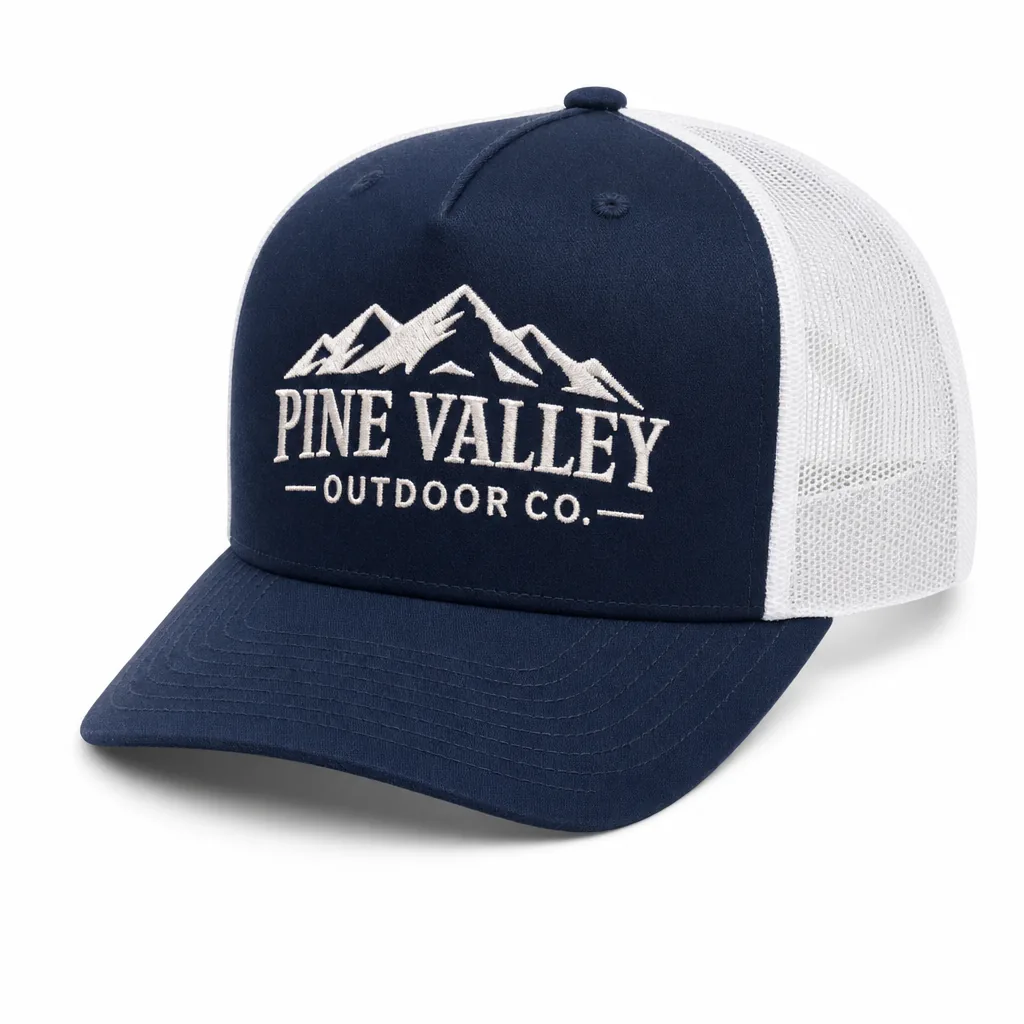
Custom Rope Hats: Manufacturing, Materials and Bulk Pricing (2026 Update) is one of the most-asked questions we receive from international buyers, and for good reason. With dozens of factories competing for your order and an alphabet soup of technical terms in every supplier quote, even experienced importers can feel lost. This guide consolidates what we have learned producing custom hats for clients in 40+ countries.
What a rope hat actually is (and isn't)
A rope hat is defined by one trim component, not by one silhouette: a braided cord running across the lower front crown, usually set 8-15 mm above the visor seam. In production, that cord is typically a 3-5 mm polyester braid or cotton-poly cord, heat-cut to stop fraying, then caught into the front panel-to-bill seam or side seam with a lockstitch and small bar-tacks at the ends. That means custom rope hats can be built on a 5-panel pinch-front, a camp-cap block, or a 6-panel structured crown with buckram; the rope is the constant, everything else is variable. The pattern changes crown break, embroidery field, and how straight the cord reads across the face. On the sewing line, rope alignment is where bad workmanship shows first: if the left-to-right deviation is more than about 2 mm, or the cord tension changes between hats, the whole cap looks crooked even when the panels and visor are otherwise clean.
What a rope hat is not: it is not automatically a snapback, not automatically high-profile, and not inherently a golf cap. The style moved through marina, fishing, and outdoor channels long before it got repackaged for pro shops and streetwear. That is why the material range is broad. A taslon or microfiber nylon body at 120-160 gsm gives the fast-dry, packable feel used in performance programs, while a washed cotton twill around 220 gsm gives a softer hand closer to a casual dad cap. Structure matters just as much as fabric: fused buckram on a 6-panel front will hold a 6,000-10,000 stitch Tajima, Barudan, or ZSK embroidery file far better than an unstructured low-profile body, which is usually better served by a woven patch, TPU badge, or heat-transfer logo. For custom rope hats, the hat body and decoration method have to be matched; otherwise the rope looks right but the crown collapses or the logo puckers.
Rope material and attachment construction
The rope is a low-cost trim, but buyers notice it before they notice the sweatband, and weak rope construction cheapens custom rope hats immediately. The most reliable default is 4 mm braided polyester cord in the 300D-450D range: it heat-sets cleanly, holds diameter after steaming, and gives more stable shade performance than nylon under UV and retail lighting. Twisted nylon rope still has a place on golf, marina, and retro resort programs because it throws more sheen, but it also absorbs more moisture, shows spiral torque if needle tension is uneven, and tends to flatten at the center front after wear. For color control, serious factories match to Pantone TCX and keep Delta-E below 1.5 on standard solids; metallic filament, mélange, and cationic blends are harder because sheen can create visible shift even when the spectro says the lot passed. Those yarns should be checked under both D65 and warm store light, not only at the lab bench.
Attachment method matters more than the rope spec itself. On properly made custom rope hats, the cord is inserted at the seam where the front crown meets the visor facing, not casually topstitched onto the outside after assembly. Using a positioning folder, pre-cut lengths, and heat-sealed ends, a stable line should hold the rope arc within +/-1.5 mm across the front curve; once operators feed cord by hand, 2-4 mm drift near the side panels becomes common, and that error is obvious from a few feet away. The rope ends should be buried in the seam allowance and locked with backstitching or a short bartack so they cannot creep out during wear, laundering, or carton compression in transit. Most field failures are gradual rather than dramatic: fuzzing from under-spec cord below roughly 250D equivalent, stitch bite damage at the exit points, or rope migration caused by inconsistent upper-thread tension. The right checkpoint is pilot-run testing: 20-cycle home-laundry simulation, dry and wet crocking, pull testing at both exits, and AQL 2.5 visual inspection alongside crown symmetry and bill shape.
Rope color strategy for retail aesthetics
The rope sets the visual hierarchy before anyone reads the front logo, so retail programs should treat it as a color-controlled trim, not an afterthought. For premium custom rope hats, tonal rope is usually the safest choice because it keeps attention on crown shape, fabric texture, and front decoration instead of creating a hard break above the visor. This works especially well on 10x10 brushed cotton twill at 240–280 gsm, peach-finish microfiber around 140–160 gsm, wool-blend melton in the 320–360 gsm range, and 75D or 100D polyester taslan where surface texture already carries enough visual information. A near-match is not good enough. Our standard practice is to approve crown fabric and rope against the same Pantone TCX target, then verify under D65 lighting and reject pairings that drift beyond roughly Delta-E 1.5–2.0, especially on navy, forest, charcoal, and black where mismatch reads immediately at retail. Tonal rope usually adds nothing or at most $0.01–$0.03 per cap versus a stock solid rope, but it consistently makes 3D puff, chain stitch, suede patches, and debossed faux leather patches photograph cleaner on PDPs and look more expensive on shelf.
Contrast rope remains the volume seller because it helps custom rope hats read from six to eight feet away on a peg wall, slatwall, or folded table. White on black, natural on forest, and cream on navy work because the rope color is anchored elsewhere: a fill stitch in the front logo, the underbill, visor sandwich, back loop label, or a side hit. When that link is missing, the rope looks random and cheap, even if the embroidery is strong. Most factories run standard 3 mm, 4 mm, or 5 mm polyester cord or cotton-poly cord, cut to length, heat sealed, and lock-stitched above the visor with no real labor premium if the line is set correctly. Two-color twisted rope moves the cap into fashion, golf, and licensed-product territory, but QC becomes less forgiving. Twist pitch, cord diameter, and end sealing have to stay consistent lot to lot; otherwise the variation fails first-glance inspection long before AQL 2.5 carton checks. In practice, a custom twist can add 3–7 days to trim sourcing and about $0.08–$0.25 per cap depending on MOQ, yarn denier, and whether the supplier already stocks that color combination.
5-panel vs 6-panel rope hat construction
Decoration tolerance is the real dividing line between 5-panel and 6-panel custom rope hats. A 5-panel crown gives you one uninterrupted front face, so wide artwork sits flatter and reads cleaner: 90-110 mm embroidery, a 65 x 45 mm woven patch, or a 1.2-1.5 mm molded TPU badge can be placed without fighting a center seam. On Tajima, Barudan, or ZSK heads, that matters more than most buyers expect. Once stitching crosses the front seam on a 6-panel crown, satin columns and fine outline details can shift 0.5-1.5 mm, and on lighter shells like 105-120 gsm taslan nylon or foam-backed polyester the seam telegraphs even harder during hooping and heat pressing. That is why golf, resort, marine, and promo programs usually land on 5-panel builds when the logo is the hero and the rope needs to track visually straight across the front edge. Material selection should follow use conditions, not whatever silhouette is trending on mood boards. For a matte, heritage look, 100% cotton twill at 260-300 gsm or brushed cotton canvas around 240 gsm gives better body and takes direct embroidery cleanly. For performance-driven custom rope hats, taslan nylon in the 70D-160D range, micro-peach polyester at 140-160 gsm, or poly-spandex blends with a C0 water-repellent finish recover better after packing and dry faster in humid climates. In production, 5-panel fronts also tolerate larger heat-transfer labels, sublimated patches, and high-density embroidery with fewer rejects because there is no center-front seam to throw off registration, puckering, or logo squareness after blocking.
A 6-panel rope hat wears rounder and closer to a traditional baseball cap because the split front and side-panel geometry distribute shape more evenly during blocking, top pressing, and brim setting. That makes it the safer pattern when the brief calls for a structured athletic profile rather than a flatter camp-cap look. The compromise is straightforward: usable logo width usually drops to about 55-85 mm, patch corners need to stay clear of the center seam, and any front-facing wordmark has to be digitized with seam travel in mind. Even a 2-3 mm rope drift at center front is obvious once the visor is stitched, especially on high-contrast braids like white-on-navy or red-on-khaki, so seam matching and rope tension control have to be checked at first-piece approval, not only at final inspection. The cost difference is not huge, but it is real. A 6-panel shell adds more sewing handling at panel joining, center-front matching, top-button setting, and crown balancing, so in bulk it commonly runs $0.20-$0.60 more per cap on orders above 3,000 units, assuming the same closure, visor board, sweatband, and decoration method. In our standard practice at CrownsForge, front-panel symmetry, crown height, rope placement, and visor curve are checked against the sealed sample, then finished caps are inspected to AQL 2.5 with special attention to seam grin, embroidery registration, and color consistency within Delta-E 1.5 to approved Pantone TCX references. Buyers choosing between 5-panel and 6-panel custom rope hats should decide first on logo format and fit profile; those two variables drive most manufacturing outcomes.
Fabric choices for rope hat programs
Fabric is the make-or-break decision in custom rope hats because the rope sits exactly where weak cloth starts to show distortion. For golf, fishing, and promo programs, 100% polyester is still the safest baseline: it holds crown geometry in transit, dries fast after sweat exposure, and stays more color-consistent across repeat POs than cotton. The spec I trust most is a 150-180 gsm woven polyester using 75D or 100D filament yarn; below that, the front panel starts reading limp after carton compression, especially on 5-panel mids. If the body is unstructured, a light mechanical stretch is acceptable, but on shaped crowns I would rather lock the face with 2.0-2.5 mm EVA backing or a laminated buckram front than chase softness. Peached poly can improve handfeel, but over-sanding weakens the surface and makes rope-channel puckering visible after sea freight. For FOB Ningbo or DDP U.S. shipments, polyester also gives tighter repeatability: a decent mill can usually hold lab dips to Pantone TCX within Delta-E 1.0-1.5, while heavily finished cotton often drifts more between dye lots.
Cotton twill earns its place when the brief is retail, lifestyle, or vintage rather than technical performance, but the construction has to be right. A real 16x12 or 20x16 twill at 220-280 gsm has enough body for rope placement, embroidery stability, and front-panel shape without making the cap feel boardy. It runs cleanly on Tajima, Barudan, or ZSK heads for both flat and 3D embroidery, and it accepts enzyme wash, pigment dye, and heavier garment finishing that polyester simply does not handle the same way. The downside is movement: cotton absorbs moisture, relaxes after sewing, and can shrink or skew 2-3% in finishing, so pre-production wash testing and pattern allowance are not optional if you want repeatable fit. The worst failures usually come from cheap poly-cotton blends trying to split the difference; saving $0.08-$0.18 per cap on fabric often creates panel torque, seam grin, and wandering rope lines that show up at final inspection. For higher-end custom rope hats, wool blends and 8W-11W corduroy add texture but need slower development because needle size, stitch density, and heat-press settings have to be retuned to avoid pile crush, strike-through, and color migration.
MOQ, lead time and pricing tiers
MOQ on custom rope hats is driven by trim complexity and approval risk far more than by sewing capacity. For a stock program in China, 100 pcs per SKU is the real floor, but that assumes one fabric, one rope color, one closure, and one decoration file. If you split into three colorways with separate Pantone TCX references, different woven labels, or revised embroidery punch files, treat each colorway as its own 100-piece MOQ. Below that level, factories are amortizing digitizing, sample-room setup, cutting loss, needle changes, carton marks, and trim over too few units, so FOB can jump 20% to 35% fast. In practice, 144 pcs per SKU is the first quantity where pricing starts to normalize for retail launches, while 288 or 576 pcs usually gives better trim yield on rope, sweatbands, visor board, and closures. That is also the point where factories are more willing to lock a stable FOB instead of padding for component overage and replenishment risk.
Lead time for custom rope hats is usually constrained by approvals and materials, not by whether the logo runs on Tajima, Barudan, or ZSK heads. A realistic schedule is 7 to 10 days for a pre-production sample, then 22 to 28 days for bulk after sample approval, deposit, and final trim booking. If you are using stock brushed cotton twill, polyester twill around 280 to 300 gsm, standard PE snaps, and stock black, white, or navy rope, you can often hit the short end of that range. Move into custom-dyed rope, recycled nylon, wool blends, sublimated undervisors, printed seam tape, or branded internal labels, and production usually extends to 28 to 35 days because lab dips, shade bands, and trim matching create more failure points than sewing. FOB pricing in 2026 typically lands at $3.80 to $6.80 per cap at MOQ quantities: about $3.80 to $4.60 for a basic 5-panel or 6-panel build with buckram front and one flat embroidery location, $4.90 to $5.80 for chino twill, corduroy, woven labels, or mixed 2D/3D embroidery, and $6.20 to $7.50 once you add melton wool blends, metal buckles, appliqué, silicone patches, or heavy inside branding. The rope trim itself usually adds only $0.25 to $0.45 per cap, but its placement is unforgiving; under AQL 2.5, even 2 to 3 mm height variation across the front crown is an obvious visual defect on contrasting colors.
Working with CrownsForge on rope hat programs
The fastest way to derail a rope-hat program is to improvise trim after the body pattern is approved. For commercial custom rope hats, two rope constructions cover most demand, but they behave very differently in sewing. A 4 mm braided polyester rope is the safer default for golf, resort, and collegiate product because the braid edge stays crisp, resists carton-rub fuzzing, and holds contrast separation better in white/navy or cream/forest combinations. A 5 mm twisted nylon rope gives a fuller, more upscale visual line, but it is less forgiving on insertion: feed tension has to be tighter, the front crown seam has to be cleaner, and stitch placement at the rope channel has to stay consistent or the line will drift 2-3 mm across the cap face. On a single sample that looks trivial; on 500 units under retail lighting, it reads as a defect. The real control point is pre-production, not final inspection. Rope color should be locked against shell fabric, visor fabric, and top button before bulk cutting, ideally to Pantone TCX for textiles or Pantone Coated when the buyer is matching hard trims and print collateral. In practice, commercial acceptance for rope is usually Delta-E 1.5-2.0, but nylon is harder to control than polyester because sheen shifts more under D65 versus warm store lighting. At CrownsForge, we normally treat custom rope colors as efficient from about 500 pcs per shade; below that, stock black, white, navy, red, and natural are usually the only sensible option unless the buyer is willing to absorb small-lot dyeing cost. A rope that misses by half a shade is often more visible than a visor underlay mismatch because it sits on the highest-contrast horizontal line on the hat.
Decoration problems on custom rope hats usually come from front-panel architecture, not bad artwork. Most 5-panel rope caps use a single uninterrupted front panel, which is why they are the safest platform for flat embroidery, chain stitch, sublimated patches, and lighter fill programs run on Tajima, Barudan, or ZSK heads. As a practical limit, once a front logo moves past about 8,500-9,000 stitches on a structured foam-backed 5-panel, you need to watch pull compensation, cap-driver pressure, and logo height together; otherwise small copy will tunnel toward the rope line and satin columns will start to crowd the curve above the visor. Approving embroidery on a flat strike-off does not prove it will sew cleanly on a formed cap body. The 5-panel versus 6-panel decision should be made at sampling, not after sales photos are already in circulation. A 5-panel silhouette gives cleaner presentation for badge graphics, script marks, and appliqué because there is no center seam cutting through the art. A 6-panel usually fits a broader head range and can reduce perceived crown height, but the center seam can split serif lettering, distort woven patches, and force logos 5-8 mm higher than intended to clear the seam and rope. That choice also affects logistics. Structured foam-front 5-panels often consume 8-12% more carton cube than comparable 6-panels, which matters when buyers are costing FOB versus DDP on volume programs. Sampling both shapes upfront costs far less than remaking a bulk order after approval photos expose crown twist, patch lift, or seam-driven logo distortion.
Frequently Asked Questions
How long does production take?
Sampling takes 7 to 12 days. Bulk production runs 20 to 30 days depending on quantity, fabric availability and decoration complexity. Inspection and packing adds another 3 to 5 days before shipment.
Can I order a sample before bulk production?
Yes. We strongly recommend approving a pre-production sample before mass production. Samples are charged at 35 to 60 USD each plus express shipping, fully refundable against confirmed bulk orders over 500 pieces.
What is the minimum order quantity (MOQ) for custom hats?
Our standard MOQ is 100 pieces per design and color, with sampling available from 1 piece. For complex multi-color logos or premium fabric upgrades, the MOQ can be lowered with a small per-piece surcharge.
Do you support sustainability certifications?
Yes. We work with GOTS organic cotton, GRS-certified recycled polyester, OEKO-TEX Standard 100 fabrics, and are BSCI and Sedex audited. Certification documentation can be provided per order.
What logo decoration techniques do you offer?
3D puff embroidery, flat embroidery, woven patch, leather patch, PVC patch, screen printing, sublimation, applique and laser etching, all in-house with no subcontracting.
What's the MOQ for custom leather patch hats no minimum?
When evaluating custom leather patch hats no minimum, the key considerations are construction quality, decoration capability, MOQ flexibility and lead time. Most ropes use 4mm braided polyester or twisted nylon cord, sewn into the seam between the crown and brim. The detail must be perfectly parallel to the brim curve and tightly stitched to prevent unraveling. Cheaply-made rope hats show the rope drift or fray after 10-20 washes. Rope tooling on file for 4mm braided polyester and 5mm twisted nylon. Custom rope colors available…
How does ordering custom hat embroidery near me work?
When evaluating custom hat embroidery near me, the key considerations are construction quality, decoration capability, MOQ flexibility and lead time. 5-panel rope hat is the golf and outdoor standard — single-panel front gives uninterrupted canvas for decoration, low-profile crown stays put under helmets or visors. 6-panel rope hat is more structured, used for streetwear capsules and premium brand drops. Rope hat MOQ 100 pieces per design/color (same as baseball cap). Sample 7-10 days, bulk 22-28 days. FOB pricing…
How does ordering custom embroidery patches for hats work?
When evaluating custom embroidery patches for hats, the key considerations are construction quality, decoration capability, MOQ flexibility and lead time. Most ropes use 4mm braided polyester or twisted nylon cord, sewn into the seam between the crown and brim. The detail must be perfectly parallel to the brim curve and tightly stitched to prevent unraveling. Cheaply-made rope hats show the rope drift or fray after 10-20 washes. Rope tooling on file for 4mm braided polyester and 5mm twisted nylon. Custom rope colors available…
How do I find a reliable custom hat manufacturer usa?
When evaluating custom hat manufacturer usa, the key considerations are construction quality, decoration capability, MOQ flexibility and lead time. 5-panel rope hat is the golf and outdoor standard — single-panel front gives uninterrupted canvas for decoration, low-profile crown stays put under helmets or visors. 6-panel rope hat is more structured, used for streetwear capsules and premium brand drops. Rope hat MOQ 100 pieces per design/color (same as baseball cap). Sample 7-10 days, bulk 22-28 days. FOB pricing…
Need a low-MOQ test order?
We help emerging brands launch with as few as 100 pieces. Premium fabric, in-house embroidery, retail-ready packaging.
Start a small orderRelated guides
Slouchy Beanie: Properties, Costs and How to Spec It Right
Read article →
Launching a Hat Brand: Marketing Playbook for the First 12 Months
Read article →
Embroidery Hats Machine: When to Use It, Costs, and What to Ask Your Factory
Read article →Sourcing custom hats does not have to be complicated. With the right manufacturing partner, clear specifications and a small upfront investment in sampling, you can launch a retail-quality product in 30 to 45 days.