
Esports Team Caps: Manufacturing Specs for Pro and Amateur Gaming Brands - Cost & MOQ Breakdown
Esports Team Caps: Manufacturing Specs for Pro and Amateur Gaming Brands - Cost & MOQ Breakdown is one of the most-asked questions we receive from international buyers, and for good reason. With dozens of factories competing for your order and an alphabet soup of technical terms in every supplier quote, even experienced importers can feel lost. This guide consolidates what we have learned producing custom hats for clients in 40+ countries.
Why esports headwear is the fastest-growing team-sport vertical
Caps outperform jerseys in esports because the inventory math is brutally better. A jersey line needs size curves, player-name forecasting, and markdown planning; an esports team cap usually runs as one-size with a plastic snap, hook-and-loop, or self-fabric strap, so the brand is betting on one core SKU instead of six to eight size variants. In FOB terms, a structured 6-panel snapback or washed cotton dad cap typically lands around $3.20 to $6.80 at 144 to 500 pieces in China, with retail still holding at roughly $24 to $38. That spread leaves room for marketplace fees, creator royalties, affiliate payouts, and event-channel discounts without choking gross margin. For fast-moving teams and creators, that matters more than hype: the cap is the item you can reorder in 288 or 500 units without tying cash up in the wrong size mix. Manufacturing is also more repeatable than cut-and-sew apparel, which is why the category scales fast. Once the crown profile, visor curvature, closure, and logo position are approved, a factory can hold the spec with relatively low variation across reorders. If the artwork is already digitized for flat satin stitch or 3D puff on Tajima, Barudan, or ZSK heads, repeat runs move quickly because the technical risk is known: stitch count, underlay, pull compensation, and thread color are already locked. In practice, that makes the esports team cap the safest drop item for tournament booths, sponsor kits, and limited online launches, especially when the brand needs a product that feels premium but does not carry the returns exposure of apparel.
The second reason growth is accelerating is that buyers treat gaming caps as daily streetwear, not one-weekend event merch. That changes the build spec. The styles that actually reorder are not novelty shapes; they are proven silhouettes in 260 to 280 gsm cotton twill, brushed chino twill, or 65/35 poly-cotton, because those fabrics hold embroidery cleanly, keep their shape on camera, and travel better in cartons than softer fashion caps with weak buckram. Short-run demand is also lumpy: 144, 288, and 500-piece repeats are common around roster announcements, playoff runs, and streamer collaborations, so a good factory has to manage consistency more than reinvention. That consistency comes from disciplined controls, not branding language. Pantone references should be locked before bulk, embroidery files should be tuned for density and compensation, and lot-to-lot fabric variation should stay within a commercially acceptable Delta-E tolerance so navy does not drift purple under studio lighting. The same production logic works from amateur teams to licensed organizations: a 100-piece trial might use a stock acrylic-wool snapback with a 6,000-stitch front logo, while a 3,000-piece program layers in woven labels, molded rubber patches, printed seam tape, hangtags, and individual polybags. The process itself barely changes—sample approval, fit confirmation, inline inspection, and final audit to AQL 2.5—so brands can scale volume without rebuilding the manufacturing playbook each season.
Sublimation vs embroidery for esports cap branding
Use sublimation when the artwork behaves like a jersey graphic, not a badge. If the design includes gradients, glow effects, halftones, topo-map textures, or sponsor side panels, embroidery will flatten it fast; thread cannot reproduce smooth tonal transitions, and outlines below about 0.8-1.0 mm usually close up after run-in. A tournament-use esports team cap for sublimation is typically built in 140-180 gsm polyester interlock, microfiber, or birdseye mesh with a moisture-wicking sweatband, low-profile buckram, and light front support so the crown stays clean through heat transfer. On a cut-and-sew 5-panel or runner silhouette, sublimation can cover crown panels, visor top, undervisor, taping, and even a printed sandwich bill, which gives far more usable branding area than a standard front-logo cap. In production, we normally approve a physical strike-off and hold color to about Delta-E 2.0-3.0 against the master artwork; that matters when the cap has to sit beside a Pantone-led jersey or sponsor kit without looking visibly off-shade under arena lighting. The limitation is fabric chemistry, not creativity. Sublimation only performs properly on white or very light polyester, so it is the wrong process for black wool-blend snapbacks, 260-320 gsm brushed cotton twill, or heathered yarn-dyes where color yield drops and edges lose definition. Embroidery still wins when perceived value matters more than graphic complexity. A structured 6-panel esports team cap in 80/20 acrylic-wool or heavy cotton twill can take flat embroidery or 3D puff cleanly, and a well-digitized front logo under roughly 8,000-10,000 stitches will usually hold up better than print in abrasion and repeated handling. The tradeoff is machine time and logo physics: once the design moves past 6-9 thread colors, relies on neon blending, or includes knockouts under 1.0 mm, even a good Tajima, Barudan, or ZSK setup starts compromising underlay, pull compensation, and stitch angle. In real programs, the split is straightforward: sublimated player-kit caps at about 100-150 pieces per design and roughly $4.20-$7.50 ex-factory, embroidered fanwear caps at 144-288 pieces and about $5.80-$11.00 depending on fabric, closure, stitch count, and whether the front logo needs 3D foam.
Performance vs lifestyle: two product lines for one team
Split the range at tech-pack stage; a player-worn esports team cap and a fanwear SKU should not share the same BOM, even if the logo set is identical. For the performance line, 140-160 gsm polyester microfiber or interlock is the reliable window: light enough for four- to six-hour wear blocks, but not so thin that the crown collapses under a headset band. Specify wicking sweatband tape, 3-5 mm laser-cut side vents only where panel geometry allows, and full-panel sublimation before cutting so sponsor logos stay crisp without the pressure points you get from dense embroidery on the front crown. On a standard 6-panel build with hook-and-loop or low-profile snap closure, China FOB is typically $4.20-6.80 at 300-500 pieces; silicone heat-transfer badges, printed underbrims, and antimicrobial sweatbands push the top end. For camera work, I would hold sublimated color to Delta-E 2.0-3.0 against approved artwork, because saturated reds and violets drift visibly under LED stage lighting and broadcast white balance.
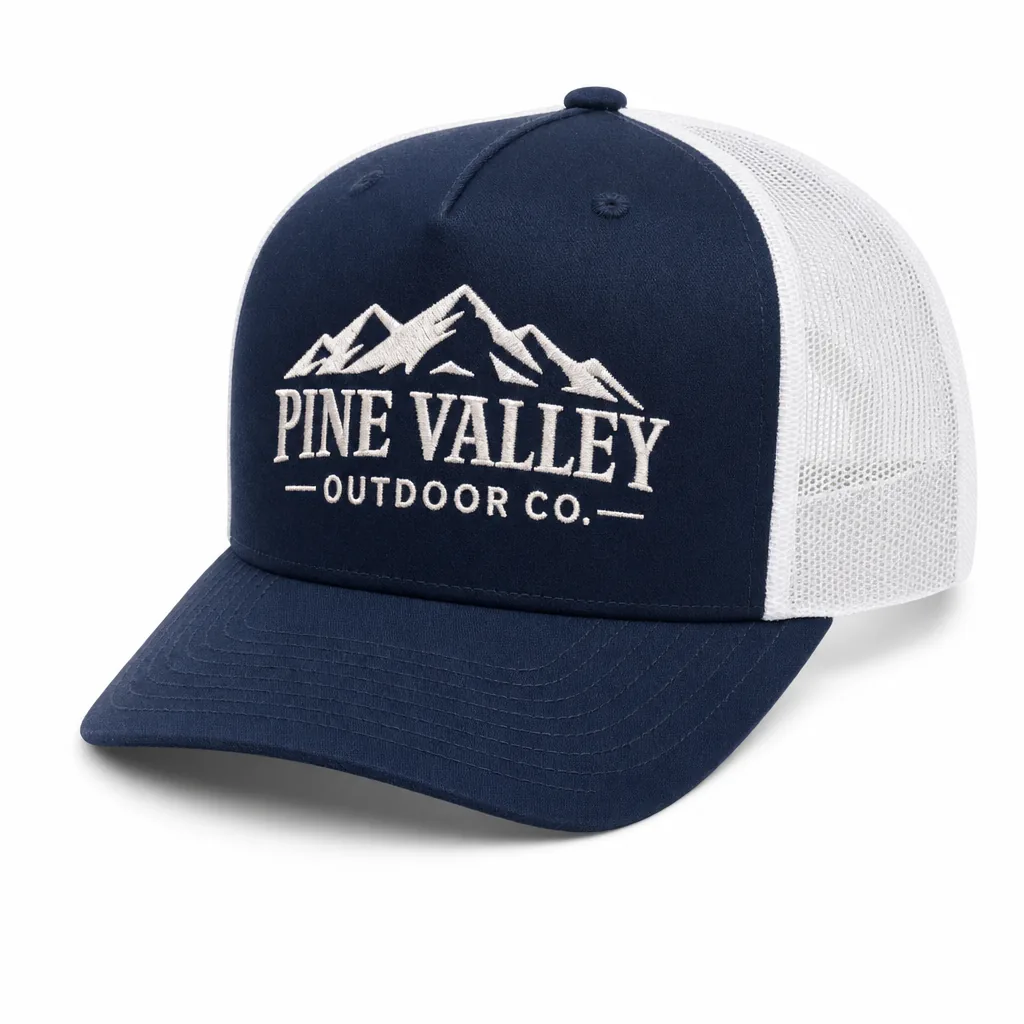
The lifestyle esports team cap should read heavier and more permanent the moment it comes out of the polybag. Use 260-320 gsm brushed cotton twill or 65/35 cotton-poly twill on a structured 6-panel crown with 0.4-0.6 mm buckram, a pre-curved PE visor, and front logo embroidery run on Tajima or Barudan heads, usually in the 8,000-14,000 stitch range depending on fill and underlay. This is where perceived value is built: 3D puff on the primary mark, flat side embroidery, woven flag labels, interior seam tape matched to approved Pantone TCX references, and a clean 6-row visor stitch count that keeps the brim looking premium at retail. FOB generally lands at $3.80-6.20 for 300-500 pieces, often slightly below the performance version because embroidery control is simpler than all-over sublimation while the handfeel is richer.
Treat the two lines as a merchandising ladder, not competing SKUs. Performance caps solve heat buildup, sweat management, and headset comfort for players, coaches, and tournament staff; lifestyle caps are for supporters who want a streetwear silhouette they will keep wearing after the event cycle ends. The smart move is to keep logo architecture and trim language consistent while changing fabric, structure, and decoration enough that the upgrade path is obvious from a few feet away. Our standard practice is to standardize hidden trims where possible—same buckle mold, same woven label size, same internal branding layout—because it reduces sampling rounds and keeps MOQs cleaner: about 144 pieces per colorway for embroidered styles and 200-300 pieces for sublimated runs. That is how you build an esports team cap program that serves both roster utility and fan retail without muddying the product line.
Limited-edition tournament drops: MOQ and timing
For a limited-edition tournament drop, the practical MOQ for an esports team cap is usually 300 to 500 pieces, not because factories like round numbers, but because the fixed setup costs stop being punitive at that level. Below 300, embroidery digitizing, strike-offs, woven labels, inner tape printing, export carton marks, and documentation can add $1.20 to $2.00 per unit before you have paid for better trims. Above 500, most teams start overbuying event-specific stock that is hard to move after the finals. In this band, a basic 5-panel trucker using 260-280 gsm polyester foam, polyester mesh, flat embroidery, and a standard PP snap closure typically lands around $6.20 to $7.10 FOB China. A more premium 6-panel esports team cap in 15% wool / 85% acrylic, with buckram front, 3D puff embroidery, woven loop label, printed seam tape, and satin undervisor, usually sits closer to $8.40 to $9.80 FOB. Decoration count moves margin faster than most buyers expect. A front logo only is one thing; add a side sponsor hit, rear wordmark, and underbill print, and you can easily add $0.45 to $1.10 per cap, plus extra QC time because registration and stitch density become less forgiving on curved panels. If the artwork includes tournament dates, host-city callouts, patch-specific player tags, or a seasonal sponsor lockup, treat it as a single-event SKU. Once the bracket is over, leftover inventory has almost no recovery value, especially if the cap is tied to a roster that changed mid-season or a sponsor package that expired.
A 30-day turnaround is realistic for tournament drops, but only when approvals are disciplined and artwork is frozen early. In a clean run, allow 2 to 3 days for tech pack review, fabric confirmation, and embroidery file cleanup; 3 to 5 days for a preproduction sample or embroidery strike-off; 12 to 16 days for bulk cutting, sewing, Tajima or Barudan embroidery, finishing, and packing; then 3 to 7 days for air freight depending on the lane and customs release. The real risk is not line capacity. It is preproduction drift. If a sponsor swaps logos, a player tag changes, or Pantone references come late, the factory can lose a week re-digitizing files, remaking labels, and re-approving samples. For fixed-date launches, keep the specification tight: one crown fabric, one closure, one visor material, and no more than three decoration positions. That is the difference between a manageable program and a rush-order mess. On visible panels, a sensible target is shade control within Delta-E 2.0 to 2.5 against the approved Pantone reference, with final inspection at AQL 2.5. On a 400-piece shipment, DDP air freight often lands around $1.20 to $2.10 per cap if carton dimensions are controlled; oversize visors, bulky retail boxes, or heavy metal trims can push the volumetric weight high enough to erase the margin you thought you saved on production.
Licensing and IP protection for esports IP
Lock the license terms before sampling, because leakage usually comes from production assets, not the master logo. For an esports team cap, the agreement should list every controlled file and tool: AI/PDF vectors, Pantone C or TCX references, Tajima DST or Barudan DSB embroidery files, woven label artwork, heat-transfer films, silicone or PVC patch molds, and any player, streamer, or sponsor graphics tied to the drop. Add explicit ownership language for derivative assets created during development, prohibit subcontracting without written approval, and ban resale of failed strike-offs, canceled overruns, and branded seconds through domestic wholesale or online side channels. The biggest exposure is usually trims. Just 200 to 500 leftover woven labels, inside seam tapes, stickers, or hangtags are enough to build gray-market units if matching shells are available. The practical control is a destruction-or-return clause for surplus branded trims, backed by a signed scrap log, dated photos, and PO-level reconciliation of issued versus consumed components.
The NDA is meaningless if file handling on the factory side is loose. Brand assets should sit on access-controlled servers with role-based permissions, because digitizing, sampling, production planning, and QA do not need the same visibility. On the floor, operators need a style code, stitch count, needle sequence, panel construction, and packing spec; they do not need a full-color licensed tech pack clipped to a line board or shared in a WeChat group. That matters even more when one esports team cap carries publisher-owned game art, a non-endemic sponsor logo, and a creator mark on the same style. USB transfer between embroidery, sewing, and packing is still common in small workshops, and that is exactly where IP systems break down.
Most licensing failures are execution failures. The logo may be approved, but the delivered cap still breaches the license because color, scale, placement, or channel controls drifted in production. Lock approvals to measurable standards: Pantone C or TCX codes, Madeira or Gunold thread shade mapping, base fabric swatches, PVC patch Shore A hardness where relevant, and Delta-E tolerances under 1.5 for dyed fabric and under 2.0 for non-critical trims. For embroidery, the approval record should include stitch count, fill density, underlay type, satin border width, and final logo size in millimeters. Keep licensing approval separate from workmanship approval and archive both against the PO. AQL 2.5 will catch loose threads, soiling, and count shortages, but it will not catch a 3 mm oversize sponsor mark, a wrong copyright line, or an event-only side patch shipped into the wrong sales channel. Those restrictions need to appear on the PO, carton marks, and packing list, not buried in email.
Sustainability is now a buyer concern in esports too
Younger buyers are no longer satisfied with a vague recycled-fabric claim on an esports team cap; they want traceable content that survives a compliance review. The baseline spec we see most often is 100% rPET performance polyester made from post-consumer bottles, usually 140-180 gsm for soft unstructured 6-panel caps and 200-240 gsm for structured crowns that need recovery after carton compression. The weak point is consistency. Recycled filament lots can vary in luster, hand feel, and dye uptake more than virgin polyester, which is why a serious program should request mill swatches from at least two approved lots, lab dips matched to Pantone TCX, and a color tolerance of Delta-E 1.5 or tighter under D65 lighting. If the cap has sponsor colors that need to read correctly on camera, that tolerance matters under LED stage wash and broadcast exposure.
A sustainable claim also falls apart quickly if only the shell fabric is recycled. Buyers should write the BOM line by line: shell, sweatband, seam tape, buckram, visor board, closure strap, hangtag, and polybag spec. In practice, recycled supply chains usually push the MOQ for a custom esports team cap to around 144-300 pieces per colorway if you want one verified fabric lot, stable embroidery on Tajima or Barudan machines, and trims sourced through the same documentation chain. Mills should be able to issue GRS transaction certificates, while the factory should be able to show current sedex-audit-cap-supplier-guide.html">BSCI 2.0 or Sedex SMETA 4-Pillar audit records, not just a marketing claim. The cost increase is real but modest: rPET shell fabric typically adds $0.18-$0.45 per cap at mid-volume, and FSC-certified hangtags, reduced-gauge polybags, plus recycled paper packaging add another $0.08-$0.22. On a retail cap at $28-$35, the larger commercial risk is an environmental claim you cannot substantiate six months later.
Frequently Asked Questions
Can I order a sample before bulk production?
Yes. We strongly recommend approving a pre-production sample before mass production. Samples are charged at 35 to 60 USD each plus express shipping, fully refundable against confirmed bulk orders over 500 pieces.
Do you support sustainability certifications?
Yes. We work with GOTS organic cotton, GRS-certified recycled polyester, OEKO-TEX Standard 100 fabrics, and are BSCI and Sedex audited. Certification documentation can be provided per order.
What logo decoration techniques do you offer?
3D puff embroidery, flat embroidery, woven patch, leather patch, PVC patch, screen printing, sublimation, applique and laser etching, all in-house with no subcontracting.
What file format should I send for my logo?
Vector files (AI, EPS, PDF) are ideal. High-resolution PNG or JPG at 300 dpi on transparent background works as a fallback. Provide Pantone color references for accurate reproduction.
What is the minimum order quantity (MOQ) for custom hats?
Our standard MOQ is 100 pieces per design and color, with sampling available from 1 piece. For complex multi-color logos or premium fabric upgrades, the MOQ can be lowered with a small per-piece surcharge.
What's the MOQ for custom baseball cap no minimum?
When evaluating custom baseball cap no minimum, the key considerations are construction quality, decoration capability, MOQ flexibility and lead time. Major esports orgs now sell more merchandise than mid-tier traditional sports teams. Hats are the entry-level product (impulse purchase, low size complexity, high margin). Sublimation allows full-color jerseys-style graphics that match team kit. Embroidery limits color count but signals premium retail. Most esports brands use both — sublimation for performance line,…
What's the MOQ for custom bucket hat no minimum?
When evaluating custom bucket hat no minimum, the key considerations are construction quality, decoration capability, MOQ flexibility and lead time. Major esports orgs now sell more merchandise than mid-tier traditional sports teams. Hats are the entry-level product (impulse purchase, low size complexity, high margin). Sublimation allows full-color jerseys-style graphics that match team kit. Embroidery limits color count but signals premium retail. Most esports brands use both — sublimation for performance line,…
What's the MOQ for custom embroidered baseball caps no minimum?
When evaluating custom embroidered baseball caps no minimum, the key considerations are construction quality, decoration capability, MOQ flexibility and lead time. Performance line: polyester moisture-wicking, sublimated, $25-35 retail. Lifestyle line: cotton twill structured, embroidered, $35-55 retail. Cross-sell at tournament events. Major esports orgs now sell more merchandise than mid-tier traditional sports teams. Hats are the entry-level product (impulse purchase, low size complexity, high margin).
What should I know about wholesale baseball caps made in usa?
When evaluating wholesale baseball caps made in usa, the key considerations are construction quality, decoration capability, MOQ flexibility and lead time. Major esports orgs now sell more merchandise than mid-tier traditional sports teams. Hats are the entry-level product (impulse purchase, low size complexity, high margin). Sublimation allows full-color jerseys-style graphics that match team kit. Embroidery limits color count but signals premium retail. Most esports brands use both — sublimation for performance line,…
What team does Caps play for?
Rasmus Borregaard Winther (Danish pronunciation: [ˈʁɑsmus ˈboːɐkɒˀ ˈve̝nˀtɐ] ; born 17 November 1999), better known by his in-game name Caps, is a Danish professional League of Legends player for G2 Esports.
What is the meaning of team cap?
Team cap meaning, in plain terms A team cap is a cap designed for a group, often customized with: a team logo or emblem. team name or slogan. colors that match your identity. names, numbers, or roles (optional, but extra cool)
How many people can be on an esports team?
The standard is five active players, such as for League of Legends teams. That said, there is pretty much no limit on how many back-ups and non-starters that a team can keep. Back to the point: the structure of an eSports team varies. There is no single layout, just like traditional sports.
How much do esports teams get paid?
As of Jun 23, 2026, the average annual pay for an Esports Team in the United States is $72,110 a year.
What team does Caps play for in LOL?
Rasmus Borregaard Winther (Danish pronunciation: [ˈʁɑsmus ˈboːɐkɒˀ ˈve̝nˀtɐ] ; born 17 November 1999), better known by his in-game name Caps, is a Danish professional League of Legends player for G2 Esports. He is widely regarded as the greatest Western League of Legends player of all time.
How good are G2 caps?
With Perkz moving to the bot lane to make room for the best player in the West, Caps was quick to show the title was well deserved with a dominating year long performance and winning MVP for the LEC Spring Split and MSI 2019. Moreover, he went on to make history as the first Western back-to-back Worlds finalist.
Ready to start your custom hat project?
Send us your tech-pack, sketch or even just an inspiration photo. We will respond with a detailed quotation and digital mock-up within 24 hours.
Request a free quoteRelated guides
First Custom Hat Order: 10 Mistakes That Cost First-Time Buyers Money
Read article →
Buckram vs Foam vs Unstructured: Cap Crown Construction Compared
Read article →
Country Hats For Men Export Shipping Checklist for Custom Hat Buyers
Read article →We hope this guide demystifies esports team caps: manufacturing specs for pro and amateur gaming brands - cost & moq breakdown and helps you move forward with confidence. If you have questions specific to your project, our English-speaking sales engineers are one message away.