
Custom Golf Hats: A Manufacturer's Guide to Performance Headwear - Cost & MOQ Breakdown - Cost & MOQ Breakdown - 2026 Buyer's Guide - Supplier Checklist

Custom Golf Hats: A Manufacturer's Guide to Performance Headwear - Cost & MOQ Breakdown - Cost & MOQ Breakdown - 2026 Buyer's Guide - Supplier Checklist is one of the most-asked questions we receive from international buyers, and for good reason. With dozens of factories competing for your order and an alphabet soup of technical terms in every supplier quote, even experienced importers can feel lost. This guide consolidates what we have learned producing custom hats for clients in 40+ countries.
The golf-specific silhouettes that dominate retail and tournament programs
The volume leader in custom golf hats is still the 6-panel performance cap with a pre-curved visor, typically cut in 110-140 gsm polyester stretch woven, 92/8 poly-spandex dobby, or lightweight taslon with a C0 or C6 water-repellent finish. It dominates because one silhouette can serve tournament uniforms, pro-shop replenishment, and corporate golf outings without generating fit complaints or looking too promotional on shelf. The specs that actually move units are practical, not decorative: laser-perforated side or rear panels for airflow, a 30-40 mm moisture-wicking sweatband, low-luster UPF 30+ or UPF 50+ fabric, and a PE brim board that holds curvature after export packing at 60-72 pcs per master carton. On fit, the commercial sweet spot is a low-to-mid profile block with an 8.5-9.0 cm crown height; go taller and the cap starts reading as lifestyle headwear rather than golf. For closures, event programs usually stick with hook-and-loop or micro Velcro for broad size tolerance, while retail accounts generally choose tuck straps, micro-injected tabs, or slim snap systems because they look cleaner in a pro shop.
Decoration is where a golf cap either stays wearable for 18 holes or turns into dead stock. Dense satin fills, stacked sponsor lockups, and oversized crest embroidery on the front panel add thread mass and stiffness, especially on structured shells with fused backing; by the back nine, that forehead panel can feel like cardboard. For lightweight custom golf hats, the better solution is usually a welded TPU patch, thin silicone badge, HD heat transfer, or a low-stitch-count run stitch plus partial fill. If embroidery is required, Tajima, Barudan, or ZSK heads running 40 wt polyester thread are standard, but thread count and underlay need to be controlled aggressively to avoid tunneling and puckering on 105-130 gsm performance fabrics. Serious retail programs should also lock color approval properly: Pantone-matched thread or badge approval against lab dips, with Delta-E under 1.5 on key brand colors, plus sweat and crocking tests after decoration. The faster-growing silhouettes are the low-profile 5-panel and rope cap for club merchandise and member-guest drops, while bucket hats and visors remain profitable niche lines; they should be quoted separately because their MOQ is usually 300-500 pcs per colorway versus roughly 144 pcs for a standard cap, driven by lower cutting yield, brim construction, and more specialized sweatband assembly.
Why golf demands performance fabric (not cotton twill)
Cotton twill is the wrong starting point for custom golf hats because it holds moisture inside the fiber instead of pushing it across the surface to evaporate. A brushed cotton twill shell at 220-260 gsm can absorb roughly 7-10% of its own weight in moisture during an 18-hole round, and once the sweatband saturates, the whole cap starts to fail the same way: the crown gains weight, seam tape stays damp, the visor edge softens, and light colors show salt migration. That may pass for a promotional cap worn at a trade show; on a golf course it reads as poor product engineering. A proper golf shell is usually 100% polyester microfiber, stretch woven polyester, or a poly-nylon blend in the 110-150 gsm range, commonly built from 75D to 150D yarns with a C0 or C6 wicking finish. Polyester itself absorbs well under 1% moisture by weight, so the drying mechanism is surface evaporation rather than fiber retention. Construction is where many so-called performance caps still miss the mark. If the cap uses a terry cotton sweatband, heavy buckram, and a dense 12,000-stitch front logo, you have already blocked airflow at the hottest part of the head. Better-performing custom golf hats use perforated side or rear panels, polyester or poly-spandex sweatbands, lighter fusible support, and trims that do not trap heat. Decoration needs the same discipline: TPU patches, welded silicone transfers, or low-mass woven labels preserve breathability better than oversized embroidery on a structured front. On our production floor, we also flag white, stone, and pastel programs for perspiration colorfastness and lightfastness checks before cutting, because if a supplier cannot discuss denier, moisture-management finish, or a commercial Delta-E tolerance of 1.0-1.5 between panels, they are usually selling generic headwear, not golf-specific product.
Dry time is not marketing language; it affects repeat wear, packing, and retailer complaint rates. In 70%+ summer humidity, a cotton cap that leaves the course wet at 2 p.m. can still feel clammy in a golf bag that night, which is exactly how odor, salt marks, and shape loss start. A properly finished polyester performance cap typically dries far faster because the fiber does not retain water internally; with normal indoor airflow, it can recover overnight in a hotel room instead of staying damp through the next tee time. That is why serious resort, club, and tournament programs now spec performance poly, poly-nylon, or stretch woven fabrics with 3-8% elastane rather than classic cotton twill. Buyers should ask for the real build sheet, not the phrase “moisture-wicking” on a sales PDF. The useful questions are fiber content, fabric weight in gsm, yarn denier, sweatband composition, finish type, and whether the mill can provide test data for colorfastness to perspiration and light. For lighter shells under 120 gsm, I also want seam slippage checked, because wrong SPI, needle size, or seam construction can distort panels after only a few wears. Venting details matter too: laser-cut holes and ultrasonic perforation work well, but only when they are positioned away from seam allowance, front support tape, and logo placements. If a factory cannot answer those points in specific terms, they are probably equipped for general caps, not engineered custom golf hats.
UPF sun protection for golf programs
The costly mistake in sun-heavy golf programs is assuming any lightweight polyester automatically qualifies as sun-protective. For custom golf hats, common shells like 110-140 gsm microfiber polyester, 75D-150D mechanical-stretch poplin, and fine-gauge poly twill often test around UPF 30-40 simply because the weave is tight. That is not the same as a supportable UPF 50+ claim. Buyers shipping into Australia or high-UV U.S. markets like Arizona, Florida, and Hawaii increasingly want a lab report tied to the exact fabric lot, not a generic mill declaration. The weak points are almost always the same: optic white crowns, pastel shades, laser-perforated side panels, and mesh inserts that improve airflow but leak too much UV once tested. If you need consistent UPF 50+, lock the fabric construction early and treat ventilation as a controlled compromise, not a styling afterthought. A 130 gsm plain-weave polyester in navy may pass with margin, while the same yarn count in white or with laser perf can miss by several points. In production, changing shell fabric, sweatband substrate, sandwich insert, or underbill after fit approval is exactly how a clean sample turns into a compliance issue. I would rather specify a proven mill-treated shell with a UV-absorber finish than gamble on an ultra-breathable fabric with no buffer, because small changes in cover factor, dye depth, and panel openness move UV transmission faster than most buyers expect.
Certification is what makes the UPF spec defensible to procurement, legal, and retail compliance teams. AS/NZS 4399 remains the benchmark most serious buyers recognize for sun-protective headwear, and SGS, Intertek, or Bureau Veritas typically charge $300-$500 per fabric/SKU combination for a report, depending on turnaround and whether wet-state and conditioned testing are included. One report rarely covers an entire line. If your custom golf hats use three body fabrics across five colorways, every meaningful change in construction, perforation pattern, or shade can affect test results; dark colors generally perform better than light ones, and a solid crown panel is not equivalent to a laser-perf panel just because both are 100% polyester. There is a direct MOQ and costing impact, so UPF has to be priced at development stage, not added after sampling. A mill-applied UV finish usually adds about $0.18-$0.45 per cap at 1,000-3,000 pieces; recycled polyester with moisture management and C0 DWR can push the premium higher. Mills commonly require 300-500 meters per color for treated fabric, which is where small team programs lose flexibility. The practical route is to certify one core shell in three or four commercial colors, then vary the look through flat embroidery, 3D puff on Tajima or Barudan heads, TPU patches, or closure trims. Our standard practice is to freeze the exact mill lot, Pantone-approved shade, and panel map before testing, because a post-approval fabric swap can make the certificate useless in the event of a claim.
Moisture-wicking sweatband: the detail buyers don't notice until summer
For custom golf hats meant for July play, the sweatband is the comfort part buyers under-spec most often. A standard brushed cotton band at 180-220 gsm can feel acceptable in a showroom, then fail on course in 30-35°C heat and 70%+ humidity; on dark crowns we regularly see visible saturation in 45-75 minutes. Once cotton loads up, it stops moving moisture, holds heat against the forehead, and leaves salt ghosting along seam tape and front panel joins. A better spec is a warp-knit or circular-knit polyester-elastane band at roughly 140-180 gsm with 8-12% spandex, using channel yarns or a durable wicking finish to spread sweat laterally across the band instead of letting it pool at the front. On performance-oriented custom golf hats, that upgrade matters more than decorative trim because the golfer is in constant contact with that forehead zone for four to five hours, and discomfort there gets blamed on the whole hat.
The cost increase is minor relative to the wear difference. In bulk production, a genuine moisture-wicking sweatband typically adds about $0.15-$0.28 per cap, with the higher end tied to custom dyeing against a Pantone TCX reference, tighter Delta-E control, or recycled yarn content. The mistake is pairing a technical shell—polyester microfiber, recycled performance twill, or 92/8 poly-spandex with laser-perforated side panels—with a basic cotton band inside. The shell dries faster than the skin-contact area, which is bad product engineering. Better bands also need stable recovery and clean overlock attachment; otherwise you see puckering at the front base, twisted joins at the back seam, and deformation after a few wash cycles.
Not every "performance" band is real moisture management. The stronger versions use fine-denier polyester filaments with mechanical capillary channels or a durable chemical finish, and they should be tested in the finished cap, not as a loose swatch. Cheap substitutes often use smooth polyester with no lasting treatment, so they feel slick in hand but collapse under real use, especially when the front panel has 0.8-1.2 mm buckram, heavy 3D embroidery, or a laminated logo patch that already restricts airflow. CrownsForge typically checks fiber content, gsm tolerance, stretch recovery, and wash performance after five home-laundry cycles, then inspects finished caps under AQL 2.5 for puckering, twisted sweatband joins, and shade variation against approved lab dips. If you're qualifying suppliers for custom golf hats, those details tell you far more than a catalog note that says "athletic sweatband."
Rope hats: why this silhouette became the golf hero category
Rope hats became golf’s hero silhouette because they solve the two problems that matter most in custom golf hats: they look premium from a merchandising distance, and they sell across age groups without reading too country-club or too skate. The visual mechanic is simple but effective: a braided cord, usually 5 to 7 mm diameter, set roughly 6 to 8 mm above the visor seam creates a hard horizontal break that makes the cap recognizable from 3 to 5 meters away on a pro-shop wall. That same break leaves a clean front billboard, so a mid-profile 5-panel or relaxed 6-panel can take 3D puff embroidery, flat fill, a 0.8 mm TPU patch, or a woven badge without fighting center seams or awkward crown curvature. On the sewing line, that matters. A rope cap gives buyers a distinct silhouette without paying for extra pattern pieces, seam-sealed joins, contrast under-visors, or other operations that increase handling time and reject risk. The silhouette only became a true golf category once fabrics improved. Older rope caps were built like resort souvenirs: heavy brushed cotton, hard buckram, poor recovery after bag compression. Current golf specs are much more disciplined—92/8 or 95/5 polyester-spandex at 140 to 180 gsm, perforated microfiber around 110 to 130 gsm, or bonded mesh side panels where airflow is needed. A good front panel needs controlled structure, not a cardboard face, so we usually spec 0.6 to 0.8 mm EVA or light laminated buckram only in the front panel; overbuild it and the crown starts tenting after carton pressure or cart-bag storage. The rope also helps smaller artwork read better, framing a 55 to 60 mm emblem cleanly, while color matching on contrast rope should realistically be held within Delta-E 1.5 to 2.0 against approved Pantone TCX references.
Rope hats also win on sourcing economics. They look current enough to support a higher retail than a basic six-panel promo cap, but they do not carry the cost stack of highly technical performance headwear. There is no ultrasonic welding, no seam taping requirement, no folded-edge binding, and far less pattern inefficiency than ultralight running caps. In practical terms, MOQ stays manageable at 100 pieces per color if the program is disciplined: one shell fabric, one rope spec, one closure, and one embroidery file. Once a buyer adds split color crowns, molded trims, multiple rope colors, or mixed decoration methods below 144 units, waste and setup time rise fast. In Yiwu production, a performance rope cap with snapback closure and a 5,000 to 8,000 stitch logo typically lands around $3.40 to $5.60 FOB China at 100 to 500 units; laser perforation, silicone heat transfers, welded taping, or custom seam tape usually pushes it into the $6.50 to $8.80 range. Manufacturing consistency is the other reason this silhouette became the safe bet in custom golf hats. Rope programs run cleanly on standard cap lines, and decoration is easier to hold on Tajima, Barudan, or ZSK heads because the front panel is flatter and less interrupted than many hybrid sport caps. The main failure points are predictable: rope alignment drifting more than 2 mm from spec, weak side-seam tacking, visor asymmetry, and poor crown shape recovery after packing compression. Our standard practice is to inspect to AQL 2.5 with specific checks on rope attachment security, stitch count, closure function, embroidery registration, and shape retention after a 24-hour carton press test. Compared with trend-heavy silhouettes, rope hats deliver stronger shelf recognition with fewer production variables, fewer fit complaints, and less MOQ pain for club shops, tournament merch, and DTC launches.
Tournament + club merchandise compliance and timing
Lead time is the first place tournament programs break, and the miss usually happens before sewing starts. For custom golf hats tied to an invitational, member-guest, or sponsor activation, lock artwork 90 to 120 days before the event if you want normal fabric choice, one clean sample round, and ocean freight instead of expensive air splits. A workable path is 5 to 7 days for fabric submits or lab dips, 2 to 3 days for embroidery digitizing, 7 to 10 days for a pre-production sample, and 25 to 35 days for bulk cutting and sewing after approval. Add 5 to 8 days for molded TPU patches, laser-cut perforation, custom metal closures, or printed seam tape because those components sit outside the main sewing line and create extra approval points. Multi-logo layouts also need real color control. Use Pantone TCX for body fabric, Pantone Solid Coated for printed packaging and paper trims, and set acceptable Delta-E at 1.5 to 2.0 for labels, heat transfers, and hangtags. Phone-photo approvals are not a color standard, especially on white, stone, and pastel caps where even a small shade drift is obvious under clubhouse lighting.
Club retail follows a different cost curve than event merchandise. Tournament orders are usually 1 to 3 SKUs at 144 to 500 pieces each, packed by sponsor count, foursome gift set, or registration batch; pro-shop programs are more fragmented, often 6 to 12 SKUs with only 72 to 144 pieces per colorway. That drives cost up because every color needs its own marker, trim issue, embroidery setup, carton segregation, and often separate UPC or size sticker application. A basic six-panel performance cap in 110 to 130 gsm microfiber or lightweight poly with woven eyelets and flat embroidery typically falls around $4.20 to $6.50 FOB China at 300 to 500 pieces. A higher-spec custom golf hats program with laser-perforated side panels, molded patch, moisture-wicking sweatband, custom inner labels, and retail swing tags is more realistically $7.50 to $10.80 FOB. The compliance side is mostly about discipline: logo placement tolerance within plus or minus 2 mm, visor curve and crown height signed off on the tech pack, embroidery thread called out by Madeira or Gunold code, and inspections run to AQL 2.5. On licensed club retail, buyers should verify sedex-audit-cap-supplier-guide.html">BSCI 2.0 or Sedex SMETA 4-Pillar status before deposit, because a passed sample means nothing if the factory cannot clear procurement onboarding.
Working with CrownsForge on golf programs
Golf programs get expensive when a supplier treats every style as a fresh development project. The practical advantage on custom golf hats is a prequalified performance library: 100% polyester twill at 140-180 gsm for structured crowns, micro-perforated polyester at 115-135 gsm for hot-weather styles, and 4-way stretch shells with 8%-12% spandex when the fit brief is closer to premium on-course headwear. Not every fabric will tolerate laser venting, fused buckram, seam tape, and a pre-curved visor without warping the front panel or twisting the side seams. CrownsForge’s standard practice is to flag those risks before sampling rather than after a failed prototype burns a week and a courier charge. Buyers should also lock Pantone TCX references at tech-pack stage and work to realistic tolerances: Delta-E under 1.5 is achievable on body fabric, but ropes, hook-and-loop tabs, closure webbing, and sweatbands usually need a looser ceiling around 2.0 because trim dye lots rarely track shell fabric perfectly across mills.
UPF claims are where weak factories hide behind mill brochures. For custom golf hats, the number that matters is the third-party report, especially on white, pastel, or perforated shells where finishing and hole density can drag performance below target. We normally verify UPF 30+ or 50+ before bulk booking and keep the approved mill lot number on file to prevent substitution during replenishment. Construction matters just as much as fabric: if the factory already has rope placement jigs, visor curve standards, and proven patterns for 5-panel semi-structured golf silhouettes, first samples come back cleaner and faster. Decoration needs the same discipline. Flat embroidery on Tajima, Barudan, or ZSK heads is stable on lightweight polyester; heavy 3D puff is not, unless stitch density is reduced and push-pull compensation is digitized correctly. A realistic schedule is 7-12 days for samples and 25-32 days bulk ex-factory, FOB Yiwu, with MOQ usually 144-300 pieces per colorway in stocked fabric, moving to 500-1,000 when you introduce molded silicone patches, custom rope colors, or proprietary trims. Insist on AQL 2.5 final inspection, visor symmetry checks, closure cycle testing, and embroidery registration within 1.5 mm.
Frequently Asked Questions
Can I order a sample before bulk production?
Yes. We strongly recommend approving a pre-production sample before mass production. Samples are charged at 35 to 60 USD each plus express shipping, fully refundable against confirmed bulk orders over 500 pieces.
Do you support sustainability certifications?
Yes. We work with GOTS organic cotton, GRS-certified recycled polyester, OEKO-TEX Standard 100 fabrics, and are BSCI and Sedex audited. Certification documentation can be provided per order.
How long does production take?
Sampling takes 7 to 12 days. Bulk production runs 20 to 30 days depending on quantity, fabric availability and decoration complexity. Inspection and packing adds another 3 to 5 days before shipment.
What file format should I send for my logo?
Vector files (AI, EPS, PDF) are ideal. High-resolution PNG or JPG at 300 dpi on transparent background works as a fallback. Provide Pantone color references for accurate reproduction.
Which shipping methods do you support?
We support FOB, CIF and DDP shipping. Air express for samples and small orders, sea LCL for 100 to 500 pieces, sea FCL for 5,000+ pieces. Door-to-door DDP available for US, EU, UK, Canada and Australia.
What's the MOQ for custom embroidered baseball caps no minimum?
When evaluating custom embroidered baseball caps no minimum, the key considerations are construction quality, decoration capability, MOQ flexibility and lead time. Performance baseball cap with curved brim, 5-panel low-profile golf cap, rope hat with rope detail above the brim, performance bucket hat, and visor. Each has a specific use case — driving range, tournament play, club merchandise programs and pro-shop retail. Standard cotton twill absorbs perspiration and stays heavy. Golf demands moisture-wicking polyester (typically…
How does ordering baseball cap custom logo work?
When evaluating baseball cap custom logo, the key considerations are construction quality, decoration capability, MOQ flexibility and lead time. Performance baseball cap with curved brim, 5-panel low-profile golf cap, rope hat with rope detail above the brim, performance bucket hat, and visor. Each has a specific use case — driving range, tournament play, club merchandise programs and pro-shop retail. Standard cotton sweatband saturates within 9 holes of summer play; polyester-elastane wicking sweatband moves…
How does ordering custom baseball team hats work?
When evaluating custom baseball team hats, the key considerations are construction quality, decoration capability, MOQ flexibility and lead time. Performance baseball cap with curved brim, 5-panel low-profile golf cap, rope hat with rope detail above the brim, performance bucket hat, and visor. Each has a specific use case — driving range, tournament play, club merchandise programs and pro-shop retail. Rope hats (a 5-panel or 6-panel cap with decorative rope above the brim, often in contrast color) became the golf…
What's the MOQ for custom logo hats no minimum?
When evaluating custom logo hats no minimum, the key considerations are construction quality, decoration capability, MOQ flexibility and lead time. Rope hats (a 5-panel or 6-panel cap with decorative rope above the brim, often in contrast color) became the golf cap of the 2020s. Originally a fishing/outdoor silhouette adopted by Imperial, Melin and Branded Bills. We produce equivalents at MOQ 100 pieces. Performance baseball cap with curved brim, 5-panel low-profile golf cap, rope hat with rope detail above the brim,…
Ready to start your custom hat project?
Send us your tech-pack, sketch or even just an inspiration photo. We will respond with a detailed quotation and digital mock-up within 24 hours.
Request a free quoteRelated guides
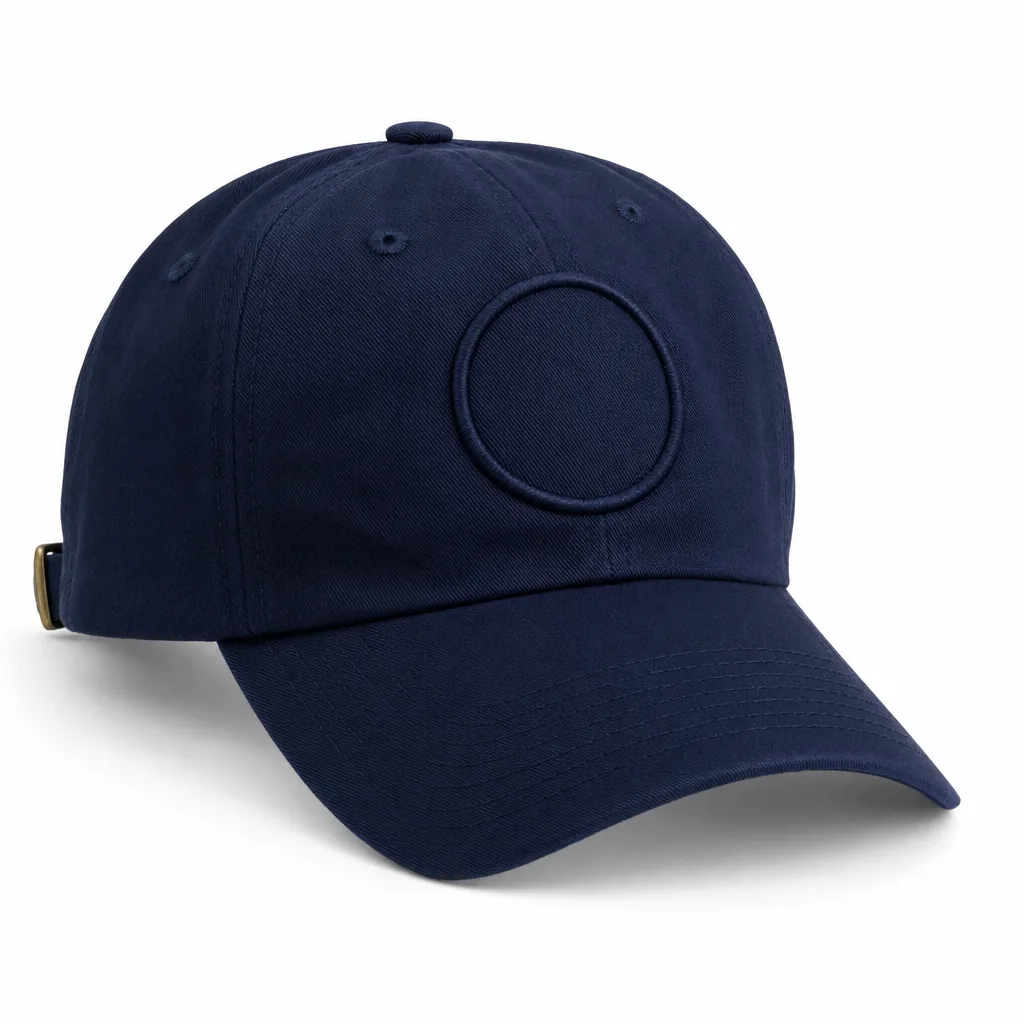
Ball Caps for Men: A 2026 Sourcing Playbook for International Buyers - Cost & MOQ Breakdown
Read article →
BSCI vs Sedex vs WRAP vs WCA: Compliance Audit Standards Compared (2026 Update) (2026 Update) (2026 Update)
Read article →
10 Questions to Ask a Cap Manufacturer on Your First Call - Supplier Checklist
Read article →We hope this guide demystifies custom golf hats: a manufacturer's guide to performance headwear - cost & moq breakdown - cost & moq breakdown - 2026 buyer's guide - supplier checklist and helps you move forward with confidence. If you have questions specific to your project, our English-speaking sales engineers are one message away.