
BSCI vs Sedex vs WRAP vs WCA: Compliance Audit Standards Compared (2026 Update) (2026 Update) (2026 Update)

Every week, our sales team answers detailed questions about bsci vs sedex vs wrap vs wca: compliance audit standards compared (2026 update) (2026 update) (2026 update). We wrote this guide so that wholesalers, streetwear brands, corporate buyers and promotional resellers can compare options with full information, and avoid the traps that show up only after production has started.
The four audits hat factories actually hold
These four audits are not substitutes, and treating them that way is how buyers lose 2 to 6 weeks during vendor onboarding. In a real cap-factory shortlist, amfori sedex-audit-cap-supplier-guide.html">BSCI 2.0 is still the default gatekeeper for many EU accounts—especially Germany, the Netherlands, and the Nordics—because it goes deep on working hours, payroll calculation, young-worker controls, grievance channels, and management-system evidence. Auditors do not just glance at a policy binder; they reconcile 12 months of attendance, wage sheets, social insurance records, and corrective-action history against local law and factory practice. In straight BSCI vs Sedex SMETA terms, BSCI is usually tougher on system discipline and CAP closure, while Sedex SMETA 4-Pillar is easier for buyers to circulate because the report sits on the Sedex platform and bundles labor standards, health and safety, environment, and business ethics in one format. Neither is “better” in the abstract. The one that matters is the one named in the customer’s vendor manual, including the approved audit body, minimum rating, validity window—typically 12 months—and whether zero-tolerance findings must be closed before the PO is released.
WRAP and WCA operate in a different commercial lane. WRAP still carries weight with U.S. apparel importers, licensed sports merchandise, and campus-bookstore programs because the certification is recognizable across retailers instead of tied to one membership platform. A proper WRAP or WCA audit will sample at least 3 months of payroll and time records, verify age documents from hiring files, inspect canteens and dormitories if provided, and flag blocked fire exits, ungrounded equipment, missing needle-control logs, or disabled alarm points on the spot. WCA has less resale value in the open market, but in Walmart-linked supply chains it can be effectively mandatory before final approval. On the factory floor, passing any of these standards takes more than tidy files: you need machine-guarding intact, evacuation routes posted, SDS sheets in Chinese for inks and cleaning chemicals, boiler and air-compressor inspection certificates, subcontractor declarations, and traceable overtime approval records that match payroll to the hour. A passed audit only has value when its scope, pillars, grade, and expiration date match the retailer’s compliance matrix exactly.
BSCI 2.0 scope and audit process
BSCI 2.0 exposes weak factory controls quickly; in a hat factory, an experienced auditor can usually tell within the first hour whether the site runs on live systems or a staged cleanup. The amfori BSCI Code of Conduct covers 13 performance areas, but the repeat nonconformities in Zhejiang headwear plants are usually specific: overtime above local legal limits, unsigned or backdated labor contracts, piece-rate calculations that do not reconcile to payroll, blocked fire exits, incomplete age-verification files, and dormitories packed beyond internal capacity rules. Auditors also check operational risks that lightweight summaries ignore, including SDS availability for screen-print inks and spot-cleaning solvents, secondary chemical labeling, compressor and boiler inspection logs, needle-control records, and PPE use at heat-transfer presses or solvent-based adhesive stations. In a practical BSCI vs Sedex SMETA comparison, BSCI is usually more management-system driven, which is why many EU retail sourcing teams use it as an early compliance gate rather than a last-stage box-tick.
The audit itself is normally a 1- to 2-day on-site assessment by an amfori-approved third-party firm, not by the buyer, with the previous 12 months used as the core evidence window. Scope depends on headcount, number of production buildings on the business license, and whether dormitories and canteens are included. The sequence is structured: opening meeting, document review, factory walkthrough, management interviews, and confidential worker interviews pulled from cutting, sewing, embroidery, finishing, packing, and warehouse departments. Auditors cross-check time records against payroll down to overtime premiums, test wage slips against local minimum wage rules, inspect evacuation routes, fire-drill logs, extinguisher checks, and first-aid stations, and verify that juvenile workers are either absent or legally protected. Results are issued on the BSCI A to E scale, backed by a 0-100 scoring model, and report validity is typically 12 months. The real buyer value is comparability: if payroll, attendance, machine maintenance logs for Tajima or Barudan embroidery lines, and CAP closures all hold together under review, the factory is usually far more dependable than one with a polished showroom and weak records.
Sedex SMETA 4-Pillar scope and process
If a buyer asks for one social compliance audit they can share across multiple accounts, they usually mean SMETA 4-Pillar rather than the lighter 2-Pillar scope. That distinction is not cosmetic. SMETA 4-Pillar covers Labor Standards, Health and Safety, Environment, and Business Ethics, which is why it shows up so often in onboarding for EU brands, licensed sports programs, and mid-to-large retail groups. In a cap factory, labor review still consumes the most audit time because auditors reconcile documents, not slogans: payroll, attendance, labor contracts, ID and age-verification files, social insurance enrollment, leave records, grievance logs, disciplinary records, and overtime approvals are checked against actual production peaks and shipment schedules. On the floor, that means tracing piece-rate operators on Tajima or Barudan embroidery lines, confirming whether rush-season labor was formally registered, reviewing dorm files if housing is provided, and checking that washing, printing, or hand-trimming has not been shifted to undeclared subcontractors. Where first-time suppliers get caught out is assuming SMETA is a checklist audit. It is closer to a forensic sample review. Sedex-approved firms such as SGS, Intertek, Bureau Veritas, QIMA, and TÜV SÜD typically allocate 2 to 3 auditor-days depending on headcount, dormitory scope, and whether embroidery, screen printing, finishing, and packing are centralized on one site. In a 150 to 300-worker hat plant, auditors commonly pull 12 months of payroll and time records, cross-check peak-month overtime, and conduct worker interviews across departments, genders, shifts, and contract types. They also inspect fire egress, distribution boards, needle control logs, guarding on eyelet and snapback assembly equipment, chemical storage with SDS and secondary containment, wastewater permits where applicable, and anti-bribery controls for purchasing or customs-facing staff. In any serious BSCI vs Sedex SMETA comparison, this is where SMETA separates itself: the buyer receives a narrative report, issue grading, and corrective-action deadlines rather than a simple pass/fail label.
Serious nonconformities under SMETA 4-Pillar can stop order approval faster than many factories expect. Blocked exits, excessive consecutive working days, underage-document gaps, missing social insurance enrollment, unlicensed dorm conditions, or undisclosed subcontracting are the types of findings that trigger immediate buyer escalation. Even when the site is otherwise commercially strong, a critical life-safety issue or falsified record set can lead to shipment holds until corrective actions are verified. In practice, that usually means a paid follow-up audit within the CAP window, often 30 to 90 days depending on finding severity and buyer policy. For hat factories operating on tight launch calendars, that delay can cost more than the audit fee itself. The operational value of SMETA is that it shows how the factory actually runs under pressure, not how its handbook reads on a quiet day. Auditors compare attendance trends to export peaks, test whether rest days were preserved during pre-holiday rushes, and look for mismatch between approved headcount and real output on embroidery, sewing, and packing lines. They will also question whether environmental controls match the process mix: water-based printing, washing, adhesive use, boiler operation, and waste segregation all create different compliance obligations. That makes SMETA particularly useful when buyers want transparency across multiple risk areas in one report. In a practical BSCI vs Sedex SMETA decision, SMETA is often favored when the customer needs broader operational detail, clearer corrective-action tracking, and a report format that procurement, compliance, and sourcing teams can all read without interpretation.
WRAP scope and process
WRAP is narrower and more prescriptive than many buyers think, and that matters when you compare certification-driven programs against the broader conversation around BSCI vs Sedex SMETA. WRAP’s 12 Principles are not abstract ESG language; auditors test them against factory records and production reality. In a China cap factory, that means reconciling payroll, attendance, labor contracts, and piece-rate sheets; checking worker age files against ID copies; reviewing social insurance enrollment; and verifying that disciplinary practices, grievance channels, and dormitory controls match what line supervisors and operators actually describe in interviews. On the floor, they will inspect machine guarding, needle-control logs, first-aid coverage, blocked exits, and chemical management for spot cleaners, screen-printing inks, and embroidery backing adhesives. If a Tajima or Barudan line shows output that does not match broken-needle records or operator rosters, that inconsistency gets noticed fast. WRAP also puts real weight on customs compliance and subcontracting disclosure, which is why licensed sports, collegiate, and entertainment buyers often treat it as a brand-risk screen rather than just another social audit.
The audit itself is usually 1 to 2 days on site, but the preparation burden is heavier than many factories expect. A WRAP-approved monitor such as Intertek, Bureau Veritas, or TÜV Rheinland will typically sample 12 months of payroll and time records, employment contracts, leave logs, EHS training records, accident reports, and working-hour controls, then cross-check those against worker interviews from sewing, embroidery, finishing, packing, and—if applicable—dormitories. For hat factories, the weak points are predictable: overtime spikes above local limits during teamwear launches, undeclared subcontracting for washing, printing, or specialty trims, and temporary labor files that are incomplete or inconsistent. Certification level also affects sourcing decisions. Platinum generally follows sustained compliance and can remain valid for up to 2 years; Gold is normally 12 months; Silver means corrective actions are still being closed, so buyers usually review the CAP in detail before issuing repeat POs. Our standard practice is to treat WRAP readiness as a document-and-floor-control discipline, not a one-week audit scramble.
WCA scope and process
WCA is a retailer-controlled audit, not a portable certification you can line up beside BSCI 2.0, WRAP, or Sedex SMETA 4-Pillar and expect every buyer to accept. Its value is narrow but commercially critical: for Walmart or Sam’s Club programs, a current WCA can be a shipping gate, especially on private-label caps, licensed headwear, and high-volume seasonal promotions. The report is typically valid for 12 months, but buyers do not treat it as a clean pass/fail. They read the rating band, zero-tolerance findings, overdue CAP items, and whether any issue touches child labor, prison or forced labor, blocked fire exits, forged payroll, or other life-safety failures. That retailer-controlled usability is the real distinction in any BSCI vs Sedex SMETA discussion. BSCI is built for broader mutual recognition across importers; WCA is built for one retail ecosystem, with far less flexibility if the result is marginal. The audit method feels closer to SMETA than to BSCI because it is evidence-heavy and floor-driven. Auditors usually start with an opening meeting, business license review, and policy checks, then move into payroll, attendance, social insurance, age verification, disciplinary records, and production-floor inspection. In practice, they often sample 3 to 12 months of records and reconcile swipe-card data against wage sheets, overtime premiums, leave balances, and local minimum wage compliance. In a China cap factory, they will go deeper than paperwork: needle-control logs on Tajima or Barudan embroidery lines, machine guarding, compressed-air safety, fire-drill frequency, dormitory conditions where applicable, and labeling for spot-cleaning chemicals, screen-print inks, or heat-transfer solvents. If washing, printing, or finishing is subcontracted, auditors will also test whether that flow is disclosed and controlled rather than hidden off-book.
What trips factories up is not the checklist itself but the follow-through. A plant can hold a current WCA report and still be commercially blocked if corrective-action evidence is weak, closure dates slip, or a follow-up audit finds repeat violations in overtime, emergency egress, wage calculation, or underage-worker controls. Walmart-approved firms do not just note a nonconformity; they look for root-cause correction, document consistency, and whether management is gaming the system with coached interviews or reconstructed records. That is why experienced buyers ask for the full context of the report, not just the score page. For sourcing teams comparing BSCI vs Sedex SMETA, WCA should be read as a channel-specific risk screen rather than a universal social-compliance asset. SMETA 4-Pillar may carry broader utility across UK and EU retail, while BSCI often fits multi-buyer programs that want a common framework and shared CAP language. WCA is different: the retailer decides whether the audit outcome is usable, whether remediation is acceptable, and whether the factory stays approved for shipment. In other words, it has less transfer value than SMETA or BSCI, but inside the Walmart supply chain it can matter more than either one.
What overlap exists and what differs
The overlap is larger than most sourcing teams think: in a typical cap factory, about 70% to 80% of the evidence set is identical across amfori BSCI 2.0, Sedex SMETA 4-Pillar, WRAP, and WCA. Auditors still ask for the same 12-month trail: payroll ledgers, swipe-card attendance, labor contracts, ID and age-verification files, social insurance receipts, fire drill records, machine-guarding checks, chemical SDS in Chinese, needle-control logs, first-aid training, and grievance handling. On the floor, the repeat findings are rarely dramatic. They are the slow, costly defects of weak control: payroll hours not matching attendance by more than 2% to 3%, expired extinguisher inspection tags, missing evacuation maps at one Tajima embroidery line, unlabeled transfer bottles in the screen-print room, or subcontractor declarations that cover sewing but not trimming and packing. That is why the BSCI vs Sedex SMETA debate is often overstated. If a factory can prove legal working hours, keep corrective actions closed for 12 consecutive months, and show traceable PPE issuance by department, moving between protocols is usually a documentation and CAP exercise, not a full operational rebuild.
The real separation is audit architecture, scoring logic, and buyer acceptance. BSCI is a performance-based framework under amfori, graded from A to E, with heavier scrutiny on management systems, root-cause closure, and consistency between records, supervisor statements, and worker interviews. Sedex SMETA is not a certification; it is an audit methodology, and the scope matters. A 2-Pillar SMETA covers labor standards and health and safety, while 4-Pillar adds environment and business ethics, which changes the evidence burden around waste manifests, permits, anti-bribery controls, and disciplinary procedure. WRAP usually pushes harder on policy implementation, lawful employment, and site security, while WCA is often more forensic on data integrity, triangulating payroll, attendance, and line output to detect underreported overtime or wage shortfalls. For suppliers, the commercial risk is not which scheme sounds stricter but which report the customer will accept without exception. In practice, a rejected audit substitution can stall onboarding 30 to 45 days, while closing a documentation-heavy CAP typically costs RMB 8,000 to 25,000 for retraining, signage, record correction, and follow-up verification.
What the audit doesn't tell you
The biggest blind spot in any BSCI vs Sedex SMETA comparison is that a passed audit says almost nothing about whether a factory can deliver your cap program on spec and on schedule. BSCI 2.0, Sedex SMETA 4-Pillar, WRAP, and WCA are social-compliance frameworks: they check wages, working hours, contracts, fire safety, grievance systems, and legal compliance. They do not test line balancing, material planning, machine uptime, or subcontractor capacity. A factory can clear an audit and still push ex-factory 10 to 18 days late because the 210D nylon labels arrived after cutting, the acrylic-wool body fabric was booked without loom reservation, or the outsourced embroidery house already committed its Tajima and Barudan heads to another customer. None of these standards measures first-pass yield, stitch registration tolerance, visor symmetry, crown height consistency, or whether final inspection is really held at AQL 2.5 instead of being softened to protect shipment. For hats, that gap is not theoretical; it is where approved suppliers become chargebacks. Audits also miss day-to-day operating discipline, which is usually where bulk orders go wrong. No auditor scores whether a merchandiser closes a tech-pack question in 4 hours or 2 days, whether strike-offs are checked against the correct Pantone TCX, or whether lab dips and trims are controlled within Delta-E 1.0 to 1.5 from the sealed sample. I have seen factories with current WRAP certificates and acceptable WCA scores ship caps with logo placement drifting 3 to 4 mm off center, mixed top-button shades, weak back-strap bartacks, and sweatband tension varying by lot. The practical read is simple: use audits for labor-risk screening, not as a proxy for production control. A better filter is recent OTIF performance, rework rate, claim rate, and PP-to-bulk variance data on comparable orders—say 3,000 to 20,000 pieces with 3D puff embroidery, woven patches, or sandwich brims. Those numbers tell you far more than a certificate framed in the lobby.
Sustainability claims have the same limitation. Sedex SMETA 4-Pillar may touch environmental management, and BSCI or WCA may surface legal noncompliance, but none of them proves that the factory can trace recycled content or control material inputs at order level. For caps, that means asking whether the mill can issue a valid GRS transaction certificate for 300D RPET, whether water-based inks and coating chemicals are tracked by batch, whether nickel-release or salt-spray test reports exist for metal buckles, and whether carton specs are strong enough to pass a basic drop test after export stacking. An audit report rarely answers those questions. If you want a realistic supplier assessment, pair the audit with operating evidence. Ask for one recent corrective-action case, the CAP closeout record, and defect data from similar programs in the last two peak seasons. Request measurable sample-to-bulk tolerances: embroidery position within plus or minus 2 mm, visor curve consistency, shade continuity by lot, sweatband seam strength, and rust testing where metal trims are used. Our standard practice is to check PP approvals, inline reports, final reports, subcontractor logs, and shipment punctuality before treating any factory as stable. Suppliers that can show actual defect Pareto charts, rework percentages under 2%, and on-time shipment above 95% are usually safer partners than factories leaning too hard on audit logos alone.
Frequently Asked Questions
What logo decoration techniques do you offer?
3D puff embroidery, flat embroidery, woven patch, leather patch, PVC patch, screen printing, sublimation, applique and laser etching, all in-house with no subcontracting.
Can I order a sample before bulk production?
Yes. We strongly recommend approving a pre-production sample before mass production. Samples are charged at 35 to 60 USD each plus express shipping, fully refundable against confirmed bulk orders over 500 pieces.
What is the minimum order quantity (MOQ) for custom hats?
Our standard MOQ is 100 pieces per design and color, with sampling available from 1 piece. For complex multi-color logos or premium fabric upgrades, the MOQ can be lowered with a small per-piece surcharge.
How long does production take?
Sampling takes 7 to 12 days. Bulk production runs 20 to 30 days depending on quantity, fabric availability and decoration complexity. Inspection and packing adds another 3 to 5 days before shipment.
What file format should I send for my logo?
Vector files (AI, EPS, PDF) are ideal. High-resolution PNG or JPG at 300 dpi on transparent background works as a fallback. Provide Pantone color references for accurate reproduction.
How does ordering custom embroidered trucker hat work?
When evaluating custom embroidered trucker hat, the key considerations are construction quality, decoration capability, MOQ flexibility and lead time. BSCI 2.0 (Business Social Compliance Initiative by amfori) — European retailer favorite. Sedex SMETA 4-Pillar (Social, Health & Safety, Environment, Business Ethics) — used by UK and increasingly global retailers. WRAP (Worldwide Responsible Accredited Production) — US retailer favorite for licensed merchandise. WCA (Walmart Conformance Audit) — required by Walmart and…
How does ordering custom bucket hat embroidery work?
When evaluating custom bucket hat embroidery, the key considerations are construction quality, decoration capability, MOQ flexibility and lead time. BSCI 2.0 (Business Social Compliance Initiative by amfori) — European retailer favorite. Sedex SMETA 4-Pillar (Social, Health & Safety, Environment, Business Ethics) — used by UK and increasingly global retailers. WRAP (Worldwide Responsible Accredited Production) — US retailer favorite for licensed merchandise. WCA (Walmart Conformance Audit) — required by Walmart and…
What should buyers know about bucket hat men nike?
When evaluating bucket hat men nike, the key considerations are construction quality, decoration capability, MOQ flexibility and lead time. BSCI 2.0 (Business Social Compliance Initiative by amfori) — European retailer favorite. Sedex SMETA 4-Pillar (Social, Health & Safety, Environment, Business Ethics) — used by UK and increasingly global retailers. WRAP (Worldwide Responsible Accredited Production) — US retailer favorite for licensed merchandise. WCA (Walmart Conformance Audit) — required by Walmart and…
How does ordering custom made hats for men work?
When evaluating custom made hats for men, the key considerations are construction quality, decoration capability, MOQ flexibility and lead time. BSCI 2.0 (Business Social Compliance Initiative by amfori) — European retailer favorite. Sedex SMETA 4-Pillar (Social, Health & Safety, Environment, Business Ethics) — used by UK and increasingly global retailers. WRAP (Worldwide Responsible Accredited Production) — US retailer favorite for licensed merchandise. WCA (Walmart Conformance Audit) — required by Walmart and…
What is the difference between BSCI and Sedex?
BSCI audits follow a fixed framework, whereas SEDEX supports multiple audit types, including BSCI itself. BSCI membership is required for suppliers, while SEDEX enables transparency by sharing audits with multiple buyers.
Is BSCI recognized globally?
The BSCI certification is recognized globally and demonstrates a company's commitment to responsible sourcing and ethical business practices. It helps companies ensure that their supply chains meet internationally recognized social standards and supports the protection of workers' rights and welfare.
Are Sedex and Smeta the same?
SMETA audits are carried out by auditors from Sedex's named independent, third-party Affiliate Audit Companies (AACs). Sedex owns and evolves the SMETA methodology, oversees its usage and drives SMETA auditing consistency through our Audit Quality Programme.
Are Smeta and BSCI the same?
Differences in Focus and Outcomes BSCI audits primarily focus on issues such as compliance with the law, freedom of association, collective bargaining, prohibition of discrimination, compensation, and working hours. SMETA audits, therefore, fall under the category of social responsibility inspections.
Is the BSCI certification legit?
The BSCI certification is recognized globally and demonstrates a company's commitment to responsible sourcing and ethical business practices. It helps companies ensure that their supply chains meet internationally recognized social standards and supports the protection of workers' rights and welfare.
Looking for a reliable hat manufacturer in China?
CrownsForge has produced custom hats for 800+ brands across 40 countries. From 100-piece launches to 100,000-piece retail programs, we deliver on time and on spec.
Get in touchRelated guides
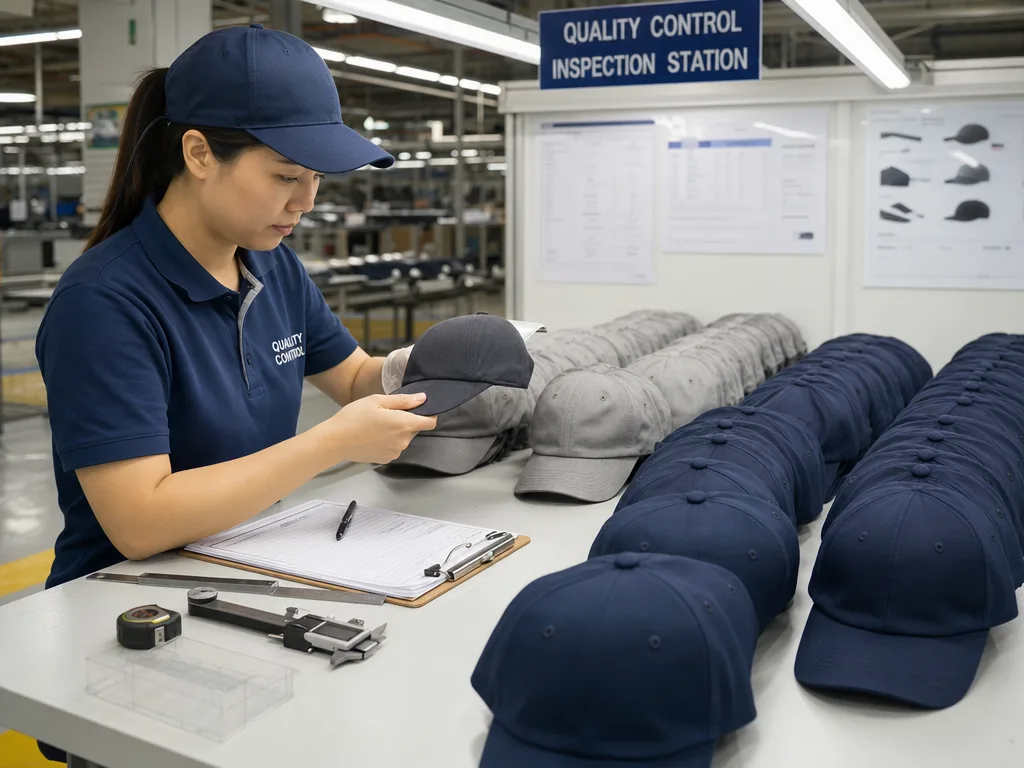
BSCI vs Sedex vs WRAP vs WCA: Compliance Audit Standards Compared (2026 Update) - 2026 Buyer's Guide
Read article →
Sustainable Cap Packaging: Options, Costs and Retail-Buyer Demands - 2026 Buyer's Guide
Read article →Bucket Hat Corduroy Fabric And Trim Spec Guide for Custom Hat Buyers
Read article →Sourcing custom hats does not have to be complicated. With the right manufacturing partner, clear specifications and a small upfront investment in sampling, you can launch a retail-quality product in 30 to 45 days.