
Bucket Hat Corduroy Fabric And Trim Spec Guide for Custom Hat Buyers
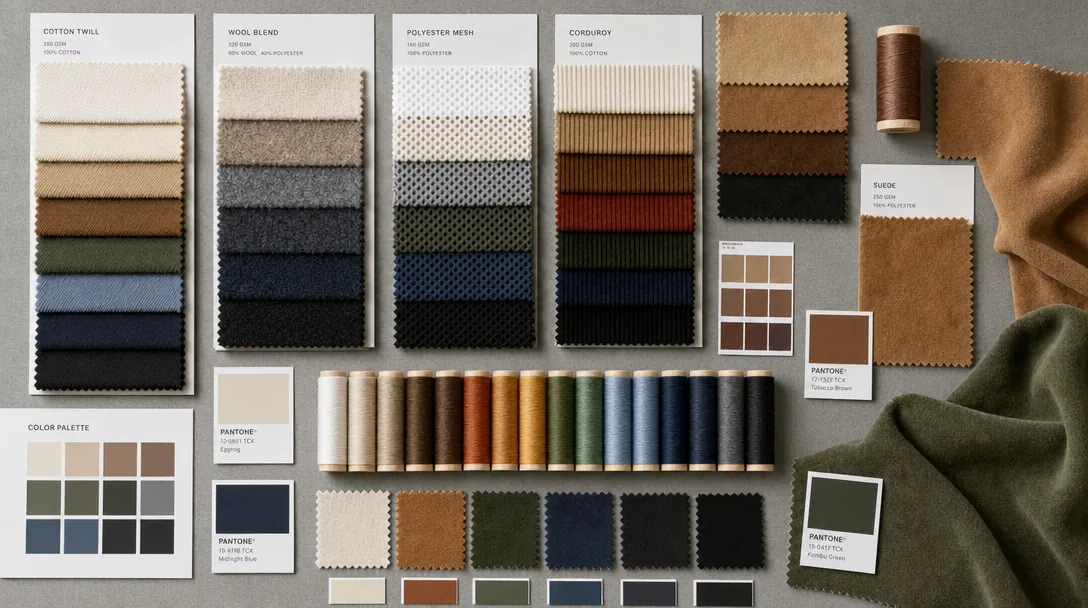
For brand owners, wholesalers and procurement teams entering the custom headwear category, bucket hat corduroy fabric and trim spec guide for custom hat buyers is one of the highest-leverage decisions you will make. Get it right and your unit economics, retail story and reorder cycle all improve. Get it wrong and you carry the cost for years.
Why bucket hat corduroy fabric and trim spec guide needs a separate sourcing plan
A bucket hat corduroy fabric and trim spec guide needs its own sourcing plan because corduroy behaves more like a garment fabric than a standard cap twill. Generic hat sourcing usually starts with 16x12 cotton twill, polyester, nylon taslan, or brushed canvas already stocked by cap mills. Bucket hat corduroy forces earlier decisions on wale count, pile direction, shrinkage, panel cutting yield, and dye-lot control. A 6-wale wide corduroy gives a chunky streetwear look but creates bulk at the crown-to-brim seam; 14-wale or 21-wale pin cord sews cleaner but reads less vintage. Buyers asking for a corduroy hat brown also need to specify Pantone TCX target, not just “chocolate” or “camel,” because pile changes shade under light and viewing angle. I normally allow Delta-E under 1.5 for lab dips, but corduroy sometimes needs buyer approval by physical swatch because the nap makes instrument readings less reliable.
Cost and lead time move differently from generic hat programs. A plain cotton bucket hat can often sample in 5-7 days and bulk in 25-35 days if fabric is in stock. A corduroy bucket hat usually needs 10-14 days for lab dip and hand-feel approval, plus another 7-10 days if we need custom dyeing above 300-500 meters. Fabric weight matters: 220-260 gsm cotton corduroy is common for soft bucket hats, while 300 gsm looks premium but may collapse poorly unless the brim has the right fusible interlining. Trims also change the price. A woven label costs about $0.06-$0.18, metal eyelets $0.03-$0.08 per piece, branded drawcord tips $0.12-$0.35 per pair, and organic cotton hat labeling requires transaction certificates if you claim GOTS or OCS. A cheap quote that ignores these items usually comes back with substitutions during production.
Compliance is another reason the bucket hat corduroy fabric and trim spec guide should not be copied from a baseball cap tech pack or even from cotton beanie men programs. Corduroy often goes through garment wash, enzyme wash, or pigment dye to get that worn-in hand feel, and those processes affect restricted substance testing, colorfastness, and dimensional stability. For EU and U.S. buyers, I would check REACH, CPSIA where children’s sizing is involved, azo-free dye declarations, nickel release on metal trims, and formaldehyde limits on fusible interlining. Our standard practice at CrownsForge is to lock fabric, trims, care label wording, and packaging spec before PP sample, then inspect bulk under AQL 2.5 for major defects and AQL 4.0 for minor defects. If the buyer also needs sedex-audit-cap-supplier-guide.html">BSCI 2.0 or Sedex SMETA 4-Pillar documentation, sourcing cannot wait until production week; the approved mill and trim suppliers must be mapped before the purchase order is placed.
Factory capability checks before quoting
Before a factory quotes a corduroy bucket hat, ask what they can actually control in-house versus subcontract. Embroidery should be checked by machine type, head count, and stitch limit: Tajima, Barudan, or ZSK heads are normal for clean 3D puff, flat satin lettering, and small under-brim hits, but corduroy ribs distort fine lines under 1.2 mm. For woven patches, request merrowed-edge, laser-cut, and heat-pressed samples, because adhesive temperature can crush 8-wale or 11-wale cotton corduroy. A serious sample room should also show fabric cards with wale count, weight in gsm, shrinkage after wash, and Pantone TCX matching tolerance, preferably Delta-E under 1.5 for solid colors like corduroy hat brown. If they cannot explain nap direction, pile height, or why embroidery must run with stabilizer backing on bucket hat corduroy, the quote is just a number, not a production plan.
Panel construction matters more on corduroy than buyers expect because the fabric has direction, bulk, and visible seam shadow. A good bucket hat corduroy fabric and trim spec guide should confirm whether the factory can build 4-panel, 6-panel, or circular crown patterns, with brim rows spaced evenly at 6 to 8 mm and seams opened cleanly so the ribs do not twist. Ask for topstitch tension samples and brim stiffness options: soft cotton twill interlining, 150 gsm nonwoven, or EVA sheet for a sharper streetwear shape. Closure choices are limited on bucket hats, but drawcords, chin straps, leather toggles, metal cord locks, and inner sweatband sizing tape still need BOM control. For an organic cotton hat claim, check GOTS or OCS transaction certificates, not just hangtag artwork. The same factory may also make cotton beanie men styles, but knitwear capability does not prove they can handle corduroy nap and brim sewing.
Quote readiness should include sample speed, audit documents, and communication discipline, not only FOB price. Our standard practice at CrownsForge is to confirm embroidery file review within 24 hours, first sample in 5 to 7 working days after artwork approval, and bulk pre-production sample before cutting if the order exceeds 1,000 pieces. Ask whether the factory works to AQL 2.5 for major defects and AQL 4.0 for minor defects, with inline checks for color shading, seam puckering, patch placement tolerance within ±2 mm, and loose thread control. Audit readiness is equally practical: BSCI 2.0, Sedex SMETA 4-Pillar, WRAP, or ISO 9001 files should be current, not “available soon.” Communication checks are simple: send one spec sheet and see if they return questions about fabric wale, lining, sweatband, label placement, carton packing, and HS code. A factory that only replies “yes, can make” will create problems after deposit.
MOQ, pricing and sample approval
MOQ is where most corduroy bucket hat projects either become practical or expensive. For stock 8-wale or 11-wale cotton corduroy in black, navy, beige, forest, and corduroy hat brown, a realistic MOQ is 100–300 pieces per color, with unit pricing usually around US$3.80–6.20 FOB Ningbo depending on lining, brim stitching, and decoration. Custom-dyed corduroy normally starts at 500–1,000 pieces per Pantone TCX color because dye lots under 80–120 kg are inefficient and shade control becomes unstable. Organic cotton hat programs need more planning: GOTS or OCS-certified corduroy mills often require 800–1,500 pieces equivalent fabric consumption, and certificates must be checked against the actual spinning and dyeing mill, not just the trader’s PDF. This bucket hat corduroy fabric and trim spec guide should make one thing clear: a low MOQ sample is possible, but a low MOQ custom fabric order is usually not.
Decoration costs should be separated from unit price because setup is not the same as production. Flat embroidery digitizing is typically US$25–45 per logo, 3D puff embroidery US$35–60 because underlay and foam trapping need more testing, and woven label mold or loom setup runs US$45–90 depending on size and color count. On Tajima, Barudan, or ZSK heads, corduroy needs lower stitch density than twill; I usually keep filled areas around 0.38–0.45 mm spacing and avoid tiny 1.5 mm text because the ribs distort edges. For Pantone matching, fabric should be approved under D65 light with Delta-E under 1.5 for lab dips when possible, but bulk corduroy can drift to Delta-E 2.0–2.5 after brushing and washing. Trims include sweatband, lining, care label, size pip, drawcord, metal eyelets, snap, hangtag, and polybag; a cheap trim mistake can make a US$5.00 hat look like a flea-market cotton beanie men reseller item.
PPS approval should never be skipped, even for a repeat corduroy hat brown order, because corduroy nap direction, brim roll, and logo placement change the whole hand feel. Our standard practice at CrownsForge is to submit a pre-production sample with approved fabric swatch, thread card, trim card, packaging mockup, and measurement report before bulk cutting. Buyers should approve crown height, brim width, top diameter, seam allowance, sweatband tension, label position, barcode format, carton mark, and inner polybag warning text. A normal sample timeline is 5–7 days for stock fabric and 12–18 days for lab-dip or custom trim; bulk production is usually 25–35 days after PPS approval, or 40–55 days for organic cotton corduroy with third-party certification paperwork. Final inspection should use AQL 2.5 for major defects and AQL 4.0 for minor defects, with specific checks for pile crushing, shade panels, skipped stitches, loose threads, metal trim rust, and packaging count accuracy.
Quality inspection and shipping risk
For a bucket hat corduroy fabric and trim spec guide, inspection has to start before packing, not after the cartons are sealed. I use AQL 2.5 for major defects and AQL 4.0 for minor defects on most corduroy bucket hat orders; for licensed sports or retail chain programs, buyers often push major defects to AQL 1.5. Measurement tolerance should be written into the spec sheet: crown height ±5 mm, brim width ±3 mm, head circumference ±5 mm, and sweatband width ±2 mm are realistic for washed cotton corduroy. Anything tighter usually creates arguments because 8-wale and 14-wale corduroy shrink differently after enzyme wash or garment dye. Colorfastness is another trap. A corduroy hat brown can look approved under showroom LED but fail crocking when rubbed against a white hoodie. Require dry and wet rubbing at Grade 4 minimum, perspiration Grade 4, and keep a sealed Pantone TCX or lab-dip standard with Delta-E under 1.5 for reorder control.
Embroidery on bucket hat corduroy needs a harsher defect standard than flat cotton twill because the pile hides and distorts stitches. Common rejects include thread breaks, birdnesting on the back, registration drift over 1 mm, crushed wale lines around dense fills, and puckering near the side panel seam. On Tajima, Barudan, or ZSK heads, a 75/11 sharp needle with proper backing works for most logos, but dense 3D puff on corduroy bucket hat panels is usually a bad idea unless the design is simplified. Our standard practice at CrownsForge is to photograph first-piece embroidery under both front light and side light, because side light exposes nap damage that a flat QC photo misses. Buyers should also define what is acceptable for shade variation between fabric, binding tape, sweatband, drawcord, and label thread. This matters even more on an organic cotton hat, where undyed or low-impact dyed trims may not match synthetic cord locks exactly.
Shipping risk is mostly documentation risk pretending to be logistics risk. Carton markings should show PO number, SKU, color name, size ratio, carton number, gross/net weight, dimensions, and country of origin; do not let the factory invent abbreviations like “BRN CORD” if your warehouse system expects “corduroy hat brown.” For FOB Ningbo or Shanghai, the buyer controls forwarder, sailing schedule, and import filing, which is cleaner for experienced importers ordering 2,000–20,000 pcs. DDP is easier for small streetwear drops, but the unit freight cost can jump from about $0.18–$0.35 by sea to $1.20–$2.80 by air depending on carton volume. Reorder documentation should include the final tech pack, approved PPS sample photos, fabric wale count and gsm, Pantone TCX references, embroidery DST file, carton layout, polybag rules, and AQL report. Keep separate specs for bucket hat corduroy versus unrelated items like cotton beanie men styles; mixing seasonal templates is how wrong labels, wrong care instructions, and wrong HTS codes get repeated.
Buyer checklist for the next RFQ
A firm quote starts with a complete tech pack, not a mood board. For a bucket hat corduroy fabric and trim spec guide RFQ, send the target style name, size range, panel construction, brim width, crown height, stitch count per inch, and whether the hat is reversible, packable, or wired at the brim. For fabric, specify wale count and weight: 8-wale or 11-wale cotton corduroy at 260–320 gsm is common for a structured corduroy bucket hat, while 14-wale at 220–260 gsm gives a softer streetwear hand feel. If you want an organic cotton hat, state GOTS or OCS requirement upfront because certified greige goods and transaction certificates affect both MOQ and lead time. Include Pantone TCX references, not screenshots; a corduroy hat brown can shift badly between lab dip and bulk if the buyer only says “chocolate” or “mocha.” We normally allow Delta-E under 1.5 for solid dyed corduroy, but darker browns may need two lab-dip rounds.
Send artwork as vector files before asking embroidery or patch pricing. AI, EPS, or PDF with outlined fonts is preferred; PNG is only acceptable for visual reference. If the bucket hat corduroy uses direct embroidery, provide exact placement in millimeters, finished logo width, thread colors, and whether the logo needs 3D puff, flat satin, chain stitch, or felt applique. A Tajima or Barudan sample run can confirm whether dense artwork will sink into the corduroy ribs; on 8-wale fabric, small text under 5 mm often closes up. For woven labels, send label size, fold type, ground color, edge finish, and Pantone references. For trims, define sweatband material, binding tape width, eyelet type, drawcord diameter, cord stopper color, care label language, barcode sticker format, polybag warning text, and carton mark layout. Do not forget packaging: flat pack, brim-supported pack, or nested cartons can change freight volume by 15–25%.
Good RFQs include photos of the target sample from front, side, top, inside crown, brim underside, sweatband, and any closure or label area, with a ruler in the frame. If you are matching an existing cotton beanie men collection or outerwear line, send the fabric standard and trim standard together so the factory can align shade, hand feel, and branding instead of guessing. State order quantity by color and size, required sample deadline, bulk delivery window, destination port or DDP address, inspection standard, and compliance needs such as BSCI 2.0, Sedex SMETA 4-Pillar, CPSIA, REACH, or Prop 65. For pricing, separate FOB Ningbo/Shanghai from DDP Los Angeles, Rotterdam, or Sydney; air freight on hats can add $0.80–$2.50 per piece depending on carton cube. A realistic RFQ also states acceptable AQL, usually AQL 2.5 major and 4.0 minor, because inspection tolerance affects sewing control, rework allowance, and final unit cost.
Working with CrownsForge
The most important control point in a bucket hat corduroy fabric and trim spec guide program is locking the wale count, shade, and handfeel before decoration starts. For a corduroy bucket hat, we normally treat 8-wale, 11-wale, and 14-wale as different materials, not cosmetic options, because stitch density, seam bulk, and brim drape change noticeably. A 280–320 gsm cotton corduroy works for structured bucket hats; 230–260 gsm is safer for packable styles. If the buyer wants an organic cotton hat, we require GOTS or OCS transaction documents from the mill, not just a hangtag claim. Lab dips are checked against Pantone TCX under D65 light, with Delta-E under 1.5 for dark colors and under 2.0 for washed shades. A corduroy hat brown is especially risky because reddish, tobacco, and chocolate tones shift after garment washing, so we approve both raw fabric and washed-panel swatches before cutting bulk.
Sampling is managed in stages because corduroy hides mistakes until the hat is fully assembled. The first proto confirms crown height, brim width, panel count, sweatband width, and whether the corduroy direction runs consistently around the crown. The second sample is for decoration: Tajima or Barudan embroidery heads need lower speed on thick wale fabric, usually 650–750 rpm instead of 900 rpm, and we often add a cutaway backing plus 75D polyester thread for cleaner edges. Flat embroidery on corduroy bucket hat panels should avoid tiny text below 5 mm; chenille, felt appliqué, or woven patches usually read better. For trims, we specify cotton twill sweatbands, matte black eyelets, nickel-free metal adjusters where used, and label materials by denier or gsm instead of vague terms like “premium.” We also cross-check trim color with related programs, because buyers often want bucket hat corduroy colors to match hoodies, cotton beanie men collections, or winter capsule accessories.
CrownsForge coordinates QC and export around a written bucket hat corduroy fabric and trim spec guide so the approved sample, BOM, carton mark, and inspection checklist all match. Incoming fabric is inspected on a 4-point system, then bulk hats are checked under AQL 2.5 for major defects and AQL 4.0 for minor defects unless the purchase order states stricter limits. Common failures are twisted brim seams, crushed pile, shade variation between crown and brim, loose topstitching, and embroidery sinkage into the wale. We measure brim width with a 2 mm tolerance, crown height with 3 mm tolerance, and carton moisture below 12% before packing with silica gel for ocean freight. For export, commercial invoice, packing list, HS code, certificate of origin, and FCR or bill of lading are prepared against FOB Ningbo, FOB Shanghai, or DDP terms. Audit-sensitive buyers can request BSCI 2.0 or Sedex SMETA 4-Pillar documentation before production scheduling.
Frequently Asked Questions
What file format should I send for my logo?
Vector files (AI, EPS, PDF) are ideal. High-resolution PNG or JPG at 300 dpi on transparent background works as a fallback. Provide Pantone color references for accurate reproduction.
What logo decoration techniques do you offer?
3D puff embroidery, flat embroidery, woven patch, leather patch, PVC patch, screen printing, sublimation, applique and laser etching, all in-house with no subcontracting.
Which shipping methods do you support?
We support FOB, CIF and DDP shipping. Air express for samples and small orders, sea LCL for 100 to 500 pieces, sea FCL for 5,000+ pieces. Door-to-door DDP available for US, EU, UK, Canada and Australia.
How long does production take?
Sampling takes 7 to 12 days. Bulk production runs 20 to 30 days depending on quantity, fabric availability and decoration complexity. Inspection and packing adds another 3 to 5 days before shipment.
Do you support sustainability certifications?
Yes. We work with GOTS organic cotton, GRS-certified recycled polyester, OEKO-TEX Standard 100 fabrics, and are BSCI and Sedex audited. Certification documentation can be provided per order.
What should buyers know about organic cotton bucket hat?
When evaluating organic cotton bucket hat, the key considerations are construction quality, decoration capability, MOQ flexibility and lead time. Explain the buyer intent behind bucket hat corduroy fabric and trim spec guide, when it differs from generic hat sourcing, and what decisions affect cost, lead time and compliance. Describe how CrownsForge manages bucket hat corduroy fabric and trim spec guide programs with sampling, decoration, QC and export coordination.
What should buyers know about brown corduroy bucket hat?
When evaluating brown corduroy bucket hat, the key considerations are construction quality, decoration capability, MOQ flexibility and lead time. Explain the buyer intent behind bucket hat corduroy fabric and trim spec guide, when it differs from generic hat sourcing, and what decisions affect cost, lead time and compliance. Describe how CrownsForge manages bucket hat corduroy fabric and trim spec guide programs with sampling, decoration, QC and export coordination.
What should buyers know about bucket hat men nike?
When evaluating bucket hat men nike, the key considerations are construction quality, decoration capability, MOQ flexibility and lead time. Explain the buyer intent behind bucket hat corduroy fabric and trim spec guide, when it differs from generic hat sourcing, and what decisions affect cost, lead time and compliance. Describe how CrownsForge manages bucket hat corduroy fabric and trim spec guide programs with sampling, decoration, QC and export coordination.
What should buyers know about acrylic beanie hat?
When evaluating acrylic beanie hat, the key considerations are construction quality, decoration capability, MOQ flexibility and lead time. Explain the buyer intent behind bucket hat corduroy fabric and trim spec guide, when it differs from generic hat sourcing, and what decisions affect cost, lead time and compliance. Describe how CrownsForge manages bucket hat corduroy fabric and trim spec guide programs with sampling, decoration, QC and export coordination.
Need a low-MOQ test order?
We help emerging brands launch with as few as 100 pieces. Premium fabric, in-house embroidery, retail-ready packaging.
Start a small orderRelated guides
Cap Size Run Planning for Retail Launches: A B2B Buyer Guide
Read article →
Cap Defect Catalog: 32 Production Issues to Inspect For
Read article →Baseball Hats For Men Retail Packaging Guide for Custom Hat Buyers
Read article →We hope this guide demystifies bucket hat corduroy fabric and trim spec guide for custom hat buyers and helps you move forward with confidence. If you have questions specific to your project, our English-speaking sales engineers are one message away.