
What's in a Cap Tech-Pack: A Specification Template for Buyers - Cost & MOQ Breakdown (2026 Update)
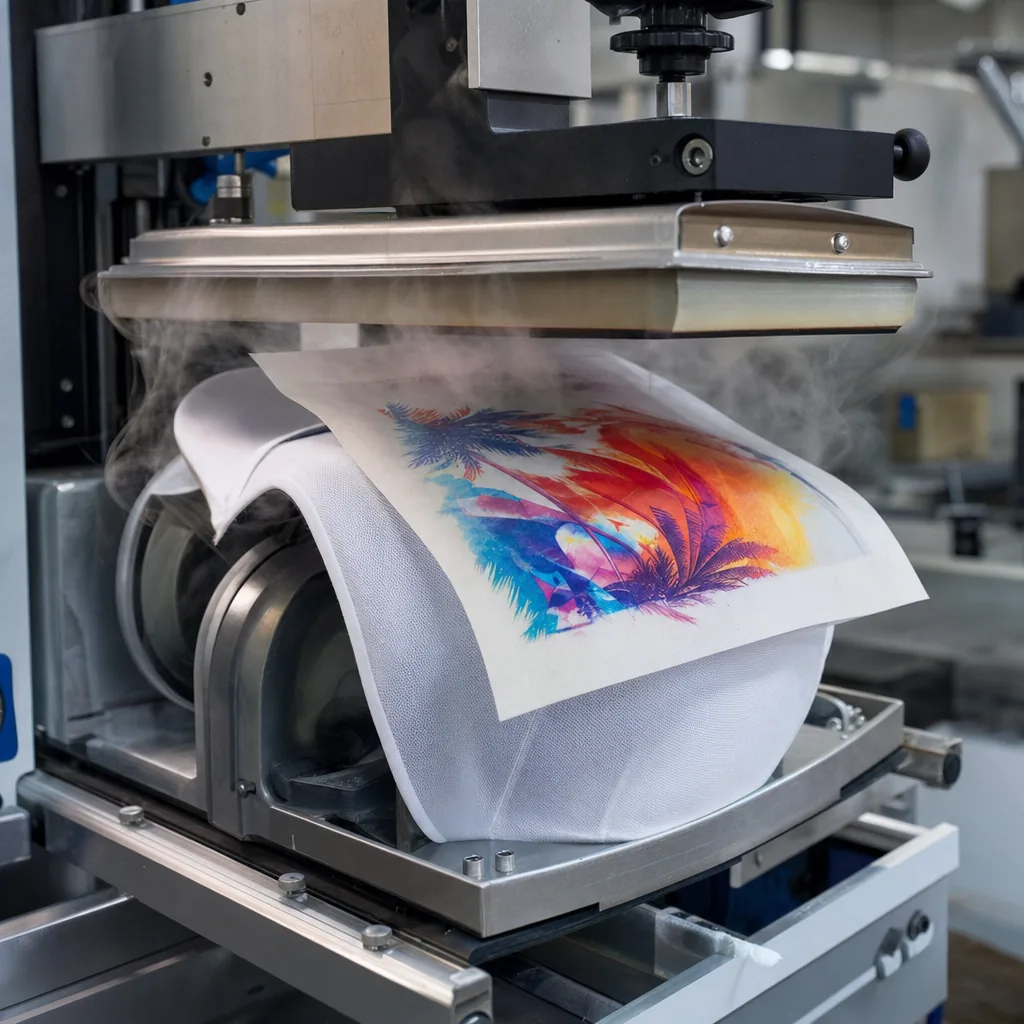
For brand owners, wholesalers and procurement teams entering the custom headwear category, what's in a cap tech-pack: a specification template for buyers - cost & moq breakdown (2026 update) is one of the highest-leverage decisions you will make. Get it right and your unit economics, retail story and reorder cycle all improve. Get it wrong and you carry the cost for years.
Why a tech-pack saves you weeks of email back-and-forth
A cap tech pack template saves weeks because it forces decisions before the sample room cuts fabric, not after the courier delivers a wrong sample. A reference photo cannot tell a merchandiser whether you want a 5-panel camper, 6-panel mid-profile snapback, unstructured dad cap, or trucker cap with hard buckram front panels. It also will not define 280 gsm brushed cotton twill versus 210D nylon taslan, 8-row visor stitching versus 6-row, self-fabric strap with brass slider versus plastic snapback, or flat embroidery versus 3D puff with EVA foam. A proper hat specification sheet should lock the pattern, crown height, visor length and radius, seam tape width, sweatband material, eyelet type, closure hardware, Pantone TCX references, logo size, placement tolerance, stitch-count estimate, and carton packing method. If those fields are blank, the factory will choose the nearest standard block, stock trim, and available fabric. That is not deception; it is how production keeps moving when the buyer has not defined the product.
Complete specifications usually reduce first-sample lead time from 12-14 calendar days to about 6-8 because CAD patterning, trim sourcing, embroidery digitizing, and lab-dip matching can run at the same time. Without a custom cap spec sheet, the workflow becomes sequential: approve crown depth, correct visor curve, move the logo down 2 mm, change nickel hardware to antique brass, then recheck thread color under D65 light. Four revision rounds are common, and each round can add 5-9 days once courier transit, Tajima or Barudan machine availability, and sample-room scheduling are included. Our standard practice at CrownsForge is to digitize embroidery for Tajima, Barudan, or ZSK heads only after logo size, backing, thread color, and density are confirmed in writing. A clear tech pack for hat manufacturer use does not remove every revision, but it turns the discussion into controlled adjustments: Delta-E color tolerance, stitch density, sweatband hand-feel, or fit on a 58 cm adult block.
The cost difference shows up before bulk production starts. A weak cap design specification can burn $80-$150 in resampling fees, plus $35-$70 per DHL or FedEx shipment, before the buyer even reaches pre-production approval. It also weakens MOQ negotiation. If the inquiry says only “black cotton cap with embroidered logo,” the factory has to quote against unknown fabric, buckram, closure, embroidery time, packing method, and inspection risk, so the MOQ often lands at 500 or 1,000 pieces. If the tech pack states stock black 16x12 cotton twill, standard 58 cm adult block, 6,000-stitch front embroidery, woven back label, metal tri-glide closure, and 100 pieces per export carton, a factory can often quote 144-300 pieces tied to a sampling order. The same document protects inspection later because AQL 2.5 or AQL 4.0 only works when the approved sample, written tolerances, and bulk standard describe the same cap.
The seven sections of a complete cap tech-pack
A usable cap tech pack template has seven sections that a factory can price, sample, and inspect without guessing: technical drawings, material specification, color standard, decoration method, construction details, labeling, and packaging/inspection. The drawing page should show scaled front, side, back, inside, and under-visor views, with measurements in centimeters and tolerances beside each callout. For a 6-panel structured cap, write “mid-profile crown 16.5 cm +/-0.3 cm, visor 7.0 cm pre-curved, 8 rows visor stitching, fused buckram on front panels, 14 mm top button, 6 embroidered eyelets” instead of “classic baseball cap.” The fabric page must name real materials, weights, and finishes: 280 gsm brushed cotton twill, 320 gsm acrylic-wool blend, 150D polyester performance fabric, recycled polyester ripstop, 8-wale corduroy, 100D/200D trucker mesh, or nylon taslan with C6-free water-repellent finish. Add shrinkage after washing, colorfastness to rubbing and perspiration, handfeel, backing, and test method. “Cotton twill” is not a buying specification; a loose 210 gsm twill and a dense 280 gsm retail twill can move FOB cost by US$0.25-0.45 per cap before decoration.
Color and decoration need production standards, not mood-board language. Use Pantone TCX for dyed fabric, Pantone C/U for printed artwork, and approved physical lab dips for black, navy, stone, fluorescent, enzyme-washed, and pigment-dyed colors. For bulk fabric, Delta-E under 1.5 is a tight retail target; Delta-E 2.0-2.5 is more realistic for many promotional orders, especially across cotton lots. Decoration must separate artwork from process: flat embroidery, 3D puff embroidery, felt applique, woven patch, silicone patch, molded rubber patch, TPU heat transfer, screen print, sublimation, or laser etching. Specify stitch count, thread brand and color, backing type, placement from the center seam or visor edge, maximum embroidery field, and machine assumptions such as Tajima, Barudan, or ZSK heads. A 12,000-stitch front logo usually adds US$0.35-0.70 per cap in China depending on density and trims; a molded rubber patch may require a US$80-180 mold charge before the unit price is even meaningful.
Construction, labeling, and packing are where the cap tech pack template becomes both a quotation sheet and an AQL checklist. Define panel shape, seam tape width, eyelet diameter, sweatband material, inside binding, visor board thickness, closure type, size range, and style category: structured snapback, unstructured dad cap, fitted cap, trucker, 5-panel camp cap, or performance runner. Label specs should cover woven main label, size label, care label, country-of-origin marking, QR code, FSC hangtag, string type, EAN/UPC sticker, and barcode position. Packing should be equally specific: individual polybag or bulk pack, tissue stuffing, brim insert, silica gel, carton quantity, carton dimensions, carton marks, and whether cartons are designed for FOB warehouse handling or DDP courier delivery. Our standard practice at CrownsForge is to tie these details to final inspection: AQL 2.5 for major defects, AQL 4.0 for minor defects, barcode scan checks, carton drop risk, and packing count should be written before bulk cutting starts, not negotiated after shipment photos arrive.
Tech sketches: front, side, back, optional underbrim
A sketch page should be a scaled vector drawing with controlled line weights, not a photo marked up with arrows. Photos miss the construction decisions that change the pattern: true 5-panel shield, 6-panel center seam, darted unstructured crown, laminated buckram front, foam trucker front, or 100% polyester mesh back panels. In a cap tech pack template, the minimum view set is front, left side, right side, back, and any asymmetric detail view exported from Illustrator, CorelDRAW, Gerber, or Optitex-compatible CAD. Call out every panel break, seam, eyelet, bartack, top button, sweatband edge, closure position, woven label, patch, and embroidery field. Use different strokes or colors for construction seams, visible stitch rows, and decoration placement so the sample room does not interpret the artwork as sewing instruction. Write stitch specs as production language: “2 rows, 3 mm from seam, 6-8 SPI,” not “double stitch.” If embroidery crosses a seam, note hoop clearance, backing, and thread, such as 40 wt rayon on Tajima or Barudan heads; that prevents puckering on 260 gsm cotton twill or 280 gsm brushed canvas.
Put measurement points directly on the drawings, not only in a table. Crown depth should run from top button or crown apex to the lower sweatband seam: 16.0-17.5 cm is normal for low-profile dad caps, while structured baseball caps usually land at 17.5-18.8 cm. Brim length is measured from the front crown seam to the visor tip, commonly 7.0 cm for fashion caps and 7.5-8.0 cm for team, golf, or performance caps. The side sketch must show visor profile: flat, hand-curved, pre-curved, or a target radius checked on a visor curve gauge. Add center-front panel height, side seam location, back opening width, strap length, buckle or snap position, and logo placement dimensions on the relevant view. Practical bulk tolerances are +/-3 mm for visor length, +/-5 mm for crown depth, +/-2 mm for logo placement, and +/-1 mm for sandwich stripe exposure. Tighter tolerances are possible, but they raise rejection rates under AQL 2.5 unless the buyer pays for 100% inspection.
The underbrim is optional only when it is plain self-fabric with no contrast color, print, sandwich stripe, binding, taping, label, or undervisor artwork. If anything changes under the visor, draw a separate underbrim view and mark orientation from wearer’s left to right; rotated undervisor prints and wrong green shades are still common sample failures. Specify visor stitching as 6-row, 8-row, single-row, or no topstitch; specify the insert as flat PE, soft PE, recycled board, EVA, or PVC-free board; and define whether the edge is turned, bound, or piped. For contrast underbrims, include fabric and shade control, for example “black 150D polyester twill, Pantone 19-4007 TCX, Delta-E <= 1.5 against approved lab dip.” At CrownsForge, the sketch is checked against the paper pattern before cutting because a clean CAD view can still fail once seam allowance, visor board thickness, embroidery hoop clearance, and sweatband folding meet on the sewing line.
Fabric and color spec: GSM, weave, Pantone references
Fabric is the line item that changes crown shape, needle performance, pressing temperature, and MOQ, so “cotton twill” is not a factory-ready description in a cap tech pack template. Specify fiber content, weave, finished weight, finish, and tolerance in the same row: 100% cotton brushed twill, 2/1 weave, 280 gsm +/-5%, reactive dyed, enzyme washed after sewing. A 180 gsm poplin will wrinkle and collapse on a curved crown block; a 320 gsm heavy twill can make a 6-panel cap look boxy unless the buckram, front seam allowance, and final pressing are adjusted. For structured caps, practical ranges are 260-300 gsm cotton twill, 300-360 gsm cotton canvas, 280-330 gsm T/C twill, and 360-420 gsm 50/50 wool-acrylic for flat-brim styles. Nylon taslan and ripstop are often specified by denier, such as 70D, 100D, or 210D, but the mill still needs finished gsm, coating type, water-repellent treatment, and handfeel after wash.
Color specifications need a recognized standard, a physical reference, and a measurable tolerance. “Navy,” “stone,” or a screenshot from Illustrator will not survive the route from buyer file to dye house to cutting table. Use Pantone TCX for shell fabric, sweatband, seam tape, washed cotton, and wool-blend materials; reserve Pantone C or U for printed graphics, woven labels, and coated trims. A usable callout reads: shell fabric Pantone 19-4023 TCX Navy Peony, undervisor Pantone 18-0527 TCX Olive Night, sweatband Pantone 11-0601 TCX Bright White, embroidery thread Madeira 1076 or Gunold equivalent. Our standard practice at CrownsForge is to require either a physical Pantone chip or an approved fabric swatch for brand-critical colors, then approve lab dips under D65 light before bulk dyeing. Set Delta-E tolerance before sampling: 1.0-1.5 for strict retail programs, 2.0-3.0 for promotional caps, and wider only for intentional garment-wash variation.
Put fabric and color callouts in a table so the mill, cutting room, Tajima or Barudan embroidery operator, sewing line, and AQL 2.5 inspector work from the same instruction. Separate rows should cover crown panels, visor top, undervisor, sandwich, sweatband, seam taping, lining, closure strap, plastic snap, metal buckle, button, eyelets, sewing thread, and embroidery thread. “Match body” is acceptable only after the approved body swatch is attached to the production file. Add tests where risk is real: rubbing fastness ISO 105-X12 grade 4 dry and grade 3-4 wet, perspiration ISO 105-E04 grade 4, shrinkage under 3% after wash, and pilling grade 3-4 minimum for wool blends. Cost moves quickly here. Changing from stock 280 gsm cotton twill to custom-dyed 320 gsm organic cotton twill can add $0.35-$0.90 per cap and move MOQ from 144 pieces to 500-1,000 pieces per color.
Decoration spec: technique, placement, dimensions, color count
Decoration must be specified before digitizing because the first expensive mistake usually shows up as a bad sew-out, not as a bad pattern. A usable cap tech pack template does not say “front logo”; it says “front center, flat embroidery, finished size 58 mm W x 42 mm H, bottom edge 12 mm above visor seam, centered on crown seam.” For 3D puff, add foam and stitch limits: “2.0 mm EVA foam, satin column minimum 2.0 mm, no open counters under 1.5 mm.” Define side placement from the wearer’s perspective and anchor it to cap geometry: “wearer’s left panel, centered between front-side seam and rear eyelet, baseline 38 mm above bottom edge.” Tajima, Barudan, and ZSK cap frames all distort curved panels slightly, especially on structured buckram fronts, so tiny serifs, gradients, hairline strokes, and counters under 1.2 mm should be redrawn before sampling. List source files by use: AI/EPS/PDF vector for digitizing, DST only after approval, and PNG/JPG for visual reference only.
Finished decoration size needs a tolerance, attachment method, and production risk note. For direct embroidery, ±2 mm on width or height is realistic in bulk; woven labels, TPU badges, silicone patches, and PVC patches can usually hold ±1 mm if the die line is clean and the crown surface is stable. Stitch count belongs in the decoration spec because it drives both price and machine output: a normal flat front logo runs about 7,000-10,000 stitches, while dense 3D puff with underlay, border, and cleanup stitches often reaches 12,000-18,000. Above roughly 15,000 stitches per cap, expect slower line speed and a unit-cost increase of about $0.08-$0.25, depending on order quantity, thread changes, and whether bulk runs on single-head sampling machines or multi-head lines. For patches, specify merrowed edge, laser-cut edge, embroidered border, heat-transfer backing, or sew-on application. Our standard practice is to reject flat embroidery strokes below 0.8 mm and puff strokes below 1.5 mm because they fail AQL 2.5 visual inspection too often.
Color count should read like a machine setup sheet, not a brand mood board. Separate every location: “front logo: 4 thread colors; wearer’s right side: 1 color; back arch wordmark: 2 colors.” Tie each color to a reference system: Pantone Solid Coated for printed artwork, Pantone FHI/TCX for fabric matching, and the nearest Madeira, Gunold, or Coats thread number for embroidery. Polyester thread is selected from fixed shade libraries, not lab-dipped like fabric; Delta-E under 2.0 is a reasonable fabric target under D65 light, but it is not a guaranteed result for thread on curved cotton twill or recycled polyester ripstop. If color accuracy matters, require a thread card photo beside the approved Pantone chip and a pre-production sew-out on the actual crown fabric, not white twill. State whether metallic, matte, glow, recycled polyester, rayon, or thick 12-wt thread is allowed, because needle size, tension, breakage rate, and running speed all change.
Packaging and label spec: polybag, hangtag, sticker, carton
Packaging belongs in the cap tech pack template because it changes freight cube, barcode readability, and marketplace compliance before the cap is even booked for shipment. For a standard 6-panel baseball cap, the bag spec should state 280 x 240 mm LDPE or CPP, 0.03-0.05 mm thick; structured truckers and high-crown snapbacks usually need 300 x 260 mm so the buckram face does not flatten during bulk packing. The bag callout should also name the exact format: self-adhesive flap, lip-and-tape, or open-mouth for 3PL repacking. For EU, UK, California, and Amazon programs, include recycling code LDPE 04 or PP 05, suffocation warning text, vent-hole requirement, and minimum print legibility. “Eco bag” is useless on a purchase order. Write the material precisely: “30% GRS-certified recycled LDPE, clear, haze below 12%, thickness tolerance +/-0.005 mm” or “PLA compostable film, EN 13432 certified.” In real costing, a plain warning polybag adds about $0.015-$0.04 per cap, while PLA or certified recycled options usually land at $0.08-$0.14 and often push MOQ to 5,000-10,000 pieces per size.
Hangtags and stickers should be treated as production specifications, not artwork notes buried in email. A usable cap tech pack template lists finished hangtag size, paper stock, gsm, coating, print method, hole diameter, barcode symbology, and attachment method. Common retail tags run 50 x 90 mm or 60 x 100 mm on 300-400 gsm C1S, FSC uncoated sheet, or black kraft, with matte varnish, soft-touch lamination, spot UV, emboss, or foil stamped as separate cost lines; those finishes typically add $0.03-$0.12 per cap depending on coverage and MOQ. Specify whether the fastener is cotton string, elastic loop, ball chain, or plastic swift tack, and mark the exact anchor point, because many licensed sports and streetwear programs reject punctures through the sweatband or visor binding. Use Pantone C for paper print, Pantone TCX for woven labels, and only hold Delta-E below 2.0 where the brand color justifies tighter inspection cost. Sticker and carton details should sit in the same section: brim stickers are commonly 45-60 mm on foil paper, matte vinyl, holographic PET, or clear PET, with placement tolerance within +/-3 mm of visor centerline and adhesive rated removable or permanent. Carton loading must match cap structure: 144 pieces per master carton is normal for unstructured dad caps, while 72 or 96 is safer for foam truckers, high-profile snapbacks, and 5-panel campers. A practical export carton is 580 x 420 x 380 mm in 5-ply K=A board, with gross weight kept below 15 kg for DDP handling, and shipping marks should include PO, style, color, size, carton number, country of origin, and any GS1-128, FNSKU, or 3PL routing labels before final inspection.
Frequently Asked Questions
What logo decoration techniques do you offer?
3D puff embroidery, flat embroidery, woven patch, leather patch, PVC patch, screen printing, sublimation, applique and laser etching, all in-house with no subcontracting.
Can I order a sample before bulk production?
Yes. We strongly recommend approving a pre-production sample before mass production. Samples are charged at 35 to 60 USD each plus express shipping, fully refundable against confirmed bulk orders over 500 pieces.
What is the minimum order quantity (MOQ) for custom hats?
Our standard MOQ is 100 pieces per design and color, with sampling available from 1 piece. For complex multi-color logos or premium fabric upgrades, the MOQ can be lowered with a small per-piece surcharge.
Which shipping methods do you support?
We support FOB, CIF and DDP shipping. Air express for samples and small orders, sea LCL for 100 to 500 pieces, sea FCL for 5,000+ pieces. Door-to-door DDP available for US, EU, UK, Canada and Australia.
What file format should I send for my logo?
Vector files (AI, EPS, PDF) are ideal. High-resolution PNG or JPG at 300 dpi on transparent background works as a fallback. Provide Pantone color references for accurate reproduction.
How does ordering custom patch trucker hat work?
When evaluating custom patch trucker hat, the key considerations are construction quality, decoration capability, MOQ flexibility and lead time. Technique (3D puff / flat embroidery / patch), placement (front center, side, back), dimensions (e.g. 5cm wide × 3cm tall), stitch count if known, color count and Pantone references. Without a tech-pack, your factory invents details that contradict your assumptions. With one, sampling lead time drops from 14 days to 7 and revision rounds drop from 4 to 1.
How does ordering baseball cap custom work?
When evaluating baseball cap custom, the key considerations are construction quality, decoration capability, MOQ flexibility and lead time. Without a tech-pack, your factory invents details that contradict your assumptions. With one, sampling lead time drops from 14 days to 7 and revision rounds drop from 4 to 1. Tech sketches, fabric spec, color spec, decoration spec, construction spec (panels, closure, eyelets, sweatband), packaging spec, label/hangtag spec.
How does ordering custom baseball cap motorcycle helmet work?
When evaluating custom baseball cap motorcycle helmet, the key considerations are construction quality, decoration capability, MOQ flexibility and lead time. Without a tech-pack, your factory invents details that contradict your assumptions. With one, sampling lead time drops from 14 days to 7 and revision rounds drop from 4 to 1. Tech sketches, fabric spec, color spec, decoration spec, construction spec (panels, closure, eyelets, sweatband), packaging spec, label/hangtag spec.
How does ordering custom bucket hat embroidered work?
When evaluating custom bucket hat embroidered, the key considerations are construction quality, decoration capability, MOQ flexibility and lead time. Without a tech-pack, your factory invents details that contradict your assumptions. With one, sampling lead time drops from 14 days to 7 and revision rounds drop from 4 to 1. Tech sketches, fabric spec, color spec, decoration spec, construction spec (panels, closure, eyelets, sweatband), packaging spec, label/hangtag spec.
Looking for a reliable hat manufacturer in China?
CrownsForge has produced custom hats for 800+ brands across 40 countries. From 100-piece launches to 100,000-piece retail programs, we deliver on time and on spec.
Get in touchRelated guides
Refreshing a Hat Collection: A Repeat-Order Playbook for Established Brands (2026 Update)
Read article →
Funny Bucket Hats: A Vertical-Specific Sourcing Guide
Read article →
Customizing Blank Fitted Caps: New Era 59FIFTY, Otto, Imperial Buyer's Guide - Supplier Checklist
Read article →If you are ready to take the next step on what's in a cap tech-pack: a specification template for buyers - cost & moq breakdown (2026 update), our team can put a tailored quotation and digital mock-up in your inbox within 24 hours. Send the inquiry form on our contact page or message us directly on WhatsApp.