
Customizing Blank Fitted Caps: New Era 59FIFTY, Otto, Imperial Buyer's Guide - Supplier Checklist
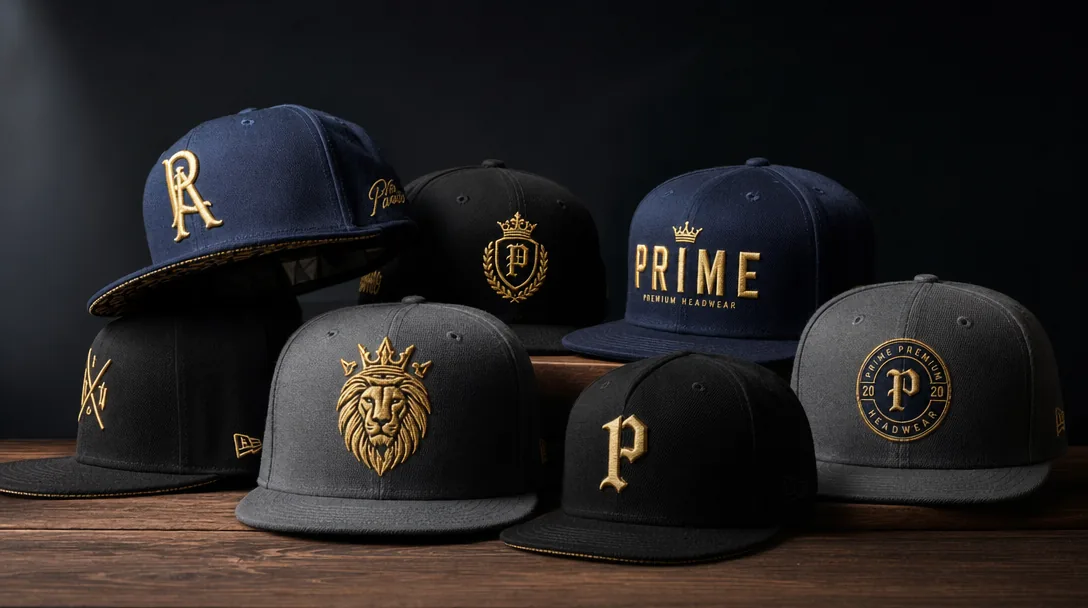
Every week, our sales team answers detailed questions about customizing blank fitted caps: new era 59fifty, otto, imperial buyer's guide - supplier checklist. We wrote this guide so that wholesalers, streetwear brands, corporate buyers and promotional resellers can compare options with full information, and avoid the traps that show up only after production has started.
Why brands ask about 'custom New Era' (and what they actually need)
Most buyers typing custom new era hats are not really asking for the side flag logo; they are chasing the geometry and hand feel of a 59FIFTY or 9FIFTY. The non-negotiables are usually a high, disciplined crown, a front panel stiff enough to survive export carton compression, a visor that holds its curve after 30 to 45 days at sea, and embroidery that stands up cleanly instead of sinking into the buckram. On the production side, that means locked specs rather than mood-board language: 6-panel construction, front crown height around 16.5 to 17.5 cm across the size run, 240 to 260 gsm poly twill or a 70/30 poly-wool blend, PE visor board at about 1.8 to 2.0 mm, and sweatbands checked for crocking on black and navy dye lots before bulk cutting. If the front logo is dense, digitizing becomes a construction issue, not just a decoration issue; on Tajima or Barudan heads, stitch density around 0.38 to 0.42 mm with the right edge-run and underlay is often the difference between sharp satin borders and a tunneled, puckered face.
The sourcing decision is usually binary, and mixing the two routes creates delays. One option is to buy authentic blanks through authorized distribution and decorate them afterward. That only makes sense when the licensed base cap is mandatory, because the cost stack is heavy: a genuine fitted blank can be 3 to 5 times the FOB cost of a comparable OEM shell before embroidery, while size availability, color continuity, and seasonal replenishment are outside your control. You also inherit fixed construction details such as undervisor color, seam tape language, front support stiffness, and fiber content. The other route is OEM development of a fitted cap or structured snapback that matches the target silhouette without making any brand claim. Once volume reaches roughly 300 to 500 pieces per colorway, that is usually the cleaner commercial answer: lower unit cost, custom seam tape and labels, Pantone TCX fabric matching within a commercial Delta-E tolerance, flexible embroidery placement, and inspection against an agreed golden sample under AQL 2.5. Buyers who send crown profile, visor shape, fabric spec, closure, and artwork method at RFQ stage usually move faster and spend less on resampling than buyers who simply say, make it like New Era.
Blank-cap brands and their positioning
New Era sits at the top of the fitted-cap market because the spec is controlled down to millimeters, not just branding. A true 59FIFTY carries a fixed silhouette: closed-back fitted construction, high structured crown, firm buckram, branded interior seam tape, and a full size run usually from 6 7/8 to 8 in 1/8-size increments. That matters if you are developing custom new era hats for licensed teams, stadium retail, or serious streetwear, because the customer already recognizes how a 59FIFTY should sit on the head, how flat the visor ships, and how the crown should hold after repeated wear. The tradeoff is less flexibility. Logo placement tolerances are typically tighter than on open-line blanks, decoration zones are more restricted, and approvals can stretch sampling by several weeks if league, agency, or color standards are involved. FOB pricing usually lands around $12 to $20 per cap depending on fabric, embellishment count, and whether Pantone matching, woven labels, or specialty trims are included.
Otto is positioned almost the other way: fast turns, broad model coverage, and lower FOB cost for decorators who care more about throughput than brand equity. A structured acrylic-wool snapback or trucker commonly lands around $3 to $6 FOB, which is why Otto shows up in promo, event merchandise, and embroidery-shop programs ordering 24 to 144 pieces at a time. The value is range: high crown, low profile, trucker mesh, rope caps, and snapbacks that can mimic the look of a 9FIFTY at a glance. But on the inspection table, the difference is obvious. Under AQL 2.5, lower-cost blanks fail in repeatable ways: panel asymmetry, inconsistent buckram hardness, loose back-seam tension, visor edge waviness, and front-panel instability that causes embroidery pull or letter distortion on Tajima and Barudan runs.
Imperial, Branded Bills, and Melin are not replacements for fitted heritage; they are channel-specific platforms where fabric story and end use matter more than MLB-style identity. Imperial is strongest in golf, resort, and corporate retail, especially in washed cotton twill, lightweight performance polyester, and rope caps where a softer hand and cleaner clubhouse look beat a rigid crown. Branded Bills plays into premium outdoor lifestyle, while Melin sits in the luxury-performance tier with retail prices often starting above $75, supported by hydrophobic fabrics, bonded seams, antimicrobial sweatbands, and heavier packaging standards. From a sourcing perspective, decoration tolerance is the real separator. Rope caps need precise center-front registration, performance poly-spandex can show needle heat and hoop marks, and premium branded programs often limit patch size, side embroidery, or seam-crossing artwork. Match the cap platform to the retail channel first; a bad base cap erodes margin faster than a 5 percent fabric upcharge.
Path 1: Buying blanks from these brands for in-house embellishment
Channel control, not embroidery, decides whether branded blanks leave you any room to work. New Era, Imperial, Branded Bills, and Melin are usually sold through authorized dealer networks with resale rules, limited discounting, and very little true factory-direct access for small decorators. That means the margin is baked into the blank before a needle ever drops. For custom new era hats, a realistic U.S. landed blank cost on a 59FIFTY is typically $18 to $28 per piece in standard team colors, and limited shades or smaller replenishment buys can run higher once domestic freight is included. Otto plays a different game entirely: structured caps often land around $4 to $10 depending on fabric, closure, and carton break. Imperial commonly sits around $9 to $18, Branded Bills around $25 to $40, and Melin around $35 to $55 before digitizing, decoration, or outbound shipping. If your target retail is under $40, branded fitted blanks leave very little room for error unless your sell-through is strong and your reorder cadence is tight. Decoration is where buyers quietly destroy their own margin. A clean front logo in the 5,000 to 8,000 stitch range typically adds about $1.20 to $2.50 per cap at volume, but side embroidery, rear arch text, metallic thread, 3D foam, or twill applique can push total decoration above $3.50 to $5.00 fast. On a 59FIFTY, that risk is higher because the crown is firm, the front seam is pronounced, and registration errors that might pass on a strapback look sloppy on a fitted profile. On Tajima or Barudan heads, even 0.5 mm of push-pull will show on sharp sans-serif lettering or boxed logos. The checklist should start with authorization status, size-curve depth, and reorder stability: confirm full runs from 6 7/8 to 7 5/8 or wider, ask whether core shades are carryover or seasonal, and verify any marketplace restrictions. Inspect blanks to AQL 2.5 for crown symmetry, visor shape, seam grin, sweatband attachment, and panel shading; on branded blanks, a 2% spoilage allowance is not pessimistic, it is standard risk control when each rejected cap may already hold $20 or more in sunk cost.
Path 2: Equivalent OEM manufacturing
If you need the look and hand feel of a flagship silhouette without paying licensed-brand pricing, the practical route is equivalent OEM manufacturing. A solid 59FIFTY-style fitted built in 80/20 acrylic-wool or 15 oz wool blend twill, with full front buckram, taped seams, matching undervisor, and 6-row visor stitching, usually lands at $4.80 to $7.20 per piece with flat or 3D embroidery included at 300 to 1,000 units. A 9FIFTY-style structured snapback equivalent in the same retail-grade fabric is typically $4.30 to $6.50, while an Imperial-style rope hat in performance polyester or peach-brushed microfiber is more often $5.20 to $7.80 because the rope insertion, laser eyelets, and lightweight moisture-management sweatband add labor. That is why many buyers comparing custom new era hats against private-label production end up separating silhouette from logo rights: the shape is manufacturable, the trademarks are not.
The quality gap comes down to factory controls, not the label on the sticker. For blank new era fitted caps or a custom new era 59fifty lookalike, the non-negotiables are crown angle consistency, brim curve tolerance, buckram hardness, and embroidery registration. We run Tajima and Barudan heads with stitch files tested for 0.3 mm pull compensation on wool blends, because poorly digitized front logos are where most cheaper factories give themselves away. On color programs, ask for Pantone TCX matching against shell fabric and embroidery thread with a Delta-E target under 1.5 for key brand colors; if the supplier cannot discuss that clearly, they are probably guessing. Our standard practice is AQL 2.5 final inspection with carton drop testing, needle policy logs, and sweatband crocking checks, which matters just as much on a new era 9fifty snapback blank equivalent as it does on a fitted.
The best use case for OEM equivalents is when you care about silhouette, margin, and speed more than licensed branding. An Otto-style mid-tier promotional cap can be built in brushed cotton twill or 600D poly-cotton at $3.90 to $5.20 with simple embroidery, but once you upgrade to woven labels, inside taping print, custom buckles, and satin seam binding, it stops behaving like a promo cap and starts costing like a retail project. Buyers sourcing otto custom hats often miss that point and compare a stripped-down sample to a fully finished production spec. For clean comparisons, request a supplier checklist covering fabric gsm, visor board thickness, snap closure resin grade, sweatband composition, embroidery stitch count, and compliance documents such as sedex-audit-cap-supplier-guide.html">BSCI 2.0 or Sedex SMETA 4-Pillar. That is the only reliable way to benchmark new era custom hats against equivalent OEM offers on a true apples-to-apples basis.
MOQ and timing differences between the two paths
Blank programs win on calendar, but buyers routinely underestimate how fitted size curves inflate the order. With New Era 59FIFTY blanks sourced through U.S. distributors or authorized team channels, the constraint is usually size availability, not style MOQ on paper. A common working curve is 6 7/8 to 7 5/8 in 1/8 increments, which already means 7 sizes; at 12 pcs per size, you are effectively at 84 caps before decoration, and some dealers push that to 96 or 120 once they enforce full-case breaks on black or navy core SKUs. If stock is live, replenishment can ship to the decorator in 1 to 3 business days, then add roughly 3 to 7 working days for embroidery, twill appliqué, or heat-applied side patches. That speed is the real reason buyers use blanks to test custom new era hats: team-store capsules, event merchandise, and short-window restocks where missing the date costs more than the margin gap. The limitation is structural. You are decorating a finished cap, not engineering one. Crown height, buckram weight, visor board, seam taping, sweatband spec, and shell fabric are locked, and that affects execution: a front logo on a 59FIFTY often needs center-out digitizing on Tajima or Barudan heads to control pull over the front seam, while side hit placement is constrained by eyelet location and panel depth.
OEM fitted production starts slower because the factory is building the cap from zero, but the economics improve fast once you need real volume or spec control. For true fitted caps, 288 to 300 pcs per design is a realistic floor because the size breakdown has to justify pattern grading, marker efficiency, cutting waste, woven size labels, carton assortments, and a slower sewing line than snapbacks or strapbacks. A workable timeline is 7 to 10 days for a proto, 3 to 5 days for revisions, then 22 to 30 days for bulk after sample sign-off and deposit; add 5 to 7 days if you need lab dips, custom-dyed wool-blend serge, or tight Pantone TCX matching with a Delta-E target under 1.5. Cost is where the split becomes obvious. A decorated blank 59FIFTY commonly lands at $18 to $28 per cap after blank cost, digitizing, embroidery, and domestic freight, while a private-label fitted in 80/20 acrylic-wool serge or 100% cotton twill typically lands around $6.50 to $11.50 FOB at 300 to 500 pcs with standard embroidery, woven labels, and polybag packing. In practice, blanks win on speed and brand recognition; OEM wins on gross margin, fabric control, and cleaner QC under an AQL 2.5 final inspection.
When to choose which path
Choose the blank-cap route when branded recognition is worth more than spec control and your volume is not high enough to absorb OEM development. If the end customer is asking for New Era, a private-label substitute will not replicate the shelf signal of a 59FIFTY: licensed hologram sticker, branded interior taping, familiar crown pitch, and a fit profile buyers already know by size. In practice, blanks are usually the smarter commercial decision below about 96 to 144 units per colorway. A 48-piece or 72-piece run with front embroidery, side logo, and rear arch can often ship in 10 to 20 working days, while a true cut-and-sew fitted program is more realistically 35 to 55 days after sample sign-off, fabric booking, and trim confirmation. That speed is why custom new era hats work for team drops, artist merch, and event capsules even when the blank itself costs $14 to $22 before decoration, which is materially higher than a private-label shell.
The tradeoff is simple: you are decorating somebody else’s engineering. On a blank program, you do not get to change shell fabric from a 260 gsm wool blend to a 300 gsm brushed cotton twill, soften the buckram, alter visor board thickness, or add 3 mm of crown depth because your fit comments say the middle sizes wear shallow. Decoration limits are real too. A structured front panel may run clean 3D embroidery on Tajima, Barudan, or ZSK heads, but once a logo climbs past roughly 10,000 to 12,000 stitches with dense fill, distortion, tunneling, and seam push become common, especially near the front seam. Buyers should confirm the usable embroidery field, max patch dimensions, seam-crossing restrictions, and whether inside-label access is allowed before opening preorders.
OEM becomes the better path once unit volume, margin, and repeatability matter more than licensed branding. On most factory floors, the break point starts around 300 to 500 pieces per style-color, because pattern development, sampling, fabric MOQs, and freight allocation stop punishing the unit cost so badly. At that stage you can specify fabric composition, yarn count, visor curve, eyelet finish, sweatband foam density, seam tape artwork, size grading, and packaging rather than inheriting stock trims. Color approval also gets tighter: dyed components can be matched to Pantone TCX with a practical Delta-E target under 1.5, and embroidery can be digitized specifically for your panel geometry instead of being forced onto an existing blank. The real comparison is not FOB cap price alone; it is total landed cost after sample revisions, duty, inspection at AQL 2.5, and the failure risk of pushing a licensed blank beyond what it was built to handle.
Decoration restrictions and licensing implications
The costliest mistake is assuming a blank cap invoice includes trademark rights. It does not. Buying blank 59FIFTY inventory gives you the physical product, not automatic permission to market it as custom new era hats, run New Era word marks in Meta or Google ads, or suggest an official collaboration. Those rights are usually carved up separately from the cap itself, and they get even tighter once MLB, MiLB, NCAA, or festival artwork enters the file. On the factory side, embroidery approval and IP clearance are two different gates: your logo may sew cleanly, but your Amazon title, hangtag copy, woven label, or outer carton print can still trigger a takedown. For U.S. DTC sellers, that distinction matters because marketplace suspensions, chargebacks, and customs holds move faster than any remake window. Relabeling is where buyers usually underestimate both licensing risk and construction limits. A 59FIFTY has a taped-seam crown, firm fused buckram, a stitched sweatband, and very little forgiveness inside the branding area. If interior relabeling is allowed at all, test it before bulk: needle size, SPI, seam-tape alignment, and replacement label thickness all affect whether the cap still passes visual inspection at AQL 2.5. On fitted caps, even a 2-3 mm shift on a sweatband join or seam tape replacement is easy to spot. Rush de-branding and you get puckering, needle marks, exposed adhesive shadow, or loose back-tacking around the band edge. Those are not cosmetic nitpicks; they are defects that experienced QC teams and license holders will reject on sight.
Placement limits are just as real as legal limits. On a structured 59FIFTY, side embroidery cannot be enlarged until it simply feels balanced on screen. Once you account for seam breaks, eyelet clearance, panel curvature, and cap-frame pressure on Tajima, Barudan, or ZSK heads, the usable height is often 45-55 mm, not the 65-70 mm many designers submit. Dense fills also need discipline: once coverage gets too heavy, especially below roughly 0.40 mm stitch spacing with the wrong backing, you start to see crown distortion, tunneling, or strike-through on the opposite panel. That is why competent programs map decoration by panel in millimeters before digitizing, then confirm thread count, underlay, and run direction on the sample cap rather than on a flat mockup. Compared with most Otto fitted programs, New Era blanks are less tolerant of relabeling errors and overbuilt embroidery because the silhouette is more controlled and the crown shows distortion faster. The safe checklist is simple: confirm trademark usage in writing, confirm whether sweatband or interior label replacement is permitted, lock panel coordinates in millimeters, and inspect a pre-production sample at normal retail distance of about 1 meter, not only at the sewing table. CrownsForge typically rejects any fitted-cap sample with more than 3 mm label shift, visible de-branding evidence, or side embroidery imbalance that pushes the finished cap outside the approved visual standard.
Working with CrownsForge on either path
The first decision is not embroidery versus patch; it is whether you are decorating licensed blanks or building a fitted cap from scratch, because the margin structure, compliance burden, and failure points are different. In a buyer-supplied blank program, the factory should only quote digitizing, decoration, inline QC, rework allowance, and outbound freight. On Tajima or Barudan machines, a front logo in the 8,000-10,000 stitch range typically lands around $0.55-$1.05 per cap in China; 3D puff pushes higher if the crown seam, buckram hardness, and needle path allow enough foam height without strike-through. A molded TPU or silicone patch is usually $0.75-$1.50 including mold amortization, heat-transfer film, and press labor. That route makes sense when the buyer specifically needs authentic branded shells for custom new era hats, because the trademark and chain-of-custody risk stay with the buyer. It is also less forgiving on the floor: finished 59FIFTY blanks already have fixed panel curvature, seam bulk, and sweatband tension, so poor digitizing can cause hoop burn, needle deflection, distorted letterforms, or puckering around the front crown.
If the requirement is 59FIFTY-style fit and structure rather than trademarked branding, full custom production is usually the cleaner commercial choice. A six-panel fitted cap with high crown geometry, hard buckram front panels, taped seams, 6-8 visor stitch rows, woven label, branded taping, and your own inner trims normally works at 300-500 pieces for about $3.20-$5.40 FOB Ningbo. That is a realistic range for 300D polyester twill, 16x12 cotton twill around 260-280 gsm, or a 580-620 gsm melton wool blend, assuming standard embroidery and no exotic closures or imported trims. Once you add inbound freight on blanks, double handling, reject exposure, and the fact that decorated blanks cannot be panel-matched or recut, full custom often ends up cheaper and more controllable. At CrownsForge, the sensible way to quote is side-by-side: MOQ, sample charge, stitch count, carton pack, freight terms from EXW to DDP, and inspection target such as AQL 2.5. If the buyer provides panel measurements, sweatband composition, Pantone TCX references, and a clear decoration map, placement tolerance can usually be held to +/-2 mm and color to an agreed Delta-E instead of relying on warehouse-light guesswork.
Frequently Asked Questions
What is the minimum order quantity (MOQ) for custom hats?
Our standard MOQ is 100 pieces per design and color, with sampling available from 1 piece. For complex multi-color logos or premium fabric upgrades, the MOQ can be lowered with a small per-piece surcharge.
Do you support sustainability certifications?
Yes. We work with GOTS organic cotton, GRS-certified recycled polyester, OEKO-TEX Standard 100 fabrics, and are BSCI and Sedex audited. Certification documentation can be provided per order.
How long does production take?
Sampling takes 7 to 12 days. Bulk production runs 20 to 30 days depending on quantity, fabric availability and decoration complexity. Inspection and packing adds another 3 to 5 days before shipment.
What logo decoration techniques do you offer?
3D puff embroidery, flat embroidery, woven patch, leather patch, PVC patch, screen printing, sublimation, applique and laser etching, all in-house with no subcontracting.
Can I order a sample before bulk production?
Yes. We strongly recommend approving a pre-production sample before mass production. Samples are charged at 35 to 60 USD each plus express shipping, fully refundable against confirmed bulk orders over 500 pieces.
What should I know about new era blank hats wholesale?
When evaluating new era blank hats wholesale, the key considerations are construction quality, decoration capability, MOQ flexibility and lead time. Most blank-cap brands sell to authorized distributors (SanMar, S&S Activewear, Alphabroder) at wholesale prices that build in their brand margin. Cost per blank cap: New Era $18-$28, Otto $4-$10, Imperial $9-$18, Branded Bills $25-$40, Melin $35-$55. Plus your decoration cost. Plus your margin for retail. Most searches for 'custom New Era hats' come from brand owners who…
What should buyers know about new era 9fifty snapback?
When evaluating new era 9fifty snapback, the key considerations are construction quality, decoration capability, MOQ flexibility and lead time. Most searches for 'custom New Era hats' come from brand owners who want the New Era silhouette and quality — premium 59FIFTY fitted construction, 9FIFTY structured snapback — without necessarily needing the New Era licensed brand. There are two viable paths: (1) buy New Era blanks and customize them, or (2) commission equivalent silhouettes from an OEM manufacturer at lower…
What's the MOQ for custom hat embroidery no minimum?
When evaluating custom hat embroidery no minimum, the key considerations are construction quality, decoration capability, MOQ flexibility and lead time. We produce silhouette equivalents — 59FIFTY-style fitted, 9FIFTY-style structured snapback, Imperial-style rope hat, Otto-style mid-tier promotional — at $4-$8 per piece including decoration. Same construction quality (we run Tajima embroidery, full buckram structure, retail-grade wool blend), at a fraction of the licensed-brand cost. Most searches for 'custom New Era hats'…
How does ordering custom embroidered hats new era work?
When evaluating custom embroidered hats new era, the key considerations are construction quality, decoration capability, MOQ flexibility and lead time. Most searches for 'custom New Era hats' come from brand owners who want the New Era silhouette and quality — premium 59FIFTY fitted construction, 9FIFTY structured snapback — without necessarily needing the New Era licensed brand. There are two viable paths: (1) buy New Era blanks and customize them, or (2) commission equivalent silhouettes from an OEM manufacturer at lower…
Ready to start your custom hat project?
Send us your tech-pack, sketch or even just an inspiration photo. We will respond with a detailed quotation and digital mock-up within 24 hours.
Request a free quoteRelated guides
Refreshing a Hat Collection: A Repeat-Order Playbook for Established Brands
Read article →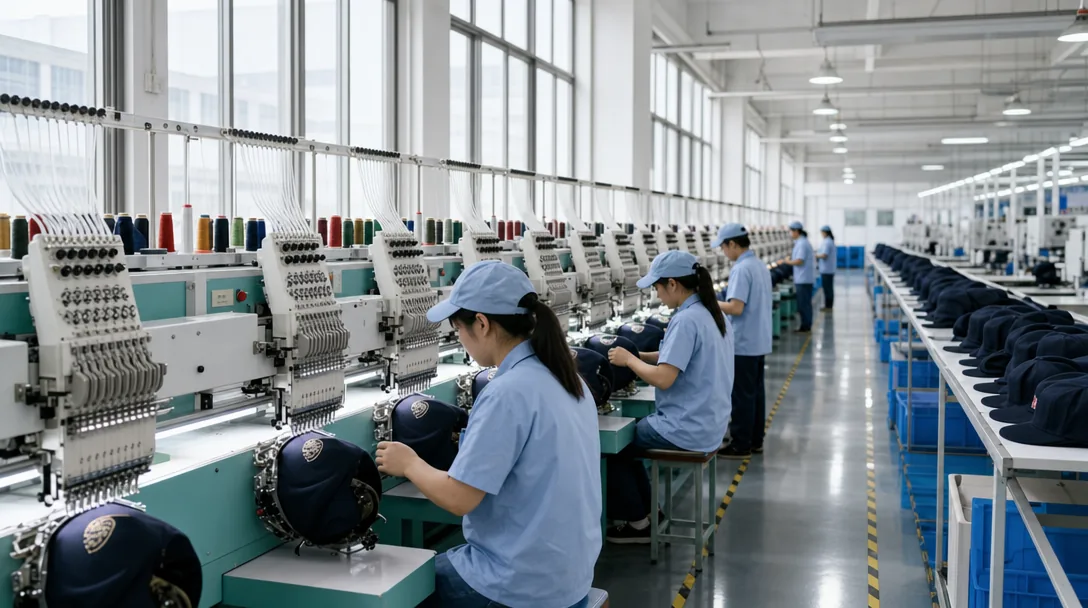
Ball Caps for Women: A 2026 Sourcing Playbook for International Buyers - 2026 Buyer's Guide
Read article →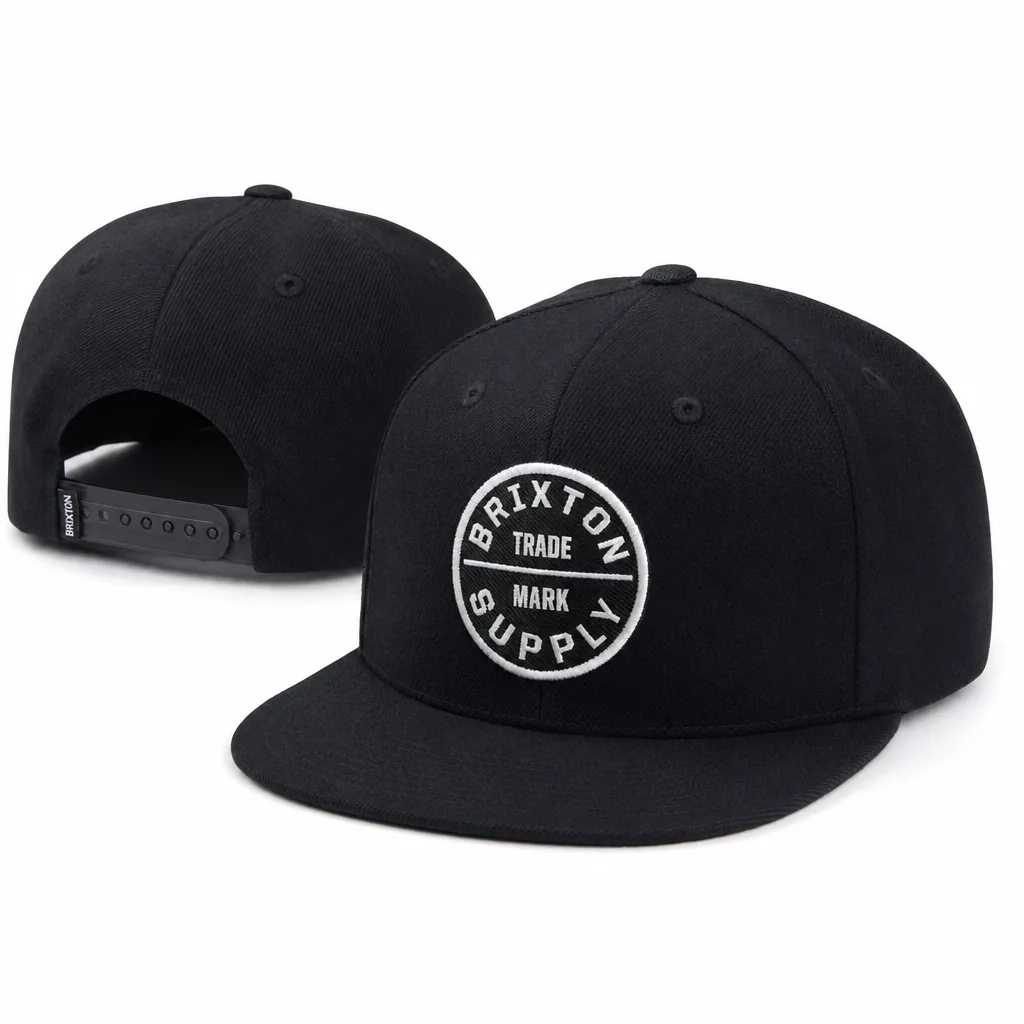
Festival Bucket Hats Reorder Planning Guide for Custom Hat Buyers
Read article →We hope this guide demystifies customizing blank fitted caps: new era 59fifty, otto, imperial buyer's guide - supplier checklist and helps you move forward with confidence. If you have questions specific to your project, our English-speaking sales engineers are one message away.