
Ball Caps for Women: A 2026 Sourcing Playbook for International Buyers - 2026 Buyer's Guide
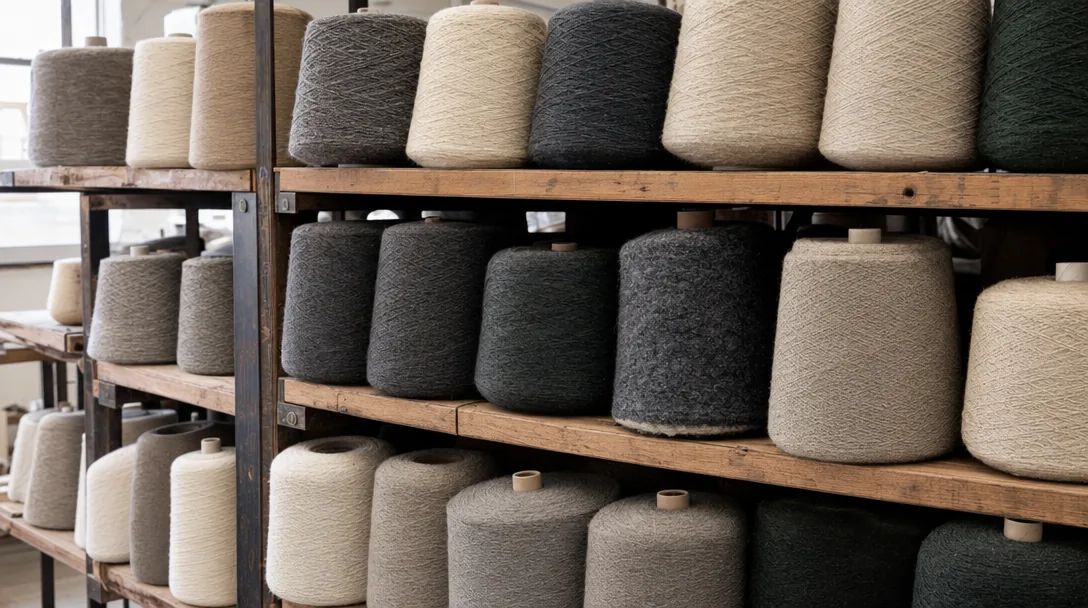
Every week, our sales team answers detailed questions about ball caps for women: a 2026 sourcing playbook for international buyers - 2026 buyer's guide. We wrote this guide so that wholesalers, streetwear brands, corporate buyers and promotional resellers can compare options with full information, and avoid the traps that show up only after production has started.
Dad Hats for Men
Most sourcing mistakes happen when buyers treat a dad hat like a generic promotional cap. A proper dad hat is an unstructured 6-panel, low-profile cap with a soft crown, pre-curved visor, and washed hand feel; miss any of those points in the tech pack and the sample often comes back looking like a shallow baseball cap with the wrong crown break. The safest fabric range is 100% cotton twill at 220-260 gsm, but fashion programs regularly move into brushed chino twill, garment-washed canvas, or 10-12 wale corduroy when they want more texture. Construction is where good suppliers separate themselves: front panels should stay unbacked or use only light fusible, visor inserts are typically PE rather than heavy PP, and post-sewing wash must be controlled to avoid torque, shrink imbalance, and visor warpage. Soft crowns also expose bad embroidery fast. On Tajima or Barudan heads, small front logos on washed cotton usually run best at lower density, around 0.35-0.40 mm stitch spacing; push a dense fill into a relaxed crown and you get puckering, tunneling, and a logo that looks cheap before the cap ever reaches store shelves.
Vague specs get expensive in bulk, especially when the same washed low-profile body is used across men’s styles and ball caps for women. Lock down crown height in centimeters, visor length and curvature, fabric weight, backstrap construction, buckle finish, sweatband fiber content, seam tape artwork, wash process, and Pantone TCX targets with an agreed Delta-E tolerance. For dyed cotton, experienced buyers usually hold bulk color within Delta-E 1.5-2.0; anything looser invites carton-to-carton shade drift. Wash language also needs precision: enzyme wash, pigment wash, and heavy vintage wash do not behave the same on crocking, shrinkage, or embroidery edge clarity. In Yiwu, MOQ for a custom dad hat is usually 144-300 pieces per colorway, with FOB pricing around $2.10-$3.40 at 300-1,000 pieces; add 5,000-8,000 stitches, engraved metal buckle, custom inside taping, barcode sticker, and individual polybag, and the realistic FOB range is closer to $3.80-$5.20.
Inspection should target defects that generate chargebacks, not cosmetic trivia. The recurring failures on dad hats are visor wave, off-center top button, twisted backstrap, crown collapse after washing, bulky sweatband joins, embroidery tunneling, and cap-to-cap shade variation. AQL 2.5 is the practical baseline for bulk production, but it is still worth pulling random pieces for dry and wet crock testing, left-right panel symmetry, buckle plating consistency, and finished head-size checks. A nominal one-size dad hat should still land around 58 cm with a controlled adjustment range, not vary by whatever happened on the sewing line that shift. This matters directly to ball caps for women because many brands now standardize one washed low-profile platform across genders, then differentiate only by color palette, logo scale, or closure trim. If a factory can hold wash consistency, crown symmetry, and clean low-density embroidery on dad hats, it is usually a safer candidate for women’s programs as well.
Country Hats for Men
Freeze the silhouette before asking for a quote. “Country” means nothing on a factory floor, and it is exactly how buyers get three different samples and four different prices. For men’s programs, the category usually resolves into four production-ready builds: a 6-panel unstructured dad cap in 8 to 10 oz cotton twill, a brushed canvas cap at 240 to 300 gsm, a trucker with foam or twill front panels plus polyester mesh at roughly 120 to 160 gsm, or a rope cap with a higher crown, braid across the seam, and a pre-curved PE visor. Construction is straightforward—cutting, front-panel backing, eyelets, sweatband attachment, visor insertion, crown closing, decoration, shaping, and packing—but decoration is where bad specs show up fast. Western serif logos, ranch marks, and livestock icons usually sew cleanest as flat embroidery on Tajima or Barudan machines at moderate stitch density. On washed or soft-hand panels, dense fill embroidery tends to tunnel, pucker, and distort the crown, so woven patches, faux leather patches, or even molded TPU labels are often the safer specification. The same discipline applies when buyers source ball caps for women from overlapping factories: logo method, fabric behavior, and panel structure transfer across gender lines even if crown depth, opening size, and color palette shift.
Write the tech pack in factory language or expect sampling drift. Call out crown height in centimeters, visor length and width, buckram or unstructured front panel, closure type, sweatband material, seam tape, stitch count per inch, shell composition, fabric weight, Pantone TCX, and an approved bulk shade tolerance such as Delta-E under 1.5. If the order is for farm-store chains, western distributors, or event merch, also lock barcode placement, care label copy, carton assortment, polybag warning text, and whether every trim must pass needle detection. MOQ is usually 144 to 300 pieces per colorway with stocked twill, standard snapbacks, and flat embroidery; move into custom-dyed mesh, enzyme wash, molded rubber patches, or printed inside taping and the first clean production run usually starts closer to 500 pieces. For 2026 FOB China, a basic brushed-cotton country cap typically lands around $2.20 to $3.80, a trucker build around $2.60 to $4.50, and a washed cap with patch application or specialty finishing around $4.20 to $6.80. Margin is won at inspection, not booking: the repeat defects are visor warpage, logo drift over 2 mm, twisted side seams, off-center top buttons, scratchy sweatband joins, and crown-to-undervisor shade mismatch. AQL 2.5 is the practical standard, with head circumference tolerance held at +/-0.5 cm and extra checks on mesh recovery, snapback brittleness, and patch adhesion after carton compression.
Toilet Bolt Caps
This topic does not belong inside a guide to ball caps for women unless you label it as a category error and separate the sourcing logic completely. Toilet bolt caps are injection-molded sanitary hardware, not sewn headwear, so the control points shift from crown height, buckram, and embroidery density to resin grade, snap-fit geometry, and molding stability. A usable spec starts with material and dimensions: PP copolymer or ABS, cap outer diameter of 32 mm or 35 mm, overall height, wall thickness at 1.8-2.5 mm, gloss level, gate location, and mold-finish standard such as SPI-B2 or equivalent. For white, bone, almond, and light gray, set color against an approved Pantone or RAL master and hold Delta-E under 1.5; once suppliers drift past 2.0, shade variation is visible on shelf under 4000-5000K retail lighting. Do not leave tolerances vague. For a common 35 mm cap, ±0.20 mm on diameter and a defined retention-force window are practical starting points, because loose snap engagement causes field complaints faster than cosmetic defects.
Cost is driven by tooling ownership before anything else. If a supplier already has an open mold for a standard 32 mm or 35 mm profile, MOQ usually lands at 3,000-5,000 pairs per color, with EXW pricing around USD 0.03-0.08 per pair depending on resin, cavity count, surface polish, and packing method. A custom mold for a nonstandard snap profile typically costs USD 600-1,800, and MOQ often jumps to 10,000 pairs to make machine time and setup worthwhile. Before paying deposit, confirm cavity count, cycle time, resin lot traceability, and packed quantity per polybag, inner carton, and master carton; low-value molded parts are notorious for lot mixing and count shortages that erase any savings in the unit quote. Final inspection should use AQL 2.5, but cosmetic sampling alone is not enough. Check sink on the dome, flash at the parting line, gate vestige, brittleness during installation, and snap retention on actual mating bolts from every carton. That discipline is identical to sourcing ball caps for women: clear specifications, approved standards, and no assumptions hidden inside a cheap piece price.
Embroidered Caps Wholesale
Embroidery is where ball caps for women either start to look retail-grade or immediately read as overbuilt promotional stock, and that decision is usually made at sample stage, not after sewing. The cap body has to be locked first because a 6-panel structured cotton twill at 260-280 gsm reacts very differently from washed chino at 220-240 gsm or 120D-150D recycled polyester performance fabric. Stitch density, edge-run underlay, pull compensation, needle size, and backing weight all shift with the substrate. Buyers should not approve artwork from a flat AI file alone; the spec pack needs crown height, brim curve, head circumference range, closure type, sweatband composition, fabric gsm, eyelet finish, and Pantone TCX references for shell, thread, and trims. For embroidery, call out logo size in millimeters, target stitch count, thread brand and composition such as Madeira Polyneon 100% polyester, backing weight in gsm, and machine platform—Tajima, Barudan, and ZSK do not sew exactly the same. On lower-profile women’s fits, front logos usually stay cleaner at roughly 3,500-7,500 stitches on an 85-90 mm crown with lighter buckram; using the same oversized fill-heavy file from a men’s promo cap often causes puckering, front-panel collapse, and a cap that feels visually top-heavy.
Cost is driven less by the word “embroidery” than by stitch count, fabric behavior, and how many colorways can share one shell and trim package. In China, 300 pcs per color per style is still the realistic MOQ for custom embroidered programs, though some factories will accept 144 pcs if stock fabrics, standard closures, and in-line sweatbands are already available. A basic brushed cotton cap with hook-and-loop closure typically lands around $2.20-$3.40 FOB Ningbo at 500 pcs; washed cotton, enzyme-washed chino, or recycled polyester with a metal tri-glide buckle is more commonly $3.10-$4.80. Add 3D foam embroidery, metallic thread, satin stitch borders, side hits, back arch text, or interior taping customization and the cost rises quickly. Digitizing normally runs $20-$60 per logo unless volume is high enough to absorb it into the order. Inspection should focus on failure points that generate claims, not cosmetic trivia. The big issues are logo placement drift beyond a 2-3 mm tolerance, fill-stitch tunneling, thread tension breaks in letters under 4 mm height, backing show-through, visor warping after sewing, and thread-to-approved-shade mismatch outside the agreed Delta-E tolerance, usually under 1.5-2.0 for branded programs. AQL 2.5 remains the standard final inspection level, but it is not enough by itself. Approved sew-outs, placement templates, perspiration and crocking colorfastness checks, and consistent crown measurements across the size run are what keep wholesale ball caps for women commercially consistent across repeat POs.
Wholesale Embroidered Caps
Embroidery remains the lowest-risk decoration method for wholesale headwear because it holds up better than heat transfer or basic screen print under washing, abrasion, and UV exposure; the catch is that the cap block and front-panel construction matter as much as the logo file. For ball caps for women, I would spec the shell first: 260-320 gsm brushed cotton twill for a softer retail handfeel, 65/35 poly-cotton twill when crocking and shade consistency matter, or 120-180 gsm polyester performance woven for team, golf, and outdoor accounts. Artwork should be digitized as a DST file for Tajima, Barudan, or ZSK multi-head embroidery, with stitch density, edge run, underlay, and pull compensation tuned to the actual panel fabric and crown height. A common sourcing mistake is shrinking a men’s mid-profile logo layout onto a lower women’s crown. That usually creates tunneling, puckering, and distorted small text, especially on softer unstructured panels. If the program includes 3D foam, metallic thread, or side and back placements, quote each location separately; an extra 6,000-8,000 stitches and trim time typically adds $0.18-$0.45 per cap FOB.
A workable spec sheet for embroidered ball caps for women has to lock fit and construction, not just the artwork. Freeze crown height, brim length, visor curve, closure type, sweatband material, buckram stiffness, seam tape color, eyelet finish, and exact logo size by placement in millimeters. For color-critical programs, provide Pantone TCX for textiles or Pantone Solid Coated for trims and packaging, then set realistic tolerances: Delta-E under 1.5 on dyed fabric is achievable on repeat runs, while embroidery thread is better held under Delta-E 2.0 because sheen shifts under different light angles. MOQ is usually 144-300 pieces per color on stock blanks and 300-500 pieces per style-color for fully custom builds with dyed fabric, custom labels, and branded closures. In Yiwu, a stock 6-panel cotton twill cap with flat embroidery generally lands around $2.20-$3.80 FOB; a fully custom mesh-back or trucker style with woven patch, 3D embroidery, and metal closure is more realistically $3.20-$5.60 FOB.
Most expensive embroidery claims are predictable: off-center logos, loose thread tails, needle cuts around dense fills, puckered crowns, visor asymmetry, top-button drift, and back-strap stitching that runs out of square. I would check front-logo placement with a millimeter template, inspect stitch coverage under raking light, and hold final inspection to AQL 2.5, with extra attention on artwork that crosses curved seams or sits too close to eyelets. Our standard practice is to review sealed samples after final pressing because shaping often reveals distortion that looks acceptable on the sewing line. Buyers also lose money by leaving “small” variables open, especially washed finishes, sandwich brims, undervisor color, interior taping, and back-label execution. If ball caps for women sit in the same program as men’s styles, do not share one cap block just to save tooling. Separate crown depth, opening circumference, and hair-volume allowance; that fit architecture will affect reorders and sell-through far more than shaving $0.18 off unit cost.
Best Baseball Caps for Men
The best baseball caps for men are decided at the pattern table, not at decoration. For commercial programs, the most reliable spec is still a 6-panel low- or mid-profile block with a finished head opening of 58–60 cm, crown height around 115–125 mm, and a visor length near 70 mm that holds its curve after carton pressure. A useful tech pack should lock measurable points instead of vague style language: panel count, front-panel structure, visor width, closure type, sweatband composition, eyelet finish, and the exact shell fabric, such as 260 gsm brushed cotton twill, 280–300 gsm chino twill, or 75D–150D moisture-wicking polyester. If the men’s assortment sits beside ball caps for women in the same retail drop, write color tolerance directly into the PO: approve Pantone TCX before bulk and hold lot-to-lot shading within Delta-E 1.5–2.0. Without that, the collection looks mismatched even when each SKU is technically acceptable. Decoration changes construction more than many buyers expect. A flat 6,000–8,000 stitch logo on Tajima or Barudan heads is standard on cotton twill, but 3D foam embroidery needs a stiffer front panel, cleaner underlay, and tighter stitch-path control or the edges collapse after packing. For a sharp face, most factories use laminated buckram on the two front panels and a pre-curved PE visor insert around 2.0–2.2 mm; miss either spec and the cap already looks tired at unboxing. In East China, a basic embroidered men’s cap in stock twill typically lands around $2.10–$3.40 FOB China at 300–500 pieces, while sandwich brims, heather performance fabric, woven labels, or interior taping push it closer to $2.80–$4.20. Stock-fabric MOQ is usually 144–300 pieces per colorway, but custom dye lots, enzyme washes, or specialty finishes normally need 500 pieces or more to make production efficient.
Inspection is where a men’s cap either proves commercial or turns into returns. The defects that damage sell-through are usually subtle: visor skew, embroidery drifting 2–3 mm off center, seam puckering on the front panels, loose interior binding, uneven top-button alignment, or a back closure that makes a labeled 58 cm cap wear closer to 56.5 cm. I would inspect to AQL 2.5 and pull actual measurements on crown height, visor length, opening circumference, logo placement, and left-right visor symmetry instead of relying on visual approval alone. Dark shades also need dry and wet crocking checks plus a basic sweat test, because rushed dye fixation on navy or black twill can bleed onto the sweatband and create immediate consumer complaints. Packing discipline matters almost as much as sewing quality, especially on structured caps. A well-made cap can still arrive unsellable if nested packing distorts the visor set or if carton compression crushes the crown during ocean transit. Buyers should specify inner-pack quantity, carton size, gross-weight limit, and maximum stacking load in the packing standard, not just fabric and decoration. That becomes more important when men’s styles are developed alongside ball caps for women in one collection, because inconsistent visor curvature, grading, or shade continuity makes the assortment look off-balance at retail. Our standard practice is to verify block consistency against approved samples before final packing, since shape problems are cheap to reject on the line and expensive to explain after delivery.
Working with CrownsForge for ball caps for women programs
Sample control decides whether a ball caps for women program launches on time; unit price is secondary. If the first proto misses crown depth, visor scale, or the back-opening proportion for ponytail wear, you burn 3 to 4 weeks on avoidable revisions. A disciplined calendar is 3 to 5 working days for artwork and construction mockups, 7 to 10 days for a sewn prototype, and another 5 to 7 days for a salesman sample when fit approval matters. Women’s fits should not be approved off a generic unisex block: 56 to 58 cm head-circumference grading, a lower front-panel profile, and reduced top-button height all affect silhouette and logo placement. Buyers who submit a full tech pack at the start — BOM, Pantone TCX references, panel-by-panel logo dimensions, closure spec, visor curve, and target finished measurements — usually eliminate one sample round, which is often worth more than negotiating another $0.20 off FOB.
MOQ has to track fabric, trim, and decoration complexity, not a vague factory minimum. For stock 100% cotton twill or brushed chino in the 180 to 260 gsm range, 144 to 300 pcs per color is commercially normal. Once you need custom dyeing matched to Pantone TCX within Delta-E 1.5, mills typically want around 500 pcs per shade to cover lab dips and dye-lot setup. Add custom metal sliders, molded rubber patches, or exclusive jacquard label tape, and the efficient break point usually moves to 1,000 pcs or more. Our standard practice is to consolidate shell fabric, sweatband, and closure families across several SKUs; on mixed-color orders that can trim landed cost by roughly $0.18 to $0.45 per cap and reduce trim leftovers.
Decoration and bulk control are where premium ball caps for women separate from generic promo caps. Small script embroidery on a 6-panel curved-brim cap is unforgiving: over-dense digitizing sinks into twill, while loose stitching frays after wash or abrasion. A Tajima or Barudan head running 40 wt polyester thread with the correct cutaway or tearaway backing will hold fine detail far better than a rushed setup, and lower-profile women’s panels often require the logo to be re-digitized from scratch rather than copied from a men’s cap file. In production, the sequence should stay locked: PP sample approval, incoming fabric and trim inspection, inline sewing checks, embroidery or patch strike-off sign-off, and final inspection at AQL 2.5 before carton sealing. For retailer programs, carton marks, barcode placement, size ratios, CPSIA or REACH compliance, and audit coverage such as sedex-audit-cap-supplier-guide.html">BSCI 2.0 or Sedex SMETA 4-Pillar matter almost as much as seam quality.
Frequently Asked Questions
How long does production take?
Sampling takes 7 to 12 days. Bulk production runs 20 to 30 days depending on quantity, fabric availability and decoration complexity. Inspection and packing adds another 3 to 5 days before shipment.
What is the minimum order quantity (MOQ) for custom hats?
Our standard MOQ is 100 pieces per design and color, with sampling available from 1 piece. For complex multi-color logos or premium fabric upgrades, the MOQ can be lowered with a small per-piece surcharge.
Can I order a sample before bulk production?
Yes. We strongly recommend approving a pre-production sample before mass production. Samples are charged at 35 to 60 USD each plus express shipping, fully refundable against confirmed bulk orders over 500 pieces.
Which shipping methods do you support?
We support FOB, CIF and DDP shipping. Air express for samples and small orders, sea LCL for 100 to 500 pieces, sea FCL for 5,000+ pieces. Door-to-door DDP available for US, EU, UK, Canada and Australia.
Do you support sustainability certifications?
Yes. We work with GOTS organic cotton, GRS-certified recycled polyester, OEKO-TEX Standard 100 fabrics, and are BSCI and Sedex audited. Certification documentation can be provided per order.
What should I know about custom trucker hats bulk?
When evaluating custom trucker hats bulk, the key considerations are construction quality, decoration capability, MOQ flexibility and lead time. Cover everything buyers ask about dad hats for men: how it's manufactured, what specs to request from a factory, typical MOQ and pricing, common quality issues to inspect for, and how this ties back to the broader ball caps for women sourcing decision. Cover everything buyers ask about country hats for men: how it's manufactured, what specs to request from a factory,…
What should buyers know about ball caps for men?
When evaluating ball caps for men, the key considerations are construction quality, decoration capability, MOQ flexibility and lead time. Cover everything buyers ask about dad hats for men: how it's manufactured, what specs to request from a factory, typical MOQ and pricing, common quality issues to inspect for, and how this ties back to the broader ball caps for women sourcing decision. Cover everything buyers ask about country hats for men: how it's manufactured, what specs to request from a factory,…
What should I know about new era blank hats wholesale?
When evaluating new era blank hats wholesale, the key considerations are construction quality, decoration capability, MOQ flexibility and lead time. Cover everything buyers ask about dad hats for men: how it's manufactured, what specs to request from a factory, typical MOQ and pricing, common quality issues to inspect for, and how this ties back to the broader ball caps for women sourcing decision. Cover everything buyers ask about country hats for men: how it's manufactured, what specs to request from a factory,…
How does ordering custom golf hats for men work?
When evaluating custom golf hats for men, the key considerations are construction quality, decoration capability, MOQ flexibility and lead time. Cover everything buyers ask about dad hats for men: how it's manufactured, what specs to request from a factory, typical MOQ and pricing, common quality issues to inspect for, and how this ties back to the broader ball caps for women sourcing decision. Cover everything buyers ask about country hats for men: how it's manufactured, what specs to request from a factory,…
Ready to start your custom hat project?
Send us your tech-pack, sketch or even just an inspiration photo. We will respond with a detailed quotation and digital mock-up within 24 hours.
Request a free quoteRelated guides
Building a Repeat-Order Workflow with Your Hat Factory (2026 Update)
Read article →
Blank Trucker Cap Wholesale Bulk: A 2026 B2B Sourcing Guide
Read article →
Hat With Patch Decoration QC Checklist for Custom Hat Buyers
Read article →If you are ready to take the next step on ball caps for women: a 2026 sourcing playbook for international buyers - 2026 buyer's guide, our team can put a tailored quotation and digital mock-up in your inbox within 24 hours. Send the inquiry form on our contact page or message us directly on WhatsApp.