
What's in a Cap Tech-Pack: A Specification Template for Buyers - Cost & MOQ Breakdown - 2026 Buyer's Guide - 2026 Buyer's Guide - 2026 Buyer's Guide
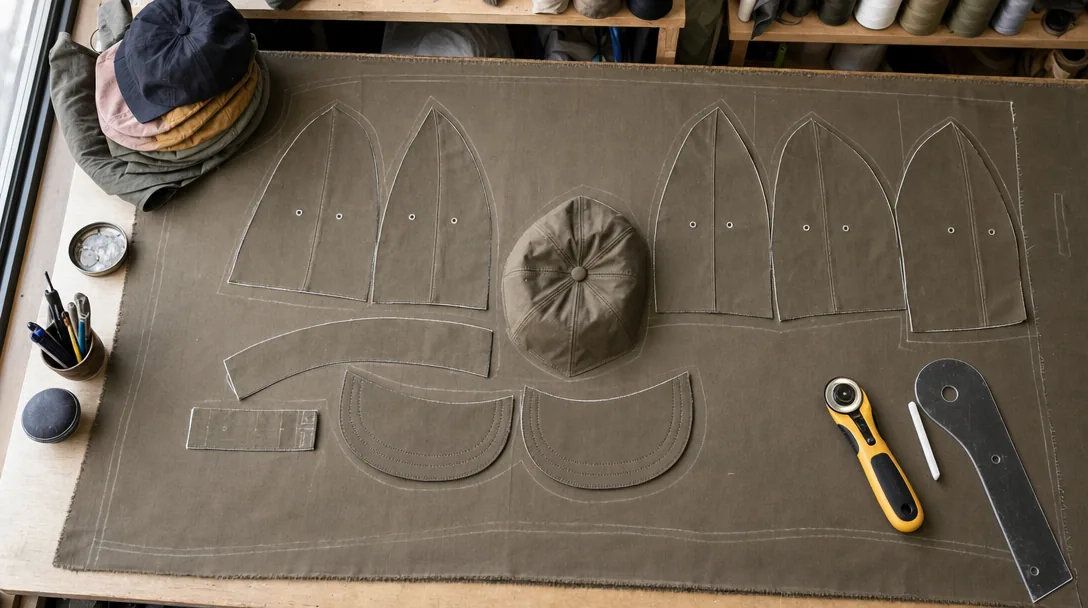
Every week, our sales team answers detailed questions about what's in a cap tech-pack: a specification template for buyers - cost & moq breakdown - 2026 buyer's guide - 2026 buyer's guide - 2026 buyer's guide. We wrote this guide so that wholesalers, streetwear brands, corporate buyers and promotional resellers can compare options with full information, and avoid the traps that show up only after production has started.
Why a tech-pack saves you weeks of email back-and-forth
A one-line request like “6-panel dad hat, navy, embroidery” does not start production; it starts interpretation. Navy might mean Pantone 19-4027 TCX Dark Navy, 19-3920 TCX Peacoat, or a lab-dip match to a reference cap with Delta-E under 1.5. Embroidery could be flat polyester, shiny rayon, 3D puff over 2 mm EVA foam, chenille, or a woven patch sewn down after blocking. Without a cap tech pack template, the factory usually quotes the safest default: 260 gsm cotton twill or 160 gsm polyester, 70 gsm front-panel interlining, generic cotton sweatband, stock PE visor board, and standard pre-curved brim. That quote may be fast, but it is rarely accurate. For un-specced cap orders, I routinely see 10-15 working days disappear before the sample room even has a clean file: crown height, visor length, closure, sweatband, label placement, thread brand, packing ratio, and carton marks all get solved by email instead of by specification.
A strong cap tech pack template moves those decisions into one controlled document. If the sheet calls out a 108 mm front crown height, 55 mm visor length, 3.5 mm PE visor board, 6-row bill stitching in #69 bonded nylon, 260 gsm brushed cotton twill in Pantone 19-4028 TCX, and a matte black metal buckle with tuck strap, the BOM can be built without guesswork. Decoration needs the same discipline: Madeira Polyneon 1842, 0.42 mm satin density, edge-run underlay, maximum 8,500 stitches, digitized for Tajima, Barudan, or ZSK heads, plus placement tolerance of +/-2 mm from center front. That level of detail commonly cuts first-sample lead time from 12-14 working days to 6-7 working days. It also changes the revision conversation. Instead of three or four rounds correcting basic construction, the buyer usually gets one focused correction on fit, logo scale, or color tolerance.
Cost control is where the tech pack pays for itself fastest. A plastic snapback costs about $0.08, a matte metal buckle with tuck strap runs $0.22-$0.35, and a YKK #5 brass zipper with leather puller can add $0.50-$0.60 before sewing labor. A vague “cotton cap” quote can move $0.40-$0.90 per unit once the buyer adds 10 oz enzyme-washed canvas, moisture-wicking polyester sweatband, satin taping, woven labels, individual polybags, or AQL 2.5 final inspection. At CrownsForge, our costing sheet pulls from BOM fields, so fabric gsm, interlining grade, embroidery stitch count, label construction, carton pack, and compliance requirements such as sedex-audit-cap-supplier-guide.html">BSCI 2.0 or Sedex SMETA 4-Pillar all affect price and MOQ. A 6-color puff logo taking 18-22 minutes per cap on a 12-head Tajima line may require 1,000-1,200 pieces, while a flat 5,000-stitch logo often stays around 300-500 pieces. The tech pack exposes that math before sample fees are spent.
The seven sections of a complete cap tech-pack
A usable cap tech pack template has seven sections, and the first three decide whether the factory quote is real or just a guess: drawings, material specs, and color standards. The drawing sheet should show front, side, back, top, under-visor, and inside views, with callouts for 5-panel or 6-panel construction, A-frame or low-profile dad-cap shape, structured buckram or unstructured crown, rope trim, sandwich visor, seam tape layout, closure position, and target visor curve. Do not write “cotton” or “performance fabric.” Write the buying spec: 16x12 cotton twill at 280 gsm, 65/35 poly-cotton canvas at 240 gsm, 150D recycled polyester ripstop with PU coating, 120 gsm nylon taslan, or 360 gsm wool-blend melton. Add risk controls where they matter: shrinkage under 3%, dry crocking Grade 4, wet crocking Grade 3, AZO-free dyes, REACH SVHC compliance, and Prop 65 labeling for California retail. Fabric shades should be Pantone TCX; printed inks should be Pantone C or U. For brand-critical solids, Delta-E 1.5-2.0 is fair. For pigment-dyed, washed, heather, or garment-dyed caps, Delta-E 3.0 is usually the honest tolerance.
Decoration, construction, and sizing are the next three sections, and they must be measurable enough for a sample room running Tajima, Barudan, or ZSK embroidery heads. Decoration specs should state logo width and height in millimeters, placement from center seam or visor edge, stitch count, backing, thread brand, thread colors, trim count, needle direction, and technique: flat embroidery, 3D puff, chain stitch, chenille, woven patch, silicone badge, heat transfer, sublimation, or screen print. A 55 mm front logo at 8,000 flat stitches may add about $0.18-$0.35 per cap; a 12,000-stitch 3D puff logo with 2 mm EVA foam, four thread colors, and three trims can add $0.45-$0.80 and create more rejection risk. Construction specs should lock crown height, panel shape, visor length, visor insert thickness, eyelet count, seam tape width, sweatband material, closure type, and tolerances. A proper sizing line reads: 58 cm sample size, +/-5 mm head circumference tolerance, six embroidered eyelets, 25 mm cotton sweatband, 7-row visor stitching, and brass buckle with tuck-in slot. Attach AI or PDF vector art, approved DST files, and strike-off approval rules before bulk cutting.
The seventh section is packaging, labeling, and inspection, because many late shipment arguments come from missing pass/fail criteria rather than poor sewing. Specify flat pack or crown-supported pack, 0.03 mm or 0.04 mm polybag, pieces per carton, carton dimensions, gross weight under 15 kg, silica gel, barcode position, carton mark format, 1.2 m drop-test requirement, and moisture target below 12% carton humidity for sea freight. Label pages should show woven main label, care label, country-of-origin label, UPC/EAN sticker, retail hangtag, string color, suffocation warning, and FSC paper requirement if a sustainability claim is printed. Inspection rules must be numeric: seam skew over 3 mm, visor off-center over 4 mm, loose sweatband stitching over 10 mm, visible oil stain, broken embroidery thread, wrong Pantone shade beyond approved Delta-E, barcode scan failure, or mixed size ratio. Our standard practice at CrownsForge is AQL 2.5 for major defects and AQL 4.0 for minor defects after pre-production sample approval. When all seven sections are complete, the cap tech pack template protects MOQ pricing, reduces quote padding, and often removes one sampling round from a custom cap order.
Tech sketches: front, side, back, optional underbrim
Scaled vector drawings are the lowest-cost control point in a cap tech pack template because they freeze the cap block before the pattern maker starts interpreting photos. Use AI, editable PDF, or DXF line art at 1:1 scale; 1:2 is acceptable only if the scale bar and all critical dimensions are printed on the sheet. The front view should identify the construction clearly: 5-panel, 6-panel, camper, trucker, low-profile unstructured dad cap, mid-profile structured snapback, or foam-front mesh cap. Mark crown height from visor seam to button or top seam, front panel width at sweatband, eyelet diameter and distance from seam, center seam yes/no, logo bounding box, and logo centerline in millimeters. Call out appearance stitching where it changes the pattern: 6–8 mm seam allowance on 280 gsm cotton twill, single-needle topstitch 2 mm from seam, or twin-needle topstitch with 4 mm gauge. Add grain direction arrows on every cut panel; brushed cotton twill, 10 x 10 canvas, nylon taslon, and washed denim can skew badly if the cutting room nests panels off-grain to save fabric.
Side and back sketches prevent the most common first-sample failures: crown too deep, visor too flat, rear opening too high, or closure sitting off-center. The side view should show crown depth from button or top seam to sweatband edge, visor length from front seam to tip, visor pitch, and curve standard. I prefer numeric visor curve notes: 58–65 mm rise on a 7-curve jig for sports retail, 32–38 mm rise for flatter streetwear shapes, and “do not pre-curve” only when the buyer truly wants a flat bill. If the visor has a sandwich or contrast edge, draw the cross-section and specify the insert: 2.0 mm PE board for normal retail caps, recycled PP for better rebound, or paper board only for low-cost promotional orders. The back view must define closure type, rear opening height and width, strap width, buckle finish, snapback hole count, elastic length, back arch stitch, woven label size, and rear logo position. A 1.5–2.0 mm change in rear opening height is enough to make an unstructured cap feel loose, especially with 75D polyester mesh or enzyme-washed cotton.
The underbrim drawing should be treated as mandatory whenever there is color blocking, licensed color matching, sublimation, camo, contrast stitching, sandwich piping, or retail compliance review. Draw the undervisor as a separate flat view and label the fabric, color reference, and tolerance: Pantone TCX or TPX for fabric, Pantone C for printed ink, Delta-E under 1.5 for licensed team colors, and under 2.0 for general retail programs. Show whether the underbrim uses self-color thread, contrast thread, or thread carried through from top visor quilting; this matters because one wrong bobbin color is visible every time the wearer tilts the cap. Keep decoration specs next to the relevant sketch, not buried in email: embroidery width and height, center point from visor seam, stitch type, estimated stitch count, 3D puff foam thickness such as 2 mm or 3 mm EVA, applique edge stitch, and machine assumption such as Tajima, Barudan, or ZSK heads. I reject notes like “same as photo” because they usually create one extra sample round: $80–150 in sample and courier cost, plus 7–10 calendar days lost.
Fabric and color spec: GSM, weave, Pantone references
The fabric line in a cap tech pack template must be written as a buying specification, not a design note. A usable line reads: “Crown/visor top: 100% cotton twill, 20s/2 warp x 10s/1 weft, 108x56 construction, 260 gsm ±5%, reactive dyed, sanforized, Pantone 19-4006 TCX, Delta-E ≤1.5 under D65, approved lab dip attached.” GSM by itself is weak control. Two 260 gsm twills can cut, block, embroider, and steam-press very differently if yarn count, pick density, resin finish, brushing, enzyme wash, or shrinkage are different. For structured 6-panel caps, specify shell fabric and buckram together; common fused buckram is 180–220 gsm polyester or cotton-poly. For unstructured dad caps, 8–10 oz washed chino or brushed cotton twill is acceptable because collapse is part of the fit. For performance caps, define 150D polyester microfiber, 92/8 poly-spandex at 180–220 gsm, or 100D/48F bird-eye mesh. For corduroy, call out 8W, 11W, or 14W; wale size affects seam bulk and embroidery registration on Tajima, Barudan, and ZSK heads.
Color must be specified by component because “black cap” may include cotton panels, polyester embroidery thread, nylon seam tape, a plastic snap, metal buckle, and PU sweatband that all reflect light differently. List crown panels, visor top, sandwich, undervisor, eyelets, top button, sweatband, seam tape, closure, buckle, woven-label ground, label yarn, and tonal embroidery thread if matching is required. Use Pantone TCX for textile fabric; use Pantone TPG only for coated trims or plastic hardware after the supplier confirms the reference. HEX, CMYK, screenshots, and phone photos are not production standards. CrownsForge keeps the approved lab dip, PP sample swatch, bulk cutting swatch, and shade band in one sealed file, then checks incoming rolls by spectrophotometer under D65 and TL84 before cutting. Reactive-dyed cotton is realistically controlled at Delta-E 1.5–2.0; solution-dyed polyester can hold 1.0–1.5 if the yarn source is locked. Dark navy, scarlet, fluorescent yellow, and deep black also need crocking and perspiration checks because color transfer often appears after steam pressing, carton pressure, or wear testing.
MOQ and cost move sharply when the spec changes from stock fabric to custom dyeing. Stock cotton twill, washed chino, polyester microfiber, and trucker mesh in black, navy, white, khaki, red, or royal can often support 144–300 pieces, with short-roll and cutting-waste surcharges around $0.15–$0.40 per cap. Custom dyeing is usually 300–500 kg per color per fabric quality; after panel yield, visor consumption, 2%–4% shrinkage allowance, and 3%–6% cutting loss, that can represent roughly 3,000–8,000 caps. Small orders forced into custom dye lots commonly absorb $120–$250 for lab dips, vat setup, and re-approval before sewing cost even changes. The tech pack should require roll segregation, lot-number recording, shade continuity by production batch, incoming GSM checks with a 100 cm² calibrated cutter and scale, and shrinkage testing after wash or steam press. Final inspection should apply AQL 2.5 for appearance defects, including panel-to-panel shade variation. The costly floor mistake is mixing two “same color” rolls in one crown; after sewing and embroidery, repair is usually impossible.
Decoration spec: technique, placement, dimensions, color count
Decoration is the line item that breaks a cap tech pack template most often, because “logo on front” tells the factory almost nothing. Each decoration callout should start with the method: flat embroidery, 3D puff embroidery, woven patch, embroidered patch, sublimated twill patch, PVC/rubber patch, chenille, felt appliqué, heat transfer, or screen print. Then define the artwork file that controls production. AI, EPS, or vector PDF is acceptable for new digitizing; DST/EMB should be treated as a reference unless it has already been sewn on the same crown shape, fabric, and backing. A 50 mm wide flat logo on a structured six-panel front usually runs 4,000–7,000 stitches; the same logo in 3D puff needs 5–6 mm minimum satin-column width, 2–3 mm EVA foam, open counters, and no text below roughly 4 mm cap height. Tajima, Barudan, and ZSK cap frames do not sew curves identically, so pull compensation, underlay, thread tension, needle size, and frame angle must be approved on the actual cap body, not assumed from a flat proof.
Placement must be measured from real cap reference points, not from an Illustrator mockup floating over a photo. For front decoration, specify width × height, bottom-edge distance above the visor seam, and the centering rule: centered on the seam for a six-panel cap, centered on the front-panel centerline for a five-panel or seamless front. A usable spec reads: “Front center 3D puff embroidery, 50 mm W × 30 mm H, bottom edge 22 mm above visor seam, centered on front seam, max 3 thread colors, no detail under 2 mm.” For side logos, measure from the nearest panel seam, eyelet, or back-center seam; for rear logos, state whether the mark sits above a plastic snap, across a fabric strap, on a leather strap, beside a metal buckle opening, or directly on the back panel. Our standard practice at CrownsForge is to confirm decoration position on a blocked sample crown before bulk release, because a 58 cm cap body distorts artwork differently from a 2D layout, especially on high-profile truckers, foam fronts, and stiff buckram crowns.
Color and construction notes should be written so costing and inspection are not left to interpretation. For embroidery, list thread brand and code where possible, such as Madeira Classic 40, Isacord 40, or Gunold Poly 40; Pantone TCX/TPX can be used as the visual target, but polyester thread, cotton twill, and recycled poly fabric will not all hit Delta-E 2.0 under D65 light. For patches, define the face material, border, backing, and attachment: woven polyester with merrowed edge and perimeter lock stitch; PVC with recessed color fill and stitch channel; sublimated twill with laser-cut edge, heat-press film, and safety stitch. At 1,000 pcs in 2026 China bulk production, flat embroidery under 6,000 stitches typically adds $0.25–$0.55 per cap, 3D puff adds $0.40–$0.90, and woven patches usually add $0.35–$0.80 depending on size, color count, and border. Lock technique, dimensions, stitch-count target, color count, Pantone references, and approval sample status before the first salesman sample is cut.
Packaging and label spec: polybag, hangtag, sticker, carton
Packaging mistakes are cheapest to prevent before the first carton is taped, so the packaging page in a cap tech pack template should read like a warehouse receiving instruction, not a design note. For a standard adult 6-panel cap, specify polybag size, resin, thickness, venting, warning copy, barcode zone, and seal method. Typical individual bags are 28 x 35 cm for curved-brim caps and 30 x 38 cm for higher crowns or flat brims, using 0.035–0.05 mm LDPE or CPP with a self-adhesive lip; heat seal is cleaner but slower for mixed-SKU packing. If suffocation rules apply, call out a 5 mm vent hole and the exact warning language, for example English/French/Spanish in 10-point minimum type. Recycled claims must be written as a material specification: “30% GRS-certified recycled LDPE, transparent, recycle mark 04-LDPE,” not “eco bag.” Virgin LDPE may cost $0.025–$0.035 per piece, while GRS recycled or compostable PLA can run $0.055–$0.09 and may require a separate supplier MOQ.
Hangtags, brim stickers, size labels, and authenticity labels should sit on the same packing-and-label sheet because they directly affect line speed and defect sorting. A normal retail hangtag is 55 x 90 mm, 300–400 gsm C1S paper, CMYK with matte or gloss lamination, 3 mm drill hole, attached by black swift tack, cotton string, elastic loop, or brass safety pin. The attachment point must be fixed: rear strap, left side seam, sweatband loop, top-button loop, or dedicated hang loop. “Attach hangtag” is not enough; on a 5,000-piece run it can create four different placements and add 3–6 seconds per cap during packing. Stickers need the same discipline. A 50 mm gold-foil brim sticker should list diameter tolerance of ±1 mm, adhesive type, foil finish, Pantone or metallic foil reference, artwork file name, and placement distance from the visor edge. Low-tack adhesive often curls within 48 hours on suede under-brims, brushed cotton, TPU-coated polyester, and water-repellent fabrics, so approve it on real bulk material, not only on paper proofs.
Carton specs are where buyers lose freight money and damage claims, especially with structured crowns. For structured baseball caps, 24 pieces per export carton is usually safer; unstructured dad caps can often pack 48 pieces if the front panels are not foam-backed and the visor shape is protected. A typical 24-piece carton is around 60 x 45 x 38 cm, but final size depends on crown height, flat versus curved visor, tissue stuffing, PE crown inserts, individual boxes, and whether caps are nested front-to-back or stacked by color. State carton board as 5-ply K=A or BC flute corrugated, minimum 32 ECT or 180 lb burst strength, moisture below 12%, and gross-weight range such as 8.5–10.5 kg. Carton marks should include PO, SKU, color code, size if applicable, quantity, gross/net weight, carton number, country of origin, and GS1-128 or routing-label position. At CrownsForge, our AQL 2.5 pre-shipment record includes inner packing photos, carton marks, and barcode scan results, because relabeling at a Ningbo or Shanghai forwarder commonly costs $0.20–$0.60 per carton before delay charges.
Frequently Asked Questions
How long does production take?
Sampling takes 7 to 12 days. Bulk production runs 20 to 30 days depending on quantity, fabric availability and decoration complexity. Inspection and packing adds another 3 to 5 days before shipment.
Do you support sustainability certifications?
Yes. We work with GOTS organic cotton, GRS-certified recycled polyester, OEKO-TEX Standard 100 fabrics, and are BSCI and Sedex audited. Certification documentation can be provided per order.
What file format should I send for my logo?
Vector files (AI, EPS, PDF) are ideal. High-resolution PNG or JPG at 300 dpi on transparent background works as a fallback. Provide Pantone color references for accurate reproduction.
What is the minimum order quantity (MOQ) for custom hats?
Our standard MOQ is 100 pieces per design and color, with sampling available from 1 piece. For complex multi-color logos or premium fabric upgrades, the MOQ can be lowered with a small per-piece surcharge.
Can I order a sample before bulk production?
Yes. We strongly recommend approving a pre-production sample before mass production. Samples are charged at 35 to 60 USD each plus express shipping, fully refundable against confirmed bulk orders over 500 pieces.
How does ordering custom patch trucker hat work?
When evaluating custom patch trucker hat, the key considerations are construction quality, decoration capability, MOQ flexibility and lead time. Technique (3D puff / flat embroidery / patch), placement (front center, side, back), dimensions (e.g. 5cm wide × 3cm tall), stitch count if known, color count and Pantone references. Without a tech-pack, your factory invents details that contradict your assumptions. With one, sampling lead time drops from 14 days to 7 and revision rounds drop from 4 to 1.
How does ordering baseball cap custom work?
When evaluating baseball cap custom, the key considerations are construction quality, decoration capability, MOQ flexibility and lead time. Without a tech-pack, your factory invents details that contradict your assumptions. With one, sampling lead time drops from 14 days to 7 and revision rounds drop from 4 to 1. Tech sketches, fabric spec, color spec, decoration spec, construction spec (panels, closure, eyelets, sweatband), packaging spec, label/hangtag spec.
How does ordering custom baseball cap motorcycle helmet work?
When evaluating custom baseball cap motorcycle helmet, the key considerations are construction quality, decoration capability, MOQ flexibility and lead time. Without a tech-pack, your factory invents details that contradict your assumptions. With one, sampling lead time drops from 14 days to 7 and revision rounds drop from 4 to 1. Tech sketches, fabric spec, color spec, decoration spec, construction spec (panels, closure, eyelets, sweatband), packaging spec, label/hangtag spec.
How does ordering custom bucket hat embroidered work?
When evaluating custom bucket hat embroidered, the key considerations are construction quality, decoration capability, MOQ flexibility and lead time. Without a tech-pack, your factory invents details that contradict your assumptions. With one, sampling lead time drops from 14 days to 7 and revision rounds drop from 4 to 1. Tech sketches, fabric spec, color spec, decoration spec, construction spec (panels, closure, eyelets, sweatband), packaging spec, label/hangtag spec.
Looking for a reliable hat manufacturer in China?
CrownsForge has produced custom hats for 800+ brands across 40 countries. From 100-piece launches to 100,000-piece retail programs, we deliver on time and on spec.
Get in touchRelated guides
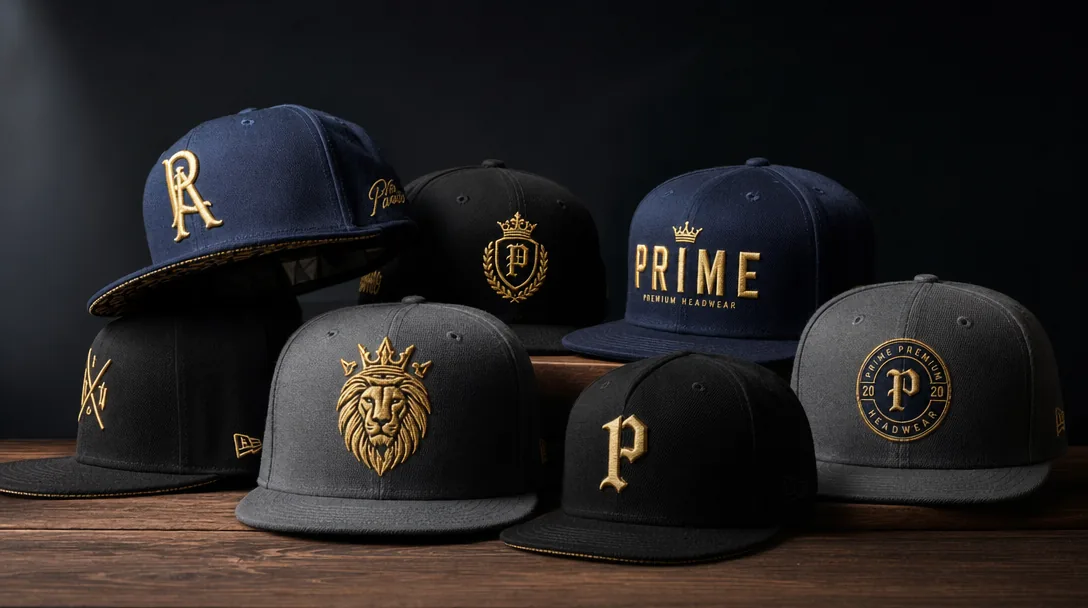
Custom Leather Patch Hat Low Minimum: A 2026 B2B Sourcing Guide
Read article →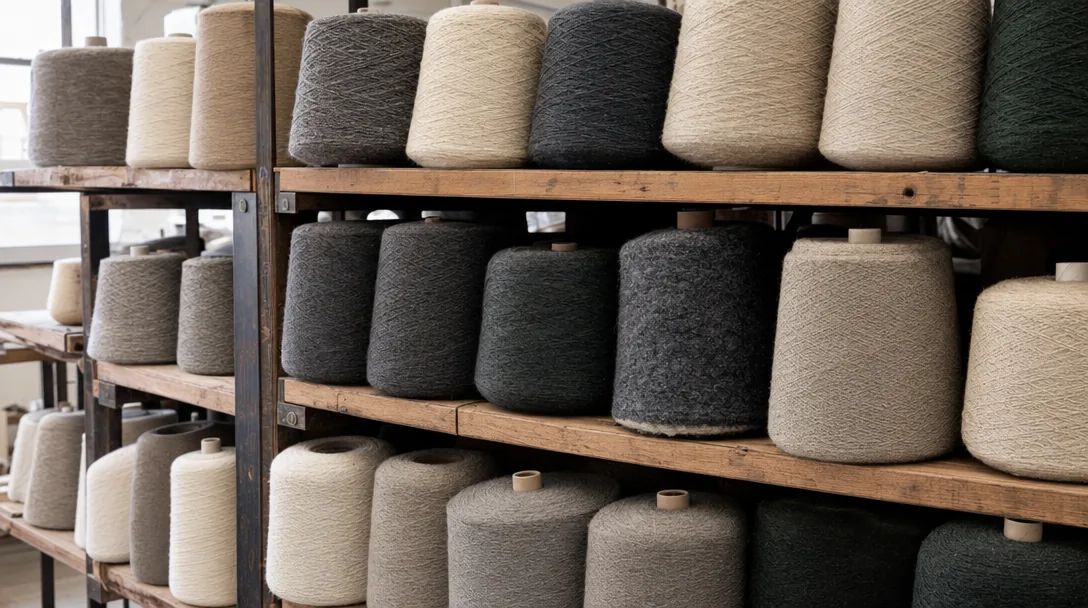
Mens Beanies: Properties, Costs and How to Spec It Right
Read article →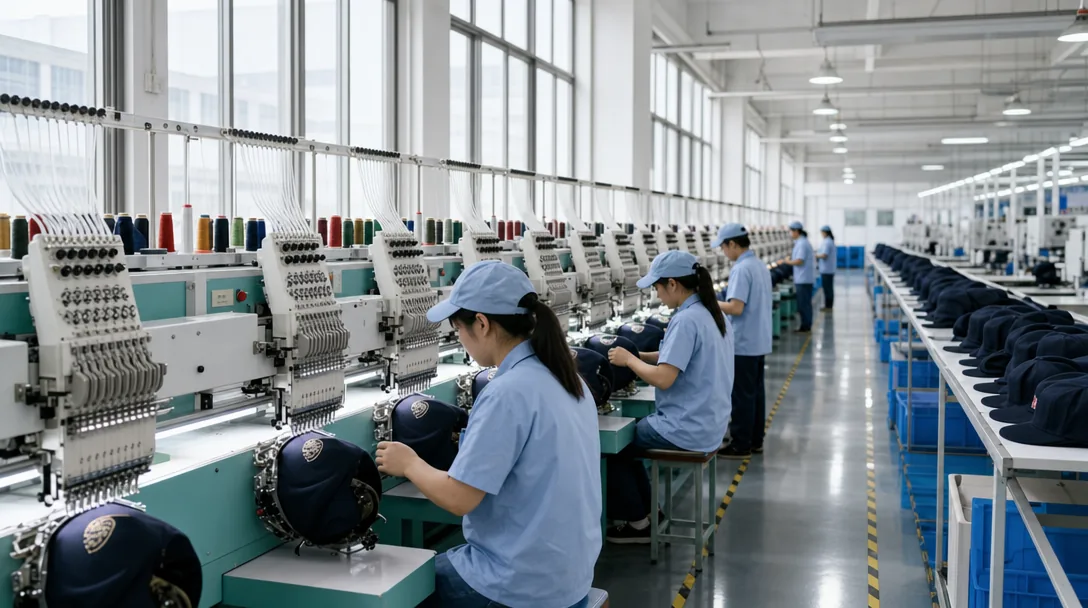
Bulk Trucker Hats Export Shipping Checklist for Custom Hat Buyers - Cost & MOQ Breakdown - Supplier Checklist
Read article →We hope this guide demystifies what's in a cap tech-pack: a specification template for buyers - cost & moq breakdown - 2026 buyer's guide - 2026 buyer's guide - 2026 buyer's guide and helps you move forward with confidence. If you have questions specific to your project, our English-speaking sales engineers are one message away.