
What's in a Cap Tech-Pack: A Specification Template for Buyers (2026 Update) - Cost & MOQ Breakdown - Supplier Checklist
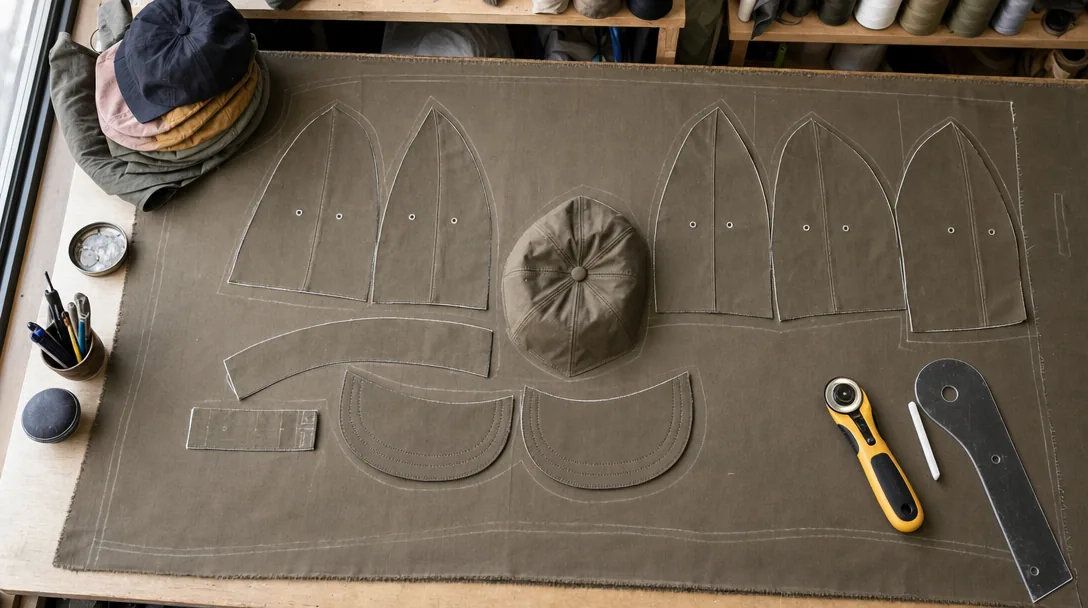
Every week, our sales team answers detailed questions about what's in a cap tech-pack: a specification template for buyers (2026 update) - cost & moq breakdown - supplier checklist. We wrote this guide so that wholesalers, streetwear brands, corporate buyers and promotional resellers can compare options with full information, and avoid the traps that show up only after production has started.
Why a tech-pack saves you weeks of email back-and-forth
A cap tech pack template saves weeks because it removes guessing before costing, patterning, and sample-room work begin. “Structured dad cap, cotton twill, 3D embroidery” is a mood board note, not a production specification. It leaves open crown height, panel shape, buckram grade, visor length, visor board thickness, sandwich color, sweatband material, seam tape, eyelet style, closure hardware, packing ratio, and embroidery density. Those choices change both FOB price and the finished silhouette. A merchandiser may cost 280 gsm washed cotton twill while the sample room pulls 320 gsm brushed twill; a pattern maker may use a 68 mm pre-curved visor when the buyer’s reference cap needs 72 mm; a digitizer may build puff embroidery at 0.8 mm satin density when the logo needs wider spacing, extra underlay, and heat-away topping to avoid puckering. Even “Pantone 19-4052 TCX” is incomplete without a Delta-E tolerance, lab dip approval rule, and light source such as D65 or TL84.
In a real factory workflow, a complete headwear specification can reduce first-sample timing from 12-14 calendar days to 6-8 because the pattern maker, embroidery digitizer, fabric sourcer, trim buyer, and costing engineer can work in parallel instead of waiting for clarification emails. Our standard practice at CrownsForge is to review the spec sheet before confirming MOQ, sample fee, and lead time, because missing construction details often change the quote. A 5-panel foam trucker with dyed polyester mesh, rope trim, 3 mm puff embroidery, and a custom woven side label may require a 500-piece mesh dye MOQ plus a $35-$80 digitizing and sample setup charge. A low-profile unstructured 6-panel cap using stock 260 gsm cotton twill, flat embroidery on Tajima or Barudan heads, and a standard brass buckle can usually move faster with less setup risk. Clear specs also prevent the classic underquote: the mockup looks simple, then sampling reveals a 12,000-stitch logo, contrast taping, custom hangtag, barcode sticker, and export carton marks that were never costed.
The biggest calendar gain is fewer remake rounds. Without a tech pack ready for hat manufacturer review, buyers often lose three or four revisions to preventable problems: crown height is 10 mm too tall, puff embroidery looks swollen, visor curve is too flat, snapback plastic feels light, or the inside label fails the retailer’s compliance guide. Each remake normally adds 5-10 days after photo comments, revised files, production scheduling, and international sample shipping are counted. A strong cap design specification should include front, side, back, and inside views; panel measurements in millimeters; fabric composition and weight; Pantone TCX or TPX references with Delta-E tolerance; embroidery size, stitch type, backing, and placement from seam lines; sweatband construction; closure hardware; label artwork; AQL 2.5 inspection points; and polybag/carton packing. With those items approved before sampling, one revision is usually enough to correct workmanship instead of redesigning the product. The tech pack does not replace factory judgment; it makes the buyer’s intent measurable.
The seven sections of a complete cap tech-pack
A usable cap tech pack template has seven sections: technical drawings, materials, color standards, decoration, construction, trims/labels, and packing/inspection. The drawing page is the quoting gate. It should show front, side, back, top, and inside views with millimeter callouts, not a mood-board render. For a structured 6-panel snapback, specify 165–175 mm front crown height, 70–75 mm visor length, 58–62 cm adjustable circumference, 14–16 mm top button, 6–8 mm eyelets, visor curve, seam locations, and front-panel lamination. “Structured” is not a specification; call out buckram weight or stiffness, such as 110–130 gsm medium-firm fusible buckram versus hard non-woven support. The material section must name fiber, weave, weight, finish, and dye route: 280 gsm brushed cotton twill, 10 oz enzyme-washed canvas, 170 gsm nylon taslan with PU coating, 600D polyester, or 80/20 acrylic-wool serge. Add shrinkage after wash, normally ≤3%, dry/wet rub fastness Grade 4 minimum, and whether the goods are piece-dyed, yarn-dyed, garment-washed, enzyme-washed, or water-repellent finished.
Color, decoration, and construction sections are where most sample rounds go sideways. Fabric color should reference Pantone TCX or TPX; print ink should reference Pantone C or U, with viewing under D65 light and tolerance stated as Delta-E ≤1.5 for licensed or team goods and ≤2.0 for promotional orders. Decoration notes need technique, artwork size, exact placement from center seam or visor edge, thread type, backing, and machine file format such as DST or EMB. A 65 mm flat embroidery at 9,000 stitches runs cleanly on Tajima, Barudan, or ZSK heads; a 95 mm 3D puff logo at 18,000 stitches needs foam height, satin-column width, and collapse control defined. Flag small lettering under 4 mm, metallic thread, tonal thread approval, applique border width, chenille pile height, PVC patch thickness, leather deboss depth, and heat-transfer temperature/time/pressure. Construction must state panel count, crown profile, seam tape width, sweatband material such as cotton twill or Coolmax polyester, closure type, eyelet method, visor board thickness, stitch density, and fitted-size grading with ±5 mm circumference tolerance.
Trim, label, packing, and inspection details look minor until a retailer rejects the shipment. The trim section should include woven label artwork, care label copy, fiber content, country-of-origin wording, hangtag stock, barcode and MSRP ticket position, closure logo, FSC paper claim if used, and compliance text such as CPSIA tracking information or California Prop 65 warning. Packing should define 0.03–0.05 mm individual polybags, suffocation warning size, silica gel, visor insert, crown tissue, carton dimensions, units per carton, carton marks, pallet pattern, and a carton gross-weight limit under 15 kg for safer handling. For FOB Ningbo/Shanghai or DDP delivery, these details affect chargeable volume and damage rate, not just presentation. Our standard practice at CrownsForge is to inspect against the approved pre-production sample using AQL 2.5 major / 4.0 minor before final packing, checking shade bands, stitch density, trim placement, fit, metal contamination when required, barcode scan, and carton marks. A complete cap tech pack template removes “supplier standard” from every item that changes cost, fit, compliance, or shelf appearance.
Tech sketches: front, side, back, optional underbrim
A cap tech pack template should use clean vector flats, not cropped Instagram photos or AI mockups. Provide front, left/right side, back, and underbrim views at 1:1 scale; if the page size forces reduction, state 1:2 and lock the measurement grid. Phone photos routinely add 5–8 mm apparent visor length because of lens distortion, especially on flat-brim snapbacks. On the front view, call out panel count, center seam, eyelet diameter and offset, visor stitch-row count, stitch spacing, top-button position, front logo safe area, and any 3D puff embroidery boundary. The side view must name the production block in factory language: 5-panel camper, 6-panel structured baseball cap, low-profile unstructured dad cap, high-crown trucker, flat-brim snapback, or strapback. If the drawing only says “same as reference photo,” the pattern room will match the nearest existing block, and a 58 mm front crown can easily become 62 mm before the counter sample is even reviewed.
Draw the construction, not just the silhouette. Mark single-needle versus double-needle seams, 10–12 mm internal seam tape, buckram height and coverage, mesh join line, dart length, visor sandwich layers, 5 mm cotton rope if used, edge binding, back arch geometry, closure type, strap keeper, and whether the top button is self-fabric or contrast. Logo placement must be dimensioned from fixed landmarks in millimeters, never described as “centered.” For a structured 6-panel cap, a workable front embroidery box might be 78 mm W × 42 mm H, centered on the front seam, with the bottom edge 18 mm above the visor seam. For a 5-panel cap, reference the panel centerline and lower front-panel seam instead. Tajima, Barudan, and ZSK embroidery heads can manage pull compensation in DST or EMB files, but they cannot fix artwork placed 5 mm too low because the sketch was vague.
Put measurement arrows directly on the flats with tolerances: crown depth from visor seam to top button, front panel height, visor length from seam to tip, visor width at base, brim curve drop, back opening width, finished circumference range, strap length, and closure overlap. For normal bulk production, use realistic limits: ±3 mm on crown and visor dimensions, ±2 mm on embroidery placement when fixed hoop jigs are used, and ±5 mm on adjustable circumference range. The underbrim view is only optional for a plain self-fabric visor; it becomes mandatory for green cotton twill, printed satin, suede, contrast polyester, sandwich piping, undervisor woven labels, or any style where stitch rows may show through. At CrownsForge, these sketch callouts are treated as CTQ points during AQL 2.5 inspection because precise flats let pattern, cutting, embroidery, sewing, and QC work from the same controlled geometry instead of arguing over a reference photo.
Fabric and color spec: GSM, weave, Pantone references
Color in a cap tech pack template has to be a measurable production standard, not “navy,” “stone,” or a screenshot pulled from Illustrator. For shell fabric and trims, specify Pantone Fashion, Home + Interiors TCX; keep RGB, HEX, CMYK, and Pantone C for digital artwork, screen printing, heat-transfer films, and packaging. A production-ready line reads: “Shell: 100% cotton twill, 280 gsm ±5%, 3/1 right-hand twill, Pantone 19-4007 TCX Jet Black, Delta-E ≤1.5 versus approved lab dip under D65.” Break out every visible part: crown panels, visor top, undervisor, sweatband, seam tape, eyelets, top button, snapback, metal buckle, woven-label ground, embroidery thread, bartack thread, and underbrim stitching. These items often come from different dye lots and different vendors. I have rejected “black” caps where the crown matched Jet Black, the undervisor read green under TL84, and the plastic snap looked blue in mall lighting. That is not a sewing defect; it is a missing color hierarchy in the specification.
GSM, weave, and fiber content decide the cap’s hand feel, needle setup, blocking behavior, embroidery stability, MOQ, and landed cost. Typical ranges are 260–300 gsm cotton twill for unstructured dad caps, 300–340 gsm brushed cotton twill plus buckram for structured snapbacks, 160–190 gsm polyester microfiber for running caps, 210D or 420D nylon oxford for outdoor panels, 10–12 oz cotton canvas for workwear caps, and 95/5 cotton-spandex twill at 260–290 gsm for stretch-fit styles. A 320 gsm structured front panel needs firmer buckram, size 90/14 needles, slower seam speed, and more steam blocking than a 260 gsm unstructured crown. Custom-dyed cotton twill usually starts at 300–500 meters per color, which yields roughly 1,200–2,500 caps after visor consumption, marker efficiency, and 8–12% cutting loss. Stock fabric can support 144–300 piece orders, but exact Pantone matching is a best effort, not a guarantee. Lab dips normally cost USD 20–50 per color, and bulk shade must be approved before cutting, especially before Tajima, Barudan, or ZSK embroidery adds non-recoverable value to panels.
Write the approval sequence into the tech pack: physical Pantone TCX chip, lab dip, pre-production yardage, bulk fabric inspection, cutting release, and TOP sample. Name the light sources, normally D65 for daylight retail review and TL84 for fluorescent store or factory lighting; for some EU retail programs, add CWF or U30 if the buyer’s QC manual requires it. At CrownsForge, our standard practice is to seal approved shade bands with the work order and verify key colors by spectrophotometer at incoming fabric inspection, inline QC, and final AQL 2.5 inspection. Delta-E ≤1.0 is possible on stable polyester or clean solid cotton, but it is too tight for washed cotton, pigment dye, heather yarn, recycled polyester, and garment-dyed caps. Delta-E ≤1.5–2.0 is more realistic for commercial headwear. For uniforms, sports licensing, and outdoor retail, add colorfastness requirements: AATCC 8 or ISO 105 crocking grade 4 dry and 3–4 wet, perspiration grade 4, and lightfastness grade 4 minimum. Without these numbers, QC can measure loose threads and stains, but it cannot prove the factory matched the buyer’s color standard.
Decoration spec: technique, placement, dimensions, color count
The decoration row in a cap tech pack template should be written like an instruction to the sampling operator, not like a note to a graphic designer. Specify process, exact placement, finished size, color count, stitch/attachment details, and approval gate in one line: “flat embroidery, front crown, centered over 6-panel seam, bottom edge 28 mm above visor seam, finished size 58 mm W x 42 mm H, 4 thread colors, tear-away backing, strike-off required.” For side logos, use wearer orientation and a measurable reference: “wearer’s left panel, logo center 65 mm forward from back seam, max height 32 mm.” Avoid “left side” because factories read caps from different directions during patterning, sewing, and QC. On Tajima, Barudan, and ZSK cap frames, stability drops near the sweatband radius and top crown curve; a 32 mm side embroidery may sew clean, while 45 mm twists, puckers, or distorts the panel grain. Scale the artwork to the cap body: 70 mm wide can suit a high-profile structured snapback, overpower a low-profile dad cap, and ripple on foam-front trucker panels unless density, underlay, backing, and crown height are engineered together.
Color callouts must use standards that match the decoration method. Use Pantone TCX for fabric and embroidery thread targets, Pantone Solid Coated for screen print, heat transfer, silicone ink, and rubber patch colors, and record viewing condition such as D65 light source. For polyester embroidery thread, Delta-E 1.5–2.0 is a reasonable thread-to-thread target; fabric-to-thread matching often needs signed visual approval because cotton twill, brushed chino, nylon taslan, recycled polyester ripstop, and rayon thread reflect light differently. List decoration colors by zone: “front logo, flat embroidery, 4 colors: PANTONE 19-4052 TCX navy, 11-0601 TCX white, 18-1664 TCX red, 14-0957 TCX gold.” Call out metallic thread, glow thread, matte cotton-look polyester, recycled polyester thread, or rayon because they change breakage rate, running speed, and yarn availability. A 6,000-stitch flat logo in China usually adds US$0.35–0.55 per cap; a 14,000-stitch 3D puff front commonly adds US$0.90–1.40 due to higher density, foam trimming, slower machine speed, and more rejected pieces.
Artwork approval is not bulk production approval. A perfect Adobe Illustrator file can still fail on a curved crown when letters are under 4 mm high, satin columns are below 1 mm, gradients require stitch interpretation, or registered colors cross the center seam. The tech pack should name the approval step: digitized stitch simulation, embroidered strike-off, decorated panel, pre-production cap photos, or one physical PP sample before bulk cutting. At CrownsForge, our standard practice is to lock technique, placement, finished dimensions, thread list, stitch count, backing, and approval method before salesman sample sign-off. MOQ also depends on decoration, not only cap sewing: basic flat embroidery usually starts at 144–300 pcs per design/colorway, while woven patches, PVC patches, leather patches, and custom metal trims are commonly 300–500 pcs because loom setup, molds, embossing dies, plating, or adhesive backing run outside the cap line. Budget US$20–50 for embroidery digitizing and US$60–180 for PVC or metal molds. For final inspection, apply AQL 2.5 with decoration tolerances such as ±2 mm for position, ±3 mm for patch size, and zero tolerance for wrong-side placement, reversed artwork, or unapproved colors.
Packaging and label spec: polybag, hangtag, sticker, carton
Packaging is not an afterthought in a cap tech pack template; it controls retail compliance, warehouse receiving, and the real landed cost per dozen. Lock one inner-pack method: 0.03–0.05 mm LDPE individual polybag, PBAT/PLA compostable bag, FSC kraft paper sleeve, or bulk pack with tissue only. For polybags, specify finished bag size, thickness tolerance, vent holes such as 2 holes at 6 mm, resealable flap versus heat seal, and the exact suffocation warning for U.S. states requiring it, usually printed in 10-point or larger type depending on bag opening size. Define where UPC/EAN, FNSKU, color-size sticker, and country-of-origin marking sit: polybag, hangtag, care label, or master carton. Hangtag specs should include 1:1 vector artwork with dieline, 300–400 gsm C1S, kraft, or black card, lamination, hole diameter, eyelet, string material, Pantone or CMYK values, and barcode quiet zones. At 500–1,000 pieces, printed hangtags usually add USD 0.08–0.18 each; woven main labels, size tabs, and wash labels add USD 0.06–0.20 depending on damask density, fold type, ultrasonic cut versus hot cut, and color count.
Stickers need dimensions and adhesive behavior, not a vague note saying “apply brim sticker.” Visor stickers are typically 38–50 mm round in gold foil, silver foil, matte PP, clear PET, or holographic film, with removable low-tack or permanent adhesive. State diameter, corner radius if not round, ink colors, backing slit, finish, and position from a measurable edge: “centered on visor, front edge of sticker 18 mm from brim edge, tolerance ±2 mm.” Low-tack adhesive is mandatory on sublimated underbrims, brushed polyester, PU-coated cotton, nylon taslan, suede-like microfiber, and DWR-coated fabric because strong glue can lift ink, leave oil rings, or raise nap. Our standard practice at CrownsForge is a 24-hour residue and edge-lift test on the approved pre-production sample before bulk sticker release. If the cap uses heat-transfer neck labels, list film type, placement from the sweatband seam, press temperature, dwell time, pressure, and wash target, such as 5 cycles at 40°C with no cracking, peeling, or dye migration.
Carton data should be approved before final inspection, because relabeling sealed export cartons costs more than doing the spec correctly. A common cap carton is 60 x 40 x 40 cm, 5-ply K=A or A=B corrugated board, with 50 pieces for structured 5-panel or 6-panel caps using crown supports and 100 pieces for unstructured dad caps or packable nylon styles. Keep gross weight below 15–17 kg for manual handling; for courier and air freight, add cap inserts, corner protection, or higher burst-strength board because cartons are stacked and thrown more aggressively than in sea freight. Carton marks should show buyer or neutral mark, PO number, style code, color, size, quantity, country of origin, net weight, gross weight, dimensions, and sequence such as 1/24. For Amazon FBA, Walmart, Target, club stores, or 3PL inbound, define FNSKU, GS1-128/UCC-128, SSCC pallet labels, mixed-SKU rules, and 4 x 6 inch label placement. Under AQL 2.5 final inspection, unreadable barcodes or carton-label mismatches should be major defects, not cosmetic issues.
Frequently Asked Questions
How long does production take?
Sampling takes 7 to 12 days. Bulk production runs 20 to 30 days depending on quantity, fabric availability and decoration complexity. Inspection and packing adds another 3 to 5 days before shipment.
Do you support sustainability certifications?
Yes. We work with GOTS organic cotton, GRS-certified recycled polyester, OEKO-TEX Standard 100 fabrics, and are BSCI and Sedex audited. Certification documentation can be provided per order.
What file format should I send for my logo?
Vector files (AI, EPS, PDF) are ideal. High-resolution PNG or JPG at 300 dpi on transparent background works as a fallback. Provide Pantone color references for accurate reproduction.
What is the minimum order quantity (MOQ) for custom hats?
Our standard MOQ is 100 pieces per design and color, with sampling available from 1 piece. For complex multi-color logos or premium fabric upgrades, the MOQ can be lowered with a small per-piece surcharge.
Can I order a sample before bulk production?
Yes. We strongly recommend approving a pre-production sample before mass production. Samples are charged at 35 to 60 USD each plus express shipping, fully refundable against confirmed bulk orders over 500 pieces.
How does ordering custom patch trucker hat work?
When evaluating custom patch trucker hat, the key considerations are construction quality, decoration capability, MOQ flexibility and lead time. Technique (3D puff / flat embroidery / patch), placement (front center, side, back), dimensions (e.g. 5cm wide × 3cm tall), stitch count if known, color count and Pantone references. Without a tech-pack, your factory invents details that contradict your assumptions. With one, sampling lead time drops from 14 days to 7 and revision rounds drop from 4 to 1.
How does ordering baseball cap custom work?
When evaluating baseball cap custom, the key considerations are construction quality, decoration capability, MOQ flexibility and lead time. Without a tech-pack, your factory invents details that contradict your assumptions. With one, sampling lead time drops from 14 days to 7 and revision rounds drop from 4 to 1. Tech sketches, fabric spec, color spec, decoration spec, construction spec (panels, closure, eyelets, sweatband), packaging spec, label/hangtag spec.
How does ordering custom baseball cap motorcycle helmet work?
When evaluating custom baseball cap motorcycle helmet, the key considerations are construction quality, decoration capability, MOQ flexibility and lead time. Without a tech-pack, your factory invents details that contradict your assumptions. With one, sampling lead time drops from 14 days to 7 and revision rounds drop from 4 to 1. Tech sketches, fabric spec, color spec, decoration spec, construction spec (panels, closure, eyelets, sweatband), packaging spec, label/hangtag spec.
How does ordering custom bucket hat embroidered work?
When evaluating custom bucket hat embroidered, the key considerations are construction quality, decoration capability, MOQ flexibility and lead time. Without a tech-pack, your factory invents details that contradict your assumptions. With one, sampling lead time drops from 14 days to 7 and revision rounds drop from 4 to 1. Tech sketches, fabric spec, color spec, decoration spec, construction spec (panels, closure, eyelets, sweatband), packaging spec, label/hangtag spec.
Looking for a reliable hat manufacturer in China?
CrownsForge has produced custom hats for 800+ brands across 40 countries. From 100-piece launches to 100,000-piece retail programs, we deliver on time and on spec.
Get in touchRelated guides
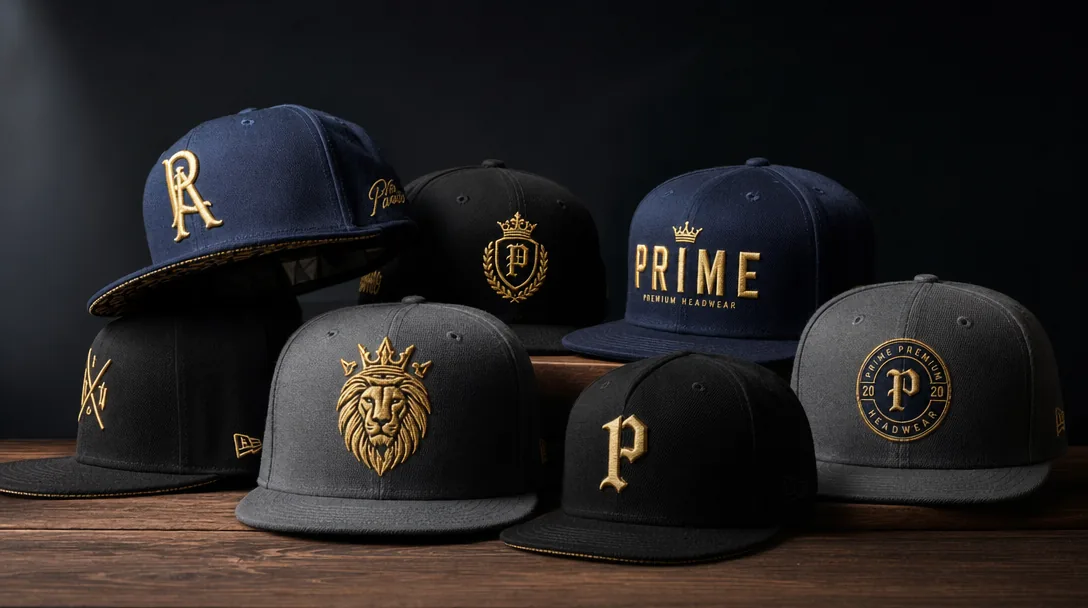
Custom Leather Patch Hat Low Minimum: A 2026 B2B Sourcing Guide
Read article →
Mens Beanies: Properties, Costs and How to Spec It Right
Read article →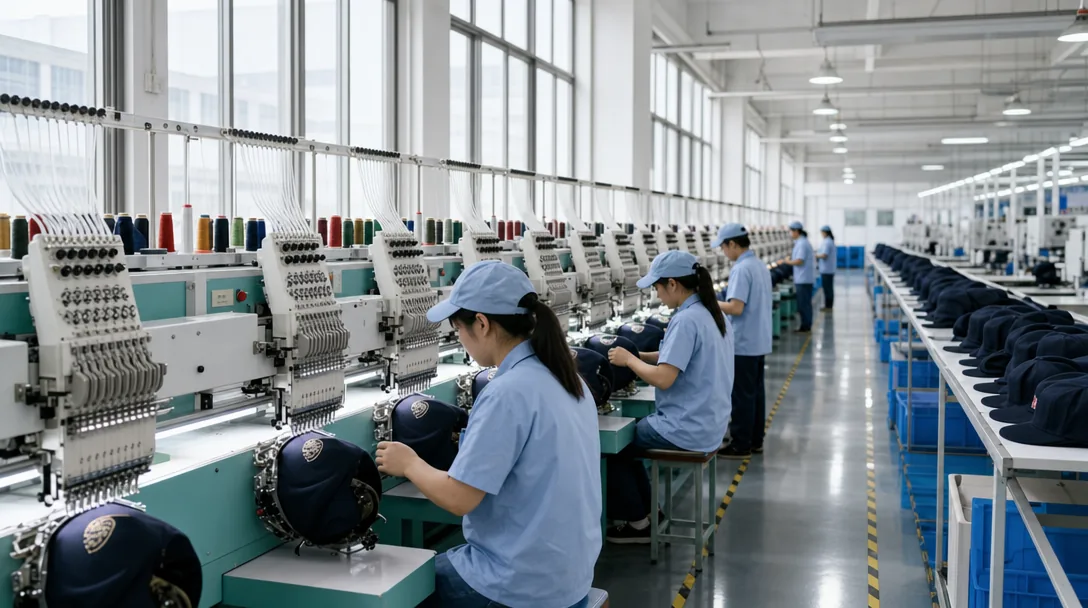
Bulk Trucker Hats Export Shipping Checklist for Custom Hat Buyers - Cost & MOQ Breakdown - Supplier Checklist
Read article →We hope this guide demystifies what's in a cap tech-pack: a specification template for buyers (2026 update) - cost & moq breakdown - supplier checklist and helps you move forward with confidence. If you have questions specific to your project, our English-speaking sales engineers are one message away.