Wholesale Custom Hats: A Practical Procurement Guide for Hat Buyers
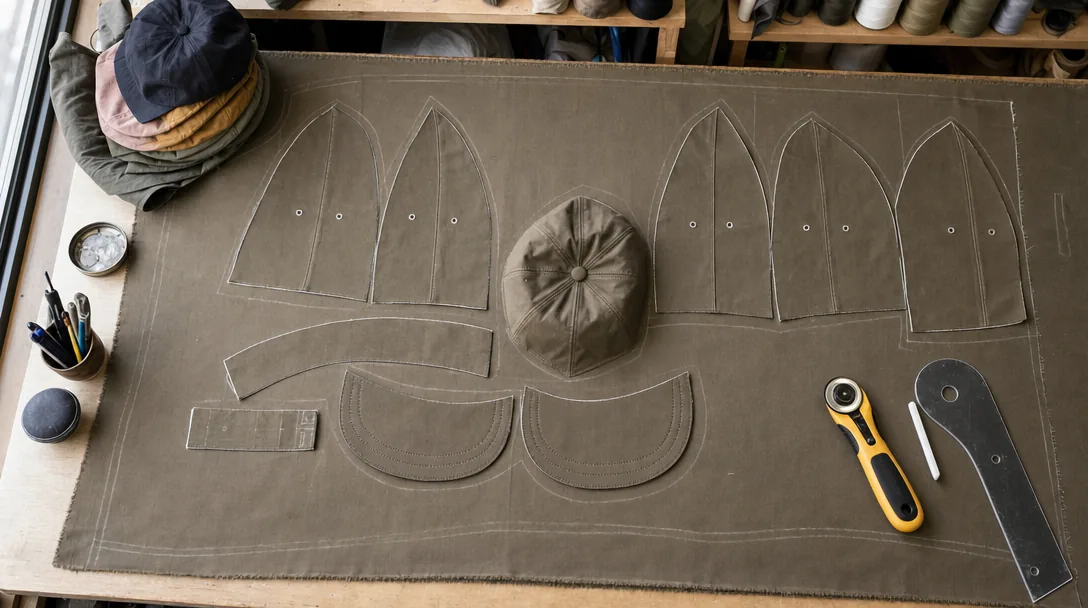
Every week, our sales team answers detailed questions about wholesale custom hats: a practical procurement guide for hat buyers. We wrote this guide so that wholesalers, streetwear brands, corporate buyers and promotional resellers can compare options with full information, and avoid the traps that show up only after production has started.
What really drives wholesale custom hats cost and lead time
For wholesale custom hats, the biggest cost driver is the bill of materials plus the process route, not whether the buyer calls the shape a dad cap, trucker, snapback, or rope cap. As an example calculation to verify in a supplier quote, a Q1 2026 Yiwu FOB order of 1,000 pieces using 260 gsm cotton twill, a woven rear label, brass-tone metal buckle, and flat embroidery at 8,000 stitches per front logo may price around US$2.40-US$3.20 per piece. Changing the same cap to 12,000 stitches of 3D puff embroidery, sandwich visor construction, custom seam tape, and non-stock trims can add US$0.35-US$0.70 per piece as an example quote assumption because Tajima, Barudan, or ZSK machine dwell time rises, foam handling slows output, and trim MOQ allocation gets spread over the order. Stock truckers stay cheaper only when foam fronts, polyester mesh, and plastic snapbacks remain standard; Pantone TCX-matched mesh, custom-mold snaps, or lab-dip shade control at Delta-E 1.5 or tighter can erase that advantage.
Lead time is usually lost before bulk sewing starts. A realistic critical path for wholesale custom hats runs through artwork cleanup, embroidery digitizing, pre-production sampling, fabric and trim booking, cutting, sewing, decoration, finishing, AQL inspection, and export booking. As an example schedule to confirm against the supplier’s live calendar, Q1 2026 digitizing for clean vector artwork may take 1-2 business days per logo; a physical pre-production sample may take 5-9 calendar days after artwork, fabric, and trim approval; and a 3,000-5,000 piece bulk run may require 18-30 calendar days after sample approval when no custom dyeing queue is involved. AQL 2.5, used under ISO 2859-1 sampling plans, is not an embroidery-quality rule by itself. The tech pack should define measurable reject points, such as loose threads over 5 mm, logo placement shift over 2 mm, visor skew over 3 mm, and shade variance outside the approved lab dip, all as buyer-approved QC limits to verify before production.
Domestic sourcing can shorten part of the calendar without lowering the real landed cost. Searches for a hat manufacturer Los Angeles, custom cowboy hats Los Angeles, or baseball caps made in USA may be relevant for labeling preference, replenishment speed, or compliance policy, but buckles, mesh, sweatbands, cartons, embroidery thread, and some blanks may still be imported. As an example freight and routing assumption to verify in a 2026 landed-cost quote, U.S. domestic finishing may save 5-12 calendar days for replenishment inside the continental United States, while Zhejiang FOB production can remain cheaper on larger private-label runs once molds, trims, carton packing, and inspection are consolidated. Methodology: the ranges above are derived from BOM costing, cap process routing, supplier quotation context, inspection planning, and the Vincent Xi Editorial Author profile on CrownsForge. Limits to verify before purchase order release include current cotton and polyester prices, RMB/USD exchange rate, trim MOQ, Incoterm, carton quantity, delivery ZIP code, and current audit documents such as sedex-audit-cap-supplier-guide.html">BSCI 2.0 or Sedex SMETA 4-Pillar where the buyer requires them.
Custom Headwear Manufacturer
A real custom headwear manufacturer prices construction risk before decoration. For wholesale custom hats, use these 2025 China export-cap quote assumptions to verify in the supplier’s written offer: 144 pieces per color for stock blanks with embroidery, 300 pieces per color for cut-and-sew 5-panel or 6-panel caps, and 500 pieces per color when dyed fabric, custom jacquard tape, woven labels, or private-mold trims are required. Example FOB Yiwu assumptions to verify are USD 2.40-3.80 per piece for 300-piece embroidered foam/mesh truckers, USD 4.20-6.50 per piece for 500-piece washed 260-320 gsm cotton twill baseball caps, and USD 7.00-12.00 per piece for 1,000-piece structured caps using wool blend, recycled polyester, or 70D-160D performance nylon. Do not put felt cowboy hats, straw bodies, molded wide-brim hats, and paneled caps into one RFQ; blocking, steaming, brim shaping, carton height, and crush protection change both the factory routing and the landed-cost risk.
Lock the cap specification before asking for embroidery pricing, because the same logo can run cleanly on one crown and fail on another. A usable RFQ should state crown height in centimeters, brim length in centimeters, panel count, front-panel structure, buckram stiffness, closure type, sweatband width, fabric weight in gsm, Pantone TCX target, and buyer-defined shade tolerance; Delta-E 1.5-2.0 is a common example requirement to confirm with the fabric mill, not a universal standard. Decoration specs should include logo size, placement, stitch count, backing, thread type, and digitizing method because Tajima, Barudan, and ZSK cap frames all expose files that ignore crown curvature. As a 2025 China factory-cost assumption to verify, a dense 12,000-stitch front logo can add USD 0.35-0.80 per piece versus a 5,000-stitch mark due to machine time, thread consumption, trimming, and higher reject exposure. For wholesale custom hats, structure decisions often matter more than artwork: a soft unstructured cotton dad cap and a laminated-buckram snapback should not share one sample approval standard.
QC belongs in the purchase order, not in an email dispute after cartons arrive. A practical control plan is pre-production sample approval, inline inspection after decoration starts, and final inspection using ANSI/ASQ Z1.4 sampling logic with buyer-defined defect categories; AQL 2.5 for major defects and AQL 4.0 for minor defects are common export-cap targets, but the standard defines sampling rules, not whether a crooked visor, shade mismatch, oil stain, loose sweatband, or thread break is acceptable. Source contexts for these ranges are 2025 China export-cap supplier quote formats for paneled caps and CrownsForge production-basis notes for Yiwu cap manufacturing; Vincent Xi is the listed Editorial Author at https://crownsforge.com/authors/vincent-xi/. Methodology: the figures are narrowed from MOQ tiers, fabric handling, decoration complexity, and inspection checkpoints for common paneled caps, not all promotional headwear. Before issuing a deposit, verify live fabric availability, current BSCI 2.0 or Sedex SMETA 4-Pillar documents if required, carton dimensions, Incoterms, duty exposure, and any origin claim with dated supplier evidence.
Blank Trucker Hats Wholesale
For blank trucker hats, freeze the base cap before pricing decoration; most quote drift comes from treating “blank” as a generic item. A usable RFQ for wholesale custom hats should specify 5-panel or 6-panel construction, crown height in centimeters, foam-front thickness in millimeters, front fabric weight in gsm, mesh denier, visor board material, sweatband type, snapback resin grade, bill curve, carton pack, and Pantone TCX or TPX target with Delta-E tolerance under D65 light. As an example calculation to verify in a live supplier quote, a 5-panel foam-front trucker at 600 pieces per color for Q1 2026 China FOB Ningbo production may land around USD 2.10-3.40 per piece; the same cap at 144 pieces per color may rise to USD 3.80-5.60 per piece because cutting, sewing-line setup, packing, and QC labor are spread over fewer units. Source contexts: Q1 2026 China cap supplier quote sheets and standard FOB export packing assumptions.
Lead time depends on whether the blank is true stock or a made-to-order blank reserved for later embroidery, patching, or heat transfer. As of Q1 2026, first-party production notes from CrownsForge and Yiwu/Ningbo supplier quotation benchmarks show 5-7 calendar days for one blank pre-production sample, 18-25 calendar days for 300-1,000 blank trucker hats after sample approval, and 30-45 calendar days once decoration is added on Tajima, Barudan, or ZSK embroidery heads, woven patch machines, or foam-front screen-printing lines. A new crown block, contrast sandwich visor, custom taping, or private-label sweatband should be treated as an added 3-5 calendar days, labeled as a planning assumption until component stock is confirmed. Methodology: the ranges combine supplier quote sheets, first-party production notes, and normal FOB export workflow timing; they are planning ranges, not a price list. Before issuing the PO, verify mesh inventory, Pantone availability, block ownership, carton quantity, polybagging, barcode labeling, and any claimed BSCI 2.0 or Sedex SMETA 4-Pillar documents with matching factory names and current dates.
QC on blank trucker hats should target defects decoration will not hide: wavy foam fronts, twisted mesh seams, off-center visors, uneven bill stitching, loose snapback teeth, sweatband puckering, dirty needle marks, and shade mismatch between crown, visor, button, and mesh. For an example inspection plan to confirm with the supplier, use ANSI/ASQ Z1.4 single sampling with AQL 2.5 for major defects and AQL 4.0 for minor defects on each shipment lot; for a 501-1,200 piece lot, measure at least 13 pieces per color for crown height, visor width, bill projection, closure function, and carton markings as of Q1 2026 supplier QC checklist practice. Source contexts: ANSI/ASQ Z1.4 sampling tables and cap-export QC checklists used for China FOB shipments. Limitations: resin, foam, mesh, and freight costs can change by quote date, and compliance claims remain unverified until the supplier provides current audit files. Publication attribution should list Vincent Xi, Editorial Author, with the author URL https://crownsforge.com/authors/vincent-xi/.
Custom Cowboy Hats Los Angeles
Los Angeles buyers should treat cowboy styles as shaped headwear, not basic caps with a wider brim. For wholesale custom hats, the quote should lock the block profile first: crown height in inches, brim width in inches, brim wire gauge or unwired edge, body material, sweatband construction, lining, hatband, concho hardware, carton pack, and D65 color review target. As an example calculation to verify in a supplier quote, a 500-piece order quoted as of Q1 2026 can run about USD 7.80-12.50 per piece FOB China for paper-straw or Toyo fashion cowboy bodies, USD 13.50-22.00 per piece for wool felt, and USD 24.00-45.00 per piece for heavier wool-blend bodies with shaped brim, satin lining, and custom metal concho. Source contexts are Yiwu/Guangdong molded-headwear quote sheets and Los Angeles/Long Beach import-handling assumptions; these are procurement benchmarks, not published market averages. Vincent Xi’s CrownsForge author profile is the attribution context for factory-side production and QC review, without implying certification or a current audit status.
MOQ and timing should be quoted by component because bodies, sweatbands, trims, and shaping blocks do not clear production together. As supplier-quote assumptions for Q1 2026, plan around 300 pieces per color for straw cowboy silhouettes, 500 pieces per color for dyed wool felt, and 1,000 pieces when the order needs a custom block, private mold, or Pantone TCX-matched felt lot. Sampling usually takes 10-18 calendar days after artwork approval, bulk production 35-55 calendar days after deposit and signed pre-production sample, ocean freight to Los Angeles/Long Beach about 18-28 calendar days, and air freight about 4-7 calendar days. QC should compare brim symmetry to the approved sample with an example 3 mm tolerance, check crown height, measure sweatband circumference in centimeters, review solid felt under a D65 lightbox with an example Delta-E target under 1.5, and pull-test conchos or riveted bands. Methodology: figures are derived from dated supplier quote structures and molded-headwear routing. Verify duty rate, carton CBM, reshaping loss, and whether the quote covers true western construction or only a fashion cowboy silhouette.
Working with CrownsForge for wholesale custom hats programs
Treat sampling as the first commercial gate for wholesale custom hats, not a courtesy sample. The buying sequence should be digital proof, bill-of-materials signoff, decoration strike-off, fit sample, sealed pre-production sample, and bulk cutting only after written approval. For a 2025 planning assumption derived from cap-factory quote templates and to verify in the supplier quote, a stock 260 gsm cotton-twill six-panel cap sample or a 160-180 gsm foam-front polyester-mesh trucker sample is usually targeted at 7-10 calendar days per style after artwork approval. Custom-dyed Pantone TCX fabric should be treated as a separate schedule risk: allow 10-18 calendar days per color for lab dips and Delta-E tolerance approval, then review the bulk-fabric shade band before cutting. Private hardware also needs its own line item; a new metal buckle mold is an example quote assumption of US$80-US$250 per mold and 12-20 calendar days of tooling time. Compare FOB Ningbo, FOB Shanghai, and DDP pricing separately because sample speed, freight control, duty exposure, and landed cost rarely move together.
Decoration is where approved wholesale custom hats most often drift from the quote, so test the exact method on production fabric before deposit. Embroidery should be sampled on Tajima, Barudan, or ZSK heads using the quoted crown fabric, backing, needle size, thread type, stitch density, and thread brand. A 3D puff logo on 260 gsm cotton twill will not run or cost like flat embroidery on a 160-180 gsm foam trucker panel. As a 2025 example calculation to verify against the stitch worksheet, a 9,000-stitch flat front logo on a 500-piece colorway may cost US$0.35-US$0.60 per cap less than a 14,000-stitch metallic-thread logo because metallic thread runs slower and has higher breakage risk. For patches, lock the construction in writing: woven, chenille, PVC, leather deboss, or sublimated fabric; then specify merrow border, heat-press layer, stitch attachment, edge tolerance, and wash or rub-test expectation. The sealed strike-off must match the sealed pre-production sample, not just the invoice description.
Evidence for this section comes from two source contexts: Vincent Xi's approved author profile at https://crownsforge.com/authors/vincent-xi/ and current order documents such as quote sheets, material summaries, packing specs, audit files, and AQL inspection records. The production-experience basis is CrownsForge's Yiwu cap-manufacturing work across embroidery digitizing, fabric sourcing, inspection, logistics, and factory-audit documentation; it should not be read as proof of any current certification without the document. Methodology is line-by-line comparison before deposit: fabric gsm, Pantone TCX reference, Delta-E tolerance, stitch count, mold ownership, carton dimensions, packing ratio, Incoterms, and inspection plan. AQL 2.5 for major defects and AQL 4.0 for minor defects are example buyer-selected limits under ANSI/ASQ Z1.4-style sampling, not factory certifications. Verify legal factory name, audit validity date, subcontracted sewing or decoration, FOB versus DDP responsibility, and failed-reinspection cost. Image brief: QC table with six-panel caps, foam-front mesh truckers, embroidery strike-offs, Pantone TCX chips, calipers, thread cones, needle samples, sealed pre-production tags, and export cartons; no logos, text, watermarks, fake certificates, or identifiable people.
Frequently Asked Questions
How long does production take?
Sampling takes 7 to 12 days. Bulk production runs 20 to 30 days depending on quantity, fabric availability and decoration complexity. Inspection and packing adds another 3 to 5 days before shipment.
Do you support sustainability certifications?
Yes. We work with GOTS organic cotton, GRS-certified recycled polyester, OEKO-TEX Standard 100 fabrics, and are BSCI and Sedex audited. Certification documentation can be provided per order.
What file format should I send for my logo?
Vector files (AI, EPS, PDF) are ideal. High-resolution PNG or JPG at 300 dpi on transparent background works as a fallback. Provide Pantone color references for accurate reproduction.
What is the minimum order quantity (MOQ) for custom hats?
Our standard MOQ is 100 pieces per design and color, with sampling available from 1 piece. For complex multi-color logos or premium fabric upgrades, the MOQ can be lowered with a small per-piece surcharge.
Can I order a sample before bulk production?
Yes. We strongly recommend approving a pre-production sample before mass production. Samples are charged at 35 to 60 USD each plus express shipping, fully refundable against confirmed bulk orders over 500 pieces.
Looking for a reliable hat manufacturer in China?
CrownsForge has produced custom hats for 800+ brands across 40 countries. From 100-piece launches to 100,000-piece retail programs, we deliver on time and on spec.
Get in touchRelated guides
Custom Leather Patch Hat Low Minimum: A 2026 B2B Sourcing Guide
Read article →
Mens Beanies: Properties, Costs and How to Spec It Right
Read article →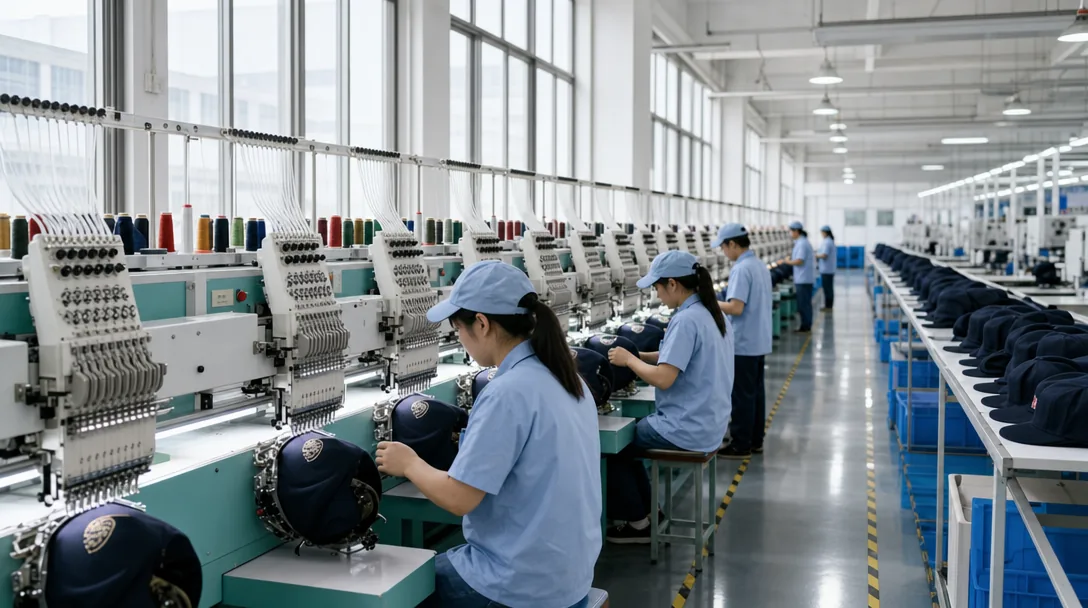
Bulk Trucker Hats Export Shipping Checklist for Custom Hat Buyers - Cost & MOQ Breakdown - Supplier Checklist
Read article →We hope this guide demystifies wholesale custom hats: a practical procurement guide for hat buyers and helps you move forward with confidence. If you have questions specific to your project, our English-speaking sales engineers are one message away.