
US Tariff Section 301 on Chinese Caps: Import Cost Planning for 2026 - Supplier Checklist
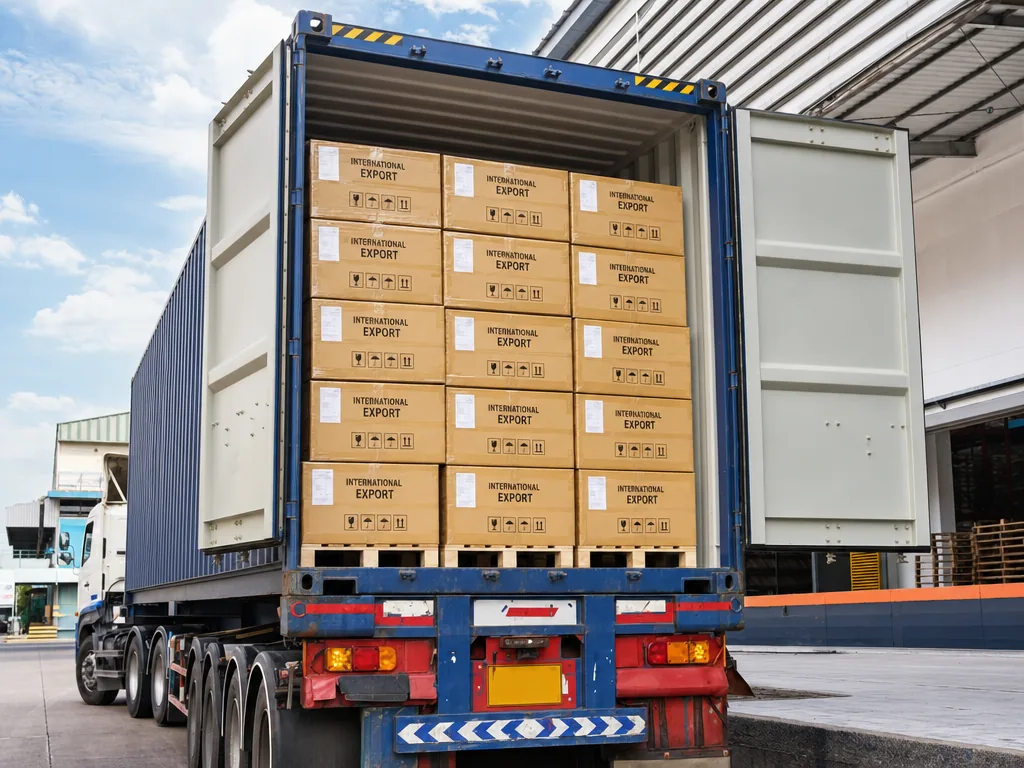
Every week, our sales team answers detailed questions about us tariff section 301 on chinese caps: import cost planning for 2026 - supplier checklist. We wrote this guide so that wholesalers, streetwear brands, corporate buyers and promotional resellers can compare options with full information, and avoid the traps that show up only after production has started.
The Section 301 landscape and 2026 updates
For cap buyers, the starting point is the HTS code, not the style name on the quote. Baseball caps, trucker caps, visors, and knit headwear can fall into different tariff lines depending on shell fabric, knit versus woven construction, mesh content, and whether the crown is fully sewn, bonded, or laminated. In a US tariff Chinese caps program for 2026, the landed-cost model needs three inputs: the base customs duty under the applicable HTSUS line, any Section 301 add-on tied to the China-origin classification, and broker fees driven by the exact entry data. I have seen two visually similar caps clear at different duty rates because the broker keyed the wrong fiber content or the commercial invoice blurred decorated samples with production units in the same carton.
The 2026 picture is not a single fixed rate. It depends on USTR action, exclusion expirations, and whether the specific HTSUS line remains inside the current Section 301 annexes. Buyers should check the tariff schedule every quarter and have the customs broker validate classification before pricing is locked. For import duty caps US planning, the conservative assumption is that China-origin headwear stays exposed until CBP accepts the entry as filed. The practical fix is a tariff sensitivity band in the quote, commonly 7.5 percent to 25 percent depending on construction and classification, so a 20,000-piece program does not lose margin at the port because the landed-cost model was too narrow.
If you source from a Chinese cap factory, ask for the supplier’s HTS suggestion, full fiber breakdown, construction photos, and a spec sheet that matches the commercial invoice and packing list line for line. That gives the broker enough detail to test whether the crown is knit, woven, or mixed media, and whether details like the bill, sweatband, closure, or lining change classification. Our standard practice is to confirm the likely HTS code before shipment, because a bad description can trigger duty corrections, document requests, or delayed release that cost more than the duty variance itself. For a 2026 supplier checklist, treat the US tariff Chinese caps question as a sourcing item on day one, not a booking problem after production is already finished.
HTS code 6505 explained
HTS code 6505 is the U.S. customs bucket for many textile hats and headwear, but that label is only the starting point. The actual subheading turns on fiber content, whether the fabric is knit or woven, lining, trim, and the final form of the article. A cotton dad cap, a polyester trucker, and a wool knit beanie can all fall somewhere under 6505 and still produce different duty results. In US tariff Chinese caps planning, the common mistake is treating every cap as one line item, then finding out the broker split the entry because the bill of materials was not precise enough to support a single classification.
For Chinese-origin caps, the landed cost usually combines normal duty plus the Section 301 surcharge, which is often 7.5 percent or 25 percent depending on the specific HTS subheading and current trade action. That is why a 6505 cap that looks cheap ex-factory can get expensive fast once the customs value includes freight, brokerage, and the tariff layer. The real risk is not the cap shape; it is sloppy declarations on fiber breakdown, crown fabric, sweatband, or lining. A style that is 100 percent cotton on paper but actually has a polyester mesh back or a different inner band can move into a different tariff path and blow up the budget.
The disciplined approach is to classify each style at sample approval, before production and freight booking, and then lock the composition sheet, gsm, trim list, and origin documents used for entry. Get the mill fiber breakdown, construction photos, and final bill of materials, then have the customs broker confirm the HTS code from the finished article, not the tech pack guess. For US tariff Chinese caps, the spreadsheet needs separate lines for base duty and Section 301, with costs modeled by style family rather than by supplier. That is the only way to compare cases cleanly in 2026 and avoid discovering too late that two caps from the same factory belong to different duty buckets.
Duty calculation example for a 1,000-piece order
For a 1,000-piece order, the right way to model US tariff Chinese caps is to build landed cost from the customs entry, not from the factory invoice alone. A realistic FOB price for a basic 6-panel cotton twill cap with flat embroidery is about $2.20 to $3.10 per piece at this volume, depending on fabric weight, crown structure, visor board, seam tape, and stitch count. For a China-origin cap, brokers typically classify it under HTS 6505.00 with duty exposure driven by the base rate plus Section 301. For planning, use the entered value, which usually means FOB plus international freight and insurance; on a consolidated ocean move, freight can easily be $450 to $900 total and cargo insurance another $20 to $50, so the customs value is already above the factory quote.
Using a simple example, assume $2.60 FOB, $650 freight, and $30 insurance on 1,000 units. That gives a customs value of $3,280, or $3.28 per cap. If the combined rate lands around 19.7 percent after the base duty and Section 301 add-on, the duty is about $646 before MPF, HMF if applicable, ISF, customs brokerage, bond allocation, and domestic delivery. Add another $150 to $300 for entry filing, bond amortization, and destination charges, and the landed cost ends up around $4.08 to $4.50 per unit. That is the number procurement teams should compare across suppliers, because the spread between a $2.45 cap and a $2.90 cap can disappear once tariffs and entry costs are loaded in.
The sourcing sheet should show four separate lines: ex-factory price, freight and insurance, tariff and customs fees, and domestic delivery. That keeps US tariff Chinese caps planning honest and makes tariff sensitivity visible when the rate shifts or CBP changes the classification treatment. A $0.30 move in duty or a $100 brokerage adjustment can erase most of the savings from a lower cap quote at 1,000 pieces. In practice, CrownsForge separates FOB from duty estimates so buyers can compare landed cost across vendors using the same assumptions, instead of underbudgeting by 10 percent to 20 percent and discovering the gap after the shipment clears.
First-Sale-for-Export and other optimization strategies
The cleanest lawful way to lower dutiable value is to set up the transaction before the first PO leaves the buyer’s desk. For US tariff Chinese caps, the common mistake is treating the supplier’s final invoice as the only customs value that matters. Under a valid first-sale-for-export structure, U.S. Customs and Border Protection can accept the earlier arm’s-length sale price in a bona fide multi-tier chain, but only if the record proves a real transfer of title, a fixed price, and export intent to the United States at that first sale. If the trading company is a paper shell, or the first contract still leaves pricing open, CBP will reject the claim and use the later sale value instead. On a 50,000-piece cap program, that difference can easily move a 7.5% Section 301 burden by several thousand dollars, and it compounds fast once freight and inland charges are layered in.
The file has to look like an actual commercial transaction, not a customs memo built after shipment. That means matching purchase orders, factory invoices, payment records, packing lists, shipping marks, export declarations, and evidence that the goods were committed to the U.S. market at the first sale. In cap programs, first-sale treatment usually fails for one of two reasons: the intermediary never takes title in substance, or it cannot show a commercial role beyond issuing invoices. CrownsForge’s standard practice is to use a trading layer only when the documentary chain is complete from production booking through entry summary, with dates, quantities, and SKUs aligned line by line. For US tariff Chinese caps, the first-sale file should be assembled before cutting starts, because once the cargo is on water, missing records are hard to fix without creating risk.
The smaller levers still matter. Freight, marine insurance, and clearly separated post-import services are normally excluded from customs value when the Incoterms, invoices, and payment trail support the split; if the paperwork bundles them into one landed price, CBP can treat the whole amount as dutiable. The same logic applies to tooling, labels, and carton charges: if they are included in the goods price without a defensible basis, the declared value rises for no good reason. On a 50,000-unit order, just $0.12 per cap is $6,000 before Section 301, which is real money on blanks, embroidery, and contract-decorated programs. The practical approach is simple: document the first sale, keep non-dutiable charges outside the product price, and make sure every charge tied to the cap is classified correctly before the entry is filed.
Should you diversify outside of China?
Diversifying outside China only makes sense once your volume is steady enough to absorb new tooling, new QC points, and the first-production learning curve. For buyers managing US tariff Chinese caps exposure, the key mistake is treating duty savings as if they were production savings. A 6-panel cotton twill dad hat with a self-fabric strap is usually portable; a 5-panel foam trucker with 3D puff embroidery, sandwich visor, woven label, and multiple color trims is not. A China-plus-one move typically adds 4 to 10 weeks for sampling, fit-block confirmation, label approval, and embroidery runout checks on Tajima or Barudan heads. If first-pass yield drops below 85 percent, or if you start splitting trims, cartons, and inspection labor across countries, the tariff math gets eaten quickly. On low-to-mid volume programs, the hidden cost is usually rework, not duty.
Vietnam is the first alternative buyers test because the sewing base is more mature than most sourcing teams expect, with workable access to cotton twill, polyester mesh, and bonded visor board. Once the line is stable, 35 to 55 day lead times are realistic, but color control becomes the real constraint: Delta-E under 2.0 is achievable only when the mill, dyer, and factory are aligned on Pantone TCX, shrinkage allowance, stitch density, and crown-block dimensions. Bangladesh is competitive for basic promotional caps and price-sensitive runs, but structured fronts, visor recovery, and embroidery placement drift if the factory is really a garment plant learning headwear on the fly. Cambodia can work for simpler orders and smaller MOQs, though capacity is thinner and imported fabric can add 7 to 14 days before cutting starts. None of these locations removes Section 301 risk entirely; they shift the problem into origin control, transshipment scrutiny, and the cost of a failed compliance file.
The practical answer is usually a split model, not a full exit from China. Keep China for the hardest SKUs and move stable, high-volume blanks or repeat programs to one secondary country only after the spec is frozen and AQL 2.5 is holding in production. That gives you a hedge if US tariff Chinese caps move again in 2026, while preserving a backup source with known fit blocks, brim recovery, carton counts, and polybag behavior. Our standard practice is to quote a China-plus-one plan with landed-cost comparisons, because FOB alone leaves out cartons, inland freight, brokerage, duty bonds, and rework. Under 20,000 pieces per style per year, diversification often creates more overhead than it saves. Above that level, and only when color, trim, labeling, and packaging are locked for at least two seasons, the risk reduction starts to justify the extra supplier management.
Why China still wins on small-batch custom orders
China still wins on small-batch custom orders because the expensive part is usually not the Section 301 duty itself, it is the waste from bad sampling, slow approvals, and remake cycles. In a US tariff Chinese caps program, duty is one line on the landed-cost sheet; on a 300-piece run with six-color embroidery, mixed size splits, and a custom closure, one wrong strike-off can cost more than the tariff gap. A capable cap factory can hold Pantone TCX within Delta-E 2 to 3, keep panel registration clean on Tajima, Barudan, or ZSK heads, and turn a corrected sample in 24 to 48 hours. That matters when the buyer changes the underbill color, swaps a snapback for a buckle, or wants a denser stitch count after seeing the first photo set.
The tariff argument gets distorted when people compare a clean container of blanks with a messy custom program. US tariff Chinese caps calculations move with HTS classification and origin treatment, but on high-mix China wholesale hats and caps the real value is in pattern control, trim coordination, and fast engineering feedback. For 3D puff, woven labels, contrast sandwich brims, enzyme-washed cotton twill, or corduroy, the supplier that understands stitch tension, crown balance, and bill memory will save more money than a slightly better duty rate on paper. The standard practice is to lock pre-production on a physical sealed sample and hold AQL 2.5 on repeat orders, because once crown height or thread density drifts, the defect cost shows up in returns and chargebacks, not just in factory rework.
By 2026, buyers facing Section 301 hats pressure should plan fewer SKUs, tighter approvals, and more disciplined forecasting instead of chasing the lowest-duty quote. China still makes sense when the factory can consolidate trims, keep MOQ flexible at 100 to 300 pieces per colorway, and absorb late art changes without restarting the entire line. The practical test is simple: does the supplier keep the embroidery file, fabric handfeel, and trim spec consistent from sample to bulk, and can they do it without forcing every small change into a new round of quotes? For licensing programs, streetwear drops, and reseller assortments, that operating control usually beats a marginal tariff advantage from a weaker supplier.
Frequently Asked Questions
How long does production take?
Sampling takes 7 to 12 days. Bulk production runs 20 to 30 days depending on quantity, fabric availability and decoration complexity. Inspection and packing adds another 3 to 5 days before shipment.
Do you support sustainability certifications?
Yes. We work with GOTS organic cotton, GRS-certified recycled polyester, OEKO-TEX Standard 100 fabrics, and are BSCI and Sedex audited. Certification documentation can be provided per order.
What is the minimum order quantity (MOQ) for custom hats?
Our standard MOQ is 100 pieces per design and color, with sampling available from 1 piece. For complex multi-color logos or premium fabric upgrades, the MOQ can be lowered with a small per-piece surcharge.
What logo decoration techniques do you offer?
3D puff embroidery, flat embroidery, woven patch, leather patch, PVC patch, screen printing, sublimation, applique and laser etching, all in-house with no subcontracting.
Can I order a sample before bulk production?
Yes. We strongly recommend approving a pre-production sample before mass production. Samples are charged at 35 to 60 USD each plus express shipping, fully refundable against confirmed bulk orders over 500 pieces.
What should I know about wholesale baseball caps made in usa?
When evaluating wholesale baseball caps made in usa, the key considerations are construction quality, decoration capability, MOQ flexibility and lead time. Standard duty rates for cotton, wool, synthetic caps. Tariff list status and outlook for hat HTS codes.
How does ordering custom made trucker hat work?
When evaluating custom made trucker hat, the key considerations are construction quality, decoration capability, MOQ flexibility and lead time. Tariff list status and outlook for hat HTS codes. Standard duty rates for cotton, wool, synthetic caps.
How does ordering baseball cap custom embroidery work?
When evaluating baseball cap custom embroidery, the key considerations are construction quality, decoration capability, MOQ flexibility and lead time. Speed, embroidery quality, supplier flexibility outweigh tariff differential for high-mix orders. Tariff list status and outlook for hat HTS codes.
How does ordering custom embroidered baseball caps work?
When evaluating custom embroidered baseball caps, the key considerations are construction quality, decoration capability, MOQ flexibility and lead time. Standard duty rates for cotton, wool, synthetic caps. Tariff list status and outlook for hat HTS codes.
Did the US cut tariffs on Chinese goods?
The US then raised its tariffs to 145%, and China responded by raising its tariffs to 125%. On May 12, both countries reached a truce in a bid to reduce tensions. The US reduced tariffs on Chinese goods to 30% while China responded by reducing tariffs on US products to 10%.
Is China's tariff 10% or 35%?
Under the agreement, the United States and China reduced the tariffs imposed in April 2025 from 125% to 10% on each other's goods (other U.S.-China tariffs remain in place).
What is the US tariff threshold for China?
The de minimis provision allowed many goods valued at or under $800 to enter the U.S. duty free and via an expedited entry process known as Entry Type 86. The $800 de minimis threshold was per person per day. On May 2, 2025, the U.S. suspended the de minimis exemption for China and Hong Kong.
Ready to start your custom hat project?
Send us your tech-pack, sketch or even just an inspiration photo. We will respond with a detailed quotation and digital mock-up within 24 hours.
Request a free quoteRelated guides

Custom Leather Patch Hat Low Minimum: A 2026 B2B Sourcing Guide
Read article →
Mens Beanies: Properties, Costs and How to Spec It Right
Read article →
Custom Rope Hats: Manufacturing, Materials and Bulk Pricing (2026 Update)
Read article →Sourcing custom hats does not have to be complicated. With the right manufacturing partner, clear specifications and a small upfront investment in sampling, you can launch a retail-quality product in 30 to 45 days.