
Trucker Hat Mesh Panel QC: Defects Buyers Should Catch Early - 2026 Buyer's Guide
Every week, our sales team answers detailed questions about trucker hat mesh panel qc: defects buyers should catch early - 2026 buyer's guide. We wrote this guide so that wholesalers, streetwear brands, corporate buyers and promotional resellers can compare options with full information, and avoid the traps that show up only after production has started.
What trucker hat mesh panel qc means in real production
On the cutting floor, trucker hat mesh panel qc means checking the roll before a marker touches it: usable width after selvedge loss, shade bands, yarn breaks per linear meter, aperture consistency, crocking, and stretch recovery. I like a simple 10 cm x 10 cm swatch test before and after steam exposure; if the swatch grows more than 2 mm in width or height, the bulk pattern needs adjustment or the roll should be rejected. Mesh does not feed like 10 oz cotton twill, brushed canvas, or 210D nylon. During sewing, the rear center seam and side seams need controlled feed pressure, or the back panels will twist, lean, or pull the snapback opening off center. Pressing cannot correct that geometry. Buyers should require sample photos on a head form from rear, side, and three-quarter views, with rear seam symmetry, side panel height, snap alignment, and crown-to-opening centering clearly visible.
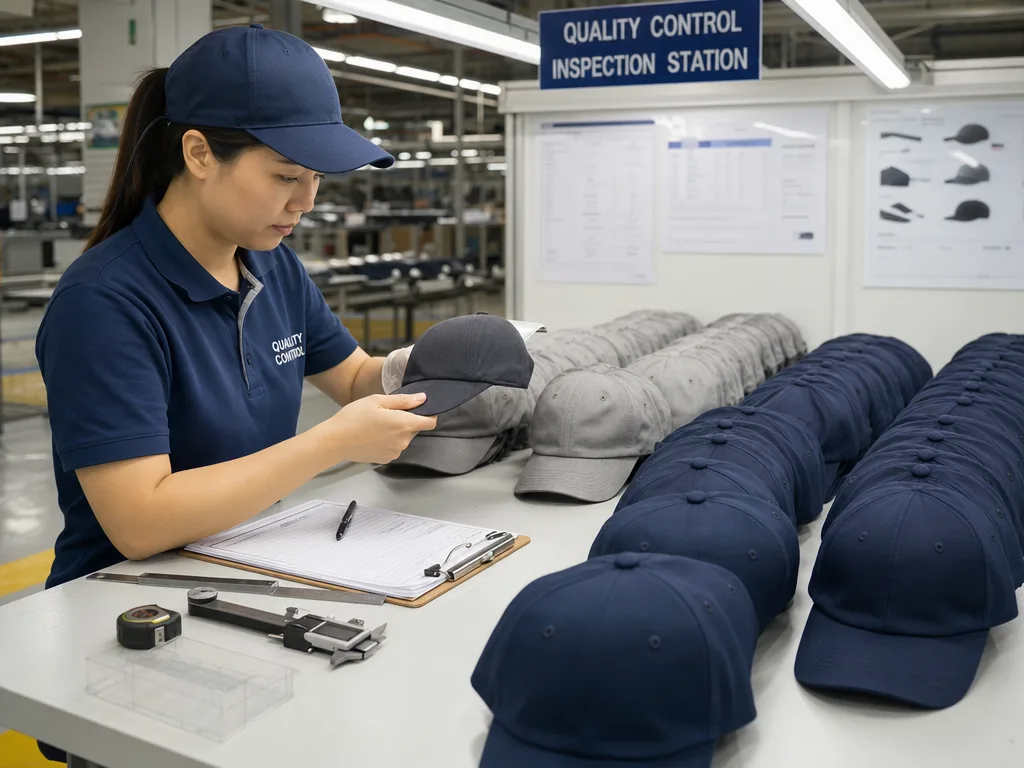
Final inspection should turn mesh defects into measurable calls, not comments like “tension OK.” Broken yarns, uneven apertures, stains, shade mismatch, crushed mesh, panel puckering, seam slippage, twisted rear panels, and off-center snapback openings belong on the checklist. I would treat unstable mesh, seam slippage, twisted panels, and off-center openings as major defects under AQL 2.5; small isolated slubs outside the main visual zone can be minor under AQL 4.0 if the brand accepts that standard. Front embroidery quality from Tajima, Barudan, or ZSK heads does not protect the rear mesh from tight hooping, steam exposure, or carton compression. Our standard practice at CrownsForge is to approve mesh by roll lot before cutting, then recheck finished caps after 24 hours packed in export cartons. Stabilized mesh usually adds USD 0.08 to 0.18 per cap, which is cheaper than reworking a 2,000-piece private-label run with mismatched backs.
Specs to request before a quote
A trucker hat price is not comparable until the rear mesh is specified in measurable terms; trucker hat mesh panel qc starts before the cutting die touches fabric. Request a size spec in millimeters covering rear panel height, back arc length, side seam angle, snapback centerline, finished circumference, and visor-to-crown position. For bulk production, I would hold +/-2 mm on mesh panel height, +/-3 mm on finished circumference, +/-1.5 mm on snapback placement, and no more than 2 mm left-right difference at the rear seam. Define the mesh as 100% polyester, nylon, or GRS recycled PET, with weight, yarn, and construction stated: standard trucker mesh is usually 110-150 gsm, 75D-150D monofilament or multifilament, with hole count or open-area percentage if breathability matters. Color needs a Pantone TCX reference, approved lab dip, and a Delta-E target: under 1.5 for whites and mid tones, under 2.0 for black, navy, charcoal, and dark green. “Standard mesh” is not a sourcing spec; it allows substitution when yarn price or dye-lot availability changes.
Decoration details must be quoted from production-ready inputs, not lifestyle photos or a previous cap sample with unknown shrinkage. For flat embroidery, send AI, PDF, or EPS artwork with finished logo width, stitch density target, maximum stitch height, placement from the visor seam, and thread references by Madeira, Gunold, or Pantone. For 3D puff, specify EVA foam at 2-3 mm and keep minimum stroke width above 4 mm; below that, Tajima, Barudan, and ZSK heads tend to leave broken edges, sunken centers, or crowded corners after trimming. For woven patches, PU leather patches, silicone badges, and heat transfers, require size tolerance, backing material, adhesive type, press temperature, dwell time, peel strength, and wash or crocking test requirements. Packing is also a quality spec: define 25 or 50 pieces per inner polybag group, 100 or 200 pieces per export carton, 200 lb test or 32 ECT board, silica gel, barcode position, and whether caps ship nested, stuffed, or with crown inserts. Those choices change rear mesh compression, carton CBM, and DDP landed cost.
Before approving the quote, ask which proof is issued at each gate: bulk mesh swatch, lab dip, pre-production sample, graded size spec, embroidery strike-off, inline photos, and final AQL report. Our standard practice at CrownsForge is AQL 2.5 for major defects and 4.0 for minor defects unless the buyer’s manual is tighter; critical defects such as broken needles, mold, wrong trademark, exposed staples, unsafe sharp edges, or contaminated cartons are zero tolerance. The inspection checklist should record mesh symmetry, side seam alignment, shade variation between front crown and rear panels, snapback pull strength, visor curve consistency, carton drop-test condition, and needle detection where required by the retailer. For trucker hat mesh panel qc, rear panels should be photographed on a light box or white inspection board, because yarn barring, uneven tension, skewed holes, and warped side seams show there before they look obvious on a retail shelf. If the supplier cannot provide dated inspection records, retained approval samples, and machine settings for embroidery or heat press work, the low quote is incomplete, not cheaper.
Factory risks and quality checks
Most mesh failures are purchased at fabric approval, so trucker hat mesh panel qc has to start before cutting, not at carton inspection. For a standard polyester trucker back, require the mill sheet to state yarn denier, finished weight, hole count or mesh gauge, heat-setting temperature, resin/softener finish, and dye lot number. Stable cap mesh usually sits at 95-130 gsm using 100D-150D polyester; 75D mesh can pass a showroom hand feel but later curl at the panel edge, bag out after steam blocking, or split near the snapback seam. Pull at least 1 meter from the middle of every dye lot roll, then check edge curl, skew, broken filaments, oil marks, hole deformation, and stretch recovery after a 10-second hand pull. Color must be judged in a D65 lightbox against the approved lab dip, with Delta-E under 1.5 for licensed or retail programs and under 2.0 for basic promotional work. Open mesh reads differently beside cotton twill, nylon taslan, or 210D polyester oxford, so Pantone 19-4005 TCX black can look brown or blue if the front-panel substrate is wrong.
A PP sample is worth approving only when it uses bulk mesh, the actual snapback closure, approved sweatband, production thread, backing, and real front-panel fabric. Substitute sample-room mesh is a common way to hide future shade drift, stretch mismatch, and seam puckering. Our standard practice at CrownsForge is to sew the PP on the intended line setup, with Tajima, Barudan, or ZSK embroidery heads used for decorated fronts, because thread tension, backing weight, and stitch density change how the front panel pulls against the mesh join. The buyer should sign a physical PP sample with a measurement sheet covering crown height, rear panel height, back opening, visor length, panel symmetry, seam allowance, sweatband width, and closure placement. For structured trucker caps, +/-2 mm is a practical tolerance on key fit points; +/-3 mm is already visible on a 58 cm head form. The danger zone is the curved seam where mesh meets the front panel. If the operator stretches the mesh while feeding, the cap may lie flat on the table but twist after blocking.
The first 50-100 sewn pieces tell you whether the line is under control; waiting for final inspection turns one bad bundle into a carton claim. A workable control plan is incoming mesh inspection, cutting-table audit, first-piece approval after machine setup, inline inspection at 20-30% completion, and final inspection under AQL 2.5 major / 4.0 minor. Licensed sports, national retail, and compliance-heavy programs often push to AQL 1.5 with tighter cosmetic limits and full shade-band segregation by dye lot. Define major defects before production starts: stains over 2 mm, visible snags, broken mesh holes, rear panel asymmetry over 3 mm, loose thread ends over 5 mm, cracked snap buttons, wrong Pantone TCX shade, crown twist, seam slippage, skipped stitches, and bartack failure near the closure. Also audit the machine-side causes buyers rarely list: needle size, worn presser feet, folder alignment, SPI consistency, dull trimming blades overheating the mesh, and uneven seam allowance through the rear panels. Most mesh rework is not a mystery; it comes from unfrozen materials and weak inline policing.
MOQ, lead time, and cost drivers
MOQ for trucker caps is driven by setup loss, shade control, and decoration efficiency, not by the polyester mesh price. For a standard 5-panel or 6-panel cap using 100D-150D polyester mesh, 260-320 gsm cotton twill front panels, PE visor insert, plastic snapback, and one flat embroidery, a realistic MOQ is 300-500 pieces per colorway. At 500 pieces, a mid-grade build usually sits around US$3.20-US$4.80 FOB Ningbo or Shanghai; at 100 pieces, the same cap often rises to US$6.50-US$9.00 because digitizing, cutting markers, thread loading, Tajima or Barudan head setup, and line balancing are spread across too few units. Custom-dyed mesh changes the math: mills typically need 1,000-3,000 pieces to justify lab dips, bulk dyeing, Pantone TCX matching, and Delta-E approval. Put trucker hat mesh panel qc into the quotation file early, because shade drift, poor stretch recovery, and panel torque are cheap to reject at roll inspection and costly after crowns are closed.
Trim and decoration can move unit cost more than the shell fabric. A stock plastic snapback is normally US$0.08-US$0.15, while a debossed snap, brass buckle, laser-etched metal adjuster, or custom color-matched closure can add US$0.25-US$0.60 per cap and trigger a separate trim MOQ. Woven labels, branded sweatbands, printed seam tape, hangtags, UPC stickers, silica gel, and individual polybags commonly add US$0.35-US$1.20 per unit, plus 2-4 handling steps during packing. Material substitutions also affect throughput and reject rate: foam fronts need compression recovery checks, corduroy creeps under the presser foot, enzyme-washed cotton can shrink 3%-5%, recycled polyester mesh may vary in tensile strength, and nylon ripstop often requires changes to needle size, stitch length, and thread tension. CrownsForge quotes decoration separately from the base cap because an 8,000-stitch flat logo on a ZSK head does not carry the same labor, reject risk, or setup time as 3D puff embroidery, a merrowed patch, silicone transfer, or molded rubber badge.
Lead time is usually lost in approvals, testing, and rework rather than sewing. A practical schedule is 5-7 days for fabric and trim sourcing, 7-10 days for embroidery strike-off or pre-production sample, 20-35 days for bulk production after written approval, and 3-7 days for AQL 2.5 final inspection, carton measurement, needle or metal detection if required, and shipment release. Add 5-10 working days for SGS, Intertek, or BV testing on colorfastness, azo dyes, CPSIA lead, nickel release, REACH SVHC, or formaldehyde; a failed report rarely fits inside the original ship window without air freight or rework cost. Freight should be modeled before PO release: sea freight to the U.S. West Coast may add US$0.20-US$0.45 per cap, while air freight can land at US$1.50-US$3.80 by volumetric weight. Strong trucker hat mesh panel qc locks down approved handfeel, shade band, stretch recovery, seam tension, crown symmetry, and carton compression before bulk cutting starts.
How CrownsForge manages this order type
CrownsForge treats trucker hat mesh panel qc as a front-end control, not a final-inspection rescue, because rear panels expose bad yarn tension, shade drift, and cutting skew before the buyer notices the logo. Proto samples typically take 7-10 working days after the artwork, closure, visor curve, sweatband, and trims are frozen. The mesh card is locked by Pantone TCX reference, D65 light-box reading, Delta-E target, denier, gsm, hole count, stretch direction, recovery, and hand feel. For standard polyester trucker mesh, our normal working window is 90-130 gsm using 150D-300D yarn; recycled PET mesh is revalidated after 24 hours on the block because recovery and edge curl are less predictable. The sample report records crown height, front panel width, visor length, sweatband width, rear arch tension, snapback position, and exposed seam tolerance, usually ±2 mm. Early rejection signs are skewed diamond pattern, left-right stretch imbalance, rear crown puckering, loose back taping, and mesh color passing under factory LED but failing under D65.
Bulk production is controlled from documents the sewing line can actually follow: dated tech pack, approved sample photos, embroidery stitch count, Wilcom or Tajima DG/ML by Pulse file version, Madeira or Gunold thread codes, trim lot numbers, barcode/SKU file, carton marks, polybag spec, and PO-linked production sheet. I do not let WeChat screenshots override crown depth, snapback color, mesh substitution, or visor curve; those decisions must be revision-locked before cutting starts. Embroidery is tested on Tajima, Barudan, or ZSK heads according to panel stiffness, backing, stitch density, and 3D puff height, with registration approved before visor insertion and sweatband sewing because correction options disappear after closing. Inline QC checks fabric grain, panel pairing, crown closing, visor setting, sweatband attachment, snapback alignment, and steam-block shape. Mesh problems must be caught before crown closing: replacing one rear panel after assembly adds handling, distorts the back seam, and can turn a $0.08 material defect into a rejected $3.20-$5.80 finished cap.
Inspection is milestone-based: incoming material, cutting start, embroidery approval, sewing inline, packing trial, final AQL inspection, and shipment release. For 500-3,000 piece B2B trucker cap orders, realistic bulk lead time is 25-35 days after sample approval; custom-dyed mesh, licensed artwork, rPET validation, or Delta-E below 1.5 usually adds 7-14 days for lab dips and strike-offs. Final appearance may be sampled at AQL 2.5, but mesh shade, panel skew, rear seam puckering, snapback centering, and closure bite need tighter internal sorting because these defects photograph badly in ecommerce listings and team-store deliveries. Cost exposure should be visible before PO release: foam fronts, 3D puff embroidery, woven labels, custom buckles, private-label packing, and DDP freight can move landed cost by roughly $0.20-$1.10 per cap. For reorders, keeping the DST file, trim lots, carton data, and defect log prevents repeat failures when the mill changes mesh shade, yarn tension, or finishing resin.
Frequently Asked Questions
How long does production take?
Sampling takes 7 to 12 days. Bulk production runs 20 to 30 days depending on quantity, fabric availability and decoration complexity. Inspection and packing adds another 3 to 5 days before shipment.
Do you support sustainability certifications?
Yes. We work with GOTS organic cotton, GRS-certified recycled polyester, OEKO-TEX Standard 100 fabrics, and are BSCI and Sedex audited. Certification documentation can be provided per order.
What file format should I send for my logo?
Vector files (AI, EPS, PDF) are ideal. High-resolution PNG or JPG at 300 dpi on transparent background works as a fallback. Provide Pantone color references for accurate reproduction.
What is the minimum order quantity (MOQ) for custom hats?
Our standard MOQ is 100 pieces per design and color, with sampling available from 1 piece. For complex multi-color logos or premium fabric upgrades, the MOQ can be lowered with a small per-piece surcharge.
Can I order a sample before bulk production?
Yes. We strongly recommend approving a pre-production sample before mass production. Samples are charged at 35 to 60 USD each plus express shipping, fully refundable against confirmed bulk orders over 500 pieces.
How does ordering custom hat trucker work?
When evaluating custom hat trucker, the key considerations are construction quality, decoration capability, MOQ flexibility and lead time. Explain trucker hat mesh panel qc in the context of a custom headwear RFQ, with the production details a buyer should verify before sampling. Cover dimensions, materials, tolerances, decoration files, carton requirements, AQL level, and the evidence a capable factory should provide.
How does ordering performance mesh running cap custom work?
When evaluating performance mesh running cap custom, the key considerations are construction quality, decoration capability, MOQ flexibility and lead time. Explain trucker hat mesh panel qc in the context of a custom headwear RFQ, with the production details a buyer should verify before sampling. Cover dimensions, materials, tolerances, decoration files, carton requirements, AQL level, and the evidence a capable factory should provide.
How does ordering foam front trucker hat custom work?
When evaluating foam front trucker hat custom, the key considerations are construction quality, decoration capability, MOQ flexibility and lead time. Explain trucker hat mesh panel qc in the context of a custom headwear RFQ, with the production details a buyer should verify before sampling. Cover dimensions, materials, tolerances, decoration files, carton requirements, AQL level, and the evidence a capable factory should provide.
How does ordering 7 panel baseball cap custom work?
When evaluating 7 panel baseball cap custom, the key considerations are construction quality, decoration capability, MOQ flexibility and lead time. Explain trucker hat mesh panel qc in the context of a custom headwear RFQ, with the production details a buyer should verify before sampling. Cover dimensions, materials, tolerances, decoration files, carton requirements, AQL level, and the evidence a capable factory should provide.
Looking for a reliable hat manufacturer in China?
CrownsForge has produced custom hats for 800+ brands across 40 countries. From 100-piece launches to 100,000-piece retail programs, we deliver on time and on spec.
Get in touchRelated guides
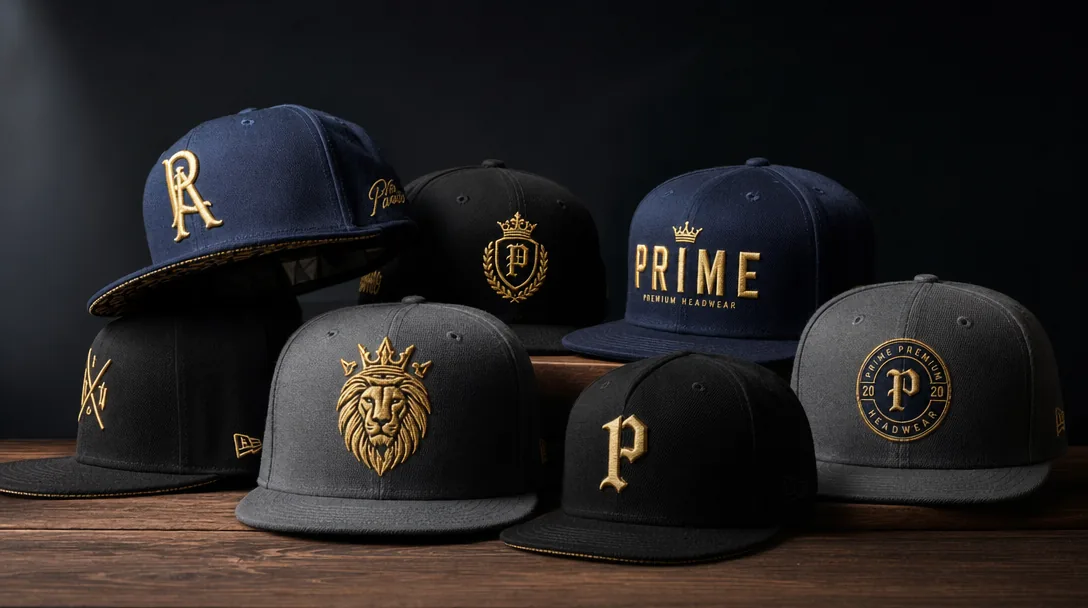
Custom Leather Patch Hat Low Minimum: A 2026 B2B Sourcing Guide
Read article →
Mens Beanies: Properties, Costs and How to Spec It Right
Read article →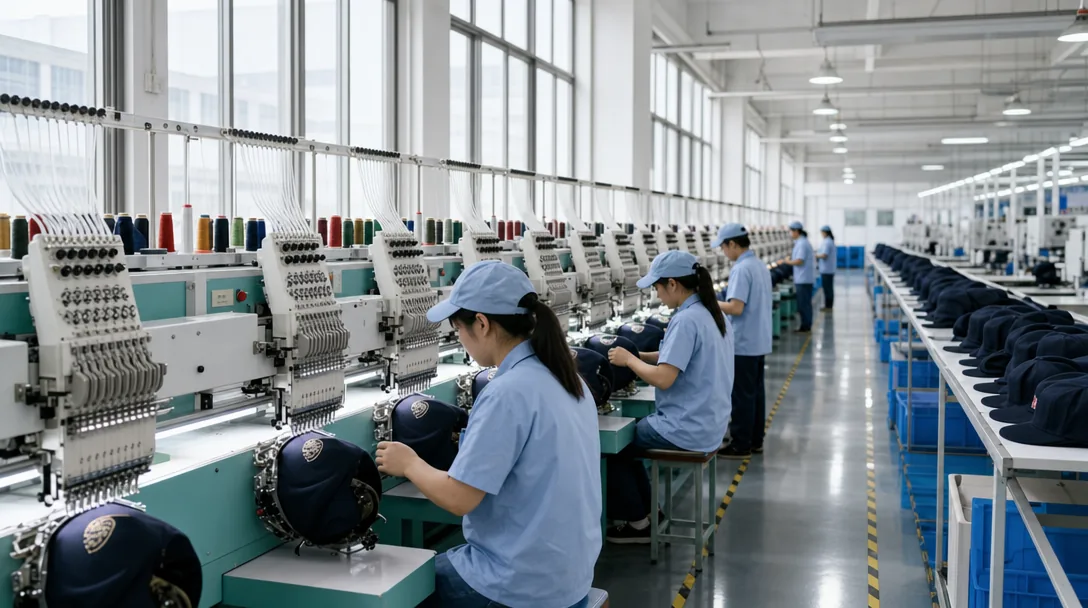
Bulk Trucker Hats Export Shipping Checklist for Custom Hat Buyers - Cost & MOQ Breakdown - Supplier Checklist
Read article →We hope this guide demystifies trucker hat mesh panel qc: defects buyers should catch early - 2026 buyer's guide and helps you move forward with confidence. If you have questions specific to your project, our English-speaking sales engineers are one message away.