
Sports Team Caps & Uniform Headwear: Bulk Manufacturing for Clubs and Schools - 2026 Buyer's Guide
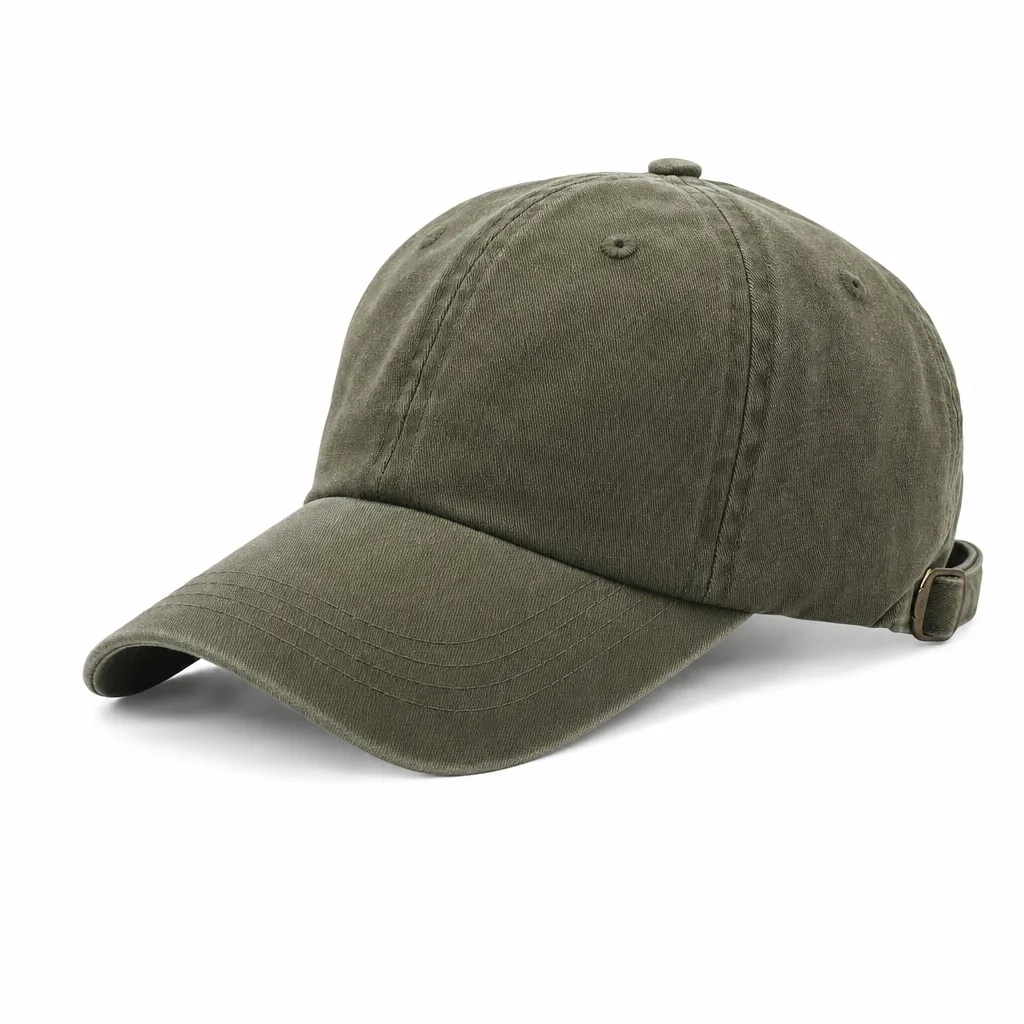
Every week, our sales team answers detailed questions about sports team caps & uniform headwear: bulk manufacturing for clubs and schools - 2026 buyer's guide. We wrote this guide so that wholesalers, streetwear brands, corporate buyers and promotional resellers can compare options with full information, and avoid the traps that show up only after production has started.
Why teams need a specialist manufacturer
Color control is usually the first reason teams outgrow generic promo vendors. Schools and clubs buying sports team caps need the fabric, visor sandwich, button, closure tab, and embroidery thread to match the uniform program within a documented tolerance, not by eye alone. The workable standard is simple: lock Pantone references at development, approve lab dips and thread cards under a D65 light box, and keep a sealed golden sample tied to the SKU. On production lots, we compare shell fabric and trims before cutting; once Delta-E pushes past about 1.5 on navy, royal, or cardinal, coaches start noticing that the cap no longer matches the jersey under daylight or stadium LEDs. Most failures come from substitution without disclosure, such as moving from 260 gsm polyester twill to acrylic-wool serge or changing thread supplier on a reorder. A specialist manufacturer builds repeatability into the process instead of relying on memory. That means archived swatches, approved Madeira or Gunold thread codes, visor board specs, and mill records by purchase order, so a 2026 reorder can match a 2024 delivery instead of drifting shade by shade. CrownsForge standard practice is to retain trim cards and sealed samples by style code because team programs rarely buy once; they reorder across seasons, add junior squads, and replace coach stock. If the factory cannot tell you the exact fabric composition, buckram stiffness, sweatband color, and embroidery file revision within the same day, your repeat order is effectively new development with all the avoidable risk that comes with it.
Reorder speed on sports team caps has very little to do with sales promises and everything to do with preproduction discipline. A true repeat order should already have a complete BOM, 6-panel pattern, crown height, visor curve, PE visor board thickness, eyelet placement, closure spec, carton pack ratio, and embroidery revision on file. Factories that run organized cap programs also store panel markers, needle charts, stitch maps, and previous bulk comments, then confirm the current fabric lot with a fresh strike-off on Tajima, Barudan, or ZSK heads before sewing. That quick validation catches pull compensation issues, edge-walk on raised satin columns, and density problems caused by a different twill finish. With stock fabric and a stable file, a 500-piece in-season reorder can usually ship in 18 to 25 days; without that documentation, the same order often slips past 40 days. Personalization is the other hard line between a cap factory and a promo shop. Side numbers, player initials, captain marks, and mixed youth/adult size runs create bundle-control problems that are easy to underestimate and expensive to fix. The real risk is not stitch count; it is head changeover, panel segregation, and final identity checks so #12 does not receive #21's cap. Competent factories separate customized panels by bundle, use barcode or manual tracking through embroidery and sewing, and audit finished goods at AQL 2.5 with size ratio and name verification built into the final inspection sheet. The cost adder is usually modest—about $0.35 to $1.20 per cap depending on placement, thread-color changes, and order size—but it pays for machine downtime and extra QA that blank-cap decorators rarely account for.
Fabric specs for athletic caps
Shell fabric decides whether sports team caps still look presentable after one season or collapse into promo-grade throwaways. The safest baseline is 100% polyester performance twill at 140-180 gsm: 75D/72F filament gives a smoother face for heat-transfer names and cleaner small text, while 100D or 150D has better crown memory for structured 6-panel baseball and softball caps. I steer running clubs, tennis programs, and summer field-day orders toward 140-150 gsm because it sheds sweat faster and dries quicker on the bench; for dugout use, PE uniforms, and daily school issue, 165-180 gsm resists locker compression and recovers shape better after repeated stuffing into equipment bags. “Moisture-wicking” is meaningless unless the finish survives laundering, so ask for retention after at least 20 home-wash cycles and perspiration colorfastness of grade 4 minimum under ISO 105-E04. Shade control matters most on navy, scarlet, and black, where weak dye houses drift fast; lock approvals to Pantone TCX and hold Delta-E to 1.5-2.0 against the sealed standard.
Ventilation and support materials are where many sports team caps fail first. Side and rear panels should be polyester warp-knit or sandwich mesh in the 120-160 gsm range; lighter mesh snags easily and starts distorting at seam joins, especially when caps are dragged across hook-and-loop bags or helmet racks. For high-output sports, laser-perforated side panels often outperform standard trucker mesh because they keep panel geometry stable and give more accurate embroidery registration on the front. If the logo is a dense flat fill or raised 3D design run on Tajima, Barudan, or ZSK heads, the front panel needs backing in the 0.35-0.50 mm range or the crown will pucker under stitch load. Seam specs should be written, not assumed: 301 lockstitch on panel joins, taped internal seams, and burst and seam-slippage test data tell you more than any “breathable” sales copy. CrownsForge treats sweatbands the same way—quick-dry polyester interlock or spacer mesh consistently outperforms cotton terry, which holds salt, dries slowly, and goes stiff after 15-30 wash cycles.
UV performance and undervisor color are usually missing from the tech pack, yet they directly affect athlete comfort and complaint rates. A dark 170 gsm polyester twill with a tight weave can reach UPF 40-50+, but pale lightweight mesh may test far lower even if airflow feels better. Buyers should ask for AATCC 183 or equivalent test reports instead of accepting “sun-proof” language with no lab data behind it. On-field visibility is also affected by the undervisor: black or charcoal cuts reflected glare far better than white or bright team colors, which matters in baseball, track, tennis, and any midday outdoor schedule. If odor control is required, specify the chemistry—silver-based, zinc pyrithione, or another finish—and require wash durability rather than assuming it is built into the sweatband. These are small cost lines, often only $0.08-$0.22 per cap in bulk, but they have an outsized impact on replacement rate, return claims, and whether athletes actually keep wearing the cap.
Color matching across multiple SKUs
Shade drift is what breaks multi-SKU uniform programs; embroidery defects are easier to fix than a navy that turns purple across jerseys, shorts, and sports team caps. The control point is not the Pantone callout alone but the approved physical standard, the substrate group, and the test method. For apparel-weight polyester twill, interlock, and performance mesh, we normally hold bulk dyeing to Delta-E 0.8-1.0 against the sealed Pantone TCX or buyer swatch under D65, 10° observer, measured on a calibrated spectrophotometer. On brushed cotton twill, acrylic serge, melton blends, and heathered constructions, a realistic acceptance band is 1.2-1.5 because pile, yarn count, and surface luster scatter light differently. A 260 gsm interlock jersey and a 210 gsm chino twill cap can share the same Pantone number and still read visibly off if you ignore texture and finish. The practical fix is lot discipline. Cap shell, visor sandwich, eyelets, top button, closure strap, and sweatband tape should be locked to one approved dye lot per color per PO, with retained swatches signed and dated before cutting. If the uniform mill and cap factory are different suppliers, both parties need the same lab dip, same light box settings, and same pass/fail standard; phone photos are worthless because auto white balance can shift navy toward green or violet. Sublimated jerseys complicate matching further because color sits on an optical-white polyester base and often cools after heat setting, so the cap fabric usually needs a corrected dye recipe rather than a literal Pantone match. Once sealed standards are skipped, a nominal 20-25 day ex-factory cap schedule can easily slip past 35 days on re-dips and approval loops.
Trim and decoration create a second layer of color error even when the shell fabric is correct. Embroidery thread should never be approved by Pantone number alone because 120D/2 trilobal polyester, rayon, and metallic thread reflect much harder than woven fabric, especially under 4000K retail LEDs or stadium lighting. On direct-embroidered sports team caps, we compare actual Madeira, Gunold, or FUJIX cones against the approved shell swatch and the matching jersey print or appliqué, then run strike-offs on Tajima or Barudan heads at production density. White outlines, metallic golds, and dark maroons are the usual trouble colors: stitch angle, underlay, and satin density can push the perceived shade bluer, greener, or brighter than the fabric by half a tone. The clean system is a color matrix written into the PO pack, not verbal approval trails. Each team color should list the Pantone TCX reference, substrate, fabric weight in gsm, thread code, trim code, approved lot number, and maximum Delta-E tolerance by material group. If the program includes fitted caps, snapbacks, visors, and bucket hats, note the substrate separately; recycled poly twill, brushed cotton, and spacer mesh will not read identically even with the same recipe. Our standard practice is to add inline shade checks at panel bundling and final inspection under AQL 2.5, then retain one keeper sample per SKU for repeat orders. That paperwork is cheaper than explaining why baseball caps, bench hats, and sideline visors delivered six months apart no longer look like one school uniform family.
Personalization at scale
The bottleneck in personalization is data integrity, not embroidery capacity. Once sports team caps include mixed player names, numbers, coach titles, and sponsor placements, each cap becomes its own SKU, and bad roster control will burn more time than any Tajima head ever saves. Lock the order with one master sheet before digitizing: style code, crown profile, fabric, Pantone reference, closure, size split, player spelling, number font, decoration position, and carton pack code on a single line per cap. That file should feed both the embroidery schedule and the packing list. On a 12-head Tajima or 8-head Barudan, operators can keep output stable only when runs are pre-sorted by thread color, cap size, and stitch count; if not, you lose hours to frame changes, thread re-sequencing, and sorting errors at packing. As a realistic benchmark, a 2-digit side number usually adds US$0.20 to 0.45 per cap at 4,000 to 7,000 stitches, while a 10- to 14-character back-arch name runs US$0.40 to 0.85 depending on stitch density, cap construction, and whether 3 mm EVA foam is used for puff elements.
Decoration method has to follow fabric behavior, not just approved artwork. Structured 6-panel polyester twill at 180 to 220 gsm or brushed cotton twill at 240 gsm will hold dense satin columns and 3D puff cleanly, but lightweight running caps in 75 to 120 gsm microfiber or perforated poly will pucker if you force a heavy file across vent holes. For those styles, heat-transfer film, silicone weld badges, or laser-cut twill appliqué are more stable and usually cleaner after 20 to 30 wash cycles. Direct embroidery is a poor choice for sponsor logos with gradients or text below 4 mm height; our standard cutoff is 0.8 mm minimum stroke width and 1.2 mm letter height for legible stitched copy. If brand color matters, approve thread against Pantone TCX for textile components and coated references for printed badges, then set a visual Delta-E tolerance before bulk starts because thread sheen and dye lots will never mirror ink exactly. At CrownsForge, personalized orders also get different QC: AQL 2.5 for workmanship, plus a count-by-name audit, left/right placement template checks within ±2 mm, and barcode packing by roster so school staff are not opening every carton to sort players.
MOQ flexibility for school orders
MOQ problems in school programs are usually caused by fragmentation, not by the logo count. A typical order gets split into 24 varsity caps, 18 JV, 12 coaches, and another 30 for booster resale, often across youth and adult crown shapes. For sports team caps, the real breakpoint is construction complexity. A stock 6-panel structured cap in 260-280 gsm brushed cotton twill, chino twill, or 300D moisture-wicking polyester can usually run at 48 pieces per colorway if the embroidery file, closure, and visor shape stay fixed. Once the spec moves to full cut-and-sew—contrast eyelets, sandwich visor, custom inside taping, woven flag label, or mixed fabric panels—the practical factory floor rises to 200-300 pieces because fabric yield loss, trim overbuy, and line changeover start dominating unit cost. The setup burden is what makes small runs expensive. Every split logo means separate digitizing edits, thread mapping against Pantone TCX or coated references, sew-out approval, and sometimes density compensation when youth caps have lower crown height and less embroidery field. If the school also wants roster packing by team, coach, or player name, packing labor continues long after sewing is finished. On a real production line, those non-sewing steps can make a 36-piece job behave like a much larger order administratively. The lowest-risk way to buy flexible sports team caps is to standardize shell fabric, closure, sweatband, and visor profile across all teams, then let the front logo and side embroidery carry the variation.
Schools also need to confirm whether the order is true factory production or blank caps decorated afterward. Blank decoration works for simple fundraiser merchandise, but it limits control over crown depth, buckram stiffness, visor curvature, seam alignment, and repeat-order color consistency. A factory-built program can combine youth and adult sizes under the same dyed fabric lot and usually hold shade variance around Delta-E 1.5-2.0 across panels, top button, and visor wrap if cutting is managed correctly. Our standard practice is to keep stock-fabric school programs in the 36-72 piece range per design, while pricing labor-heavy add-ons separately so buyers can see exactly what is driving cost instead of hiding it inside a blended unit price. For budgeting, a standard cap with flat front embroidery, plastic snapback, woven size label, and polybag packing usually lands around $4.20-$6.80 FOB Ningbo at 72-144 pieces, depending on fabric, stitch count, and carton spec. At 24-48 pieces, the same sports team caps often increase by 18-35 percent because trimming, needle detection, metal checks where required, and AQL 2.5 final inspection still apply whether the lot is 30 units or 300. Customization creates the next cost jump: player numbers, side names, or 3D puff embroidery on Tajima or Barudan heads generally adds $0.60-$1.80 per cap, with the upper end tied to hoop changes and stitch counts above about 8,000-10,000. If a school wants MOQ flexibility without quality drift, standardize the body and vary only the decoration.
Sample, approve, produce: timeline for season launch
Count backward from first wear date, not from the purchase order. For sports team caps, a credible China-to-U.S. schedule is 10 to 14 weeks with one PPS round and ocean freight, or 4 to 7 weeks if artwork, size split, player roster, and retail packing are locked before sampling and you ship air. The factory path is usually 2 to 5 days for artwork cleanup and embroidery digitizing, 5 to 8 days for a pre-production sample, 20 to 30 days for bulk cutting, sewing, embroidery, finishing, and packing, then 2 to 4 days for final inspection at AQL 2.5. Transit is where buyers miscalculate: expect roughly 28 to 38 days door-in by sea to most U.S. destinations after vessel departure, versus 5 to 9 days by air once customs clearance and final-mile delivery are included. If opening day is August 20, most schools and clubs should release the PO no later than early June; late June usually means paying for speed somewhere. Freight cost is what punishes indecision. A structured six-panel cap packed 144 pieces per export carton may add only about USD 0.18 to 0.35 per piece on ocean freight in a mixed shipment, but the same sports team caps can jump to USD 1.20 to 2.40 per piece by air once chargeable weight, carton dimensions, fuel surcharge, and destination ZIP are applied. Add one avoidable resample and you often lose 7 to 12 calendar days, which is exactly how a routine school season order turns into an expedited shipment.
Most delays come from approvals buyers treat as minor. Mascot outline weight, visor curvature, sweatband color, snapback versus hook-and-loop closure, and Pantone alignment to the jersey are not cosmetic once production starts; each one can force a new sample, new thread map, or even a material re-cut. A valid approval sample for sports team caps should confirm the sewn cap body, not just a flat embroidery strike-off: crown profile, buckram stiffness, seam balance, eyelet spacing, sweatband attachment, embroidery registration, and logo edge quality after the front panels are blocked. On Tajima or Barudan heads, a front logo commonly runs 8,000 to 18,000 stitches; if underlay, density, or pull compensation are off, satin borders spread and small text closes up even when thread shade is within Delta-E 1.5 to 2.0 of the target. Fabric selection is the other hidden clock. Stock brushed cotton twill at 260 to 280 gsm or polyester twill around 180 to 220 gsm can move straight into sampling, but custom-dyed performance poly, melange, or moisture-wicking microfiber usually adds 10 to 21 days for lab dips, shade approval under D65 light, and basic shrinkage or colorfastness checks. CrownsForge normally locks the PPS before cutting and then checks panel symmetry, visor sandwich alignment, top button centering, and carton assortments in-line, because rework after embroidery and sewing is where schedules get burned. If a program includes player-specific names or numbered side hits, build in another 3 to 5 production days for file setup, separation, and packing verification by roster.
Frequently Asked Questions
What is the minimum order quantity (MOQ) for custom hats?
Our standard MOQ is 100 pieces per design and color, with sampling available from 1 piece. For complex multi-color logos or premium fabric upgrades, the MOQ can be lowered with a small per-piece surcharge.
Which shipping methods do you support?
We support FOB, CIF and DDP shipping. Air express for samples and small orders, sea LCL for 100 to 500 pieces, sea FCL for 5,000+ pieces. Door-to-door DDP available for US, EU, UK, Canada and Australia.
Do you support sustainability certifications?
Yes. We work with GOTS organic cotton, GRS-certified recycled polyester, OEKO-TEX Standard 100 fabrics, and are BSCI and Sedex audited. Certification documentation can be provided per order.
Can I order a sample before bulk production?
Yes. We strongly recommend approving a pre-production sample before mass production. Samples are charged at 35 to 60 USD each plus express shipping, fully refundable against confirmed bulk orders over 500 pieces.
What file format should I send for my logo?
Vector files (AI, EPS, PDF) are ideal. High-resolution PNG or JPG at 300 dpi on transparent background works as a fallback. Provide Pantone color references for accurate reproduction.
How much does cheap custom hats in bulk typically cost?
When evaluating cheap custom hats in bulk, the key considerations are construction quality, decoration capability, MOQ flexibility and lead time. Repeatable color matching across seasons, fast reorder, individualization options. Moisture-wicking polyester, mesh ventilation panels, UV protection.
How does ordering custom beanie cap work?
When evaluating custom beanie cap, the key considerations are construction quality, decoration capability, MOQ flexibility and lead time. Repeatable color matching across seasons, fast reorder, individualization options. Moisture-wicking polyester, mesh ventilation panels, UV protection.
What should buyers know about nike bucket hats for men?
When evaluating nike bucket hats for men, the key considerations are construction quality, decoration capability, MOQ flexibility and lead time. Repeatable color matching across seasons, fast reorder, individualization options. Moisture-wicking polyester, mesh ventilation panels, UV protection.
What should buyers know about cool bucket hats for guys?
When evaluating cool bucket hats for guys, the key considerations are construction quality, decoration capability, MOQ flexibility and lead time. Repeatable color matching across seasons, fast reorder, individualization options. Moisture-wicking polyester, mesh ventilation panels, UV protection.
What is the most popular sports team hat?
1. New York Yankees Cap. The New York Yankees cap has been a classic since the 1970s and remains popular today.
What is a sports cap called?
A baseball cap is a type of soft hat with a rounded crown and a stiff bill projecting in front.
Need a low-MOQ test order?
We help emerging brands launch with as few as 100 pieces. Premium fabric, in-house embroidery, retail-ready packaging.
Start a small orderRelated guides
Camouflage Bucket Hat: Properties, Costs and How to Spec It Right (2026 Update)
Read article →
Refreshing a Hat Collection: A Repeat-Order Playbook for Established Brands
Read article →
Embroidery Hats Machine: When to Use It, Costs, and What to Ask Your Factory - Cost & MOQ Breakdown
Read article →We hope this guide demystifies sports team caps & uniform headwear: bulk manufacturing for clubs and schools - 2026 buyer's guide and helps you move forward with confidence. If you have questions specific to your project, our English-speaking sales engineers are one message away.