
Camouflage Bucket Hat: Properties, Costs and How to Spec It Right (2026 Update)
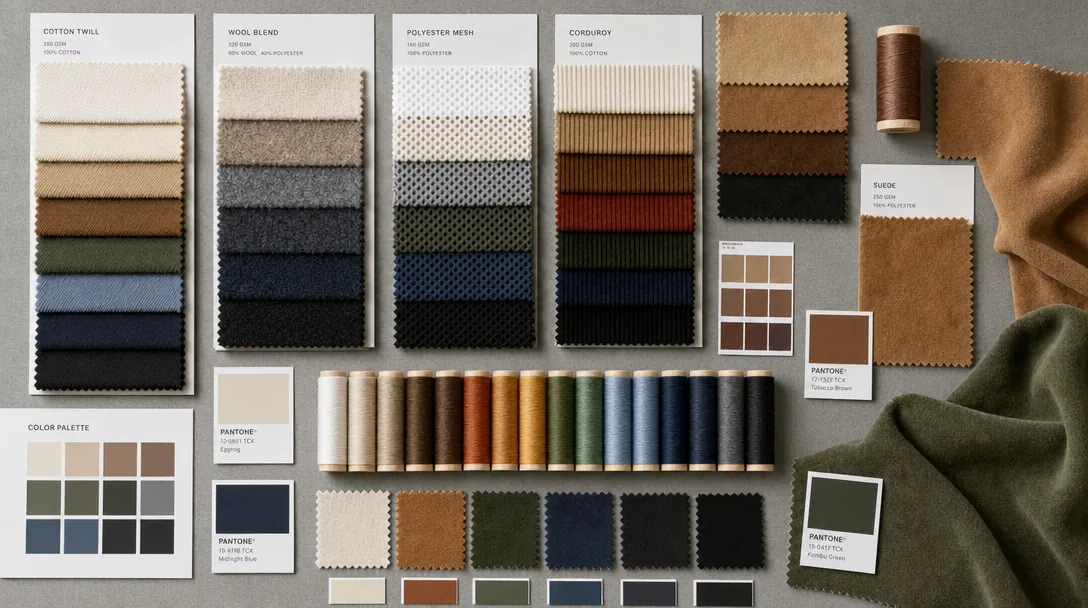
Camouflage Bucket Hat: Properties, Costs and How to Spec It Right (2026 Update) is one of the most-asked questions we receive from international buyers, and for good reason. With dozens of factories competing for your order and an alphabet soup of technical terms in every supplier quote, even experienced importers can feel lost. This guide consolidates what we have learned producing custom hats for clients in 40+ countries.
Bucket Hat Women
Women’s sell-through on a camouflage bucket hat is driven by proportion, not by making the print “prettier.” A standard unisex 58 cm block is usually too deep through the side wall, so the brim collapses onto the ears and the hat looks oversized after one wash cycle. The safer women’s spec is a crown height of 8.5-9.0 cm, brim width 5.5-6.2 cm, and tighter grading through the S/M range, typically 56-57 cm finished circumference before wash allowance. Fabric choice should match the silhouette: 180-240 gsm cotton twill holds a cleaner edge, 220-280 gsm washed canvas gives a softer broken-in drape, and 16-21 wale corduroy works when the product is fashion-led rather than utility-led. Brim construction is where weak development shows up first. I would spec 6-8 SPI with topstitch rows at 2.5-3.0 mm spacing and match the interlining to shell weight; a generic PE insert is exactly how you get edge rippling, torque after laundering, and a brim that flares unevenly panel to panel.
For camouflage, the critical question is whether the pattern is printed on yardage before cutting or created through a post-sew pigment wash. Pre-printed fabric gives you repeat control, cleaner seam matching, and more predictable shade continuity across brim panels; post-sew effects give a drier hand and more vintage character, but lot-to-lot variation increases fast. The tech pack should lock fabric composition, gsm tolerance at +/-5%, print repeat, eyelet count, sweatband spec, label placement, and Pantone TCX references for any solid trims, with Delta-E under 1.5 on non-camo parts under D65 lighting. In Zhejiang, a basic women’s camouflage bucket hat in stock twill is usually $2.10-$3.40 FOB at 500 pcs. Custom-printed canvas, woven labels, seam taping, or an enzyme wash pushes it to roughly $3.60-$5.80 FOB, and custom camo normally raises the practical MOQ to 800-1,200 pcs because print setup and marker efficiency matter. QC should be run at AQL 2.5 major / 4.0 minor, with specific checks on brim symmetry, side-seam print alignment, eyelet burrs, sweatband join thickness, and color migration after washing.
Corduroy Hat Men's
Corduroy only works on a bucket when you spec it like a structured fabric, not like generic cotton. For a men’s program, 10- to 12-wale cotton corduroy at 240 to 280 gsm is the usable window; below 230 gsm the shell collapses and telegraphs every seam, while above 300 gsm the crown-to-brim joins get bulky and the topstitch starts to climb over seam stacks. An 11-wale, 260 gsm shell is usually the safest balance for hand feel, shape retention, and sewing efficiency. Rib direction belongs in the tech pack for every panel. Sidewall ribs should run vertical, brim pieces should mirror cleanly, and you should state that panel rotation is not allowed without approval. If that line is missing, the cutting room may rotate pieces to gain 2% to 4% marker efficiency, and the finished hat will look visibly wrong at first glance. If the same collection also includes a camouflage bucket hat, review the corduroy lab dips and camo strike-offs together so the palette reads as one range instead of two unrelated developments.
Color and sewing tolerances need to be tighter than buyers usually assume. Corduroy pile throws shade differently depending on nap direction, so I would require Pantone TCX lab-dip approval, bulk approval under D65 lighting, and a shade tolerance no wider than Delta-E 1.0 to 1.5. On dark olive, black, or brown programs, also test dry and wet crocking, because brushed ribs can release dye faster than twill. The tech pack should lock sample size at 58 cm, finished crown depth at 8.5 to 9.0 cm, brim width at 5.5 to 6.0 cm, brim stitch rows, seam allowance, and SPI; for corduroy, 6 to 7 SPI is usually safer than pushing a dense stitch that can cut pile and pucker seams. Brim interlining at 80 to 120 gsm nonwoven gives enough body without creating a ropey edge after washing. FOB China on a basic unstructured corduroy bucket usually lands around $2.40 to $3.90 at 500 to 1,000 pieces; enzyme wash, custom lining, or woven taping can push it to $4.60 to $5.20. Final inspection should run to AQL 2.5, but I would still require a first-100-piece in-line check focused on wale alignment, seam grin, skipped topstitching over bulk, needle cuts, brim roundness, and pile crush at seam intersections.
Organic Cotton Newborn Hat
The biggest commercial risk in an organic cotton newborn hat is paperwork, not sewing. Buyers sign off on “organic yarn” too casually, then discover the chain of custody breaks at dyeing or cut-and-sew, which makes the retail claim unusable. If the factory is booking baby programs, the spec should name GOTS or OCS transaction certificates by lot, allowable fiber-content tolerance, yarn count, knit gauge, and approved dyestuff class before lab dips are issued. For infant headwear, 180–220 gsm organic cotton interlock or 1x1 rib is the safe working range; below 180 gsm, panels torque and edge-roll after washing, and above 220 gsm, the crown seam gets bulky enough to irritate the fontanel area. I would also write pH 4.0–7.5, azo-free chemistry, formaldehyde limits to CPSIA or REACH baby standards, and saliva/perspiration colorfastness directly into the purchase spec. Shrinkage needs a hard limit as well: on a 36 cm newborn cap, anything above 3% after one domestic wash will trigger fit complaints immediately.
Construction should be optimized for skin contact and wash stability, not trim. A 4-thread overlock with a low-profile seam, folded hem, and no loose thread tails over 3 mm is the minimum; detachable ornaments, hard PVC badges, metal eyelets, and glitter prints should be excluded outright. Better factories cut from tubular knit to eliminate side seams, relocate care labels away from the forehead, or use low-migration heat transfers that pass crocking tests. The defects that actually cost money are ordinary ones: seam grinning at the crown, needle cuts visible under light-box stretch, oil marks, lot-to-lot shade drift beyond Delta-E 1.5–2.0, and wash twist caused by poor relaxation before cutting. Inspection should be run at AQL 2.5 with measured checks for circumference, crown height, stretch recovery, and carton odor; some retailers will also require metal detection and CPSIA tracking labels. In China, MOQ is usually 800–1,500 pcs per color for custom-dyed organic cotton, or 300–500 pcs on stock greige shades, with 2026 FOB pricing around $0.85–$1.60 for a plain cap and $1.80–$3.20 for printed or gift-set packs. The same discipline applies when you move into a camouflage bucket hat: traceability, shade control, and lot consistency matter just as much as the sewing.
Corduroy Hat Wholesale
Wale count is the first line item I lock down for a camouflage bucket hat in corduroy, because it dictates how much camo detail survives after printing and sewing. Leaving it as “corduroy” in a tech pack is how you get a bulk lot that looks muddy on the shelf. An 8-wale cloth gives a heavier, vintage hand and masks seam grin on an unstructured crown, but the rib height breaks up small branches, digital pixels, and tight contour lines. A 14-wale face prints cleaner and reads more premium for streetwear, yet it also exposes every issue on the sewing floor: needle drag, brim edge waviness, panel torque, and inconsistent topstitch tracking. The safest commercial spec is usually 11-wale, 100% cotton, 240-260 gsm, pre-shrunk to below 3% residual shrinkage, with pile direction kept one way across crown, sidewall, and brim so the shade does not flip under LED retail lighting. If the camouflage is custom, decide print chemistry before sampling. Pigment is cheaper by roughly $0.18-$0.35 per hat and gives a drier hand, but edges soften on the ribs; reactive printing costs more, yet you can reasonably ask for wash fastness grade 4 and dry crocking grade 4-5 on a good mill run.
The spec sheet for a corduroy camouflage bucket hat needs tighter controls than plain chino twill, especially on print alignment and sewing tolerances. I would call out wale count, finished gsm at +/-5%, crown height, brim width, eyelet construction, sweatband material, seam tape color, SPI, and topstitch count. For adult hats, a practical production tolerance is head circumference +/-0.5 cm, brim width +/-0.3 cm, and crown height +/-0.3 cm; anything looser starts showing up immediately on fit and silhouette. Camo approval should never rely on Pantone callouts alone. Approve against strike-off, repeat size, panel placement map, and seam-join expectation, otherwise a factory can deliver technically correct colors with obvious pattern drift at the side seam and brim splice. For 2026 China FOB, stock corduroy buckets usually sit around 300-500 pieces per colorway, but custom-printed camouflage fabric often pushes MOQ to 800-1,200 because the mill wants an efficient print run. A realistic FOB range is $2.70-$3.60 for a basic unlined corduroy bucket at 500 pieces, and $4.10-$5.60 once you add custom camo, woven label, inside taping, and a small front embroidery. Under AQL 2.5, the defects I watch first are nap mismatch, broken wales at seam margins, brim puckering, skipped topstitching, off-grain cutting, and logo registration drift on Tajima or Barudan embroidery heads.
Wholesale Hat Manufacturers Usa
When buyers search “wholesale hat manufacturers usa,” the first test is whether the supplier actually runs cut-and-sew or just decorates imported blanks. For a camouflage bucket hat, a real production spec should be easy to recite: 180–240 gsm cotton twill or 210D–300D poly-cotton ripstop, reactive or pigment camouflage print, 80–120 gsm brim interlining, crown panels cut on grain, and a sweatband in self-fabric, cotton twill, or spacer mesh depending on price. I also want non-negotiables in writing: crown height, brim width, seam allowance, topstitch density at 8–10 SPI, and color control tied to a Pantone TCX reference. If bulk shade drifts beyond Delta-E 1.5 under D65 lighting, the lot is not matchable in a multi-color reorder.
The spec pack matters more than the ZIP code on the invoice. A usable camouflage bucket hat spec should lock fabric composition, print method, crown depth, brim width, eyelet finish, top button construction, seam taping, label placement, wash standard, carton pack-out, and inspection level, usually AQL 2.5 major and 4.0 minor. For decorated stock, 144–300 pieces per colorway is common; true custom domestic cut-and-sew often needs 500–1,000 pieces because markers, trim sourcing, and setup time are real costs. For 2026 pricing, imported custom bucket hats finished in the U.S. usually land around $4.20–$6.80 landed, while small-batch U.S. production is more often $9.50–$18.00 depending on embroidery minutes, woven labels, seam tape, and wash testing.
The defects that kill a camouflage bucket hat order are predictable: brim waviness from uneven fusing, crown torque from off-grain cutting, camouflage mismatch at side seams, skipped topstitching, and sweatbands that shrink after laundering and pull the silhouette out of shape. Seam alignment will never be perfect on a print repeat, so define an acceptable side-seam offset up front; 3 mm is realistic, tighter only if the repeat is engineered for matching. A serious factory should be checking crown symmetry, brim circumference, shade continuity by lot, crocking resistance, and embroidery registration on Tajima, Barudan, or ZSK heads before final audit. The supplier worth paying for is the one that can show fabric traceability, needle control, metal detection for kids’ goods when required, and current sedex-audit-cap-supplier-guide.html">BSCI 2.0 or Sedex SMETA 4-Pillar status, then repeat the same camouflage bucket hat construction on reorder without drift.
Black Beanie Hat
A black beanie looks simple, but it is a good stress test for the same process controls that decide whether a camouflage bucket hat comes out clean or gets rejected for shade drift and sloppy finishing. Start by locking the knit platform instead of approving from a photo: 100% acrylic 7-gauge 2x2 rib is still the volume option for winter promo and value retail, while a 50/50 recycled polyester-acrylic blend holds abrasion better and usually pills less after repeated wear. Cotton-rich jerseys feel softer but lose thermal performance and can torque more after wash if yarn twist is not balanced. In Zhejiang, most commercial beanies land around 280-380 gsm finished weight on circular knitting machines, then go to cut-and-link or fully fashioned assembly depending on crown profile and seam preference. For cuffed styles, specify unfolded height, cuff depth, relaxed width, and stretch recovery after 20 extension cycles, because a cuff that looks fine off-head can open up 1.5-2.0 cm in real use. Black is where vague color language fails. If the beanie will ship under one PO, asking for Delta-E below 1.0 between approved lab dip and bulk is realistic; if the order is split across yarn lots, put the tolerance and lot-segregation rule in writing. Also call out colorfastness to crocking and perspiration, pilling minimum 3.5-4.0, and a cuff tolerance of +/-0.5 cm. Decoration changes the hand more than buyers expect: 5,000-8,000 stitches of flat embroidery on Tajima or Barudan heads can make a cuff noticeably stiffer than a woven label, TPU patch, or leatherette tab, and the wrong backing is a common cause of needle cuts, tunneling, and puckering. Write the spec sheet with yarn count, needle gauge, top-closure method, and seam bulk limit, not mood-board language, because the same discipline used here is what later keeps a camouflage bucket hat consistent across panels, brim rows, and trim placement.
Packing and inspection are where basic beanie programs still fail. Bulk-packed dozens without dividers often flatten the crown, shift the cuff fold, and create false measurements before final inspection even starts. For black goods, inspection under standard warehouse lighting is not enough; use higher-lux lighting and check oil marks, needle damage, and shade variation from more than one angle. Typical defect patterns are repetitive: barre from mixed yarn lots, linking oil stains, top-seam grin, torque after wash, and embroidery puckering that only shows when the hat is worn on-head. AQL 2.5 is the practical benchmark for export orders, and head-opening checks should be taken across the lot rather than only from top cartons, because stretch variation tends to hide in the middle of production. In 2026, MOQ for custom beanies is usually 300-500 pieces per color per style, though stock-yarn programs with simple trims can sometimes run at 144 pieces. FOB Ningbo pricing for a basic acrylic beanie with a woven label is commonly $1.10-$1.85 at 1,000 units, depending on yarn market movement, gauge, and pack method. Add roughly $0.18-$0.45 for flat embroidery and $0.25-$0.60 for a custom pom, with recycled yarns typically carrying a 6%-12% premium if you need traceable content. At CrownsForge, we treat black-on-black inspection as a process audit, not a cosmetic check, because if a factory cannot hold lot consistency, seam cleanliness, and decoration stability on a black beanie, it will struggle even more on a camouflage bucket hat where panel matching and brim symmetry are far less forgiving.
Working with CrownsForge for camouflage bucket hat programs
The biggest failure point in a camouflage bucket hat program is sample lock, not sewing throughput. If the first approved sample does not pin down hand feel, print scale, brim pitch, and post-wash crown depth, bulk production drifts fast and the loss shows up in fabric waste, not labor minutes. A usable tech pack should call out shell fabric by construction and weight—say 100% cotton twill at 220 gsm or washed chino at 240 gsm—plus Pantone TCX references for trims, crown depth tolerance within ±4 mm after wash, brim width within ±3 mm, stitch count per inch, seam allowance, and whether the underbrim is self-fabric or contrast. On stock greige that we already run, proto lead time is usually 5 to 7 working days. Add a custom camo print, enzyme wash, or bound brim edge and it becomes 10 to 14 working days because the printer needs strike-off approval, shade confirmation, and often 300 to 500 meters minimum before the price stabilizes. MOQ is where many buyers misread the category. A stock-fabric camouflage bucket hat can often run at 144 to 300 pieces per colorway, but a custom print typically starts closer to 500 to 1,000 pieces because rotary screen setup, print waste, and finishing losses drive the economics. Unit cost on a straightforward stock-twill hat with woven label and standard sweatband may land around $3.20 to $4.80 FOB China at 300 pieces; custom reactive print, embroidery, and branded inner taping can push that into the $5.80 to $8.50 range. CrownsForge treats crown geometry as a controlled spec, not a styling note, because two hats cut from the same camo cloth can still look like different products if the side wall collapses or the brim roll is inconsistent by even 5 mm.
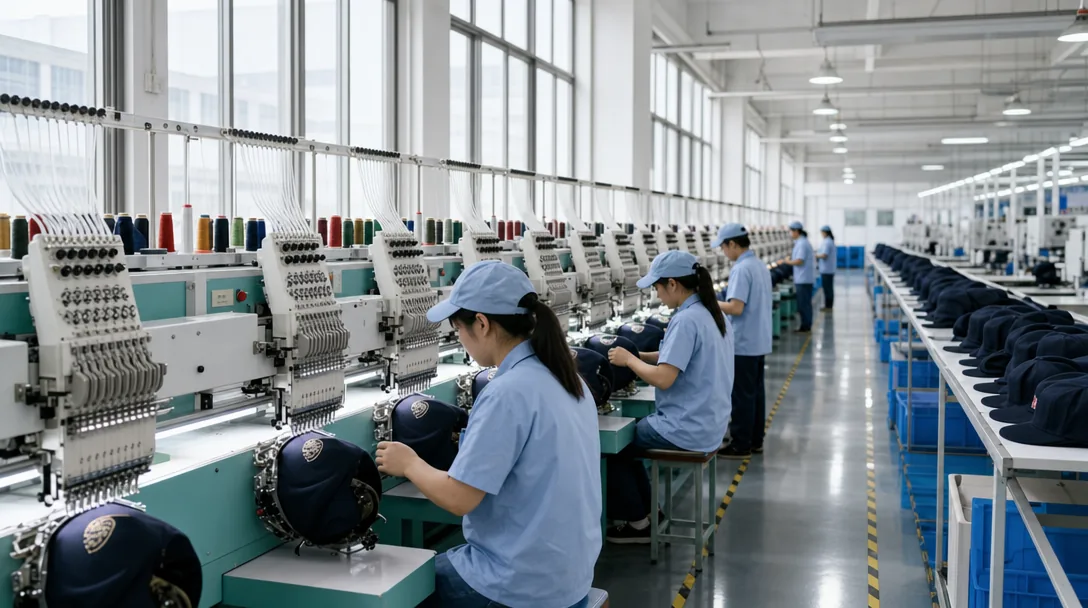
Decoration is where a camouflage bucket hat either looks retail-ready or cheap from six feet away. Small curved panels magnify registration errors, and camo ground colors swallow weak embroidery unless the digitizing is adjusted for the print underneath. On Tajima and Barudan 9- to 12-head machines, we normally increase underlay coverage, reduce stitch density in filled areas, and tune pull compensation so the logo edge stays clean on uneven twill tension. Fine outlines below about 1.2 mm, small type, or tonal branding usually reproduce better as woven patches, high-density damask labels, or silicone heat transfers than as flat satin stitch. Every method needs a strike-off on actual fabric, especially on pigment-washed or reactive-printed cotton, because finishing heat and wash chemistry can shift shade enough to miss an approved standard by Delta-E 1.5 or more. Order control is what keeps margin from leaking out between PO release and ex-factory. The checkpoints that matter are BOM signoff, print strike-off or lab-dip approval, pre-production sample, pilot run, inline inspection, and final audit at AQL 2.5 with carton-level verification before loading. For U.S. and EU retail, serious buyers will also ask for current BSCI 2.0 or Sedex SMETA 4-Pillar reports and lab data covering azo dyes, formaldehyde, total lead, colorfastness to perspiration, and crocking. Packing details are not trivial either: 100 pieces per master carton usually protects brim shape better than 150, but it increases cube and freight. Once a camouflage bucket hat program scales from a 300-piece test to 10,000 units across multiple print variants, those controls are what prevent mixed shades, crushed brims, and size inconsistency from turning into chargebacks.
Frequently Asked Questions
Can I order a sample before bulk production?
Yes. We strongly recommend approving a pre-production sample before mass production. Samples are charged at 35 to 60 USD each plus express shipping, fully refundable against confirmed bulk orders over 500 pieces.
How long does production take?
Sampling takes 7 to 12 days. Bulk production runs 20 to 30 days depending on quantity, fabric availability and decoration complexity. Inspection and packing adds another 3 to 5 days before shipment.
Do you support sustainability certifications?
Yes. We work with GOTS organic cotton, GRS-certified recycled polyester, OEKO-TEX Standard 100 fabrics, and are BSCI and Sedex audited. Certification documentation can be provided per order.
What is the minimum order quantity (MOQ) for custom hats?
Our standard MOQ is 100 pieces per design and color, with sampling available from 1 piece. For complex multi-color logos or premium fabric upgrades, the MOQ can be lowered with a small per-piece surcharge.
What logo decoration techniques do you offer?
3D puff embroidery, flat embroidery, woven patch, leather patch, PVC patch, screen printing, sublimation, applique and laser etching, all in-house with no subcontracting.
What should buyers know about organic cotton bucket hat?
When evaluating organic cotton bucket hat, the key considerations are construction quality, decoration capability, MOQ flexibility and lead time. Cover everything buyers ask about organic cotton newborn hat: how it's manufactured, what specs to request from a factory, typical MOQ and pricing, common quality issues to inspect for, and how this ties back to the broader camouflage bucket hat sourcing decision. Cover everything buyers ask about bucket hat women: how it's manufactured, what specs to request from a…
What should buyers know about men's corduroy bucket hat?
When evaluating men's corduroy bucket hat, the key considerations are construction quality, decoration capability, MOQ flexibility and lead time. Cover everything buyers ask about corduroy hat men's: how it's manufactured, what specs to request from a factory, typical MOQ and pricing, common quality issues to inspect for, and how this ties back to the broader camouflage bucket hat sourcing decision. Cover everything buyers ask about corduroy hat wholesale: how it's manufactured, what specs to request from a factory,…
What should buyers know about nike bucket hats for men?
When evaluating nike bucket hats for men, the key considerations are construction quality, decoration capability, MOQ flexibility and lead time. Cover everything buyers ask about corduroy hat men's: how it's manufactured, what specs to request from a factory, typical MOQ and pricing, common quality issues to inspect for, and how this ties back to the broader camouflage bucket hat sourcing decision. Cover everything buyers ask about bucket hat women: how it's manufactured, what specs to request from a factory,…
What should buyers know about cotton beanie men?
When evaluating cotton beanie men, the key considerations are construction quality, decoration capability, MOQ flexibility and lead time. Cover everything buyers ask about corduroy hat men's: how it's manufactured, what specs to request from a factory, typical MOQ and pricing, common quality issues to inspect for, and how this ties back to the broader camouflage bucket hat sourcing decision. Cover everything buyers ask about organic cotton newborn hat: how it's manufactured, what specs to request from a…
Looking for a reliable hat manufacturer in China?
CrownsForge has produced custom hats for 800+ brands across 40 countries. From 100-piece launches to 100,000-piece retail programs, we deliver on time and on spec.
Get in touchRelated guides
Bulk Trucker Hats Reorder Planning Guide for Custom Hat Buyers
Read article →
Baseball Hats For Men Export Shipping Checklist for Custom Hat Buyers
Read article →Wholesale Hats Suppliers: Properties, Costs and How to Spec It Right
Read article →We hope this guide demystifies camouflage bucket hat: properties, costs and how to spec it right (2026 update) and helps you move forward with confidence. If you have questions specific to your project, our English-speaking sales engineers are one message away.