
Baseball Hats For Men Export Shipping Checklist for Custom Hat Buyers
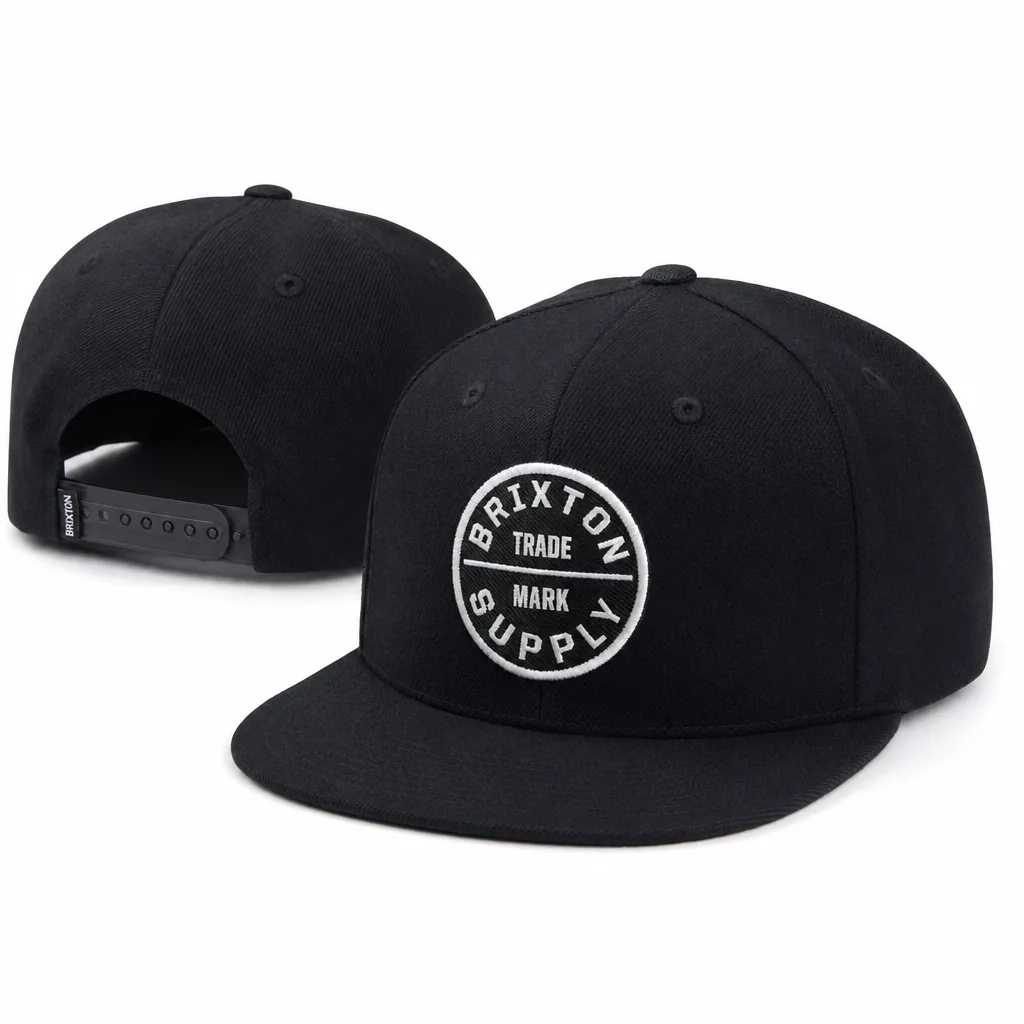
Baseball Hats For Men Export Shipping Checklist for Custom Hat Buyers is one of the most-asked questions we receive from international buyers, and for good reason. With dozens of factories competing for your order and an alphabet soup of technical terms in every supplier quote, even experienced importers can feel lost. This guide consolidates what we have learned producing custom hats for clients in 40+ countries.
Why baseball hats for men export shipping checklist needs a separate sourcing plan
Compliance decisions belong in the sourcing plan, not at shipment release. If the buyer needs sedex-audit-cap-supplier-guide.html">BSCI 2.0, Sedex SMETA 4-Pillar, recycled polyester certificates, Prop 65 review, or children’s-product testing, the factory must know before materials are purchased. Our standard practice at CrownsForge is to confirm care labels, carton marks, packing ratios, needle detection requirements, and inspection criteria on the proforma invoice, because changing them after production usually means repacking fees of US$0.05–0.18 per piece and a 2–5 day delay. Mixed programs make this more important: fitted hats with patches, mesh trucker caps, and festival bucket hats may share one purchase order but need different carton sizes, label positions, and compliance files. A proper baseball hats for men export shipping checklist forces these decisions early, so buyers can compare FOB, DDP, and courier quotations on the same technical basis instead of discovering hidden costs after bulk goods are finished.
Factory capability checks before quoting
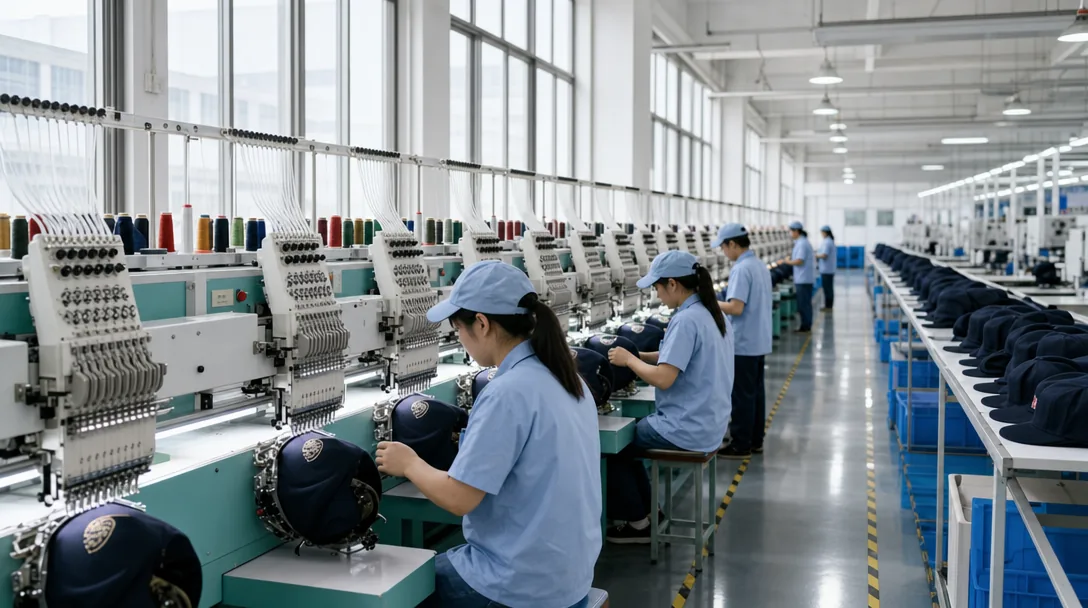
The first capability check is decoration, because embroidery and patches expose weak factories faster than any spreadsheet quote. For raised 3D puff on baseball hats for men, ask what embroidery heads they run and how they control density on curved fronts; Tajima, Barudan, and ZSK machines can all do clean work, but only if the digitizer knows when to drop from 0.40 mm satin spacing to 0.35 mm and when to add underlay for foam. For fitted hats with patches, confirm whether they can produce woven, chenille, PVC, leather debossed, and embroidered patches in-house or through a stable subcontractor. A serious sample room should show stitch-out photos, backing type, thread brand, and patch edge method before charging a mold fee. For custom baseball team hats, I also check whether they can match team colors to Pantone TCX or TPX within Delta-E 1.5 to 2.0, not just say “navy” or “red” in a message.
Fabric and construction capability matter just as much as decoration, especially when the buyer is comparing baseball hats Canada shipments against U.S. or EU orders. A factory quoting a baseball hats for men export shipping checklist should be able to identify crown fabric by weight and behavior: 280 gsm cotton twill for classic dad caps, 340 gsm acrylic-wool blend for structured flat brims, 150 denier polyester mesh for truckers, and quick-dry nylon for outdoor programs. Panel construction must be checked by style: 5-panel camper, 6-panel structured, unstructured low-profile, flexfit, and high-crown snapback all require different buckram, seam tape, sweatband, and block settings. Closure options should be quoted with actual components: YKK-style metal buckle, plastic snap, brass clasp, hook-and-loop, elastic flex band, or fitted sizing from 6 7/8 to 8. If the same supplier also offers festival bucket hats, verify separate patterns and brim stitching gauges instead of accepting a generic “we make all hats” answer.
Before releasing an RFQ, I check sample room speed, audit readiness, and communication discipline because these affect shipment risk more than a low unit price. Our standard practice at CrownsForge is to quote only after confirming sample capacity, usually 5 to 7 days for embroidery caps, 7 to 10 days for PVC or woven patch caps, and 12 to 15 days when custom-dyed fabric or new metal trims are involved. Ask whether pre-production samples include a spec sheet with panel measurements, crown height, brim length, seam allowance, packing method, and barcode placement if retail cartons are required. For compliance, the factory should be able to provide recent BSCI 2.0, Sedex SMETA 4-Pillar, or equivalent audit documents, plus AQL 2.5 inspection records for major defects like loose threads, off-center logos, shade variation, and carton short-pack. A practical baseball hats for men export shipping checklist also includes one communication test: send a marked-up tech pack and see whether the merchandiser answers in measurements, materials, and timelines—not vague promises.
MOQ, pricing and sample approval
MOQ is not one number; it is a cost curve. For baseball hats for men, the practical floor is usually 144 pieces per color/style if you accept stock fabric, stock sweatband, and standard rear closure. At 300 pieces, you can normally split sizes on fitted caps or add a woven label without wrecking unit cost. At 500–1,000 pieces, fabric dyeing, custom taping, private buckle engraving, and carton marking become reasonable. A 6-panel cotton twill cap with flat embroidery may land around USD 2.40–3.80 FOB Yiwu at 500 pieces, while fitted hats with patches, heavy buckram, size stickers, and custom inside trims can move into USD 4.80–7.20. Small runs are possible, but decoration setup does not shrink: embroidery digitizing is commonly USD 35–80 per logo, mold charges for PVC or silicone patches run USD 80–180, and woven patch setup is often USD 45–90 before any cap is sewn.
Sample approval should be treated as production engineering, not a photo exchange. A proper PPS must confirm crown height, visor curve, panel symmetry, stitch density, thread color, label placement, closure tension, and packaging. For embroidery on Tajima, Barudan, or ZSK heads, I want to see stitch count, backing type, and density before bulk; raised 3D puff usually needs 0.38–0.45 mm stitch spacing and clean foam tear-away, while flat logos may sit at 0.32–0.40 mm depending on fabric. Pantone matching should specify Pantone TCX for fabric and Pantone C/U or Madeira/Rayon thread references for decoration, with Delta-E under 1.5 for critical brand colors and under 2.5 for less visible trims. This matters more for custom baseball team hats and baseball hats Canada programs, where repeat orders expose shade drift between seasons.
Lead time starts after PPS approval, not after deposit, and buyers often underestimate this. For a normal order, expect 5–7 days for digitizing and first sample, 7–10 days if patches, metal trims, or lab dips are involved, then 25–35 days for bulk production at 500–3,000 pieces. Peak season before summer festivals or Q4 promo campaigns can add 7–14 days, especially when the same sewing lines are handling festival bucket hats and structured caps together. Packaging choices also affect timing and cost: individual polybags add about USD 0.05–0.09 each, barcode stickers USD 0.02–0.04, inner boxes USD 0.18–0.35, and export cartons should be tested for cap crushing, not just weight. Our standard practice at CrownsForge is to tie the baseball hats for men export shipping checklist to PPS sign-off, including carton dimensions, HS code, country-of-origin label, AQL 2.5 inspection level, and final packing photos before balance payment.
Quality inspection and shipping risk
The highest shipping risk is not the vessel delay; it is discovering cap defects after cartons arrive and the selling season has already started. For baseball hats for men, I use AQL 2.5 for major defects and AQL 4.0 for minor defects on final random inspection, with carton sampling pulled after packing, not from a “nice” side pile. Critical checks include crown height within ±3 mm, visor length within ±2 mm, head circumference within ±0.5 cm on fitted sizes, and sweatband stitching at 8–10 stitches per inch with no skipped seams longer than 6 mm. For custom baseball team hats, size grading must be checked across the full run, especially 7 1/8 through 7 5/8, because a block issue on fitted caps can ruin half the order. Our standard practice at CrownsForge is to keep a signed pre-production sample, bulk fabric swatch, and measurement sheet on the inspection table so the QC team is not judging from memory.
Color and decoration failures are expensive because they are visible before the customer even tries the hat on. For cotton twill, washed chino, and polyester performance fabrics, buyers should ask for lab-dip approval by Pantone TCX or TPX, with Delta-E under 1.5 for brand colors and under 2.0 for darker neutrals. Colorfastness should be at least Grade 4 dry rub and Grade 3–4 wet rub under ISO 105-X12; for baseball hats Canada programs, add sweat fastness because winter retail often means darker caps worn with light hoodies. Embroidery inspection must catch thread breaks, pull distortion, registration shift over 1 mm, and backing show-through, especially on raised 3D puff logos stitched on Tajima, Barudan, or ZSK heads. Fitted hats with patches need edge lift testing after heat press or sewing, and festival bucket hats need brim symmetry checks because soft panels hide defects until they are packed flat.
A practical baseball hats for men export shipping checklist should treat paperwork and cartons as part of quality control, not as an office afterthought. Carton marks need buyer PO, style number, color, size breakdown, gross/net weight, carton dimensions, country of origin, and sequential numbering such as 1/86, 2/86. For a 144-piece master carton, keep gross weight under 18–20 kg to avoid crushed visors and warehouse handling claims; use 5-ply export cartons for DDP and wet-strength tape during rainy-season departures from Ningbo or Shanghai. FOB is cleaner when the buyer controls freight and customs classification, while DDP is useful for smaller streetwear drops but must price in duty, brokerage, VAT/GST, and last-mile risk. Reorder documentation should include digitized embroidery files, patch molds, fabric gsm, visor board thickness, Pantone references, approved photos, carton specs, HS code, and the final inspection report so the next run does not become a new development project.
Buyer checklist for the next RFQ
A firm RFQ starts with a complete tech pack, not a mood board and a target price. For baseball hats for men, send the cap style first: 5-panel, 6-panel, unstructured dad cap, mid-profile trucker, flat-brim snapback, or true fitted. Include crown height, brim type, closure, sweatband material, size run, and whether the visor needs PE, PP, or recycled board. For fabric, specify cotton twill 180–260 gsm, brushed chino, wool blend, polyester performance fabric, nylon taslon, or mesh denier if it is a trucker. Color should be Pantone TCX or TPX, not “navy like the photo,” and any contrast stitching should be called out separately. Your baseball hats for men export shipping checklist should also state order quantity by color and size, target delivery date, destination port or DDP address, and inspection level such as AQL 2.5 for major defects and 4.0 for minor defects.
Decoration files decide both price and failure risk, so send production-ready artwork before asking for a locked quote. Embroidery needs vector art plus stitch-area size in inches or millimeters, thread color references, and whether you expect flat, 3D puff, appliqué, or chain stitch on Tajima, Barudan, or ZSK heads. For fitted hats with patches, provide patch type, edge finish, backing, placement photo, and tolerance; a woven patch at 70 x 45 mm prices differently from PVC or genuine leather. If you are quoting custom baseball team hats, include league logo rules, player-number variations, and any licensing label requirements. For baseball hats Canada shipments, note bilingual labeling, importer name, and carton marking preferences. The same checklist discipline applies if the RFQ mixes caps with festival bucket hats, because bucket brim width, panel seams, and reversible construction change fabric yield and packing CBM.
Photos should show construction, not just branding. Send front, side, rear, under-brim, inside seam tape, sweatband, closure, and label shots from a reference sample, plus one photo with a ruler against the crown and brim. If you have an approved sample, state whether the quote must match it within Delta-E 1.5–2.0 for fabric color and whether hand-feel is critical. Our standard practice at CrownsForge is to quote tooling, sample fee, bulk unit price, carton size, gross weight, and lead time only after decoration method, packing method, and shipping term are clear. For FOB Ningbo or Shanghai, ask for unit price and export carton details; for DDP, provide postal code, business/residential status, and whether delivery needs Amazon FBA cartons or palletization. A good baseball hats for men export shipping checklist prevents the common mistake: comparing a low quote based on blank caps against a real quote that includes labels, patches, inspection, duties, and inland freight.
Working with CrownsForge
The fastest way to keep a baseball hats for men export shipping checklist from turning into a freight dispute is to lock the sample standard before bulk fabric cutting. For a typical men’s cap program, we confirm crown height, visor curve, sweatband width, back closure, carton method, and decoration placement on a pre-production sample, not just a digital mockup. If the order includes custom baseball team hats, I want the team license artwork approved in vector format, Pantone TCX or TPX references listed, and thread colors matched under D65 light before Tajima or Barudan machines run bulk panels. For fitted hats with patches, size grading matters as much as the patch: a 7 1/8 and 7 5/8 shell do not behave the same after seam taping, buckram insertion, and steam blocking. CrownsForge normally keeps one signed PP sample in the sewing line, one in QC, and one in the export file, so packing staff are not guessing from a WhatsApp image at the end of production.
Decoration needs to be engineered around shipping reality, not treated as an afterthought. Raised 3D embroidery on 6-panel baseball hats for men usually needs 0.8–1.2 mm foam, 75D polyester thread, and stitch density adjusted so the front panel does not pucker after compression in cartons. Woven patches, rubber patches, and leatherette patches each require different edge treatment; merrowed borders add bulk, while heat-pressed TPU patches can distort on brushed cotton twill if press time exceeds the fabric tolerance. For baseball hats Canada buyers, I recommend avoiding untreated metal trims if winter road salt exposure is likely, and using polybags with warning text in English and French when required by the distributor. Even if the same PO includes festival bucket hats, we separate QC standards because bucket hat brim symmetry, top circumference, and fold-packing recovery are inspected differently from structured caps. Bulk inspection should run at AQL 2.5 for major defects and AQL 4.0 for minor defects, with special attention to logo tilt, loose threads, oil marks, carton count, barcode scanability, and moisture readings below 12%.
Export coordination should be built into the baseball hats for men export shipping checklist before the deposit is paid, because last-minute carton revisions cost more than most buyers expect. A standard 58 x 45 x 38 cm export carton may hold 144 unstructured caps, but only 72–96 structured caps if you want the crown to arrive clean without crushed front panels. For FOB Ningbo or Shanghai, buyers should confirm HS code, carton marks, commercial invoice description, packing list, and whether the forwarder requires fumigation-free pallets; for DDP to the United States or Canada, duty, brokerage, remote-area surcharge, and Amazon FBA labeling can add USD 0.35–1.20 per cap depending on routing. Compliance paperwork also matters: BSCI 2.0 or Sedex SMETA 4-Pillar audit reports, material composition, nickel-free trim declarations, and CPSIA tracking labels for youth sizes should be prepared before final inspection. My rule is simple: no shipment release until sample approval, QC report, carton photos, weight/measurement sheet, and booking confirmation all match the purchase order.
Frequently Asked Questions
How long does production take?
Sampling takes 7 to 12 days. Bulk production runs 20 to 30 days depending on quantity, fabric availability and decoration complexity. Inspection and packing adds another 3 to 5 days before shipment.
Can I order a sample before bulk production?
Yes. We strongly recommend approving a pre-production sample before mass production. Samples are charged at 35 to 60 USD each plus express shipping, fully refundable against confirmed bulk orders over 500 pieces.
Do you support sustainability certifications?
Yes. We work with GOTS organic cotton, GRS-certified recycled polyester, OEKO-TEX Standard 100 fabrics, and are BSCI and Sedex audited. Certification documentation can be provided per order.
What logo decoration techniques do you offer?
3D puff embroidery, flat embroidery, woven patch, leather patch, PVC patch, screen printing, sublimation, applique and laser etching, all in-house with no subcontracting.
What file format should I send for my logo?
Vector files (AI, EPS, PDF) are ideal. High-resolution PNG or JPG at 300 dpi on transparent background works as a fallback. Provide Pantone color references for accurate reproduction.
How does ordering custom fitted hats for men work?
When evaluating custom fitted hats for men, the key considerations are construction quality, decoration capability, MOQ flexibility and lead time. Explain the buyer intent behind baseball hats for men export shipping checklist, when it differs from generic hat sourcing, and what decisions affect cost, lead time and compliance. Describe how CrownsForge manages baseball hats for men export shipping checklist programs with sampling, decoration, QC and export coordination.
What should buyers know about nike bucket hats for men?
When evaluating nike bucket hats for men, the key considerations are construction quality, decoration capability, MOQ flexibility and lead time. Explain the buyer intent behind baseball hats for men export shipping checklist, when it differs from generic hat sourcing, and what decisions affect cost, lead time and compliance. Describe how CrownsForge manages baseball hats for men export shipping checklist programs with sampling, decoration, QC and export coordination.
How does ordering custom embroidered baseball hats work?
When evaluating custom embroidered baseball hats, the key considerations are construction quality, decoration capability, MOQ flexibility and lead time. Explain the buyer intent behind baseball hats for men export shipping checklist, when it differs from generic hat sourcing, and what decisions affect cost, lead time and compliance. Describe how CrownsForge manages baseball hats for men export shipping checklist programs with sampling, decoration, QC and export coordination.
How does ordering custom leather patches for hats work?
When evaluating custom leather patches for hats, the key considerations are construction quality, decoration capability, MOQ flexibility and lead time. Explain the buyer intent behind baseball hats for men export shipping checklist, when it differs from generic hat sourcing, and what decisions affect cost, lead time and compliance. Describe how CrownsForge manages baseball hats for men export shipping checklist programs with sampling, decoration, QC and export coordination.
Looking for a reliable hat manufacturer in China?
CrownsForge has produced custom hats for 800+ brands across 40 countries. From 100-piece launches to 100,000-piece retail programs, we deliver on time and on spec.
Get in touchRelated guides
Bulk Trucker Hats Supplier Audit Checklist for Custom Hat Buyers
Read article →
Golf Hats For Men Supplier Audit Checklist for Custom Hat Buyers
Read article →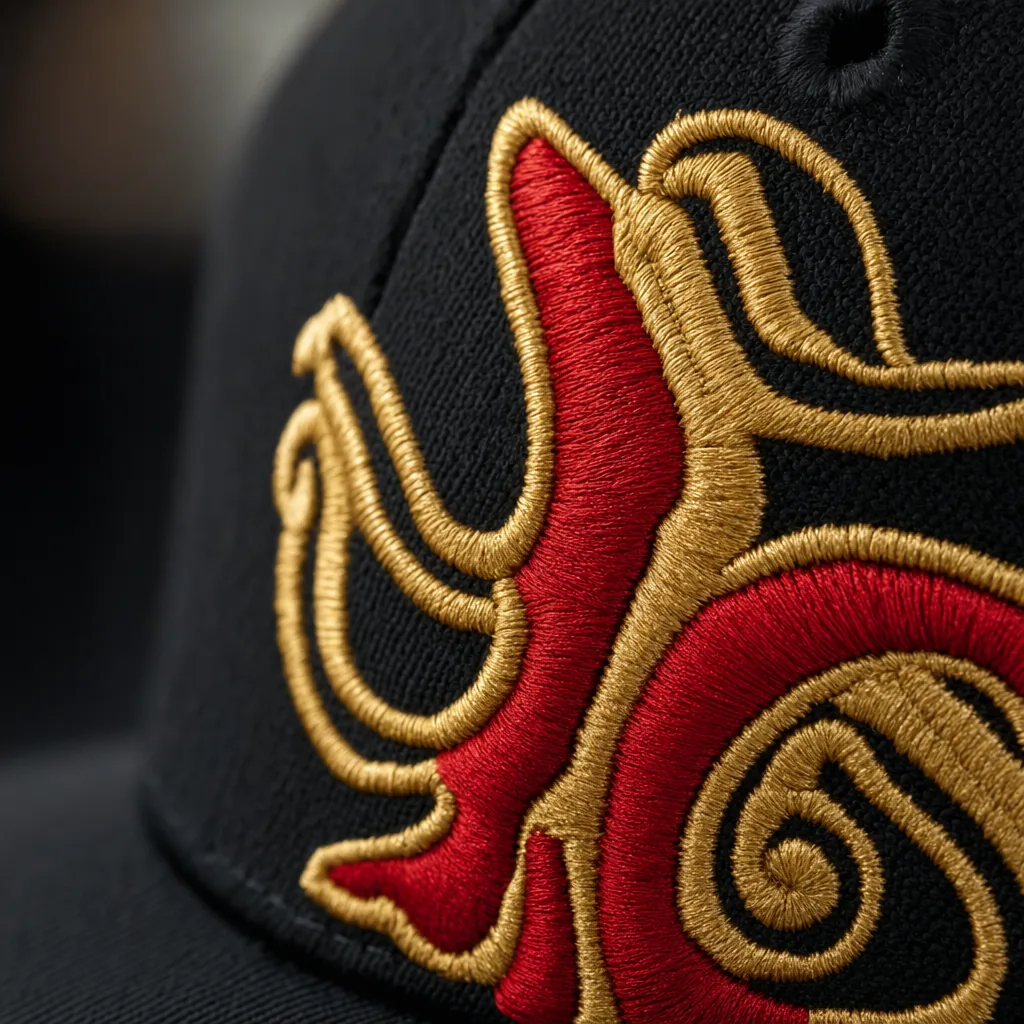
Hat With Patch MOQ And Pricing Plan for Custom Hat Buyers
Read article →We hope this guide demystifies baseball hats for men export shipping checklist for custom hat buyers and helps you move forward with confidence. If you have questions specific to your project, our English-speaking sales engineers are one message away.