
Bulk Trucker Hats Reorder Planning Guide for Custom Hat Buyers
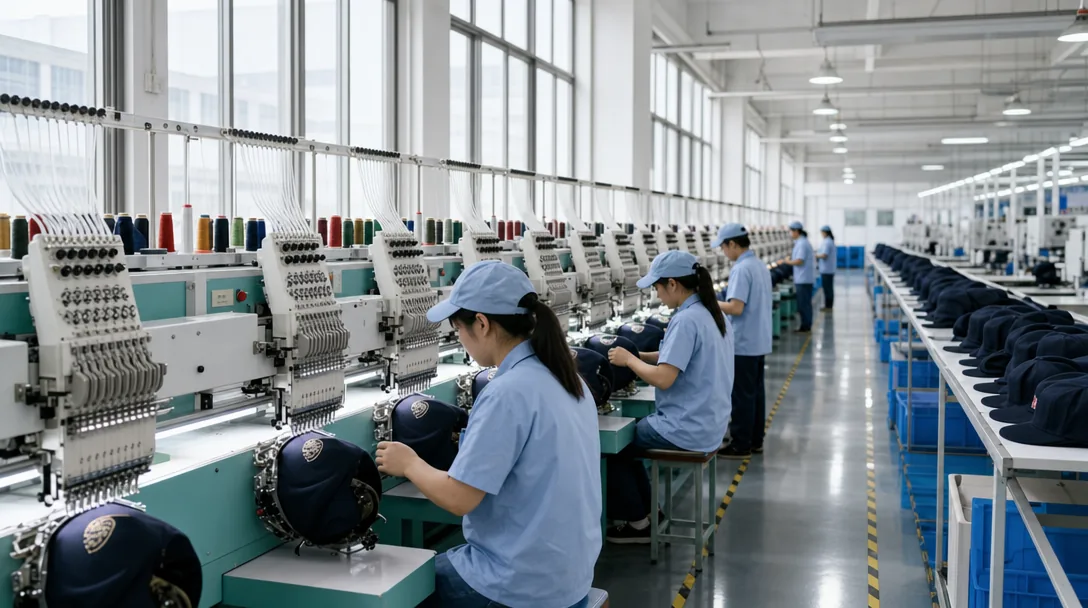
Bulk Trucker Hats Reorder Planning Guide for Custom Hat Buyers is one of the most-asked questions we receive from international buyers, and for good reason. With dozens of factories competing for your order and an alphabet soup of technical terms in every supplier quote, even experienced importers can feel lost. This guide consolidates what we have learned producing custom hats for clients in 40+ countries.
Why bulk trucker hats reorder planning guide needs a separate sourcing plan
Cost, lead time, and compliance decisions should be made before the reorder trigger, not after inventory is already low. Branded bills custom hat cost rises quickly when buyers change visor embroidery, sandwich trim, underbill color, or woven labels between runs because each change may require new screens, thread setup, or lab-dip approval; even small changes can reset the sample clock by 5–10 working days. For DDP delivery to the U.S., a 5,000-piece cartonized reorder may need 25–35 days by ocean after production, while air freight can save time but add roughly $1.20–$2.80 per cap depending on carton volume. Compliance is another reason this bulk trucker hats reorder planning guide needs a separate sourcing plan: promotional buyers may accept AQL 2.5 final inspection and basic factory documents, but licensed sports, university, or corporate programs often require sedex-audit-cap-supplier-guide.html">BSCI 2.0, Sedex SMETA 4-Pillar, restricted-substance declarations, and traceable subcontractor control for embroidery and packing.
Factory capability checks before quoting
The first capability check is decoration capacity, because embroidery and patch work are where most reorder delays start. For bulk custom trucker hats, ask the factory what machines they run, how many heads are available, and whether digitizing is done in-house or subcontracted. A real custom hat manufacturer should be able to tell you if your logo needs flat embroidery, 3D puff, appliqué, woven patch, rubber patch, leatherette patch, or heat-transfer, and what stitch count limit keeps the front panel clean. On Tajima, Barudan, or ZSK heads, I normally want 8,000–12,000 stitches for a standard front logo; above 15,000 stitches on foam-backed trucker fronts can cause puckering unless backing, needle size, and thread tension are controlled. For bulk custom embroidered hats, confirm thread color matching against Pantone TCX or Madeira/Rayon charts, not just a phone photo. Also ask how they store digitized files for reorders, because losing the DST file turns every repeat order into a new sampling job.
Panel construction and material control matter as much as decoration. A proper bulk trucker hats reorder planning guide should include fabric specs for the front panel, mesh, sweatband, seam tape, and visor, not just “cotton/poly.” Common builds are 5-panel foam front with 100–120 gsm polyester mesh, 6-panel cotton twill front with nylon mesh, or structured buckram front using 16s cotton twill around 260–300 gsm. If you use custom bulk trucker hats for retail, request panel pattern consistency, crown height tolerance, visor curve standard, and Delta-E color tolerance for dyed fabric; I usually reject visible shade drift beyond Delta-E 1.5–2.0 on repeat programs. Closure options also affect reorder reliability: plastic snapback is the easiest to repeat, while metal buckle, hook-and-loop, rope trim, and custom molded closures need longer component lead times. Branded bills custom hat cost changes quickly when you add sandwich piping, underbill printing, edge embroidery, or custom visor stickers, so those items should be locked in the first quote sheet.
Before quoting, I would also test the sample room and the office team, not only the production line. A capable factory should produce a fit sample, decoration strike-off, and pre-production sample with measurement records, not one “nice photo sample” made by the best operator and never repeatable in bulk. Our standard practice at CrownsForge is to record crown height, bill length, panel width, seam allowance, embroidery position, thread colors, fabric lot, and closure type on one tech pack before price confirmation. For audit readiness, ask whether the supplier has current BSCI 2.0, Sedex SMETA 4-Pillar, WRAP, or brand-specific social compliance records, and whether the audit covers the actual sewing and embroidery site. Communication checks are simple but revealing: send one technical question about backing, AQL 2.5 inspection, carton dimensions, and FOB versus DDP lead time. If the reply avoids numbers, the quote will probably be cheap but unstable when reorders scale.
MOQ, pricing and sample approval
MOQ is not one number; it changes with fabric, mesh color, decoration, and how much trim you are asking the line to change. For bulk custom trucker hats, a practical starting MOQ is 144 pieces per colorway when using stock cotton twill, polyester foam, or nylon mesh. At 288–576 pieces, the unit price usually drops because cutting, Tajima or Barudan embroidery setup, and packing labor spread better. For fully custom bulk trucker hats with dyed fabric, private-label sweatbands, printed seam tape, and molded PVC patches, I would plan 600–1,000 pieces per SKU. A basic 5-panel foam trucker may land around $2.20–$3.40 FOB Ningbo at 500 pieces; a structured 6-panel cotton twill trucker with 3D embroidery, sandwich bill, woven label, and custom buckle can sit at $4.20–$6.80. Branded bills custom hat cost rises fast when the undervisor print requires separate screens, registration checks, or Pantone-controlled sublimation.
Decoration setup is where buyers underestimate reorder timing. Flat embroidery setup is often $35–$60 per logo, while 3D puff digitizing can be $50–$90 because foam height, pull compensation, and stitch angle must be tested on the actual front-panel fabric. For bulk custom embroidered hats, I do not approve art by PDF alone; we check a stitched panel for stitch density, thread breaks, edge sawtoothing, and whether small text survives at 0.8–1.2 mm column width. Pantone matching also has limits: fabric should be specified in Pantone TCX, while thread normally uses Madeira, Isacord, or Gunold cards, with Delta-E under 2.0 considered tight for dyed fabric and under 1.5 hard to maintain across mesh lots. Our standard practice at CrownsForge is to lock the pre-production sample only after confirming shell fabric gsm, mesh denier, visor board thickness, button color, snapback resin grade, inside taping, and carton mark layout.
PPS approval should be treated as the reorder control document, not a souvenir sample. A proper PPS includes the approved cap, measurement spec, bill curve, crown height, front-panel buckram stiffness, embroidery file version, Pantone references, trim list, packaging method, and AQL 2.5 inspection criteria for major defects. If you are using polybags, barcode stickers, silica gel, hangtags, or retail cartons, approve them before bulk cutting; changing packaging after sewing often adds 3–7 days and creates carton cube problems for DDP freight. For a bulk trucker hats reorder planning guide, I tell buyers to allow 7–10 days for sampling, 2–4 days for PPS comments, 18–30 days for production after deposit and PPS approval, then 3–5 days for inspection and export paperwork. Peak season before March trade shows and August school/team programs can push the same order to 40–50 days, especially if the custom hat manufacturer must redye fabric or wait for imported thread colors.
Quality inspection and shipping risk
Quality risk on bulk custom trucker hats is rarely a single dramatic failure; it is usually 4% crooked front panels, 3 mm crown-height drift, weak snapback tension, or embroidery thread breaks that nobody caught before packing. For reorders, I like AQL 2.5 for major defects and AQL 4.0 for minor defects, with a separate measurement pull of at least 20 pieces per colorway. Normal tolerance should be ±5 mm on crown height and bill length, ±3 mm on logo placement, and no more than ±1 stitch column shift on flat embroidery borders. Embroidery defects need their own checklist: loose backing, birdnesting, skipped stitches, puckering around 3D puff foam, and color mismatch against approved Madeira or Gunold thread codes. If the buyer approved Pantone 19-4007 TCX for black mesh, the factory should verify lab dip and bulk fabric within Delta-E 1.5 to 2.0, because “black” from two mesh lots can look different under D65 light.
Colorfastness and material consistency matter more on trucker caps than many buyers expect, because sweatband, mesh, and front panel age differently. For bulk custom embroidered hats, we normally require dry rubbing grade 4, wet rubbing grade 3-4, and perspiration fastness grade 4 under ISO 105 testing for cotton twill or polyester foam-front panels. Cheap foam fronts can yellow after heat pressing or container humidity, so I ask for a 48-hour high-humidity check if the reorder uses white, cream, or neon panels. Branded bills custom hat cost also changes when you tighten quality controls: a sandwich bill with contrast binding, woven label, and underbill print may add $0.35 to $0.90 per cap, but it also adds three more failure points. This bulk trucker hats reorder planning guide should treat the approved sample as a controlled document, not a nice photo in WhatsApp: keep the physical PPS, logo stitch file, thread card, fabric lot reference, and carton spec together.
Shipping risk starts at the carton, not at the port. Carton markings should show PO number, style code, color, size if applicable, quantity, gross/net weight, carton number, and country of origin; missing or inconsistent marks are a common reason DDP shipments get delayed at consolidation warehouses. For custom bulk trucker hats, I prefer 50 or 100 pieces per export carton depending on crown structure, with polybagging agreed in advance because over-compression can deform foam fronts and curved bills. FOB Ningbo or Shanghai gives experienced importers more control over freight and insurance, while DDP is easier for small brands but hides customs classification, duty, and last-mile surcharge risk. A custom hat manufacturer should archive the reorder package after every shipment: final invoice, packing list, inspection report, embroidery DST file, approved Pantone TCX references, fabric gsm, mesh denier, carton photos, and any defect concessions. Without that paper trail, the next reorder becomes a new development project instead of a controlled repeat order.
Buyer checklist for the next RFQ
Before asking any custom hat manufacturer for a locked FOB or DDP price, include packaging and compliance requirements. State polybag preference, carton marks, hangtags, UPC/FNSKU labels, inner carton quantity, master carton size limits, and whether the order ships by sea, air, rail, or courier. For custom bulk trucker hats going to retailers, add AQL level, usually General Inspection Level II with AQL 2.5 for major defects and 4.0 for minor defects, plus any required BSCI 2.0, Sedex SMETA 4-Pillar, or brand audit documents. At CrownsForge, our standard RFQ review also checks previous sample photos, approved sample date, wash or colorfastness test reports, and exact reorder change notes. That prevents the classic reorder problem: buyer says “repeat order,” but changes mesh color, sweatband, closure, or packing, which turns a simple reorder into a new development job.
Working with CrownsForge
Reorder planning fails when the first PO is treated like a one-time promotion instead of a controlled production standard. For bulk custom trucker hats, we lock the approved sample into a tech pack with crown height, foam density or buckram spec, mesh denier, sweatband width, closure type, thread codes, and Pantone TCX references for fabric and embroidery. CrownsForge’s standard practice is to keep a sealed gold sample and digital production file for each SKU, so a 10,000-piece reorder does not drift from the first 1,000-piece launch. For a practical bulk trucker hats reorder planning guide, I tell buyers to approve not only the front logo but also the bill curve, seam tension, eyelet placement, and back arch shape, because those are the details customers notice when reorders sit beside old inventory. Reorder lead time is usually 25–35 days after deposit if fabric and mesh are stocked, but private-dyed panels can add 10–15 days, especially below 3,000 pieces per color.
Decoration consistency is where custom bulk trucker hats either look retail-ready or cheap. For flat embroidery, we keep stitch density around 0.36–0.42 mm spacing depending on twill thickness; for 3D puff, foam height is usually 2–3 mm and small text under 5 mm should be avoided. Tajima, Barudan, and ZSK heads can all produce clean work, but the digitizing file matters more than the badge on the machine. A reorder of bulk custom embroidered hats should reuse the same DST file only if fabric weight, backing, and thread brand stay unchanged; switching from 260 gsm brushed cotton to 210 gsm polyester twill can make the same logo pucker. For branded bills custom hat cost, buyers should budget roughly $0.18–$0.45 per cap for underbill printing at 1,000 pieces, while woven patches often add $0.35–$0.80 depending on border, merrow finish, and heat-press versus stitch application.
QC and export coordination need to be built into the reorder calendar, not squeezed in after sewing is done. A serious custom hat manufacturer should inspect incoming fabric for shade under D65 lighting, hold Delta-E within 1.0–1.5 for repeat colors, and run in-line checks before caps reach final trimming. For bulk trucker hats reorder planning guide programs, I prefer AQL 2.5 for major defects and AQL 4.0 for minor defects, with specific checkpoints for crooked embroidery, loose snapback studs, oil marks, warped bills, and carton assortment errors. Export timing depends on Incoterms: FOB Ningbo or Shanghai is clean for experienced importers, while DDP to U.S. warehouses can add 18–30 days by sea plus customs and last-mile trucking. Buyers with seasonal drops should place reorders when sell-through hits 55–65%, not when inventory is nearly gone, because mesh shortages and audit-driven production holds under BSCI 2.0 or Sedex SMETA 4-Pillar can disrupt even well-planned schedules.
Frequently Asked Questions
What logo decoration techniques do you offer?
3D puff embroidery, flat embroidery, woven patch, leather patch, PVC patch, screen printing, sublimation, applique and laser etching, all in-house with no subcontracting.
How long does production take?
Sampling takes 7 to 12 days. Bulk production runs 20 to 30 days depending on quantity, fabric availability and decoration complexity. Inspection and packing adds another 3 to 5 days before shipment.
Can I order a sample before bulk production?
Yes. We strongly recommend approving a pre-production sample before mass production. Samples are charged at 35 to 60 USD each plus express shipping, fully refundable against confirmed bulk orders over 500 pieces.
What is the minimum order quantity (MOQ) for custom hats?
Our standard MOQ is 100 pieces per design and color, with sampling available from 1 piece. For complex multi-color logos or premium fabric upgrades, the MOQ can be lowered with a small per-piece surcharge.
Which shipping methods do you support?
We support FOB, CIF and DDP shipping. Air express for samples and small orders, sea LCL for 100 to 500 pieces, sea FCL for 5,000+ pieces. Door-to-door DDP available for US, EU, UK, Canada and Australia.
How does ordering custom embroidered trucker hat work?
When evaluating custom embroidered trucker hat, the key considerations are construction quality, decoration capability, MOQ flexibility and lead time. Explain the buyer intent behind bulk trucker hats reorder planning guide, when it differs from generic hat sourcing, and what decisions affect cost, lead time and compliance. Describe how CrownsForge manages bulk trucker hats reorder planning guide programs with sampling, decoration, QC and export coordination.
What should I know about custom trucker hats bulk?
When evaluating custom trucker hats bulk, the key considerations are construction quality, decoration capability, MOQ flexibility and lead time. Explain the buyer intent behind bulk trucker hats reorder planning guide, when it differs from generic hat sourcing, and what decisions affect cost, lead time and compliance. Describe how CrownsForge manages bulk trucker hats reorder planning guide programs with sampling, decoration, QC and export coordination.
What's the MOQ for custom embroidered trucker hats no minimum?
When evaluating custom embroidered trucker hats no minimum, the key considerations are construction quality, decoration capability, MOQ flexibility and lead time. Explain the buyer intent behind bulk trucker hats reorder planning guide, when it differs from generic hat sourcing, and what decisions affect cost, lead time and compliance. Describe how CrownsForge manages bulk trucker hats reorder planning guide programs with sampling, decoration, QC and export coordination.
What should I know about custom rope hat wholesale bulk?
When evaluating custom rope hat wholesale bulk, the key considerations are construction quality, decoration capability, MOQ flexibility and lead time. Explain the buyer intent behind bulk trucker hats reorder planning guide, when it differs from generic hat sourcing, and what decisions affect cost, lead time and compliance. Describe how CrownsForge manages bulk trucker hats reorder planning guide programs with sampling, decoration, QC and export coordination.
Need a low-MOQ test order?
We help emerging brands launch with as few as 100 pieces. Premium fabric, in-house embroidery, retail-ready packaging.
Start a small orderRelated guides
Custom Logo Hats: When to Use It, Costs, and What to Ask Your Factory
Read article →
Golf Hats For Men Sample Approval Process for Custom Hat Buyers
Read article →Hat With Patch Supplier Audit Checklist for Custom Hat Buyers
Read article →If you are ready to take the next step on bulk trucker hats reorder planning guide for custom hat buyers, our team can put a tailored quotation and digital mock-up in your inbox within 24 hours. Send the inquiry form on our contact page or message us directly on WhatsApp.