
Snapback vs Fitted vs Adjustable: Cap Closure Systems Compared - Supplier Checklist - Cost & MOQ Breakdown - Cost & MOQ Breakdown
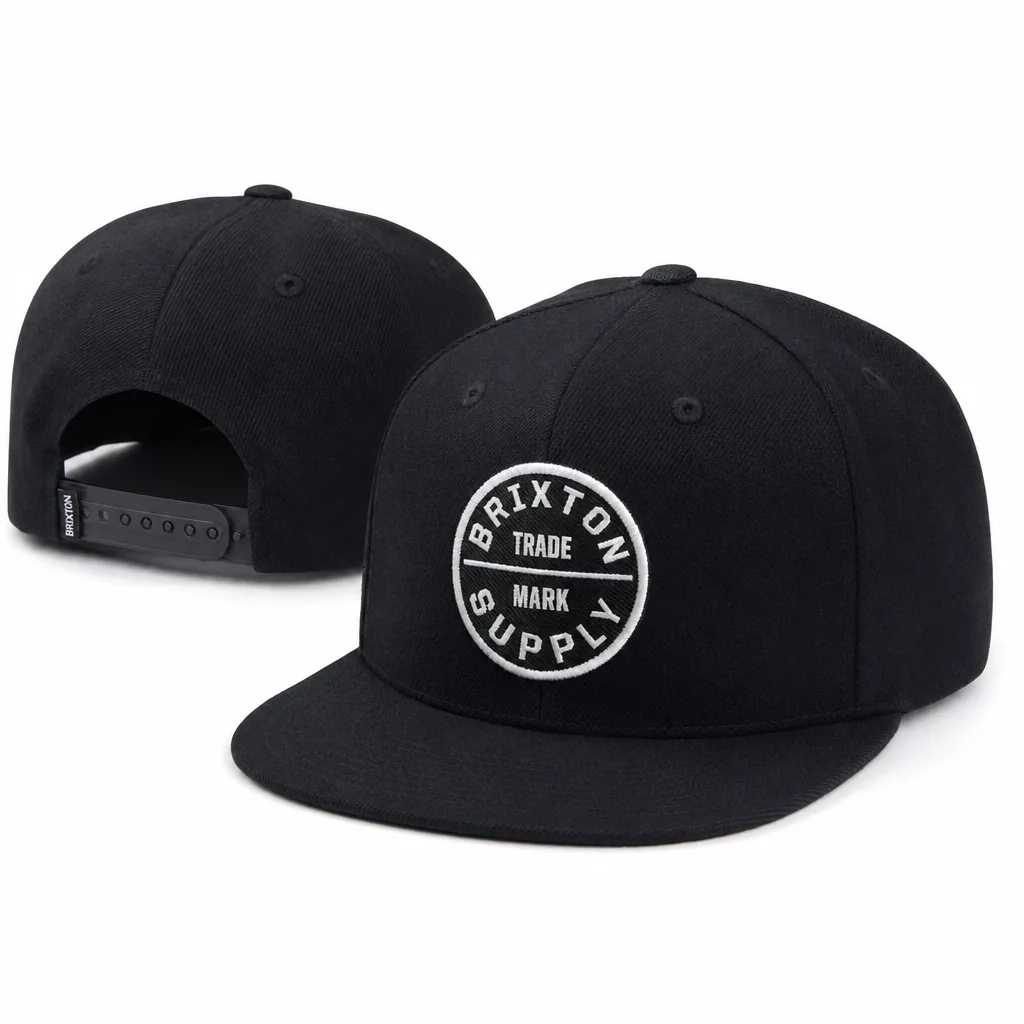
Every week, our sales team answers detailed questions about snapback vs fitted vs adjustable: cap closure systems compared - supplier checklist - cost & moq breakdown - cost & moq breakdown. We wrote this guide so that wholesalers, streetwear brands, corporate buyers and promotional resellers can compare options with full information, and avoid the traps that show up only after production has started.
The five closure systems in commercial production
Plastic snap is the lowest-cost closure that still looks retail-correct for streetwear, licensed team merch, and promotional caps. A standard 7-hole PE or PP snap set is usually $0.035-$0.06 at factory scale, adds almost no sewing time, and lets one adult pattern cover roughly 56-61 cm. That is the practical production difference in snapback vs fitted: a snapback can run one size curve, one carton ratio, and one SKU, while a fitted program needs demand planning by size. Stock black, white, gray, and navy snaps are easy; custom Pantone TCX plastic normally needs 3,000-5,000 sets, with Delta-E around 1.5-2.0, which is looser than a lab-dipped cotton twill panel. Plastic hardware works best on 380 gsm acrylic-wool twill, firm buckram, flat brim builds, and 3D puff embroidery from Tajima, Barudan, or ZSK heads. On 220 gsm washed cotton or an unstructured dad cap, the same snap often looks too heavy and cheap.
Fabric strap closures split into two real production systems: exposed slide buckle and tucked strap with rear tunnel. A slide buckle is faster and typically adds $0.12-$0.25, depending on zinc alloy versus brass, plating thickness, strap fabric, and whether the buckle is blank, laser-etched, or debossed. A tuck-strap costs more because the tunnel must be sewn straight, the tail must feed smoothly, and the back arch has less tolerance for misalignment. For 260-320 gsm cotton twill, pigment dye, enzyme wash, and low-profile unstructured caps, self-fabric straps usually look more coherent than plastic snaps. The weak point is not the buckle invoice; it is strap fatigue after repeated adjustment. Our standard practice is 6-8 stitches per cm on the strap seam, no skipped stitches around the back opening, and a 7 kg pull test before final AQL 2.5 inspection. Keep rear embroidery below about 55 mm wide by 18 mm high, or it will fight the opening curve and distort during wear.
Hook-and-loop, elastic-fit, and true fitted closures solve different buyer problems and should not be treated as interchangeable. Hook-and-loop runs about $0.10-$0.18, adjusts quickly, and fits uniforms, kids’ caps, tactical caps, and event golf caps, but it collects lint, makes noise, and consumes most of the back decoration area. Elastic-fit builds, often Flexfit-style, use spandex sweatbands and stretch woven panels; they look cleaner than Velcro but require tighter blocked circumference control, usually within +/-5 mm, or the size run feels inconsistent. Fitted caps remove the closure entirely, so sizing becomes the product: U.S. 6 7/8 through 8, or 56-62 cm metric. That means separate cutting bundles, size labels, carton ratios, steaming checks, and higher reject risk from circumference drift. Adjustable caps can often start at 300 pcs per color; fitted programs usually need 1,200-2,400 pcs spread across seven or eight sizes. Do not choose fitted without real sell-through data by size.
Plastic snap (snapback) economics
In the snapback vs fitted cost model, the plastic snap wins because it converts a size-risk problem into a small trim cost. A stocked 7-hole PP snap set on a 6-panel cap usually lands at $0.08–$0.16 per piece at 1,000–5,000 pcs, including the male/female strips and the short lockstitch or bartack operation. A self-fabric strapback with tuck slot, slider, and brass or zinc alloy buckle is typically $0.20–$0.45 higher because it adds cutting, folding, pressing, bartacking, and metal-detector control. A fitted cap removes the closure trim, but that saving disappears fast when you cut separate size runs from 6 7/8 to 7 5/8, segregate cartons, and carry dead stock from a bad size curve. For private-label orders, stocked black, white, navy, red, and gray snaps can often run at 144–300 pcs. Custom Pantone-matched snaps usually make sense at 500 pcs per color and above; below that, resin batching, mold purging, and injection setup charges distort the real unit cost.
Plastic snap color approval needs tighter control than most buyer tech packs allow. Molded PP or PE reflects differently from 280 gsm cotton twill, polyester serge, acrylic-wool blend, or 100D trucker mesh, so a Pantone TCX reference alone is not a production approval. Our standard practice is to review the snap against the fabric lab dip or pre-production cap under D65 light before locking embroidery thread and back-closure trim together. Delta-E 1.0–1.5 is a practical tolerance for molded plastic, but gloss, resin translucency, strip thickness, and recycled-content filler can make the snap read lighter than the crown even when the spectrophotometer passes it. Male and female strips also need to be checked assembled, because two injection batches can pass separately but look mismatched across the back opening. For garment-washed cotton, pigment-dyed twill, heather polyester, foam trucker fronts, or enzyme-washed caps, approve the snap on a finished sample, not from a PDF render or loose trim card.
Snapback QC is simple only if the strip is treated as a functional component, not disposable trim. Inline inspectors should check hole definition, peg alignment, strip curvature, locking force, burrs, sink marks, warping, color streaks, and cracking after repeated open-close cycles. Cheap brittle resin often fails around the pegs after cold storage, export-carton compression, or rough DDP trucking, so a cap can pass sewing inspection and still break in retail handling. I classify broken pegs, weak locking, sharp burrs, wrong color, and misaligned male/female strips as major defects under AQL 2.5; minor flow marks can sit at AQL 4.0 if they are not visible at normal viewing distance. The PO should specify flat or curved strip, matte or glossy surface, resin type such as PP or PE blend, recycled-content claim, and restricted-substance compliance under CPSIA, REACH, or California Prop 65. Stock snaps rarely affect a 25–35 day bulk schedule after sample approval, while custom colors normally add 5–10 days before sewing can start.
Fabric strap with metal buckle (dad hat aesthetic)
A fabric strap with a metal slide buckle belongs on washed dad hats, golf shop caps, resort souvenirs, and premium promo programs where the buyer wants a softer hand than plastic. Use the same fabric as the crown unless contrast is intentional: 16x12 cotton twill at 260–300 gsm, pigment-dyed canvas, brushed chino, enzyme-washed cotton, or 8-wale corduroy. Finished strap width should be 16–20 mm; 18 mm is the safest adult spec because it feeds cleanly through common tri-glide and slide buckles without bunching. The strap should be clean-turned or lockstitched at 8–10 SPI, then bartacked 10–12 mm from the rear opening so the fold does not creep after a 40°C wash and low tumble test. On a low-profile six-panel block, real fit range is usually 54–63 cm, affected by sweatband elasticity and rear arch height. In a snapback vs fitted comparison, this is the practical middle option: more retail-looking than a plastic snapback, but far less size-risk than fitted inventory from 6 7/8 through 7 5/8.
The fabric strip is cheap; the cost sits in buckle finish, strap handling, threading time, and rework when plating scratches. A stock 16 or 18 mm metal slide buckle in antique brass, brushed nickel, or matte black normally adds $0.12–$0.18 per cap, including eyelet, folding, bartack, and labor. Custom gunmetal, rose-gold plating, debossed logos, laser engraving, or nonstandard inside diameters add about $0.08–$0.30 and usually push hardware MOQ to 1,000–3,000 pieces because plating vendors will not guarantee shade stability on tiny lots. CrownsForge normally matches buckle tone to the top button, side rivet, cord tips, or woven-label hardware before bulk cutting. After steam blocking, run a 1.5 kg pull/slip test for 10 seconds; if the strap moves more than 3 mm through the buckle, it will loosen in normal wear even if it passes a quick visual inspection. For export orders, I also reject buckles with sharp burrs over 0.2 mm because they cut washed cotton after repeated adjustment.
The tech pack must lock strap width, buckle inside diameter, prong versus friction-slide style, strap-end shape, eyelet finish, bartack length, and whether the loose tail tucks into a hidden sweatband channel. The tucked-tail version looks cleaner for streetwear and resort retail, but the sweatband needs 2–3 mm clearance at the rear seam; otherwise the wearer feels a hard ridge at the occipital bone. Do not use this closure on a structured high-crown flat-brim cap if the design language is classic snapback, because the soft strap weakens the silhouette and looks like a compromise. QC should include head-gauge checks at minimum and maximum adjustment, plus AQL 2.5 inspection for buckle scratches, bent prongs, plating stains, loose bartacks, twisted straps, and misaligned rear openings. If the strap is dyed to match a Pantone TCX crown color, control Delta-E below 1.5 under D65 lighting; pigment-dyed cotton and enzyme-washed chino often drift between lab dip, bulk fabric, and post-wash cap panels.
Velcro (lowest cost, widest range)
Velcro is the lowest-cost adjustable closure when you price the full operation, not just the tape. Commodity polyester hook-and-loop in 20–25 mm width lands around $0.025–$0.045 per cap in Yiwu, but the installed cost is usually $0.07–$0.12 after die cutting, heat sealing, folding the tab end, aligning the back opening, and bartacking. For adult caps, 25 mm tape is the safe default; 20 mm is acceptable for kids’ caps or lightweight promotional orders. A well-cut adult pattern can cover roughly 54–63 cm head circumference if the sweatband has some give and the rear arch is not too narrow. In a snapback vs fitted discussion, Velcro is the inventory-control closure: no fitted size curve, no S/M-M/L-L/XL carton split, and fewer leftover units in fringe sizes like 7 7/8 or XS.
The tradeoff is perceived value, not manufacturing difficulty. Velcro looks functional beside a molded 7-hole snap, brass buckle strap, leather strapback, or closed fitted back, so I would not use it for a streetwear drop, licensed team cap, or wool-blend crown expected to retail at $28–$45. Hook tape collects lint, pulls fibers from brushed cotton twill and acrylic-wool blends, and can snag satin lining or trucker mesh when caps are bulk-packed 50 pieces per polybag. Cheap mixed-yarn tape also loses bite faster after washing, sweat, dust, and warehouse use. For institutional orders, specify nylon hook-and-loop, 20–25 mm width, shell-color matching within Delta-E 1.5–2.0, and peel strength above 1.0 N/cm. Fitted still reads most premium, snapback reads mainstream retail, strapback reads cleaner, and Velcro reads uniform, giveaway, or field-use.
Velcro works best in 500–5,000 piece programs because MOQ is normally controlled by shell fabric, embroidery thread colors, and logo setup, not the closure. A basic 6-panel cotton twill cap with 120–160 gsm buckram, 25 mm Velcro, and flat embroidery on Tajima, Barudan, or ZSK heads stays in the lowest sewing-labor tier. Fitted caps add size grading, tighter cutting control, more QC checkpoints, and more complicated packing lists; that cost shows up before the buyer sees a single cap. Our standard practice at CrownsForge is two bartacks at each tape end, reinforced stitching around the rear opening, and a tab length long enough to hold under pull without curling during AQL 2.5 inspection. Use Velcro when low cost, fast fit, and broad distribution matter more than retail hand-feel. Do not treat it as a cheap substitute for snapback styling; buyers notice immediately.
Fitted: why some brands accept the operational cost
Fitted caps are expensive because sizing converts one colorway into eight or nine inventory positions before sewing even starts. A normal U.S. adult fitted range covers 6 7/8 through 7 3/4, with size 8 added for some baseball and big-and-tall programs. Each size needs a different crown block control, sweatband cut length, rear seam allowance, woven size label, barcode, carton mark, and warehouse bin. There is no snap, Velcro, or brass buckle to hide a 10 mm circumference miss. In a snapback vs fitted cost review, fitted should be treated as graded headwear, not simply a closure choice: cutting markers change, WIP must stay bundled by size, and the packing team must prevent 7 1/8 labels from landing in 7 3/8 polybags. Good retail programs hold finished circumference to ±0.5 cm after steam blocking and 24-hour relaxation. That tolerance sounds small, but it affects back-seam setting, sweatband tension, and final inspection speed on every size bundle.
MOQ is the part that surprises small brands. A snapback colorway can often run at 300 pieces because one adjustable back covers most adults; a fitted program commonly needs 1,200–2,100 pieces to stock eight sizes with usable depth. Factories may quote 48 or 72 pieces per size, but the FOB price rises because fabric yield worsens, labels multiply, cartons fragment, and embroidery QC has to be checked across more size lots. For a 6-panel wool-acrylic fitted cap with fused buckram front, 400 gsm PE visor board, closed back, taped seams, satin size label, and 3D puff embroidery on Tajima or Barudan heads, a realistic FOB China price is US$5.80–8.20 at about 1,200 pieces. The comparable snapback normally sits around US$4.20–6.20. At CrownsForge, fitted final inspection is packed by size carton and checked under AQL 2.5 for circumference, size label, UPC, carton mark, embroidery placement, and size ratio, because one mixed carton can trigger retailer chargebacks.
Brands accept the operational cost when fit accuracy is part of the product value. Pro sports licensees, baseball-led streetwear labels, and premium retail capsules use fitted because the closed back looks authentic and the consumer expects a true hat size, not an exposed adjuster. A clean fitted cap can justify US$3–6 higher retail than a similar snapback if the logo rights, embroidery stitch count, fabric handfeel, and Pantone TCX color match support the positioning. Team orders are the safest case: players know their sizes, reorder curves stabilize after one season, and fringe sizes can be forecast from roster data instead of guessed. For promotional resellers, campus giveaways, and first-time DTC drops, snapback vs fitted usually ends in favor of snapback, strapback, or buckle closures. One adjustable SKU covers the majority of adult heads and avoids the classic fitted inventory trap: 7 1/4 sells out immediately while 7 5/8 ties up cash for six months.
MOQ implications by closure type compared
MOQ is driven less by closure hardware and more by how many patterns, cut bundles, and QC size lots the factory must control. A 7-hole PE snap set is usually USD 0.035–0.08 per cap, hook-and-loop tape runs USD 0.06–0.16 depending on width and denier, and a brass or zinc-alloy slide buckle with self-fabric strap is typically USD 0.12–0.28. None of those trims justify a 500-piece MOQ by themselves. For snapback, strapback, and hook-and-loop styles, one crown block—often a 58 cm base on a 6-panel cap—can cover roughly 56–61 cm when the rear opening, elastic recovery, and sweatband tension are controlled. On common fabrics such as 280–320 gsm cotton twill, acrylic-wool blend, polyester serge, or 600D polyester, 100 pieces per color/design is realistic if fabric is in stock and embroidery thread matches standard Madeira or Gunold shades. In snapback vs fitted costing, the ex-factory difference may only be USD 0.30–0.90, but the SKU burden is completely different: one adjustable cap means one barcode, one carton mark, one packing-list line, and one circumference tolerance report.
Fitted caps behave like apparel sizing, so MOQ multiplies fast. Each size—6 7/8, 7, 7 1/8, 7 1/4, 7 3/8, 7 1/2, 7 5/8—needs its own graded crown pattern, cutting ticket, bundled panels, blocking mold check, QC count, and carton label. If the factory minimum is 100 pieces per size, even a basic five-size fitted program starts at 500 caps before colorways; five colors become 2,500 units. The embroidery file may stay the same on Tajima, Barudan, or ZSK heads, but production cannot casually mix front panels from different crown grades without creating twisted center seams, uneven side panels, or crown-height variation. Under AQL 2.5 final inspection, fitted orders also need size-by-size circumference checks, usually within ±3 mm after blocking and steaming, plus crown depth confirmation within about ±2 mm. That is the real MOQ issue in snapback vs fitted: not trim price, but size-lot control and inventory exposure.
Adjustable closures are the safer first-production choice because they compress the selling range into one commercial SKU. Snapback works well for streetwear, licensed team merchandise, school stores, and youth retail because the plastic adjuster is familiar, low-cost, and easy to replace. Fabric strap with metal buckle suits golf, resort, outdoor, and corporate programs where buyers want a cleaner rear view and less “street” styling. Fitted should be treated as a demand-planning decision, not a premium upgrade. Without POS history, wholesale preorders, or reliable size data from a previous drop, the buyer is financing a guessed size curve. Our standard practice at CrownsForge is to approve fitted programs only when the customer can defend a split such as 15% size 7, 25% size 7 1/8, 30% size 7 1/4, 20% size 7 3/8, and 10% larger sizes. Slow tails like 6 7/8 or 7 5/8 can sit in inventory for a year and erase the margin made on the fast middle sizes.
How to spec the right closure for your retail positioning
Start the closure spec from the sales channel and return-risk model, not from the fabric swatch. For a first streetwear drop, the snapback vs fitted choice is usually commercial: one adult OSFM snapback normally covers 56–60 cm, while fitted requires a size run from 6 7/8 to 7 5/8, often 8–10 SKUs per color. A structured 6-panel, high-profile crown with a flat PE visor, firm buckram, and 7-hole PP snap is still the safest online SKU because warehouse pickers cannot ship the wrong size. If the brief calls for a 1990s snapback silhouette, specify PP or ABS resin, gloss level, tab thickness, hole pitch, and Pantone TCX target for the snap. On black, navy, stone, and bone closures, I would hold Delta-E to 1.5–2.0 against the approved fabric. Neon, translucent, and recycled PP snaps can drift to Delta-E 3.0, so approve them as separate components, not as “close enough” fabric matches.
Promotional and event programs should prioritize speed, packing accuracy, and post-event wearability. For 1,000–20,000 caps going to schools, sponsor activations, golf outings, or franchise campaigns, snapback and hook-and-loop are the practical closures because nobody at the receiving end wants to sort head sizes. Hook-and-loop is usually the cheapest adjustable option, about $0.08–$0.18 FOB Yiwu over a plain back opening, and it works well for youth caps because head circumference changes fast. The factory-floor problem is snagging: hook tape catches 120D embroidery thread tails, woven label edges, polyester mesh, and polybag seams unless operators close every strap before final pressing and carton loading. For adult promotional caps, I prefer plastic snapback over hook-and-loop if the cap may be worn after the event; it photographs cleaner, does not fuzz after repeated adjustment, and feels closer to retail. Avoid fitted in this channel unless the buyer accepts leftovers, because efficient cutting normally needs 144–300 pieces per size/color.
Use strapback or fitted only when the retail positioning justifies the extra handling. A self-fabric strap, genuine leather strap, or PU strap with antique brass, matte black, or nickel hardware adds roughly $0.25–$0.70 FOB, but it belongs on washed cotton twill, 10 oz canvas, 14-wale corduroy, wool blend, and low-profile garment-washed caps where a hard plastic snap cheapens the handfeel. Fitted belongs in pro-team license programs, stadium shops, anniversary drops, and hero SKUs in wool blend or 180–220 gsm performance poly twill with structured buckram. The tolerance discipline is tighter: check every finished size on a metal head gauge after sweatband attachment, steaming, and blocking, not just flat with a tape. I would hold circumference to ±3 mm before AQL 2.5 final inspection. Our standard practice at CrownsForge is snapback for volume colors, fitted for collector colors, and strapback for washed or unstructured programs.
Frequently Asked Questions
How long does production take?
Sampling takes 7 to 12 days. Bulk production runs 20 to 30 days depending on quantity, fabric availability and decoration complexity. Inspection and packing adds another 3 to 5 days before shipment.
Do you support sustainability certifications?
Yes. We work with GOTS organic cotton, GRS-certified recycled polyester, OEKO-TEX Standard 100 fabrics, and are BSCI and Sedex audited. Certification documentation can be provided per order.
What file format should I send for my logo?
Vector files (AI, EPS, PDF) are ideal. High-resolution PNG or JPG at 300 dpi on transparent background works as a fallback. Provide Pantone color references for accurate reproduction.
What is the minimum order quantity (MOQ) for custom hats?
Our standard MOQ is 100 pieces per design and color, with sampling available from 1 piece. For complex multi-color logos or premium fabric upgrades, the MOQ can be lowered with a small per-piece surcharge.
Can I order a sample before bulk production?
Yes. We strongly recommend approving a pre-production sample before mass production. Samples are charged at 35 to 60 USD each plus express shipping, fully refundable against confirmed bulk orders over 500 pieces.
What should buyers know about cotton twill baseball cap?
When evaluating cotton twill baseball cap, the key considerations are construction quality, decoration capability, MOQ flexibility and lead time. Universal sizing 54-62cm with 8 snap positions. Single SKU per design covers most adults. Adds ~$0.05 per cap for hardware. Industry-standard for retail snapback hats, trucker caps, casual baseball caps. Available in 8 stocked colors; custom Pantone-matched snaps at 500+ pieces. Plastic snap (snapback), fabric strap with metal slide buckle, fabric strap with tuck-buckle,…
What should buyers know about flat bill hats snapback?
When evaluating flat bill hats snapback, the key considerations are construction quality, decoration capability, MOQ flexibility and lead time. Universal sizing 54-62cm with 8 snap positions. Single SKU per design covers most adults. Adds ~$0.05 per cap for hardware. Industry-standard for retail snapback hats, trucker caps, casual baseball caps. Available in 8 stocked colors; custom Pantone-matched snaps at 500+ pieces. Plastic snap (snapback), fabric strap with metal slide buckle, fabric strap with tuck-buckle,…
How does ordering custom flat bill hat embroidery work?
When evaluating custom flat bill hat embroidery, the key considerations are construction quality, decoration capability, MOQ flexibility and lead time. Universal sizing 54-62cm with 8 snap positions. Single SKU per design covers most adults. Adds ~$0.05 per cap for hardware. Industry-standard for retail snapback hats, trucker caps, casual baseball caps. Available in 8 stocked colors; custom Pantone-matched snaps at 500+ pieces. Soft fabric strap (1.5-2cm wide) with antique brass slide buckle. Fits 54-63cm. Adds ~$0.15 per…
What should buyers know about baseball hats women?
When evaluating baseball hats women, the key considerations are construction quality, decoration capability, MOQ flexibility and lead time. Universal sizing 54-62cm with 8 snap positions. Single SKU per design covers most adults. Adds ~$0.05 per cap for hardware. Industry-standard for retail snapback hats, trucker caps, casual baseball caps. Available in 8 stocked colors; custom Pantone-matched snaps at 500+ pieces. Plastic snap (snapback), fabric strap with metal slide buckle, fabric strap with tuck-buckle,…
Is a fitted hat a snapback?
Comparing Style and Fit Snapbacks have an adjustable snap closure, usually made from plastic, that you can use to adjust the size of the cap to fit your head perfectly. A fitted cap is just a hat, with no adjustable sizing. The snapback design is bolder, with a more structured high crown and a flat brim.
Do baseball players wear snapbacks or fitted?
The snaps are usually plastic even if the cap is made of wool, cotton, or other material. Popularized by New Era, the official hat supplier to the MLB, the snapback cap is de rigueur for Major League baseball players.
Looking for a reliable hat manufacturer in China?
CrownsForge has produced custom hats for 800+ brands across 40 countries. From 100-piece launches to 100,000-piece retail programs, we deliver on time and on spec.
Get in touchRelated guides
Custom Leather Patch Hat Low Minimum: A 2026 B2B Sourcing Guide
Read article →
Mens Beanies: Properties, Costs and How to Spec It Right
Read article →
Bulk Trucker Hats Export Shipping Checklist for Custom Hat Buyers - Cost & MOQ Breakdown - Supplier Checklist
Read article →We hope this guide demystifies snapback vs fitted vs adjustable: cap closure systems compared - supplier checklist - cost & moq breakdown - cost & moq breakdown and helps you move forward with confidence. If you have questions specific to your project, our English-speaking sales engineers are one message away.