
Snapback vs Fitted vs Adjustable: Cap Closure Systems Compared - Supplier Checklist - Cost & MOQ Breakdown - 2026 Buyer's Guide
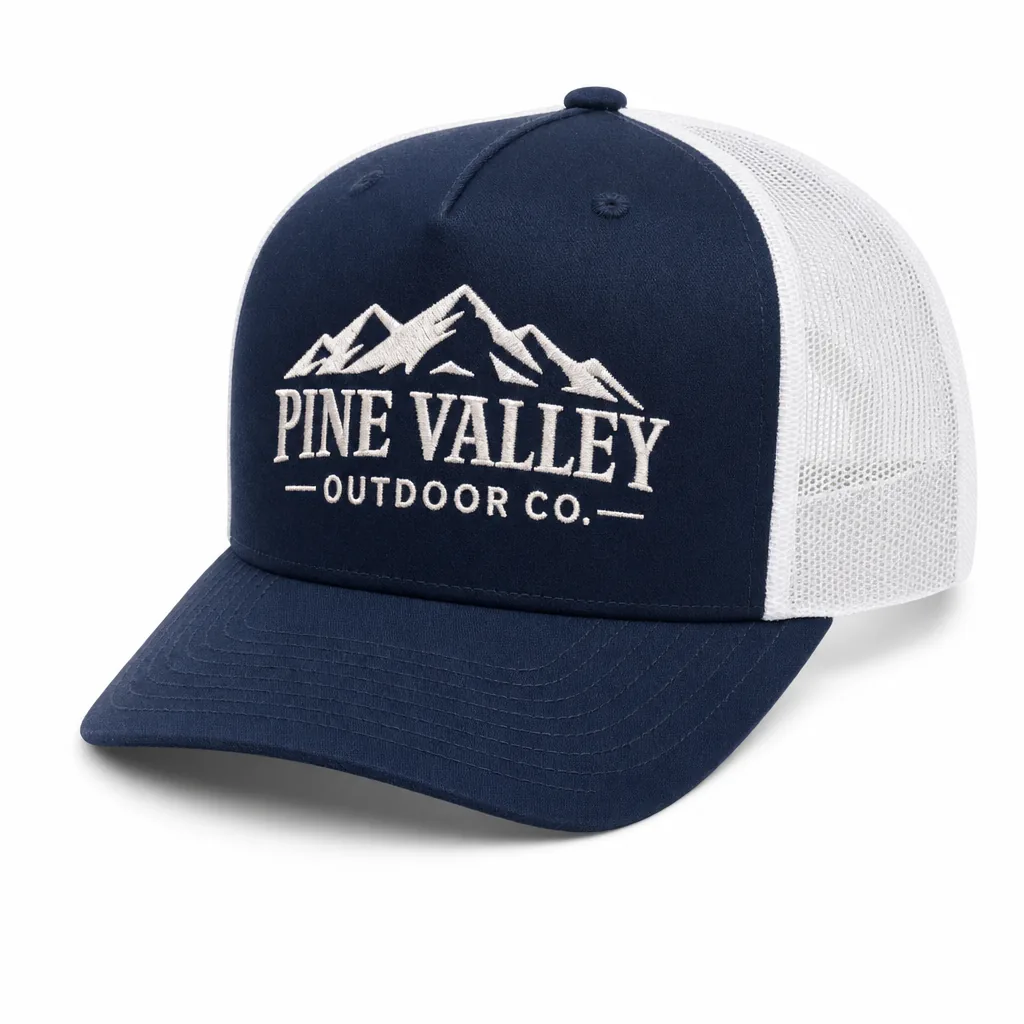
For brand owners, wholesalers and procurement teams entering the custom headwear category, snapback vs fitted vs adjustable: cap closure systems compared - supplier checklist - cost & moq breakdown - 2026 buyer's guide is one of the highest-leverage decisions you will make. Get it right and your unit economics, retail story and reorder cycle all improve. Get it wrong and you carry the cost for years.
The five closure systems in commercial production
Inventory risk is the real fault line in snapback vs fitted, not styling. A standard 7-hole plastic snap usually covers a 56-60 cm finished head size, and with a longer back opening you can stretch that to 55-61 cm without distorting the crown. That means one SKU absorbs most adult demand. Fitted caps remove that buffer entirely: you are cutting, sewing, labeling, polybagging, and carton-assorting by size, usually 6 7/8 through 7 5/8 for core retail, sometimes up to 8 for licensed sports or wide-size programs. On the floor, the failures are rarely dramatic sewing defects; they are operational misses like wrong size stickers, mixed carton ratios, sweatbands joined to the wrong shell size, or blocked crowns drifting out of shape after pressing. Those mistakes do not show up on a mood board, but they destroy replenishment accuracy and leave dead stock in the wrong sizes. The cost difference is not only in hardware; it sits in tolerance control and MOQ efficiency. A fitted program needs tighter circumference management, typically within ±0.3 cm, plus more consistent sweatband tension and crown blocking across every size break. Many adjustable orders can live with ±0.5 cm because the closure absorbs variation. That is why stock-closure adjustable caps can run at 144-300 pcs per color with clean economics, while fitted is usually more realistic at 576 pcs per color once volume is split across five to seven sizes. If size demand is unproven by region, channel, or gender mix, snapback vs fitted stops being a design discussion and becomes a margin leak. At CrownsForge, we usually push first-time buyers toward adjustable unless they already have sell-through data from prior drops or comparable headwear programs.
The five commercial closure systems are plastic snap, fabric strap with metal slider, tuck-strap buckle, hook-and-loop, and fully fitted. Plastic snap remains the volume standard because it is cheap, stable, and easy to replace in after-sales service; the factory add-on is typically US$0.08-0.18 depending on resin quality, mold polish, and whether the color is stock black or Pantone-matched. A fabric strap with brass, zinc-alloy, or stainless slider usually lands around US$0.22-0.45, and the buckle finish matters: cheap electroplating fails salt-spray and rub tests fast, especially on export orders moving through humid warehouses. Tuck-strap buckle closures look cleaner at retail, but they are less forgiving in sewing. On 10 oz cotton twill, 280 gsm canvas, or heavy brushed chino, the rear tunnel has to be dimensioned correctly or the strap drags, twists, and distorts the back arch. Hook-and-loop is still valid for kids, uniforms, and promo because it is fast to wear and forgiving on fit, but it is the weakest retail option: the hook side collects lint, catches embroidery backing, and loses hand feel after repeated opening cycles. Rear decoration should be planned before digitizing, because closure geometry changes the usable field. On a snapback, the opening breaks the embroidery area, so rear logos usually need to stay below 45-50 mm wide or shift to a woven label. Strapbacks give a cleaner back panel for flat embroidery, folded labels, or metal tabs. On structured 6-panel streetwear styles, closure also changes perceived price tier: a color-matched PVC snap with 3D puff embroidery sewn on Tajima or Barudan heads reads premium in a way hook-and-loop never will. Good spec sheets should call out head-size range, closure material, plating standard, spare hardware policy, rear decoration zone, and AQL 2.5 checkpoints, not just snapback vs fitted as a visual preference.
Plastic snap (snapback) economics
Plastic snap is the cheapest closure that still gives credible retail size coverage, which is why the snapback side of a snapback vs fitted decision usually wins on inventory economics before anyone argues about silhouette. A standard injection-molded PP snap, usually sold as a 7-hole or 2x4/2x5 post set depending on the mold, typically gives an effective fit range around 54–62 cm on adult caps once you factor in crown height, rear opening width, sweatband recovery, and whether the pattern is built on a high-profile 6-panel or a shallower mid-profile block. In practical terms, one snapback colorway can replace 6 to 8 fitted size SKUs that would otherwise need separate labels, carton ratios, and replenishment planning. On a 3,000-piece order, that reduction alone usually matters more than the trim cost itself because it cuts pick-pack mistakes, partial-case leftovers, and dead stock in fringe sizes like 6 7/8 or 7 5/8. The trim is commodity-priced. For a stocked snap in black, white, navy, red, royal, gray, or khaki, most factories in Zhejiang are adding about $0.04–$0.07 per cap versus a fully closed fitted back, including the plastic set, rear opening construction, internal binding, and attachment labor. That is still materially cheaper than metal buckle, tuck strap, or leather-strap systems, which usually add $0.18–$0.45 depending on hardware plating and strap material. At CrownsForge, we treat stock snaps as a replenishment tool first: low MOQ availability, stable lead times, and minimal shade risk compared with custom resin-matched closures.
Line efficiency is where plastic snap keeps pulling away from fitted. Once the back opening is cut and bound, an experienced operator can install the closure in a few seconds with a heated press or pneumatic fixture, and QC only needs to confirm post engagement, pull strength, center-back alignment, and stress whitening or crack marks caused by over-melting. None of that fixes a bad fitted size run. AQL 2.5 final inspection can catch workmanship defects, but it cannot solve the commercial problem of overbuying 7 1/2 and selling out of 7 1/8 in week three. That is the operational core of snapback vs fitted for most buyers: one is a trim decision, the other is a forecasting risk. Plastic snap also behaves well in production and transit. On structured 6-panel caps, it is commonly paired with 350–450 gsm buckram, a PE board or sandwich visor, and embroidery run on Tajima or Barudan heads because the closure does not distort the crown during sewing or bulk packing. Custom snap colors are possible, but buyers should be realistic: molded resin can usually get within Delta-E 2.0–3.0 of a Pantone TCX target, not a perfect fabric match under every light source. For programs under about 1,200 pieces per color, stocked snaps are usually the smarter choice unless branding specifically requires a custom-molded closure or logoed top button aesthetic on the back strap area.
Fabric strap with metal buckle (dad hat aesthetic)
A self-fabric strap with a metal slider belongs on low-profile, unstructured hats where the back view cannot look sporty. The strap is typically 16 to 20 mm wide, cut from the same shell as the crown—usually 210 to 260 gsm brushed cotton twill, pigment-washed chino, or 8 to 10 oz canvas—then folded, edge-turned, and topstitched at 1/16 to 1/8 inch. Most factories pattern the adjustment range to fit about 54 to 62 cm head circumference, which covers standard adult retail without splitting inventory into fitted sizes. That is why, in a practical snapback vs fitted discussion, this closure sits in a separate lane: it gives size flexibility close to a snapback, but visually reads quieter, older, and more fashion-led than a PE snap tab. The hardware is cheap; the execution is not. A stocked zinc-alloy slider in matte black, antique brass, or brushed nickel generally adds only $0.12 to $0.18 per cap at 500 to 1,000 units, but custom debossed metal, stainless steel, or leather tuck straps push the uplift to roughly $0.30 to $0.48, with hardware MOQs commonly 1,000 to 3,000 pieces per finish. Factories that know what they are doing will also control strap bulk at the fold, because too much thickness makes the buckle bind, while too little lets it creep under wear. Our standard practice is to pull-test adjusted samples and cycle the strap 20 to 30 times before bulk approval, because slider slippage usually appears after repeated use, not at first inspection.
Assembly discipline matters more here than on a plastic snap closure. The strap must feed through the slider without twist, bartacks should land consistently around 3 to 4 mm from the strap edge, and cut edges cannot fray inside the fold or they will jam the buckle after washing. On 220 to 260 gsm cotton twill, standard zinc hardware usually holds well. On nylon taslon, peach-finished microfiber, or heavily enzyme-washed fabrics, slip rates rise fast unless the slider has a tighter tooth geometry or split-bar construction. This is where factories with Barudan or Tajima cap lines still need a strong sewing floor, because embroidery quality does not fix a closure that drifts open in wear. This closure pairs best with softer decoration and lower crown structures: 5,000 to 8,000 stitch direct embroidery, tonal chain stitch, washed twill applique, or small front logos that suit a dad hat silhouette. It is the wrong tool for youth sizing, event giveaways, or sideline team issue, where fast one-hand adjustment matters more than aesthetics. Buyers weighing snapback vs fitted should treat the metal-buckle strap as the style-first adjustable option, not a substitute for precise fitted grading or high-speed promotional functionality. QC should check plating consistency, burrs on slider edges, stitch symmetry, and color continuity between strap and crown after wash. On garment-dyed cotton, a strict Delta-E target is unrealistic; commercial acceptance is usually fine if the strap comes from the same dye lot and mismatch is not obvious at arm's length.
Velcro (lowest cost, widest range)
Velcro is still the cheapest functional closure on a cap: in Yiwu factory pricing, standard 20 mm or 25 mm hook-and-loop runs about $0.025-$0.045 per set including cutting, bartack, and rear-opening reinforcement tape. It also covers the widest size span of any mainstream closure. A single adult pattern will usually fit 54-63 cm, while a kids’ grade can cover roughly 50-56 cm without re-blocking the crown. That range is why Velcro survives in school programs, tourist merchandise, event giveaways, and entry-level uniforms where one SKU has to absorb size uncertainty. In a real snapback vs fitted comparison, Velcro is not about brand image; it is the closure buyers choose when cost, tolerance, and replenishment simplicity matter more than shelf appeal.
The weakness is wear life and retail perception. Woven nylon hook tape, especially in lower deniers, loses holding power faster than a PE snap strip, and in practice the closure starts feeling soft after around 2,000-3,000 open-close cycles. Short-pile loop tape also traps lint, reducing engagement, and exposed hook edges can snag jersey knits or catch hair. Velcro makes sense on 5-panel foam truckers, 180-220 gsm brushed cotton twill promos, kids’ baseball caps, and cadet styles in the 500-5,000 piece range. I would not spec it for premium streetwear, licensed sports, golf, or any retail program merchandised beside structured snapbacks. Even if the front embroidery is clean on Tajima or Barudan heads, the back view immediately reads budget. At CrownsForge, we inspect rear-opening centering and stitch security to AQL 2.5 because a 3-5 mm tape offset is enough to make an otherwise acceptable cap look cheap, and I usually reject custom dye-to-match Velcro under 3,000 pieces because tape-to-shell variation can drift to Delta-E 1.5-2.5 against a Pantone TCX target.
Fitted: why some brands accept the operational cost
Fitted caps are chosen for margin and brand positioning, not because they are simpler to produce. In a snapback vs fitted decision, the real variable is inventory risk: every size is its own SKU, carton line, and replenishment problem. A commercial size run usually centers on 6 7/8, 7, 7 1/8, 7 1/4, 7 3/8, and 7 1/2, with 7 5/8 added only when sell-through data justifies it. The sewing sequence on a 59-style body can look similar to a snapback—6-panel crown, buckram front, flat or pre-curved visor, full taped seams—but the grading tolerance is tighter. If the pattern increment is off at the sweatband or opening circumference, the shape drift shows immediately: shallow fit on 7 1/4, loose back arch on 7 1/2, or a visor-to-crown proportion that looks wrong on shelf. Those are not cosmetic defects; they drive returns and chargebacks. MOQ is where many buyers underestimate fitted. A quoted 144-piece minimum sounds manageable until it is divided across six sizes, leaving only 24 units per size before reserves, samples, and replacements. Below that level, cutting efficiency drops, embroidery sequencing gets messy, and carton packing becomes expensive. In Yiwu or Dongguan, a practical first order is usually 300 to 600 pieces per style per color if you want a usable size curve and stable FOB. For a wool-blend melton or 260 to 300 gsm polyester twill fitted with 3D plus flat embroidery at 8,000 to 12,000 stitches on Tajima or Barudan 15-head machines, current FOB often lands around $4.20 to $6.80. Add imported Coolmax sweatbands, sublimated seam tape, or woven damask labels and it climbs quickly. The hidden cost is dead stock, especially in fringe sizes where demand is inconsistent.
Brands still accept that cost because fitted caps carry authority that adjustable closures usually do not. In licensed sports, heritage workwear, and collector-led streetwear, exact sizing signals on-field authenticity and product seriousness. That matters in snapback vs fitted buying because consumers will often pay more for the perceived legitimacy of a true size run: decorated fitteds commonly retail at $38 to $55, while comparable snapbacks and strapbacks more often sit around $24 to $35. The sewing cost difference is minor; the price ceiling is not. A snapback usually wins when the goal is broad sell-in, lower fit risk, and easier replenishment, but fitted wins when the customer treats size specificity as part of the product itself. Brands that make fitted profitable manage it like apparel, not generic headwear. They forecast by size ratio, lock carton assortments before bulk, and inspect size mix as carefully as embroidery quality. CrownsForge normally runs AQL 2.5 on workmanship and packing, but fitted programs need extra attention on circumference and labeling because a mispack of 7 1/8 into a 7 3/8 carton causes more damage than a minor top-button alignment issue. Final QC should verify head opening within ±3 mm, sweatband join position, visor symmetry, and shell-to-sweatband color consistency under agreed lighting, ideally with Delta-E limits written into the spec if repeat orders must match. Fitted only makes financial sense when historical size data, licensing requirements, or collector behavior are strong enough to offset slower turns and higher cash tied up in the curve.
MOQ implications by closure type compared
MOQ is controlled by sellable SKU count, not by the style debate of snapback vs fitted. Plastic snapback, fabric strapback, metal-buckle strap, and hook-and-loop closures usually cover one adult size range, typically 56–61 cm, so one colorway can run at 100–144 pieces in a normal custom program. That means one size label, one UPC, one carton mark, and one packing ratio. A 6-panel acrylic-wool snapback with a 7-hole PE snap, buckram front, 3D puff embroidery on Tajima or Barudan heads, and a woven side flag can be planned as a single SKU. The same applies to most unstructured dad hats, camper caps, and 5-panels with adjustable straps. On the line, fewer SKUs mean fewer cutting bundles, fewer size separators at blocking, simpler AQL 2.5 inspection, and fewer packing mistakes. For small streetwear drops and promotional orders, this matters more than the closure’s visual preference because unsold inventory is usually caused by wrong size depth, not wrong embroidery.
Fitted caps multiply MOQ because every circumference is a separate inventory decision. A basic fitted curve might include 7, 7 1/8, 7 1/4, 7 3/8, and 7 1/2; licensed sports programs often add 6 7/8, 7 5/8, 7 3/4, and sometimes 8. If the factory MOQ is 100 pieces per size, one logo and one fabric color becomes 500–900 pieces before alternate colorways are added. Quotes that promise “300 pieces total” often hide a weak size curve, such as 15–20 pieces in fringe sizes, which is inefficient for cutting, blocking, labeling, barcode control, and carton packing. Fitted production also needs tighter tolerance: final circumference should usually stay within ±0.5 cm after steaming and finishing, and sweatband stretch must be consistent lot to lot. If inspection finds size drift, rework is slow because there is no closure adjustment to absorb the error.
Adjustable closures keep opening MOQ low, but custom trim can still force hidden minimums. A stock PE snap set normally adds $0.12–$0.18 per cap; a nylon strap with antique brass buckle and tuck slot adds about $0.25–$0.45; a genuine leather strap with debossed logo and plated buckle can add $0.60–$1.10 depending on leather grade, thickness, and hardware finish. Pantone-matched TPU snaps, custom-dyed webbing to Pantone TCX, logo-engraved buckles, and special plating such as matte black nickel often require 500–1,000 trim pieces even when the cap sewing MOQ is only 100–144 pieces. The leftover trim then gets charged into the unit price or held for reorder. Hook-and-loop is MOQ-friendly and cheap, but it looks weak on premium streetwear and catches lint from brushed cotton twill, corduroy, and wool blends during packing. CrownsForge generally recommends fitted caps only when the buyer has sell-through data by size or a reorder plan above 500 pieces per colorway.
How to spec the right closure for your retail positioning
Retail position should decide the closure before the artwork is finalized, because closure choice drives size risk, return rate, and perceived MSRP. In a snapback vs fitted comparison, snapback is the safer volume play for streetwear drops, licensed fashion capsules, and wholesale assortments where buyers do not have reliable size history. A standard 7-hole PP snap covers roughly 58–61 cm finished head circumference, reduces SKU count, and keeps carton allocation simple. I specify snap color to match the shell within Delta-E 1.0–1.5 under D65 lighting, especially on black, navy, stone, and washed olive where cheap snaps look obviously off-tone. Fitted caps belong in programs with proven demand and disciplined size ratios, usually 6 7/8 through 7 5/8, sometimes up to 8. If the buyer cannot forecast 7 1/8, 7 1/4, and 7 3/8 correctly, fitted becomes an inventory problem, not a premium feature.
For lifestyle retail above basic promo pricing, self-fabric straps, metal buckles, and leather straps usually read better than plastic snaps, but only when the stitching and hardware are controlled tightly. A self-fabric strap with tuck-in tunnel typically adds USD 0.18–0.35 over a basic snapback closure; a 20 mm genuine leather strap with antique brass buckle, debossed logo, or edge paint can add USD 0.45–0.90 depending on hide thickness and buckle plating. The failure points are predictable: crooked topstitching at the tuck slot, buckle pins that wobble, strap ends that fray after abrasion, and plating that fails a 24-hour neutral salt spray test. On pre-production samples, I reject buckle placement more than 2 mm off center and bartacks that cut into 10 oz cotton twill, enzyme-washed canvas, or 280 gsm brushed chino. A premium closure cannot rescue a cap if the rear opening looks uneven on shelf.
Promo, staff uniform, youth, and event programs should prioritize complaint reduction over collector credibility. Hook-and-loop closure is still practical when thousands of caps are handed out on site because nobody is sorting 7 1/4, 7 3/8, S/M, and L/XL by wearer. Generic hook-and-loop or branded Velcro usually saves USD 0.12–0.28 per cap versus a metal-buckle strap on 108x58 cotton twill, 600D brushed polyester, or recycled rPET promo caps. The tradeoff is lower perceived value, lint pickup, opening noise, and weaker long-term shape discipline after repeated adjustment cycles, so I avoid it above an USD 18–20 retail target unless the use case is functional. For fitted programs, finished circumference must stay within ±0.5 cm after sweatband setting, rear seam take-up, and steam blocking. Size labels, barcode mapping, and carton marks should be checked under AQL 2.5, because one mixed-size carton can destroy margin faster than a visible embroidery defect.
Frequently Asked Questions
What file format should I send for my logo?
Vector files (AI, EPS, PDF) are ideal. High-resolution PNG or JPG at 300 dpi on transparent background works as a fallback. Provide Pantone color references for accurate reproduction.
What logo decoration techniques do you offer?
3D puff embroidery, flat embroidery, woven patch, leather patch, PVC patch, screen printing, sublimation, applique and laser etching, all in-house with no subcontracting.
Which shipping methods do you support?
We support FOB, CIF and DDP shipping. Air express for samples and small orders, sea LCL for 100 to 500 pieces, sea FCL for 5,000+ pieces. Door-to-door DDP available for US, EU, UK, Canada and Australia.
How long does production take?
Sampling takes 7 to 12 days. Bulk production runs 20 to 30 days depending on quantity, fabric availability and decoration complexity. Inspection and packing adds another 3 to 5 days before shipment.
Do you support sustainability certifications?
Yes. We work with GOTS organic cotton, GRS-certified recycled polyester, OEKO-TEX Standard 100 fabrics, and are BSCI and Sedex audited. Certification documentation can be provided per order.
What should buyers know about cotton twill baseball cap?
When evaluating cotton twill baseball cap, the key considerations are construction quality, decoration capability, MOQ flexibility and lead time. Universal sizing 54-62cm with 8 snap positions. Single SKU per design covers most adults. Adds ~$0.05 per cap for hardware. Industry-standard for retail snapback hats, trucker caps, casual baseball caps. Available in 8 stocked colors; custom Pantone-matched snaps at 500+ pieces. Plastic snap (snapback), fabric strap with metal slide buckle, fabric strap with tuck-buckle,…
What should buyers know about flat bill hats snapback?
When evaluating flat bill hats snapback, the key considerations are construction quality, decoration capability, MOQ flexibility and lead time. Universal sizing 54-62cm with 8 snap positions. Single SKU per design covers most adults. Adds ~$0.05 per cap for hardware. Industry-standard for retail snapback hats, trucker caps, casual baseball caps. Available in 8 stocked colors; custom Pantone-matched snaps at 500+ pieces. Plastic snap (snapback), fabric strap with metal slide buckle, fabric strap with tuck-buckle,…
How does ordering custom flat bill hat embroidery work?
When evaluating custom flat bill hat embroidery, the key considerations are construction quality, decoration capability, MOQ flexibility and lead time. Universal sizing 54-62cm with 8 snap positions. Single SKU per design covers most adults. Adds ~$0.05 per cap for hardware. Industry-standard for retail snapback hats, trucker caps, casual baseball caps. Available in 8 stocked colors; custom Pantone-matched snaps at 500+ pieces. Soft fabric strap (1.5-2cm wide) with antique brass slide buckle. Fits 54-63cm. Adds ~$0.15 per…
What should buyers know about baseball hats women?
When evaluating baseball hats women, the key considerations are construction quality, decoration capability, MOQ flexibility and lead time. Universal sizing 54-62cm with 8 snap positions. Single SKU per design covers most adults. Adds ~$0.05 per cap for hardware. Industry-standard for retail snapback hats, trucker caps, casual baseball caps. Available in 8 stocked colors; custom Pantone-matched snaps at 500+ pieces. Plastic snap (snapback), fabric strap with metal slide buckle, fabric strap with tuck-buckle,…
Is a fitted hat a snapback?
Comparing Style and Fit Snapbacks have an adjustable snap closure, usually made from plastic, that you can use to adjust the size of the cap to fit your head perfectly. A fitted cap is just a hat, with no adjustable sizing. The snapback design is bolder, with a more structured high crown and a flat brim.
Do baseball players wear snapbacks or fitted?
The snaps are usually plastic even if the cap is made of wool, cotton, or other material. Popularized by New Era, the official hat supplier to the MLB, the snapback cap is de rigueur for Major League baseball players.
Need a low-MOQ test order?
We help emerging brands launch with as few as 100 pieces. Premium fabric, in-house embroidery, retail-ready packaging.
Start a small orderRelated guides
Custom Made Trucker Hat: The 2026 Sourcing & Manufacturing Playbook (2026 Update) (2026 Update) - 2026 Buyer's Guide
Read article →
Corduroy Hat Vintage Supplier Audit Checklist for Custom Hat Buyers
Read article →
Bulk Trucker Hats Export Shipping Checklist for Custom Hat Buyers - Cost & MOQ Breakdown - Cost & MOQ Breakdown
Read article →We hope this guide demystifies snapback vs fitted vs adjustable: cap closure systems compared - supplier checklist - cost & moq breakdown - 2026 buyer's guide and helps you move forward with confidence. If you have questions specific to your project, our English-speaking sales engineers are one message away.