
Bulk Trucker Hats Export Shipping Checklist for Custom Hat Buyers - Cost & MOQ Breakdown - Cost & MOQ Breakdown
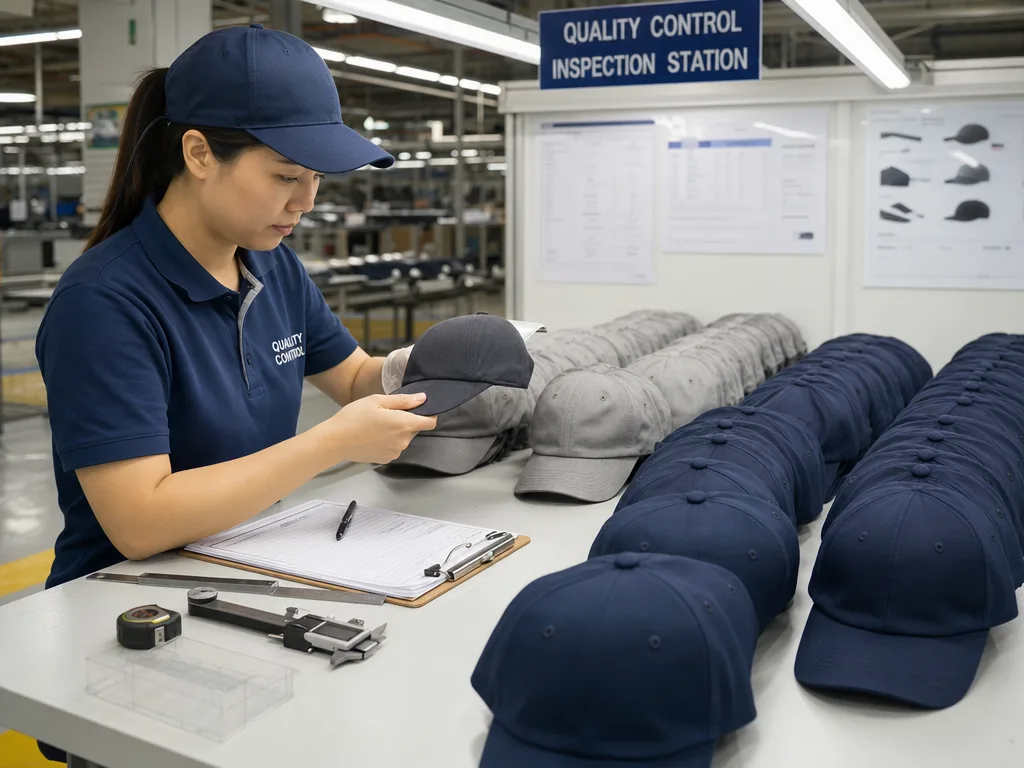
Every week, our sales team answers detailed questions about bulk trucker hats export shipping checklist for custom hat buyers - cost & moq breakdown - cost & moq breakdown. We wrote this guide so that wholesalers, streetwear brands, corporate buyers and promotional resellers can compare options with full information, and avoid the traps that show up only after production has started.
Why bulk trucker hats export shipping checklist needs a separate sourcing plan
A separate sourcing plan is mandatory because trucker hats fail in transit for reasons that do not show up on a sewing-line inline check. The weak points are structural, not cosmetic: a 3-5 mm EVA or sponge-foam front panel can take a permanent crease under top-load pressure, 75D-100D polyester mesh can snag on rough polybag vent holes, and a pre-curved PE visor can relax or twist after weeks in a container that peaks above 45-50°C. That is why a real bulk trucker hats export shipping checklist has to start with carton engineering, not just cap specs. For a 5-panel foam trucker with 3D puff embroidery, I want to know the nesting ratio, master carton burst strength, drop-test standard, and whether the crown needs tissue support or an inner frame before I care about a quoted FOB price. The hidden cost is cube, not labor. A basic custom trucker may quote at $2.10-$3.40 FOB Ningbo on 3,000 pieces, but small spec changes can wreck freight density fast. Moving from 3 mm to 5 mm foam, switching standard polyester mesh to recycled rPET, or adding a woven patch, hangtag, barcode label, and individual polybag can push landed cost up another 8%-15% even when the sewing cost barely moves. Embroidery itself might add only $0.18-$0.65 per cap depending on stitch count and run time on Tajima, Barudan, or ZSK heads; one less row per carton due to taller crowns can erase that saving immediately. If packing specs are still floating at PPS stage, the freight quote is fiction.
Compliance is the second reason the sourcing logic has to be separate. A trucker hat combines more material categories than a brushed-cotton baseball cap: foam, mesh, snap closure, sweatband, visor board, thread, and often heat-transfer film or woven labels. For U.S. and EU programs, that can mean CPSIA tracking for children’s styles, REACH screening on plastic trims and decoration films, and azo-free dye declarations on visible panels. Serious buyers also tie shipment release to social compliance reports such as sedex-audit-cap-supplier-guide.html">BSCI 2.0 or Sedex SMETA 4-Pillar, plus packaging verification if the order is going into Amazon FBA or a licensed retail channel. Miss one document or declare the wrong HS code, and the delay cost is usually higher than the sewing margin on the order. Color control and MOQ planning also behave differently on truckers. Mesh lots drift more obviously than cotton twill, so approved standards should be locked to Pantone TCX references with visible-panel tolerance written at Delta-E below 1.5, not left to “commercially acceptable” judgment. Shared-stock programs can start around 144-300 pieces per colorway, but custom-dyed mesh, printed underbrims, private-label sweatbands, or proprietary snap colors usually push practical MOQ to 800-1,000 pieces because each component creates a separate purchasing and inspection point. At final random inspection, AQL 2.5 failures on truckers usually come from brim symmetry, snap function, logo placement, mesh damage, and carton assortment errors. Our standard practice is to freeze labeling layout, carton dimensions, and packing method before bulk cutting, because late changes there are what delay carton-out and distort the final freight plan.
Factory capability checks before quoting
Bad quotes usually come from factories pricing outside their real process window. Before sending artwork, verify whether the supplier can execute your trucker spec in-house or only through managed subcontractors, and ask which operations are outsourced. Flat embroidery on a 3 mm foam front, 3D puff over center seam, woven patch edge-fold, PVC patch heat-press, and screen print on EVA-backed fronts all fail differently. A shop running Tajima, Barudan, or ZSK heads should tell you the usable embroidery field, a safe stitch-count range before foam collapse or panel tunneling, and whether they use 2 mm or 3 mm puff foam. Ask for close-up photos of the face and inside: underlay type, backing weight, bobbin tension, edge coverage, and thread brand such as Madeira Polyneon or Gunold. If they promise Pantone matching within Delta-E 2.0, they also need a documented approval method, because polyester thread rarely lands on Pantone TCX without a nearest-shade signoff.
Construction capability is what turns a nice sample into repeatable bulk. Confirm actual material specs, not sales language: 7 oz cotton twill, brushed chino at 240-280 gsm, 100% polyester foam front, or recycled poly/cotton blends with stated composition tolerance. Mesh should be defined by denier, aperture, hand feel, and rebound after compression, because cheap trucker mesh creases permanently after export packing. A capable factory should specify whether it builds 5-panel or 6-panel truckers, fused or unfused fronts, and what tolerance it holds on crown height, visor length, and visor curve across lots. Lock closures early—single-row snap, double-row snap, self-fabric strap with metal buckle, hook-and-loop, or elastic flex—since each changes labor minutes and carton density. This is where the bulk trucker hats export shipping checklist matters in real numbers: individual PE bagging, tissue-stuffed retail packing, barcode labels, and carton counts can shift outer carton size from roughly 60 x 45 x 45 cm to 72 x 48 x 58 cm, directly changing CBM and freight cost per 100 units.
Sample-room discipline and compliance records are the fastest way to separate an export factory from a workshop that improvises. A serious supplier should turn a first proto in 5-7 working days, revise against fit comments, and freeze a sealed approval sample tied to a signed spec sheet covering crown height, bill shape, visor stitch rows, seam tape, sweatband material, top button, and Pantone references for shell, mesh, and trims. Our standard practice is to lock that sample with a trim card and workmanship notes, then inspect bulk at AQL 2.5 unless the buyer requires AQL 1.5 for major defects. Ask who owns discrepancy reporting when artwork, fabric shade, or fit comments conflict; shipment delays usually start there, not at the port. Current BSCI 2.0 or Sedex SMETA 4-Pillar reports, plus needle-control logs, metal-detection procedure, and REACH or CPSIA support, belong on the same bulk trucker hats export shipping checklist because they tell you whether the factory can document risk instead of just quoting low.
MOQ, pricing and sample approval
MOQ is the first place buyers lose control of margin, because trucker-hat pricing is driven by SKU count, decoration method, and material availability—not just total units. For a standard 5-panel or 6-panel trucker with 2.5 mm EVA foam front, 100% polyester mesh back, PE snap closure, and 6,000-8,000 stitches of flat embroidery, a realistic factory MOQ is usually 144-300 pcs per colorway, but the first meaningful FOB break typically starts at 300-500 pcs per logo/colorway. In the current China market, a clean stock-material program is commonly $2.10-$3.20 FOB Ningbo at 300 pcs, then around $1.60-$2.25 at 1,000 pcs if you stay on in-stock mesh, standard snap colors, and no special washing. Once you add 3D puff, woven patch sew-on, metallic thread, screen-printed underbill, rope trim, or custom-dyed front panels, expect another $0.12-$0.70 per cap plus setup charges of about $35-$120 per process. Any serious bulk trucker hats export shipping checklist should break MOQ by SKU, because 1,200 pcs split across four colorways and two logos will not cost like 1,200 pcs of one repeat order.
Sample approval is where most preventable claims get stopped. For branded production, approve both the embroidery layout and a physical PPS cap; a digital mockup is useless for judging how a logo behaves on a curved crown with foam, buckram stiffness, and center seam distortion. On Tajima, Barudan, or ZSK heads, the digitizing has to match crown height, seam angle, stitch direction, and backing type, or satin borders start tunneling and 3D puff edges collapse. Lock body color against Pantone TCX for fabric and mesh, use Pantone Coated only for printed elements, and write a practical tolerance into the PO—Delta-E 1.5-2.0 is achievable on lab-dipped front panels, while embroidery thread usually needs slightly looser tolerance because polyester sheen shifts under D65 and store lighting. Also sign off trims and packing before mass production: woven labels, seam tape print, hangtags, barcode labels, and individual polybags usually add $0.18-$0.65 per hat. Packing method matters just as much as unit cost; half-nested loading can cut CBM noticeably versus full-shape packing, so carton size, max gross weight, and AQL 2.5 inspection timing belong in the same bulk trucker hats export shipping checklist.
Quality inspection and shipping risk
Pre-shipment inspection is where a bulk trucker hats export shipping checklist stops being theory and starts protecting cash. Do not release the balance before a third-party PSI on at least 80% packed goods, using ANSI/ASQ Z1.4, General Inspection Level II, with AQL 2.5 for Major and 4.0 for Minor as the baseline; licensed retail and e-commerce programs often push to 1.5/2.5. The expensive failures are usually systematic, not dramatic: embroidery running 2-3 mm off center across 5,000 units, crown height drifting between sewing lines, visor pre-curves relaxing after carton compression, loose top-button lockstitch, sweatband join seam opening, or mesh snagged by a damaged needle. Those are preventable only if tolerances are written into the PO before cutting: head circumference and crown height at ±0.5 cm, visor length at ±0.3 cm, logo placement at ±0.2 cm, with out-of-spec units counted as rejects, not negotiated later as “acceptable variation.”
Mixed-material trucker hats expose weak quality control fast. Foam front panels, 100% polyester mesh, cotton twill undervisors, and rayon embroidery thread all read color differently, so Pantone approval has to be by component, not by eye. For visible panels, keep Delta-E within 1.5-2.0 under D65 lighting and check dark shades for crocking and perspiration fastness, especially where dye can transfer onto the sweatband. Embroidery review should call out thread breaks, poor satin edge coverage, fill-area puckering, sink-in on low-density foam, and backing show-through inside the crown; a Tajima or Barudan head will still sew a bad logo if the digitizing ignores underlay, pull compensation, and stitch angle. Before cargo release, confirm barcode scan accuracy, carton drop resistance, needle log reconciliation, and metal detection records if required by the retailer.
Shipping claims on trucker hats are more often caused by weak packing and sloppy documents than by the ocean leg. Carton marks must match the shipping approval exactly: PO, style, color, carton sequence, quantity, gross and net weight, dimensions, country of origin, and any FNSKU or retailer label. A single suffix error can trigger relabeling at destination, missed warehouse appointments, and chargebacks that can run $1-3 per carton or more than $500 per PO on major accounts. Carton spec should match the route: for FOB Ningbo or Shanghai on palletized ocean freight, a 5-layer double-wall carton is usually sufficient; for DDP with parcel injection, transloading, or cross-dock handling, use stronger board, PE liners or 10-20 g desiccant packs, and cap carton weight below 15 kg to reduce crush and manual-handling damage. Lock the Incoterm before production starts, because FOB, CIF, and DDP shift control of customs data, duty assumptions, and claim responsibility long before booking.
Buyer checklist for the next RFQ
A usable RFQ starts with a real tech pack, not annotated screenshots. For a reliable bulk trucker hats export shipping checklist, lock the cap spec before asking for price: 5-panel or 6-panel, structured or unstructured front, crown height in mm, visor shape, snapback type, mesh material, and fabric weight. If you want the classic trucker build, call out 3-5 mm laminated foam with polyester jersey on the front panel; otherwise specify the actual shell material such as 12 oz cotton twill, brushed chino around 260-300 gsm, recycled polyester, or 210D nylon. Color has to be controlled component by component, not as a vague “black” or “navy.” Provide Pantone TCX or Pantone Solid Coated references for front panels, mesh, visor top and underbill, sandwich, top button, closure, sweatband, and seam tape. On repeat orders, a competent factory should target shade tolerance around Delta-E 1.5-2.0 under a D65 light box. Put destination country, carton size ceiling, label compliance, and Incoterm in the first email as well; FOB Ningbo versus DDP to a U.S. 3PL can shift landed cost by roughly $0.35-$1.20 per cap depending on volume, peak-season freight, and carton utilization.
Most RFQs break down in artwork and order structure, not sewing. Send vector files in AI, EPS, or press-ready PDF and assign decoration by position: flat embroidery, 3D puff, woven patch, TPU patch, screen print, or sublimated patch. For 3D puff on a trucker front, keep minimum stroke width at 2.5-3.0 mm or the digitizer will simplify the art to run cleanly on Tajima, Barudan, or ZSK machines. Also define logo size in mm, thread coverage, patch border type, interior label placement, seam tape print, hangtag spec, barcode format, country-of-origin marking, sticker requirement, and polybag instructions including suffocation warning text where required. Those trims usually add $0.08-$0.45 per piece and often create separate MOQs for custom patches, labels, or molded closures. Break quantity by SKU, colorway, and logo version, not just total units: 288 pieces in one style prices completely differently from 288 split across six SKUs. For standard mesh-back truckers, a realistic range is about $2.10-$4.80 FOB China at 500, 1,000, and 3,000 pieces, depending on materials, decoration count, packaging, and inspection level such as AQL 2.5.
Working with CrownsForge
Most failures in a bulk trucker hats export shipping checklist start before production, when approvals are visual instead of measurable. Lock the pre-production sample before bulk cutting and write every visible point into the tech pack: crown height in mm, visor curve, front-panel gsm, mesh composition, snapback spec, seam tape color, and Pantone TCX references for shell, tape, button, visor edge, and embroidery thread. On a standard 5-panel trucker using 108x56 cotton twill at 250-280 gsm with 100% polyester mesh, a disciplined sample cycle is usually 5-7 working days. Add 3-5 days if the style includes custom PVC patches, molded rubber badges, metal eyelets, or fresh mold charges. Decoration approval is where buyers either control risk or inherit it. For embroidery, freeze the DST or EMB file, stitch count, underlay, pull compensation, satin width, and 3D puff foam thickness before bulk. A logo that looks acceptable on one pre-pro sample can shift, sink, or tunnel at 5,000 pieces if the file was tested on a different Tajima, Barudan, or ZSK setup than the bulk line. The approved digitizing file matters more than the mood board.
Good factories treat decoration, inspection, and packing as one process, not three handoffs. Practical tolerances should be written into the production order: embroidery placement within +/-2 mm, woven or TPU patch alignment within +/-1.5 mm, visor sandwich color at Delta-E 1.5-2.0 against the approved swatch, and crown symmetry checked panel-by-panel at sewing. Inline QC every 50-100 pieces should catch skipped stitches, mesh tearing, seam puckering, sweatband twisting, broken snaps, and uneven top-button centering before finishing. Final inspection should run to AQL 2.5 and verify assortment ratios, barcode labels, country-of-origin marking, suffocation warnings on polybags where required, carton count, and carton marks against the packing list. Export packing is not a cosmetic detail; it is freight-risk control. A workable trucker carton is usually 5-layer corrugated with gross weight held around 12-15 kg to reduce crown crush and warehouse chargebacks. As a realistic benchmark, a basic twill-front trucker at 3,000 pieces often lands around $2.20-$3.10 EXW, while a structured style with 8,000-12,000 stitches, inside tape print, woven label, hangtag, and custom patch usually runs $3.60-$5.20 EXW. FOB Ningbo or Shanghai lead time is commonly 30-40 days after sample approval; retailer compliance, mixed trims, or extra lab testing can stretch that to 45 days.
Frequently Asked Questions
What is the minimum order quantity (MOQ) for custom hats?
Our standard MOQ is 100 pieces per design and color, with sampling available from 1 piece. For complex multi-color logos or premium fabric upgrades, the MOQ can be lowered with a small per-piece surcharge.
What logo decoration techniques do you offer?
3D puff embroidery, flat embroidery, woven patch, leather patch, PVC patch, screen printing, sublimation, applique and laser etching, all in-house with no subcontracting.
How long does production take?
Sampling takes 7 to 12 days. Bulk production runs 20 to 30 days depending on quantity, fabric availability and decoration complexity. Inspection and packing adds another 3 to 5 days before shipment.
What file format should I send for my logo?
Vector files (AI, EPS, PDF) are ideal. High-resolution PNG or JPG at 300 dpi on transparent background works as a fallback. Provide Pantone color references for accurate reproduction.
Do you support sustainability certifications?
Yes. We work with GOTS organic cotton, GRS-certified recycled polyester, OEKO-TEX Standard 100 fabrics, and are BSCI and Sedex audited. Certification documentation can be provided per order.
How does ordering custom embroidered trucker hat work?
When evaluating custom embroidered trucker hat, the key considerations are construction quality, decoration capability, MOQ flexibility and lead time. Explain the buyer intent behind bulk trucker hats export shipping checklist, when it differs from generic hat sourcing, and what decisions affect cost, lead time and compliance. Describe how CrownsForge manages bulk trucker hats export shipping checklist programs with sampling, decoration, QC and export coordination.
What should I know about custom trucker hats bulk?
When evaluating custom trucker hats bulk, the key considerations are construction quality, decoration capability, MOQ flexibility and lead time. Explain the buyer intent behind bulk trucker hats export shipping checklist, when it differs from generic hat sourcing, and what decisions affect cost, lead time and compliance. Describe how CrownsForge manages bulk trucker hats export shipping checklist programs with sampling, decoration, QC and export coordination.
What's the MOQ for custom embroidered trucker hats no minimum?
When evaluating custom embroidered trucker hats no minimum, the key considerations are construction quality, decoration capability, MOQ flexibility and lead time. Explain the buyer intent behind bulk trucker hats export shipping checklist, when it differs from generic hat sourcing, and what decisions affect cost, lead time and compliance. Describe how CrownsForge manages bulk trucker hats export shipping checklist programs with sampling, decoration, QC and export coordination.
What should I know about custom rope hat wholesale bulk?
When evaluating custom rope hat wholesale bulk, the key considerations are construction quality, decoration capability, MOQ flexibility and lead time. Explain the buyer intent behind bulk trucker hats export shipping checklist, when it differs from generic hat sourcing, and what decisions affect cost, lead time and compliance. Describe how CrownsForge manages bulk trucker hats export shipping checklist programs with sampling, decoration, QC and export coordination.
What is the best shipping method for hats?
In general, you can safely package most hats inside cardboard boxes. You should wrap them in a protective layer or place enough packing material inside to protect the hat from any residue that leaks onto the box. Most hats have a hard brim, visor, bill, or crown that must retain its shape during shipping.
What size box is needed to ship a hat?
Down. So this is the 1686. All right perfect for your dozen hats dozen plus. So this one here this is the 2488. And this one here of course to ship out the higher quantity.
How much does an average hat weigh?
The typical weight of a baseball cap ranges from 3 to 4 ounces (about 85 to 113 grams). This can vary slightly depending on the materials used, the design of the cap, and any added features like embellishments or mesh backs. The weight of a baseball cap can affect your comfort and performance.
How are baseball caps shipped?
For baseball caps, a box around 8x8x4 inches usually works well. Next, use protective materials like tissue paper, bubble wrap, and packing peanuts or air cushions. If you're just starting out, dollar stores are a good place to find these items.
Need a low-MOQ test order?
We help emerging brands launch with as few as 100 pieces. Premium fabric, in-house embroidery, retail-ready packaging.
Start a small orderRelated guides
Custom Embroidered Patches: When to Use It, Costs, and What to Ask Your Factory (2026 Update)
Read article →
Custom Made Trucker Hat: The 2026 Sourcing & Manufacturing Playbook (2026 Update) (2026 Update) - 2026 Buyer's Guide (2026 Update) - Cost & MOQ Breakdown
Read article →
Private Label vs White Label Caps: Which Model Fits Your Brand? - Cost & MOQ Breakdown
Read article →Sourcing custom hats does not have to be complicated. With the right manufacturing partner, clear specifications and a small upfront investment in sampling, you can launch a retail-quality product in 30 to 45 days.