
Custom Embroidered Patches: When to Use It, Costs, and What to Ask Your Factory (2026 Update)
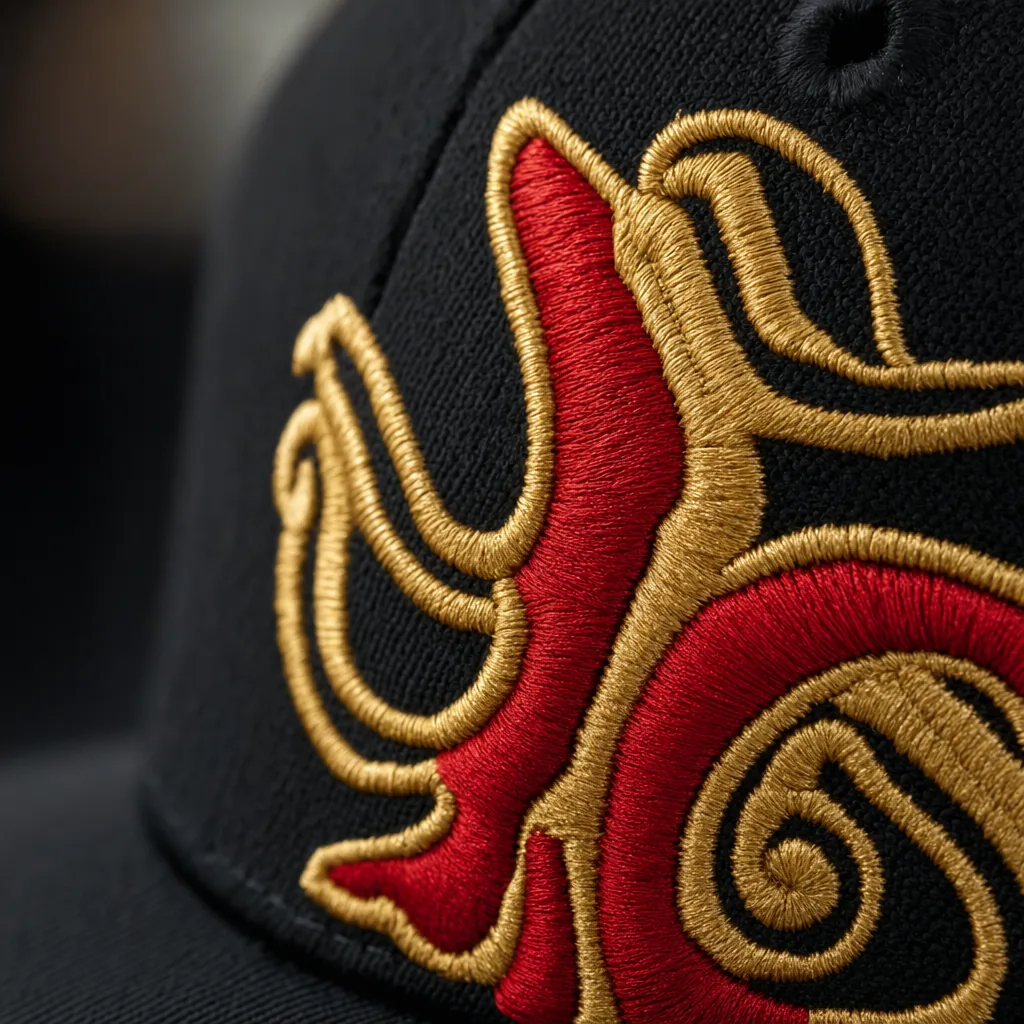
Custom Embroidered Patches: When to Use It, Costs, and What to Ask Your Factory (2026 Update) is one of the most-asked questions we receive from international buyers, and for good reason. With dozens of factories competing for your order and an alphabet soup of technical terms in every supplier quote, even experienced importers can feel lost. This guide consolidates what we have learned producing custom hats for clients in 40+ countries.
Custom Logo Hats
Decide on custom embroidered patches before the cap pattern is locked, not after the first sample is sewn. A patch changes the production route: badge first, cap body second, attachment after crown assembly and before final trimming, pressing, and AQL packing. That sequencing matters because direct embroidery is unforgiving on center-front seams, buckram-supported crowns, and 5-panel foam truckers. If the artwork has serif strokes under 1.0 mm, reversed text below about 2.2 mm cap height, or gradient-style color breaks, thread run directly into the crown will usually close up, sink, or skew. A circular front logo can easily distort 3% to 5% when it crosses a 6-panel seam; custom embroidered patches keep the geometry cleaner because the design is stitched on flat ground under stable tension before application. Specify patch size in millimeters, merrowed or laser-cut edge, backing, attachment method, crown construction, and Pantone reference at tech-pack stage. “Dark red” is useless. Use Pantone TCX or TPX for fabric, Madeira or Gunold thread cards for embroidery approval, and ask whether shade matching is controlled to Delta-E 2.0 or tighter against the signed standard.
On cost, the patch itself is rarely the expensive part; labor loss, cap construction, and reject risk drive the real number. In China, loose patch MOQ can start at 50 to 100 pieces when runs are combined, but finished logo hats normally settle at 144 to 300 pieces per colorway because cutting, sewing, and trim matching are the actual constraints. A 70 x 45 mm embroidered patch on a standard 65/35 poly-cotton twill snapback typically lands around US$3.20 to US$5.80 FOB Ningbo at 300 pieces, while a foam trucker with a woven patch may run US$2.70 to US$4.60. Wool serge, brushed cotton at 280 gsm, suede visors, TPU badges, or hidden-stitch appliqué can push the unit past US$6.50 fast. The break-even against direct embroidery usually flips once the artwork exceeds roughly 8,000 to 10,000 stitches, carries more than six thread colors, or needs edge clarity that standard fill density cannot hold cleanly.
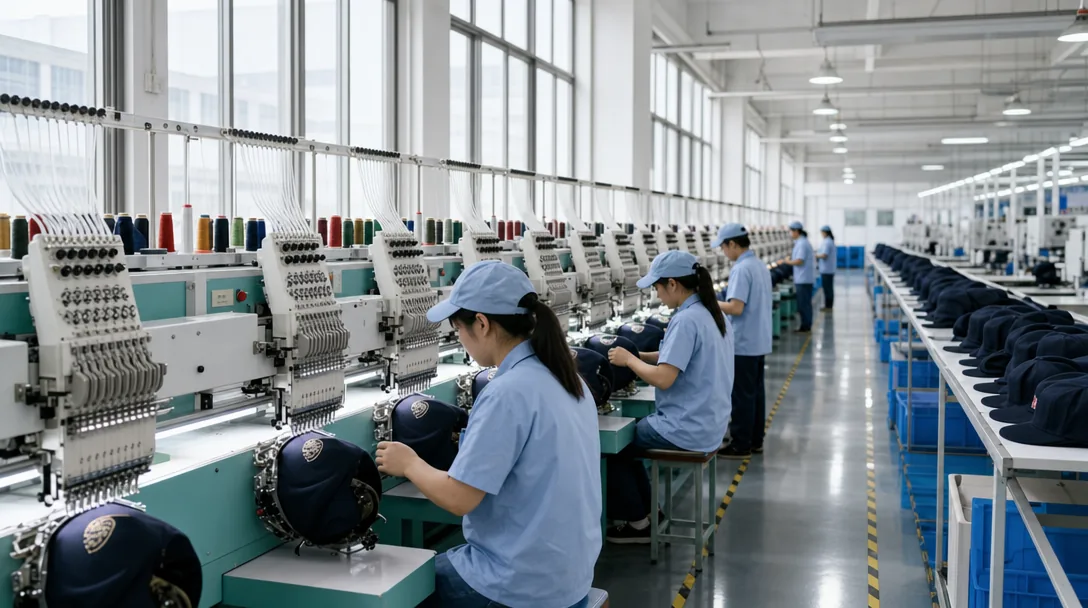
QC is where suppliers get exposed. Patch placement on the finished hat should hold within ±2 mm left-right and ±2 degrees rotation, with no glue bleed, no skipped merrow, no bubbling after heat press, and no fill so thin that the twill ground ghosts through. Attachment needs to survive pull testing and tape-lift checks during AQL 2.5 final inspection, especially on foam fronts and seam-crossing placements where bond failure shows up first. Ask what equipment is actually running the work: Tajima, Barudan, and ZSK heads each handle density and small lettering slightly differently, and bad digitizing causes more rejects than the machine brand. CrownsForge’s standard practice is to approve both the loose patch and the applied sample, because a patch that looks perfect on a flat panel can wrinkle, dome, or drift once it is sewn onto a structured crown with buckram, eyelets, and front seam bulk.
Custom Hat with Patch
A custom hat with patch is a controlled assembly job, not a standard embroidery order. The patch is made first—usually embroidered twill, woven damask, merrowed badge, molded PVC, or PU leatherette—then applied after the cap body is sewn and blocked. That order matters because the cap architecture sets the limit. A structured 6-panel trucker with buckram can carry a 2.25 to 3.0 inch patch with 1.2 to 1.8 mm total thickness; an unstructured washed chino dad cap will telegraph the patch edge and distort sooner, especially on the front seam. Rope caps also lose usable height above the rope and center seam, so artwork that fits on a flat proof often crowds the panel in production. When buyers choose custom embroidered patches instead of direct embroidery, the real advantage is technical: cleaner edge definition, better color blocking, and less crown puckering when the logo has high stitch density or satin columns wider than 5 mm. For embroidered constructions, the patch usually runs on Tajima, Barudan, or ZSK heads using 40 wt polyester thread over 0.35 to 0.45 mm polyester-cotton twill, with stitch counts commonly landing between 6,000 and 14,000 for a 58 mm front badge. Merrow borders are durable but bulky; laser-cut or heat-cut edges look sharper on modern streetwear caps, though they need tighter thread lock and cleaner backing control. Attachment should be specified by method, not by shorthand: lockstitch perimeter, zigzag, heat press with TPU film, or stitch-plus-adhesive for high-abuse programs. In practice, custom embroidered patches outperform direct embroidery when copy drops below about 4.5 mm letter height or when the logo uses multiple Pantone breaks that would otherwise stack dense underlay into a stiff front panel.
The spec sheet determines whether a patch hat runs smoothly or turns into a remake. Call out finished patch size in millimeters, border type, backing, attachment method, cap fabric content, crown profile, placement point, and tolerance. Front-center placement should be held to ±2 mm, and left-side or back-arch placements to ±3 mm because seam geometry is less stable there. If brand color matters, specify Pantone TPX or TCX references and a Delta-E target under 2.0 against the sealed sample under D65 lighting. For embroidered patches, also ask for stitch density, thread sheen level, and thread brand or approved equivalent; Madeira, Gunold, and FUJIX do not reflect identically under retail lighting, and that difference shows up fast on black caps with bright logo fills. Most failures on patch hats come from attachment, not from the patch embroidery itself. The recurring defects are skewed placement, heat-press bubbling, seam show-through on thin front panels, merrow unraveling, and crown warping after over-pressing at roughly 145 to 155°C for 12 to 18 seconds. PU and leatherette badges can also shift gloss or crack along the edge after a 24 to 48 hour recovery period, so peel testing should be done after conditioning, not straight off the press. MOQ is usually split: hats often start at 144 to 300 pieces per colorway, while standalone custom embroidered patches typically need 300 to 500 pieces to absorb digitizing, border setup, and sampling. In Zhejiang, a basic 2.25 inch embroidered patch commonly adds $0.22 to $0.55 FOB, with another $0.10 to $0.28 for application; chenille, layered felt, or mixed-material badges can push the add-on past $0.80 before freight. AQL 2.5 is the minimum sensible inspection level for this category.
Custom Patch for Hat
For hats, custom embroidered patches are a separate component with their own engineering, and most failures happen when factories price them like ordinary cap embroidery. Start with the patch substrate, not the hat. For clean edge definition, 180-220 gsm polyester twill is the standard; for a heavier varsity or heritage look, 1.5-2.0 mm acrylic felt works better but adds thickness at the crown break. Most patch runs are sewn on Tajima, Barudan, or ZSK heads using 120D/2 polyester or rayon thread, then finished with a merrow edge, satin stitch border, hot knife, or laser cut. Merrow is durable, but on front patches below about 50-55 mm wide it creates unnecessary bulk and resists the curve of a structured 6-panel crown. A satin border or sealed laser-cut edge usually seats flatter and looks cleaner on smaller front logos. Custom embroidered patches make more sense than direct cap embroidery when the artwork has high stitch density, uses a specialty ground like camo twill or PU leatherette, or needs to stay visually consistent across snapbacks, bucket hats, knit beanies, and jackets without redigitizing each placement. They also solve a common production problem: the same badge can be approved once, then applied across multiple SKUs with tighter visual consistency than front embroidery on different crown profiles. That matters when buyers are trying to hold one logo standard across structured truckers, unstructured cotton caps, and curved 5-panel styles, where stitch angle, needle deflection, and buckram stiffness would otherwise change the look.
Bad quotes usually come from incomplete patch specs. A usable tech pack should lock finished size in millimeters, substrate, border construction, backing type, stitch coverage, Pantone reference, attachment method, placement point, and tolerance. On center-front panels, more than +/-2 mm off-center is obvious at arm’s length; for premium programs, buyers often hold patch size to +/-1.5 mm and placement to +/-1.5 mm as well. You also need to state whether the patch is sewn before cap assembly or after crown closing. Pre-assembly sewing gives the cleanest result on 5-panel and 6-panel cotton fronts because the operator can keep the panel flat; post-assembly application is sometimes unavoidable on foam truckers, mesh-back caps, and short runs where resetting the sewing sequence is not worth the line disruption. In 2026, a standard 2.25 inch twill patch generally costs $0.18-$0.45 each at 1,000 pieces, depending on stitch count, border type, and backing. Attaching it to the cap adds roughly $0.12-$0.28 for lockstitch or zigzag sewing; heat-assist constructions can reduce handling time but create risk if the adhesive softens around 60-70 degrees C during container transit. The failure points are predictable: merrow unraveling, laser scorch marks, satin-border gaps at corners, skipped attachment stitches, puckering on lightweight nylon taslon, and adhesive bleed on brushed cotton twill. Inspect patch strike-offs separately from the cap PPS, then approve bulk against AQL 2.5 or tighter if the program is licensed or fashion-sensitive; a crooked patch is far more visible than minor variation in direct embroidery.
Custom Patch Hat
A patch hat is not just a cap with a logo added later; it is a two-process product, and most defects come from buyers approving the hat shape before the patch construction is locked. With custom embroidered patches, the patch’s thickness, edge finish, and backing determine whether the front panel stays clean or starts tunneling. Merrow-edge twill patches are still the safest choice for structured trucker caps and standard 6-panel cotton twill because the raised border hides small registration drift and holds up well in bulk sewing. On low-profile dad caps, washed chino, and other unstructured crowns without full buckram support, a dense patch over about 2.0-2.5 mm total thickness will often telegraph through the fabric, causing edge lift and visible distortion. When detail drops below roughly 0.8-1.0 mm line width or text falls under 4 mm cap height, embroidery is usually the wrong decoration method; woven damask, printed twill, TPU, or faux leather patches reproduce small copy far better and avoid the muddy fill you get from overpacked stitches.
If you want an accurate quote and a usable pre-production sample, the spec pack has to call out more than logo size. I would list patch dimensions in millimeters, base fabric type and weight, border style, backing, stitch coverage, attachment method, placement tolerance, and approved thread references using Pantone TCX or coated Pantone against a physical standard, not a phone screen. Also state whether the patch is attached before crown closing or after the cap is fully assembled; pre-assembly sewing usually gives cleaner inside finishing and more even feeding on Juki post-bed machines, while post-assembly attachment is faster but less forgiving on placement. On Tajima, Barudan, or ZSK heads, satin columns under 1.2 mm and lettering below 4 mm need proper underlay and pull compensation during strike-off or the bulk run will close up fast. In Yiwu, a sewn merrow patch typically adds about $0.30-$0.65 per cap at 500 units, while woven, molded, or faux leather applications usually land around $0.75-$1.80 before digitizing, mold fees, wash testing, and freight.
Inspection on patch hats should focus on attachment integrity first, because the failure points are easy to predict. The defects I see most often are front placement drifting beyond ±2 mm, border stitch density going uneven around curves, merrow joins fraying, adhesive bleeding into light-colored brushed twill, and puckering where a stiff patch fights the crown shape. Color control also gets missed: if the patch base or embroidery thread lot shifts, the approved sample and the bulk run can be visibly different even when the supplier claims the Pantone is unchanged. For retail programs, write a Delta-E tolerance into the approval standard for critical background colors and ask to review the patch lot card before bulk attachment starts. AQL 2.5 is a reasonable final inspection level for placement, edge finish, and stitch security, but mixed-material caps like taslon nylon, corduroy, and washed cotton need extra scrutiny because heat marks, press shine, and needle holes show immediately. Our standard practice is to test wash resistance, sweat exposure, and carton compression, since brim pressure in transit can crack molded patches or crease raised embroidery long before the customer ever wears the hat.
Custom Patch Hats
On a hat, the patch is not a decoration; it is a second manufacturing process with its own failure map. Treat the cap and patch as one assembly, because most problems show up at the interface: edge lift on curved crowns, puckering from over-dense stitch files, or color mismatch between patch twill and cap shell. For custom embroidered patches, the right construction depends on artwork, not buyer preference. Merrow-edge twill works for classic badge shapes but usually adds 2.5-3.5 mm of visual bulk around the perimeter. Laser-cut twill with a satin border gives a cleaner silhouette, but on small logos that satin column can eat into copy fast. Once lettering drops below roughly 3 mm cap height or line weight falls under 1.0-1.2 mm, even a well-run Tajima or Barudan head will start to close counters and muddy registration. If the art carries gradients, distressing, or stacked microtype, woven, sublimated, or printed patches usually hold detail better than embroidery.
Attachment method drives both unit cost and claim risk. Heat press is quickest, but it is also the least forgiving: shell chemistry, crown profile, pressure, dwell time, and cooling all affect bond strength. A structured 6-panel brushed cotton twill cap with buckram will usually hold a 55-70 mm front patch far better than an unstructured washed chino cap, a foam trucker, or a slick 228T Taslon nylon shell. Stitch-down adds labor, usually $0.12-$0.28 per cap FOB China, but it is mechanically safer after freight compression and repeated wear. Press-plus-stitch is the floor-tested compromise when buyers want a clean edge without corner lift. On center-front placement, ±2 mm is a realistic production tolerance; at ±4 mm, the drift is obvious at first glance. The spec sheet should lock in patch size in millimeters, border type, backing, thread as 120D rayon or polyester, placement by panel, and approval method. Fabric color can be controlled to Delta-E below 2.0 against Pantone TCX, but embroidery thread still needs visual approval under D65 lighting because sheen shifts perceived shade.
Patch-hat pricing moves with patch source, cap body, and finishing method more than most buyers expect. If the hat factory outsources the patch to a second-tier vendor, you add one more handoff on strike-off approval, color accountability, and lead time; in practice, that often means 3-5 extra days and a blurrier defect trail when something arrives off spec. For 100 pieces on a stock brushed cotton twill baseball cap, FOB China typically lands around $2.20-$4.80 per hat. At 1,000 pieces, the same program is more often $1.35-$2.80, depending on closure, fabric weight, underbrim treatment, patch size, and whether attachment is pressed, stitched, or hybrid. Practical MOQ is usually 100-144 per colorway on stock bodies, but fully custom shells, matching trims, or developed patch twills tend to push MOQ to 300-500. Inspect patch hats to AQL 2.5 as finished goods, not as loose patches. The commercial failures are edge fray, adhesive bleed, off-center application, needle damage around stitch-down borders, lot-to-lot thread variation, and patches that cup or peel after 30 days in a compressed master carton.
Hat Patch Custom
For hat patch programs, the weak point is usually not the embroidery itself but the handoff from patch making to cap assembly. Most custom embroidered patches are stitched on twill, felt, or polyester base cloth, then trimmed, backed, and applied to a curved crown later. That split matters: a 65 mm patch may sit flat on a structured 6-panel with 2.0-2.5 mm buckram, but an 85-90 mm patch on an unstructured washed dad cap often bridges over seams or lifts at the corners. Buyers should freeze the full spec before pricing: finished size in millimeters, base fabric, edge finish, backing, thread system, and attachment method. If letters drop below 3 mm cap height or counters get tight, woven labels usually outperform embroidery, because 40 wt polyester thread will spread and close detail even on a clean Tajima or Barudan run.
Ask for tolerances, not adjectives. A decent spec sheet should state size tolerance of +/-1.0 to 1.5 mm, border width, stitch density, backing weight, and placement tolerance on cap of +/-2.0 mm, plus Pantone TCX references for key colors. Approve against real thread cards, not a PDF, because sheen changes how the eye reads color even when Delta-E is acceptable. If the patch is heat-applied, require the adhesive type and press recipe; 145-160 C for 12-18 seconds is common for heat-seal backing, but washed cotton twill, brushed chino, and wool blends all react differently once the sweatband and seams are in place. For anything curved or high-coverage, ask for a strike-off on the actual hat body and check edge lift, panel puckering, and shadowing around the border.
Pricing only makes sense once the application method is fixed. Loose custom embroidered patches in the 2.5-3.5 inch range usually land around US$0.18-0.60 each in China at 100-300 pieces per design; laser-cut shapes, metallic thread, molded Velcro hook backing, and 3D foam push that higher. Once the same patch is sewn or pressed onto caps, MOQ often rises to 144 or 288 units per colorway because labor, not machine time, becomes the bottleneck. Inspect the dull problems that cause real claims: merrow tails left inside the border, placement drifting more than 2 mm off center, over-press gloss on brushed cotton, needle marks on suede or PU, and adhesion loss after carton compression or summer transit. AQL 2.5 is a sensible baseline for bulk checks, and we recheck peel strength after 24 hours plus heat-aging or wash simulation, because a patch that passes factory QC can still fail in a hot truck or retail handling.
Working with CrownsForge for custom embroidered patches programs
Most failures in custom embroidered patches happen before bulk sewing starts: the buyer approves a flat proof, then discovers the patch was wrong for the surface. A 24-48 hour digital proof is only a color and layout check; it will not show how a 3.0 inch patch behaves over a center seam, a buckram-backed 6-panel crown, or a ribbed 1x1 acrylic beanie. The safer sequence is digital proof first, then a physical strike-off within 3-5 working days after thread chart, border construction, backing, and finished size are locked. If the patch is going onto a finished cap, add a full assembly sample. That extra step usually adds just 2-4 days, but it catches the expensive defects: twill puckering, edge lift on curved fronts, satin border distortion, and placement drift of 3-5 mm once operators move from a flat sample board to production caps. Artwork quality determines whether a patch should be embroidered at all. Send vector files whenever possible; otherwise, use a clean 300 dpi file at actual size. As a practical limit, text below 2.0 mm cap height, negative gaps under 0.8 mm, and gradient-heavy artwork usually need redraws or a switch to woven or printed construction. Patch programs like this are typically run on Tajima or Barudan multi-head embroidery machines, with border style chosen for function, not taste alone: merrow for classic round or oval badges, satin edge for tighter custom shapes, laser-cut edge for modern low-profile designs. Our standard practice is to sample the complete assembly for rope caps, truckers, and knit programs because crown curvature, seam bulk, and stitch tension can change the final look enough to make a flat patch approval meaningless.
Pricing gets predictable once the attachment method and order scale are fixed. For custom embroidered patches, 50-100 pieces is a realistic small run when the design is already digitized, the patch stays around 2.25-3.5 inches, and the construction is simple. A one-time digitizing charge usually lands at $25-$60, depending on stitch count and color changes. At 500-1,000 units per colorway, unit cost drops materially because digitizing, laser-cut setup, thread mapping, and handling are spread over volume. On cap programs, sewn attachment typically adds $0.18-$0.45 per piece versus heat seal, but it gives better wash durability and fewer edge failures at retail. If the target is a promotional FOB, heat seal can work; if it is a retail custom patch hat, sewn attachment is usually the correct choice. Control documents matter as much as pricing. A factory handling custom embroidered patches for U.S. or EU retail should be able to show current sedex-audit-cap-supplier-guide.html">BSCI 2.0 or Sedex SMETA 4-Pillar reports and maintain restricted-substance controls for hot-melt adhesives, inks, and backing materials. Before bulk, lock the BOM, Pantone references, thread chart, backing type, border construction, placement coordinates, and carton pack-out. For branded programs, color tolerance should be discussed in real terms: Delta-E under 1.5 for critical logo shades and under 2.0 for less sensitive colors is a reasonable standard. Inspection should run inline plus final at AQL 2.5, with specific checks for skipped stitches, border consistency, attachment strength, seam alignment, and compression damage after master-carton stacking. Those are the controls that prevent repeat-order headaches like backing delamination, crooked placement, edge fray, and visible color drift between lots.
Frequently Asked Questions
How long does production take?
Sampling takes 7 to 12 days. Bulk production runs 20 to 30 days depending on quantity, fabric availability and decoration complexity. Inspection and packing adds another 3 to 5 days before shipment.
Do you support sustainability certifications?
Yes. We work with GOTS organic cotton, GRS-certified recycled polyester, OEKO-TEX Standard 100 fabrics, and are BSCI and Sedex audited. Certification documentation can be provided per order.
What logo decoration techniques do you offer?
3D puff embroidery, flat embroidery, woven patch, leather patch, PVC patch, screen printing, sublimation, applique and laser etching, all in-house with no subcontracting.
Can I order a sample before bulk production?
Yes. We strongly recommend approving a pre-production sample before mass production. Samples are charged at 35 to 60 USD each plus express shipping, fully refundable against confirmed bulk orders over 500 pieces.
Which shipping methods do you support?
We support FOB, CIF and DDP shipping. Air express for samples and small orders, sea LCL for 100 to 500 pieces, sea FCL for 5,000+ pieces. Door-to-door DDP available for US, EU, UK, Canada and Australia.
How does ordering custom embroidered patch hat work?
When evaluating custom embroidered patch hat, the key considerations are construction quality, decoration capability, MOQ flexibility and lead time. Cover everything buyers ask about custom hat with patch: how it's manufactured, what specs to request from a factory, typical MOQ and pricing, common quality issues to inspect for, and how this ties back to the broader custom embroidered patches sourcing decision. Cover everything buyers ask about custom patch for hat: how it's manufactured, what specs to request from a…
How does ordering custom leather patch hats work?
When evaluating custom leather patch hats, the key considerations are construction quality, decoration capability, MOQ flexibility and lead time. Cover everything buyers ask about custom patch hats: how it's manufactured, what specs to request from a factory, typical MOQ and pricing, common quality issues to inspect for, and how this ties back to the broader custom embroidered patches sourcing decision. Cover everything buyers ask about custom logo hats: how it's manufactured, what specs to request from a factory,…
How does ordering custom embroidered baseball hats work?
When evaluating custom embroidered baseball hats, the key considerations are construction quality, decoration capability, MOQ flexibility and lead time. Cover everything buyers ask about custom logo hats: how it's manufactured, what specs to request from a factory, typical MOQ and pricing, common quality issues to inspect for, and how this ties back to the broader custom embroidered patches sourcing decision. Cover everything buyers ask about custom patch hats: how it's manufactured, what specs to request from a factory,…
What's the MOQ for custom embroidered patches no minimum?
When evaluating custom embroidered patches no minimum, the key considerations are construction quality, decoration capability, MOQ flexibility and lead time. Cover everything buyers ask about custom logo hats: how it's manufactured, what specs to request from a factory, typical MOQ and pricing, common quality issues to inspect for, and how this ties back to the broader custom embroidered patches sourcing decision. Cover everything buyers ask about custom hat with patch: how it's manufactured, what specs to request from a…
Looking for a reliable hat manufacturer in China?
CrownsForge has produced custom hats for 800+ brands across 40 countries. From 100-piece launches to 100,000-piece retail programs, we deliver on time and on spec.
Get in touchRelated guides
Blank Hats Export Shipping Checklist for Custom Hat Buyers
Read article →Bulk Trucker Hats Export Shipping Checklist for Custom Hat Buyers
Read article →
Camouflage Bucket Hat: Properties, Costs and How to Spec It Right
Read article →We hope this guide demystifies custom embroidered patches: when to use it, costs, and what to ask your factory (2026 update) and helps you move forward with confidence. If you have questions specific to your project, our English-speaking sales engineers are one message away.