Recycled Polyester Cap Manufacturer Bulk: A 2026 B2B Sourcing Guide - Cost & MOQ Breakdown
Every week, our sales team answers detailed questions about recycled polyester cap manufacturer bulk: a 2026 b2b sourcing guide - cost & moq breakdown. We wrote this guide so that wholesalers, streetwear brands, corporate buyers and promotional resellers can compare options with full information, and avoid the traps that show up only after production has started.
Organic Cotton Cap Wholesale Custom
Organic cotton should be costed as its own cap program, not slipped into a recycled polyester cap manufacturer bulk order as a material swap. As a 2026 example specification to verify against the fabric mill invoice and pre-production sample report, a 6-panel organic cotton dad cap body typically starts with 10 oz to 12 oz per square yard twill, about 250 gsm to 310 gsm after washing, but the confirmed gsm should be measured on the approved fabric lot, not copied from a catalog. The claim also has to be precise: GOTS-certified organic cotton, OCS blended content, and a supplier’s informal “organic” description are not interchangeable. The certificate scope, transaction certificate, care-label wording, and purchase order material line should match before bulk cutting. For shade control, set a Pantone TCX target and use Delta-E 1.5 to 2.0 as a 2026 example tolerance to confirm with the dye house. Garment-washed cotton also needs shrinkage testing; a buyer limit of 3% length or width shrinkage is an example threshold to verify because excess shrinkage can distort the brim seam and move Tajima, Barudan, or ZSK embroidery off-register.
MOQ and price usually move with fabric roll weight, dye-lot planning, and trim sourcing, not with the sewing line alone. As a 2026 quote assumption to verify in the supplier quotation sheet, stock-color organic cotton twill caps may start at 300 pieces per color, while custom Pantone-dyed lots commonly require 600 to 1,000 pieces per color because mills batch fabric by kilograms, not by finished cap count. An early-2026 FOB China costing model for a structured or unstructured organic cotton cap with flat embroidery is USD 3.20 to USD 5.80 per piece, assuming standard woven label, metal buckle or self-fabric strap, export carton packing, and normal embroidery density. Example adders to verify in the supplier quote include USD 0.20 to USD 0.75 per piece for 3D puff embroidery, enzyme wash, higher stitch counts, brushed cotton finishing, or upgraded closures. Methodology: these figures are derived from production-style inputs including fabric consumption, trim cost, embroidery machine minutes, packing materials, and sewing labor; source contexts should include the mill invoice, certificate scope document, supplier quotation sheet, and pre-production sample report.
Bulk inspection should focus on defects that organic cotton shows more clearly than recycled polyester: puckered embroidery, uneven garment dye, crown asymmetry, sweatband staining, hand-feel variation between dye lots, front-panel height drift, brim curve inconsistency, and closure pull strength. For a 2026 QC plan, AQL 2.5 for major defects and AQL 4.0 for minor defects are example acceptance levels to align with the buyer’s inspection agency; carton moisture target, polybag thickness, tissue liner use, and shipping-mark format should be locked before FOB or DDP shipment. Vincent Xi, Editorial Author, attributes this guidance to the approved CrownsForge production basis listed at https://crownsforge.com/authors/vincent-xi/. Limitations to verify before awarding mixed organic cotton and recycled polyester cap manufacturer bulk business include current organic certificate scope, recycled polyester transaction certificates, dated sedex-audit-cap-supplier-guide.html">BSCI 2.0 or Sedex SMETA 4-Pillar documents if the buyer requires social compliance, live factory capacity, and whether the quoted supplier is certified for the exact label claim and process shown on the finished cap, not just a related material category.
Custom Wool Blend Ball Cap
Quote a custom wool blend ball cap as a wool/rPET blend, not as “recycled wool” or 100 percent wool unless the mill certificate and fabric composition test say so. A realistic 2026 quote spec to verify with the supplier is 50 percent wool and 50 percent recycled polyester by fabric weight, 280 gsm to 330 gsm crown fabric, 16.0 cm to 17.5 cm finished crown height, fused buckram front panels, a 2.0 mm to 2.5 mm PE brim insert, and a cotton twill or recycled polyester sweatband. Wool changes the line setup: panels need relaxation after cutting, lint control is stricter, steam temperature must be tested before bulk pressing, and shrinkage should be checked after embroidery and final shaping. That is why a recycled polyester cap manufacturer bulk price for standard rPET twill cannot be compared directly with a wool blend cap unless fabric weight, shrinkage allowance, dye-lot rules, and finishing method are written into the quotation.
Decoration should be costed from the stitch file, not from a mockup. For flat embroidery on Tajima, Barudan, or ZSK multi-head machines, require stitch count, backing type, thread brand, logo height in mm, and placement tolerance before sample approval. As an example calculation to verify in the supplier quote, a 55 mm front logo may run 7,000 to 9,000 stitches; puff embroidery, rope trim, chain stitch, or contrast underbrim can add USD 0.35 to USD 0.90 per piece at a 500-piece SKU quantity, as of January 2026 supplier-quote assumptions. Use Pantone TCX for fabric and Madeira or Gunold references for thread, then define a buyer-side lab-dip target such as Delta-E under 1.5 against the approved standard, subject to the supplier’s stated spectrophotometer method. Source contexts for this guidance are Yiwu cap production notes attributed to Vincent Xi’s approved CrownsForge author profile and anonymized 2025-2026 supplier quotations for wool-blend caps, rPET twill caps, and recycled polyester ripstop caps.
For planning, treat 300 pieces per color/style as an example MOQ assumption to verify, but expect 500 pieces per SKU when the wool blend needs a separate dye lot or several Pantone TCX shades. A structured 6-panel wool-blend cap with flat embroidery, metal buckle, and standard polybag packing may quote at USD 3.20 to USD 5.80 per piece FOB Yiwu at 500 pieces, as of January 2026 example supplier-quote assumptions; DDP landed cost will move with carton volume, destination duty rate, and seasonal freight. The methodology behind these numbers is a practical comparison of material behavior, decoration setup, MOQ pressure, and inspection failure modes across comparable bulk cap quotes. Limitations to verify before deposit: fabric composition certificate, shrinkage test after steaming, lab-dip Delta-E report, approved counter sample, carton dimensions, repeat-order shade availability, and any claimed BSCI 2.0 or Sedex SMETA 4-Pillar audit document. AQL 2.5 may be specified for major defects, but it is an inspection sampling plan, not a factory certification. Visible publication attribution should remain Vincent Xi, Editorial Author, with the author profile at https://crownsforge.com/authors/vincent-xi/.
Ripstop Tactical Cap Manufacturer
Ripstop tactical caps should be costed from the shell fabric outward, not from whether the cap is a 5-panel or 6-panel block. For a Q1 2026 RFQ assumption to verify in the supplier quote, specify 150D to 300D recycled polyester ripstop at 110 to 150 gsm finished fabric weight, with PU coating for higher water resistance or C0 DWR where the buyer’s PFAS policy excludes fluorinated finishes. Shade tolerance should be written as Delta-E 1.5 to 2.0 against the approved Pantone TCX lab dip, measured by production dye lot and checked separately on crown, visor, strap, and sweatband-facing materials. Source contexts for this section are outdoor headwear tech packs, mill lot sheets, and ISO 2859-1 inspection plans used for tactical and promotional cap programs; the methodology is a buyer-side RFQ build, not a market-wide price index. A recycled polyester cap manufacturer bulk quote should identify yarn denier, recycled-content claim basis, finished-width yield, coating chemistry, current GRS scope, and transaction certificate availability if recycled content will appear in customer-facing claims.
As an example Q1 2026 FOB assumption to verify, a custom recycled polyester ripstop tactical cap in one shell color, with tonal embroidery under 8,000 stitches, hook-and-loop closure, fused buckram or unstructured front panels, and no private molded trim commonly lands at USD 3.20 to USD 5.80 per piece FOB Ningbo or Shanghai at 600 pieces per color. Runs below 300 pieces per color may trigger fabric lot surcharges, trim minimums, or sample fees of USD 80 to USD 180 per style because coated ripstop and recycled polyester yarn lots are harder to consolidate than blank trucker cap wholesale bulk. Before counter-sampling, lock visor thickness, sweatband composition, bartack locations, seam allowance, crown height, and logo execution on Tajima, Barudan, or ZSK embroidery heads. Comparable cap categories carry different risks: corduroy trucker hats need nap-direction control, wool-blend ball caps need lint and steaming checks, and rope hats add rope dye matching plus front-panel alignment tolerance.
Inspection has to catch defects that plain twill can hide: ripstop grid skew, needle cuts along seam allowance, coating delamination after crown blocking, puckering at the visor seam, uneven brim radius, embroidery pull that opens the square grid, and shade drift between panels. A buyer can specify AQL 2.5 for major defects and AQL 4.0 for minor defects using ISO 2859-1 or ANSI/ASQ Z1.4 sampling terminology; that is an inspection plan, not evidence of factory certification. CrownsForge practice separates document review from workmanship inspection: composition, recycled-content paperwork, shade-band approval, and coating details are checked before cutting, while panel symmetry, logo placement, seam tension, finished circumference, packing, and carton marks are checked after finishing. Vincent Xi is the named Editorial Author at https://crownsforge.com/authors/vincent-xi/. Limitations to verify before purchase order release include current recycled yarn availability, coating MOQ, valid BSCI 2.0 or Sedex SMETA 4-Pillar audit documents if required, carton drop-test rules, duty rate, freight basis, and destination handling charges.
Working with CrownsForge for recycled polyester cap manufacturer bulk programs
For a recycled polyester cap manufacturer bulk program, use CrownsForge as a calendar-control test before arguing over the lowest FOB line. As 2026 planning assumptions to verify in the written quote, an rPET twill or recycled polyester mesh cap on an existing block typically needs 7-10 business days per sample round for fit, fabric hand-feel, and trim confirmation; decoration approval adds 12-15 business days per logo position when embroidery strike-offs, heat-transfer film, or woven patches are involved; and a new crown block, rope color, buckle finish, or panel fabric can extend development to 18-25 business days per SKU. MOQ is usually driven by fabric procurement, not the logo. Treat 300 pieces per color as a quote assumption for stocked rPET twill or mesh, 500-1,000 pieces per color for dyed-to-match Pantone TCX fabric with Delta-E under 1.5 measured under D65 light, and about 2,000 pieces per SKU for custom rPET yarn, ripstop, corduroy, or proprietary denier. The PO should state whether MOQ applies by color, logo, size, shipment, or fabric lot.
Decoration is where recycled polyester cap programs lose time because rPET panels can pucker, glaze, or shrink differently than cotton twill under dense embroidery or heat press. A practical approval route is artwork check, digitizing review, one machine strike-off on Tajima, Barudan, or ZSK heads, sealed pre-production sample, then bulk cutting only after written approval. For a 1,000-piece FOB China order in 2026, use these example cost assumptions to verify in the supplier quote: flat embroidery at 8,000 stitches may add US$0.35-US$0.70 per cap; 3D puff embroidery may add US$0.60-US$1.10 per cap; and a merrowed woven patch may add US$0.45-US$0.90 per cap. Compliance must stay document-based. BSCI 2.0 and Sedex SMETA 4-Pillar are social audit frameworks, not recycled-content proof. Recycled claims need current GRS or RCS chain-of-custody documents, transaction certificates where applicable, yarn supplier invoices, batch references tied to the purchase order, and clear separation between certified material and non-certified trim.
Methodology: the planning ranges above are derived from two source contexts: common cap production gates for 300-2,000 piece B2B orders and Vincent Xi’s approved author basis at https://crownsforge.com/authors/vincent-xi/, which covers cap manufacturing work across embroidery digitizing, fabric sourcing, AQL inspection, FOB/DDP logistics, and BSCI/Sedex audit handling. These figures are not proof of current certification, live capacity, or customer results for any supplier. Before deposit, verify recycled polyester percentage by batch, Pantone TCX lab-dip light source, Delta-E tolerance, AQL 2.5 inspection level and defect list, carton CBM per export carton, HS code, incoterm, and whether DDP includes duty, brokerage, and last-mile delivery. Visual brief: overhead QC table showing cut rPET cap panels, recycled polyester mesh, embroidery strike-off sheets, Pantone TCX chips, calipers measuring seam allowance, stitch-density notes, AQL sampling tags, sealed pre-production caps, zipper bags, and carton labels turned away from camera; no people, logos, watermarks, or text overlays.
Frequently Asked Questions
How long does production take?
Sampling takes 7 to 12 days. Bulk production runs 20 to 30 days depending on quantity, fabric availability and decoration complexity. Inspection and packing adds another 3 to 5 days before shipment.
Do you support sustainability certifications?
Yes. We work with GOTS organic cotton, GRS-certified recycled polyester, OEKO-TEX Standard 100 fabrics, and are BSCI and Sedex audited. Certification documentation can be provided per order.
What file format should I send for my logo?
Vector files (AI, EPS, PDF) are ideal. High-resolution PNG or JPG at 300 dpi on transparent background works as a fallback. Provide Pantone color references for accurate reproduction.
What is the minimum order quantity (MOQ) for custom hats?
Our standard MOQ is 100 pieces per design and color, with sampling available from 1 piece. For complex multi-color logos or premium fabric upgrades, the MOQ can be lowered with a small per-piece surcharge.
Can I order a sample before bulk production?
Yes. We strongly recommend approving a pre-production sample before mass production. Samples are charged at 35 to 60 USD each plus express shipping, fully refundable against confirmed bulk orders over 500 pieces.
What's the MOQ for custom dad hat low minimum?
When evaluating custom dad hat low minimum, the key considerations are construction quality, decoration capability, MOQ flexibility and lead time. Cover everything buyers ask about organic cotton cap wholesale custom: how it's manufactured, what specs to request from a factory, typical MOQ and pricing, common quality issues to inspect for, and how this ties back to the broader recycled polyester cap manufacturer bulk sourcing decision. Cover everything buyers ask about custom wool blend ball cap: how it's…
How does ordering custom embroidered trucker hat work?
When evaluating custom embroidered trucker hat, the key considerations are construction quality, decoration capability, MOQ flexibility and lead time. Cover everything buyers ask about organic cotton cap wholesale custom: how it's manufactured, what specs to request from a factory, typical MOQ and pricing, common quality issues to inspect for, and how this ties back to the broader recycled polyester cap manufacturer bulk sourcing decision. Cover everything buyers ask about custom wool blend ball cap: how it's…
What should I know about custom golf cap rope bulk?
When evaluating custom golf cap rope bulk, the key considerations are construction quality, decoration capability, MOQ flexibility and lead time. Cover everything buyers ask about organic cotton cap wholesale custom: how it's manufactured, what specs to request from a factory, typical MOQ and pricing, common quality issues to inspect for, and how this ties back to the broader recycled polyester cap manufacturer bulk sourcing decision. Cover everything buyers ask about custom wool blend ball cap: how it's…
How does ordering custom embroidered ball cap work?
When evaluating custom embroidered ball cap, the key considerations are construction quality, decoration capability, MOQ flexibility and lead time. Cover everything buyers ask about custom wool blend ball cap: how it's manufactured, what specs to request from a factory, typical MOQ and pricing, common quality issues to inspect for, and how this ties back to the broader recycled polyester cap manufacturer bulk sourcing decision. Cover everything buyers ask about organic cotton cap wholesale custom: how it's…
Looking for a reliable hat manufacturer in China?
CrownsForge has produced custom hats for 800+ brands across 40 countries. From 100-piece launches to 100,000-piece retail programs, we deliver on time and on spec.
Get in touchRelated guides
Custom Leather Patch Hat Low Minimum: A 2026 B2B Sourcing Guide
Read article →
Mens Beanies: Properties, Costs and How to Spec It Right
Read article →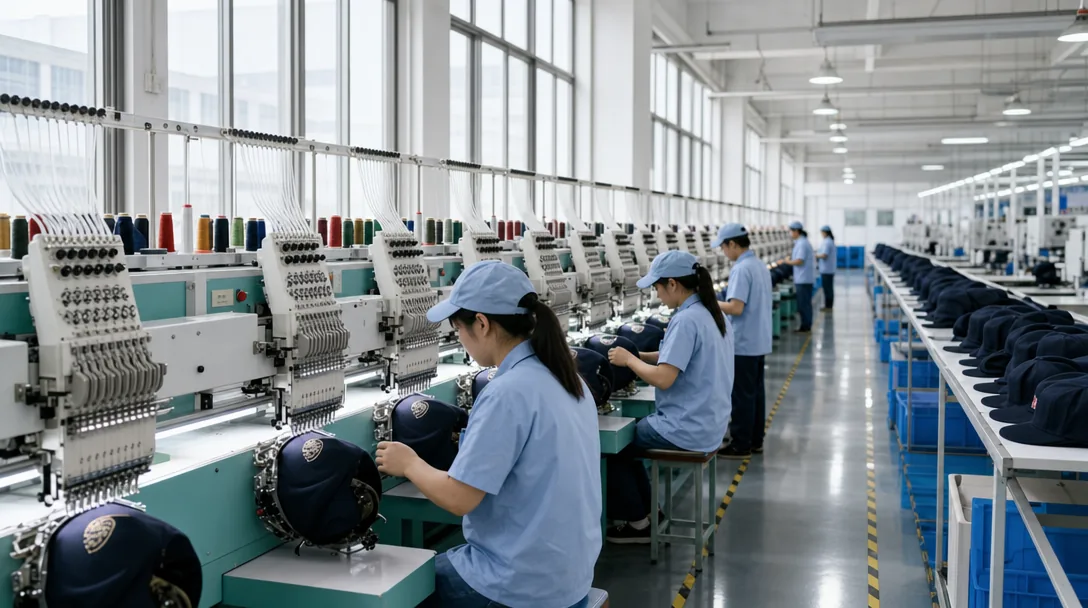
Bulk Trucker Hats Export Shipping Checklist for Custom Hat Buyers - Cost & MOQ Breakdown - Supplier Checklist
Read article →We hope this guide demystifies recycled polyester cap manufacturer bulk: a 2026 b2b sourcing guide - cost & moq breakdown and helps you move forward with confidence. If you have questions specific to your project, our English-speaking sales engineers are one message away.