
Negotiating with a China Hat Manufacturer: 12 Tactics That Actually Work - 2026 Buyer's Guide - 2026 Buyer's Guide - Supplier Checklist
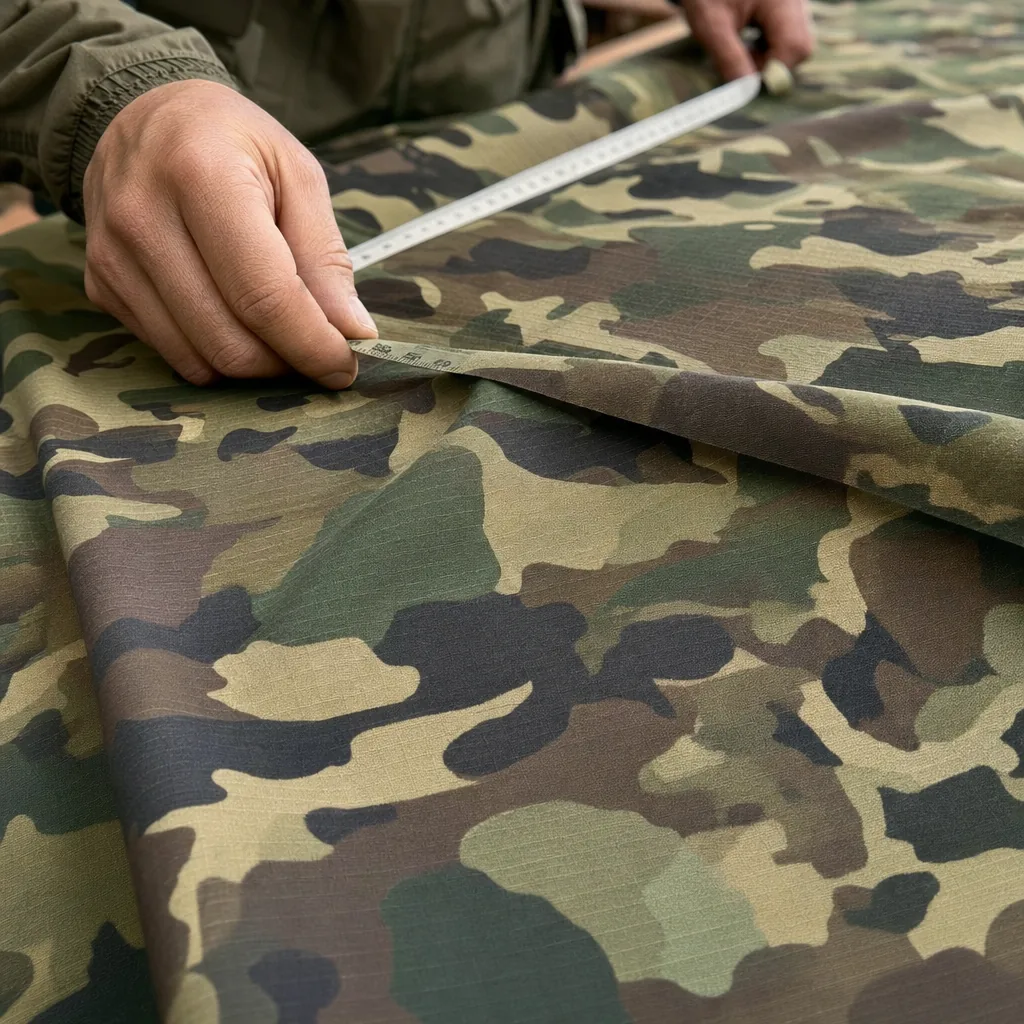
Every week, our sales team answers detailed questions about negotiating with a china hat manufacturer: 12 tactics that actually work - 2026 buyer's guide - 2026 buyer's guide - supplier checklist. We wrote this guide so that wholesalers, streetwear brands, corporate buyers and promotional resellers can compare options with full information, and avoid the traps that show up only after production has started.
The negotiating dynamic factories actually see
The first quote from a China cap factory is usually a risk quote, not the real floor. On orders under 500 pcs per color, many factories quietly load 12% to 25% into the price to cover sampling revisions, embroidery re-digitizing, trim minimums, carton splits, and the very real chance the buyer disappears after ten days of back-and-forth. Once the program is 2,000 to 5,000 pcs on one approved tech pack, that cushion often compresses to 6% to 12% because fabric yield, line balancing, and raw-material booking are easier to control. If you understand that before you negotiate with chinese hat manufacturer partners, the conversation gets sharper: stop asking for a generic discount and start asking which risk variables can be removed so the factory can release margin. Factories do not price enthusiasm; they price operational drag. A 300-piece acrylic snapback with flat embroidery, one woven label, and one FOB shipment is inconvenient but manageable. The same 300 pcs split across three colorways, with metallic thread, custom inside taping, barcode stickers, individual polybags, and DDP delivery to two warehouses becomes expensive because every add-on adds handling minutes, QA exposure, and leftover trim risk. The fastest way to move price is to trade away cost drivers a merchandiser can recalculate immediately: cut thread changes from six colors to four, standardize visor stickers, consolidate SKUs, or shift from DDP to FOB Ningbo. A blunt demand for 10% off usually just gets hidden somewhere else.
Buyers get better movement when they force the quote onto technical ground. Ask whether the shell fabric is 108x58 cotton twill at 260 gsm, brushed chino closer to 245 gsm, or 600D polyester; confirm whether the embroidery allowance is based on a 5,000-stitch side logo or an 8,000-stitch front-crown file running on Tajima, Barudan, or ZSK heads. Check whether the woven label price includes Pantone TCX matching, what Delta-E tolerance is accepted on dyed components, whether the carton cost assumes mixed SKUs, and whether freight is quoted FOB Ningbo, FOB Shanghai, or DDP with duty paid. A real factory can answer those points quickly; a trader padding margin usually cannot. That questioning matters because it signals that you understand where money actually leaks on the production floor. Clean tech packs, approved vector artwork, realistic lead times of 30 to 45 days after sample approval, and workable terms like 30% deposit and 70% against copy B/L usually reduce contingency pricing faster than aggressive language. Factories will concede margin sooner to buyers who look repeatable: forecasted replenishment, controlled revisions, stable labeling specs, and a reasonable inspection standard such as AQL 2.5. One repeat PO with the same bill of materials is worth more than squeezing $0.20 off a single cap and forcing the supplier to rebuild the process on the next order.
Tactic 1-3: MOQ and quantity flexibility
MOQ talks are only meaningful after the spec is frozen. If the supplier is quietly changing crown fabric, embroidery stitch count, closure, or packaging between price tiers, you are not seeing a quantity ladder; you are seeing three different hats. When you negotiate with chinese hat manufacturer quotes, ask for the same bill of materials priced at 100, 300, and 1,000 pieces from the first RFQ. For a standard 6-panel structured baseball cap in 100% cotton twill, 21s x 21s, around 270 gsm, with 3 mm sandwich piping, flat embroidery up to 8,000 stitches, buckram front panels, and a nickel-free metal buckle, a realistic FOB Zhejiang range is about $3.90-$4.60 at 100 pieces, $3.00-$3.50 at 300, and $2.30-$2.90 at 1,000. The drop comes from fixed costs being spread properly: paper pattern work, embroidery digitizing, thread setup, cutting markers, and sewing line balancing. If the gap from 300 to 1,000 pieces is only $0.10-$0.15, I usually assume one of two things: margin is padded, or the factory intends to downgrade trim or workmanship after sampling.
The most practical MOQ concession is SKU consolidation, not bullying the factory into a fantasy minimum by color. A 300-piece order is much easier to run as 3 colors x 100 when the shell fabric, buckram, visor board, sweatband, eyelets, seam tape, and back closure are identical, because the cutting room can spread one fabric program and the sewing floor keeps bundle flow intact. The real cost is in changeovers: Tajima or Barudan embroidery heads stopping for thread swaps, relabeling size stickers and care labels, resetting heat-transfer jigs, and breaking carton assortments. Once you add different back hits, custom inner taping by color, or separate woven labels for each SKU, the working MOQ climbs fast even if the total order quantity looks healthy on paper. Another lever that actually works is stock-lot fabric. Partial rolls of brushed cotton twill, canvas, or 600D recycled polyester from canceled programs can trim material cost by 8%-15%, often saving $0.20-$0.35 per cap at 300 pieces. That saving is only real if the mill lot is consistent, the shade is held within Delta-E 1.5-2.0 to approved Pantone TCX, and the final inspection stays at AQL 2.5 instead of becoming a dumping ground for off-shade goods.
Tactic 4-6: Sample fee and setup cost
Put the refund trigger for samples on the PI, not in a WeChat promise. For a standard 6-panel cap using an existing fit block and stock fabric, a realistic pre-production sample fee is usually $35 to $80 in Zhejiang or Guangdong. Once you add 3D puff embroidery, a woven clamp label, custom inside seam tape, contrast underbill, or a higher streetwear crown that needs pattern adjustment, the fee typically moves to $90 to $180. Most factories push for “refundable after 500 pieces” because the sample room loses line efficiency, trims get consumed in low volume, and a technician may spend 2 to 4 hours correcting pattern balance and visor shape. If you negotiate with chinese hat manufacturer partners on a simple build in stock 260 gsm brushed cotton twill, 240 to 280 gsm chino twill, or 75D to 150D polyester microfiber, asking for refund at 300 pieces per style-color is commercially reasonable. Write it exactly: “Sample fee refundable against first bulk order of 300 pcs per style/color.” If the wording says only “refundable after order,” expect a dispute when bulk is booked.
Setup charges expose whether the quote is disciplined or padded. Front-logo embroidery digitizing is not a big-ticket cost: a usable DST file for Tajima, Barudan, or ZSK machines at roughly 6,000 to 10,000 stitches normally costs $8 to $25 in China, sometimes less if the factory digitizes in-house. Ask for the first digitizing file free, and agree that new charges apply only if you materially change the artwork after approval—new outline, different stitch direction, resized logo, or added puff foam layer. If the stitch path stays the same and you only change thread colors using Madeira or Gunold equivalents, a second digitizing fee is hard to justify. Apply the same rule to color matching. For the first approved colorway, ask for one free physical Pantone match on shell fabric, visor sandwich, top button, and embroidery thread, referenced to Pantone TCX or coated standards, with acceptance defined under D65 lighting and a Delta-E tolerance agreed in advance. Extra Pantone-sensitive variants can reasonably cost $10 to $30 each, especially when the mill has to submit lab dips, re-dye trims, or remake binding tape.
Tactic 7-9: Payment terms and currency
Payment terms decide whether your margin stays in inventory or in your bank account. After two or three clean POs—shipped on time, no bulk fabric or embroidery claims, and invoices paid exactly as agreed—push past the standard 30% deposit / 70% before shipment model. With a Zhejiang cap factory, the first realistic move is usually 30% deposit and 70% due net 15 days from B/L date; if volume stays steady for another season, net 30 on the balance is reasonable. True open account is uncommon unless annual spend is already around $150,000 to $300,000 and the supplier’s finance team has evidence of repeatability across multiple styles, not just one successful run. On a $25,000 custom hat order, delaying the final $17,500 by 15 days often improves cash flow more than grinding for another $0.03 per cap. If you want to negotiate with chinese hat manufacturer finance teams effectively, show them risk data: payment history, reorder intervals, claim rate, and a rolling 6- to 12-month forecast. Sales can argue your case; finance signs off based on exposure.
Currency terms deserve the same discipline as unit price because this is where negotiated savings quietly disappear. For any PO above roughly $20,000, the PI should state the quote currency, the fixed FX basis, and a validity window—typically 15 to 30 days. Most cap inputs, including 12 oz cotton twill, sweatband yarn, metal buckles, and Tajima embroidery thread, are purchased in RMB even when the quote is issued in USD. If the factory leaves exchange treatment vague, it can reopen price after sample approval, lab dip confirmation, or trim booking and recover the discount you thought you won. A 2% USD/CNY swing can erase a $0.10 to $0.12 per cap concession on a 10,000-piece order. The cleanest clause is straightforward: quote in USD, state the assumed exchange rate, and define whether price is locked to PI date, deposit receipt date, or bulk material booking date. Also specify whether buyer-side delays—Pantone TCX approval, embroidery strike-off signoff, revised artwork, or packaging changes—extend validity or trigger repricing. On first orders, milestone-backed protection is sensible for non-resalable builds such as brushed chino dad caps, 600D recycled polyester truckers, or fitted styles with custom woven labels; it will not replace AQL 2.5 inspection, but it forces tighter documentation before you loosen terms.
Tactic 10-12: Long-term commitment leverage
Real leverage starts when you give the factory something it can plan against: annual volume broken into call-offs, not vague promises about "scaling." If you want to negotiate with chinese hat manufacturer teams without triggering defensive quoting, trade predictability for capacity and material efficiency. A factory quoting a standard 6-panel cotton twill cap at $4.80 FOB Ningbo on 3,000 pieces may realistically move to $4.35-$4.55 once the program reaches 12,000-20,000 units per year across repeat SKUs, because it can reserve Tajima or Barudan embroidery time, lock sewing-line loading, and buy shell fabric, buckram, sweatband tape, visor board, and plastic snap closures in bulk. Put the commitment in writing: Q1 3,000 pcs, Q2 3,500 pcs, Q3 2,500 pcs, Q4 3,000 pcs, with a +/-10% tolerance and reorder notice at least 45 days before ship date. That changes the conversation from one PO at a time to annual utilization, which is why MOQ resistance often softens on repeat styles.
Exclusivity only has value when the protected scope is narrow enough to enforce and the volume is high enough to compensate for lost opportunities. In real cap manufacturing, fewer than 5,000 pieces per year per design family rarely justifies meaningful protection from a competent supplier. Do not ask for broad language like "no other U.S. streetwear customers." Define the protected package exactly: crown pattern, visor curve, Pantone TCX colorway, 12 oz cotton twill or 600D polyester, embroidery file, undervisor color, woven label placement, closure type, and trim set, for a fixed 12-month period. That wording maps directly to the tech pack, sample approval, and production file, so the factory can actually control it. The better concession is often operational, not cosmetic: waived repeat sampling fees, reduced pattern amortization, fixed FOB pricing for two quarters, and priority booking in August through October when nominal 30-day lead times easily stretch to 45-60 days.
Forecast discipline is where long-term commitment turns into real commercial value. A 6- to 12-month rolling forecast with quarterly true-ups lets the supplier reserve dye lots, buckram, sweatband stock, embroidery capacity, and finishing slots before the line gets congested. The paper savings may look small—often just $0.05-$0.12 per cap—but the bigger win is avoiding rush trim substitutions, split lots, and airfreight when launches cannot move. It also protects color consistency: once the original fabric lot is gone, a re-dye can introduce Delta-E drift that becomes obvious under retail lighting, especially on black, navy, and dark olive programs. Our standard practice is to schedule forecast-backed accounts differently because they run cleaner through inline QC and AQL 2.5 final inspection. If the supplier resists a deeper unit-price cut, push for execution advantages instead; saving a launch date is usually worth more than another $0.08 off the cap.
What NOT to negotiate
Never trade away the QC floor. On custom caps, `AQL 2.5` final inspection is standard, not an upsell, because a single bad 5,000-piece shipment can erase the savings from shaving `$0.08-$0.15` off FOB price. The expensive failures are boringly predictable on the factory floor: embroidery registration drifting past `1.0 mm` on `Tajima` or `Barudan` heads, visor sandwich piping missing approved `Pantone TCX` by more than `Delta-E 1.5`, front buckram quietly downgraded from `280 gsm` to `230 gsm`, or sweatband topstitch puckering after capping and carton compression. If a supplier offers a lower quote in exchange for `AQL 4.0`, fewer inline checks, or “worker self-inspection,” they are not cutting cost; they are pushing defect risk onto your warehouse, your customer service team, and your chargeback line. When you negotiate with chinese hat manufacturer partners, lock inspection standard, approved construction, and tolerance table first, then bargain on levers that do not damage output: marker efficiency, repeat-order pricing, carton optimization, or `FOB` versus `DDP` structure.
Do not concede inspection transparency, and do not chase unrealistically soft payment terms on fully custom programs. A capable cap factory should accept third-party inspection from `SGS`, `Intertek`, or `Bureau Veritas`, and it should be able to show current `sedex-audit-cap-supplier-guide.html">BSCI 2.0` or `Sedex SMETA 4-Pillar` audit status plus basic chemical compliance for prints, coatings, and metal trims. Pushback usually signals real production risk: embroidery density set too high for `ZSK` heads, needle cuts on brushed cotton twill, logo placement drifting beyond `±2 mm`, or buckle plating that will not survive salt-spray expectations. “Internal inspection only” removes the last neutral checkpoint before balance payment and cargo release, which is exactly when problems get hidden. The same rule applies to deposits. For custom headwear, `30/70` is normal because fabric booking, embroidery digitizing, woven labels, custom closures, and sampling all consume cash before bulk sewing starts. A factory casually offering `10%` down on a complex order is often covering weak order flow, unstable capacity, or margin they plan to recover elsewhere through substitution or shortcuts. Better negotiating wins come from cleaner tech packs, annual volume commitments, standard lead times, simplified packaging, or call-off scheduling. Do not squeeze the factory’s control system or working capital so hard that it starts solving your price target with lower-grade materials and hidden process cuts.
How factories signal genuine vs. fake price drops
A genuine cap price reduction always ties to a named engineering change on the BOM, not a salesperson’s cleaner spreadsheet. If a factory cuts 8% to 15%, you should be able to trace the savings line by line: 320 gsm brushed cotton twill downgraded to 260 gsm regular twill, 3D puff embroidery on Tajima or Barudan heads converted to flat fill, stitch count reduced from about 10,500 to 7,200, 1.8 mm PE visor board changed to 1.5 mm, or custom-printed polybags removed in favor of bulk-packed 5-layer export cartons. When you negotiate with chinese hat manufacturer teams, push for a revised spec sheet, not just a revised total. The document should show fabric gsm, crown structure, buckram grade, sweatband composition, closure type, embroidery stitch count, label application, and packing method. If the supplier cannot mark exactly what changed, the quote is not cheaper in any meaningful sense; it is simply less transparent.
Fake price drops are usually frictionless on paper and expensive in reality. “Same cap, same logo, same packing, better price” almost never holds unless cotton prices moved sharply, exchange rates shifted, or your volume crossed a real efficiency break. More often, the reduction is buried in places buyers miss until inline inspection or final random check: lower-density buckram, lighter fusing in the front panels, sweatband topstitch cut from 2 rows to 1, Pantone matching drifting beyond Delta-E 2.0, or embroidery moved to a weaker subcontract line with unstable thread tension. Those shortcuts show up as twisted panels, wavy seams, poor brim memory, loose trims, and logo inconsistency that struggles to pass AQL 2.5 appearance criteria. The cleanest test is to demand side-by-side quotations for original spec and revised spec, then ask for ladder pricing at 300, 500, and 1,000 pieces. A credible factory can explain savings in real terms—typically $0.18 to $0.35 per cap from better marker yield, reduced machine changeover, and more efficient carton utilization—not vague “special support” that later turns into claims or rework.
Frequently Asked Questions
How long does production take?
Sampling takes 7 to 12 days. Bulk production runs 20 to 30 days depending on quantity, fabric availability and decoration complexity. Inspection and packing adds another 3 to 5 days before shipment.
Do you support sustainability certifications?
Yes. We work with GOTS organic cotton, GRS-certified recycled polyester, OEKO-TEX Standard 100 fabrics, and are BSCI and Sedex audited. Certification documentation can be provided per order.
What is the minimum order quantity (MOQ) for custom hats?
Our standard MOQ is 100 pieces per design and color, with sampling available from 1 piece. For complex multi-color logos or premium fabric upgrades, the MOQ can be lowered with a small per-piece surcharge.
What logo decoration techniques do you offer?
3D puff embroidery, flat embroidery, woven patch, leather patch, PVC patch, screen printing, sublimation, applique and laser etching, all in-house with no subcontracting.
Can I order a sample before bulk production?
Yes. We strongly recommend approving a pre-production sample before mass production. Samples are charged at 35 to 60 USD each plus express shipping, fully refundable against confirmed bulk orders over 500 pieces.
How does ordering baseball cap custom embroidery work?
When evaluating baseball cap custom embroidery, the key considerations are construction quality, decoration capability, MOQ flexibility and lead time. (4) Sample fee refundable against orders above a threshold (500 pieces typical, ask for 300). (5) Embroidery digitizing free on first design, paid only on revisions. (6) Free physical Pantone matching for first colorway, paid for additional Pantones. Factories quote with margin to absorb negotiation. First quote typically includes 15-25% margin headroom on smaller orders,…
What should buyers know about best hat embroidery machine?
When evaluating best hat embroidery machine, the key considerations are construction quality, decoration capability, MOQ flexibility and lead time. (4) Sample fee refundable against orders above a threshold (500 pieces typical, ask for 300). (5) Embroidery digitizing free on first design, paid only on revisions. (6) Free physical Pantone matching for first colorway, paid for additional Pantones. Factories quote with margin to absorb negotiation. First quote typically includes 15-25% margin headroom on smaller orders,…
How does ordering custom dad hat embroidery work?
When evaluating custom dad hat embroidery, the key considerations are construction quality, decoration capability, MOQ flexibility and lead time. (4) Sample fee refundable against orders above a threshold (500 pieces typical, ask for 300). (5) Embroidery digitizing free on first design, paid only on revisions. (6) Free physical Pantone matching for first colorway, paid for additional Pantones. Factories quote with margin to absorb negotiation. First quote typically includes 15-25% margin headroom on smaller orders,…
What should buyers know about best baseball caps for men?
When evaluating best baseball caps for men, the key considerations are construction quality, decoration capability, MOQ flexibility and lead time. Factories quote with margin to absorb negotiation. First quote typically includes 15-25% margin headroom on smaller orders, 8-15% on larger orders. Knowing this changes how you approach the conversation — you're not asking for a discount, you're testing whether the deal fits both sides. (1) Ask for tier pricing at multiple quantities (100, 300, 1000) up front; reveals real…
How to negotiate prices with a Chinese manufacturer?
Identify your ideal price range and walk-away point. Determine which terms (e.g., payment terms, lead time, or quality standards) you are willing to negotiate. Have alternative suppliers as backups in case negotiations don't go as planned.
Is it common to haggle in China?
In China, it's a tradition to ask for (and mostly give) a discount. Shopping in China requires haggling but have fun with it. If this is fun for you then it's probably fun for them too. As soon as it becomes nasty or, if you insult the vendor or their products, then you've lost and you're not going to get a deal.
How to negotiate price with Chinese suppliers?
Understand and respect Chinese business culture. Research suppliers and develop a negotiation strategy. Set clear goals and maintain flexibility. Leverage long-term commitments for better pricing. Confirm all agreements in writing and implement quality control measures.
How to negotiate price with manufacturer?
Get Multiple Quotes and Use Them Strategically. ... Negotiate Total Landed Cost, Not Just Unit Price. ... Negotiate Payment Terms That Protect Both Sides. ... Negotiate Quality Standards, Not Just Price. ... Build the Relationship and Negotiate Better Over Time.
Ready to start your custom hat project?
Send us your tech-pack, sketch or even just an inspiration photo. We will respond with a detailed quotation and digital mock-up within 24 hours.
Request a free quoteRelated guides
Custom Leather Patch Hat Low Minimum: A 2026 B2B Sourcing Guide
Read article →
Mens Beanies: Properties, Costs and How to Spec It Right
Read article →
Custom Rope Hats: Manufacturing, Materials and Bulk Pricing (2026 Update)
Read article →Sourcing custom hats does not have to be complicated. With the right manufacturing partner, clear specifications and a small upfront investment in sampling, you can launch a retail-quality product in 30 to 45 days.