
Merino Wool Beanie: Properties, Costs and How to Spec It Right (2026 Update) - 2026 Buyer's Guide
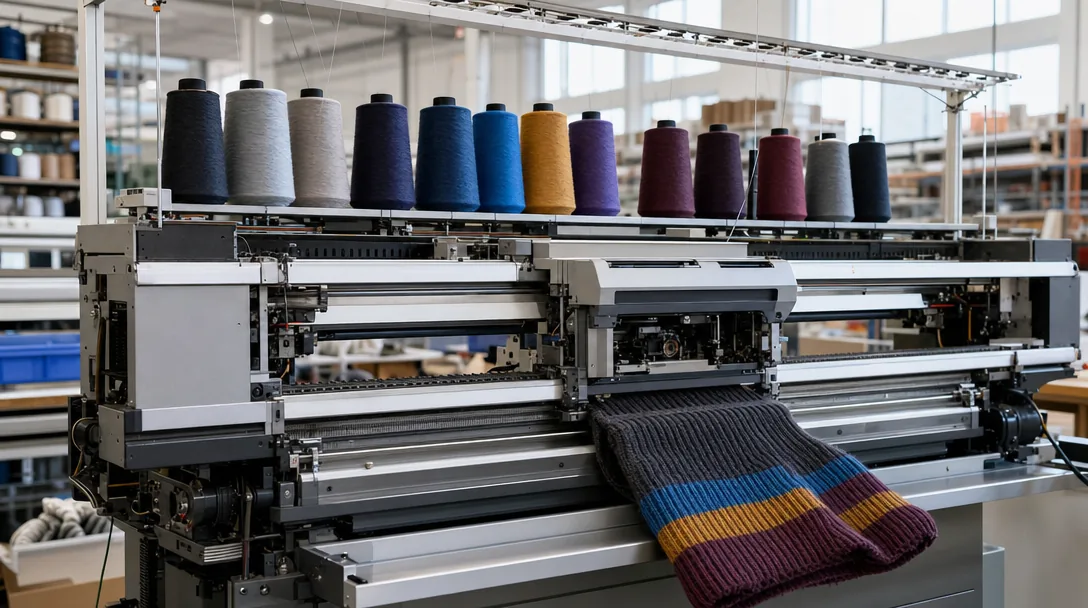
Every week, our sales team answers detailed questions about merino wool beanie: properties, costs and how to spec it right (2026 update) - 2026 buyer's guide. We wrote this guide so that wholesalers, streetwear brands, corporate buyers and promotional resellers can compare options with full information, and avoid the traps that show up only after production has started.
Acrylic Beanie
Acrylic beanies are the cost-control option when the brief cares more about margin discipline than climate regulation. A workable spec starts with the knit recipe, not the silhouette: 100% acrylic staple yarn in 28Nm/2 or 32Nm/2, knit at 7GG for a bulkier winter hand or 12GG for a cleaner retail face, with finished weight locked at roughly 75 to 110 grams depending on cuff depth and crown height. Buyers who ask for a "standard beanie" usually end up comparing mismatched constructions, so write down gauge, stitch structure, body width, crown depth, cuff height, and whether the hat is 1x1 rib, 2x2 rib, jersey, cable, or jacquard. Decoration needs the same discipline. A 6,000 to 10,000 stitch front logo on a soft 80-gram body can distort the cuff, cause tunneling, or pull the face off grain unless the knit is steamed, relaxed, and properly backed before it goes under Tajima or Barudan embroidery heads. Compared with a merino wool beanie, acrylic holds shape more predictably, hits brighter synthetic shades, and is easier to cost across replenishment runs, but it does not manage moisture, odor, or next-to-skin comfort at the level of 19.5-micron or 17.5-micron merino.
FOB pricing looks simple until the spec gets loaded with avoidable extras. In Zhejiang knitting factories, a basic cuffed acrylic beanie usually lands around $1.10 to $2.20 FOB China at 300 to 500 pieces per color, but full jacquard artwork, recycled-content yarn, satin lining, custom melange, woven label programs, or hand-tied poms can move the same hat past $2.80 quickly. Acrylic also needs tighter color control than many buyers expect. I would freeze color against Pantone TCX or TPX references, require approved lab dips, and hold production shade variation to Delta-E 1.5 or better, because low-cost acrylic lots are prone to visible drift between dye batches. The common factory-floor failures are barre, poor rib recovery, top-seam grin, cuff torque, harsh hand from low-grade fiber, and pilling after early wash cycles. QC should be written around finished measurement tolerance of plus or minus 0.5 inch, seam security, embroidery registration, odor, colorfastness, and carton assortment, then inspected at AQL 2.5. At CrownsForge, acrylic is the practical answer for promo, school-spirit, and price-led winter programs; if the brief prioritizes thermal comfort, lower itch, and a stronger natural-fiber story, a merino wool beanie is usually the better specification even with a materially higher FOB.
Cotton Beanie
Cotton beanies are usually cut-and-sew knit programs, not full-fashion knitting like a true merino wool beanie, and that difference matters in both fit stability and quality control. Most suppliers start from tubular single jersey or 1x1 rib at 180-240 gsm for lighter fashion beanies, then move to 280-340 gsm for double-layer winter styles or brushed-back fleece constructions. The sewing is routine: body panels are cut, crown seams are closed on a 4-thread overlock, and the opening is turned with a self-band or cuff. The real failure point is dimensional movement after wet processing. In cotton jersey, I regularly see 3% to 5% shrinkage after reactive dyeing and compacting, then another 2% to 3% after the first domestic wash if preshrink settings are not locked down. A usable tech pack should call out fiber content, finished gsm within +/-5%, piece weight, body height, opening circumference, cuff height, and post-wash measurements, not just ex-factory measurements. If the hand feel matters, specify whether the fabric is enzyme-washed, silicone-softened, peach-finished, or compacted, because these finishes change both recovery and perceived quality.
The commercial case for cotton is simple: it is cheaper, easier to source, and less seasonal than a merino wool beanie, but the savings disappear fast if you leave the specification loose. In 2026, realistic China FOB pricing is about US$1.10-US$1.70 for a single-layer beanie in stock greige fabric and standard reactive dyeing, and US$1.85-US$2.90 for double-layer, brushed-interior, or garment-washed versions. Common add-ons run roughly US$0.06-US$0.12 for a woven label, US$0.10-US$0.22 for a heat transfer, and US$0.18-US$0.40 for simple flat embroidery depending on stitch count and backing. MOQ is typically 300-500 pieces per color when the knitting mill already holds base fabric, but custom shades, washed effects, or tighter lab-dip control often move the dye-house minimum to 800-1,200 pieces per color. I would lock color to Pantone TCX with Delta-E under 1.5 for premium private-label work, require a one-wash approval before bulk, and inspect finished goods to AQL 2.5 with attention to seam grin, torque, cuff height variation, shade banding, crocking, and skew after wash. At CrownsForge, dark shades like black, navy, and bottle green get extra rubbing and perspiration fastness checks before bulk release because that is where cotton programs most often fail.
Black Beanie Hat
A black beanie exposes technical mistakes faster than brighter colors do. With a merino wool beanie, I would lock fiber composition before discussing gauge or trim, because hand feel, cuff recovery, and pilling resistance are driven more by yarn than by silhouette. For premium retail, 100% merino in the 19.5-21.5 micron range gives the softest hand and better moisture management, but it is less forgiving at the cuff and more prone to abrasion shine over time. A 70/30 or 50/50 merino-nylon blend usually performs better in Martindale and wash-recovery testing, especially on high-turn ribs. Most factories will knit black beanies on computerized flat machines in 5G, 7G, or 12G: 5G for bulky winter texture, 7G for the mainstream cuffed look, and 12G for a cleaner fashion silhouette with a tighter face. Black also needs stricter shade control than buyers assume. Wool lots can drift toward brown cast or charcoal, so the spec should call out Pantone reference, package-dyed versus fiber-dyed yarn, and an acceptable Delta-E tolerance, typically no more than 1.0-1.5 for a consistent retail run.
The spec sheet for a black merino wool beanie should be blunt and numeric: yarn count, merino micron range, gauge, stitch density, finished weight per piece, body height before cuff, cuff depth, and head-circumference tolerance. I would also require wash standard, shrinkage allowance, anti-pilling grade target, colorfastness to crocking and perspiration, and whether the crown is fully fashioned or linked after knitting. On wool programs, one showroom sample is not enough; ask for a pre-production sample and a washed sample from the same yarn lot, because bulk shrinkage can move 3%-8% if finishing tension or wash chemistry drifts. Typical MOQ is 300-500 pieces per color with stock yarn, but custom-dyed merino, woven branding, and retail packing usually push the commercial minimum into the 800-1,200 piece range. Ex-factory pricing in China is still materially higher than acrylic: roughly $1.20-$2.20 for a basic acrylic beanie versus about $3.80-$7.50 for a true merino program, with RWS or OEKO-TEX yarn, finer micron wool, and tighter shade tolerance all adding cost.
Bulk inspection is where weak black beanie programs get exposed. I would inspect at AQL 2.5 and focus on defects that often pass sales-sample review: uneven crown reduction, torque or spiraling on jersey constructions, broken elastane in the cuff rib, oil marks from needles, and pilling that appears after only a few wear cycles. Measurement stability after steaming matters as much as flat measurement at packing, because an over-relaxed cuff can change fit by more than 1 cm. Shade sorting also needs discipline; black beanies should be checked under both D65 and warm light, since off-black variation shows up immediately at receiving even when cartons looked acceptable on the line. If embroidery or patches are added, confirm the factory has separated knitting and embellishment controls, because lines running Tajima or Barudan heads can introduce oil contamination, thread dust, or metal fragments if housekeeping is sloppy. At CrownsForge, we treat black wool styles as higher-risk than heather colors for exactly that reason: the premium price of a merino wool beanie is only justified when knitting tension, washing, cuff memory, and shade consistency are all controlled in bulk, not just on the approval sample.
Slouchy Beanie
A slouchy beanie lives or dies on drop, recovery, and handfeel, so the factory process matters more than most buyers realize. The cleanest route is computerized flat knitting on 12GG to 16GG Stoll or Shima Seiki machines, then linking the crown and closing with a fully fashioned reduction so the top does not pucker like a cheap acrylic beanie. For a merino wool beanie with a true slouch profile, I usually tell buyers to specify body length at 28 to 32 cm instead of a standard 21 to 24 cm watch cap, with opening width 22 to 24 cm relaxed, single-layer or 1x1 rib cuff depending on whether they want structure at the forehead. Yarn choice changes everything: 19.5 to 21.5 micron merino gives a softer hand but needs tighter stitch control, while merino-nylon blends around 90/10 or 80/20 improve abrasion resistance and reduce bagging after wear. If the brand wants a more substantial winter hand, request 2/26Nm or 2/30Nm yarn and confirm finished weight, usually 85 to 140 grams per piece for adult slouchy styles.
The spec sheet should be more detailed than what buyers often use for a corduroy hat or bucket hat women program because knit variance is harder to hide than cut-and-sew variance. Ask the factory for yarn micron, fiber origin claim, gauge, stitch density, finished weight tolerance, wash standard, pilling grade target, color tolerance, and dimensional stability after laundering. A workable benchmark is shrinkage within plus or minus 5 percent after one gentle wash, pilling grade 3.5 to 4 minimum, colorfastness to rubbing grade 4, and shade variation controlled to Delta-E under 1.5 against approved lab dip when the color is critical. MOQ is usually 300 to 500 pieces per color for stock merino blends, but true custom-dyed merino or RWS-certified yarn often pushes mills to 500 to 1,000 pieces because dye lots are small and expensive. In China, 2026 FOB pricing for a basic single-color slouchy beanie in merino blend is typically around $3.20 to $5.80, while 100 percent fine merino with linking, branded labels, and custom Pantone TCX matching can land closer to $5.80 to $9.50 depending on gauge, yarn volatility, and order size.
Inspection needs to focus on the failures that show up after wear, not just what looks tidy in carton photos. The common defects are spiraling due to uneven tension, weak crown closure, needle lines, yarn contamination, inconsistent slouch length across size sets, and harsh finishing that makes wool feel dry or prickly. I also watch for edge rolling at the opening, seam grin after stretch, and excessive growth after a 4-hour hang test, because these are the complaints that turn into returns. Our standard practice is to check knit measurements after steaming and again after a 24-hour rest, then inspect finished goods to AQL 2.5 with special attention to weight variance and handfeel consistency lot to lot. From a sourcing standpoint, this is why a merino wool beanie decision should not be made in isolation from adjacent categories like a camouflage bucket hat or corduroy hat men's line: wool knitwear has a different risk profile, longer yarn lead times, and stricter raw material control than woven headwear, so the right supplier is the one with proven knit QA rather than just a strong cut-and-sew cap background.
Cotton Beanie Men
Most buying errors start when the PO says only “100% cotton beanie.” That is not a usable production spec. In men’s programs, the two common builds are cut-and-sew circular jersey at 180-240 gsm and fully fashioned flat knits on 7GG or 12GG machines, and they behave like different products at retail. Circular jersey tubes are softer and cheaper, but they twist more easily, show side-seam spiraling after wash, and lose cuff memory faster. Fully fashioned knits cost roughly 20% to 35% more FOB, but they hold crown shape better, link cleaner at the top, and present more like specialty retail. If the target hand feel is closer to a premium merino wool beanie, specify ring-spun combed cotton or long-staple compact-spun cotton, enzyme wash after sewing, and finished weight tolerance within plus or minus 5%. Open-end yarn may save $0.05 to $0.12 per piece, but it pills faster, looks hazy after laundering, and immediately reads as promotional grade rather than sell-through merchandise.
A competent tech pack should lock the factory on measurable points: yarn count or finished gsm, crown height, cuff depth, relaxed and stretched circumference, stitch gauge, seam type, label attachment method, and Pantone TCX reference. For piece-dyed cotton, I would set color tolerance at Delta-E 1.0 to 1.5 under D65 lighting; black, navy, and olive are the shades that drift first when the dyehouse loses control lot to lot. If the style includes folded-cuff embroidery on Tajima or Barudan heads, also define backing, maximum stitch count, and density so the logo does not tunnel the shell or crush the cuff face. In Yiwu, 2026 FOB pricing is still fairly rational: basic cut-and-sew cotton beanies at 300-500 pieces per color usually land around $1.10-$1.85, while fully fashioned styles with shaped crowns and cleaner linking sit closer to $1.90-$3.20. Add another $0.20-$0.55 for cuff embroidery, custom hangtags, recycled polybags, and carton drop testing.
The real quality failures show up after laundering, not at carton opening. On cotton beanies, I look first for seam spiraling on tubular bodies, cuff torque, lot-to-lot shade banding, shrinkage above 3% to 5%, and embroidery puckering that collapses the front during wear. If the knitting mill quietly downgraded yarn, pilling usually appears quickly in Martindale or basic abrasion testing and often becomes visible after one or two home-laundry cycles. Inspection should run to AQL 2.5 for appearance and measurement, with specific checks for colorfastness to crocking, seam extension, needle damage, oil contamination, and press shine under white light. For dark reactive shades, ask for wash-test and crocking reports before ex-factory; once goods ship, the leverage is gone. Cotton remains a practical choice for mild-weather streetwear, licensed merchandise, and promotional retail, but it is a poor substitute when the brief actually calls for a merino wool beanie for ski, winter run, or outdoor channels, where warmth-to-weight, odor control, and elastic recovery justify the higher yarn cost.
100 Acrylic Beanie
A 100% acrylic beanie is cheap only when the spec is loose; once you control yarn count, machine gauge, and finishing, cost and quality separate fast. Two suppliers can both quote “100% acrylic” and deliver very different results if one uses 28/2 anti-pilling acrylic on a 7-gauge flat machine and the other runs a lighter 32/2 yarn on 12-gauge with a softer steam set. For a standard cuffed beanie, I would lock the construction around finished weight in grams, machine gauge, yarn count, rib structure such as 1x1 or 2x2, body height before cuff, cuff depth, and crown-close method. Color also needs tighter language than most tech packs get: specify Pantone TCX, approve a physical lab dip, and set a Delta-E target of 1.5 to 2.0 for core shades, because black, navy, and heather charcoal often drift between dye lots more than mills admit. Decoration should be written as its own engineering spec; embroidery on a loose knit can tunnel, chew the ribs, or pull the logo off-center unless stitch count, underlay, backing, and center-front placement are defined in millimeters. Compared with a merino wool beanie, acrylic can imitate loft and visual bulk at roughly 35% to 60% of the FOB cost, but it still loses on moisture buffering, odor retention, and thermal comfort during active wear.
The commercial range is wide enough that vague specs get punished immediately. In China, a plain stock-color acrylic beanie at 40 to 55 grams usually lands around $1.00 to $1.70 FOB at 1,000 to 3,000 pieces, while a heavier 70 to 90 gram rib-knit version with jacquard artwork, pom-pom, woven loop label, or fold tag is more often $1.90 to $3.20 FOB. MOQ is commonly 300 to 500 pieces per color on stock yarn, but custom dyeing, marl effects, and strict brand matching usually push the practical floor to 800 to 1,000 pieces because the spinner and dye house need to cover lot minimums, wastage, and color correction. I would not release bulk without a sealed pre-production sample that confirms finished weight tolerance within plus or minus 5%, cuff depth within plus or minus 0.5 cm, and stretch recovery after 24 hours of rest.
Inspection should focus on the defects factories like to call “normal knit variation” but buyers and end users read as cheap: dropped stitches, rib misalignment, crown puckering, seam spiraling, yarn knots on the face, oil odor from finishing, lint shedding, and cuff collapse after compression packing. If the beanie carries embroidery or a patch, add checks for needle breaks, snagged loops, logo skew, and distortion around dense satin columns; a Barudan or Tajima run can still look bad if the backing and hoop tension are wrong for the knit. For private-label programs, AQL 2.5 remains the sensible baseline, especially when assorted colors are packed under deadline pressure and shade sorting gets sloppy. Acrylic also pills faster than a good merino wool beanie, so premium programs should call for anti-pilling yarn and require either a Martindale abrasion result or, at minimum, an agreed internal rub test after the first wash. Our standard practice is to treat acrylic as the right material when bright color range, easy care, and low FOB matter most, and to reserve wool for programs where lower odor retention and better thermal regulation justify the higher yarn cost.
Working with CrownsForge for merino wool beanie programs
Most merino wool beanie programs go sideways before knitting starts. The real control point is the yarn spec, because once bulk merino is dyed, you cannot negotiate your way out of a bad handfeel, loose shade tolerance, or wash instability. A usable spec should lock micron range, yarn count, ply, blend, gauge, finished weight, and color standard at the same time: for example 19.5-21.5 micron merino, 2/30Nm for a denser 7-gauge cuffed style or 2/48Nm for a finer 12-gauge body, target weight 85-110 gsm equivalent per finished hat depending on fold depth, and a Pantone TCX reference with an agreed Delta-E tolerance for repeat lots. I do not trust cone approval on wool. Approve a lab dip and a knit-down together, then run the agreed wash test and measure dimensional change, spirality, and cuff recovery after 24 hours flat. For a retail-grade merino wool beanie, under 5% shrinkage is a practical ceiling, and anything above that should be corrected at yarn or finishing stage, not argued over during final inspection.
Lead times and MOQs have to follow yarn reality, not acrylic timing. If the spinner has stock-supported shades, an opening order of 150-300 pieces per colorway is workable; once you move to custom dye lots, the efficient MOQ usually shifts to 500-1,000 pieces because mill minimums, shade variation risk, and yarn wastage become expensive fast. A straightforward proto for a cuffed merino wool beanie usually takes 5-7 working days, PPS another 4-6, and bulk 22-30 days after approvals, deposit, and yarn booking. Our standard practice is to freeze artwork only after yarn, knit-down, and color approval, because approving logos first is how buyers end up debating puckering, color cast, and panel distortion on the same sample. Decoration needs the same discipline: dense fills that look acceptable on a cap front will make fine merino pucker and go boardy. For logos under about 60 mm, woven labels, loop labels, TPU or silicone patches, or low-density embroidery on Tajima or Barudan heads are safer. Commercial FOB China pricing typically lands around $4.20-$9.80 depending on micron, gauge, RWS status, and trim package, and QC should run through tech-pack review, knit-down approval, decoration strike-off, pilot run, in-line checks, and final random inspection to AQL 2.5 with wash shrinkage, fiber-content, and elastic-recovery checkpoints included.
Frequently Asked Questions
What is the minimum order quantity (MOQ) for custom hats?
Our standard MOQ is 100 pieces per design and color, with sampling available from 1 piece. For complex multi-color logos or premium fabric upgrades, the MOQ can be lowered with a small per-piece surcharge.
Which shipping methods do you support?
We support FOB, CIF and DDP shipping. Air express for samples and small orders, sea LCL for 100 to 500 pieces, sea FCL for 5,000+ pieces. Door-to-door DDP available for US, EU, UK, Canada and Australia.
Do you support sustainability certifications?
Yes. We work with GOTS organic cotton, GRS-certified recycled polyester, OEKO-TEX Standard 100 fabrics, and are BSCI and Sedex audited. Certification documentation can be provided per order.
Can I order a sample before bulk production?
Yes. We strongly recommend approving a pre-production sample before mass production. Samples are charged at 35 to 60 USD each plus express shipping, fully refundable against confirmed bulk orders over 500 pieces.
What file format should I send for my logo?
Vector files (AI, EPS, PDF) are ideal. High-resolution PNG or JPG at 300 dpi on transparent background works as a fallback. Provide Pantone color references for accurate reproduction.
What should buyers know about black bucket hat men?
When evaluating black bucket hat men, the key considerations are construction quality, decoration capability, MOQ flexibility and lead time. Cover everything buyers ask about black beanie hat: how it's manufactured, what specs to request from a factory, typical MOQ and pricing, common quality issues to inspect for, and how this ties back to the broader merino wool beanie sourcing decision. Cover everything buyers ask about cotton beanie men: how it's manufactured, what specs to request from a factory, typical…
What should buyers know about kangol bucket hat mens?
When evaluating kangol bucket hat mens, the key considerations are construction quality, decoration capability, MOQ flexibility and lead time. Cover everything buyers ask about black beanie hat: how it's manufactured, what specs to request from a factory, typical MOQ and pricing, common quality issues to inspect for, and how this ties back to the broader merino wool beanie sourcing decision. Cover everything buyers ask about acrylic beanie: how it's manufactured, what specs to request from a factory, typical MOQ…
What should buyers know about corduroy hat womens?
When evaluating corduroy hat womens, the key considerations are construction quality, decoration capability, MOQ flexibility and lead time. Cover everything buyers ask about black beanie hat: how it's manufactured, what specs to request from a factory, typical MOQ and pricing, common quality issues to inspect for, and how this ties back to the broader merino wool beanie sourcing decision. Cover everything buyers ask about acrylic beanie: how it's manufactured, what specs to request from a factory, typical MOQ…
What should buyers know about acrylic beanie hat?
When evaluating acrylic beanie hat, the key considerations are construction quality, decoration capability, MOQ flexibility and lead time. Cover everything buyers ask about acrylic beanie: how it's manufactured, what specs to request from a factory, typical MOQ and pricing, common quality issues to inspect for, and how this ties back to the broader merino wool beanie sourcing decision. Cover everything buyers ask about black beanie hat: how it's manufactured, what specs to request from a factory, typical MOQ…
Are merino beanies worth it?
If you value sustainability, comfort, durability, and superior thermal performance, a merino wool beanie is a smart and stylish investment. Despite the higher upfront cost, the long-term benefits—including shape retention, moisture management, and odour resistance—make it a practical addition to your wardrobe.
Is merino good for a beanie?
Made for all your outdoor adventures, merino is soft on skin, easy to layer and naturally temperature regulating and odour resistant. A fitted beanie, it's perfect for wearing under hoods or helmets while out hiking, climbing, skiing or mountain biking.
Are merino wool beanies worth it?
A: Yes, Merino wool is excellent for hats because it is breathable, quick drying, and temperature-regulating, providing comfort in various weather conditions.
Is merino yarn good for beanies?
Additionally, wool has a certain level of stretch to it, making it great for beanies. However, there are different types of wool you can choose from: - Merino wool comes from merino sheep and is known to be very fine and soft. It can be used for anything from socks to hats.
Is a merino wool beanie itchy?
Merino wool is finer and softer than other kinds of wool, which makes it less itchy. Its fibers are very short in length and smaller in diameter, which makes it a whole lot softer and gentler on the skin.
Need a low-MOQ test order?
We help emerging brands launch with as few as 100 pieces. Premium fabric, in-house embroidery, retail-ready packaging.
Start a small orderRelated guides
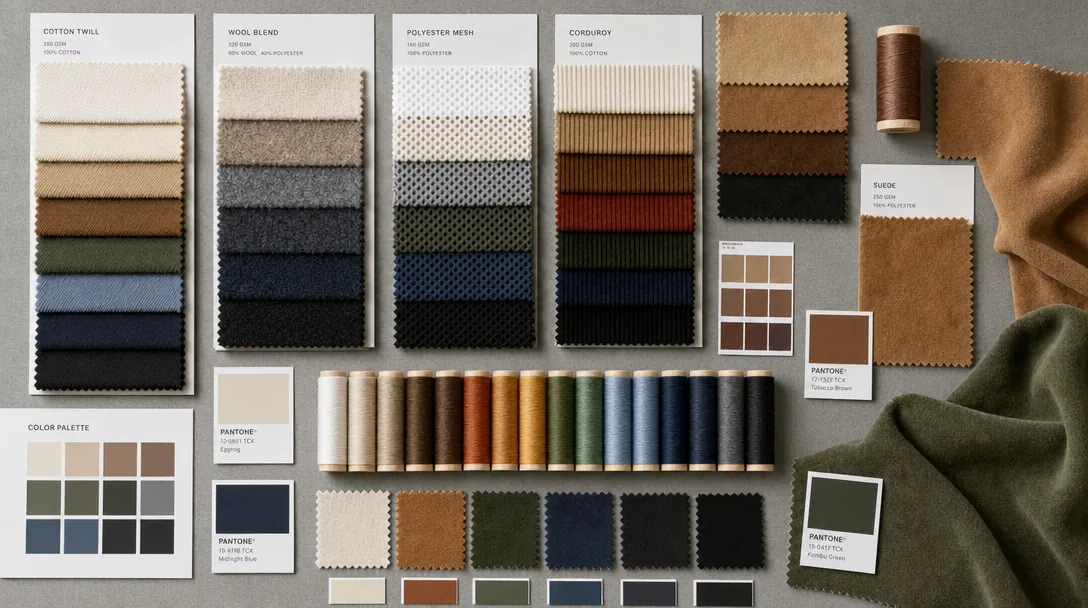
Camouflage Bucket Hat: Properties, Costs and How to Spec It Right (2026 Update)
Read article →
Refreshing a Hat Collection: A Repeat-Order Playbook for Established Brands
Read article →
Embroidery Hats Machine: When to Use It, Costs, and What to Ask Your Factory - Cost & MOQ Breakdown
Read article →We hope this guide demystifies merino wool beanie: properties, costs and how to spec it right (2026 update) - 2026 buyer's guide and helps you move forward with confidence. If you have questions specific to your project, our English-speaking sales engineers are one message away.