Men's Bucket Hat: A Vertical-Specific Sourcing Guide - Cost & MOQ Breakdown
Men's Bucket Hat: A Vertical-Specific Sourcing Guide - Cost & MOQ Breakdown is one of the most-asked questions we receive from international buyers, and for good reason. With dozens of factories competing for your order and an alphabet soup of technical terms in every supplier quote, even experienced importers can feel lost. This guide consolidates what we have learned producing custom hats for clients in 40+ countries.
Baseball Hats for Men
Baseball caps are won or lost in pattern engineering, so freeze the silhouette before you discuss trims or artwork. A 6-panel structured cap with 1.8-2.2 mm PE buckram, a washed unstructured dad cap, and a high-profile fitted crown can all carry the same logo, but they do not wear or sell the same. A usable tech pack should specify crown height in centimeters, visor length, pre-curve angle, seam allowance, eyelet construction, sweatband content, closure type, shell fabric weight, and Pantone TCX for shell, undervisor, and thread. If you are buying fitted styles, size by finished head circumference in 0.5 cm increments and approve a graded spec set before bulk; a 0.5 cm miss is enough to push returns on e-commerce orders. For embroidery, confirm file type, stitch count, underlay, pull compensation, and machine class. Tajima, Barudan, and ZSK heads do not handle 3.5-4.0 mm text or narrow satin columns the same way, especially on heavily curved front panels. That discipline matters even if the wider assortment is a men's bucket hat program, because suppliers who gloss over cap pattern specs usually take the same shortcuts on bucket crown depth and brim width.
Cost is driven less by logo size than by construction, fabric, and trim stack. A basic adjustable cap in 260-280 gsm brushed cotton twill with flat front embroidery typically lands around $2.20-$3.40 FOB China at 300-500 pieces per colorway. Move to acrylic-wool blend shell fabric, fitted sizing, woven interior taping, contrast undervisor, 3D puff embroidery, metal eyelets, or two extra logo hits, and the same program usually shifts to $4.20-$6.80 FOB. True fitted caps also need more volume because size splits hurt marker efficiency and carton ratios; 600-1,200 pieces across 4-6 sizes is a realistic opening, while adjustable caps can sometimes start at 144-300 pieces. Buyers comparing this against a men's bucket hat range should pay attention to how the factory handles MOQ logic: a supplier promising unusually low minimums often relies on stock bodies, restricted size grading, or loose tolerance control rather than a fully custom pattern.
Inspection should focus on defects that are expensive to absorb once goods land: off-center embroidery, twisted front panels, top-button drift, visor asymmetry over 3 mm, skipped stitches at the sweatband join, and fabric shade variation above Delta-E 1.5 against the approved lab dip or strike-off. On fitted caps, measure inside circumference after finishing, not only at cut stage, because heat setting, fusing, and sweatband attachment can shrink the opening by 0.3-0.8 cm. AQL 2.5 is a practical shipment standard, but for licensed sports, streetwear, or premium retail, logo placement, size accuracy, seam puckering, and panel skew should be classified as major defects. Our standard practice is to check crown symmetry on a cap block, then remeasure visor width, panel alignment, and finished opening from packed cartons, not just in-line. The same quality discipline carries straight into a men's bucket hat order: factories that cannot hold repeatable crown balance, brim geometry, and color consistency on baseball caps usually struggle even more with bucket sidewall shape and brim roll after washing or packing.
Designer Bucket Hats
Designer-level quality in a men's bucket hat is decided by material stability and round sewing accuracy, not by how elaborate the logo looks on screen. Most premium programs start with 240-320 gsm cotton twill, 10-12 oz canvas, 120-160 gsm nylon taslon, or a 55/45 wool-poly blend, then live or die on the technical spec: Pantone TCX for shell, underbrim, and binding, crown height, brim width, seam allowance, sweatband content, and acceptable tolerance. On bucket styles, I would hold brim width to +/-2 mm and circumference to +/-5 mm, because a small drift becomes obvious across a full 360-degree silhouette. If embroidery is involved, confirm whether it runs on Tajima or Barudan heads before crown assembly or after panel closing; on lightweight nylon, that decision changes puckering risk and backing choice immediately. Pattern control matters more on a men's bucket hat than many buyers expect. Stripes, monograms, and engineered prints need marker approval, panel-matching rules, and circumference placement charts before cutting starts, otherwise the artwork walks between sizes and production lots. The brim is where factories get exposed: grain skew, off-balance die cutting, and uneven brim sandwich assembly show much faster than on a 6-panel cap. Ask for brim topstitch count upfront as well—typically 3-5 rows at 5-6 mm spacing for cleaner retail execution—and specify eyelet finish, fusible weight, and underbrim construction. At CrownsForge, our standard practice is to lock these points before the first counter sample, because once the die is set and the wash recipe is approved, late changes usually cost more than the logo itself.
MOQ on a designer men's bucket hat is usually dictated by fabric and trim setup, not the silhouette. If you are using stock 240-280 gsm cotton twill, direct embroidery, stock eyelets, and a standard damask woven label, workable MOQ is often 144-300 pieces per color. Once the spec moves into custom-loomed shell fabric, all-over printed lining, branded seam tape, contrast underbrim, metal logo hardware, or applique plus chain stitch, the efficient production break point usually shifts to 300-500 pieces. In Zhejiang or Dongguan, a realistic FOB China range is about US$3.60-US$5.80 at 300 pieces for clean mid-tier quality; heavyweight canvas, garment enzyme wash, satin lining, or multi-technique decoration typically lands closer to US$6.90-US$9.50 depending on stitch count and trim source. Inspection needs to be disciplined and measurable. Brim stitch rows should stay parallel with no visible runout, side seams should not torque after pressing, and the crown-to-brim join should stay even around the full circumference. For color-controlled programs, keep crown-to-brim shade variation within Delta-E 1.5-2.0 under D65 lighting, especially when shell and underbrim are cut from different lots. I would hold production to AQL 2.5 for major defects and 4.0 for minor, measure circumference and brim width on at least 13 pieces per size, and run a post-wash wear test on any washed style. Soft interlining is the usual failure point: the hat may pass inline inspection, then collapse after one enzyme wash or a few days of retail handling if the brim fuse weight was underspecified.
Cool Bucket Hats for Guys
Shape is the first thing buyers notice in a men's bucket hat, and it is usually where cheap product gives itself away. A retail-grade build depends on four components working together: top crown, side band, brim, and sweatband. For most commercial patterns, the brim should use two shell layers plus a 1.5 to 2.5 mm needle-punched or nonwoven interlining; that insert determines brim drop, rebound, and how badly the edge twists after washing. In practical sourcing terms, 8 to 12 oz cotton twill, enzyme-washed chino, 210 to 260 gsm canvas, and 120 to 160 gsm nylon taslon are the safest shells for men’s programs. Below that range, the hat tends to collapse after laundering; above it, the crown sits bulky and traps heat. Brim stitching also needs to be specified, not left to factory habit. Six to eight rows at 5 to 6 SPI usually gives the cleanest balance of stiffness and appearance, while the 4-row construction common on low-cost imports often reads flat and unstable on head. If shade matching matters, approve Pantone TCX against actual shell fabric under D65 lighting and hold bulk fabric to Delta-E below 1.5, especially on black, navy, olive, and other dark seasonal colors.
A usable tech pack for a men's bucket hat needs far more than a logo and one flat sketch. Lock the finished crown height, brim width, head circumference, top button yes or no, eyelet material, brim edge finish, seam binding method, and sweatband spec before sampling starts. “One size” is where fit claims begin, so 58 cm, 60 cm, and 62 cm grading is a safer adult size run, with finished circumference held to +/-0.5 cm. If embroidery is included, specify stitch count and machine assumptions early: a 6,000 to 9,000 stitch logo runs very differently on washed twill or soft nylon than on a structured cap panel, and Tajima or Barudan heads need proper underlay and pull compensation to avoid tunneling on the curved side band. Cost is driven more by fabric, trim, and finish than by pure sewing minutes. In Zhejiang, a basic cotton twill bucket hat with one embroidery position typically lands around $2.10 to $3.40 ex-factory at 144 to 300 pcs per color; washed retail quality is more often $3.60 to $5.80, while water-repellent nylon, metal eyelets, printed seam tape, or contrast binding pushes cost into the $6.20 to $9.50 range. First proto charges usually run $45 to $90 once pattern making, digitizing, and wash testing are broken out correctly.
The failure points in this category are predictable, which is exactly why vague specs become expensive. The defects I watch first are brim waviness from uneven interlining shrinkage, twisted crowns caused by off-grain cutting, eyelet puckering, embroidery distortion on soft shells, and size drift that still passes measurement tolerance but fails at retail. For a men's bucket hat, I would hold brim symmetry within 0.3 cm side to side, verify consistent stitch count across every brim row, and require colorfastness of at least grade 4 dry and 3-4 wet on dark washed fabrics. Those are not academic numbers; the product is judged on silhouette from three feet away before anyone notices the logo detail. Inline inspection should catch most sewing faults, but final inspection still needs AQL 2.5 on major defects, assortment verification by size and color, and a carton drop check before shipment. Buyers who brief a bucket like a standard baseball cap often end up with acceptable decoration on an unacceptable shape, which is one of the most common and most preventable sourcing mistakes.
Funny Bucket Hats
Funny graphics on a men's bucket hat live or die on decoration method, not the joke itself. For 220-260 gsm cotton twill, brushed chino, or washed canvas, embroidery is still the safest option for short slogans, mascot heads, and chest-pocket-scale icons, but keep each hit around 8,000 stitches and under 70 mm wide if you want the crown to stay smooth. Once buyers push dense fills past 10,000 stitches on unstructured panels, you start seeing puckering, tunneling, and brim distortion after wash. On Tajima or Barudan machines, a competent digitizer will usually build 0.35-0.4 mm pull compensation, reduce underlay on soft fabric, and avoid tiny serif text below 4.5 mm cap height. If the humor depends on meme-style artwork, gradients, or photo detail, sublimation on 150D-300D polyester gives cleaner reproduction than plastisol or heat transfer pressed onto dark cotton, especially across curved brim sections where low-cost prints often crack or feel rubbery.
Sampling gets expensive when the tech pack is vague. A usable spec sheet should lock crown height, brim width, eyelet quantity, sweatband construction, artwork placement in millimeters, and Pantone references for shell, binding, and labels; calling a color simply “black” is how you end up with crown and brim panels drifting beyond Delta-E 1.5 between dye lots. For adult sizing, 58 cm circumference with +/-0.5 cm tolerance is the standard base size, and S/M or L/XL should be defined in centimeters, not left to retailer interpretation. In Yiwu, MOQ for a custom cut-and-sew men's bucket hat is usually 144-300 pieces per colorway in cotton twill, while stock-body embroidery programs can start at 50-100 pieces. Real FOB pricing is roughly $2.20-$3.40 for a basic embroidered style, $3.80-$5.80 for full sublimation with lining, and $4.50-$7.00 once you add contrast underbrim, enzyme wash, woven labels, or custom inside binding. Before shipment, inspection should run at AQL 2.5 with focused checks on artwork rotation off seam center, brim waviness from uneven fusing, skipped brim topstitch rows, seam slippage, crocking, and color consistency between crown and brim.
Bucket Hats Festival
Festival buyers should engineer a men's bucket hat around brim recovery, circumference control, and pack-out pressure, not just front-end appearance. The failure points are predictable: waviness from uneven brim fusing, twisted side seams, and size drift that turns a nominal 58 cm hat into a 56.8 cm wearable return. A production-ready spec should lock crown construction at 4 or 6 panels, define brim width by position, and call out finished head circumference with ±0.5 cm tolerance. For shell fabric, the practical range is 210 gsm cotton twill for promo and music merch, 230 to 260 gsm washed canvas for heavier hand feel, or 110 to 130 gsm nylon taslon when crush-packability and quick drying matter. Brim structure should specify 80 to 120 gsm nonwoven or light woven interlining, concentric stitch rows at 6 to 8 mm spacing, and consistent SPI so the brim does not ripple after carton compression. I would also require Pantone TCX references, sweatband composition, eyelet type, and wash standard in the tech pack, because “black cotton bucket hat” is not a usable factory instruction.
Decoration and MOQ are where costing gets real fast. On soft crowns, direct embroidery has a narrow safe window: a 5,000 to 8,000 stitch logo usually runs clean on Tajima, Barudan, or ZSK heads over midweight cotton, but once you push past 10,000 stitches on lightweight shell fabric, puckering and panel distortion become likely unless the digitizer reduces fill density, adjusts underlay, and swaps backing weight. On nylon or very soft washed cotton, a woven patch or twill appliqué is often the cleaner option. For sourcing, stock 210 gsm twill or standard washed cotton usually supports MOQs around 144 to 300 pieces per colorway, while custom-dyed fabric, reflective trims, sublimated polyester, or GRS-certified recycled nylon with transaction certificate support typically pushes the working MOQ to 500 to 1,000 pieces. Current Zhejiang FOB for a plain men's bucket hat at 300 pieces is roughly US$2.10 to US$3.40; add pigment wash, woven labels, metal eyelets, custom tape, or embroidery and the range usually lands around US$3.80 to US$5.20. Final approval should be tied to AQL 2.5 inspection, at least 10-piece measurement checks per lot, and lab dip acceptance at Delta-E 1.5 or tighter against the approved swatch.
Festival Bucket Hat
Most festival failures come from cheap spec decisions, not the silhouette. A men’s bucket hat for concerts, brand activations, or summer drops needs to handle heat, packability, and decoration without looking crushed by noon. The baseline construction is usually a 4-panel or 6-panel crown with a circular top, a 5.5-7.0 cm brim, and either a self-fabric sweatband or a 20 mm cotton twill sweat strip. Fabric has to match the artwork: 180-240 gsm cotton twill gives the cleanest retail hand and holds flat embroidery better, 210D polyester is the budget choice for sublimation, and nylon Taslon or crinkle nylon works better for lightweight technical capsules where fast drying matters. Lock the tech pack before asking for price: crown height, finished inside circumference in centimeters, brim width tolerance, eyelet count, SPI, interlining weight, Pantone TCX references, label language, and compliance requirements such as REACH or azo-free testing. If you are printing pale grounds or all-over reactive artwork, set a Delta-E target under 1.5, because even small shade drift becomes obvious outdoors under direct daylight.
MOQ usually follows fabric and decoration complexity, not the fact that it is a bucket. A basic men’s bucket hat in stock 100% cotton twill with a woven label and flat embroidery normally starts at 144-300 pieces per colorway, with realistic FOB China pricing around US$2.10-US$3.40 depending on stitch count and fabric weight. Add garment wash, contrast binding, metal eyelets, printed seam tape, or higher-density embroidery on Tajima or Barudan heads, and the same style typically lands at US$3.80-US$5.20 FOB. Reversible builds, hidden zipper pockets, or full-panel sublimation usually push MOQ to 300-500 pieces because marker efficiency drops and sewing minutes climb fast. Fit should be specified by exact inside circumference, not vague S/M or L/XL; 58 cm is standard, but 60 cm and 62 cm are worth offering if the customer overlaps with fitted-cap buyers. For QC, check brim symmetry within +/-3 mm, even topstitch spacing, eyelet alignment, and interlining rebound after folding. AQL 2.5 is standard, but I would still require a wear-and-pack test: 30 minutes on head, fold into a pocket, reopen, then inspect for seam puckering, print ghosting, brim memory, and embroidery distortion.
Working with CrownsForge for men's bucket hat programs
The fastest way to de-risk a men's bucket hat program is to freeze the sample path before you argue over cents on bulk price. In practice, a blank prototype should take 3-5 working days, a fully decorated PP sample 7-10 working days, and another 2-3 days if the style uses enzyme-washed cotton twill, reactive dye, or bound brim edges that need shade confirmation. Artwork format changes the clock more than most buyers realize. Clean vector logos can go straight into Tajima or Barudan digitizing, but all-over print, printed lining, sublimated seam tape, or multiple woven-label positions each create another approval round. At CrownsForge, we treat MOQ as a cost-engineering issue, not a sales line item. For a standard men's bucket hat in 220-260 gsm cotton twill, 144-300 pieces per colorway is usually workable; add custom lining, Pantone TCX-matched internal tape, mixed size ratios, or two-plus label applications, and the real MOQ often lands at 500-1,000 pieces because fabric minimums, cutting loss, and trim setup stop being forgiving.
Decoration and QC are where a men's bucket hat either reads premium or looks like promo stock. The reliable methods are flat embroidery, limited 3D embroidery on stable crown zones, HD woven patches, screen print on cut panels, heat-transfer care labels, and direct-sewn branded taping. Run embroidery on Tajima or ZSK heads and watch stitch density, underlay, and pull compensation closely; on lightweight 180-220 gsm cotton, bad digitizing will tunnel satin columns and distort the crown near the side seam. Cap artwork also needs to be redrawn for bucket geometry. A logo built for a structured 59FIFTY-style front panel rarely survives the curvature, seam breaks, and softer collapse of a bucket silhouette without losing proportion.
Compliance needs to be as specific as decoration. A credible supplier should show current sedex-audit-cap-supplier-guide.html">BSCI 2.0 or Sedex SMETA 4-Pillar audit reports, a documented needle policy, metal-detection procedure where applicable, and written AQL 2.5 criteria covering appearance, measurement, and carton packing. For dyed programs, approve lab dips or bulk fabric swatches against Pantone TCX with a commercial Delta-E tolerance around 1.0-1.5; phone photos are useless for sign-off, especially on black, olive, and washed earth tones where shade drift hides until bulk arrives. The clean workflow is straightforward: tech pack review, quotation with fabric and trim assumptions, PP approval, 30% deposit, bulk booking, inline inspection at roughly 20-30% output, final inspection after 100% packed, then shipment under FOB Ningbo or DDP terms. That sequence prevents the usual bucket-hat failures: mismatched brim topstitch spacing, uneven crown height, twisted side labels, and color variance between shell, tape, and lining.
Frequently Asked Questions
What file format should I send for my logo?
Vector files (AI, EPS, PDF) are ideal. High-resolution PNG or JPG at 300 dpi on transparent background works as a fallback. Provide Pantone color references for accurate reproduction.
Can I order a sample before bulk production?
Yes. We strongly recommend approving a pre-production sample before mass production. Samples are charged at 35 to 60 USD each plus express shipping, fully refundable against confirmed bulk orders over 500 pieces.
What is the minimum order quantity (MOQ) for custom hats?
Our standard MOQ is 100 pieces per design and color, with sampling available from 1 piece. For complex multi-color logos or premium fabric upgrades, the MOQ can be lowered with a small per-piece surcharge.
How long does production take?
Sampling takes 7 to 12 days. Bulk production runs 20 to 30 days depending on quantity, fabric availability and decoration complexity. Inspection and packing adds another 3 to 5 days before shipment.
What logo decoration techniques do you offer?
3D puff embroidery, flat embroidery, woven patch, leather patch, PVC patch, screen printing, sublimation, applique and laser etching, all in-house with no subcontracting.
How does ordering custom new era 59fifty fitted hats work?
When evaluating custom new era 59fifty fitted hats, the key considerations are construction quality, decoration capability, MOQ flexibility and lead time. Cover everything buyers ask about baseball hats for men: how it's manufactured, what specs to request from a factory, typical MOQ and pricing, common quality issues to inspect for, and how this ties back to the broader men's bucket hat sourcing decision. Cover everything buyers ask about designer bucket hats: how it's manufactured, what specs to request from a factory,…
How does ordering custom baseball hats for men work?
When evaluating custom baseball hats for men, the key considerations are construction quality, decoration capability, MOQ flexibility and lead time. Cover everything buyers ask about baseball hats for men: how it's manufactured, what specs to request from a factory, typical MOQ and pricing, common quality issues to inspect for, and how this ties back to the broader men's bucket hat sourcing decision. Cover everything buyers ask about designer bucket hats: how it's manufactured, what specs to request from a factory,…
What should buyers know about bucket hat men?
When evaluating bucket hat men, the key considerations are construction quality, decoration capability, MOQ flexibility and lead time. Cover everything buyers ask about baseball hats for men: how it's manufactured, what specs to request from a factory, typical MOQ and pricing, common quality issues to inspect for, and how this ties back to the broader men's bucket hat sourcing decision. Cover everything buyers ask about designer bucket hats: how it's manufactured, what specs to request from a factory,…
What should buyers know about nike bucket hats for men?
When evaluating nike bucket hats for men, the key considerations are construction quality, decoration capability, MOQ flexibility and lead time. Cover everything buyers ask about baseball hats for men: how it's manufactured, what specs to request from a factory, typical MOQ and pricing, common quality issues to inspect for, and how this ties back to the broader men's bucket hat sourcing decision. Cover everything buyers ask about designer bucket hats: how it's manufactured, what specs to request from a factory,…
Ready to start your custom hat project?
Send us your tech-pack, sketch or even just an inspiration photo. We will respond with a detailed quotation and digital mock-up within 24 hours.
Request a free quoteRelated guides
Cotton Beanie: Properties, Costs and How to Spec It Right - Cost & MOQ Breakdown
Read article →
Cap Defect Catalog: 32 Production Issues to Inspect For - Cost & MOQ Breakdown
Read article →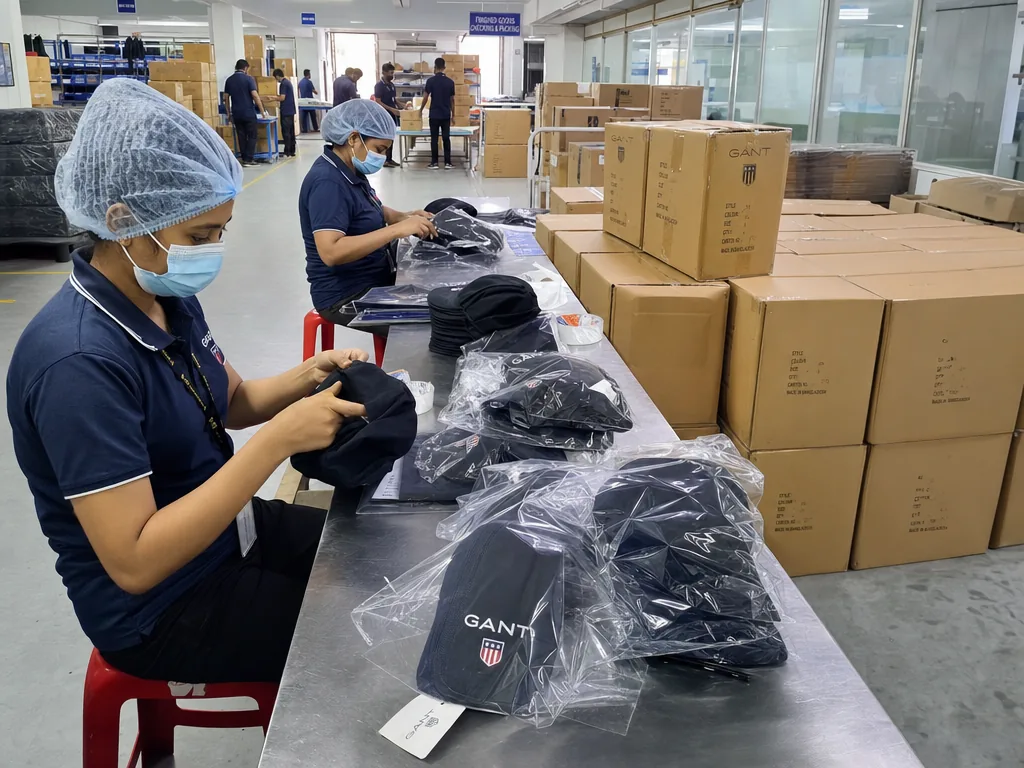
Building a Repeat-Order Workflow with Your Hat Factory (2026 Update)
Read article →Sourcing custom hats does not have to be complicated. With the right manufacturing partner, clear specifications and a small upfront investment in sampling, you can launch a retail-quality product in 30 to 45 days.