
Cotton Beanie: Properties, Costs and How to Spec It Right - Cost & MOQ Breakdown
Cotton Beanie: Properties, Costs and How to Spec It Right - Cost & MOQ Breakdown is one of the most-asked questions we receive from international buyers, and for good reason. With dozens of factories competing for your order and an alphabet soup of technical terms in every supplier quote, even experienced importers can feel lost. This guide consolidates what we have learned producing custom hats for clients in 40+ countries.
Organic Cotton Newborn Hat
For an organic cotton newborn hat, the fabric spec does most of the risk control. A reliable baseline for a newborn cotton beanie is 1x1 rib jersey at 180-220 gsm or interlock at 200-240 gsm: enough stretch recovery for fit, but not so much elastane that you create heat retention or muddy the organic claim. I advise buyers to write the fiber content as 95-100% organic cotton, then name the certification correctly at material level: GOTS or OCS, supported by a valid scope certificate plus transaction certificate, not a vague “organic” note on the purchase order. Combed ring-spun 30s or 32s yarn is the practical sweet spot because it gives a cleaner surface, lower pilling risk, and flatter seam profile than cheaper carded yarns. Construction needs to be called out just as tightly. For a cut-and-sew cotton beanie, specify 4-thread overlock seams, a coverstitched hem, and trimmed seam allowance so the inside does not leave a hard ridge on the scalp. Top-knot newborn styles should have hidden reinforcement tape or a bartack at the knot base; otherwise the crown starts torquing after wash testing. On infant sizing, small tolerance drift becomes visible immediately, so the spec sheet should lock finished dimensions by age band, relaxed and stretched opening circumference, crown depth, gsm tolerance at ±5%, and shrinkage under 5% after one 40°C home-launder cycle. If shade consistency matters, approve lab dips against Pantone TCX and hold Delta-E below 1.5, especially on ecru, baby blue, and pale pink where oil marks and contamination show fast.
MOQ and price on a newborn cotton beanie are driven far more by traceability and testing than by sewing complexity. In practice, 500-1,000 pieces per color is the normal MOQ for a certified organic cut-and-sew style. If the factory already holds stock organic fabric with current paperwork, some runs can start at 300 pieces, but the tradeoff is limited color choice and less control over exact handfeel. In Zhejiang, FOB pricing at 1,000 pieces typically lands around $0.85-$1.40 for a plain style with basic sewing and standard care labeling. Add a water-based allover print, custom belly band, or GOTS transaction-certificate handling, and the workable range usually moves to $1.60-$2.30 per piece. Compliance is where buyers underestimate cost. Infant programs should require needle detection, azo-free dyestuff, low-formaldehyde finishing, CPSIA tracking support for the U.S. market, and nickel-free confirmation on any snaps or trims. AQL 2.5 final inspection is standard, but newborn programs need extra checkpoints for spirality, seam slippage, crown symmetry, label placement, and handfeel drift caused by over-softener or poor enzyme control. The failures that trigger returns are usually subtle, not catastrophic: twisted side seams, uneven crown joins, knitting oil stains, or a scratchy neck label on an otherwise simple cotton beanie. That is why newborn styles should sit on their own costing and QA track rather than inherit adult beanie standards by default.
Black Beanie Hat
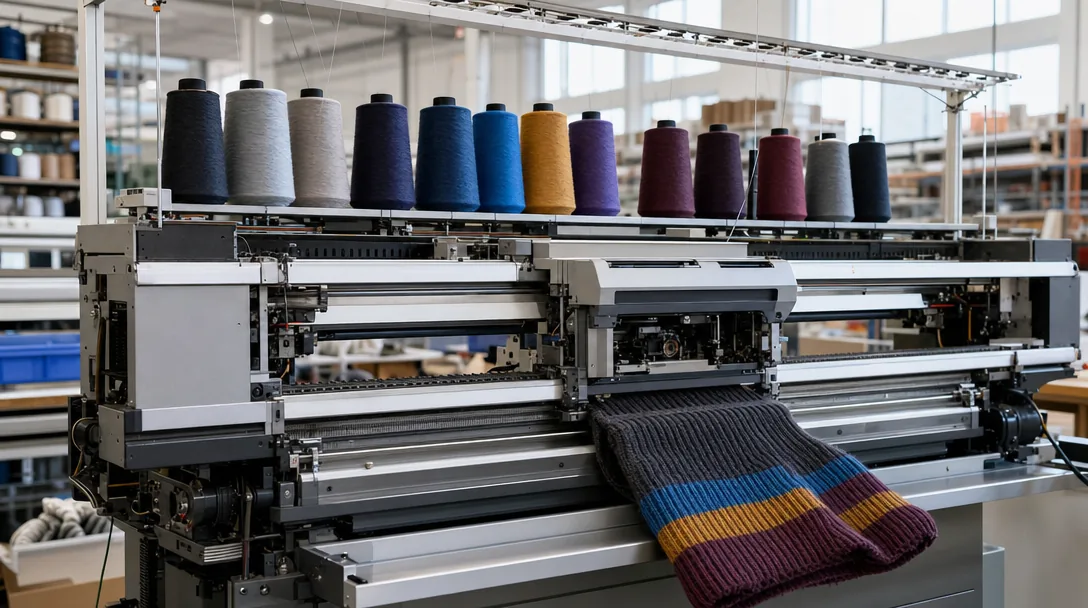
Black shows every mistake, so a black cotton beanie needs tighter yarn and color controls than heather, navy, or other forgiving shades. The first thing I lock is fiber and yarn quality, because the generic spec "100% cotton" tells you almost nothing. For better recovery, many commercial programs use 95/5 cotton-spandex or a compact-spun combed cotton base instead of low-grade open-end cotton that relaxes at the cuff after a few wears. A typical adult beanie is knitted in 1x1 or 2x2 rib on 12GG to 16GG circular machines with 21s to 32s yarn counts, then crown-linked, washed, boarded, and trimmed. For black, reactive dyeing is the safer call, and the lab standard should be tied to an approved Pantone TCX reference with Delta-E under 1.0 under D65 light. If you do not control that, one bulk lot reads true black and the next shifts blue-black or dusty charcoal under retail lighting.
Your tech pack should freeze finished height, cuff depth, weight, gauge, wash tolerance, and test requirements before sampling goes into bulk. A commercial adult black cotton beanie usually measures 21 to 23 cm in body height before cuffing, with a 7 to 8 cm cuff and a finished weight around 70 to 110 grams depending on gauge and yarn count. I would hold dimensional change after one home-laundry cycle to within 5% in both length and width, with dry crocking at grade 4 minimum and wet crocking at grade 3 to 4. Black also hides defects in the carton until the claims start: barre from uneven yarn tension, oily needle marks, weak crown linking, spirality after wash, and dye transfer onto labels, sweatbands, or paper inserts. For repeat orders, ask the mill to reserve the same black yarn lot for 60 to 90 days and approve bulk from actual production yarn, not salesman sample stock. On cost, most China knit lines quote a realistic MOQ of 300 to 500 pieces per color per style. At 500 pieces, a basic combed-cotton beanie with a woven label usually lands around $1.35 to $2.20 FOB Ningbo or Shanghai; organic cotton, enzyme wash, custom hangtags, and individual polybags can push that to $2.40 to $3.60.
Slouchy Beanie
A slouchy silhouette only works when the crown is built to drape, not when a factory simply adds 4-6 cm to a standard cuff beanie. On a cotton beanie, that shortcut usually creates a pointed crown and an opening that relaxes out after two wears. The variables that actually control slouch are machine gauge, yarn count, stitch density, and elastic recovery. In production, 7GG with 21s/2 combed cotton gives a heavier 75-90 gram hand that reads streetwear, while 12GG with 32s/2 lands closer to 65-75 grams and sells more like mainstream retail. A workable spec is finished height 27-30 cm, relaxed opening circumference 42-46 cm, and a crown closed with a balanced 4-point or 6-point linking seam so the drop sits centered instead of twisting off-axis. If you want the shape to survive washing, 95% combed cotton with 5% spandex or PBT is the safer build; 100% cotton can look clean off the knitting machine but commonly bags out after extension and domestic wash.
A proper spec sheet should lock down post-wash performance, not just yarn composition. List fiber content, yarn count, gauge, finished measurements after wash, crown construction, and Pantone TCX color reference with a Delta-E target under 1.5 for dark or seasonal shades. I would also require dimensional change within +/-5% after one home-laundry cycle, opening recovery measured after 30 minutes rest, and seam appearance with no grin-through at normal extension. For claims control, add a tolerance chart for body height, opening width, and piece weight before and after wash, because cotton relaxation can easily push dimensions beyond 5% if stitch density is off. On cost, slouchy styles are driven more by yarn setup and dyeing than by sewing labor: stock black, white, or melange can work at 300-500 pieces per color, but custom reactive-dyed yarn usually needs about 1,000 pieces per color to avoid heavy small-lot surcharges. Current China FOB for a basic single-layer slouchy cotton beanie is typically US$1.60-US$2.40 at 1,000 pieces, rising to US$2.80-US$4.20 with jacquard patterning, enzyme wash, heavier weights, or post-knit embroidery on Tajima or Barudan heads.
Cotton Twill Baseball Cap
A cotton twill baseball cap is won or lost on fabric spec, not decoration. “100% cotton twill” is purchasing fluff unless you lock the shell to measurable construction: 16x12 or 21x21 yarn count, 108x58 to 128x60 density, and 240 to 320 gsm finished weight depending on whether you want a soft retail hand or a stiffer promotional silhouette. If the style is brushed, write in post-finish shrinkage below 3% and require even sanding across crown, visor, and strap; uneven brushing is one of the fastest ways a cap looks cheap in bulk. If it is pigment-dyed or washed, ask for lab dips against Pantone TCX and hold bulk production to Delta-E 1.5 max under D65 lighting, because washed navy, khaki, and black drift badly from lot to lot if the mill is not controlled. Most factory cost cutting shows up in structure, not the embroidery file. Weak fusing on the front panels, sweatbands under 160 gsm, and flimsy brim inserts are what cause a cap to collapse after humid transit or light wear. A stable spec should call for properly fused front panels, a 1.6 to 1.8 mm PE brim board, and clean stitch balance on Tajima, Barudan, or ZSK heads so front embroidery does not tunnel or pucker. This is exactly why you should not apply cotton beanie sourcing logic to a twill cap: a cap is judged on panel stability, visor memory, and seam accuracy, while a cotton beanie lives or dies by gauge consistency, stretch recovery, and skin feel.
A usable tech pack removes guesswork before the first sample leaves the line. Call out 5-panel or 6-panel construction, finished circumference, crown height, visor length and curvature, seam SPI, brim stitch rows, eyelet type, seam tape material, sweatband composition, closure hardware, inner label position, and carton pack-out. For a standard mid-profile cap, I would spec 58 cm finished circumference, 11 cm crown height, 7 cm visor length, 8 rows on the brim, 260 gsm cotton twill shell, 210D polyester seam tape, and a cotton-poly sweatband at 180 to 200 gsm. Those numbers are specific enough for a sample room to build against and tight enough for QC to reject against. MOQ and price are usually driven by the fabric mill, not the sewing floor. Stock-color twill programs commonly start around 144 to 300 pieces per color, while custom-dyed fabric usually pushes the real minimum to 500 to 1,000 pieces because dye lots and finishing runs have their own threshold. FOB China pricing is typically $1.80 to $3.20 for a blank cap, $2.40 to $4.50 with flat embroidery, and $4.80 to $6.50 for washed styles with a metal buckle closure. Final inspection should run to AQL 2.5 with head-size tolerance at ±0.5 cm, embroidery placement within 2 mm, visor symmetry checks, crocking tests on dark shades, and carton compression review so the shipment does not land crushed. If you are also buying a cotton beanie program, keep the specs separate; the materials may both be cotton, but the acceptance points are completely different.
Organic Cotton Hat
Certification is the first filter, not softness. A cotton beanie can be made in 21s or 32s ring-spun combed cotton, finished at 220-280 gsm in single jersey or 1x1 rib, and still have no defensible organic claim unless the mill provides GOTS or OCS transaction certificates matched to the exact yarn lot. Put the yarn count, spinning method, certification scope, and Pantone TCX reference in the tech pack from day one. For piece-dyed bulk, I would hold lab dips to Delta-E below 1.5 against the approved standard; anything looser is where “natural ivory” and “off-white” start drifting across lots. If the cotton beanie is sold for infants or toddlers, add azo-free dyes, nickel-free trims, formaldehyde limits, and a finished pH in the usual 4.0-7.5 range, because children’s programs get audited harder under CPSIA and EU REACH than standard adult headwear.
Most briefs are too vague to produce consistent bulk. Writing “organic cotton hat” is not enough; a usable cotton beanie spec should state fiber content, knitting gauge, finished weight, body height, cuff height, seam construction, stretch recovery, and wash shrinkage. A practical baseline is 100% organic combed cotton at 7 gauge for a denser winter hand or 12 gauge for a cleaner, lighter surface, with a 26-28 cm body height, 7 cm cuff, head-circumference tolerance of +/-1 cm, crocking grade 4 minimum, and wash shrinkage under 5% after care testing. If you are adding embroidery, call out backing, underlay, stitch count, and placement; soft cotton knits tunnel fast on Tajima or Barudan heads when tension is not balanced. On the line, the sequence is usually knitting, linking, pre-wash, shape setting, trimming, needle detection, and final packing, and inspection should be run to AQL 2.5 with extra attention on seam grin, barre, torque, needle lines, and oil marks after washing.
Price is driven more by certified yarn access and paperwork than by sewing time. In China, a basic certified organic cotton beanie is commonly quoted at 300-500 pcs per colorway for factory MOQ, but mills often require closer to 1,000 pcs if they need to open a custom certified yarn lot and issue traceable documents. A plain solid-color style usually sits around $2.10-$3.60 FOB China at 500-1,000 pcs; jacquard logos, woven patches, or embroidery typically move the same cotton beanie into the $3.80-$5.50 range depending on gauge, stitch density, patch application method, and individual packing. When comparing offers, normalize certification scope, yarn spec, finished weight, testing, labels, and carton requirements before deciding one source is cheaper. The lowest quote often excludes polybag stickers, carton marks, third-party lab testing, or compliance overhead such as sedex-audit-cap-supplier-guide.html">BSCI 2.0 or Sedex SMETA 4-Pillar, and those missing costs usually come back later as shipment delays, failed audits, or retailer chargebacks.
Cotton Beanie Men
For a men’s cotton beanie, the biggest cost driver is construction, not the logo. Buyers often ask for a “cotton beanie” and get quotes for two different products: a cut-and-sew jersey style using 180–220 gsm single jersey, or a fully knitted beanie made from 21s, 26s, or 32s cotton yarn on 7GG or 12GG machines in 1x1 rib or plain knit. Jersey is usually the lower-cost option because marker efficiency is stable and sewing time is short, but it loses recovery faster and can show edge growth after washing. A knitted body costs more, yet it holds shape better, fits cleaner on the head, and looks more credible for streetwear, team merchandise, and licensed retail. If the hat is intended for repeat wear rather than one-off promotion, lock the specification to exact fiber content, yarn count or finished gsm, gauge, and required hand feel instead of approving by photo alone.
Do not leave performance open to interpretation. For bulk approval, I would require a 30°C home-laundry wash test with dimensional stability within ±5%, spirality below 3%, and colorfastness at least grade 4 for washing and crocking. If shade matters, issue Pantone TCX references before lab dips and hold factory approval to Delta-E 1.5 or tighter under D65 light. Adult men’s sizing should also be fixed with real numbers: body height 21–23 cm, cuff height 6–8 cm, and opening width 20–22 cm laid flat after conditioning, with tolerances of ±0.5 cm on height and ±1.0 cm on opening. Seam construction should be spelled out as well—4-thread overlock for jersey, linked or fully fashioned joins for knit bodies, plus stitch density and whether the cuff is measured blocked or unblocked.
Decoration and MOQ are where many cost sheets go off track. Direct embroidery on a light 180 gsm jersey cotton beanie can pucker badly unless the cuff panel is stabilized with backing, and Tajima or Barudan heads generally run cleaner on a folded cuff than on the crown panel. A basic adult jersey version usually lands around $1.10–$1.80 ex-factory at 300–500 pieces per color, while a rib-knit cotton beanie is more commonly quoted at 500 pieces per color and $1.80–$3.20, depending on yarn grade, gauge, and logo count. Organic or GOTS-certified cotton typically adds $0.25–$0.60 per piece, plus tighter lot traceability and document control. Final inspection should not just count cartons; it should target seam grin, rib recovery, shade banding between dye lots, needle damage, logo distortion on the cuff, and measurement compliance under AQL 2.5.
Working with CrownsForge for cotton beanie programs
Pre-production discipline decides whether a cotton beanie program runs clean; knitting capacity is rarely the bottleneck. If yarn shade, gauge, cuff height, and trim placement are still moving when bulk starts, the usual claims show up fast: panel-to-panel shade variation, embroidery puckering on the fold, and a fit that opens up after wash because the rib structure was never locked. A workable timeline is usually 3 to 5 working days for yarn lab dips against Pantone TCX, then 7 to 10 days for a wearable proto after artwork, fold height, gauge, and label position are frozen. For a fully custom knit cotton beanie, MOQ is typically 300 pieces per colorway. If the factory uses in-stock cotton yarn, a standard 1x1 rib, and only a woven clamp label, 144 to 200 pieces can be possible, but the unit cost rises because machine setup, linking, and hand-finishing time do not scale down with volume. Decoration has to be engineered around stretch, not added as an afterthought. Flat embroidery on Tajima or Barudan heads works on a cuffed cotton beanie, but stitch count, underlay, and pull compensation need to be controlled so the cuff does not tunnel or lose recovery after washing. As a rule, dense fills over roughly 35,000 to 40,000 stitches on a narrow fold start creating problems unless the knit is stabilized correctly. Silicone heat-transfer patches, chain stitch, appliqué, and woven labels all need separate strike-offs because each one changes hand feel, rebound, and wash performance. At CrownsForge, the safest route is to approve trims on the actual knit gauge and fold construction that will run in bulk, not on a substitute sample swatch.
The cleanest quotes come from measurable specs, not from a vague request for a “custom beanie.” For a 100% cotton beanie in 1x1 rib at roughly 280 to 320 gsm equivalent finished weight, ex-works pricing at 500 pieces usually lands around $2.10 to $3.40 per piece, depending on yarn grade, knitting gauge, cuff construction, and decoration method. Organic cotton, branded trims, retail-ready polybagging with barcode labels, or individual header cards usually push the range to $3.80 to $5.20. Sampling fees are often credited back against bulk, but only when the tech pack is stable. Most avoidable cost leakage comes from repeated artwork edits, changing cuff depth from 7 cm to 9 cm after proto approval, or switching from woven label to embroidery after digitizing has already been completed. Quality control should be written into the program before the PO is placed. That means tech-pack review, yarn and color approval with an agreed Delta-E tolerance, PPS sign-off, inline inspection, and final audit to AQL 2.5 rather than a last-minute carton check. Buyers selling into EU or major U.S. retail should also confirm BSCI 2.0 or Sedex SMETA 4-Pillar audit status, azo and formaldehyde test support, needle-control records, and carton traceability by PO, SKU, and colorway. If the cotton beanie program uses GOTS-certified yarn, transaction-certificate handling needs to be confirmed before bulk knitting starts; trying to sort certificate ownership after packing is how otherwise good shipments get delayed.
Frequently Asked Questions
What file format should I send for my logo?
Vector files (AI, EPS, PDF) are ideal. High-resolution PNG or JPG at 300 dpi on transparent background works as a fallback. Provide Pantone color references for accurate reproduction.
What logo decoration techniques do you offer?
3D puff embroidery, flat embroidery, woven patch, leather patch, PVC patch, screen printing, sublimation, applique and laser etching, all in-house with no subcontracting.
Do you support sustainability certifications?
Yes. We work with GOTS organic cotton, GRS-certified recycled polyester, OEKO-TEX Standard 100 fabrics, and are BSCI and Sedex audited. Certification documentation can be provided per order.
Can I order a sample before bulk production?
Yes. We strongly recommend approving a pre-production sample before mass production. Samples are charged at 35 to 60 USD each plus express shipping, fully refundable against confirmed bulk orders over 500 pieces.
Which shipping methods do you support?
We support FOB, CIF and DDP shipping. Air express for samples and small orders, sea LCL for 100 to 500 pieces, sea FCL for 5,000+ pieces. Door-to-door DDP available for US, EU, UK, Canada and Australia.
What should buyers know about corduroy hat men's?
When evaluating corduroy hat men's, the key considerations are construction quality, decoration capability, MOQ flexibility and lead time. Cover everything buyers ask about organic cotton newborn hat: how it's manufactured, what specs to request from a factory, typical MOQ and pricing, common quality issues to inspect for, and how this ties back to the broader cotton beanie sourcing decision. Cover everything buyers ask about black beanie hat: how it's manufactured, what specs to request from a factory,…
What should buyers know about organic cotton hat?
When evaluating organic cotton hat, the key considerations are construction quality, decoration capability, MOQ flexibility and lead time. Cover everything buyers ask about organic cotton newborn hat: how it's manufactured, what specs to request from a factory, typical MOQ and pricing, common quality issues to inspect for, and how this ties back to the broader cotton beanie sourcing decision. Cover everything buyers ask about organic cotton hat: how it's manufactured, what specs to request from a factory,…
How do I find a reliable wholesale hat manufacturers?
When evaluating wholesale hat manufacturers, the key considerations are construction quality, decoration capability, MOQ flexibility and lead time. Cover everything buyers ask about organic cotton newborn hat: how it's manufactured, what specs to request from a factory, typical MOQ and pricing, common quality issues to inspect for, and how this ties back to the broader cotton beanie sourcing decision. Cover everything buyers ask about black beanie hat: how it's manufactured, what specs to request from a factory,…
What should buyers know about cotton beanie men?
When evaluating cotton beanie men, the key considerations are construction quality, decoration capability, MOQ flexibility and lead time. Cover everything buyers ask about cotton beanie men: how it's manufactured, what specs to request from a factory, typical MOQ and pricing, common quality issues to inspect for, and how this ties back to the broader cotton beanie sourcing decision. Cover everything buyers ask about organic cotton newborn hat: how it's manufactured, what specs to request from a factory,…
What's the best fabric for a beanie?
Wool undeniably remains the absolute reference for winter beanies. This natural fiber has remarkable thermoregulatory properties that allow it to maintain a stable body temperature even in extreme cold. Merino wool is particularly distinguished by its exceptional fineness.
Ready to start your custom hat project?
Send us your tech-pack, sketch or even just an inspiration photo. We will respond with a detailed quotation and digital mock-up within 24 hours.
Request a free quoteRelated guides
Camouflage Bucket Hat: Properties, Costs and How to Spec It Right
Read article →
5 Panel Hat Vintage: A 2026 B2B Sourcing Guide
Read article →
Ball Caps for Women: A 2026 Sourcing Playbook for International Buyers
Read article →We hope this guide demystifies cotton beanie: properties, costs and how to spec it right - cost & moq breakdown and helps you move forward with confidence. If you have questions specific to your project, our English-speaking sales engineers are one message away.