
Cap Defect Catalog: 32 Production Issues to Inspect For - Cost & MOQ Breakdown
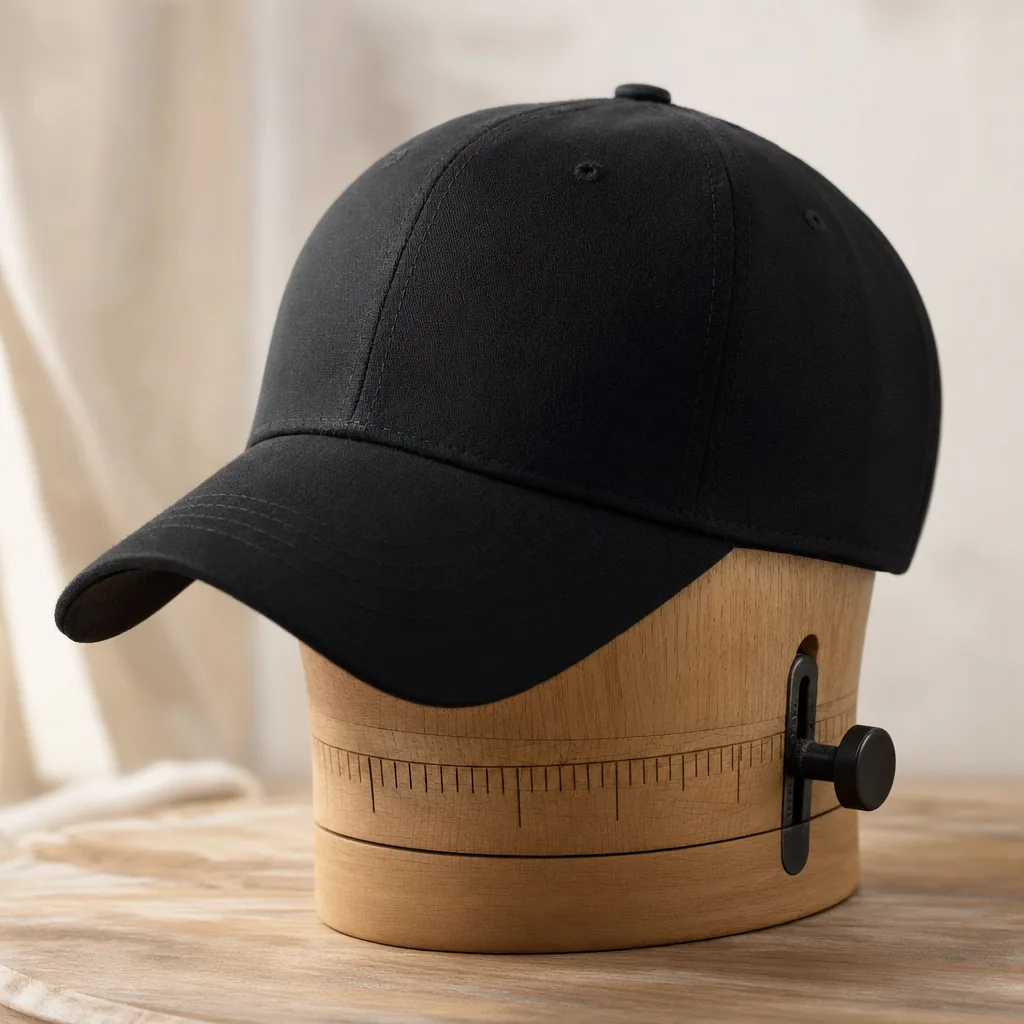
Cap Defect Catalog: 32 Production Issues to Inspect For - Cost & MOQ Breakdown is one of the most-asked questions we receive from international buyers, and for good reason. With dozens of factories competing for your order and an alphabet soup of technical terms in every supplier quote, even experienced importers can feel lost. This guide consolidates what we have learned producing custom hats for clients in 40+ countries.
How to read this catalog
Read each entry through two lenses: defect location and inspection grade. Location tells you where a process is breaking down. Front panels usually expose puckering, hoop burn, and embroidery pull on buckram-backed 6-panel caps; crown seams show seam grin, skipped stitches, and panel mismatch; visor edges reveal binding gaps, raw sandwich piping, and cracked PE board after forming; sweatband joins expose raw-edge roll and missed bartacks; metal closures and D-rings are where you find burrs, plating loss, and weak rivets. Grading decides whether the lot ships. In cap production defects, a critical defect is an automatic reject because it creates safety, legal, or functional risk: broken needle contamination, a sharp burr on a snap buckle, the wrong licensed artwork, or a false fiber-content label. Major defects reduce saleability or function and usually fail the lot under AQL 2.5: front embroidery off-center by over 2 mm, visor curve asymmetry above 3 mm left-to-right, visible oil staining, or crown dimensions outside the approved tolerance. Minor defects are still counted, but they are cosmetic: a 1-2 mm seam-tape offset, slight topstitch waviness, or a slub in 260 gsm brushed cotton twill that remains within the approved standard.
Do not read the catalog as 32 isolated flaws; read it against the sample plan, approved sample set, and measurement spec. On a 5,000-piece order, ANSI/ASQ Z1.4, General Inspection Level II, typically gives code letter L and a 200-piece sample. If the agreed limits are AQL 2.5 for major and 4.0 for minor, the lot usually accepts at 10 major and 14 minor defects, and rejects at 11 major or 15 minor. That threshold matters more than one ugly cap pulled from the carton. Repeated moderate faults usually point to unstable sewing tension, inconsistent visor pressing temperature, poor trim control, or embroidery registration drift on Tajima, Barudan, or ZSK heads. Keep the golden sample, measurement chart, Pantone or Pantone TCX callout, and packing spec open while using the catalog, or you will misclassify normal variation and miss real commercial risk. Color should be judged against an agreed tolerance, often Delta-E 1.0-1.5 for solid body fabric under D65 light; embroidery registration drift above 1.5 mm, crown height over spec by 5 mm, or carton assortment errors are not subjective issues, they are chargeback triggers. Our standard practice is to log every defect by location, frequency, and severity so the report shows whether the issue is random noise or a repeatable process failure worth stopping on the line.
Panel and crown defects (8 categories)
The crown is where buyers notice cap production defects first, and the costly failures are usually structural. On a standard 6-panel structured cap, the center-front seam should sit within 1.5 to 2.0 mm of the visor midpoint; beyond that, the cap looks twisted even if the brim board and visor stitch rows are correct. I treat panel misalignment, seam torque, stitch puckering, crown height variation, and panel shape inconsistency as the core five crown failures because they usually come from upstream process control, not final packing. Puckering is rarely random: it typically starts with excessive top-thread tension, mismatched bobbin tension, SPI set too high for 108 x 58 cotton twill, or feeding a light 240-260 gsm twill as if it were a 12-16 oz heavy fabric. On fused front panels, uneven buckram lamination or poor heat-press dwell time will also create asymmetry that no finishing steam can hide. Height and shape variation often begin in cutting, especially when panel lays are spread under inconsistent tension or when die-cut stacks mix fabric grain direction. A 3 mm crown-height swing within one carton is already visible on-head; at 4 mm, buyers start assuming split production or mixed subcontracting. Fabric-face defects belong in the same inspection block because the eye reads them as crown defects the moment the cap is under retail lighting. On peach-finish cotton, wool-acrylic melton, and suede-touch polyester, slubs, reed marks, float yarns, needle cuts, and uneven brushing show immediately under D65 or cool LED light. Our standard practice is to inspect crown panels before sewing under a 4-point fabric system and reject face defects larger than 3 mm in the front two panels, where concealment is basically impossible.
Shade variation and eyelet faults are the crown defects that slip through weak inline control, even in otherwise decent factories. If bulk cutting mixes roll lots, adjacent panels can fall outside tolerance and make a cap look patched together. For branded programs, I would not accept a Delta-E above 1.5 against the approved Pantone TCX standard on the same cap body; for dark heathers or brushed surfaces, even 1.2 can be visible on the front crown. Good cap production defects control means isolating roll numbers by marker, recording lot IDs during spreading, and blocking mixed-lot cutting unless the buyer signs off in writing. Pilling is another early claim driver on brushed cotton, microfiber suede, and melton blends because carton compression and transit abrasion can raise surface fuzz before retail display; if the fabric fails basic Martindale or dry-rub expectations, the claim shows up before the end customer wears it twice. Eyelet defects look minor but routinely fail AQL 2.5 because they combine appearance, symmetry, and function. Loose eyelet stitching usually traces to dull needles, poor hooping, unstable backing, or thread-tension drift on Tajima or Barudan heads, and the issue worsens after abrasion when thread tails lift. On most adult caps, stitched eyelet holes are typically 4.0 mm nominal; once they collapse to 2.5-3.0 mm, the reduction is visible and noticeably changes airflow on lightweight performance styles. Position tolerance matters too: if eyelets on opposite panels vary by more than 2 mm in height, the imbalance reads immediately. Color mismatch is just as damaging; a navy shell paired with eyelet thread from a greener stock cone may pass under factory fluorescents but fail under D65. Post-sewing eyelet rework usually costs $0.08-$0.20 per cap, so thread-shade approval, hole-diameter standards, and machine setup checks are much cheaper than sorting finished cartons.
Brim defects (5 categories)
Brim-related cap production defects are high-visibility failures because buyers read the peak line before they notice embroidery or taping. The five categories that deserve separate checkpoints are curve deviation, stiffness inconsistency, undervisor shade mismatch, printed undervisor misregistration, and brim stitching faults. For a pre-curved baseball cap, the finished brim should stay within ±2 mm of the approved golden sample when checked on a fixed metal profile jig at the left tip, center arch, and right tip after the cap has fully cooled. Beyond that, the hat starts reading as twisted even if the crown sewing is clean, and under AQL 2.5 it should be logged as a major defect. On the factory floor, the root cause is usually forming instability: press temperature drifting outside 145-160°C, dwell time moving more than 6 seconds from the set standard, or operators stacking peaks before the insert has stabilized. It is rarely the PE insert alone. Stiffness variation is the costlier issue because it exposes bad material control: mixing 1.5 mm and 2.0 mm PE, substituting paperboard with uneven density, or using underweight sandwich stitching before pressing. On structured caps, I want insert thickness checked by caliper at goods-in and a bend-and-recovery test every 50 pieces, especially on orders below 500 where mixed trim lots are common.
Undervisor defects create disproportionate buyer complaints because the crown fabric may match approval while the underside still looks off under retail lighting. The practical standard is to compare the undervisor against both the sealed swatch and the approved production sample under D65 lighting; if Delta-E is above 1.5-2.0, the mismatch is already visible on dark green, khaki, and charcoal bases. This is common when factories pull stock twill or brushed microfiber from a different mill lot instead of matching the approved Pantone TCX target by construction and dye recipe. Printed undervisors add a different failure mode: on camo, gradient, or licensed team graphics, registration drift over 1.5 mm becomes obvious after curving, especially along the centerline where distortion increases during pressing. Last is brim stitching, the most preventable of the five cap production defects. Typical failures are skipped stitches, loose topstitch tension, wandering stitch rows, and edge misses that expose the insert line. On a standard 6-row peak stitch, row spacing should stay visually even at roughly 4-5 mm, with 6-8 SPI on 10x10 cotton twill and 8-10 SPI on lighter microfiber. A first-piece approval on the brim station, plus thread tension checks and needle replacement every 6,000-8,000 stitches, costs almost nothing; replacing a defective brim later usually adds $0.35-$0.80 per cap in labor and rework.
Embroidery defects (6 categories)
Embroidery is the fastest way to turn a sellable cap into scrap because most defects sit on the front panel, where rework is limited and visual tolerance is tight. The first two categories to inspect are thread color mismatch and registration error. Approved thread should be signed off against a physical Pantone TCX reference or Madeira/Gunold thread card under D65 light; judging burgundy, cream, or athletic navy from a phone image is how licensed colors drift. On light cotton twill or brushed chino, a Delta-E above 2.0 is visible to most buyers at arm’s length, and anything over 2.5 should be recorded as a major defect under AQL 2.5. Registration failure is just as expensive: satin borders sitting 0.5-1.0 mm off the fill, shadow layers drifting, or counters in letters like A, R, and P choking closed because the digitizer missed pull compensation or sequenced the objects badly. These are top-tier cap production defects because they cannot be hidden by steaming, trimming, or repacking.
The next two categories are poor density/underlay setup and puckering, both of which usually start before the operator hits run. Patchy fill often comes from loose stitch spacing—around 0.45 mm on artwork that really needs 0.38-0.40 mm—so the base fabric shows through. Go too tight, and the logo turns into a hard plate that distorts the crown, especially on 180-220 gsm cotton twill or soft unstructured panels. Underlay show-through is common when light thread sits on dark fabric, melange jersey, or foam-backed trucker fronts without enough edge-run or zigzag coverage. The last two categories are backside finish and placement accuracy. Loose thread tails longer than 8 mm, bird nests, and jump stitches left untrimmed are straightforward QC rejects; they snag, unravel, and look cheap the moment the cap is turned over. Placement is equally unforgiving: center-front embroidery on a 6-panel cap should usually hold within ±2 mm of the seam, and left-chest-style offset logos need the same written tolerance on the tech pack. Our standard practice is to slow Tajima, Barudan, or ZSK heads from roughly 850 spm to 650-700 spm on soft crowns with cutaway backing, because repair labor on misplacement almost always costs more than the original embroidery charge of about $0.18-$0.60 per cap.
Patch defects (4 categories)
Patch defects are often approved too loosely at PP sample stage, then become some of the most expensive cap production defects to sort in bulk because the failure is visual and impossible to hide at retail distance. The first control point is placement. For a center-front patch on a structured 6-panel cap, keep tolerance at ±2 mm side-to-side and ±2 mm in height; on 5-panels, foam truckers, and other crowns with more shape distortion, ±3 mm is more realistic. Rotation should stay within 2°; past that, the logo reads crooked even when the sewing line technically lands inside spec. Process order matters just as much as the tape measure. A patch sewn after assembly on a post-bed single-needle will show more operator variation than one positioned on a flat panel, but pre-assembly application has its own risk because seam take-up, buckram tension, and top-button pull can drag the badge off visual center. On embroidered, woven, leather, and TPU patches, any obvious asymmetry should be treated as a major defect under AQL 2.5 because consumers notice it immediately.
Adhesive failure is the next high-cost category because once glue stains the shell, repair is rarely economical. Hot-melt film in the 30-50 gsm range is generally safe, but if press settings drift above roughly 130-145°C or dwell time runs long, adhesive can squeeze past the edge and leave a glossy halo around woven, leather, or TPU patches. On brushed cotton twill, recycled polyester, and nylon taslon, that bleed often changes hand feel and can shift the appearance of dark shades, especially black and navy. Bulk approval should include strike-through and edge-squeeze testing on actual shell fabric, not just a salesman sample made under lab conditions. Leather patches need a separate inspection standard: die-cut edges should be clean, edge paint even if specified, and corners free from fiber lift, chatter marks, or delamination after 24 hours of conditioning.
Woven and PVC patches should never sit under the same generic QC line because they fail in completely different ways. Woven patch defects usually start at the perimeter: weak merrow coverage, low-denier edge yarn, or poor heat-cut settings leave the border exposed to fraying. For merrowed badges, inspect for full overlock coverage with no skipped sections or exposed base yarn. For laser-cut or heat-cut woven patches, the edge should be uniformly sealed with no brown melt, waviness, or loose whiskers at corners. PVC patches are less about edge wear and more about color and molding control. Soft PVC will not hit Pantone as tightly as embroidery thread, so approval should be made against a physical standard under D65 light with a defined Delta-E tolerance; for licensed or brand-sensitive logos, Delta-E 2.0-3.0 is a reasonable target. Common rejects are incomplete fill on fine text, sink marks, flash, poor venting scars, and inconsistent gloss. On a 1,000-piece MOQ, one bad patch approval can turn the whole order into dead stock.
Sweatband defects (3 categories)
Loose sweatband attachment is the first sweatband issue worth isolating because it fails both comfort and wear life, and it usually traces back to one unstable sewing step: joining the band over center-back bulk on a post-bed or cylinder-bed cap machine. On a 6-panel baseball cap in 10 oz cotton twill, the sweatband seam should run at 7-9 SPI with a 3.0-3.5 mm bite and consistent top and bobbin tension; anything looser starts to grin when the band is pulled. The common failure pattern is skipped stitches across the rear overlap, partial catch where the needle only grabs shell or band for 5-12 mm, and band twist caused by uneven feeding through the curve. These are not cosmetic. Once the visor is pre-curved and the crown is worn, that weak section opens first. In a practical inspection of cap production defects, any visible detachment, exposed seam allowance, or band rollover that can be felt against the forehead should be treated as a major defect under AQL 2.5. Operators often miss it because the cap still looks acceptable on the table, especially after inside labeling hides the seam area. Rework is expensive once embroidery, taping, and visor topstitching are already finished: reopening and resewing typically adds $0.18-$0.40 per cap, and washed fabrics can show permanent needle tracks after correction. Our standard practice is to tension-check the first 5 pieces per bundle and manually pull the center-back join with light hand force before the lot moves downstream.
Material mismatch is the second category, and it creates more claims than line-side rejects because the cap can be sewn perfectly and still violate the approved spec. Buyers often specify 180-220 gsm brushed cotton twill, cotton terry, microfiber polyester, or moisture-wicking mesh for the sweatband, but factories with weak trim control substitute whatever black stock is available. A 200 gsm cotton band and a 150 gsm polyester tricot are not equivalent: they differ in absorption, rebound, steam shrinkage, and skin feel, and the difference becomes obvious after packing or first wear. If the PO does not lock fiber content, finished weight tolerance, and a control swatch under D65 light with Pantone TCX reference, the wrong band can slip through final inspection even when shell fabric and embroidery are correct. The third category is sweatband size inconsistency, which starts at strip cutting and gets amplified during attachment. For adult baseball caps, the finished inner circumference should usually hold within plus or minus 3 mm across the run; once strips are cut short, stretched during sewing, or joined with uneven overlap, variation can jump to 6-10 mm. That is when you get forehead pressure points, rippling above the band, and the buyer complaint I hear most often: “same style, random fit.” This is one of the more expensive cap production defects because it is hard to sort visually. Steel-rule die cutting, startup bundle measurement, and head-form verification at final catch far more than table inspection alone, especially on low-profile caps where fit tolerance is less forgiving.
Closure defects (3 categories)
Closure defects are the cheapest cap production defects to catch in-line and some of the most expensive to absorb after shipment, because the buyer touches the back closure before they evaluate panel symmetry or embroidery coverage. On plastic snapbacks, checking only the two middle positions is lazy QC. The strip has to lock cleanly through all 7 or 8 settings, with full peg engagement, no rebound under a light tug, and no excessive insertion force. In practice, weak performance usually traces to resin flash on the female holes, worn injection tooling, brittle low-grade POM or PP resin, or sewing drift that pulls the male and female strips out of parallel by more than 1.5 to 2.0 mm. Our standard practice is to cycle each closure 10 to 15 times, then apply roughly 3 to 4 kgf hand pull to expose pegs that white-stress, deform, or half-seat before packing. Color and finish mismatch on closures should be logged separately from mechanical failure, because buyers read it as component substitution, not minor cosmetics. A black snap with a blue cast, or off-ivory against a Pantone TCX-approved shell, is obvious under D65 lighting even if the fabric itself passed shade tolerance. For dark trims, a visual Delta-E above 1.5 is usually enough to trigger complaints; on khaki, stone, and putty programs, inconsistent gloss is often more visible than hue shift. The practical standard is simple: closure resin, thread, and body fabric need to read as one color family at arm’s length, not just under a factory tube light. Among cap production defects, weak snap engagement and closure shade mismatch create claims fast because the defect is exposed in the first 10 seconds of wear.
Fabric strap, metal buckle, and hook-and-loop backs fail in different ways, so they should never sit under one generic “closure OK” checkpoint. On cotton twill, brushed chino, corduroy, or 12 to 14 oz canvas caps, the first failure point is usually the strap anchor, not the strap itself. I look for a clean box-X or bar-tack structure, 6 to 8 effective securing stitches per end, balanced SPI around 8 to 10, thread tails trimmed below 3 mm, and no seam grin when the strap is tensioned to 7 to 10 kgf on a Juki or Brother lockstitch setup. If the anchor distorts the back arch, if the webbing frays at the cut edge, or if the stitch line bites unevenly into the shell fabric, that is a real defect, not “normal handmade variation.” Buckles add hardware-specific risks: burrs on the center bar, bent slider frames, plating scratches, sharp edges that abrade the strap, and inconsistent antique brass, gunmetal, or matte nickel finish from weak electroplating control. Any buckle that sits visibly warped or chews the strap during adjustment should be classified major under AQL 2.5. Hook-and-loop closures need their own discipline because inspectors often skip proper testing when the tape arrives pre-mated. Separate the tape fully, remove lint, cycle it at least 5 times, and check for edge lift, crushed loop pile, stitch skip, and off-center placement. On low-profile dad hats, 20 mm tape drifting just 2 to 3 mm off center looks crooked on-head; on trucker caps, the same drift can torque the opening and make the whole back arch read twisted.
Packaging defects (3 categories)
Packaging failures are some of the most expensive cap production defects because the hat may be fully saleable while the shipment is still non-compliant. I group them into three categories: primary pack defects, trim-and-label defects, and outer-carton ID defects. Primary pack issues usually start with the polybag spec, not the sewing line. For baseball caps and snapbacks, 35 to 45 micron LDPE is a workable baseline; below 30 microns, side-seal burst rates rise sharply when 24, 36, or 48 pcs are packed per master carton and compressed in consolidation. Oversized vent holes, weak bottom seals, or no bag at all on brushed cotton or wool-blend caps lead to dust pickup, crown abrasion, and visor-to-visor scuffing. UK and EU retailer programs also check suffocation warning text height, recycle mark, and resin identification; if any of that is missing, the shipment can fail packaging compliance even when the cap itself passes AQL 2.5.
Trim-and-label defects are logged as packaging defects because buyers treat tags, stickers, and inserted papers as part of the SKU, not decoration. A missing hangtag is usually a major defect; wrong barcode, wrong country-of-origin statement, or the wrong care label language can block intake outright. Placement has to be measured. On fitted caps, size stickers are commonly centered on the visor within +/-3 mm of the crown centerline; on fashion programs, front branding stickers are often aligned to the button axis or front seam with photo standards. Factories also miss fastener location: a nylon swiftach through the sweatband instead of the rear eyelet leaves a permanent hole and turns a minor packing error into product damage. The last category, outer-carton ID failures, creates the highest downstream cost. A carton missing PO, style, color, size, carton sequence, quantity, country of origin, or a scan-readable GS1-128/UCC label can be rejected by a 3PL or misrouted in customs handling. Repacking in Yiwu typically runs $0.04 to $0.09 per cap; relabeling at the forwarder is usually $1.50 to $3.00 per carton, and both costs climb fast once pallets are stretch-wrapped and booked for FOB dispatch.
Frequently Asked Questions
How long does production take?
Sampling takes 7 to 12 days. Bulk production runs 20 to 30 days depending on quantity, fabric availability and decoration complexity. Inspection and packing adds another 3 to 5 days before shipment.
Do you support sustainability certifications?
Yes. We work with GOTS organic cotton, GRS-certified recycled polyester, OEKO-TEX Standard 100 fabrics, and are BSCI and Sedex audited. Certification documentation can be provided per order.
What logo decoration techniques do you offer?
3D puff embroidery, flat embroidery, woven patch, leather patch, PVC patch, screen printing, sublimation, applique and laser etching, all in-house with no subcontracting.
Can I order a sample before bulk production?
Yes. We strongly recommend approving a pre-production sample before mass production. Samples are charged at 35 to 60 USD each plus express shipping, fully refundable against confirmed bulk orders over 500 pieces.
Which shipping methods do you support?
We support FOB, CIF and DDP shipping. Air express for samples and small orders, sea LCL for 100 to 500 pieces, sea FCL for 5,000+ pieces. Door-to-door DDP available for US, EU, UK, Canada and Australia.
What should buyers know about cotton twill army cap kangol?
When evaluating cotton twill army cap kangol, the key considerations are construction quality, decoration capability, MOQ flexibility and lead time. Sweatband attachment loose, sweatband fabric mismatch (cotton requested but polyester delivered), sweatband size inconsistency (varies cap-to-cap within batch). The 32 defect categories below group by area of the cap (panel, brim, embroidery, etc.) and severity (critical, major, minor under AQL 2.5). Critical defects mean reject. Major defects must remain under the AQL 2.5…
How does ordering baseball cap embroidered custom work?
When evaluating baseball cap embroidered custom, the key considerations are construction quality, decoration capability, MOQ flexibility and lead time. The 32 defect categories below group by area of the cap (panel, brim, embroidery, etc.) and severity (critical, major, minor under AQL 2.5). Critical defects mean reject. Major defects must remain under the AQL 2.5 sample limit. Minor defects are tolerated within wider limits. Stitch puckering on panels, fabric weave irregularity, color shading between panels of supposedly…
How does ordering custom embroidered trucker hat work?
When evaluating custom embroidered trucker hat, the key considerations are construction quality, decoration capability, MOQ flexibility and lead time. The 32 defect categories below group by area of the cap (panel, brim, embroidery, etc.) and severity (critical, major, minor under AQL 2.5). Critical defects mean reject. Major defects must remain under the AQL 2.5 sample limit. Minor defects are tolerated within wider limits. Stitch puckering on panels, fabric weave irregularity, color shading between panels of supposedly…
What should buyers know about kangol bucket hat mens?
When evaluating kangol bucket hat mens, the key considerations are construction quality, decoration capability, MOQ flexibility and lead time. The 32 defect categories below group by area of the cap (panel, brim, embroidery, etc.) and severity (critical, major, minor under AQL 2.5). Critical defects mean reject. Major defects must remain under the AQL 2.5 sample limit. Minor defects are tolerated within wider limits. Stitch puckering on panels, fabric weave irregularity, color shading between panels of supposedly…
What are the defects of plastic bottle caps?
Types of bottle caps defects that can be detected damages (chips, cracks, scratches); deformations (pinches, bents, dents, warping, buckling, roundness loss); missing parts (absence of caps, absence of tamper rings);
What are production defects?
A production defect is any deviation in a manufactured part from its defined specification — dimensional, functional, visual or material. The definition sounds simple; in practice, most disagreements in a quality meeting come from confusing four related terms that are not the same thing.
What are common manufacturing defects?
Manufacturing defects arise during the production process, where an otherwise safe product is rendered dangerous due to errors or irregularities in its manufacturing. This might include issues such as substandard materials, improper assembly, or other deviations from the intended design.
Looking for a reliable hat manufacturer in China?
CrownsForge has produced custom hats for 800+ brands across 40 countries. From 100-piece launches to 100,000-piece retail programs, we deliver on time and on spec.
Get in touchRelated guides
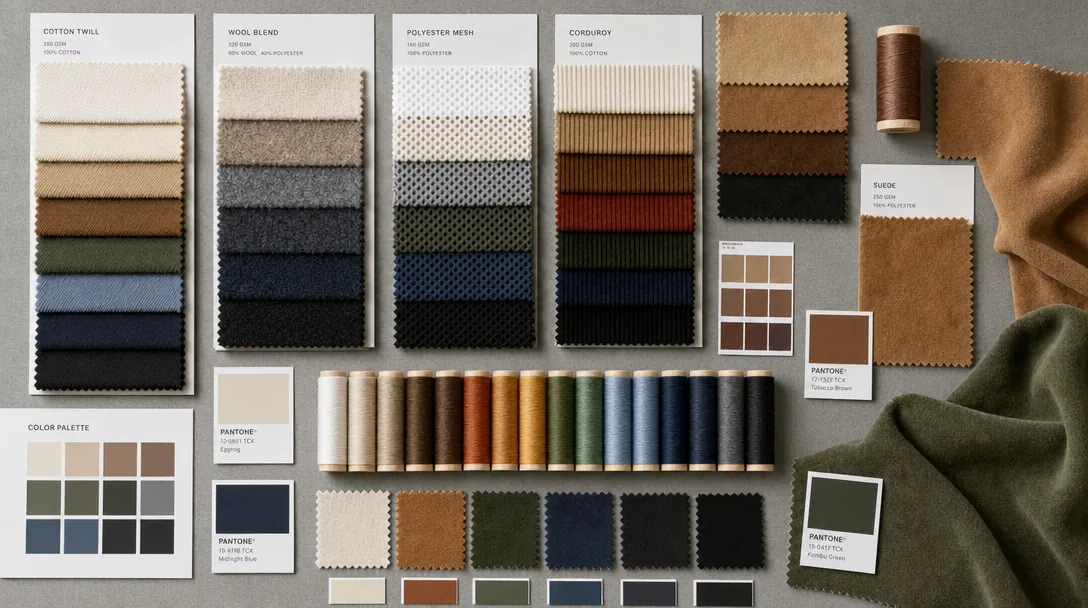
Corduroy Hat Men's: Properties, Costs and How to Spec It Right - Cost & MOQ Breakdown
Read article →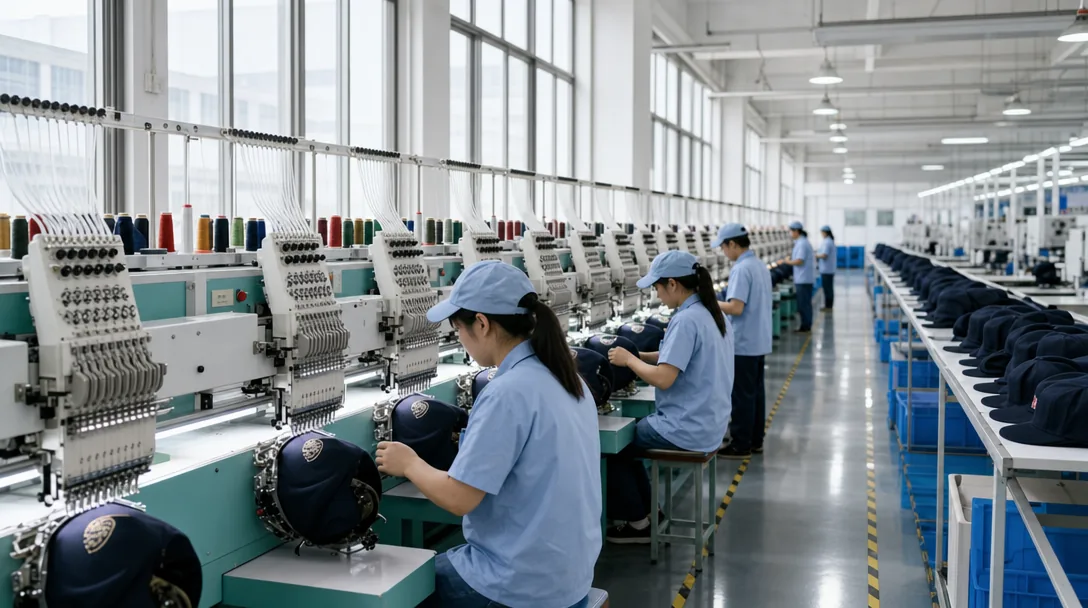
Bulk Trucker Hats Export Shipping Checklist for Custom Hat Buyers
Read article →Camouflage Bucket Hat: Properties, Costs and How to Spec It Right
Read article →We hope this guide demystifies cap defect catalog: 32 production issues to inspect for - cost & moq breakdown and helps you move forward with confidence. If you have questions specific to your project, our English-speaking sales engineers are one message away.