
Corduroy Hat Men's: Properties, Costs and How to Spec It Right - Cost & MOQ Breakdown
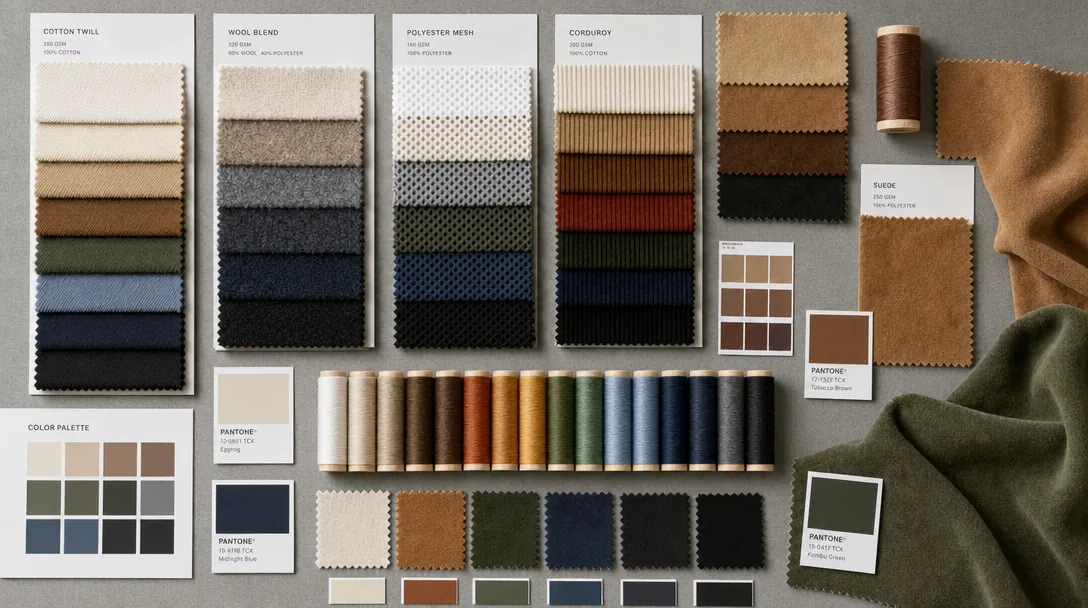
Corduroy Hat Men's: Properties, Costs and How to Spec It Right - Cost & MOQ Breakdown is one of the most-asked questions we receive from international buyers, and for good reason. With dozens of factories competing for your order and an alphabet soup of technical terms in every supplier quote, even experienced importers can feel lost. This guide consolidates what we have learned producing custom hats for clients in 40+ countries.
Bucket Hat Women
Women’s bucket hats are not forgiving; if the brim pitch, crown symmetry, and interlining balance are off, the shape looks cheap before the carton even reaches retail. The most stable builds I see are 4-panel or 6-panel crowns in 8 to 14 wale cotton corduroy, 260 to 320 gsm cotton twill, or 10 to 12 oz canvas, paired with 130 to 170 gsm fusible interlining in the brim. That combination keeps the edge from collapsing after garment wash or enzyme wash. If this style is being developed alongside a corduroy hat men's capsule, use the same approved fabric lot, wale direction, and Pantone TCX standard for both programs. On corduroy, even a Delta-E 1.5 to 2.0 shade shift between dye lots is visible on shelf, especially in black, camel, and forest tones. The dimensions need to be frozen in the first sample round, not negotiated after PPS. Call out crown height, top diameter, front and side brim width, finished circumference, and seam allowance in millimeters. On smaller women’s sizes, a 2 to 3 mm brim deviation is obvious, and an extra 5 mm in crown depth can make the silhouette drop from clean to floppy. Our standard practice is to control top-panel centering, brim roundness, and SPI at the sewing line rather than trying to correct shape at final pressing, because once the brim has been stretched or twisted in stitching, steam only hides the problem for a day or two.
Your tech pack should specify more than fabric and logo placement. Include fiber content, wale count, sweatband material, inside seam finish, stitch-per-inch target, wash recipe, eyelet size, and whether the brim rows are 6 mm or 8 mm apart. If you add embroidery, write the machine and setup assumptions into the comments: Tajima, Barudan, and ZSK heads can all run small curved logos well, but fine-wale corduroy needs lower stitch density, lighter underlay, and a clean cutaway backing or the ribs get crushed and satin edges turn jagged. That point matters even more when the bucket is meant to sit beside a corduroy hat men's style with the same branding, because inconsistent embroidery pull will make the collection look split across factories. MOQ and costing move fast once fabric is locked. A stock-fabric women’s bucket hat is usually practical at 300 to 500 pcs per color, but custom-dyed corduroy often starts around 800 to 1,000 meters per shade, which pushes the real break-even closer to 1,000 to 1,200 pcs depending on marker efficiency. FOB China pricing is typically $2.20 to $3.40 for twill or canvas and $2.90 to $4.80 for corduroy, before upgrades like metal eyelets, printed seam tape, enzyme wash, or woven main labels. For inspection, use AQL 2.5, hold finished circumference to +/-0.5 cm, brim width to +/-3 mm, and check shade under a D65 lightbox. The defects that matter most are brim waviness, off-center crowns, wash puckering, needle cuts on 14 wale corduroy, and logo drift from the front-center line.
Camouflage Bucket Hat
Camouflage bucket hats need to be specified as a print-controlled product first and a sewn hat second. Most factories cut them in 220-280 gsm cotton twill, 210-240 gsm ripstop, or 240-300 gsm brushed canvas; true corduroy is a poor ground because the wale distorts edge definition and makes camouflage read muddy at a distance. That is the opposite of a typical corduroy hat men's development, where texture is the selling point. A commercial bucket build is usually a 4-panel or 6-panel crown, 5.5-6.5 cm brim, 6-8 rows of brim stitching at 3-4 mm pitch, and either 4 embroidered eyelets or 4 metal eyelets depending on target FOB. If the pattern is custom, lock the print route before sampling. Reactive printing on 100% cotton gives a softer hand and usually reaches wash fastness 4-5, while pigment print on CVC can save roughly $0.20-$0.35 per piece at 1,000 units but often shows drier hand feel and heavier crocking in black and dark olive zones. Buyer-ready specs should call out gsm, crown height, brim width tolerance, stitch SPI, eyelet finish, label position, and Pantone TCX references for every solid trim; “army green” is not an approval standard.
The biggest failures on camouflage are shade drift between lots and ugly seam breaks that make the print look cheap even when sewing is acceptable. Require strike-offs before bulk, then seal one master swatch for fabric, sweatband, binding, labels, and thread. For non-printed trims, a Delta-E tolerance of 1.0-1.5 is realistic; anything beyond that becomes obvious once tan, black, and olive sit side by side under store lighting. Ask whether the repeat is engineered for the side seam and brim join, because random placement creates a carton-to-carton mismatch that buyers read as inconsistency. MOQ is normally 300-500 pcs per colorway for stock camo fabric, while custom-printed camouflage is more often 800-1,200 pcs because mills need minimum screen or digital print runs. FOB China for a basic stock-camo bucket hat is typically $2.10-$3.40 at 500 pcs; custom versions with inside taping, woven labels, and metal eyelets land closer to $3.80-$5.60. For inspection, I would use AQL 2.5, hold brim width at +/-0.3 cm, test crocking and colorfastness on dark areas, and watch embroidery density carefully if you add logos. Tajima or Barudan heads can sew over camo cleanly, but heavy underlay will pucker the panel and bury the print, which is exactly the kind of process weakness you do not want carrying into a broader corduroy hat men's program.
Organic Cotton Newborn Hat
Certification is the first gate; if the paperwork is weak, the product is weak no matter how soft the handfeel is. For an organic cotton newborn hat, ask for the mill’s GOTS or OCS scope certificate before yarn or fabric booking, then require a transaction certificate with shipment documents if you are selling on an organic claim. In production, the common builds are 180-240 gsm single jersey or 250-320 gsm 1x1 rib, usually in combed 30s or 40s cotton, sewn on Pegasus or Yamato overlock lines with low-bulk seams so the crown join does not leave pressure marks on infant skin. Keep the style trim-free where possible, specify OEKO-TEX Standard 100 Class I compliant chemistry, azo-free dyes, and formaldehyde under 20 ppm. That spec logic is very different from a corduroy hat men's program, where buyers spend more time on wale count, buckram, and visor recovery than on seam bulk, wash pH, and skin-contact risk.
A loose tech pack is where most newborn programs go sideways. Lock fabric weight at plus or minus 5%, set torque and skew after wash at under 5%, and approve color to Pantone TCX with Delta-E 1.5 max against the sealed lab dip under D65 lighting. Also write in post-wash handfeel, because bio-polish and silicone softener can make the same 220 gsm jersey feel completely different after one home-laundry cycle. MOQ is usually 300-500 pieces per color for a plain stock-shade cap, but custom dyeing, printed labels, FSC gift boxes, or branded belly bands typically push the factory minimum to 800-1,000 pieces. FOB China pricing at 1,000 units is normally $0.78-$1.35 for a basic organic jersey cap, rising to $1.40-$2.20 with water-based print, contrast binding, or certified paper packaging; separate certification fees from CM cost or quote comparisons become meaningless.
Inspection should be stricter than for adult caps because the failure points are functional, not just cosmetic. Use AQL 2.5 for majors and focus on needle cuts in lightweight jersey, seam puckering at the crown, loose thread tails inside the cap, off-grain panels that twist after wash, and incorrect fiber-content or care labels. Measure body height, half opening, and cuff depth across the sample set, and if there has been any broken-needle incident in sewing, require documented needle control and metal detection before packing. For lab work, pH, saliva and perspiration colorfastness, and nickel release matter if snaps are present, although the cleanest newborn program is usually trim-free. A factory that can hold infant compliance, stable knit shrinkage, and label accuracy is usually better prepared later for a corduroy hat men's line, where fabric cost is higher and crown shape consistency becomes the main technical risk.
Beanies for Men
Beanie production is a different animal from a cut-and-sew cap, and that is where buyers coming from a corduroy hat men's program usually get into trouble. A beanie is knitted, not panel-cut, so the spec has to control yarn, gauge, structure, and post-wash measurements instead of crown height, seam tape, and visor shape. “100% cotton beanie” tells the factory almost nothing. A usable tech pack should call out yarn count, fiber content, machine gauge, stitch structure, finished weight, cuff depth, stretch recovery, and wash tolerance. A solid baseline for a men’s cuff beanie is 100% combed cotton in 2/32Nm yarn, knitted at 7G in 1x1 rib, finished weight 85-110 g, body height 21-23 cm, cuff height 7 cm, and opening width 22-24 cm laid flat. For color, specify Pantone TCX and keep bulk approval within Delta-E 1.5-2.0, because cotton yarn lots can drift more visibly than most buyers expect under D65 light. Decoration needs to be frozen early because it changes both the knitting plan and the final hand feel. Direct embroidery on rib knit can sink or tunnel unless the design is digitized for stretch and run with the right underlay on Tajima or Barudan heads. Woven loop labels need seam allowance built into the cuff construction, while TPU, silicone, or faux-leather patches reduce front stretch and can make the beanie flare when worn. In practical costing, Zhejiang factories usually quote plain acrylic beanies at 300-500 pcs per color around $1.10-$1.80 FOB, while 100% cotton versions land closer to $1.80-$3.20 FOB because cotton runs slower, shrinks more in washing, and requires tighter boarding control. Typical add-ons are $0.18-$0.45 for a woven label, $0.35-$0.90 for embroidery, and $0.60-$1.50 for a custom patch, excluding mold charges if the patch is new.
MOQ on beanies is driven less by cutting waste and more by yarn booking, machine time, and color setup. That is the opposite of a corduroy hat men's order, where fabric minimums, wale consistency, and trim sourcing usually set the commercial floor. If the buyer asks for custom-dyed cotton yarn, small lots get expensive fast because the spinner may impose a higher minimum than the knitting factory itself. Gauge also matters: a 3G or 5G chunky beanie eats more yarn and machine minutes than a 7G rib style, so two beanies with the same silhouette can have a 20-35% FOB gap just from construction. If you want reliable costing, specify fiber blend, yarn count, gauge, stitch, fold style, decoration method, and whether the beanie is washed before packing. Inspection should be run at AQL 2.5 with actual measurement points tied to commercial risk: body height, opening width, cuff height, piece weight, logo position, and color continuity between cartons. The defects that trigger claims are predictable: uneven rib density, spiraling after wash, loose crown linking, dropped stitches, needle lines, embroidery puckering, and cuffs folding off-grain. Our standard practice is to approve yarn shade cards before bulk knitting and recheck after washing and boarding, because that is where shade shift shows up. On cotton beanies, a 3-5% dimensional change after wash is normal unless the structure is heavily stabilized, so promising cap-style tolerances is a rookie mistake. Buyers who lock the knit spec with the same discipline they use on a corduroy hat men's cap usually avoid the expensive back-and-forth in bulk production.
Corduroy Hat Wholesale
The biggest wholesale mistake is treating corduroy like brushed twill. For a stable corduroy hat men's program, lock the wale count before you ask for pricing, because it changes cutting yield, seam behavior, and logo clarity. In practice, most cap-ready cloth is 8-wale to 11-wale, usually 280-320 gsm in 100% cotton or a cotton/spandex blend around 97/3 for softer hand feel. Finer 14-wale reads more fashion-forward on unstructured 6-panels, but it is less forgiving on curved seams and shows seam grin faster on visor wraps and front-panel joins. Nap direction is non-negotiable in the tech pack: if crown panels, top button, and visor are cut against each other, you will see a visible shade swing under 4000K-5000K retail LED even when the lab dip matches Pantone TCX. A usable spec should call out fiber content, wale count, gsm tolerance of plus or minus 5%, crown structure, visor shape, buckram weight, sweatband material, and a panel-matching requirement for nap and dye lot.
Embroidery is where weak factories get exposed, because corduroy punishes bad digitizing immediately. A fill file built for chino twill will sink between ribs, tunnel, or fracture the wale surface, especially on soft front panels without 0.4-0.6 mm fused interlining. On Tajima, Barudan, or ZSK heads, wide-wale fabric usually needs lower stitch density, a firmer edge run, stronger underlay, and in many cases a switch from full fill to satin columns, felt appliqué, or woven patch to protect the nap. Buyers should specify backing type, front-panel support, closure hardware, eyelet finish, seam tape quality, and logo method up front because each choice changes rejection risk and SAM time. Cost also moves more than most buyers expect: in Zhejiang, a standard 6-panel corduroy cap with flat embroidery, cotton sweatband, and metal buckle is typically $2.80-$4.60 FOB Ningbo at 300 pieces in stock fabric, while enzyme wash, custom tape, chain stitch, or mixed-material trims push it into the $5.20-$7.50 range. Stock-color programs can start at 144-300 pieces per colorway, but custom-dyed corduroy often follows real mill minimums of 500-1,000 meters per shade, which is where MOQ planning usually breaks.
Inspection has to focus on defects approval photos hide. The critical checkpoints are nap consistency across all six panels, broken wales from needle penetration, center-front puckering, visor symmetry within a 3-5 mm tolerance, embroidery registration, and color variance between crown, strap, and self-covered button. AQL 2.5 is acceptable for most promotional and mid-market orders, but premium retail programs should tighten visual standards on front-panel matching and require dyed-lot control with Delta-E targets, typically under 1.5 to 2.0 on dark olive, brown, and navy where lot shift is common. Pressing is another failure point: too much heat or pressure will glaze the ribs permanently, flatten the nap, and telegraph sweatband shadowing onto the side panels. At CrownsForge, we verify whether the fabric was steam-relaxed or pre-shrunk before cutting, and we record the interlining spec used on salesman sample versus bulk, because repeatability—not just a low quote—is what keeps a corduroy hat men's order out of rework.
Wholesale Hat Manufacturers Usa
Most buyers looking at wholesale hat manufacturers in the USA are not buying the same service model, and that mistake blows up costing on a corduroy hat men's program. In practice, “USA manufacturer” usually means one of three things: domestic cut-and-sew, imported blanks decorated in the U.S., or offshore production stocked in a U.S. warehouse and shipped domestically. Those are three different cost structures, lead times, and country-of-origin positions. A true 6-panel corduroy cap normally uses 8W to 12W cotton corduroy in the 230 to 280 gsm range, plus fused front panels, 1.8 to 2.2 mm PE brim board, cotton twill sweatband, seam tape, metal slide or snapback closure, and embroidery run on Tajima, Barudan, or ZSK heads. If a supplier claims Made in USA, ask where the shell fabric, buckram, closure, sweatband, and thread are sourced; plenty of shops in California, New Jersey, and Texas are sewing imported inputs. That is not inherently a problem, but it changes labeling compliance, replenishment flexibility, and how you should compare quotes. The spec sheet is where margins usually leak. For corduroy hat men's, lock the wale count, fiber content, finished weight tolerance of plus or minus 5 percent, Pantone TCX reference, and an approved shade tolerance of Delta-E 1.5 to 2.0 under D65 lighting. Then fix crown height, visor length, closure spec, sweatband construction, embroidery stitch count, artwork size, seam tape print, wash treatment, and carton pack-out. Garment wash or enzyme wash can improve hand feel, but it also changes shrinkage, panel skew, and visor memory, so you need that risk priced upfront. U.S.-based MOQ is commonly 144 to 288 pieces per color for standard embroidery, while custom-dyed corduroy, appliqué, or mixed closure programs usually start closer to 300 to 500 pieces. Current market pricing is roughly $7.50 to $11.50 per piece for domestic assembly, versus about $3.20 to $5.80 FOB China before duty, freight, and inland delivery. Corduroy needs tougher final inspection than brushed twill because the pile exaggerates visual defects under retail lighting. The first checkpoint is nap direction: one panel cut against the pile can make the same dye lot read like two different colors. After that, inspect brim symmetry within plus or minus 3 mm, top button centering, front-panel puckering at the buckram edge, seam slippage on side joins, and whether small lettering sinks into the pile instead of sitting cleanly on top. AQL 2.5 works for most bulk orders, but better retail accounts usually add stricter visual screening for crown shape recovery after carton compression and color continuity across the full dozen. Most disputes on corduroy caps come from weak specs, not factory failure. Low-density buckram collapses, cheap hook-and-loop loses holding power fast, and poor sweatbands can bleed after perspiration or wash testing. If domestic labeling and short replenishment cycles matter, a U.S. source can justify the premium; if target cost drives the brief, offshore production usually wins.
Working with CrownsForge for corduroy hat men's programs
The fastest way to de-risk a corduroy hat men's program is to lock the fabric and cap architecture before you debate logo treatment. Wale count is not a cosmetic detail; it changes cutting yield, seam bulk, and how clean the front panel looks after sewing. An 8-wale 100% cotton corduroy at 300 to 320 gsm behaves very differently from an 11-wale cotton-poly blend at 280 gsm, especially on the center-front seam and visor wrap. If you are building a soft unstructured 6-panel, heavier ribs can work because the body can relax around the pile. If you want a high-profile trucker-style crown with buckram, the same fabric can telegraph puckering fast unless the nap direction is kept consistent in cutting and the operator controls feed pressure. Our standard practice is 5 to 7 working days for a first prototype on a proven body, but once you add Pantone-matched lining, custom woven taping, branded metal closure hardware, or inside labels, 7 to 10 working days is the realistic window.
MOQ should be framed around process risk, not just unit price. For most corduroy hat men's orders, 144 pieces per colorway is the practical bulk MOQ when the shell fabric is mill-ready and the decoration method is already proven. You can usually test at 48 to 72 pieces if you keep the pattern unchanged, use one closure, and avoid mixing embroidery with multiple patch constructions on the same style, but below that point defect cost starts rising faster than the freight savings. Corduroy rejects are usually predictable: nap shading between panels, seam slippage on bulky joins, mismatched wale direction, and crushed pile around the crown edge where weaker factories over-handle the cut parts. Decoration is where this shows up immediately. On Tajima, Barudan, or ZSK heads, dense fill embroidery will sink into the ribs unless stitch density is opened up, pull compensation is widened, and underlay is built for the pile. On medium-wale fabric, text under roughly 4.5 mm cap height rarely holds cleanly, so woven patches, merrowed badges, chain stitch, or thin PU labels are often the safer choice.
The operational side needs to be boring, documented, and measurable. Before bulk cutting, the tech pack should fix fabric composition, gsm tolerance, wale direction, visor board thickness, sweatband material, needle count, closure finish, carton ratio, and shade approval standard. If color matters across repeat orders, do not accept a visual-only approval; lock Pantone TCX references and agree a bulk tolerance such as Delta-E under 1.5 to 2.0 on the base fabric, with a separate note that pile reflection will shift perceived shade under side light. Compliance paperwork should also be settled early, not after ex-factory booking: sedex-audit-cap-supplier-guide.html">BSCI 2.0 or Sedex SMETA 4-Pillar audit reports, azo-free dye declarations, REACH screening for metal trims and PU patches, and CPSIA-ready component data for U.S. retail programs are common asks. Bulk lead time is typically 25 to 35 days after sample approval and deposit, followed by final inspection at AQL 2.5. That is the difference between a one-off fashion bet and a repeatable corduroy hat men's sourcing program.
Frequently Asked Questions
How long does production take?
Sampling takes 7 to 12 days. Bulk production runs 20 to 30 days depending on quantity, fabric availability and decoration complexity. Inspection and packing adds another 3 to 5 days before shipment.
What logo decoration techniques do you offer?
3D puff embroidery, flat embroidery, woven patch, leather patch, PVC patch, screen printing, sublimation, applique and laser etching, all in-house with no subcontracting.
Which shipping methods do you support?
We support FOB, CIF and DDP shipping. Air express for samples and small orders, sea LCL for 100 to 500 pieces, sea FCL for 5,000+ pieces. Door-to-door DDP available for US, EU, UK, Canada and Australia.
What is the minimum order quantity (MOQ) for custom hats?
Our standard MOQ is 100 pieces per design and color, with sampling available from 1 piece. For complex multi-color logos or premium fabric upgrades, the MOQ can be lowered with a small per-piece surcharge.
What file format should I send for my logo?
Vector files (AI, EPS, PDF) are ideal. High-resolution PNG or JPG at 300 dpi on transparent background works as a fallback. Provide Pantone color references for accurate reproduction.
What should buyers know about organic cotton hat?
When evaluating organic cotton hat, the key considerations are construction quality, decoration capability, MOQ flexibility and lead time. Cover everything buyers ask about organic cotton newborn hat: how it's manufactured, what specs to request from a factory, typical MOQ and pricing, common quality issues to inspect for, and how this ties back to the broader corduroy hat men's sourcing decision. Cover everything buyers ask about bucket hat women: how it's manufactured, what specs to request from a factory,…
What should buyers know about cotton beanie men?
When evaluating cotton beanie men, the key considerations are construction quality, decoration capability, MOQ flexibility and lead time. Cover everything buyers ask about organic cotton newborn hat: how it's manufactured, what specs to request from a factory, typical MOQ and pricing, common quality issues to inspect for, and how this ties back to the broader corduroy hat men's sourcing decision. Cover everything buyers ask about bucket hat women: how it's manufactured, what specs to request from a factory,…
What should buyers know about men's corduroy bucket hat?
When evaluating men's corduroy bucket hat, the key considerations are construction quality, decoration capability, MOQ flexibility and lead time. Cover everything buyers ask about bucket hat women: how it's manufactured, what specs to request from a factory, typical MOQ and pricing, common quality issues to inspect for, and how this ties back to the broader corduroy hat men's sourcing decision. Cover everything buyers ask about camouflage bucket hat: how it's manufactured, what specs to request from a factory,…
What should buyers know about organic cotton men's shirts?
When evaluating organic cotton men's shirts, the key considerations are construction quality, decoration capability, MOQ flexibility and lead time. Cover everything buyers ask about organic cotton newborn hat: how it's manufactured, what specs to request from a factory, typical MOQ and pricing, common quality issues to inspect for, and how this ties back to the broader corduroy hat men's sourcing decision. Cover everything buyers ask about bucket hat women: how it's manufactured, what specs to request from a factory,…
Ready to start your custom hat project?
Send us your tech-pack, sketch or even just an inspiration photo. We will respond with a detailed quotation and digital mock-up within 24 hours.
Request a free quoteRelated guides
Cotton Beanie: Properties, Costs and How to Spec It Right - 2026 Buyer's Guide
Read article →Corduroy Hat Vintage MOQ And Pricing Plan for Custom Hat Buyers
Read article →
Baseball Hats For Men Fabric And Trim Spec Guide for Custom Hat Buyers
Read article →If you are ready to take the next step on corduroy hat men's: properties, costs and how to spec it right - cost & moq breakdown, our team can put a tailored quotation and digital mock-up in your inbox within 24 hours. Send the inquiry form on our contact page or message us directly on WhatsApp.