
Cotton Beanie: Properties, Costs and How to Spec It Right - 2026 Buyer's Guide
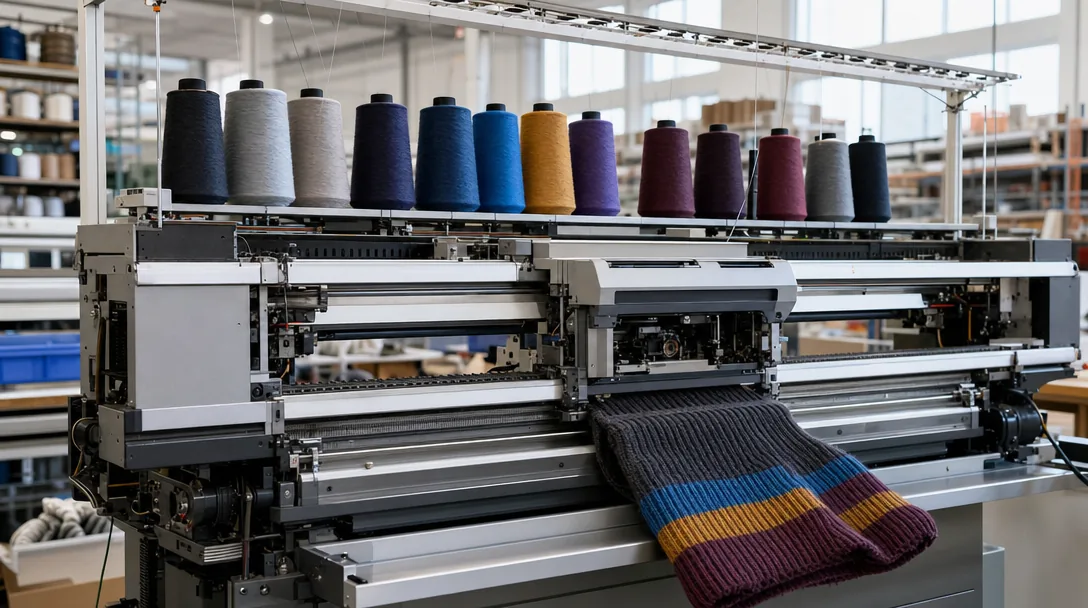
Every week, our sales team answers detailed questions about cotton beanie: properties, costs and how to spec it right - 2026 buyer's guide. We wrote this guide so that wholesalers, streetwear brands, corporate buyers and promotional resellers can compare options with full information, and avoid the traps that show up only after production has started.
Organic Cotton Newborn Hat
Traceability is the non-negotiable starting point for an organic cotton newborn hat; hand feel proves nothing if the yarn lot cannot be traced. For this cotton beanie, require GOTS or OCS transaction certificates linked to the exact spinner and lot number, plus OEKO-TEX Standard 100 Class I coverage for dyestuffs, silicone softeners, sewing thread, and any print chemistry. The safest fabric window is usually 180-220 gsm combed ring-spun single jersey for a lighter cap or 240-280 gsm 1x1 rib for better opening recovery. Below roughly Ne 26/1, all-cotton jersey tends to distort faster after wash, especially on infant sizes where a few millimeters matter. If the style uses 3-5% elastane, the content claim has to be written correctly: the cotton can be certified organic, but the finished blend is not automatically “100% organic.” That distinction gets mishandled constantly on supplier paperwork. Construction should be engineered for skin contact and repeat washing, not decoration. I would spec a 4-thread overlock on the body panels, a 2-needle coverstitch or self-fabric binding at the opening, and no bulky back-center seam allowance pressing into the crown. Keep seam allowance at 0.6-0.8 cm, loose thread ends under 3 mm, and insist on documented needle control and broken-needle logs on the sewing floor. Infant-safe trims mean no metal badges, no detachable patches, no drawcords, and only nickel-free snaps if absolutely necessary. Shade control also needs to be tighter than many buyers expect: for reactive-dyed fabric, set bulk approval at Delta-E 1.0-1.2 to the sealed lab dip, and require passing results for azo-free chemistry, saliva colorfastness, and perspiration colorfastness before cutting starts.
The spec sheet for a newborn cotton beanie should be tighter than a standard promo cap because fit drift shows up immediately on infant sizes. Lock finished head circumference by age band, list both pre-wash and post-wash measurements, and hold fabric weight at plus or minus 5%. On performance, I would cap shrinkage at under 5% after a 40°C domestic wash and check spirality on any single-jersey body; lightweight organic knits often pass sewing inspection and still torque badly after laundering. Rib openings should recover without edge waviness after extension testing, and embroidery should stay below about 5,000 stitches with soft backing, low-density digitizing, or no backing at all. If you want print, water-based ink is usually the safer route, but only after the chemical package is confirmed for infant compliance. MOQ and FOB cost move mainly with dye strategy and certification handling. Custom-dyed certified organic fabric usually needs about 1,000-1,500 pieces per color to make sense at the mill, while stocked greige or ready-dyed programs can sometimes run at 300-500 pieces per size-color. In China, a plain certified newborn cotton beanie is typically around $0.85-$1.60 FOB depending on gsm, certification paperwork, and packing method. Add-ons like printed care labels, fold cards, belly bands, or FSC-certified paper packaging can add $0.06-$0.22 per unit quickly. The bulk failures I see most often are crown seam grin, oil contamination, opening misgrading, rib rebound loss, and wash torque that stays within sewing tolerance but fails actual fit. Those are the defects worth targeting in pre-production wash tests and final inspection at AQL 2.5.
Black Beanie Hat
Black exposes every shortcut. Under 4000K retail LEDs, a black cotton beanie will immediately show shade drift, seam grin, lint attraction, and crocking that would hide on heather gray. Do not write “black” on the PO and hope the mill understands. Lock the color to a Pantone TCX reference, approve a lab dip, and hold bulk within Delta-E 1.0 to 1.5 against the sealed standard; once you get past that, carton-to-carton variation is visible to the naked eye. For fabric, most commercial black beanies sit in 2x2 rib or single jersey at 220 to 300 gsm. A 100% combed cotton build gives a cleaner face for embroidery and a softer hand, but recovery is noticeably weaker than a 95/5 cotton-spandex knit after repeated wear and 20 wash cycles. If the style is cuffed and needs to hold a sharp silhouette on shelf, that 5% spandex usually pays for itself in fewer fit complaints and lower returns.
Write the spec like an engineering sheet, not a concept brief. For an adult black cotton beanie, a practical starting spec is 21 to 23 cm finished height, 20 to 22 cm opening width flat, cuff depth 6 to 8 cm, piece weight 65 to 90 g, and shrinkage under 5% in both warp and weft after a 40 C wash. Add stitch density, seam construction, and spirality tolerance, because black rib that twists after laundering looks cheap fast. If you are adding embroidery, call out exact placement, backing, max stitch count, and distortion limits. Tajima and Barudan heads can run beanies cleanly, but dense fills on lighter knits will tunnel unless the stabilizer and hooping match the gsm. In 2026, a realistic MOQ is 300 to 500 pieces per color. FOB China is typically $1.10 to $1.80 for a plain 100% cotton version and $1.60 to $2.60 with standard front embroidery; GOTS yarn, custom labels, and individual polybags push that number up quickly.
Most black-beanie failures are predictable before shipment: spirality, crown seam grin, cuff torque, dye crocking, and oil marks from knitting or finishing. Black reactive dyeing is less forgiving than mid-tones, so appearance approval is not enough. Standard practice is AQL 2.5 final inspection plus extra pulls for wash, stretch-recovery, and dry/wet rub testing, because poor fixation can stain woven labels, sweatbands, or adjacent garments during transit. On cut-and-sew rib styles, check wale alignment front to back; if the ribs drift, the beanie reads off-grade even when sewing is technically passable. Also separate yarn quality from sewing quality when you source. Open-end cotton can hit an aggressive cost target, but it pills sooner, feels drier, and loses rebound faster than combed ring-spun yarn. If the program is for baby, organic, or private-label retail, require azo-free dyestuffs, formaldehyde compliance, and documented needle control, and verify whether knitting, dyeing, and finishing are in-house or subcontracted, because that is where black shade consistency usually starts to slip.
Slouchy Beanie
A slouchy silhouette lives or dies on drape-to-recovery balance; most bad samples fail because the crown is too short, the stitch is too tight, or the yarn has no rebound. For an adult cotton beanie that actually wears slouchy instead of just oversized, I’d spec finished height at 27-30 cm, relaxed opening circumference at 42-46 cm, and a cuffless body or self-fold no deeper than 4 cm. In production, 9GG and 12GG flat-knit programs are the normal range, but gauge by itself is not the control point. Stitch length, wale density, and yarn elasticity decide whether the crown drops cleanly or stands up like a helmet. A 100% combed cotton beanie in 21s/2 or 32s/2 yarn gives the best handfeel and airflow, but pure cotton recovers poorly after repeated wear, so a 2x2 rib structure, Milano knit, or 3-5% elastane plating is usually what keeps the opening from growing out after wash and fit testing. Keep adult and infant slouch styles on separate tech packs. Buyers often try to scale down one pattern, but newborn construction changes at the root level: shallower crown depth, lower opening tension, softer seam bulk, azo-free trims, and a different compliance path under CPSIA or REACH. If the beanie will be garment washed or enzyme washed for a softer hand, write shrinkage expectations into the spec instead of arguing after bulk comes back short; 3-5% dimensional change is common unless the exact yarn lot and wash recipe were lab-tested in advance. Color also needs to be locked early on a cotton beanie, especially black, olive, stone, and vintage pigment shades. I’d call out Pantone TCX, approve a lab dip, and hold bulk within Delta-E 1.5 for core retail programs.
A factory cannot quote a slouchy cotton beanie from mood boards alone. You need yarn count, fiber composition, machine gauge, stitch density, finished weight, crown closure method, wash standard, and point-of-measure tolerances before the price is worth anything. A realistic adult spec lands around 60-90 g per piece, with post-wash tolerance at ±1 cm on body height and opening circumference. Crown finishing matters more than many buyers realize: a 4-point top closure is cheaper, but a 6-point or linked closure usually gives a cleaner fall on softer slouch programs because the top doesn’t peak as aggressively. Our standard practice is to confirm handfeel against the approved sample after wash, not before, because cotton loft, torque, and panel recovery can shift noticeably once the finishing is done. Decoration is where slouchy programs get ugly fast. Dense front embroidery on a soft crown tends to tunnel, pucker, or collapse the drape, especially once you push past 8,000-10,000 stitches on Tajima or Barudan heads. If the artwork is mandatory, I’d reduce fill density, switch to a lighter underlay, or move branding to a woven flag label, folded loop label, or hem tab. On cost, a standard solid-color cotton beanie usually lands around $1.90-3.40 FOB China at 500-1,000 pieces, depending on yarn grade, gauge, and decoration. Organic cotton, custom-dyed yarn, or GOTS-backed sourcing more often comes in at $2.80-4.80 FOB, with MOQ typically 300-500 pieces per color and higher if the spinner has to open a special yarn lot.
Cotton Twill Baseball Cap
Most quality failures on a cotton twill baseball cap start long before sewing, at fabric approval. “100% cotton twill” is not a workable spec any more than “cotton beanie” is a full knit spec; for repeatable production you need yarn count, weave construction, finished weight, hand feel, color standard, and shrinkage limits written into the PO. For structured retail caps, 10x10 or 16x12 cotton twill at 240-280 gsm is the safe band because it supports buckram cleanly and resists panel distortion after embroidery. For softer unstructured builds, 21x21 twill around 200-220 gsm handles better and gives a more relaxed crown without looking flimsy. If the program will reorder, approve shell fabric to a Pantone TCX standard and write color tolerance into the spec: Delta-E under 1.5 for visible shell panels is achievable, while under 2.0 is acceptable for sweatband, seam tape, and underbill where lot variation is less obvious. The production sequence is straightforward and still easy to ruin: 4-point fabric inspection, relaxed lay cutting, buckram fusing, embroidery on Tajima or Barudan heads, panel joining, eyelet stitching, visor insertion, sweatband closing, and final blocking. Twill is unforgiving because the diagonal wale makes off-grain cutting, seam grin, puckering, and bill skew visible at a glance. A usable tech pack should lock crown height, visor profile, closure type, eyelet thread color, top button diameter, sweatband composition, and embroidery settings including stitch count, pull compensation, underlay, and backing weight. A 9,000-12,000 stitch front logo is routine, but dense fills on 260 gsm twill will tunnel if the digitizing is sloppy or the underlay is too aggressive. Our standard practice is to reject any lot above 3% wash shrinkage or with unstable shade between dye lots, because those problems do not improve later in sewing or packing.
Pricing moves fast once the details are real. Stock-color cotton twill caps usually sit at 144-300 pieces per colorway, but custom-dyed fabric, enzyme wash, brushed finish, or specialty trims normally push the workable MOQ to 500-1,000 pieces because the mill and wash house both need volume. A basic 6-panel cap with flat embroidery and Velcro closure is commonly around $1.80-$3.20 FOB Ningbo; add a metal buckle, woven label set, sandwich brim, contrast underbill, or garment wash and the more honest range is $3.40-$4.80. If the order is going into licensed sports, chain retail, or big promo distribution, ask for azo-free dye compliance, fiber composition reports, needle policy logs, and current social audit status such as sedex-audit-cap-supplier-guide.html">BSCI 2.0 or Sedex SMETA 4-Pillar. Those documents tell you whether the supplier actually controls production or is only brokering it. Inspection is where weak cap orders should be stopped. The repeat defects on cotton twill are front seam grin, bill asymmetry, embroidery registration drift, skipped topstitching, sweatband torque, and shade mismatch between crown, button, and visor wrap. I would hold bulk to AQL 2.5, measure finished circumference to within +/-0.5 cm, verify brim symmetry on a flat fixture, and check color under D65-equivalent light rather than warehouse fluorescents. For washed styles, test crown collapse, visor edge abrasion, and needle-hole opening after compression packing, because lighter twills mark easily after a long ocean transit. The same sourcing logic applies to any cotton beanie supplier: if a factory cannot hold shade, shrinkage, and hand feel on woven cotton headwear, it usually will not deliver consistent knit cotton programs either.
Organic Cotton Hat
Organic claims on a cotton beanie mean nothing without transaction-level traceability. A credible program should include GOTS or OCS certificates tied to the exact yarn lot, plus dyehouse batch records, trim declarations, carton packing lists, and internal lot coding that survives a BSCI 2.0 or Sedex SMETA 4-Pillar audit. Most failures happen at the accessory level, not the shell: sewing thread defaults to conventional polyester, elastane content in a rib cuff goes undeclared, and a woven label or heat-transfer care label can break the fiber claim if the supplier is not controlling every input. In production, the safest baseline is 100% combed ring-spun organic cotton in 21s/2 or 32s/2 yarn, knitted in single jersey or 1x1 rib, with finished fabric weight around 180-280 gsm. If the cotton beanie is for infants or baby retail, tighten the compliance spec immediately: azo-free reactive dyes, formaldehyde within babywear limits, pH 4.0-7.5, documented needle-control logs, and nickel-free metal parts if any snap or decorative fastener is added.
The cheapest mistake is an incomplete spec pack. For a repeatable organic cotton beanie, write down the certification standard, yarn count, knitting gauge, finished height and opening, point-of-measure tolerance, wash method, and shrinkage limit after one domestic wash at 30°C. Color control should be contractual, not verbal: approve lab dips against a Pantone TCX reference and cap tolerance at Delta-E 1.0-1.5 under D65 lighting, otherwise “natural,” “oatmeal,” and “off-white” will drift across reorders. In Zhejiang knitting clusters, MOQ for a plain cotton beanie is usually 300-500 pieces per color, but jacquard logos, yarn-dyed stripes, folded cuffs, or custom woven labels typically push the run to 800-1,000 pieces. A realistic 2026 cost for a basic GOTS-certified style at 1,000 pieces is about $1.65-$2.60 FOB China; a double-layer rib version with cuff embroidery on Tajima or Barudan heads generally lands closer to $2.40-$3.80 FOB.
Bulk inspection on a cotton beanie is mostly about shape retention and shade control, not dramatic sewing defects. The costly failures are seam torque after wash, weak rib recovery, uneven crown shaping, needle lines from over-tensioned linking, and shade variation between dye lots; none look catastrophic on paper, but they trigger chargebacks because the hat loses its silhouette on shelf and after wear. A practical release standard is AQL 2.5 with extra checkpoints for crown and cuff stitch security, measurement tolerance, shade banding under light-box review, and wash-test approval before bulk ships. Buyers also make a category mistake when they assess a cotton beanie like a structured cap. Knits depend on yarn stability, gauge consistency, dyehouse control, and finishing discipline; caps are driven more by panel cutting, buckram behavior, visor curve, and sewing balance. If a supplier handles both categories, separate the approval path early and ask for wash-test records, color continuity controls, and recent compliance status before scaling the order.
Cotton Beanie Men
Construction is the first commercial decision, because men’s cotton beanie returns usually come from shape loss, seam torque, or bad shrinkage rather than dramatic visual defects. For most programs you are choosing between cut-and-sew jersey made from circular-knit fabric and fully fashioned rib knit on 7GG to 12GG flat machines. Cut-and-sew is common for lighter streetwear fits at roughly 180 to 260 gsm, but it exposes every weakness in yarn quality, spirality control, and side-seam balance after washing. A fully fashioned cotton beanie costs more, yet crown shaping is cleaner and dimensional stability is better, especially when you spec 95% cotton / 5% spandex or plate in 20D to 40D elastane for recovery. “100% cotton” is not a usable spec on its own. Buyers should lock yarn type as combed or carded, knit structure as single jersey or 2x2 rib, dye route as reactive dye, sulfur dye, or pigment wash, and target shrinkage after one home-laundry cycle. For adult men’s sizing, a practical spec is finished width 21 to 23 cm, body height 27 to 29 cm, cuff height if folded, weight tolerance ±5%, and bulk shade control to approved Pantone TCX within Delta-E 1.5.
A workable spec sheet should call out every failure point before bulk starts: yarn count or gsm, machine gauge, top closure, seam construction, logo application, wash standard, folding method, carton ratio, and tolerance at each POM. Embroidery is where a lightweight cotton beanie often gets ruined. Dense fills on single jersey will tunnel or pucker unless the file is digitized correctly for Tajima, Barudan, or ZSK heads, with lighter underlay, reduced stitch density, and backing matched to fabric weight; on soft 180 to 220 gsm jersey, a woven patch or HD print is often safer than direct embroidery. In China, MOQ is typically 300 to 500 pieces per color in stock yarns, but GOTS-certified cotton, custom dye lots, or low-impact chemistry usually pushes minimums higher because small dye bookings are inefficient. Ex-factory pricing in 2026 is commonly around $1.10 to $1.90 for basic jersey, $1.80 to $3.20 for rib knit with a woven patch, plus $0.20 to $0.60 for enzyme wash, barcode sticker application, or recycled polybag packing.
Inspection should focus on the claims that actually trigger debit notes: spirality after wash, side-seam torque, uneven crown points, needle lines, slubs, oil stains, off-center logos, and handfeel variation between dye lots. I would hold a cotton beanie order to AQL 2.5, measure key points both before and after wash, and require test data for colorfastness to dry crocking, wet crocking, and perspiration, especially on black, navy, olive, and red where failure rates are higher. For retail programs, ask for approved shade bands, a defined rework standard for puckering or seam twist, and bulk fabric panels retained against the approval sample. A supplier that mainly builds structured caps often underestimates knit recovery, gauge stability, and finishing control, which shows up later as inconsistent fit on replenishment. Our standard practice is to add metal detection for infant or gift-retail knit hats even when the customer does not specify it, because broken needle risk is low but not theoretical. The bigger sourcing point is simple: if the factory cannot discuss shrinkage, gauge drift, and post-wash tolerance in numbers, they are not ready for a serious men’s cotton beanie program.
Working with CrownsForge for cotton beanie programs
Most cotton beanie delays start in the brief, not on the knitting floor. If gauge, finished weight, cuff depth, body height, label position, and logo size are still vague after kickoff, the first prototype is just an expensive guess. For a commercial program, the buyer should lock at least yarn count, rib structure, target weight in grams, flat measurements, Pantone TCX references, and tolerance bands before sampling starts. A competent factory can usually return a digital spec review in 24 to 48 hours, make a first sample in 5 to 7 working days on stock shades, and turn a revised pre-production sample in another 3 to 5 days after comments. If the cotton beanie uses custom-dyed yarn, add 7 to 10 days for lab dips and bulk shade approval; for solid colors, a Delta-E below 1.5 against the approved standard is a practical pass mark, not a luxury. MOQ needs the same level of honesty. A plain 1x1 rib cotton beanie with a cuff is often workable at 100 to 300 pieces per color, but once you add jacquard logos, yarn-dyed stripes, contrast tipping, or multiple trims, the real commercial floor usually moves to 500 to 1,000 pieces. Below that, knitting efficiency drops, yarn waste climbs, and unit cost gets distorted by setup time. In our standard practice, buyers who provide a signed tech pack covering gauge, target weight, cuff height tolerance, carton assortment, and approved branding placement usually avoid one full round of resampling, which is where most small programs lose both margin and calendar.
Decoration is where a cotton beanie program either stays controlled or starts drifting. The reliable in-house options are flat embroidery on Tajima or Barudan heads, woven-label insertion into the cuff seam, merrowed or laser-cut twill patches, and heat transfers for short-run event programs. 3D foam embroidery is technically possible, but only on heavier knit structures that can support the loft; on soft fine-gauge ribs, dense stitch files cause tunneling, puckering, and panel distortion quickly. On a standard adult 1x1 rib body, keeping a front logo around 6,000 to 8,000 stitches is a sensible ceiling unless the area is backed with cutaway or another stabilizer. Serious buyers should ask who digitizes the file, whether stitch density is adjusted for knit stretch, and whether trim pull strength and placement are verified before bulk packing. Process control matters more than a cheap FOB quote. Before bulk yarn is booked, the factory should confirm knit gauge, finished measurements, cuff height tolerance, label placement, color standards, and packing ratio in writing. The real checkpoints are incoming yarn inspection, pilot-run approval, inline checks during linking and sewing, decoration sign-off, and final random inspection at AQL 2.5 unless the retailer specifies AQL 4.0. If the cotton beanie program includes organic claims or children’s product requirements, the document set should be ready without chasing: BSCI 2.0 or Sedex SMETA 4-Pillar audit reports, OCS or GOTS transaction certificates where applicable, REACH support for trims, and CPSIA files for U.S. kids’ programs. That paperwork is what keeps a 300-piece trial order scalable when replenishment grows to 5,000 or 10,000 units across multiple colors.
Frequently Asked Questions
What is the minimum order quantity (MOQ) for custom hats?
Our standard MOQ is 100 pieces per design and color, with sampling available from 1 piece. For complex multi-color logos or premium fabric upgrades, the MOQ can be lowered with a small per-piece surcharge.
Which shipping methods do you support?
We support FOB, CIF and DDP shipping. Air express for samples and small orders, sea LCL for 100 to 500 pieces, sea FCL for 5,000+ pieces. Door-to-door DDP available for US, EU, UK, Canada and Australia.
Do you support sustainability certifications?
Yes. We work with GOTS organic cotton, GRS-certified recycled polyester, OEKO-TEX Standard 100 fabrics, and are BSCI and Sedex audited. Certification documentation can be provided per order.
Can I order a sample before bulk production?
Yes. We strongly recommend approving a pre-production sample before mass production. Samples are charged at 35 to 60 USD each plus express shipping, fully refundable against confirmed bulk orders over 500 pieces.
What file format should I send for my logo?
Vector files (AI, EPS, PDF) are ideal. High-resolution PNG or JPG at 300 dpi on transparent background works as a fallback. Provide Pantone color references for accurate reproduction.
What should buyers know about corduroy hat men's?
When evaluating corduroy hat men's, the key considerations are construction quality, decoration capability, MOQ flexibility and lead time. Cover everything buyers ask about organic cotton newborn hat: how it's manufactured, what specs to request from a factory, typical MOQ and pricing, common quality issues to inspect for, and how this ties back to the broader cotton beanie sourcing decision. Cover everything buyers ask about black beanie hat: how it's manufactured, what specs to request from a factory,…
What should buyers know about organic cotton hat?
When evaluating organic cotton hat, the key considerations are construction quality, decoration capability, MOQ flexibility and lead time. Cover everything buyers ask about organic cotton newborn hat: how it's manufactured, what specs to request from a factory, typical MOQ and pricing, common quality issues to inspect for, and how this ties back to the broader cotton beanie sourcing decision. Cover everything buyers ask about organic cotton hat: how it's manufactured, what specs to request from a factory,…
How do I find a reliable wholesale hat manufacturers?
When evaluating wholesale hat manufacturers, the key considerations are construction quality, decoration capability, MOQ flexibility and lead time. Cover everything buyers ask about organic cotton newborn hat: how it's manufactured, what specs to request from a factory, typical MOQ and pricing, common quality issues to inspect for, and how this ties back to the broader cotton beanie sourcing decision. Cover everything buyers ask about black beanie hat: how it's manufactured, what specs to request from a factory,…
What should buyers know about cotton beanie men?
When evaluating cotton beanie men, the key considerations are construction quality, decoration capability, MOQ flexibility and lead time. Cover everything buyers ask about cotton beanie men: how it's manufactured, what specs to request from a factory, typical MOQ and pricing, common quality issues to inspect for, and how this ties back to the broader cotton beanie sourcing decision. Cover everything buyers ask about organic cotton newborn hat: how it's manufactured, what specs to request from a factory,…
What's the best fabric for a beanie?
Wool undeniably remains the absolute reference for winter beanies. This natural fiber has remarkable thermoregulatory properties that allow it to maintain a stable body temperature even in extreme cold. Merino wool is particularly distinguished by its exceptional fineness.
Need a low-MOQ test order?
We help emerging brands launch with as few as 100 pieces. Premium fabric, in-house embroidery, retail-ready packaging.
Start a small orderRelated guides
5 Panel Hat Vintage: A 2026 B2B Sourcing Guide
Read article →
Custom Embroidered Hat: The 2026 Sourcing & Manufacturing Playbook
Read article →
Golf Hats For Men Supplier Audit Checklist for Custom Hat Buyers
Read article →We hope this guide demystifies cotton beanie: properties, costs and how to spec it right - 2026 buyer's guide and helps you move forward with confidence. If you have questions specific to your project, our English-speaking sales engineers are one message away.