
Custom Embroidered Hat: The 2026 Sourcing & Manufacturing Playbook
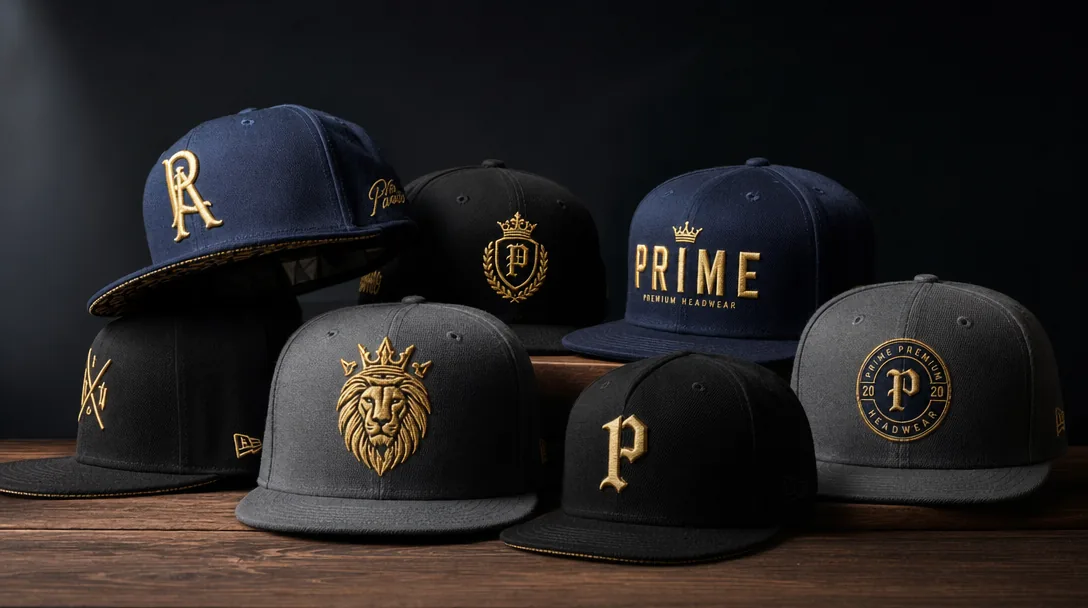
For brand owners, wholesalers and procurement teams entering the custom headwear category, custom embroidered hat: the 2026 sourcing & manufacturing playbook is one of the highest-leverage decisions you will make. Get it right and your unit economics, retail story and reorder cycle all improve. Get it wrong and you carry the cost for years.
Custom Embroidered Hats
A proper custom embroidered hat starts with the fabric and structure, not the logo. For a standard six-panel custom trucker hat, I’d ask the factory for a full spec sheet: crown height in mm, front panel buckram type, visor board thickness, mesh denier, sweatband composition, closure type, and embroidery size in mm. If you’re doing a custom embroidered hat for retail, request Pantone TCX targets for the fabric and thread, plus a stitch file preview from Tajima, Barudan, or ZSK software before sampling. On the floor, the usual failure points are poor digitizing density, puckering on 100% cotton twill, low-density foam underlay on 3D puff, and mismatched panel symmetry when the hat is blocked too fast. A factory that knows custom hat embroidery should be able to tell you stitch count, machine head count, and whether the design needs appliqué or direct sew-out to stay clean.
MOQ and pricing move a lot depending on construction. For basic custom embroidered hats, 300 to 500 pieces per color is common at a real factory; for a custom made trucker hat with private label details, 500 to 1,000 pieces is more typical because mesh, sweatband, and closure all need separate sourcing. In 2026, factory ex-works pricing for a simple 5-panel or 6-panel custom trucker hat usually lands around $2.20 to $4.80 per piece at 500 units, while heavier twill, structured crowns, woven labels, custom taping, or multi-location embroidery can push it to $5.50 to $7.50. If you need a small run, expect a sample charge of $30 to $80 per design and a one-time embroidery program fee if the design needs digitizing. Freight, duty, and carton packing can add another 15% to 35% depending on destination and shipping mode.
The inspection checklist should be boring and brutal. Measure brim curve consistency, crown shape, stitch tension, eyelet placement, thread trimming, and logo position from the center seam; a 2 mm drift on a front logo is enough to make a retail buyer reject the lot. For embroidered goods, I’d use AQL 2.5 as a baseline and specifically inspect for skipped stitches, bobbin show-through, oil stains from the machine, loose threads inside the sweatband, and color shift against approved Pantone under D65 lighting. If the order is tied to a broader sourcing decision, compare not just price but auditability, lead time, and repeatability: sedex-audit-cap-supplier-guide.html">BSCI 2.0 or Sedex SMETA 4-Pillar matters if you sell into chains, while a well-run custom embroidered hat program should hold Delta-E under 2.0 on core colors and keep sample-to-bulk variation tight across all custom embroidered hats in the range.
Custom Hat Embroidery
Custom hat embroidery is not just “send a logo and stitch it.” On the factory floor, it starts with digitizing the artwork into a stitch file, usually DST or EMB, then testing the stitch path, underlay, pull compensation, and density against the actual hat structure. A 5-panel unstructured cap needs different treatment than a stiff front custom hat trucker, because the foam or buckram changes how the needle penetrates and how thread tension behaves. For a custom embroidered hat, I ask for thread brand, thread type, stitch count per logo, backing type, needle size, and whether the factory is using Tajima, Barudan, or ZSK heads; that tells you a lot about repeatability. If the logo has gradients or fine text under 3 mm, embroidery may not be the right method, and puff embroidery or a woven patch can save you from distortion.
Typical MOQ for custom embroidered hats is 100 to 300 pieces per colorway if the factory already has the base blank in stock; fully custom panels, washes, or closures usually push it to 500 pieces or more. Pricing is usually driven by blank cost, stitch count, and number of embroidery locations. In Yiwu, a basic 6-panel cotton twill cap with one standard logo might land around $2.20 to $3.80 FOB at 300 units, while a custom made trucker hat with mesh back, woven label, and front embroidery often sits closer to $3.20 to $5.50 FOB depending on fabric and trim. For buyers comparing custom embroidered hats, the real cost driver is not just decoration; it is whether the factory can hold color, shape, and panel alignment consistently across the run without rework.
The quality issues I inspect first are puckering, thread breaks, loop tension, misregistration, and logo distortion near seams, especially on a custom trucker hat where the front panel may bow if the backing is weak. Ask for a pre-production sample sewn on the exact final blank, not a “reference sample” on some other cap body. You should also request Pantone TCX matching for fabric if the hat includes dyed panels, and check the embroidery thread against the approved shade under D65 light; Delta-E above 2.0 is usually visible on bold brand colors. The broader sourcing decision is simple: if the factory cannot show clean sample approval, AQL 2.5 inspection, and stable embroidery tension on a 12-hour production run, the cheapest custom embroidered hat will cost more after claims, rework, and missed ship dates.
Custom Hat Trucker
A custom hat trucker is usually built from five parts: front panels, mesh back, visor, sweatband, and closure, then finished with custom hat embroidery if the buyer wants logos on the crown. The front panel is commonly 100% cotton twill, 240 to 280 gsm, or polyester-cotton blend if you want less shrink and better color stability. Mesh is usually 100 percent polyester, 17x14 to 19x16 construction, and the visor board is PE or recycled cardboard depending on target cost. In production, the cap is cut, fused, sewn on flat-bed and overlock machines, then the logo is digitized for Tajima, Barudan, or ZSK embroidery heads; on a custom embroidered hat, stitch density, underlay, and push/pull compensation decide whether the logo looks sharp or distorted. For a clean spec sheet, buyers should request Pantone TCX or PMS color matching, front panel buckram stiffness, visor curve, closure type, seam tape, sweatband material, and logo size in millimeters, not “large” or “small.”
Typical MOQ for custom embroidered hats is 300 to 500 pieces per colorway if you want sensible unit pricing; some factories can go lower, but sampling and setup cost will make the per-piece price ugly. For a basic custom made trucker hat with one-color flat embroidery, FOB Yiwu or Ningbo often lands around USD 2.10 to 3.40 at 500 to 1,000 pcs, depending on fabric, closure, and stitch count. Add 15 to 35 cents for a woven label, 20 to 50 cents for 3D puff embroidery, and more if you need a structured foam front or special wash treatment. Buyers should ask for a pre-production sample with exact thread codes, embroidery file approval, color swatches, and carton pack-out details; otherwise you get “approved” samples that never match bulk. On larger programs, the real savings come from simplifying the panel count, limiting thread colors, and keeping one crown shape across the line.
The usual quality failures on a custom trucker hat are boring but expensive: crooked embroidery, visible bobbin thread, loose seam ends, mesh puckering near the side seam, mismatched crown height, and visor boards that crack in transit. I also inspect whether the closure sits centered, because a 2 to 3 mm shift is obvious on the head even if it passes a quick table check. For inspection, use AQL 2.5 for major defects and check dimensions like crown height, brim length, and head circumference against the approved tech pack; random color tolerance should be controlled to Delta-E under 2.0 if the brand is strict about shade consistency. A custom embroidered hat sourcing decision really comes down to use case: if the buyer wants a sharper retail look, structured front and denser embroidery matter; if they want giveaway economics, lighter construction and simpler custom hat embroidery usually make more sense.
Our standard practice is to lock the BOM before bulk cutting, because changing a visor board or thread brand after embroidery digitizing creates avoidable waste. Buyers comparing custom embroidered hats should ask whether the factory runs BSCI 2.0 or Sedex SMETA 4-Pillar audits, whether the embroidery room keeps thread humidity controlled, and whether bulk is packed with shape retainers or crushed into master cartons. Freight also matters: a custom made trucker hat ships efficiently because it is light, but a poorly packed carton can still deform the front panel and ruin resale value. If the order is for a licensed sports program or streetwear drop, I would rather spend an extra 20 to 40 cents on better structure and QC than chase the cheapest quote and clean up returns later.
Custom Made Trucker Hat
A custom made trucker hat is not just a foam front and mesh back; the build sequence determines whether the cap can hold clean embroidery or collapses after transit. Standard construction starts with a 5-panel or 6-panel crown, usually a 100% polyester foam front laminated to tricot, paired with 100% polyester mesh at 75 to 120 gsm and a PE snapback closure. For a sharper silhouette, buyers should specify front panel thickness, buckram type, crown height, visor curve, and whether the sweatband is cotton twill or moisture-wicking poly. If the style is meant for custom hat embroidery, ask the factory what machine setup they use on truckers, because foam fronts run differently from brushed cotton caps; Tajima and Barudan heads need lower speed, typically 650 to 800 rpm, plus proper backing to prevent tunneling and needle cuts. A good tech pack should also call out visor rows, top button material, sandwich brim if any, seam tape print, and target color tolerance, ideally within Delta-E 1.5 to 2.0 against approved Pantone TCX references.
The specs buyers skip are usually the ones that create claims later. For a custom trucker hat, request panel pattern, crown depth in centimeters, visor length, mesh hole shape, snapback brand or resin grade, embroidery stitch count range, backing type, and carton pack-out. MOQ for a stock-shape custom hat trucker is commonly 144 to 300 pcs per colorway, but fully custom molds, proprietary mesh, or woven label sets usually push that to 500 or 1,000 pcs. China FOB pricing in 2026 for a basic foam-front trucker with 1 location flat embroidery is realistically around $2.10 to $3.40 at 500 pcs; add 3D puff, inside taping print, woven label, or retail polybag with barcode, and you are more in the $3.60 to $5.20 range. Sampling is often $35 to $80 per style plus courier, though many factories credit that against bulk. At CrownsForge, our standard practice is to separate digitizing cost from pre-production sample cost because bad digitizing on foam is the fastest way to waste both time and fronts.
Inspection on custom embroidered hats should focus less on obvious cosmetic issues and more on failure points unique to truckers. The common defects are warped visors, asymmetrical crown shape, loose overlock at the mesh join, broken snap tabs, embroidery registration drift across the center seam, and foam crushing that leaves a permanent dent after export packing. For QC, I would write an AQL 2.5 inspection with specific checks for crown height variance within plus or minus 3 mm, embroidery placement tolerance within 2 mm, stitch density consistency, and colorfastness on sweatbands if dark shades are used. Carton compression testing matters because truckers can arrive looking fine on random samples but show panel collapse on the bottom layers after ocean freight. From a sourcing standpoint, the custom embroidered hat decision should drive the trucker spec, not the other way around: if the artwork needs fine satin borders, small text under 4 mm, or heavy fill areas, a foam-front trucker may be the wrong substrate, and a structured cotton twill cap or acrylic-wool blend often gives cleaner results with fewer rejects.
Custom Trucker Hat
A proper custom trucker hat starts with the shell, not the logo. Most factories build it from a 5-panel or 6-panel crown in 100% cotton twill, washed cotton, or polyester-cotton, then add a foam front or structured buckram front and a polyester mesh back in 30–40 denier. If you want a real custom embroidered hat rather than a cheap print job, specify the front panel height, crown depth, brim curve, and whether the cap needs fused buckram or foam-laminated support for the embroidery. For custom hat embroidery, ask for stitch count targets, backing type, thread brand, and a digitized sample on the actual fabric, because a design that looks clean on paper can pucker badly on thin foam or stretch mesh. A factory should also confirm sweatband material, closure type — plastic snapback, Velcro, or metal buckle — and color matching to Pantone TCX with a practical Delta-E tolerance of 2.0 to 3.0, not a vague “close enough.”
Typical MOQ for a custom hat trucker is 300 to 500 pieces per colorway if you want sane pricing, with sampling usually 7 to 12 days and bulk production 20 to 30 days depending on embroidery complexity and accessory lead times. In China, a plain custom made trucker hat with one small front embroidery often lands around $1.80 to $3.20 FOB at 500 pcs, while a more complex custom embroidered hat with multiple locations, woven label, and custom taping can move into the $3.50 to $5.50 range. The numbers change fast if you choose premium mesh, thicker foam, or a specialty closure. Buyers should ask for a line-item quotation: blank cap cost, embroidery cost, seaming, packing, carton fee, and shipping terms. That is the only way to compare custom embroidered hats from different factories without getting fooled by a low headline price and expensive add-ons later.
The quality failures on custom trucker hat orders are predictable and easy to catch if you know where to look. Check for misaligned front panels, crooked embroidery, loose trims at the visor edge, uneven mesh tension, broken stitches at high-density fills, and low-grade foam that dents after one carton compression cycle. For inspection, I would use AQL 2.5 for general defects and a stricter check on logo placement: center point, left-right symmetry, and stitch density against the approved SMS or PP sample. Also verify odor, color migration, seam strength, and closure pull tests, especially if the order is for sports, promo, or retail channels. A custom embroidered hat should survive both a visual scan and a practical wear test; if the crown collapses, the embroidery tunnels, or the sweatband twists after steaming, the construction was wrong from the start. That is why the sourcing decision for custom embroidered hats should be made on factory capability, not just price: you want correct digitizing, stable materials, and a production line that can hold tolerances across hundreds or thousands of pieces.
Custom Trucker Hats
A custom trucker hat is not just a baseball cap with mesh added; the build method, panel geometry, and decoration limits are different enough that buyers should spec it separately from a standard twill cap. The classic structure is a 5-panel or 6-panel crown with a foam-backed front, polyester mesh back, pre-curved PE visor board, plastic snap closure, and a sweatband in 180 to 220 gsm cotton twill or poly-cotton. For a commercial custom hat trucker program, I would always ask the factory for exact front panel material and thickness, mesh type in denier, crown height, visor curve angle, snapback grade, and finished cap weight tolerance. If you want embroidery on the front, confirm whether the face fabric is 3 mm foam laminated tricot or brushed cotton twill, because stitch definition changes a lot. Fine text under 4 mm height will sew cleaner on twill than on foam, while big satin-fill logos pop better on foam-front custom trucker hat styles. The manufacturing flow is straightforward but unforgiving: panel cutting, foam or buckram lamination, front logo embroidery, panel seaming, visor binding, sweatband insertion, closure attachment, shaping, trimming, and final metal detection if the compliance program requires it. On Tajima, Barudan, or ZSK heads, trucker fronts usually need lower machine speed than flat twill caps because foam compression can cause thread sink, edge wobble, and top thread breaks, especially on dense fills over 0.40 mm stitch spacing. If the order is a custom embroidered hat with side or back logos too, the factory should confirm hooping method before sampling, since mesh distortion is common when embroidering directly onto rear panels. At CrownsForge, our standard practice is to strike off the artwork on the exact front panel construction before bulk approval, because a digitized file that works on acrylic can fail badly on foam mesh combinations.
For RFQ purposes, buyers should stop sending only artwork and quantity; the useful spec sheet for custom embroidered hats includes silhouette, panel count, adult or youth sizing, front material, mesh color, visor sandwich detail, closure type, embroidery location count, thread brand, Pantone TCX reference for fabric, and acceptable color tolerance. If color matching matters, ask for a Delta-E target under 1.5 on dyed twill and under 2.0 on mesh, since mesh lots usually drift more. MOQ for a stock-body custom made trucker hat is commonly 144 to 300 pieces per colorway, but true cut-and-sew with custom-dyed fabric, woven taping, inside label, and private mold details is more realistically 500 to 1,000 pieces per style-color. In China, 2026 FOB pricing for a basic foam-front custom trucker hat with 1 front embroidery is often around $2.20 to $3.40 at 300 to 500 pieces, while heavier brushed twill front panels, 3D puff embroidery, printed seam tape, and specialty closures can push it to $3.80 to $5.80. Sampling cost also tells you how serious the factory is. A normal development sample for custom hat embroidery on a trucker body runs about $35 to $80 including digitizing, while a fully custom mold, dyed fabric lab dips, and revised embroidery punch file can easily reach $120 to $250 before bulk. If the front logo uses 3D puff, request the embroidery file details: stitch count, underlay type, foam thickness, and whether the columns exceed 10 to 12 mm width, because oversize puff areas collapse after carton compression. For shipping, trucker hats cube out faster than low-profile caps, so ocean freight usually wins once you are above about 1,500 pieces; a 60 x 45 x 45 cm master carton typically holds 100 to 150 truckers depending on crown height and insert method. That freight math matters in the broader custom embroidered hat sourcing decision, because a cap that is only $0.40 cheaper ex-factory can become more expensive landed if the packing efficiency is poor.
The most common trucker failures show up in embroidery first and assembly second. During inspection, I check front logo centering within plus or minus 2 mm, crown symmetry, visor-to-crown alignment, mesh tearing at seam joins, snap closure pull strength, sweatband stitching skips, and thread trims inside the crown that can irritate the wearer. Foam-front caps also get “railroad tracking” on satin borders, needle cuts through laminated fabric, and puckering where dense logos distort the front panel. For a commercial order, AQL 2.5 is a reasonable final inspection standard, but for licensed sports or retail programs I would tighten visual criteria for logo shape, thread coverage, and color consistency. If the order includes white mesh, inspect for oil marks and yellowing under daylight and TL84 light; white truckers expose contamination fast. A buyer choosing between a standard twill cap and custom trucker hats should think about end use, not just trend. Trucker builds are excellent for streetwear drops, summer promo, outdoor events, and price-sensitive merchandising because they ventilate well and can carry bold front embroidery with relatively low material cost. They are weaker when the artwork needs tiny lettering, all-over embroidery, or luxury handfeel. That is why the trucker conversation ties directly back to the bigger custom embroidered hat decision: the body construction must fit the logo, retail channel, target margin, and compliance needs. If the factory has BSCI 2.0 or Sedex SMETA 4-Pillar coverage, can control embroidery on mixed materials, and can document repeatable QC on mesh and foam components, then a trucker program is usually low-risk. If not, the same logo that looks clean on a brushed cotton dad cap can become a claims problem on a trucker body.
Working with CrownsForge for custom embroidered hat programs
For a custom embroidered hat program, the first thing I look at is whether the factory can turn a clean sample fast without guessing on materials or stitch count. Our standard sample lead time is 5–7 days after artwork and spec confirmation, with 1–2 rounds of revisions if the crown shape, visor curve, or thread density needs adjustment. MOQ is flexible by construction method: 100–200 pcs for simple custom hat embroidery on stock blanks, 300–500 pcs for fully custom panels, woven labels, or special trims. That matters for first-time buyers because the sample is not just a sales tool; it is where you catch bad buckram, weak stitch balance, or a logo that collapses on a structured front panel before you spend on 1,000 units.
The decoration stack is where many custom embroidered hats go wrong. We use in-house embroidery digitizing for flat, 3D puff, applique, and mixed techniques, with Tajima, Barudan, and ZSK heads depending on thread count and run length. For a custom hat trucker or custom made trucker hat, I usually recommend 12,000–18,000 stitches for front logos and a 0.4–0.6 mm satin density on clean typography; anything heavier starts to distort mesh-backed crowns. Color control should be based on Pantone TCX or a physical thread card, not screen files, and we target Delta-E under 2.0 on critical logo colors. If the buyer wants a custom trucker hat with shaped foam fronts, we can also add woven patches, silicone badges, or leather labels without forcing everything through embroidery.
The de-risking piece is compliance and order control, not just sewing. CrownsForge works to BSCI 2.0 and Sedex SMETA 4-Pillar expectations, and for buyers who need retailer onboarding, we can support factory documents, material declarations, and carton-level packing lists tied to PO numbers. The workflow is straightforward: tech pack review, sample approval, production pre-check, in-line inspection, then final AQL 2.5 based on quantity and defect class. I tell buyers to treat a custom embroidered hat order like a small production program, not a merchandise purchase; that means confirming crown profile, sweatband spec, visor board, and label placement before bulk. Done that way, custom embroidered hats scale cleanly from 300 pieces to 30,000 without surprise rework or missed ship windows.
Frequently Asked Questions
Which shipping methods do you support?
We support FOB, CIF and DDP shipping. Air express for samples and small orders, sea LCL for 100 to 500 pieces, sea FCL for 5,000+ pieces. Door-to-door DDP available for US, EU, UK, Canada and Australia.
Do you support sustainability certifications?
Yes. We work with GOTS organic cotton, GRS-certified recycled polyester, OEKO-TEX Standard 100 fabrics, and are BSCI and Sedex audited. Certification documentation can be provided per order.
What is the minimum order quantity (MOQ) for custom hats?
Our standard MOQ is 100 pieces per design and color, with sampling available from 1 piece. For complex multi-color logos or premium fabric upgrades, the MOQ can be lowered with a small per-piece surcharge.
What logo decoration techniques do you offer?
3D puff embroidery, flat embroidery, woven patch, leather patch, PVC patch, screen printing, sublimation, applique and laser etching, all in-house with no subcontracting.
What file format should I send for my logo?
Vector files (AI, EPS, PDF) are ideal. High-resolution PNG or JPG at 300 dpi on transparent background works as a fallback. Provide Pantone color references for accurate reproduction.
How does ordering custom embroidered hats near me work?
When evaluating custom embroidered hats near me, the key considerations are construction quality, decoration capability, MOQ flexibility and lead time. Cover everything buyers ask about custom embroidered hats: how it's manufactured, what specs to request from a factory, typical MOQ and pricing, common quality issues to inspect for, and how this ties back to the broader custom embroidered hat sourcing decision. Cover everything buyers ask about custom trucker hats: how it's manufactured, what specs to request from a…
How does ordering custom hat embroidery near me work?
When evaluating custom hat embroidery near me, the key considerations are construction quality, decoration capability, MOQ flexibility and lead time. Cover everything buyers ask about custom hat embroidery: how it's manufactured, what specs to request from a factory, typical MOQ and pricing, common quality issues to inspect for, and how this ties back to the broader custom embroidered hat sourcing decision. Cover everything buyers ask about custom embroidered hats: how it's manufactured, what specs to request from a…
What's the MOQ for custom logo hats no minimum?
When evaluating custom logo hats no minimum, the key considerations are construction quality, decoration capability, MOQ flexibility and lead time. Cover everything buyers ask about custom embroidered hats: how it's manufactured, what specs to request from a factory, typical MOQ and pricing, common quality issues to inspect for, and how this ties back to the broader custom embroidered hat sourcing decision. Cover everything buyers ask about custom trucker hats: how it's manufactured, what specs to request from a…
What should I know about bulk custom trucker hats?
When evaluating bulk custom trucker hats, the key considerations are construction quality, decoration capability, MOQ flexibility and lead time. Cover everything buyers ask about custom trucker hats: how it's manufactured, what specs to request from a factory, typical MOQ and pricing, common quality issues to inspect for, and how this ties back to the broader custom embroidered hat sourcing decision. Cover everything buyers ask about custom embroidered hats: how it's manufactured, what specs to request from a…
Looking for a reliable hat manufacturer in China?
CrownsForge has produced custom hats for 800+ brands across 40 countries. From 100-piece launches to 100,000-piece retail programs, we deliver on time and on spec.
Get in touchRelated guides
Sustainable Custom Hats: Eco-Friendly Materials, Recycled Fabrics & Certifications
Read article →
BSCI vs Sedex vs WRAP vs WCA: Compliance Audit Standards Compared
Read article →
5-Panel vs 6-Panel Caps: Construction, Use Cases and Cost Compared
Read article →Sourcing custom hats does not have to be complicated. With the right manufacturing partner, clear specifications and a small upfront investment in sampling, you can launch a retail-quality product in 30 to 45 days.