
5-Panel vs 6-Panel Caps: Construction, Use Cases and Cost Compared
Every week, our sales team answers detailed questions about 5-panel vs 6-panel caps: construction, use cases and cost compared. We wrote this guide so that wholesalers, streetwear brands, corporate buyers and promotional resellers can compare options with full information, and avoid the traps that show up only after production has started.
The visual and structural difference
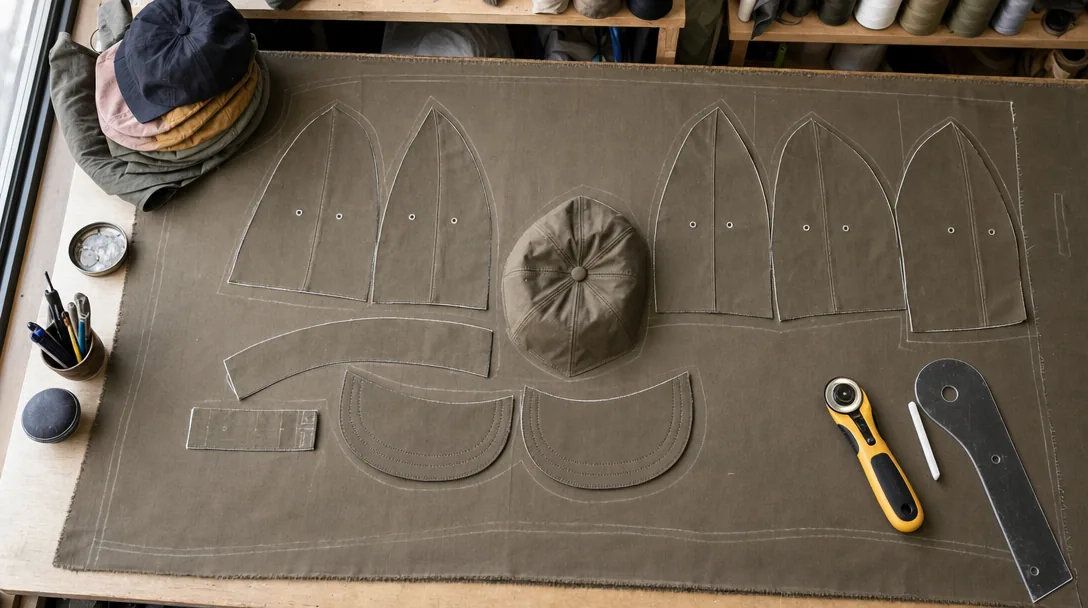
The visual difference is not subtle once you put both patterns on the table: a 6-panel cap is built from six crown pieces that come together at a center point on top, while a 5-panel cap uses one continuous front panel with two side panels and two back panels. That single front panel changes the whole face of the cap. On a 6-panel, the front is split by a seam, so embroidery often sits across two panels and the crown looks more segmented. On a 5-panel cap construction, the front panel is clean and uninterrupted, which is why it reads flatter and more graphic on the head.
Structurally, the brim, sweatband, and closure are usually the same on both styles, so the real cap panel count issue is the crown pattern, not the hardware. A 6-panel cap construction tends to give a rounder, more traditional baseball shape, while a 5-panel cap vs baseball cap comparison usually comes down to that taller, boxier front and a lower-seam profile. If you are digitizing logos for embroidery, the 5-panel front is easier for large centered designs, especially when the artwork needs a single uninterrupted stitch field instead of crossing a seam.
From a factory point of view, the difference also affects how the crown is cut, pressed, and sewn. A 6-panel needs one more cut piece and one more seam to close the crown, which changes machine time and quality risk at the apex. A 5 panel hat manufacturer will usually favor the 5-panel for flat-brim streetwear or promo styles because the front panel takes prints and patches better, while 6-panels still dominate classic sports caps and curved-brim programs. In both cases, the sweatband, visor board, and closure spec can be matched exactly, so buyers should focus on the crown pattern first, not the accessories.
Decoration sweet spots for each construction
On a 6-panel cap, the center front seam is the first thing I check before sending artwork to embroidery. That vertical seam gives the crown its classic baseball shape, but it also cuts straight through the middle of the front panel, so a big centered stitch file will usually pucker or bridge badly. The practical sweet spot is an offset logo, usually 4–5 cm wide, placed a few millimeters off the seam or slightly lower on the crown. For a clean 6 panel cap construction, small flat embroidery, 3D puff on a compact mark, woven side labels, and back strap branding all work better than trying to force a large chest-style graphic onto the front.
With 5-panel cap construction, the front panel is a single uninterrupted canvas, which is why screen printers and embroidery shops like it. If you are comparing 5 panel cap vs baseball cap applications, the difference is not just silhouette; it is decoration real estate. A 5-panel cap can handle wider embroidery in the 8–10 cm range, larger woven patches, and front appliqués without the seam breaking the artwork. On a good sample, I’ll spec the logo placement higher and flatter than on a 6-panel, because the panel count changes how the crown sits on the head and where the front surface naturally lands after sewing and buckram insertion.
For heavier decoration, the 5 panel vs 6 panel cap decision comes down to stress points and process limits, not just looks. If the client wants all-over sublimation print on polyester twill or a big heat-transfer graphic, the 5-panel usually gives the cleaner face because there is no center seam to interrupt registration. A practical 5 panel hat manufacturer will still test stitch density, backing, and cap frame tension before bulk, because even a 0.5 mm misalignment becomes obvious on a flat front. My rule: choose 6-panel for smaller, cleaner logos with a traditional shape; choose 5-panel when the art needs breadth, bold patches, or print coverage across the front crown.
Cost difference and MOQ implications
On a real production sheet, the 5 panel vs 6 panel cap cost gap is small enough that buyers who optimize only on unit price usually miss the bigger lever: decoration method and order quantity. A 5 panel cap construction eliminates one front seam, so sewing time is a bit lower, but the cutting room usually loses some efficiency because the front panel is a larger continuous piece and nesting is less flexible. In practice, the net difference is typically around $0.05 to $0.10 per piece at 1,000 to 3,000 units, assuming similar fabric like 100% cotton twill, 200 to 260 gsm, or polyester ripstop. If your logo needs large flat embroidery or a woven patch, the cap panel count matters more for visual effect than for cost.
The 6 panel cap construction is slightly more common in mainstream sports and promotional programs because it gives a more rounded crown and usually handles curved-bill baseball styling well. A 5 panel cap vs baseball cap comparison often comes down to front panel real estate: the 5-panel front is flatter, so screen print, puff embroidery, and heat transfer labels read cleaner, while a 6-panel crown can create more break lines across the artwork. From an MOQ perspective, neither style should force a major surcharge unless you add custom trims, specialty closures, or complex mixed-color panel layouts. If you are comparing quotes from a 5 panel hat manufacturer and a 6-panel supplier, the labor delta is usually too small to justify changing the silhouette for cost reasons alone.
The MOQ implication is mostly about setup waste, not panel count. A factory will often ask for the same base MOQ for both styles, but smaller runs may carry a higher effective unit price because cutting loss, thread changes, and embroidery digitizing are spread over fewer pieces. On a 500-piece order, the per-unit difference between 5-panel and 6-panel builds can disappear entirely once you factor in sampling, cardboard sweatband molds, and trim sourcing. Our standard practice is to quote the style you actually want for fit and branding, then lock the spec early so the buyer is not paying twice for revisions. If you want the cleanest buying decision, compare the 5 panel cap construction and 6 panel cap construction on decoration area, fit profile, and freightable carton count before worrying about a few cents in sewing cost.
Retail positioning by panel count
Panel count does more for retail positioning than most buyers admit. A 6-panel cap is the default because the seam layout creates the familiar rounded crown people already read as “cap,” which is why it works across sports, streetwear basics, telecom promos, and licensed team programs. The front profile is predictable, the fit tolerances are easier to manage, and the format gives decorators a large, stable front panel for embroidery or patch work. In wholesale terms, it is the safer buy: fewer surprises in silhouette, fewer questions from distributors, and fewer rejected samples when the buyer wants something mainstream. A 5 panel vs 6 panel cap decision usually starts here — if the target shelf needs broad acceptance, 6 panels win on familiarity.
By contrast, 5 panel cap construction reads as intentional. The one-piece front panel with two side panels and a curved or low-profile crown gives a flatter, more modern face, which is why it shows up in skate, trail, festival, and fashion-led drops. The 5 panel cap vs baseball cap comparison is useful here: baseball caps are usually associated with the 6-panel, precurved, athletic look, while 5-panel hats lean more technical or directional. That narrower language can be an advantage if the brand wants differentiation, but it also means the market is less forgiving of weak detailing — poor brim shape, loose panel matching, or cheap buckram shows up immediately. A strong 5 panel hat manufacturer has to control crown height, front panel stiffness, and sweatband feel more tightly than buyers expect.
From a merchandising standpoint, cap panel count changes how the product sits in the line. Six-panel styles are easier to spread across age groups and price tiers, so they absorb volume better in promos, retail basics, and team sales. Five-panel styles usually sell on identity rather than utility, so they can carry higher perceived value when the colorway, fabric, and trim are right — nylon ripstop, washed cotton twill, and recycled polyester all make more sense here than glossy low-cost fabric. At CrownsForge, the practical split is simple: if the client needs mass-market readability, we steer toward 6 panels; if they want a sharper outdoor or skate signal, 5 panels are the better construction choice. The wrong panel count for the audience is a fast way to create dead stock, even when the sample looks good on the table.
Closure and brim pairings buyers commonly request
Buyers usually underestimate how much the cap panel count affects the closure menu. A 6-panel cap construction is flexible enough to take plastic snapback, fabric strap, Velcro, and fully fitted sizing without looking awkward, because the crown has enough seams and structure to hide the adjustment zone cleanly. That is why the 5 panel vs 6 panel cap decision often starts with the intended fit system, not the silhouette. In practice, the 6-panel is the safer choice for teams, corporate programs, and retail lines where you need multiple size options or want to move between adjustable and fitted runs without re-drafting the body pattern.
A 5-panel cap construction behaves differently because the front panel is wider and cleaner, and the rear panels are usually built for adjustment rather than precision sizing. That makes plastic snap and fabric strap the two closure pairings buyers request most often; Velcro appears less often because it can look cheap on a cleaner front-facing shape, and true fitted versions are rare unless the factory retools the pattern. When someone asks for a 5 panel cap vs baseball cap comparison, the real issue is usually the rear opening and whether the silhouette can support a low-profile strap without distorting the crown.
Brim choice follows the same logic. A 6-panel works with both pre-curved and flat brim because the front panel seam line distributes tension well, so you can spec a classic curved sports look or a streetwear flat-brim profile. A 5-panel hat manufacturer will usually steer buyers toward a flat brim or a short pre-curved brim, since the one-piece front gives a cleaner graphic field and looks best when the visor does not fight the crown shape. For embroidered logos, the flatter front on a 5-panel is easier to keep stable during sewing, but if you want a more traditional retail cap with broader closure options, 6-panel still wins on versatility and fewer surprises in sampling.
When to spec each construction for your brand
If you are sourcing a retail-friendly program, the 6-panel construction is usually the safer bet. A true 6-panel cap construction gives you the familiar rounded crown, better fit consistency across head shapes, and a front structure that takes 3D puff embroidery, woven labels, and woven side hits without looking forced. That is why it shows up in baseball caps, snapbacks, sports licensee programs, and the bulk of promotional headwear. In a 5 panel vs 6 panel cap decision, the 6-panel usually wins when the buyer needs broad consumer acceptance, easy replenishment, and less design risk. It also maps cleanly to standard grading and spec sheets, which matters when multiple factories are quoting against the same tech pack.
Choose a 5-panel when the cap itself is part of the brand story, not just a logo carrier. A 5 panel cap construction gives you one uninterrupted front panel, so the silhouette reads flatter, cleaner, and more editorial; that is why it works well for outdoor/skate capsules, festival merch, technical headwear, and brands trying to stand apart from the same old 6-panel programs. If you are comparing a 5 panel cap vs baseball cap for a drop collection, the 5-panel usually has more visual tension and less heritage-sports baggage. The front panel also gives more usable real estate for centered artwork, jacquard patches, or heat-transfer logos, especially when the crown height is kept moderate and the bill shape is kept slightly curved.
From a production standpoint, cap panel count affects more than appearance. A 5-panel hat manufacturer has to control front-panel alignment, seam bulk at the top, and how the sweatband sits when the crown is pressed; those details decide whether the cap feels premium or just unusual. For large programs, I would spec 6-panels when the buyer wants lowest risk on fit, repeatable color matching, and easier mold compatibility for structured fronts and visors. I would spec 5-panels when the design team wants differentiation, but I would still lock down sample approval on crown height, visor curve, closure type, and stitch density before bulk. In practice, the right choice is not about which construction is better overall; it is about whether you need mainstream sell-through or a sharper point of view.
Working with CrownsForge on either construction
From a production standpoint, the 5 panel vs 6 panel cap decision does not change our lead time or the way we quote the job. Our standard practice is to keep sampling at 7-10 days and bulk production at 22-28 days for either build, with the same MOQ, the same decoration menu, and the same trim options. That matters because a lot of buyers assume the cap panel count changes the schedule; in reality, the schedule is driven more by fabric availability, patch type, and whether the artwork needs multiple stitch-out approvals. For a 5 panel cap construction, the front panel gives you a cleaner canvas for flat embroidery or woven patches. For a 6 panel cap construction, the center seam is useful for classic curved-bill sports styling, but it adds one more seam to control during stitching and blocking.
If you want to compare the 5 panel cap vs baseball cap question properly, you need to look at wear behavior and decoration, not just appearance. A 5 panel hat manufacturer usually sees this build used for streetwear, promotional drops, and foam-front or nylon styles where the uninterrupted front panel matters. The 6 panel version is still the safer choice for traditional headwear buyers who want a familiar fit and a more structured crown. We can send physical samples of both constructions on request, which is the fastest way to judge drape, front height, and how the crown sits after washing or steam finishing. On paper the two styles can look close, but in hand the seam placement and panel geometry are obvious.
For buyers managing multiple SKUs, the important point is consistency: once the pattern is approved, the same decoration options apply to both constructions without changing the commercial terms. That includes flat embroidery on Tajima, Barudan, or ZSK heads, woven labels, printed underbills, sandwich brims, and custom closures. If the art is sensitive to seam distortion, we will flag it during sampling rather than learn it in bulk. That is the practical value of working with one factory on both builds: you can standardize fit, stay within the same price band, and choose the right panel count by channel instead of by guesswork. If your line mixes retail streetwear and team or promo programs, that flexibility usually saves more money than chasing a marginal fabric difference.
Frequently Asked Questions
Which shipping methods do you support?
We support FOB, CIF and DDP shipping. Air express for samples and small orders, sea LCL for 100 to 500 pieces, sea FCL for 5,000+ pieces. Door-to-door DDP available for US, EU, UK, Canada and Australia.
Can I order a sample before bulk production?
Yes. We strongly recommend approving a pre-production sample before mass production. Samples are charged at 35 to 60 USD each plus express shipping, fully refundable against confirmed bulk orders over 500 pieces.
Do you support sustainability certifications?
Yes. We work with GOTS organic cotton, GRS-certified recycled polyester, OEKO-TEX Standard 100 fabrics, and are BSCI and Sedex audited. Certification documentation can be provided per order.
What file format should I send for my logo?
Vector files (AI, EPS, PDF) are ideal. High-resolution PNG or JPG at 300 dpi on transparent background works as a fallback. Provide Pantone color references for accurate reproduction.
What logo decoration techniques do you offer?
3D puff embroidery, flat embroidery, woven patch, leather patch, PVC patch, screen printing, sublimation, applique and laser etching, all in-house with no subcontracting.
How does ordering baseball cap embroidered custom work?
When evaluating baseball cap embroidered custom, the key considerations are construction quality, decoration capability, MOQ flexibility and lead time. The 6-panel cap has six fabric triangles meeting at a center seam at the top of the crown; the 5-panel cap has a single seamless front panel plus two side and two back panels. Brim, sweatband and closure are identical between the two; the front panel construction is the entire difference. 6-panel is the universal sports/streetwear/promotional default — instantly readable as…
How does ordering custom embroidered trucker hat work?
When evaluating custom embroidered trucker hat, the key considerations are construction quality, decoration capability, MOQ flexibility and lead time. The 6-panel cap has six fabric triangles meeting at a center seam at the top of the crown; the 5-panel cap has a single seamless front panel plus two side and two back panels. Brim, sweatband and closure are identical between the two; the front panel construction is the entire difference. 6-panel has visible front seam that runs vertically through center; embroidery is…
How does ordering custom dad hat embroidery work?
When evaluating custom dad hat embroidery, the key considerations are construction quality, decoration capability, MOQ flexibility and lead time. 6-panel has visible front seam that runs vertically through center; embroidery is normally placed offset from the seam (4-5 cm wide centered logos work). 5-panel has uninterrupted front canvas — perfect for wider patches, woven labels, larger embroidery (8-10 cm wide), all-over sublimation print. The 6-panel cap has six fabric triangles meeting at a center seam at the top…
What's the MOQ for custom embroidered baseball caps no minimum?
When evaluating custom embroidered baseball caps no minimum, the key considerations are construction quality, decoration capability, MOQ flexibility and lead time. Choose 6-panel for: retail-distribution baseball caps, snapbacks, sports licensee programs, promotional/event programs. Choose 5-panel for: outdoor/skate brand capsules, festival merch, technical headwear, brand differentiation from competing 6-panel programs. The 6-panel cap has six fabric triangles meeting at a center seam at the top of the crown; the 5-panel cap has a…
Need a low-MOQ test order?
We help emerging brands launch with as few as 100 pieces. Premium fabric, in-house embroidery, retail-ready packaging.
Start a small orderRelated guides
Performance & Athletic Caps: Moisture-Wicking, UPF and Buyer Specs
Read article →
Custom Hats for Corporate, Business and Branded Merchandise Programs
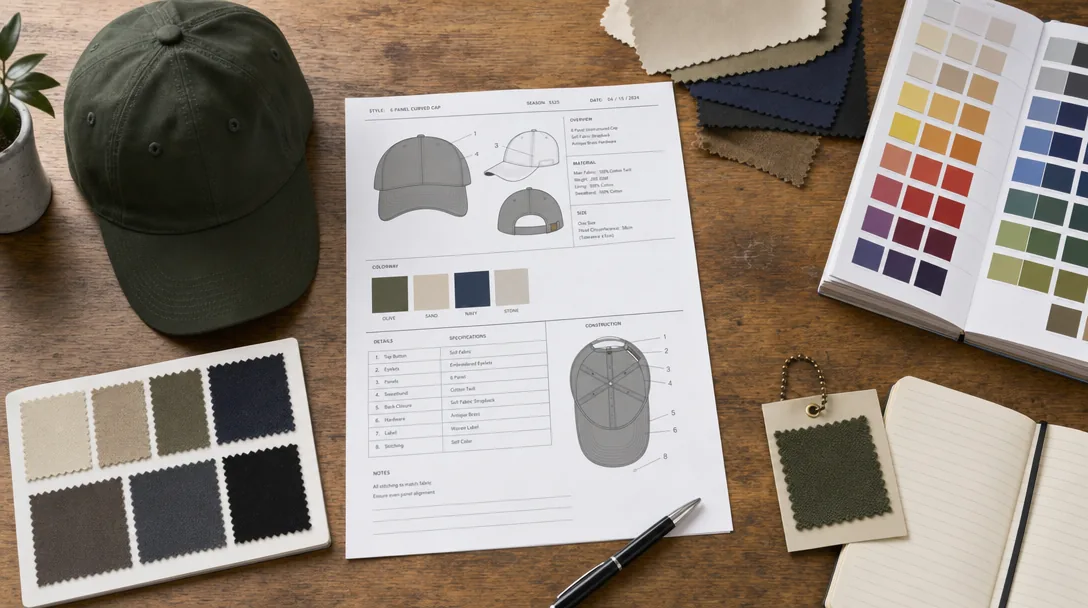
Read article →What's in a Cap Tech-Pack: A Specification Template for Buyers
Read article →If you are ready to take the next step on 5-panel vs 6-panel caps: construction, use cases and cost compared, our team can put a tailored quotation and digital mock-up in your inbox within 24 hours. Send the inquiry form on our contact page or message us directly on WhatsApp.