
BSCI vs Sedex vs WRAP vs WCA: Compliance Audit Standards Compared
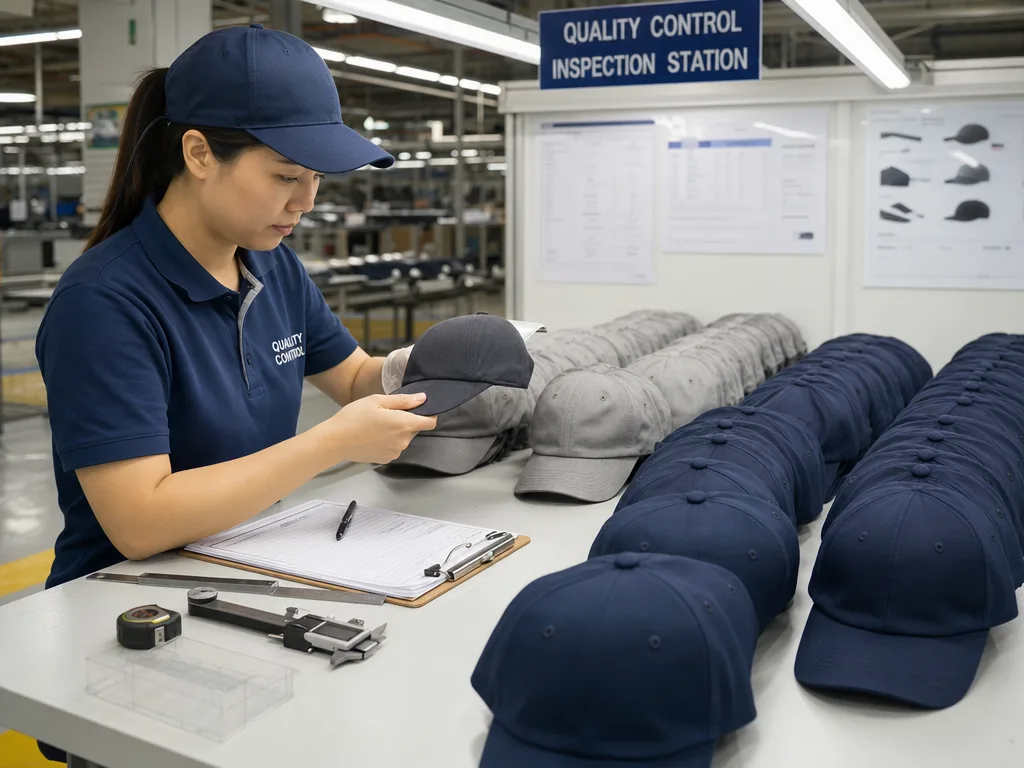
For brand owners, wholesalers and procurement teams entering the custom headwear category, bsci vs sedex vs wrap vs wca: compliance audit standards compared is one of the highest-leverage decisions you will make. Get it right and your unit economics, retail story and reorder cycle all improve. Get it wrong and you carry the cost for years.
The four audits hat factories actually hold
On the factory floor, these four audits are not interchangeable, even if buyers lump them together as “social compliance.” sedex-audit-cap-supplier-guide.html">BSCI 2.0 is the one European retailers ask for most often because it maps cleanly to their supplier onboarding systems and focuses on labor, health and safety, ethics, and management systems. Sedex SMETA 4-Pillar goes further on paper because it adds environmental and business ethics checks, so it is the stronger choice when a buyer wants a broader ethical audit comparison rather than just labor compliance. In practice, BSCI vs Sedex SMETA is less about which is “better” and more about what the retailer’s sourcing team is set up to accept, because the corrective action process, evidence burden, and follow-up cadence can feel very different for the same china hat factory.
WRAP vs WCA audit is a cleaner split. WRAP is common in licensed merchandise and US retail because it is built around lawful, humane, and ethical manufacturing, with a strong emphasis on documented systems and no child or forced labor. WCA, by contrast, is Walmart’s own conformance framework, and it tends to be more prescriptive on working hours, wage records, fire safety, machine guarding, and factory housekeeping. For a social compliance audit hat factory, the difference is operational: WRAP may care more about policy maturity and traceability, while WCA inspectors often focus hard on what they can see and verify in the production area, dormitory, and time records.
The mistake buyers make is treating supplier compliance audit standards as a badge collection. A factory can pass SMETA and still fail a customer’s WCA window if overtime records, payroll math, or chemical storage are sloppy. Likewise, a BSCI 2.0 result can look fine while a WRAP reviewer flags subcontracting or training gaps. The real question is whether the factory can maintain consistent evidence: attendance cards, payroll under local labor law, EHS training logs, emergency drill records, and corrective actions closed on time. In a real audit cycle, that paperwork matters as much as the audit score, because a clean report from last quarter does not protect you if the line supervisor changes and controls collapse next month.
BSCI 2.0 scope and audit process
BSCI 2.0 is the broadest of the common supplier compliance audit standards if you look at it from a factory-floor angle. It covers 13 areas, and the parts buyers actually get stuck on are working hours, wage records, employment contracts, age verification for child labor, fire exits, chemical storage, and whether the grievance mechanism is real or just a form in a drawer. In a china hat factory, auditors will also check needle control, trimming waste, screen-print chemical segregation, and whether dormitory rules or canteen deductions are documented properly. The audit is usually run by amfori-approved auditors, and for most cap factories it takes 1 to 2 days depending on headcount, shifts, and whether records are organized or a mess. The certificate is typically valid for 12 months, which means the plant has to keep the discipline year-round, not just before the visit.
Compared with BSCI vs Sedex SMETA, BSCI is more structured around retailer expectations in Europe and tends to be the first pass/fail filter for chains like H&M, Aldi, Lidl, and Carrefour. The process is straightforward but unforgiving: auditors sample payroll, timecards, age documents, and disciplinary logs, then walk the production floor to verify fire safety, chemical handling, and emergency access. In a social compliance audit hat factory, the weak spots are usually overtime calculation, piece-rate reconciliation, and whether labor contracts match what people are actually doing on the floor. If records show 60-hour weeks but the line is running 72, that is not a paperwork problem; it is a finding. For buyers comparing WRAP vs WCA audit or doing an ethical audit comparison, BSCI is usually the one that exposes how the factory really manages labor control, not just how it writes policies.
For suppliers, the practical value of BSCI is that it forces the factory to systematize the boring parts: hiring files, wage slips, training logs, chemical registers, and fire drill records. Good factories keep age verification by national ID and passport copy, attendance by biometric clock or card swipe, and working-hour summaries that can be reconciled with payroll in under an hour. Bad factories try to rebuild it the night before the auditor arrives, and that is where they fail. In my experience, a clean BSCI file set also helps with Sedex, because the underlying supplier compliance audit standards overlap heavily even if the scoring and reporting format differ. The main difference is that BSCI is often used as a retailer gatekeeper, while Sedex can be more widely shared across customers; either way, if the factory cannot prove wages, hours, fire safety, and grievance handling, the logo on the report does not matter.
Sedex SMETA 4-Pillar scope and process
SMETA 4-Pillar is the version buyers actually ask for when they want a real supplier compliance audit standard, not a checkbox exercise. The four pillars are Labor, Health & Safety, Environment, and Business Ethics, with Labor taking the deepest dive by far: working hours, wage records, age verification, disciplinary practices, grievance handling, dormitory conditions, and freedom of association. In a china hat factory, auditors will usually spend most of their time on payroll samples, timecards, contractor records, and the physical shopfloor, because that is where inconsistencies show up fast. Compared with a simple factory questionnaire, this is much closer to an ethical audit comparison that tests whether the documents match what workers actually experience.
The 4-Pillar format is what most retailers now require because it maps better to global sourcing risk than the older 2-Pillar version. In the BSCI vs Sedex SMETA discussion, Sedex tends to be seen as broader on business ethics and environmental controls, while BSCI is often pushed harder on social management systems and corrective action tracking. A proper SMETA 4-Pillar audit usually takes 2 to 3 days on site, depending on headcount and dormitory setup, and the certificate or report is typically treated as valid for 12 months. Auditors are usually from Sedex-approved firms such as SGS, BV, Intertek, QIMA, or TÜV, and they will expect records in clean order: payroll by month, attendance by shift, safety training logs, fire drill evidence, chemical inventories, and subcontracting declarations.
For a social compliance audit hat factory, the process is less about passing a single visit and more about proving control across the production cycle. Auditors will walk cutting, sewing, embroidery, packing, and warehouse areas, then cross-check what they saw against labor files and H&S procedures; if you run Tajima, Barudan, or ZSK embroidery heads, they will still ask whether needle-guard checks, machine maintenance logs, and operator training are current. The best outcomes come when the factory has already closed obvious gaps before the audit: overtime capped to legal limits, PPE issued by role, emergency exits unobstructed, and supplier declarations on paper for trims, cartons, and chemicals. That is why buyers comparing WRAP vs WCA audit often still add SMETA on top — different standards, different risk focus, and no single report covers every retailer’s rulebook.
WRAP scope and process
WRAP is narrower and more certification-driven than a full factory management audit, which is why license holders like it for a social compliance audit hat factory. It checks 12 principles: legal compliance, forced labor, child labor, harassment, discrimination, health and safety, freedom of association, compensation, hours of work, environment, customs compliance, and security. In practice, the audit is usually a 1-2 day on-site review with worker interviews, payroll sampling, time records, and a walkthrough of sewing, embroidery, cutting, and packing areas. At a real china hat factory, the auditor will look hard at needle guards, emergency exits, chemical storage for adhesives and inks, and whether overtime is voluntary or quietly pressured through production targets.
WRAP’s three certification levels are straightforward: Silver is valid for 12 months, Gold for 2 years, and Platinum for multi-year performance with no major findings over repeated audits. The audit itself is done by WRAP-approved firms such as Intertek, Bureau Veritas, or Centre Testing, so the report format is fairly standardized compared with some other supplier compliance audit standards. For buyers comparing BSCI vs Sedex SMETA, WRAP is more of a pass-fail certification path, while SMETA is an ethical audit comparison tool used more broadly across suppliers. That difference matters when sourcing licensed sports or music merchandise, where brand owners often want a clean WRAP certificate before approving production.
In a WRAP vs WCA audit comparison, WRAP is much stricter and more recognized by major licensors, while WCA is often used as a lighter factory self-assessment or retailer-specific check. WRAP also tends to be less forgiving on payroll accuracy and working-hour records than many first-time suppliers expect; if your time cards show 78-hour weeks but the attendance system says 60, that gets flagged immediately. On the factory floor, the practical work is not glamorous: aligning wage records with piece-rate output, documenting training, fixing missing fire extinguisher tags, and making sure subcontracted embroidery or washing units are disclosed. If a supplier already passed BSCI or Sedex, WRAP is still a separate hurdle, not a substitute, because the scoring logic and certification outcome are different.
WCA scope and process
WCA is not a broad social compliance framework like BSCI or Sedex; it is a buyer-specific gatekeeper. Walmart calls it the Walmart Conformance Audit, and the protocol is built around Walmart Standards for Suppliers, which means the factory is being measured against Walmart’s own expectations first, not an industry consortium. In practice, the methodology feels close to SMETA: document review, site walk-through, worker interviews, hours and wage testing, dormitory and canteen checks where applicable, plus a management-system review. The difference is that the result is only meaningful for Walmart or Walmart-linked programs, including Sam’s Club and certain Costco-adjacent supply chains that borrow the same compliance logic. For a china hat factory, this is usually a factory-level audit, not a style-level approval.
WCA scope is narrower than a typical ethical audit comparison, but the demands can be just as strict on labor records. Auditors are appointed through Walmart-approved firms, and the report is generally valid for 12 months, which forces factories to keep payroll, timekeeping, and hiring files clean all year instead of scrambling before a renewal. I have seen factories fail on basic stuff such as missing age verification, inconsistent overtime calculation, or dorm capacity records that do not match headcount. That is why buyers asking about WRAP vs WCA audit are usually mixing two different concepts: WRAP is a factory certification with broader brand recognition, while WCA is a retailer-specific compliance audit tied to a customer’s vendor onboarding process. If your shipment is going into retail programs that demand WCA, a passing SMETA file does not automatically substitute for it.
For suppliers comparing BSCI vs Sedex SMETA with WCA, the practical point is this: WCA is not a general social compliance audit hat factory can use as a universal badge. It is one of the supplier compliance audit standards that only matters when the customer asks for it, and the audit scope follows that customer’s rulebook. The upside is that the evidence package overlaps heavily with other audits: working-hours tracking, wage slips, anti-forced-labor controls, grievance channels, and safety documentation. The downside is that a factory can be fully prepared for an ethical audit comparison and still fail WCA because the format, scoring, or buyer-specific nonconformance closure process is different. In export work, I always treat WCA as a separate compliance lane, not a substitute for BSCI, SMETA, or WRAP.
What overlap exists and what differs
The honest answer is that BSCI, Sedex SMETA, WRAP, and WCA all inspect the same core labor-risk territory: age verification, wages, working hours, overtime consent, disciplinary practice, fire safety, and basic management systems. In a normal social compliance audit hat factory review, I’d say 70% to 80% of the evidence pack is shared — payroll samples, time records, ID copies, dormitory checks, chemical storage, emergency exits, and interview consistency. If a china hat factory is already maintaining clean payroll ledgers and actual timekeeping instead of “corrected” sheets, it usually doesn’t need to reinvent its operations to pass the next standard.
Where the standards start to diverge is in format and tolerance, not in moral philosophy. BSCI vs Sedex SMETA is mostly a question of audit methodology and reporting emphasis: BSCI leans on the Amfori platform and corrective action management, while SMETA 4-Pillar adds more depth on environment and business ethics. WRAP vs WCA audit is even more straightforward — WRAP is broader and certification-based, while WCA is more prescriptive because it reflects Walmart’s own supplier compliance audit standards. WCA will dig harder on dormitory occupancy, wage calculation logic, and working-hours documentation, so a factory with sloppy attendance records can squeak through one audit and get stuck on the next.
In practice, a factory that can hold BSCI 2.0, Sedex SMETA, WRAP, and WCA at the same time has already done the hard work: digitized payroll, capped overtime control, documented fire drills, traceable subcontracting, and a management team that understands what the auditor will ask before they ask it. That is why the negotiation disappears. Buyers do not have to argue about which ethical audit comparison is “best,” because the evidence package is already built to the stricter side of the overlapping scope. From a production-floor perspective, the difference is usually not compliance theory; it is whether the factory can show real records, in real time, without scrambling.
What the audit doesn't tell you
A social compliance audit hat factory report is useful, but it is not a production capability report. BSCI vs Sedex SMETA, WRAP, and WCA all look hard at wages, working hours, fire exits, dormitory rules, document control, and child-labor risk. They do not tell you whether a china hat factory can hit a tight Pantone TCX color, keep embroidery registration within 1.5 mm on a 12-head Tajima, or hold a Delta-E under 2.0 across three dye lots. I have seen factories with clean audit files still ship uneven crown heights, crooked center-front logos, and visor stitching that drifts after the first 3,000 pieces. The audit says the factory is allowed to operate; it does not say the factory is technically good at making your hat.
That gap matters because buyers often confuse supplier compliance audit standards with process control. A factory can pass BSCI 2.0 or Sedex SMETA 4-Pillar and still be weak on sample matching accuracy, trim sourcing, carton labeling, or on-time delivery rate. For hats, the practical checks are boring but decisive: shrinkage after washing, colorfastness on cotton twill, seam slippage on washed denim, and whether the bill insert stays flat instead of warping in humidity. In a WRAP vs WCA audit discussion, people focus on scope and scoring, but neither audit will tell you if the merchandiser replies in 12 hours or 3 days, which is often the real reason a line gets delayed. The ethical audit comparison is necessary, but it is not enough to choose a supplier.
The right way to buy is to treat the audit as a gate, not a verdict. Verify the certificate, then ask for shipment photos, AQL 2.5 reports, and reference checks from at least two existing buyers in the same category, preferably someone who already sourced caps or cut-and-sew headwear at 5,000 to 50,000 units. Sustainability is the same story: these audits usually confirm legal minimums, not low-water dyeing, recycled polyester content, or chemical discipline beyond the base standard. If a supplier cannot show consistent inspection records, clear communication, and matching samples over multiple POs, the certificate is just paperwork. In practice, the best China suppliers combine a valid audit with stable production data, because that is what protects you when the PO is live and the container is already booked.
Frequently Asked Questions
What is the minimum order quantity (MOQ) for custom hats?
Our standard MOQ is 100 pieces per design and color, with sampling available from 1 piece. For complex multi-color logos or premium fabric upgrades, the MOQ can be lowered with a small per-piece surcharge.
How long does production take?
Sampling takes 7 to 12 days. Bulk production runs 20 to 30 days depending on quantity, fabric availability and decoration complexity. Inspection and packing adds another 3 to 5 days before shipment.
What file format should I send for my logo?
Vector files (AI, EPS, PDF) are ideal. High-resolution PNG or JPG at 300 dpi on transparent background works as a fallback. Provide Pantone color references for accurate reproduction.
What logo decoration techniques do you offer?
3D puff embroidery, flat embroidery, woven patch, leather patch, PVC patch, screen printing, sublimation, applique and laser etching, all in-house with no subcontracting.
Which shipping methods do you support?
We support FOB, CIF and DDP shipping. Air express for samples and small orders, sea LCL for 100 to 500 pieces, sea FCL for 5,000+ pieces. Door-to-door DDP available for US, EU, UK, Canada and Australia.
How does ordering custom embroidered trucker hat work?
When evaluating custom embroidered trucker hat, the key considerations are construction quality, decoration capability, MOQ flexibility and lead time. BSCI 2.0 (Business Social Compliance Initiative by amfori) — European retailer favorite. Sedex SMETA 4-Pillar (Social, Health & Safety, Environment, Business Ethics) — used by UK and increasingly global retailers. WRAP (Worldwide Responsible Accredited Production) — US retailer favorite for licensed merchandise. WCA (Walmart Conformance Audit) — required by Walmart and…
How does ordering custom bucket hat embroidery work?
When evaluating custom bucket hat embroidery, the key considerations are construction quality, decoration capability, MOQ flexibility and lead time. BSCI 2.0 (Business Social Compliance Initiative by amfori) — European retailer favorite. Sedex SMETA 4-Pillar (Social, Health & Safety, Environment, Business Ethics) — used by UK and increasingly global retailers. WRAP (Worldwide Responsible Accredited Production) — US retailer favorite for licensed merchandise. WCA (Walmart Conformance Audit) — required by Walmart and…
What should buyers know about bucket hat men nike?
When evaluating bucket hat men nike, the key considerations are construction quality, decoration capability, MOQ flexibility and lead time. BSCI 2.0 (Business Social Compliance Initiative by amfori) — European retailer favorite. Sedex SMETA 4-Pillar (Social, Health & Safety, Environment, Business Ethics) — used by UK and increasingly global retailers. WRAP (Worldwide Responsible Accredited Production) — US retailer favorite for licensed merchandise. WCA (Walmart Conformance Audit) — required by Walmart and…
How does ordering custom made hats for men work?
When evaluating custom made hats for men, the key considerations are construction quality, decoration capability, MOQ flexibility and lead time. BSCI 2.0 (Business Social Compliance Initiative by amfori) — European retailer favorite. Sedex SMETA 4-Pillar (Social, Health & Safety, Environment, Business Ethics) — used by UK and increasingly global retailers. WRAP (Worldwide Responsible Accredited Production) — US retailer favorite for licensed merchandise. WCA (Walmart Conformance Audit) — required by Walmart and…
Need a low-MOQ test order?
We help emerging brands launch with as few as 100 pieces. Premium fabric, in-house embroidery, retail-ready packaging.
Start a small orderRelated guides
Sustainable Cap Packaging: Options, Costs and Retail-Buyer Demands
Read article →
Fitted vs Snapback vs Adjustable: A Closure-Type Buyer's Guide
Read article →
Embroidery Thread Libraries: Madeira, Isacord and What Your Cap Factory Uses
Read article →We hope this guide demystifies bsci vs sedex vs wrap vs wca: compliance audit standards compared and helps you move forward with confidence. If you have questions specific to your project, our English-speaking sales engineers are one message away.