
Refreshing a Hat Collection: A Repeat-Order Playbook for Established Brands - Cost & MOQ Breakdown
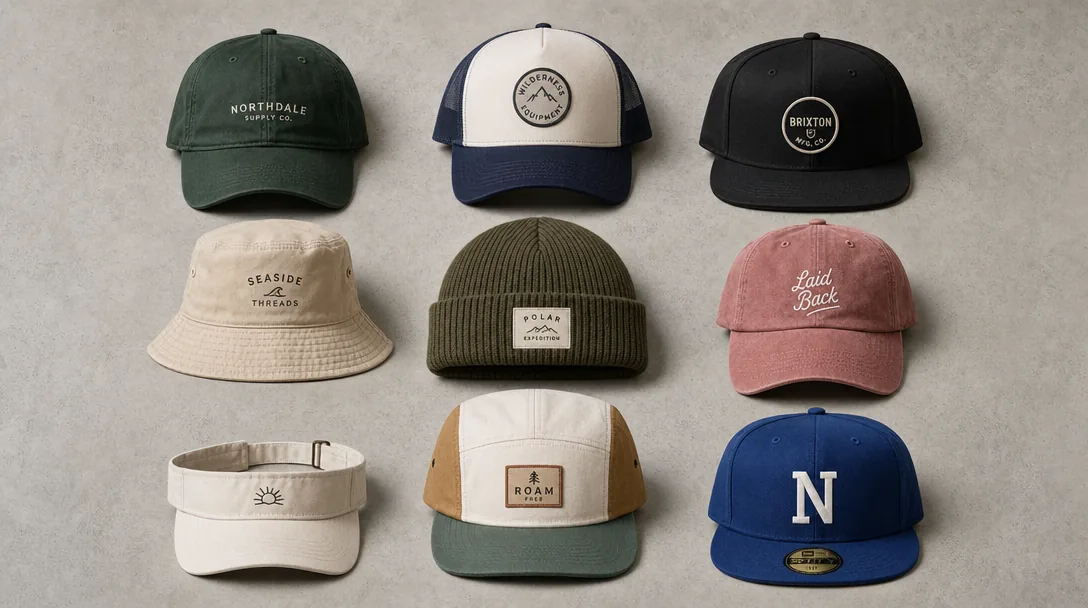
Refreshing a Hat Collection: A Repeat-Order Playbook for Established Brands - Cost & MOQ Breakdown is one of the most-asked questions we receive from international buyers, and for good reason. With dozens of factories competing for your order and an alphabet soup of technical terms in every supplier quote, even experienced importers can feel lost. This guide consolidates what we have learned producing custom hats for clients in 40+ countries.
Why annual refresh outperforms major rebrand
Annual refresh beats a hard reset because cap buyers read silhouette and front-mark placement before they notice storytelling. The repeat-order programs that hold margin usually change only 10% to 25% of the visible package: a new Pantone TCX underbrim, raised 3D embroidery swapped to a tighter satin fill, a fabric shift from 280 gsm cotton twill to 300 gsm brushed canvas, or a closure upgrade from self-fabric strap to debossed PU tuck strap. Those edits create freshness without erasing the fit history, sell-through data, and replenishment confidence tied to the existing block. A full rebranding cap line typically changes crown height, visor pitch, embroidery scale, labels, and trims all at once, which is where teams lose control. On the factory floor that means more sample iterations, more approval loops, and more ways to drift from what end customers already recognize. Keeping the same shell pattern and sweatband construction while updating surface details is usually the stronger commercial move.
The cost difference is not theoretical; it shows up immediately in development spend and MOQ exposure. If the silhouette is already approved, a refresh is usually limited to revised embroidery punch files, label artwork, trim substitutions, and one wear-test round. A realistic range is $35 to $80 for Tajima or Barudan front-logo re-digitizing, $15 to $30 for a woven label revision, and modest component MOQs on the changed items only, often 300 to 500 pieces per colorway. A rebuilt program pushes risk much higher because new fabric, hardware, and internal construction can force 1,000-plus piece commitments before bulk pricing makes sense. Lead time also shortens when the line already knows the operation breakdown, stitch-per-inch target, visor curve spec, and packing method from prior runs.
Big rebrands look clean in a deck and messy in production. When shape, fabric, trim, and branding language all move together, color variance above Delta-E 1.5 becomes easier to spot, embroidery registration issues show up faster on unfamiliar panel geometry, and fit complaints increase because customers compare against memory, not the spec sheet. Annual refresh cycles reduce that shock while still giving retail and wholesale accounts a reason to buy again. The most reliable structure is one carryover body and one edited version every half-year: the same 6-panel mid-profile cap with an updated side hit, contrast sandwich brim, or a seasonal fabric switch such as 600D recycled polyester for spring and 16-wale corduroy for fall. That keeps novelty high while preserving forecast accuracy, inline QC stability, and AQL 2.5 inspection control.
Seasonal capsule strategy: 4 drops per year
A four-drop calendar works only when product and purchasing run to hard gates. For a rebranding cap line, set retail arrivals for late January, mid-April, early August, and mid-October, then freeze artwork and BOMs 75 to 90 days before vessel departure or 45 to 60 days before airfreight. That timing gives most wholesale accounts a clean 5 to 7 weeks of full-price selling before the next capsule starts crowding the wall. Spring should stay technically simple and fast to replenish: 180 to 220 gsm cotton twill, 120 to 160 gsm washed nylon, unstructured 6-panels, laser-perforated side panels, and moisture-wicking polyester sweatbands. If you want pale pastels or acid brights, approve lab dips earlier than usual. Pantone TCX can read differently across cotton, recycled polyester, and nylon, and once the dye house starts rushing, Delta-E can drift past 1.5 under D65 lightbox checks and the assortment stops looking intentional.
Summer is where brands usually waste margin on novelty trims that never reorder cleanly. Keep one crown shape and closure platform, then shift the seasonal read through shell fabric, color, and decoration. In practice that means 70D to 150D performance nylon, quick-dry microfiber, foam trucker fronts, and mesh inserts that can still hold clean embroidery on Tajima, Barudan, or ZSK heads without tunneling. Mixed decoration needs discipline: woven patches, reflective heat transfers, and applique typically add 7 to 12 production days and increase AQL 2.5 failures when patch placement or registration is loose. A realistic MOQ is 144 to 300 pieces per style-color in stock fabrics, but custom-dyed shells, branded seam tape, molded rubber trims, or custom buckles usually move the efficient run to 500 to 1,000 pieces. The margin gain comes from standardizing hidden components across all four drops, especially visor boards, seam tape width, inside labels, and metal closures.
Fall and winter are where the four-drop model actually pays back, because ASP usually rises faster than unit cost. Fall capsules should lean on 8-wale or 11-wale cotton corduroy, brushed twill, and poly-wool blends that can handle dense satin stitch embroidery without panel puckering. Winter needs different engineering: structured wool blends at 20% to 40% wool content, fleece-lined earflap caps, quilted sweatbands, and acrylic rib beanies in 9 to 12 gauge for true cold-weather programs. At 300 pieces, a basic cotton dad cap typically lands around $2.20 to $3.40 ex-factory, corduroy styles around $3.80 to $5.20, and lined wool-blend winter caps $4.80 to $7.50 depending on trim count, lining, and packing spec. The operational advantage is bigger than the cost sheet: mills can reserve greige goods, embroidery capacity can be blocked on Tajima or ZSK schedules, and repeat orders become forecast-driven instead of one oversized annual gamble.
When to keep the existing silhouette vs change construction
Keep the existing silhouette unless the block is clearly hurting conversion, margin, or returns. In repeat orders, customers notice crown height, front rise, panel angle, visor curvature, and overall head feel faster than they notice a fabric change from 260 gsm brushed cotton twill to 230 gsm recycled canvas. A 6-panel mid-profile snapback, low-profile unstructured dad cap, or standard A-frame trucker builds fit memory over multiple seasons; once you disturb that memory, return rates usually climb 2-5 points before sell-through reports explain why. For established brands, the silhouette is usually the equity. Safer refresh levers are fabric handfeel, Pantone TCX color blocking, closure hardware, undervisor color, seam tape print, and decoration swaps such as tonal 3D puff embroidery, flat embroidery with a tighter satin column, HD silicone heat transfer, or a contrast sandwich brim. In a rebranding cap line, that approach gives you a visible shelf change without rewriting the paper pattern, sweatband width, brim board thickness, or panel spec that made the style repeatable in the first place.
Change construction only when the business case is strong enough to justify retraining the customer on fit. Moving from a 5-panel camper to a 6-panel baseball cap, dropping crown height by 8-12 mm, switching from unstructured to full buckram, or changing a pre-curved PE brim insert to a flat peak is a category shift, not a cosmetic update. Those decisions affect face framing, embroidery behavior, pack-out, and even freight efficiency because taller front panels and flatter visors increase carton volume. Valid reasons include poor sell-through on the current block, a clear channel shift toward a different profile, or a technical performance brief that truly requires 70D nylon taslon, perforated polyester, or 120-140 gsm microfiber. The disciplined way to do it is one structural change in one SKU, with fit samples checked to plus/minus 3 mm at front height, crown depth, visor width, and back opening, then wear-tested across at least 8 head shapes before approving bulk at AQL 2.5. Once the silhouette drifts in cutting and sewing, even clean Tajima or Barudan embroidery cannot rescue the style.
Repeat-order timing for retail inventory
Booking date decides whether retail inventory lands on time; the sketch is secondary. For ocean freight out of Zhejiang into a U.S. distribution center, Q4 receipts should be locked by mid-July and Q1 receipts by late October, because you still need ex-factory time, vessel cutoff, customs clearance, and DC intake before product can hit the floor. Miss that window and the choice is usually ugly: accept stock-outs or buy air freight at roughly $6.50 to $9.00/kg airport-to-airport, then add customs brokerage, Section 301 exposure where applicable, and domestic linehaul. On caps, a rushed 20-carton top-up can erase the margin you thought you protected when the PO was placed. Established brands feel that immediately in OTIF and fill-rate metrics, and buyers do not forget late replenishment when they set next season's open-to-buy. A rebranding cap line only works when the calendar is built backward from in-store date, with ex-factory, ETD, ETA, and warehouse appointment fixed first and internal approvals forced into the remaining days.
Repeat orders stop being true repeats the moment the spec moves. Change a plastic snap to a metal buckle, switch a 260 gsm brushed cotton twill to a recycled poly-cotton blend, shift the front embroidery 6 mm, or increase stitch density on a Tajima or Barudan program, and you are back into strike-offs, Pantone TCX shade approval, trim confirmation, and sometimes revised carton drop tests. If old and refreshed inventory will sit side by side at retail, keep visible shade variation tight; Delta-E under 1.5 on trims and key fabric panels is a practical target, otherwise customers read the mismatch as poor quality control rather than a planned update. From approved artwork to ex-factory, a clean repeat with minor changes is usually 35 to 50 days, followed by 25 to 40 days on water depending on destination, carrier booking, and consolidation.
What hurts brands is not MOQ; it is recovery freight and missed floor-set timing. If Q4 stock shows up in November instead of October, you have already lost holiday set dates, teamwear resets, and a full cycle of e-commerce photography and paid media. In practice, it is usually cheaper to lock the PO while secondary variants are still being debated internally, because flying 144 pcs of one style-color often costs more than the $0.18 to $0.25 per cap saved by delaying the booking to squeeze cost. A sensible repeat-order range for a domestic replenishment program is 288 to 576 pcs per style-color, with pre-shipment inspection at AQL 2.5 so the inventory that does land is immediately sellable. For a rebranding cap line, disciplined timing protects gross margin, retailer confidence, and the credibility of the collection refresh.
Sampling cost discipline for established brands
Established brands should treat repeat-order sampling as an exception, not a default line item. Once the tech pack, sealed counter sample, PPS comments, paper pattern, and construction sheet are locked, there is no legitimate reason to rebill $35 to $80 per style for a routine remake when the shell fabric, buckram, visor board, closure, stitch count, and artwork are unchanged. The factory is already running from approved specs and an existing embroidery file on Tajima, Barudan, or ZSK heads; unless that file is rebuilt, a fresh digitizing fee is equally hard to justify. For a brand managing a rebranding cap line, the right control on a stable repeat is a line pull, embroidery strike-off, or top-of-production check against the sealed sample, not a cosmetic resample that adds cost without reducing risk. New sample charges only make sense when the risk profile actually changes in bulk. That usually means a material or construction variable with measurable downstream impact: moving from 260 gsm brushed cotton twill to 300 gsm recycled canvas, changing a 5 mm PE visor board to a softer EVA insert, converting flat embroidery to 3D foam, or approving a new Pantone TCX shade that needs lab dips within Delta-E 1.0 to 1.5 under D65 lighting. The same logic applies to a new applique base cloth, merrowed woven patch edge, snapback vendor, seam-tape print, or undervisor fabric, because each can affect handfeel, sewing tolerance, shrinkage, colorfastness, or visual balance. A thread color swap on an existing program, a woven size-label revision, or a seasonal launch on the same approved block should not trigger a full PPS fee.
The cleanest safeguard is contractual: write the rule into the PO before bulk booking. State that no sample charge applies on repeat orders unless there is a documented change to fabric, trim, structure, fit block, or decoration method, and require every exception to be broken out by cost driver such as pattern revision, lab dip, redigitizing, wash test, courier, or trim sourcing. When a supplier cannot itemize that delta, the real incremental cost is usually closer to $6 to $12 than the $50 invoice they are trying to pass through. That is where repeat-order buyers quietly lose margin. On runs above roughly 1,200 to 3,000 pieces, a full remake is usually the wrong checkpoint anyway. A photo PPS, strike-off, or top-of-production sample pulled from line gives better control because it verifies the actual bulk lot: fabric shade, logo registration, visor symmetry, crown height, closure alignment, and finished measurements against the sealed sample and tolerance chart. CrownsForge typically checks those points under AQL 2.5 rather than reopening development work that was already closed on the previous order. If the approved block and bill of materials have not moved, sample discipline should protect margin and lead time, not become a routine surcharge hidden inside a rebranding cap line refresh.
When to test a 'limited drop' before commit
A 300-piece drop is the smallest volume that gives you a usable read before locking a 2,000 to 5,000 piece reorder. For a rebranding cap line, that usually means two colorways at 150 units each or three at 100 each; any lower and sell-through data gets distorted by store placement, influencer seeding, or one account overbuying. Keep the test narrow: one silhouette, one crown height, one fabric family, one closure, one visor board. If you are testing color, hold logo size, stitch count, eyelets, top button, and back label constant. If you are testing decoration, run the same Pantone TCX target across flat embroidery, 3D puff, and a woven patch so the result reflects trim preference rather than mixed variables. The moment you combine low-profile and mid-profile bodies, cotton twill and recycled nylon, or snapback and strapback closures inside the same 300 pieces, the trial stops being a demand test and turns into guesswork with a higher FOB.
Treat the limited drop as paid market research, not a margin program. A standard 6-panel cap in 260 to 280 gsm cotton twill with flat embroidery usually lands around $4.20 to $5.80 FOB at 300 pieces; that same spec often drops to $2.60 to $3.40 at 2,000 units once digitizing, trim setup, and line inefficiency are spread properly. Decoration changes compound fast: 3D puff embroidery adds roughly $0.18 to $0.40, a molded silicone patch $0.45 to $0.90, woven interior branding $0.12 to $0.25, and size sticker polybagging another $0.06 to $0.10. The smarter spend is an extra $600 to $900 on a controlled drop, because that is still cheaper than warehousing a weak style for two seasons after approving the wrong fabric hand feel or logo treatment too early.
The real checkpoint is whether the idea survives bulk production without quality drift. Sales samples can flatter details that get unstable at scale: dense fills on foam-front truckers can tunnel, tonal embroidery can miss shade if thread approval is not held within Delta-E 1.5 to 2.0, and fabrics like 500D recycled nylon or brushed sueded cotton can shift noticeably from one dye lot to the next. Build the test on bulk-ready materials, inspect to AQL 2.5, and review physical risk points instead of relying on sample photos alone: embroidery registration, visor curve consistency, sweatband join strength, crown symmetry, carton compression, and post-transit appearance. At CrownsForge, our standard practice is to treat 70 percent sell-through in four to six weeks, paired with low returns and clean QC, as a credible trigger for full production; anything weaker usually means the market signal is not strong enough to justify a large repeat order.
Frequently Asked Questions
What is the minimum order quantity (MOQ) for custom hats?
Our standard MOQ is 100 pieces per design and color, with sampling available from 1 piece. For complex multi-color logos or premium fabric upgrades, the MOQ can be lowered with a small per-piece surcharge.
What logo decoration techniques do you offer?
3D puff embroidery, flat embroidery, woven patch, leather patch, PVC patch, screen printing, sublimation, applique and laser etching, all in-house with no subcontracting.
Can I order a sample before bulk production?
Yes. We strongly recommend approving a pre-production sample before mass production. Samples are charged at 35 to 60 USD each plus express shipping, fully refundable against confirmed bulk orders over 500 pieces.
What file format should I send for my logo?
Vector files (AI, EPS, PDF) are ideal. High-resolution PNG or JPG at 300 dpi on transparent background works as a fallback. Provide Pantone color references for accurate reproduction.
Which shipping methods do you support?
We support FOB, CIF and DDP shipping. Air express for samples and small orders, sea LCL for 100 to 500 pieces, sea FCL for 5,000+ pieces. Door-to-door DDP available for US, EU, UK, Canada and Australia.
How does ordering custom leather patch trucker hat work?
When evaluating custom leather patch trucker hat, the key considerations are construction quality, decoration capability, MOQ flexibility and lead time. Brands that drop 1-2 small evolutions per year retain customers better than brands that rebrand wholesale every 3 years. Small change = familiar but fresh. Spring (lightweight fabric, summer color palette), Summer (festival-ready), Fall (corduroy, transitional fabric), Winter (wool blend, beanies, lined caps). Predictable cadence = predictable customer purchasing.
What's the MOQ for custom leather patch hats no minimum?
When evaluating custom leather patch hats no minimum, the key considerations are construction quality, decoration capability, MOQ flexibility and lead time. Brands that drop 1-2 small evolutions per year retain customers better than brands that rebrand wholesale every 3 years. Small change = familiar but fresh. Spring (lightweight fabric, summer color palette), Summer (festival-ready), Fall (corduroy, transitional fabric), Winter (wool blend, beanies, lined caps). Predictable cadence = predictable customer purchasing.
How does ordering custom snapback trucker hats work?
When evaluating custom snapback trucker hats, the key considerations are construction quality, decoration capability, MOQ flexibility and lead time. Brands that drop 1-2 small evolutions per year retain customers better than brands that rebrand wholesale every 3 years. Small change = familiar but fresh. Spring (lightweight fabric, summer color palette), Summer (festival-ready), Fall (corduroy, transitional fabric), Winter (wool blend, beanies, lined caps). Predictable cadence = predictable customer purchasing.
What should I know about wholesale custom baseball cap?
When evaluating wholesale custom baseball cap, the key considerations are construction quality, decoration capability, MOQ flexibility and lead time. Brands that drop 1-2 small evolutions per year retain customers better than brands that rebrand wholesale every 3 years. Small change = familiar but fresh. Spring (lightweight fabric, summer color palette), Summer (festival-ready), Fall (corduroy, transitional fabric), Winter (wool blend, beanies, lined caps). Predictable cadence = predictable customer purchasing.
How to brand a cap?
Front Panels: Prime Real Estate. This is your main stage. ... Side Panels. Understated and cool. ... Back Panels. A good spot for slogans or web addresses. ... Under the Brim. Yes, it's a thing. ... Embroidery. ... Screen Printing. ... Heat Transfer. ... Woven or Embroidered Patches.
How do you tell customers your rebranding?
Some folks will always feel blindsided by these kinds of changes, chat through it with those accounts. Be proactive instead of reactive. I would message all my customers and simply say what you pointed out - it's just a rebrand and nothing is changing.
How to rebrand an existing brand?
Identify your new target audience and buyer personas. ... Explore your brand's updated story and vision. ... Establish new brand colors, logos, fonts, and graphics. ... Rethink your brand name and tagline. ... Launch your new brand. ... Track and measure brand awareness, sentiment, and reach.
What does rebranding mean?
Rebranding is the process of changing the identity or perception of a company, product, or service. It involves updating or completely altering elements such as the brand's name, logo, tagline, design, messaging, or even its overall market positioning.
Can you rebrand a logo?
A logo rebrand, on the other hand, involves creating an entirely new logo to represent a significant shift in your company's direction, mission, or values. This process is more extensive and often coincides with a broader rebranding strategy. A logo rebrand can also be called a logo redesign.
What is a branding change?
It's about how it's positioned, perceived, and experienced. This might involve changing your brand name, designing a completely new visual identity, reworking your messaging from the ground up, and repositioning your business in the market. A rebrand is usually driven by big shifts.
Looking for a reliable hat manufacturer in China?
CrownsForge has produced custom hats for 800+ brands across 40 countries. From 100-piece launches to 100,000-piece retail programs, we deliver on time and on spec.
Get in touchRelated guides
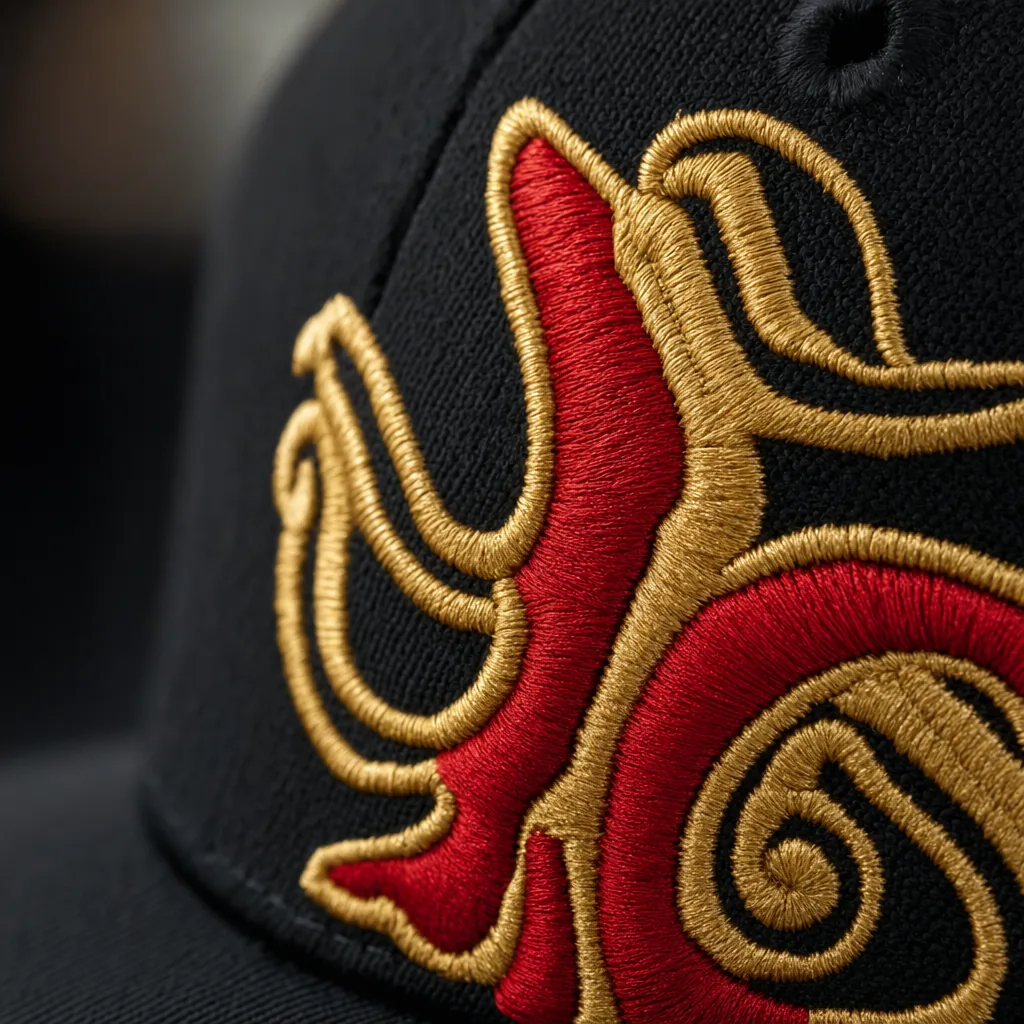
Custom Logo Hats: When to Use It, Costs, and What to Ask Your Factory (2026 Update)
Read article →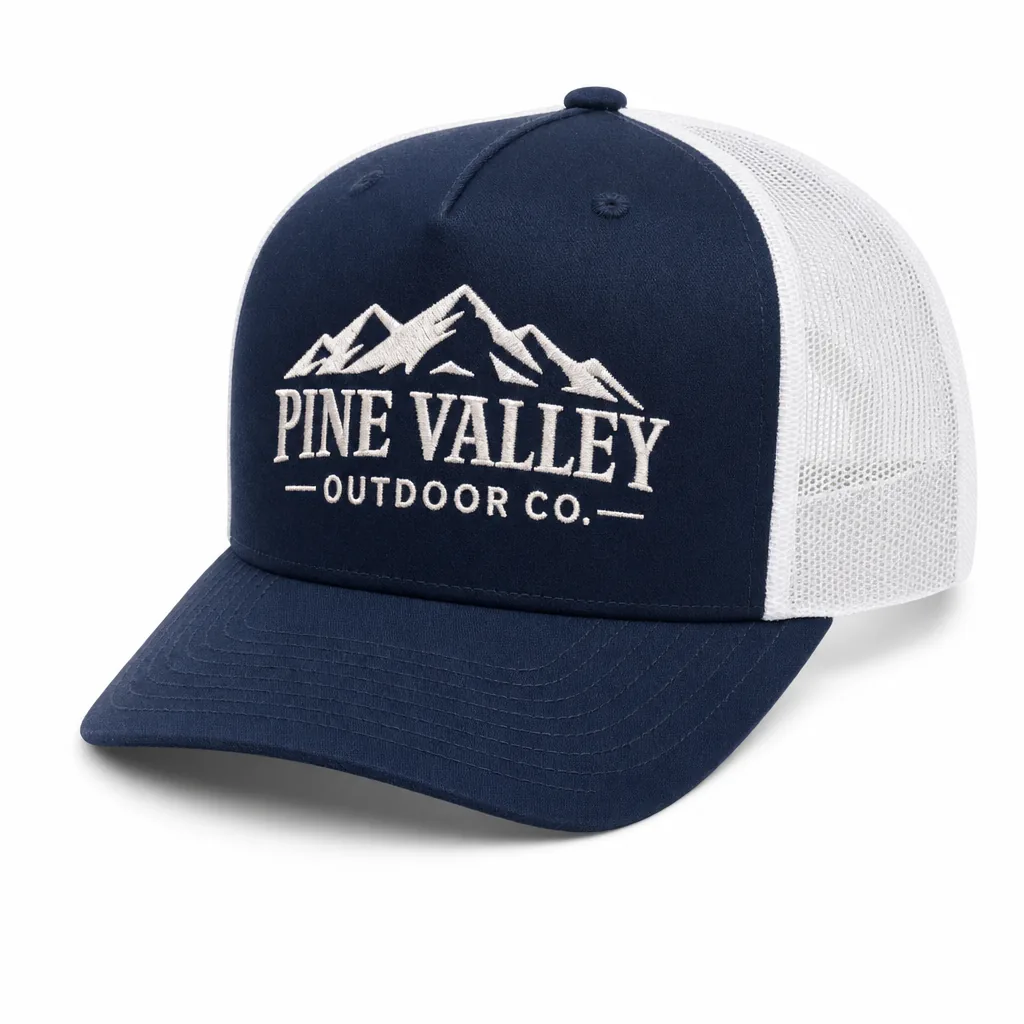
Mesh Caps Wholesale: Trucker Cap Manufacturing Specifications and Pricing
Read article →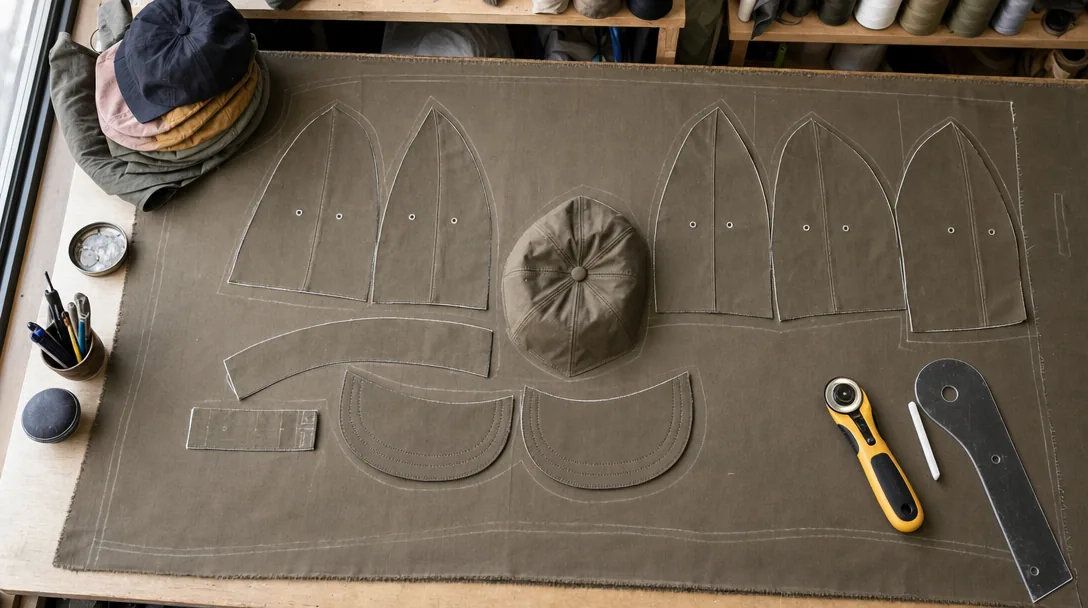
Baseball Hats Men's: A Vertical-Specific Sourcing Guide - Cost & MOQ Breakdown
Read article →If you are ready to take the next step on refreshing a hat collection: a repeat-order playbook for established brands - cost & moq breakdown, our team can put a tailored quotation and digital mock-up in your inbox within 24 hours. Send the inquiry form on our contact page or message us directly on WhatsApp.