
Baseball Hats Men's: A Vertical-Specific Sourcing Guide - Cost & MOQ Breakdown
Baseball Hats Men's: A Vertical-Specific Sourcing Guide - Cost & MOQ Breakdown is one of the most-asked questions we receive from international buyers, and for good reason. With dozens of factories competing for your order and an alphabet soup of technical terms in every supplier quote, even experienced importers can feel lost. This guide consolidates what we have learned producing custom hats for clients in 40+ countries.
Baseball Hats
The biggest pricing mistake in baseball hats men's sourcing is treating the front logo as the main cost driver. It usually is not. The cap architecture sets the real factory cost: 5-panel vs. 6-panel body, low-profile or mid-profile crown, structured buckram front or unstructured crown, PE visor board thickness, sweatband material, and closure choice. On the line, the sequence is cut panels, fuse fronts, embroider on Tajima or Barudan heads, sew crown, build visor, set sweatband, attach closure, shape on blocks, trim threads, and steam finish. A 270 gsm brushed cotton twill dad cap with self-fabric strap and 6,000-stitch flat embroidery will run on a very different labor and yield profile than a 150 gsm polyester performance cap with laser-perforated side panels, microfiber sweatband, and silicone heat-transfer branding. For FOB quoting, a clean 300-piece order in basic cotton twill is typically $2.20 to $3.80 per cap; fitted acrylic-wool or wool-blend styles with raised embroidery and branded seam tape are more realistically $3.80 to $6.20.
If you want comparable FOB numbers, freeze the tech pack before asking for price. That means fabric composition, gsm, Pantone TCX or Pantone Coated reference, stitch rows on the visor, SPI on key seams, eyelet construction, seam tape artwork, embroidery stitch count, and point-of-measure tolerance. For fitted baseball hats men's programs, the size run matters as much as the artwork: 6 7/8 through 7 5/8 is standard, but you also need to confirm the factory’s head block grading, because fitted caps expose sizing errors that snapbacks hide. In Yiwu and Dongguan, MOQ for stock fabric is usually 144 to 300 pieces per colorway; once you move to custom-dyed fabric, mills often ask for 500 to 1,000 meters, which can push the practical MOQ above 800 caps. Most avoidable losses show up at inspection, not sewing: embroidery drifting more than 2 mm off-center, visor twist, panel shading, skipped sweatband stitches, uneven top-button setting, and front-crown collapse after packing are the repeat failures. AQL 2.5 works for shipment release only if the checklist covers measurements, logo placement, visor symmetry, carton drop resistance, and color tolerance held to about Delta-E 1.5 to 2.0 against the approved standard.
Bucket Hat Men
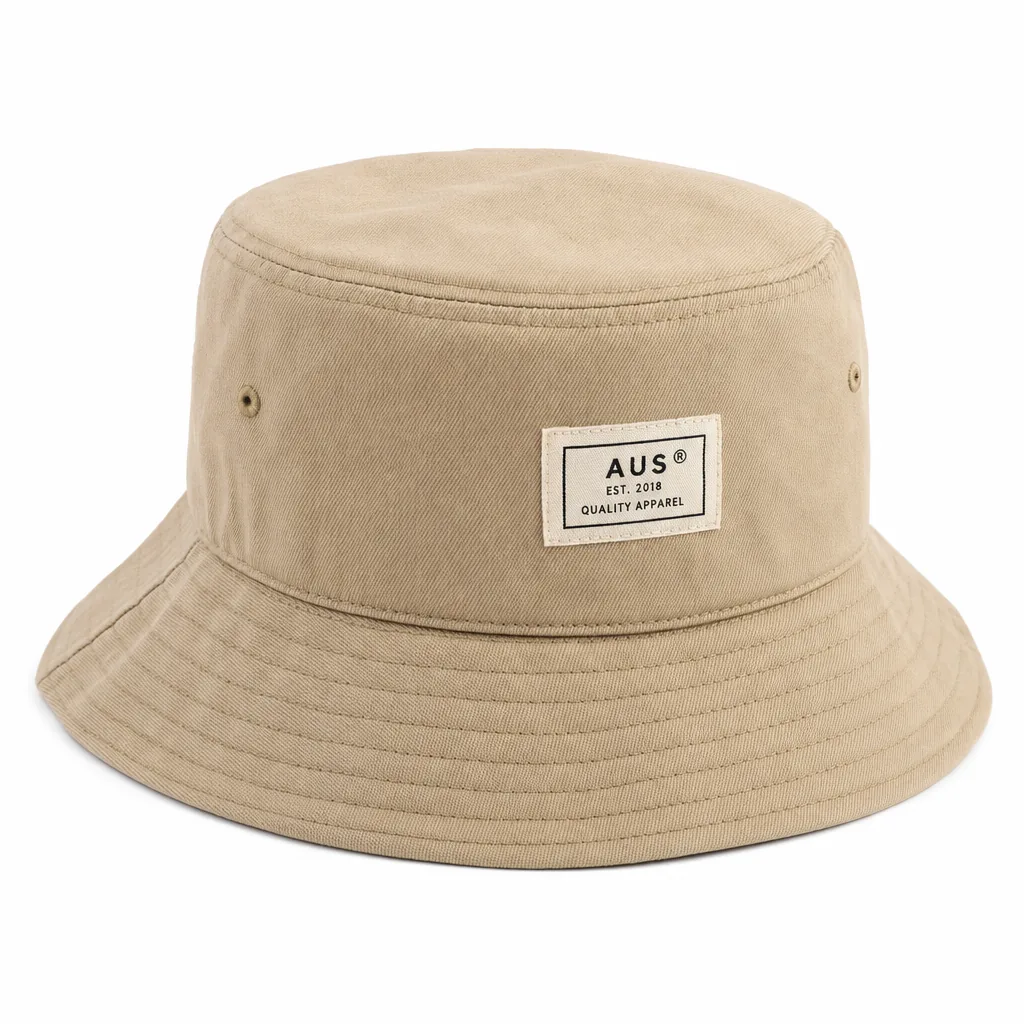
Bucket hat sourcing looks easier than structured baseball hats men's programs, but most failures come from bad geometry control, not simple sewing. Lock the spec before sampling: crown height 8.5-9.5 cm, brim width 5.5-7.0 cm, finished head circumference by size grade rather than a generic 58 cm sample, and brim construction spelled out as none, 20-40 gsm woven fusible, or 2-3 mm EVA. A proper tech pack should also call out brim stitch rows, usually 6-10, because row count changes hand feel and brim memory. Most factories cut a circular crown top, side wall, and separate brim ring, then assemble on single-needle lockstitch with edge topstitching; if the side wall is off grain or the brim ring is eased unevenly, the hat twists after laundering or spirals on head. That is why bucket hats can fit less consistently than well-graded baseball hats men's styles unless the pattern is controlled tightly from the first proto.
Fabric choice drives both fit retention and usable MOQ. For fashion retail, 245-280 gsm cotton twill, brushed chino, or enzyme-washed canvas are the safest because they sew cleanly and hold brim shape without the harsh hand of heavy fusible. For outdoor capsules, 110-160 gsm nylon taslon, supplex nylon, or polyester microfiber paired with mesh eyelets and a moisture-wicking sweatband performs better, but these fabrics expose puckering and shade variation faster. In Yiwu and Dongguan, a plain dyed cotton bucket hat usually starts at 150-300 pcs per colorway, while reversible, pigment-washed, sublimated, or multi-position embroidered builds normally need 300-500 pcs because marker loss, setup time, and rejection risk rise quickly. Real FOB China pricing at 300 pcs is about US$2.10-3.40 for a basic 260 gsm cotton twill style, US$3.60-5.80 for reversible or all-over print, and US$4.20-6.50 once you add applique, chain stitch, or dense flat embroidery on Tajima or Barudan heads. QC should stay at AQL 2.5 with in-line headform checks after pressing, plus circumference tolerance within +/-0.5 cm and shade matching under Delta-E 1.5 between shell, under-brim, and sweatband; measured flat, a bucket hat can pass spec and still wear wrong.
Baseball Hats Women
Women’s caps rarely need a separate sewing line, but they absolutely need a separate pattern if you expect the fit to sell through. A common sourcing mistake is to treat women’s as a scaled-down version of baseball hats men's, using the same 6-panel body block and just tightening the back strap. That usually leaves the crown too tall and the front too broad. A workable women’s spec is typically a 56-58 cm head opening, 15.5-16.2 cm crown depth, 7.0-7.2 cm visor length, and a narrower front panel to reduce the visual bulk above the brow. If your PO says only “smaller fit,” the sample room will guess, and that guess usually comes back as PP sample rework. Lock the tech pack early: closure type, buckle gauge, visor curvature, stitch density, sweatband material, and fabric weight. For softer fashion caps, 240 gsm brushed cotton twill gives better hand feel; 260-280 gsm chino twill holds shape better; 150-180 gsm polyester microfiber is the practical choice for lightweight performance styles.
Shade control and decoration engineering matter more than many buyers expect, especially on light fashion colors. Pinks, ecru, stone, sage, and other soft tones will show component mismatch immediately under retail lighting, so specify Pantone TCX references, approved lab dips, and a bulk tolerance of Delta-E below 1.5 between crown panels, underbrim, strap, and button. Embroidery also changes once you move to low-profile or unstructured fronts: satin stitch logos above roughly 5,000-6,000 stitches can tunnel or pucker unless the factory adjusts underlay, backing, and thread tension on Tajima or Barudan heads. Commercially, women’s caps are straightforward if the package stays disciplined. Stock fabric and standard trims usually support 144-300 pcs per colorway; custom-dyed fabric, satin lining, printed seam tape, or a dedicated women’s block usually pushes MOQ to 500 pcs. FOB Ningbo pricing is typically $2.20-$3.40 for basic embroidered styles and $3.80-$5.20 once you add enzyme wash, piping, metal trims, or premium closures. Final inspection should stay at AQL 2.5, with measurement checks on opening circumference, crown depth, visor symmetry within 3 mm, logo position, and closure function, because a women’s cap can pass as a reduced baseball hats men's spec and still fail at retail.
Men's Bucket Hat
Men's bucket hats look easier than structured caps, but the tolerance window is actually tighter than many baseball hats men's buyers assume. The common shell fabrics are 100% cotton twill at 180 to 260 gsm, washed chino around 220 gsm, and nylon taslon at 110 to 160 gsm for faster-dry outdoor programs. Because there is no buckram front or pre-curved visor to disguise construction faults, every sewing error stays visible. The first thing I check is brim geometry: on a 5.5 cm brim, a stitch path drifting 2 mm or a crown-to-brim join pulling unevenly is enough to make the hat look off-grade at retail. On the line, the repeat defects are inconsistent brim topstitch spacing, sidewall imbalance, and torque after washing. A solid sample should hold uniform brim drop, run 7 to 9 SPI on twill, and stay visually round after enzyme wash or pigment wash.
The tech pack needs more discipline than the average six-panel spec. Lock the finished circumference by size, crown height, brim width tolerance, fabric weight, sweatband material, eyelet construction, brim quilting row count, under-brim fabric, and wash standard before sample approval. For color-managed programs, use Pantone TCX references and set a realistic bulk tolerance: Delta-E under 1.5 is achievable on stable dyed fabric, but washed cotton often needs a signed physical wash standard against the PP sample because shade shift is part of the process. Cost moves quickly once trims get less basic. In Zhejiang, a plain bucket in stock twill with flat embroidery or a woven loop label usually runs FOB $2.20 to $3.80 at 300 to 500 pieces, with workable MOQs around 144 to 300 pieces per color. Move into custom-dyed fabric, sublimation, mesh lining, branded seam tape, or lightweight waterproof nylon, and supplier minimums usually push the real MOQ to 500 to 1,000 pieces and FOB to $4.20 to $7.00+.
Inspection needs to be written into the PO instead of left to a final random pull. Measure finished circumference after washing, because untreated 100% cotton can shrink 2% to 4% if the laundry is unstable or the drying curve drifts. Brim symmetry should be checked flat, but also on-head or on a block, because some hats pass table measurement and still collapse unevenly once worn. The failure points worth calling out are skipped stitches at the brim join, puckering around metal eyelets, shade variation between brim and side band from mixed dye lots, and embroidery distortion on nylon when the backing is too stiff or the tension is too aggressive on a Tajima or Barudan head. AQL 2.5 is fine for final inspection, but I would still require 100% in-line visual control on brim topstitch rows and crown-to-brim joining. For brands extending a baseball hats men's range into seasonal buckets, that is where the preventable defects usually start.
Baseball Hats Fitted
Fit is where fitted caps win or fail. Unlike adjustable baseball hats men's styles, you cannot hide bad pattern grading behind a strap; the shell, sweatband, back seam, and visor all have to land correctly by size from the first paper pattern. For U.S. retail, the practical size run is usually 6 7/8 to 7 5/8 in 1/8 increments, and each size needs its own blocking tolerance after sewing and steaming. A usable tech pack should specify finished head circumference in centimeters, crown depth, visor length and pre-curve, seam allowance, eyelet type, sweatband width, buckram hardness, and fabric weight. For entry-level fitted programs, 100% cotton twill at 260-320 gsm is the safest base because it sews cleanly and holds size better than lighter brushed fabrics; wool-acrylic blends at 380-450 gsm give a truer on-field silhouette but usually need stiffer front buckram and tighter steaming control. Lock color and trim references in writing: Pantone TPG or TCX for shell fabric, Madeira or Gunold thread codes for embroidery, and a shade tolerance of Delta-E 1.5 or tighter under D65 light. Embroidery specs matter more on fitted caps because crown distortion shows immediately when the cap is worn. If the front logo uses 3D puff, call out 2-3 mm EVA foam, stitch direction, underlay type, and a stitch-count limit; over-digitized files are exactly what crack foam and pinch the front panel on Tajima or Barudan machines. Our standard practice is to flag any center-front logo drift beyond 2 mm and any puckering on lighter twills before bulk approval, because those defects only get worse after final pressing. Compared with cheaper baseball hats men's categories, fitted styles demand tighter control over left-right symmetry, visor alignment, and sweatband join placement, since even a small pressure point or twisted back seam will trigger fit complaints faster than a minor cosmetic issue.
MOQ on fitted caps is set by size splitting, not just sewing time. A factory that accepts 144-300 pieces on a strapback will often require 300-500 pieces per color for fitted baseball hats men's orders, because that quantity gets divided across 5-7 sizes and smaller edge sizes do not turn evenly. The size ratio needs to be agreed before quoting; 1:2:3:3:2:1 across six sizes is common for general U.S. wholesale, while streetwear brands often skew heavier into 7 1/4, 7 3/8, and 7 1/2. If the ratio changes after sampling, your unit cost changes with it because cutting efficiency, sweatband consumption, and leftover inventory risk all shift. In Zhejiang, a basic 6-panel cotton twill fitted cap usually lands around $3.20-$4.60 FOB Ningbo at 500 pieces, while raised embroidery, contrast undervisor, woven seam taping, moisture-wicking or spandex sweatbands, and interior branding push it into the $4.90-$6.80 range. Inspection has to start with measurement, because fit failure destroys sell-through faster than a missed loose thread. Under AQL 2.5, check finished circumference, crown depth, visor length, peak symmetry, and back-seam verticality in every size run, especially after sweatband attachment and final steaming, where shrink and distortion usually show up. The repeat defects on fitted caps are predictable: back-seam twist, sweatband joins creating a hard pressure point, visor sandwich exposure, rippled seam tape, and embroidery off-center by more than 2 mm. Fitted baseball hats men's programs carry more inventory complexity than adjustable caps, but when sizing is clean and trims stay consistent across the range, they justify a higher retail position because the consumer can feel the difference immediately on head, not just on shelf.
Fitted Hats Sizes
Fitted sizing is decided by pattern grading, blocking, and sweatband joining accuracy, not by whatever size sticker gets applied at packing. A proper fitted cap is built to a finished inner circumference measured at the sweatband seam, then graded in standard 1/8 increments such as 6 7/8, 7, 7 1/8, 7 1/4, and 7 1/2. On structured 6-panel baseball hats men's programs with buckram front panels, a 2-3 mm drift at blocking or back-seam closing is enough to push the cap visibly off spec. Buyers should demand a measurement chart covering finished circumference, crown height, visor length, sweatband width, top-button position, and back-seam alignment instead of accepting "adult fitted" as a spec. In production terms, +/-3 mm on finished circumference is a solid premium standard; +/-5 mm is closer to promotional grade. That tolerance logic is specific to fitted construction and should never be copied over from strapbacks or flex styles, where the closure absorbs part of the fit variation.
MOQ and price on fitted caps are driven less by total units than by size spread. A factory may quote 144-300 pieces per colorway in 16x12 acrylic-wool twill or 260-320 gsm cotton brushed twill, but once that run is split across 5-7 sizes, efficiency drops fast below roughly 24-36 pieces per size. Cutting yield, sewing line balance, and carton assortment all get worse, so a practical MOQ is usually 300-500 pieces per style per color for stable output. FOB China pricing for a standard 6-panel fitted cap typically lands around $3.20-$5.80 with flat embroidery, woven main label, care label, and standard taping; melton wool, moisture-wick sweatbands, metallic thread, or 3D puff embroidery on Tajima or Barudan heads will usually push it to $6.50-$8.50. Inspection should stay at AQL 2.5 but put extra weight on actual circumference, visor centering, left-right crown symmetry, and size-label accuracy, because mixed-size packing mistakes are common on rushed runs. For color-critical baseball hats men's collections, keep shell and underbrim within Delta-E 1.5 to the approved lab dip, especially on black, navy, and licensed team shades.
Working with CrownsForge for baseball hats men's programs
Sampling speed, not sewing line capacity, usually determines whether a baseball hats men's program hits launch. A stock blank in 100% cotton twill can be turned in 5-7 business days, but a sales-ready sample with flat embroidery, 3D puff, sublimated patch, or heat transfer is more realistically 7-10 days. Once you add Pantone TCX fabric matching, custom woven labels, printed seam tape, or molded PVC patch tooling, development stretches to 12-15 days. The smart first step is to start from a proven block, not a fresh pattern: a 6-panel structured cap in 270-300 gsm twill, or a low-profile dad cap in brushed cotton. Lock crown height, visor curve, buckram weight, closure, and sweatband construction before approving decoration; otherwise every logo revision turns into a full remake.
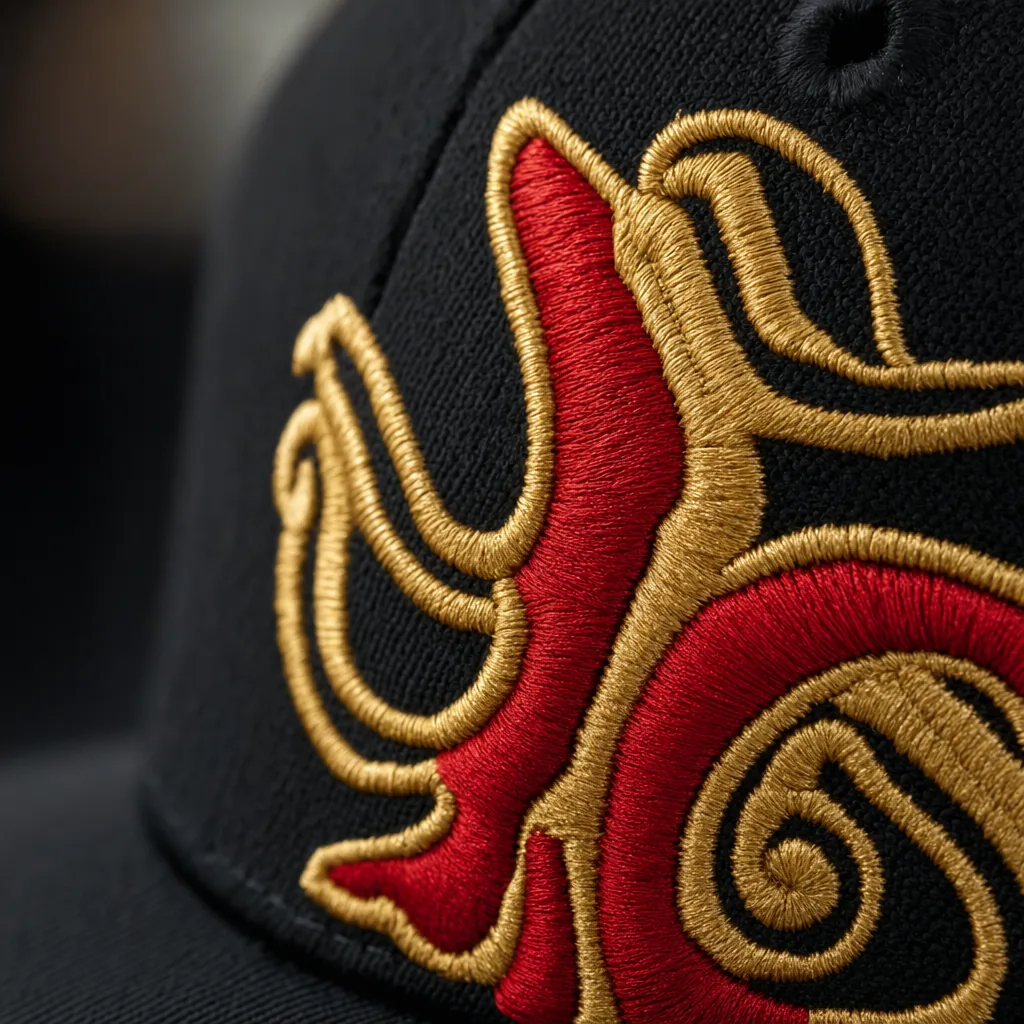
Decoration failures are where inexperienced buyers lose time and money. A logo that looks clean on screen can still break down on the machine: 3D puff that runs fine on a Tajima or Barudan head with a 5.5-6.0 mm satin column may sink into brushed cotton if foam thickness, underlay, or edge walk is off. Treat sew-outs as a production control point, not a formality. On MOQ, the useful benchmark for baseball hats men's is 144 pcs per colorway for a standard cap using one shell fabric and one embroidery file. With stock materials, some factories will accept 48-96 pcs per SKU, but expect a real surcharge of about $0.60-$1.80 per cap. Current market pricing for a basic cotton twill cap with flat embroidery is typically $2.80-$4.20 FOB Ningbo; wool-blend melton, suede brim, metal clasp, custom inner tape, and mixed decoration processes push factory cost to roughly $5.50-$8.50. The safer workflow is tech pack review, digitizing, pre-production sample approval, lab dips, inline inspection, and final audit at AQL 2.5. Our standard practice is to verify visible shell panels against approved color standards with Delta-E control, because front-crown shade drift is one of the first defects a retail buyer will reject. For licensed or scalable programs, sedex-audit-cap-supplier-guide.html">BSCI 2.0 or Sedex SMETA 4-Pillar records, plus REACH or California Proposition 65 declarations, should be treated as operating requirements, not afterthought paperwork.
Frequently Asked Questions
What is the minimum order quantity (MOQ) for custom hats?
Our standard MOQ is 100 pieces per design and color, with sampling available from 1 piece. For complex multi-color logos or premium fabric upgrades, the MOQ can be lowered with a small per-piece surcharge.
What logo decoration techniques do you offer?
3D puff embroidery, flat embroidery, woven patch, leather patch, PVC patch, screen printing, sublimation, applique and laser etching, all in-house with no subcontracting.
Can I order a sample before bulk production?
Yes. We strongly recommend approving a pre-production sample before mass production. Samples are charged at 35 to 60 USD each plus express shipping, fully refundable against confirmed bulk orders over 500 pieces.
What file format should I send for my logo?
Vector files (AI, EPS, PDF) are ideal. High-resolution PNG or JPG at 300 dpi on transparent background works as a fallback. Provide Pantone color references for accurate reproduction.
Which shipping methods do you support?
We support FOB, CIF and DDP shipping. Air express for samples and small orders, sea LCL for 100 to 500 pieces, sea FCL for 5,000+ pieces. Door-to-door DDP available for US, EU, UK, Canada and Australia.
What should buyers know about kangol bucket hat?
When evaluating kangol bucket hat, the key considerations are construction quality, decoration capability, MOQ flexibility and lead time. Cover everything buyers ask about bucket hat men: how it's manufactured, what specs to request from a factory, typical MOQ and pricing, common quality issues to inspect for, and how this ties back to the broader baseball hats men's sourcing decision. Cover everything buyers ask about men's bucket hat: how it's manufactured, what specs to request from a factory, typical MOQ…
What should buyers know about corduroy hat men's?
When evaluating corduroy hat men's, the key considerations are construction quality, decoration capability, MOQ flexibility and lead time. Cover everything buyers ask about bucket hat men: how it's manufactured, what specs to request from a factory, typical MOQ and pricing, common quality issues to inspect for, and how this ties back to the broader baseball hats men's sourcing decision. Cover everything buyers ask about men's bucket hat: how it's manufactured, what specs to request from a factory, typical MOQ…
How does ordering custom fitted hats for men work?
When evaluating custom fitted hats for men, the key considerations are construction quality, decoration capability, MOQ flexibility and lead time. Cover everything buyers ask about baseball hats fitted: how it's manufactured, what specs to request from a factory, typical MOQ and pricing, common quality issues to inspect for, and how this ties back to the broader baseball hats men's sourcing decision. Cover everything buyers ask about fitted hats sizes: how it's manufactured, what specs to request from a factory,…
What should buyers know about corduroy bucket hat mens?
When evaluating corduroy bucket hat mens, the key considerations are construction quality, decoration capability, MOQ flexibility and lead time. Cover everything buyers ask about bucket hat men: how it's manufactured, what specs to request from a factory, typical MOQ and pricing, common quality issues to inspect for, and how this ties back to the broader baseball hats men's sourcing decision. Cover everything buyers ask about men's bucket hat: how it's manufactured, what specs to request from a factory, typical MOQ…
Looking for a reliable hat manufacturer in China?
CrownsForge has produced custom hats for 800+ brands across 40 countries. From 100-piece launches to 100,000-piece retail programs, we deliver on time and on spec.
Get in touchRelated guides
Custom Logo Hats: When to Use It, Costs, and What to Ask Your Factory (2026 Update)
Read article →
Mesh Caps Wholesale: Trucker Cap Manufacturing Specifications and Pricing
Read article →
Bucket Hat Men: A Vertical-Specific Sourcing Guide - Cost & MOQ Breakdown
Read article →If you are ready to take the next step on baseball hats men's: a vertical-specific sourcing guide - cost & moq breakdown, our team can put a tailored quotation and digital mock-up in your inbox within 24 hours. Send the inquiry form on our contact page or message us directly on WhatsApp.