
Mesh Caps Wholesale: Trucker Cap Manufacturing Specifications and Pricing
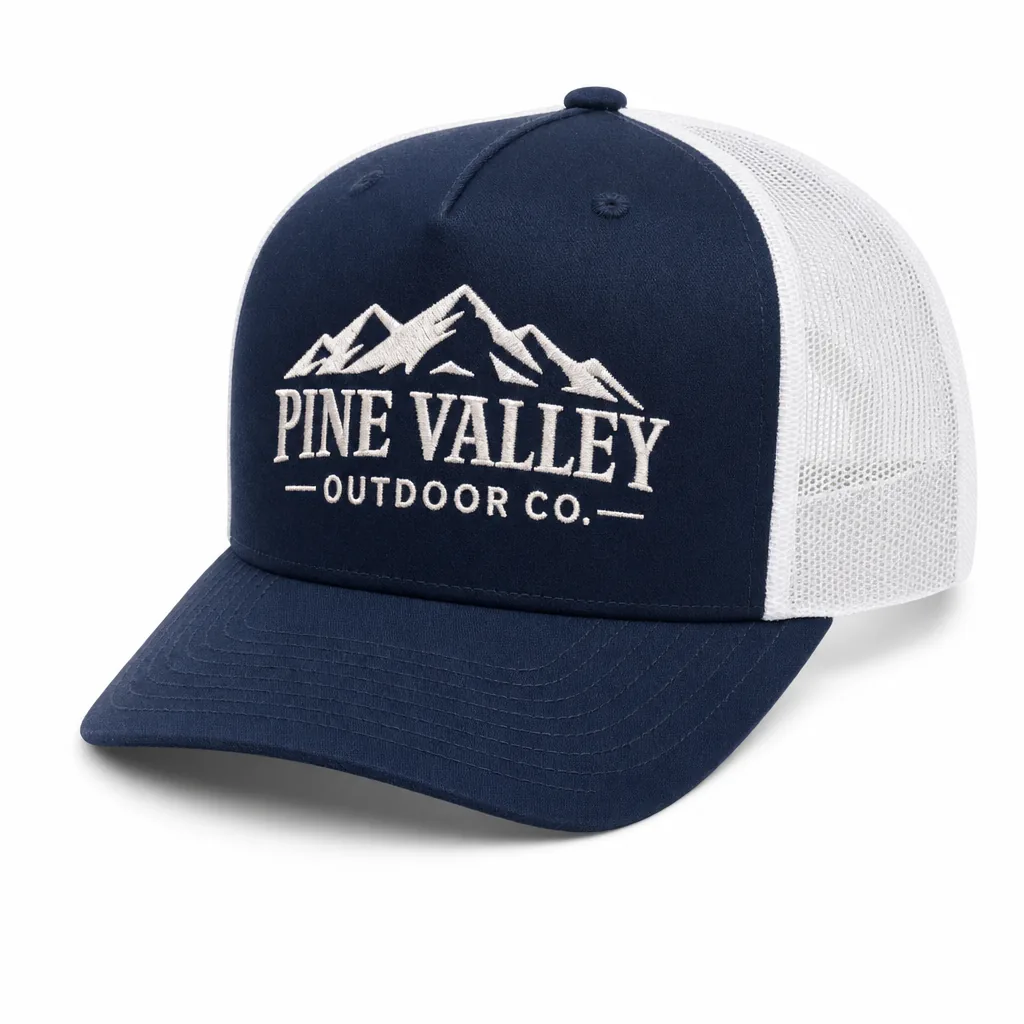
Mesh Caps Wholesale: Trucker Cap Manufacturing Specifications and Pricing is one of the most-asked questions we receive from international buyers, and for good reason. With dozens of factories competing for your order and an alphabet soup of technical terms in every supplier quote, even experienced importers can feel lost. This guide consolidates what we have learned producing custom hats for clients in 40+ countries.
Polyester mesh: the back-panel material that defines the trucker silhouette
Polyester hex mesh is the back-panel material that actually defines a trucker cap. For mesh caps wholesale, the normal spec is 100% polyester mesh built from 75-denier yarn: light enough to breathe, but still stable when the crown is heat-pressed, embroidered, or sewn into a foam front. In my experience, 50D mesh is where buyers start getting complaints — it feels flimsy, snags easier, and the open holes distort after repeated wear. At the other end, 100D microfiber mesh gives a softer hand-feel and cleaner drape, but it usually adds a bit of cost and can make the cap feel less “classic” trucker unless the front panel and visor are balanced correctly.
A mesh hat manufacturer should treat mesh as a functional spec, not just a color choice. Standard stock colors for wholesale mesh hats are black, white, gray, navy, royal, red, kelly green, and brown, which covers most sports, promo, and streetwear programs without custom dyeing. When a brand needs matched panels for custom mesh trucker hats, Pantone TCX matching is realistic at 500+ piece runs, but buyers should expect a small Delta-E tolerance because mesh takes dye differently than cotton twill or foam laminate. On the factory floor, we usually approve mesh swatches under daylight D65 and then confirm how the color reads next to the front panel, because back-panel contrast changes the whole silhouette.
The pricing difference between bulk mesh trucker hats is driven more by yarn quality and dye lot consistency than by the mesh itself. A 75D stock mesh is usually the best value for mesh caps wholesale, while 50D can shave a little cost on very large orders but tends to create returns if the hats are meant for retail. If the program needs premium feel, 100D microfiber mesh is worth considering, especially for fashion accounts that want a cleaner back-panel finish and less scratchiness against the skin. For a mesh back cap manufacturer, the real control point is keeping the mesh stable through cutting and stitching so the holes don’t collapse around the seam line, which is where a cheap cap starts looking cheap.
Foam front + mesh back pairings
The foam front is what decides whether a trucker cap reads as cheap promo or credible retail. For mesh caps wholesale, the baseline spec is still a 3 mm PU foam front laminated to polyester tricot, paired with a standard six-row stitched visor and 100 to 120 gsm polyester mesh on the back panels. That build usually lands around $2.20 to $3.20 per cap at 500 to 3,000 pieces, depending on closure, embroidery count, and whether the mesh is domestic stock or dyed to Pantone. The reason buyers keep using this pairing is simple: the front panel holds a rigid billboard shape, while the open mesh keeps weight and heat buildup down. If you go softer on the front or too fine on the mesh, the cap loses that classic trucker silhouette fast. A good mesh hat manufacturer will also match foam density to the decoration method, not just the target price. Thin 3 mm promo foam takes screen print and heat transfer easily, but under dense embroidery it can ripple, especially above 7,000 stitches or with large filled areas. We usually stabilize it with a tricot-backed facing or a lighter underlay, because otherwise the front crown can tunnel after packing. That is where many wholesale mesh hats fail inspection: the silhouette collapses before the customer even opens the carton.
The premium move is a 5 mm foam front, and the upcharge is real but usually justified: add roughly $0.30 to $0.60 per cap, depending on the foam grade and whether the front fabric is standard poly or upgraded brushed twill laminate. A thicker front panel gives custom mesh trucker hats a taller crown, cleaner edge definition at the seam, and better rebound after compression in export cartons. It also improves decoration tolerance. On Barudan or Tajima heads, 5 mm foam handles satin borders, chain stitch fills, and higher stitch density with less puckering than 3 mm stock. If the logo has sharp outlines or block lettering, that extra thickness is often the difference between a flat-looking cap and one with actual shelf presence. The back pairing matters just as much. Hard nylon mesh, often 70D to 100D monofilament, gives the most traditional snapback feel but can scratch and deform if tension is off during sewing. Softer polyester mesh is more forgiving for bulk mesh trucker hats and usually performs better on color consistency, especially when buyers want black, khaki, or custom dye lots within Delta-E 1.5 to 2.0. A mesh back cap manufacturer that knows the category will balance front foam thickness, back mesh stiffness, and seam tape tension together; otherwise you get twisted side profiles, uneven crown height, or cracked front prints after a few weeks in transit.
Mesh denier and breathability tradeoffs
Mesh denier is the first thing I look at when a buyer says they want mesh caps wholesale, because it tells you almost everything about hand-feel, airflow, and how the cap will survive packing and wear. A 50D to 75D mesh is lighter and more open, so it breathes well and keeps unit cost down; that is why it works for roadshows, sponsorship giveaways, and other high-volume promotional runs. In practical terms, 50D mesh can shave roughly $0.10 to $0.25 off a cap versus a denser spec, depending on color, dye lot, and how much waste the factory gets from cutting the panels. The downside is obvious on the line: very low-denier mesh can snag easier, deform faster, and show more irregularity if the bonding and stitching tension are not controlled.
For wholesale mesh hats meant for retail, I usually move the conversation to 100D microfiber mesh only when the buyer cares about a softer, more substantial touch. It does not breathe as freely as 75D, but the surface looks cleaner under store lighting and it holds shape better after repeated packing. That matters for custom mesh trucker hats sold in boutiques or team channels, where customers will compare the cap against established brands. The tradeoff is not just airflow; thicker mesh also adds a small but real weight increase and usually pushes FOB cost up by about $0.15 to $0.35 per piece, especially if the mesh back cap manufacturer is using tighter QC on tension, seam alignment, and color matching to Pantone TCX.
For outdoor and athletic programs, 75D is the sweet spot and the spec I recommend most often for bulk mesh trucker hats. It gives enough porosity to dump heat during summer events, but it is still stable enough to survive embroidery framing, carton compression, and basic retail handling without looking flimsy. On the factory floor, 75D also behaves better under standard 12-needle embroidery because the fabric does not pucker as aggressively as very light mesh, so you get cleaner logo edges and fewer rejected panels. If the buyer wants a real-world benchmark, ask for AQL 2.5 inspection on stitching, mesh gauge, and color shade bands; that is the level where a mesh hat manufacturer can actually keep consistency across a full production run instead of just a sample room sample.
Custom mesh colors and dyeing economics
Stock mesh colors are the cheapest route in mesh caps wholesale because the mill has already paid for yarn, greige inspection, and the dye-house minimums. Once you ask for a custom Pantone TCX match on the mesh, you are paying for a separate dye-lot setup, not just the fabric itself. In practice, that usually means an $80 to $150 setup charge per color plus a minimum of about 200 yards of mesh fabric, and the shade can still land within a sensible Delta-E tolerance rather than a perfect lab match. For a mesh hat manufacturer, that is normal; for small runs under 500 pieces, it often makes the unit cost ugly fast.
The economics are better when buyers keep the foam front and bill are stock colors and only customize the mesh back cap manufacturer side with one dyed mesh shade. Two-tone trucker caps — for example white foam with black, red, navy, or forest green mesh — are still the standard because they reduce fabric waste and simplify cutting tables. On bulk mesh trucker hats, the mesh panel is usually the cheapest visible variable, but it becomes expensive if you demand a unique color, special hand feel, or heavier denier construction. Typical trucker mesh is 100% polyester, around 50 to 70 gsm, and changing both color and texture at the same time usually adds more cost than buyers expect.
For custom mesh trucker hats, I would only recommend a Pantone-matched mesh when the order is 500 pieces or more and the color is brand-critical, like a licensed team shade or a streetwear drop with repeat reorders. At CrownsForge, our standard practice is to confirm the color against a physical swatch under D65 light before the dye-lot is released, because screen images are useless for mesh transparency and yarn saturation. If the buyer can accept a close stock color, the price stays closer to FOB baseline; if not, the extra setup is justified only when the re-order plan spreads that tooling cost across multiple shipments.
Recycled polyester mesh (rPET) for sustainability programs
GRS-certified recycled polyester mesh is the cleanest sustainability upgrade that actually makes sense in mesh caps wholesale. In practice, the fabric performs almost the same as virgin polyester mesh: similar hand feel, similar air permeability, similar recovery after packing, and no meaningful penalty in print or embroidery stability. The big difference is traceability. A real mesh hat manufacturer should be able to show GRS transaction certificates, fiber content documentation, and chain-of-custody records from yarn to finished cap, not just say "recycled" on a hangtag. The cost premium is usually modest, about $0.20 to $0.40 per cap depending on mesh weight, dyed component colors, and order volume. On a 5,000-piece program, that is an extra $1,000 to $2,000, which is manageable for outdoor brands, music festivals, and retail programs that need a defensible sustainability story. For wholesale mesh hats, that premium is often easier to absorb than trying to retrofit a carbon-offset narrative after the fact. Visually, rPET mesh is not a compromise material; if the supplier controls filament denier and heat-setting correctly, it looks clean on the wall and photographs the same as standard polyester.
For bulk mesh trucker hats, the main specification points are the same whether the mesh is virgin or recycled: mesh openness, front panel structure, crown height, and color consistency. A 100% recycled mesh usually lands around 150-180 gsm depending on the knit, with the back panel needing enough rigidity to survive cap washing and shipping compression. Good factories will match the recycled mesh to the front fabric by Delta-E under 1.5 to 2.0 on production lots, because sustainability programs still get rejected when the colors drift. If you are working with custom mesh trucker hats, ask for a lab dip and a pre-production sample before approving the yarn lot. From a sourcing angle, the important part is certification discipline, not just the fiber claim. A reliable mesh back cap manufacturer should be able to support sedex-audit-cap-supplier-guide.html">BSCI 2.0 or Sedex SMETA 4-Pillar audits and maintain the paperwork for recycled inputs without mixing them into standard stock. On larger runs, our standard practice is to separate rPET programs from regular production so the documentation stays clean for retail compliance. That matters more than a lot of buyers expect, especially when the caps are going to outdoor chains or festival merch programs where sustainability language gets checked by the customer’s legal team.
MOQ tiers and pricing for mesh cap bulk orders
The pricing breaks on mesh caps wholesale are driven by two things buyers usually underestimate: stitch count and how much changeover the line needs. For 100-299 pieces, $2.80-$3.80 per cap is realistic for an entry or test run, especially if you want embroidery, woven labels, custom sweatbands, or color matching to Pantone TCX. At this size, every extra operation hurts, because the factory still has to set up the crown panels, visor board, mesh back, and closure hardware the same way it would for a larger order. A serious mesh hat manufacturer will quote this tier to cover sampling risk, not just fabric and labor. If you are comparing wholesale mesh hats, make sure the quote states whether the price includes one logo placement, one revision, and standard carton packing; otherwise the landed cost jumps fast. At 300-999 pieces, $2.40-$3.20 is the normal production band for bulk mesh trucker hats, and this is where the pricing starts to make sense for brands that want repeatability instead of a one-off test. By this point, a mesh back cap manufacturer can amortize plate fees, sewing setup, and embroidery digitizing across the run, so you are paying less per unit for the same structure. If you need a foam front, 65/35 poly-cotton twill front panel, or a 5-panel profile with plastic snapback, stay closer to the upper half of the range. From experience, buyers should ask for a pre-production sample in the same mesh gauge and front fabric weight they plan to order, because 130 gsm and 160 gsm fronts look similar in photos but sew very differently on the line. The real factory economics show up at 1,000-4,999 pieces and above. In the 1,000-4,999 range, $2.10-$2.80 is the normal wholesale mesh hats price for a standard spec, and 5,000+ pieces can drop to $1.85-$2.40 when the colorway, closure, and logo placement are locked. That is the point where custom mesh trucker hats stop being a custom job in the shop and become a controlled production run with stable labor input. Lead time is usually 7-10 days for sampling and 22-28 days for bulk, FOB Yiwu or Shenzhen, depending on whether the order is moving by truck to Ningbo or consolidated through Shenzhen export channels. If you are buying as mesh caps wholesale, push for an AQL 2.5 inspection standard, carton drop-test confirmation, and a written breakdown of what is excluded from the FOB price, because the cheapest quote often hides freight, hangtags, or carton reinforcement.
For larger contract orders, the unit price only stays low if the tech pack is disciplined. A 5,000+ piece run at $1.85-$2.40 assumes the crown height, visor curve, mesh denier, and stitching density are fixed before cutting starts. If the buyer keeps changing from structured front to unstructured front, or from PVC snap to metal buckle, the line loses time and the price rises immediately. In my view, the cleanest way to buy from a mesh hat manufacturer is to freeze one base spec first, then add decoration options only after the price is agreed. That is how wholesale mesh hats stay within budget instead of turning into a series of small, expensive exceptions. If you are comparing factories, ask whether they are actually a mesh back cap manufacturer with in-house embroidery or just a trading office passing the order out. A real shop should be able to tell you whether the logo will run on a Tajima, Barudan, or ZSK head, how many stitches the front panel can tolerate before puckering, and whether the mesh is soft or hard hand feel. For bulk mesh trucker hats, those details matter more than the headline price. CrownsForge’s standard practice is to quote FOB Yiwu or Shenzhen with sample timing, bulk timing, and packing spec separated line by line, because that is the only way to compare suppliers on equal terms. Buyers who want mesh caps wholesale at the contract tier should also request BSCI 2.0 or Sedex SMETA 4-Pillar audit status if compliance is part of their sourcing policy, since low price is not useful if the factory cannot pass a retailer audit.
The best way to read these tiers is as capacity bands, not just discounts. A 100-piece order is an expensive test because you are paying for development, while a 5,000-piece order is cheaper because the factory can keep the same cutting markers, thread colors, and carton count across the whole run. On custom mesh trucker hats, the cost difference can also come from small details like black vs white mesh, stitched eyelets, or whether the inner tape is printed or plain. If you want a stable quote, send a spec sheet with crown construction, visor insert type, closure, mesh composition, and target target retail price; vague references like “premium quality” do not help anyone on the floor. For procurement teams, the practical move is to ask for a price ladder with the same spec held constant across all four MOQ tiers. That lets you see the real break point for bulk mesh trucker hats and judge whether the supplier is competitive or just discounting the first run to win the account. In most cases, 300-999 pieces is where the buyer can validate fit and branding, 1,000-4,999 pieces is where unit economics become workable, and 5,000+ pieces is where a disciplined factory can lock in repeat production. If the numbers you get for mesh caps wholesale do not include sampling, embroidery digitizing, carton packing, and FOB handover terms, the quote is incomplete, not cheap.
Frequently Asked Questions
How long does production take?
Sampling takes 7 to 12 days. Bulk production runs 20 to 30 days depending on quantity, fabric availability and decoration complexity. Inspection and packing adds another 3 to 5 days before shipment.
What file format should I send for my logo?
Vector files (AI, EPS, PDF) are ideal. High-resolution PNG or JPG at 300 dpi on transparent background works as a fallback. Provide Pantone color references for accurate reproduction.
What is the minimum order quantity (MOQ) for custom hats?
Our standard MOQ is 100 pieces per design and color, with sampling available from 1 piece. For complex multi-color logos or premium fabric upgrades, the MOQ can be lowered with a small per-piece surcharge.
What logo decoration techniques do you offer?
3D puff embroidery, flat embroidery, woven patch, leather patch, PVC patch, screen printing, sublimation, applique and laser etching, all in-house with no subcontracting.
Which shipping methods do you support?
We support FOB, CIF and DDP shipping. Air express for samples and small orders, sea LCL for 100 to 500 pieces, sea FCL for 5,000+ pieces. Door-to-door DDP available for US, EU, UK, Canada and Australia.
How much does cheap custom trucker hats typically cost?
When evaluating cheap custom trucker hats, the key considerations are construction quality, decoration capability, MOQ flexibility and lead time. Stocked colors run at FOB baseline. Custom Pantone-matched mesh requires a dye-lot setup ($80-$150 setup + minimum 200 yards of mesh fabric) — practical at 500+ piece runs. Two-tone trucker caps (one foam color + contrast mesh) are the most popular configuration. Standard hex mesh is 100% polyester at 75-denier (D) yarn thickness. Cheaper variants drop to 50D (lighter, less…
What's the MOQ for custom trucker hat no minimum?
When evaluating custom trucker hat no minimum, the key considerations are construction quality, decoration capability, MOQ flexibility and lead time. Stocked colors run at FOB baseline. Custom Pantone-matched mesh requires a dye-lot setup ($80-$150 setup + minimum 200 yards of mesh fabric) — practical at 500+ piece runs. Two-tone trucker caps (one foam color + contrast mesh) are the most popular configuration. Standard hex mesh is 100% polyester at 75-denier (D) yarn thickness. Cheaper variants drop to 50D (lighter, less…
What's the MOQ for custom rope hats no minimum?
When evaluating custom rope hats no minimum, the key considerations are construction quality, decoration capability, MOQ flexibility and lead time. Stocked colors run at FOB baseline. Custom Pantone-matched mesh requires a dye-lot setup ($80-$150 setup + minimum 200 yards of mesh fabric) — practical at 500+ piece runs. Two-tone trucker caps (one foam color + contrast mesh) are the most popular configuration. Standard hex mesh is 100% polyester at 75-denier (D) yarn thickness. Cheaper variants drop to 50D (lighter, less…
What's the MOQ for custom embroidered trucker hats no minimum?
When evaluating custom embroidered trucker hats no minimum, the key considerations are construction quality, decoration capability, MOQ flexibility and lead time. Stocked colors run at FOB baseline. Custom Pantone-matched mesh requires a dye-lot setup ($80-$150 setup + minimum 200 yards of mesh fabric) — practical at 500+ piece runs. Two-tone trucker caps (one foam color + contrast mesh) are the most popular configuration. Standard hex mesh is 100% polyester at 75-denier (D) yarn thickness. Cheaper variants drop to 50D (lighter, less…
Looking for a reliable hat manufacturer in China?
CrownsForge has produced custom hats for 800+ brands across 40 countries. From 100-piece launches to 100,000-piece retail programs, we deliver on time and on spec.
Get in touchRelated guides
Custom Cap MOQ Explained: How Small Brands Can Order in Bulk Without Wasting Capital
Read article →
Custom Embroidered Patches: When to Use It, Costs, and What to Ask Your Factory
Read article →
Cap Fabric Guide: Cotton Twill, Wool Blend, Polyester & Performance Materials
Read article →If you are ready to take the next step on mesh caps wholesale: trucker cap manufacturing specifications and pricing, our team can put a tailored quotation and digital mock-up in your inbox within 24 hours. Send the inquiry form on our contact page or message us directly on WhatsApp.