Esports Team Caps: Manufacturing Specs for Pro and Amateur Gaming Brands - Supplier Checklist
Esports Team Caps: Manufacturing Specs for Pro and Amateur Gaming Brands - Supplier Checklist is one of the most-asked questions we receive from international buyers, and for good reason. With dozens of factories competing for your order and an alphabet soup of technical terms in every supplier quote, even experienced importers can feel lost. This guide consolidates what we have learned producing custom hats for clients in 40+ countries.
Why esports headwear is the fastest-growing team-sport vertical
Esports headwear is growing faster than most team-merch categories because it solves the two issues that kill first orders: price resistance and size risk. A jersey at $60 to $120 retail forces S-XXL forecasting, higher MOQ exposure, and return friction if sell-through misses. An esports team cap usually retails at $28 to $42, can run as a snapback, strapback, or limited S/M-L/XL size split, and still leaves room for healthy margin when FOB is roughly $4.80 to $8.20 on a standard 6-panel build, depending on fabric, closure, and embroidery count. For a team reacting to a tournament result, streamer collaboration, or local LAN drop, that matters more than people admit: caps are faster to reorder, easier to hold in stock, and much less punishing when the demand signal is wrong. That is why amateur orgs, collegiate teams, and mid-tier gaming brands usually launch with headwear before they ever touch a full cut-and-sew jersey program. The buying behavior is also different from traditional sideline merch. Fans who will not wear a sponsor-heavy jersey in daily life will still buy a clean cap with a 3D front logo, side hit, and understated back mark if it feels wearable off-stream. The best sellers are usually 6-panel snapbacks, low-profile dad caps, and A-frame cotton twill silhouettes with one dominant logo and disciplined decoration. Once you overload an esports team cap with oversized back embroidery, multiple woven labels, and contrast details on every seam, factory efficiency drops fast: run time on Tajima or Barudan heads increases, seam alignment gets less forgiving, and reject rates climb from loose trims, puckering, or off-center placements. In real production terms, simpler layouts scale better, preserve margin, and give teams a safer SKU to repeat in 144-, 288-, or 500-piece runs.
Esports merch also moves on a much tighter release calendar than amateur field sports. Teams are not waiting for one opening-day sell-in; they sell around qualifiers, roster moves, Twitch activations, Discord launches, and short-run creator collabs. That creates a production pattern of 144 to 500 pieces with frequent repeats, which favors suppliers that can sample quickly, lock repeat embroidery files, and keep color variation within a commercially acceptable Delta-E tolerance from lot to lot. If the first run sells in a weekend, the reorder window is usually measured in days, not quarters. A factory that cannot hold logo shape, visor curve, and panel color consistency across repeat runs will lose the program even if the first price looked attractive. Material choice matters more in esports than many buyers expect because most product is consumed on camera before it is handled in person. Black interlock polyester, 300D RPET blends, and peach-brushed chino all read cleaner under LED lighting than cheap light-color cottons, and they hide sweat and handling marks better during events. On the production side, embroidery on 240 to 280 gsm cotton twill or brushed chino needs balanced stitch density so fills do not tunnel and outlines stay crisp; Pantone TCX alignment across shell fabric, taping, and sweatband accents should stay tight enough that mismatch is not visible under studio lighting. From a factory-floor view, an esports team cap is rare: low cube, low return exposure, strong perceived value, and fast reorder velocity in one SKU. That combination is exactly why the category is scaling so quickly.
Sublimation vs embroidery for esports cap branding
If you need exact jersey-match graphics, sublimation wins on technical range. A polyester front panel can carry gradients, sponsor lockups, camo fades, and neon effects that embroidery simply cannot reproduce without turning the artwork into a compromise. For an esports team cap tied to a competition kit, we usually work from Pantone references and approve against a printed strike-off under D65 lighting, because RGB screen art almost always shifts when converted to fabric dyes. On 140 to 180 gsm interlock or brushed tricot, a good sublimation setup can keep visual color deviation around Delta-E 2.0 to 3.5 on the main tones, which is acceptable for most teamwear programs. The tradeoff is feel and substrate: sublimation needs high-poly content, so you are not getting the same structure and handfeel as a traditional wool-blend retail cap.
Embroidery is still the stronger choice when the goal is perceived value at retail. A clean 3D satin stitch logo on a structured crown, run on Tajima or Barudan heads, gives depth, shadow, and edge definition that fans read as premium the moment they pick it up. The limitation is artwork complexity: small gradients, thin outlines under 1.0 mm, and more than 6 to 8 thread colors usually need simplification during digitizing. That is why a gaming cap manufacturer should review stitch count before quoting, not after sampling; a front logo at 8,000 stitches behaves very differently from one at 18,000, both in cost and in how the buckram holds shape. For a typical esports merch hat in acrylic/wool or 100% cotton twill, embroidery adds roughly $0.35 to $1.20 per piece depending on stitch count, thread changes, and whether puff underlay is used.
The practical answer is not sublimation versus embroidery; it is where each one belongs in the line. Most serious programs split product architecture: sublimated performance caps for tournament wear, staff issue, or twitch cap merch bundles, then embroidered premium drops for direct-to-consumer sales and sponsor gifting. A pro gaming cap supplier should also be checking construction against use case: laser-perforated poly with moisture-wicking sweatbands for players, versus heavier 260 to 300 gsm brushed cotton or melton-blend bodies for lifestyle capsules. At CrownsForge, our standard practice is to inspect both decoration types to AQL 2.5, but the failure points differ—sublimation needs checks for ghosting, panel misregistration, and seam shadow, while custom esports headwear with embroidery needs thread trim control, center-out alignment, and no crown distortion after hooping. Buyers who treat them as separate products, not interchangeable branding methods, usually get better sell-through and fewer sample revisions.
Performance vs lifestyle: two product lines for one team
The cleanest way to build an esports headwear program is to split it into two SKUs from day one: a performance line for match-day wear and a lifestyle line for daily street use. Trying to force one esports team cap to do both jobs usually gives you a hat that feels too technical for fans and too heavy for players under stage lights. For the performance side, I’d spec 140-180 gsm polyester interlock or brushed microfiber with moisture-wicking sweatbands, laser-cut eyelets or bonded mesh panels, and full-panel sublimation for gradients, sponsor marks, and low-minimum player personalization. Retail lands comfortably at $25-35 if the decoration is dye-sub only, closure is standard hook-and-loop or light plastic snap, and the crown construction stays in the 5-panel or unstructured 6-panel range to keep weight down.
Lifestyle should be built like a proper fan product, not a downgraded athletic piece. A structured 6-panel cap in 260-320 gsm cotton twill or cotton-poly twill, with a buckram-supported front, embroidery on Tajima or Barudan heads, and optional flat embroidery plus woven loop labels, fits the $35-55 retail bracket much better. This is where you sell identity: raised logo embroidery at 5,000-8,000 stitches, side hit for league season or creator tag, underbill contrast, and cleaner Pantone TCX matching on trims. A good gaming cap manufacturer will also warn you that dense embroidery over lightweight performance fabric causes puckering, which is exactly why the lifestyle and performance lines should stay technically separate even if the artwork family is shared.
The real commercial upside is cross-selling both lines at tournaments, pop-ups, and team webstores. Players and staff buy the lightweight on-stage version because it performs; fans buy the heavier embroidered esports merch hat because it photographs better and feels premium in hand. We usually keep logos consistent but change fabrication, visor shape, and sweatband spec so the two lines read as one collection rather than duplicate stock. For example, a performance cap may use sublimated side sponsor hits and a quick-dry black sweatband, while the lifestyle version swaps in 3D embroidery, a cotton tape seam finish, and a metal clasp. That product ladder also helps a pro gaming cap supplier manage MOQ risk: sublimated customs can run efficiently at 100-150 pieces per style, while structured embroidered custom esports headwear often makes more sense at 144-288 pieces once digitizing, sampling, and trim setup are included.
Limited-edition tournament drops: MOQ and timing
For a limited-edition tournament drop, the real constraint is calendar discipline, not sewing capacity. A practical MOQ for an esports team cap is 300 to 500 pieces if the build stays tight: stock 260 gsm brushed cotton twill or 220 to 240 gsm recycled polyester, one crown color, one closure, and embroidery held to roughly 8,000 to 12,000 stitches per location. In that range, a structured 6-panel with flat embroidery, woven flag label, and standard sweatband typically lands at $4.60 to $6.20 FOB China at 300 pieces. Once the spec adds split colorways, molded TPU patches, underbill sublimation, custom-dyed webbing, or die-cast metal buckles, the workable MOQ usually moves to 450 to 600 pieces because trim tooling, setup loss, and higher reject exposure change the math fast; FOB then often climbs to $6.80 to $8.50. Buyers who try to force premium trims into a 300-piece run usually end up paying surcharge-level pricing without getting real production efficiency.
The most expensive mistake is treating a tournament capsule like evergreen merch. Date-coded side embroidery, sponsor updates, roster tags, and serialized labels all reduce tolerance for revision after sampling. Once embroidery files are approved, even a minor date or logo edit can burn 4 to 6 days between re-digitizing, thread shade confirmation, and sample re-approval on Tajima, Barudan, or ZSK heads. For event-driven programs, I would rather delete one weak decoration than protect a bloated spec sheet that cannot survive one late change. A realistic door-to-door timeline is about 30 days only when approvals move at factory speed: 2 to 3 days for tech pack review, BOM lock, and Pantone TCX confirmation; 3 to 5 days for digitizing and strike-offs; 12 to 15 days for cutting, sewing, finishing, and inline QC; then 7 to 10 days for air freight and customs clearance. Supplier vetting should focus on operating control: ask if bulk fabric can be reserved before final sample sign-off, whether final inspection runs to AQL 2.5, and whether the factory holds current sedex-audit-cap-supplier-guide.html">BSCI 2.0 or Sedex SMETA 4-Pillar status. For a 500-piece esports team cap drop, DDP air often adds only $0.90 to $1.60 per cap versus FOB, which is cheap insurance against missing the tournament sales window.
Licensing and IP protection for esports IP
Lock down rights before sampling, not after the first stitch-out. For any licensed esports team cap program, the factory should execute both a bilateral NDA and a manufacturing IP agreement before tech-pack review, with the exact legal entity names matching the PO, trademark registration, and payment party. The agreement should state who owns source assets, who can approve revisions, whether DST, EMB, or PDF production files may be reused, and how long files, strike-off approvals, and shipment records can be retained. The appendix is where most disputes are won or lost: list every protected item by filename and revision code, including AI or EPS logo files, Pantone Coated or Pantone TCX references, woven label art, inner seam-tape prints, hangtag dielines, hologram stickers, and carton marks. If a licensing agency or merch manager is approving on behalf of the team, require written authorization from the trademark owner; in licensed headwear, weak approval chains cause more claims than bad embroidery.
The main leak point is file control, not sewing. A supplier handling licensed esports team cap production should store artwork on encrypted servers with role-based access, download logs, and revision history, while operators at Tajima, Barudan, or ZSK embroidery heads receive only the job-specific DST and color callout for that PO. In practical terms: no full-size logo printouts taped beside machines, no uncontrolled USB transfers between digitizing stations, and no open shared folders where last season's finals logo can be pulled into a fresh run. IP controls also need to survive rework and shipment, because gray-market leakage usually comes from overruns, rejects, and excess branded packaging. The contract should ban second-shift production, prohibit subcontracting without written consent, require destruction records for failed panels and canceled trims, and set overrun tolerance in writing, typically 0 percent for licensed goods rather than the 3 to 5 percent some promotional factories still assume.
Inspection language has to tie IP protection to measurable factory discipline. Final audit should verify branding against the approved artwork revision, carton count against the PO, and disposal logs for defective branded parts alongside normal workmanship checks at AQL 2.5. If embroidery is involved, confirm thread colors against approved Pantone references and require an agreed visual shade tolerance; for printed labels or stickers, a Delta-E under 2.0 is a realistic target on stable substrates. For higher-risk drops such as tournament launches or streamer collaborations, add PO-linked quantity controls like numbered cutting tickets, serialized carton labels, and reconciliation of issued panels against packed units. Buyers should also ask whether the site has passed BSCI 2.0 or Sedex SMETA 4-Pillar. Those audits do not guarantee IP security, but they do indicate whether the factory can maintain traceability, controlled records, and management accountability under real production pressure.
Sustainability is now a buyer concern in esports too
Sustainability has become a real sourcing filter in esports, especially for Gen Z fanwear and sponsor-backed merch programs where procurement teams now ask for paperwork before they approve a single esports team cap. The baseline is traceability, not vague recycled content language. For shell fabrics, the credible setup is usually 100% rPET performance twill or a recycled polyester-spandex blend at 140-220 gsm, with a valid GRS scope certificate from the mill and a transaction certificate covering the shipped lot. If a supplier cannot tie the invoice, fabric lot, and trim declarations together, the claim is weak. Recycled yarn also needs tighter color control than many buyers expect; we normally treat Delta-E 1.5 to the approved Pantone TCX as the ceiling, because luster variation between rPET lots becomes obvious under stage lighting and livestream cameras. The factory-floor risk is profile stability. Structured six-panel caps with buckram-backed fronts are less forgiving when recycled fabric tension is inconsistent, and that shows up as panel skew after fusing, puckering around sewn eyelets, or a front crown that loses shape after heat setting at 115-125 C. Those defects are common when the supplier has handled basic promo caps but not camera-facing headwear. On embroidery, slick recycled twills often need re-digitizing on Tajima, Barudan, or ZSK heads: fill density usually has to come down 5%-8%, underlay needs cleaning up, and backing often moves from a light cutaway to a firmer 70-80 gsm support to prevent tunneling. Buyers should treat that as standard engineering, not a surcharge hidden under an "eco" label.
Packaging is usually the lowest-risk sustainability change on an esports team cap because it does not force you to re-engineer crown structure, seam balance, or embroidery performance. On a 500-1,000 piece run, moving to FSC-certified hangtags, uncoated paperboard inserts, and reduced-gauge or eliminated individual polybags typically adds about $0.04-$0.09 per cap. That is modest compared with changing to certified recycled shell fabric, where costs can jump $0.18-$0.45 depending on gsm, finish, and MOQ. The mistake is treating packaging as a paperwork exercise. For DTC shipments, test carton burst strength, edge crush, barcode scan accuracy after abrasion, and soy-ink rub resistance. A recyclable mailer that fails in parcel transit only creates replacement shipments, which is both more expensive and harder to defend in any sustainability review. The checklist should ask for evidence that survives an audit, not just a sales presentation. At minimum, request the FSC chain-of-custody number for paper components, a composition or recycled-content test report from the mill, and chemical management records tied to BSCI 2.0 or Sedex SMETA 4-Pillar controls. If water-based inks are used on labels or inner branding, ask for crocking results and humidity exposure data, because esports merch often sits in fulfillment stock before launch rather than shipping immediately after production. CrownsForge's standard practice is to verify these claims against actual purchase lots during pre-production and then inspect finished goods to AQL 2.5, because sustainability failures usually show up as missing documentation, mixed packaging materials, or unapproved trim substitutions rather than obvious sewing defects.
Frequently Asked Questions
Can I order a sample before bulk production?
Yes. We strongly recommend approving a pre-production sample before mass production. Samples are charged at 35 to 60 USD each plus express shipping, fully refundable against confirmed bulk orders over 500 pieces.
Do you support sustainability certifications?
Yes. We work with GOTS organic cotton, GRS-certified recycled polyester, OEKO-TEX Standard 100 fabrics, and are BSCI and Sedex audited. Certification documentation can be provided per order.
What logo decoration techniques do you offer?
3D puff embroidery, flat embroidery, woven patch, leather patch, PVC patch, screen printing, sublimation, applique and laser etching, all in-house with no subcontracting.
What file format should I send for my logo?
Vector files (AI, EPS, PDF) are ideal. High-resolution PNG or JPG at 300 dpi on transparent background works as a fallback. Provide Pantone color references for accurate reproduction.
What is the minimum order quantity (MOQ) for custom hats?
Our standard MOQ is 100 pieces per design and color, with sampling available from 1 piece. For complex multi-color logos or premium fabric upgrades, the MOQ can be lowered with a small per-piece surcharge.
What's the MOQ for custom baseball cap no minimum?
When evaluating custom baseball cap no minimum, the key considerations are construction quality, decoration capability, MOQ flexibility and lead time. Major esports orgs now sell more merchandise than mid-tier traditional sports teams. Hats are the entry-level product (impulse purchase, low size complexity, high margin). Sublimation allows full-color jerseys-style graphics that match team kit. Embroidery limits color count but signals premium retail. Most esports brands use both — sublimation for performance line,…
What's the MOQ for custom bucket hat no minimum?
When evaluating custom bucket hat no minimum, the key considerations are construction quality, decoration capability, MOQ flexibility and lead time. Major esports orgs now sell more merchandise than mid-tier traditional sports teams. Hats are the entry-level product (impulse purchase, low size complexity, high margin). Sublimation allows full-color jerseys-style graphics that match team kit. Embroidery limits color count but signals premium retail. Most esports brands use both — sublimation for performance line,…
What's the MOQ for custom embroidered baseball caps no minimum?
When evaluating custom embroidered baseball caps no minimum, the key considerations are construction quality, decoration capability, MOQ flexibility and lead time. Performance line: polyester moisture-wicking, sublimated, $25-35 retail. Lifestyle line: cotton twill structured, embroidered, $35-55 retail. Cross-sell at tournament events. Major esports orgs now sell more merchandise than mid-tier traditional sports teams. Hats are the entry-level product (impulse purchase, low size complexity, high margin).
What should I know about wholesale baseball caps made in usa?
When evaluating wholesale baseball caps made in usa, the key considerations are construction quality, decoration capability, MOQ flexibility and lead time. Major esports orgs now sell more merchandise than mid-tier traditional sports teams. Hats are the entry-level product (impulse purchase, low size complexity, high margin). Sublimation allows full-color jerseys-style graphics that match team kit. Embroidery limits color count but signals premium retail. Most esports brands use both — sublimation for performance line,…
What team does Caps play for?
Rasmus Borregaard Winther (Danish pronunciation: [ˈʁɑsmus ˈboːɐkɒˀ ˈve̝nˀtɐ] ; born 17 November 1999), better known by his in-game name Caps, is a Danish professional League of Legends player for G2 Esports.
What is the meaning of team cap?
Team cap meaning, in plain terms A team cap is a cap designed for a group, often customized with: a team logo or emblem. team name or slogan. colors that match your identity. names, numbers, or roles (optional, but extra cool)
How many people can be on an esports team?
The standard is five active players, such as for League of Legends teams. That said, there is pretty much no limit on how many back-ups and non-starters that a team can keep. Back to the point: the structure of an eSports team varies. There is no single layout, just like traditional sports.
How much do esports teams get paid?
As of Jun 23, 2026, the average annual pay for an Esports Team in the United States is $72,110 a year.
What team does Caps play for in LOL?
Rasmus Borregaard Winther (Danish pronunciation: [ˈʁɑsmus ˈboːɐkɒˀ ˈve̝nˀtɐ] ; born 17 November 1999), better known by his in-game name Caps, is a Danish professional League of Legends player for G2 Esports. He is widely regarded as the greatest Western League of Legends player of all time.
How good are G2 caps?
With Perkz moving to the bot lane to make room for the best player in the West, Caps was quick to show the title was well deserved with a dominating year long performance and winning MVP for the LEC Spring Split and MSI 2019. Moreover, he went on to make history as the first Western back-to-back Worlds finalist.
Ready to start your custom hat project?
Send us your tech-pack, sketch or even just an inspiration photo. We will respond with a detailed quotation and digital mock-up within 24 hours.
Request a free quoteRelated guides
First Custom Hat Order: 10 Mistakes That Cost First-Time Buyers Money
Read article →
Buckram vs Foam vs Unstructured: Cap Crown Construction Compared
Read article →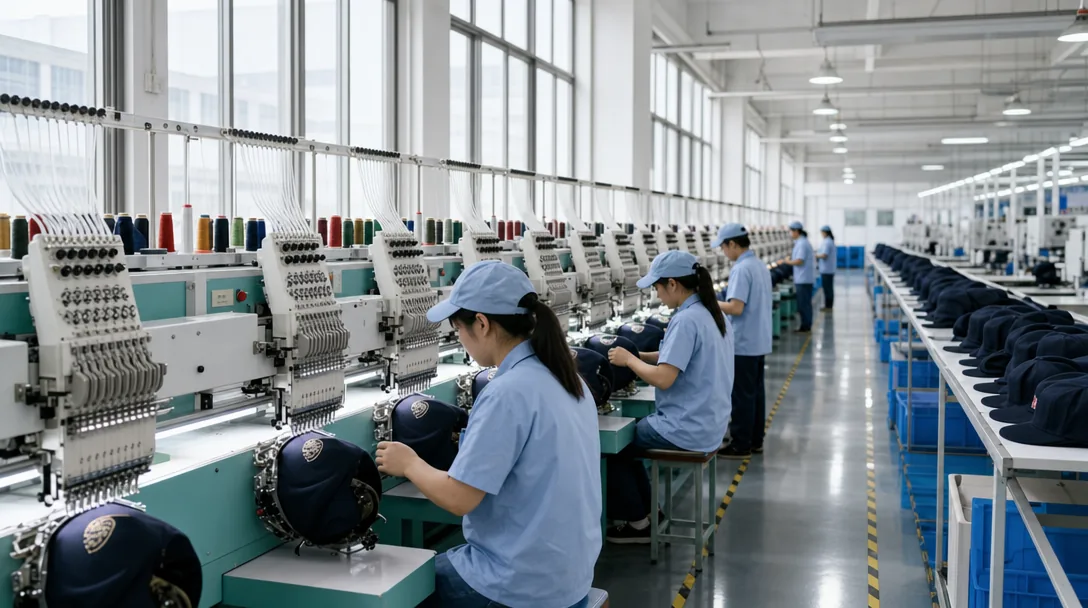
Country Hats For Men Export Shipping Checklist for Custom Hat Buyers
Read article →We hope this guide demystifies esports team caps: manufacturing specs for pro and amateur gaming brands - supplier checklist and helps you move forward with confidence. If you have questions specific to your project, our English-speaking sales engineers are one message away.