
Custom Rope Hats: Manufacturing, Materials and Bulk Pricing - Cost & MOQ Breakdown - Supplier Checklist
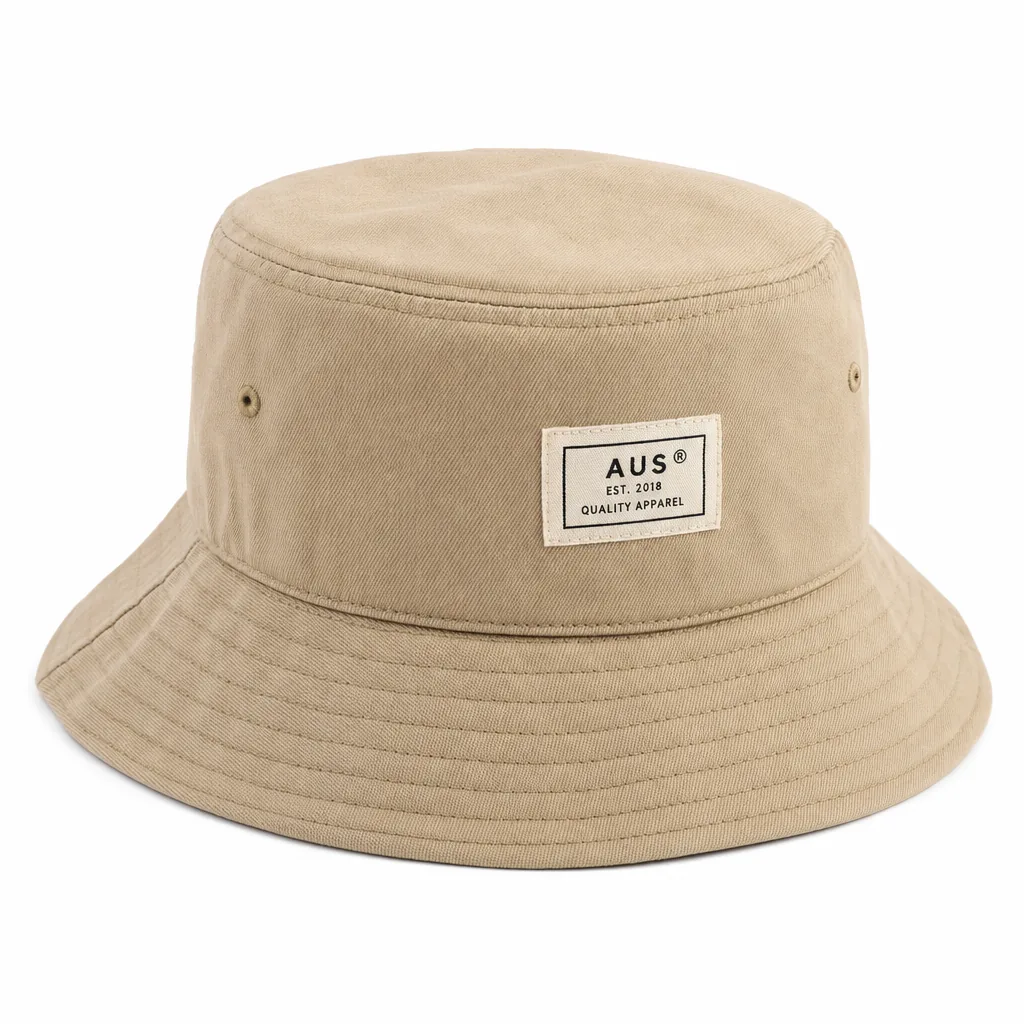
For brand owners, wholesalers and procurement teams entering the custom headwear category, custom rope hats: manufacturing, materials and bulk pricing - cost & moq breakdown - supplier checklist is one of the highest-leverage decisions you will make. Get it right and your unit economics, retail story and reorder cycle all improve. Get it wrong and you carry the cost for years.
What a rope hat actually is (and isn't)
A rope hat is a cap with a decorative cord running horizontally across the front, sitting in the break between the crown and visor. On most custom rope hats, that cord is 3–5 mm braided polyester, nylon, or cotton-blend rope; cheap blanks often use flat, shiny cord that collapses after pressing. The rope should be tacked into both side seams, not just caught with a few loose stitches near the front panels. It is not structural: remove it and the cap should still hold its crown height, visor curve, and fit. For licensed or team-color programs, treat the rope like a real trim component: Pantone TCX or TPX reference, lab dip if custom dyed, and Delta-E under 1.5 for strict color matching. Twist direction, surface sheen, and diameter matter because a matte cotton navy rope and glossy polyester navy rope can look like two different colors under LED retail lighting.
The common builds are 5-panel low-profile rope caps and 6-panel structured rope caps, but the rope does not decide the cap category by itself. A 5-panel front gives a clean billboard for woven patches, merrowed badges, sublimated labels, flat embroidery, or 3D puff run on Tajima, Barudan, or ZSK heads. A 6-panel version usually uses buckram or fused front panels and feels closer to a golf, resort, or old-school promo cap, especially in 160–220 gsm cotton twill, poly twill, nylon taslan, or 70D–100D ripstop. The best rope hats are not the ones with the most expensive cord; they are the ones with accurate panel cutting, a centered visor, smooth sweatband sewing, and rope ends buried cleanly inside the side seams. A 2 mm height error is visible on a plain crown, and puckering around the tack stitch makes the cap look like a decorated stock blank.
A rope hat is not automatically a trucker cap, snapback, dad hat, or performance golf cap, though it can borrow features from any of them. You can spec custom rope hats with mesh backs, plastic snap closures, unstructured cotton crowns, UPF-rated nylon, moisture-wicking polyester, recycled rPET fabric, or water-resistant coatings; those choices define the wearing category, while the cord defines the visual line. Buyers often over-spec rope color and under-spec crown depth, visor profile, and front-panel tension. A 10 mm change in crown height can move the same artwork from surf-style low profile to old-school golf promo. Our standard practice at CrownsForge is to approve rope placement on a measured pre-production sample: distance from visor seam, left-right centering within 2 mm, no rolling into the side seams, and no puckering after steam press. That is the difference between a designed rope hat and a generic cap with cord added late.
Rope material and attachment construction
Rope is not trim; on custom rope hats it is the first quality signal after the front panel shape. The commercial baseline is still a 4 mm braided polyester cord made from 300D to 600D continuous-filament yarn, mainly because it survives visor pressing without collapsing and keeps color better than commodity nylon under UV exposure. In bulk production, that rope usually lands at $0.03 to $0.06 per cap FOB, assuming stock colors and no metallic content. If you want a firmer, more retail-looking edge, mills move to tighter braid constructions in 600D to 900D polyester or polyester-cotton blends. That pushes trim cost into the $0.07 to $0.10 range, especially when you add lurex flecks, marl effects, or custom-dyed lots. Twisted nylon has a softer hand and decent abrasion resistance, but I avoid it for most programs because poor heat-setting makes the cord torque after washing and absorb more moisture in humid climates. Color consistency is where rope quality usually breaks down first. Solid polyester is easy; flecked, heathered, and metallic ropes are not. If the mill is not matching to Pantone TCX with approved lab dips, lot-to-lot variation becomes obvious once the rope sits against a clean visor fabric. For branded programs, I would lock Delta-E at 1.5 to 2.0 under D65 lighting and specify whether the cord is solution-dyed or piece-dyed. Solution-dyed polyester gives materially better lightfastness for golf, fishing, and outdoor retail, while piece-dyed rope is more flexible on MOQ and fashion colors. Our standard practice is to also check braid density, recovery after heat exposure, and post-press roundness, because loosely braided cords flatten during visor pressing and make the cap read cheap before it ever reaches packing.
Attachment construction is where custom rope hats either hold up for a season or start looking crooked after three wears. The rope should be captured directly into the crown-to-visor seam, not stitched as a floating applique above it. On a disciplined sewing line, operators use seam guides or a fixed jig to keep rope placement within +/-1.5 mm across the brim arc; once you drift past 2 mm, the misalignment is visible on head. I want the ends heat-cut, tucked, and back-tacked with at least 8 to 10 lockstitches per side using a 301 stitch, not just trapped raw in the seam and hidden under topstitching. That shortcut saves seconds on the line and creates the classic failure: frayed ends, rope twist, or one side pulling upward after washing. The real defects show up in wear simulation, not at final carton count. Weak braid tension causes center-front flattening, metallic yarns can crock against light-colored fingers and visors, and bad top-thread balance creates puckering that makes the rope climb near the side panels. Fabric matters: brushed cotton twill, performance microfiber, and nylon taslon do not sew the same under the presser foot, so stitch density and top tension need to be reset by material instead of using one recipe for every cap body. A competent factory should validate pilot samples with at least 5 home-laundry cycles, seam-pull checks on the rope attachment line, and visual grading for symmetry and end concealment under AQL 2.5. Ask whether the rope is sewn before or after visor shaping; that sequencing directly affects curve consistency, reject rate, and whether the cord stays seated round instead of rolling flat.
Rope color strategy for retail aesthetics
Tonal rope is the safest retail choice when the hat already carries visual weight: 3D puff embroidery, chenille, appliqué, acid wash, garment dye, or heavier fabrics like 280–320 gsm cotton canvas, brushed chino twill, washed cotton, and nylon taslan. On custom rope hats, matching the cord to the crown keeps the front panel looking intentional rather than promotional. The factory risk is shade control. Most rope is polyester, cotton-poly, or acrylic, and it does not absorb dye like enzyme-washed cotton or pigment-dyed fabric. Black-on-black is easy; stone, khaki, mushroom, sage, washed navy, and faded red often show a Delta-E 1.5–3.0 mismatch under 4000K LED retail lighting. Our standard practice at CrownsForge is to approve a Pantone TCX lab dip, then a finished cap sample after steaming, blocking, and brim setting, because rope can darken slightly once sewn into the front seam and heat-set. Stock tonal rope normally adds USD 0.10–0.25 per cap; custom dyeing adds 3–7 days and should be controlled by dye lot, not approved from a supplier phone photo.
Contrast rope works best for golf, resort, brewery, outdoor, and streetwear programs because it gives a strong shelf read without adding a second embroidery location. The rule I trust is simple: match the rope to one key color in the logo, not the full artwork. If the front embroidery uses navy, cream, and red, a red rope can work, but only when the undervisor, snapback, top button, sweatband, and woven label stay quiet. I check contrast rope against actual thread cones, not only Pantone references; Madeira, Isacord, and Gunold polyester threads often read brighter than dyed cord even when the target color is technically close. For bulk custom rope hats, stock contrast colors are practical at 300–500 pieces per colorway. Custom-dyed contrast rope usually pushes MOQ to 1,000–2,000 pieces, with dye-lot charges around USD 35–80 and an added USD 0.15–0.35 per cap. For reorder programs, lock the rope mill and retain an approved sealed sample, or the second run may pass casually but fail on a retail wall.
Two-color twisted rope is the fashion option, but it exposes weak production control faster than any tonal cord. The issue is not just color; it is twist ratio, yarn denier, cord diameter, and sewing tension through the brim seam. A stable target is 4.5–5.5 mm finished rope diameter, with lot variation held within 0.3 mm. If one roll reads 60/40 cream-green and the next reads 80/20 cream-green, the order will look like mixed production even if the cap body is correct. We reject twisted cord that opens after a 30-second dry hand rub or flattens visibly after sewing and steaming. Two-tone rope also needs stricter artwork discipline: if the front already has 6,000–9,000 Tajima or Barudan stitches, six thread colors, or a merrow-style patch, twisted rope can make a low-profile 5-panel crown look crowded. Expect USD 0.25–0.60 per cap above standard rope and longer sampling. Under 500 pieces, stock two-tone rope is usually smarter than developing a proprietary twist.
5-panel vs 6-panel rope hat construction
A 5-panel rope hat is the better construction when the front decoration has to look clean at scale. The single uninterrupted face panel gives a usable embroidery field of roughly 160–180 mm wide by 55–65 mm high before the crown curve starts fighting the hoop. That matters for custom rope hats with oversized flat embroidery, chenille, 3D puff, sublimated patches, or a 3.25-inch woven badge, because the design does not have to cross a center seam. On Tajima, Barudan, or ZSK heads, we can usually run a well-digitized front logo at 800–850 spm on 220–280 gsm cotton twill with fewer thread breaks and less push-pull distortion. Most 5-panel rope styles use a lower, flatter crown with 1.5–2.0 mm PE foam or light buckram behind the front panel. For golf, fishing, resort, and beverage-brand programs, that build keeps the face smooth without creating the tall, boxy look buyers often reject after sampling.
A 6-panel rope hat is the stronger choice when the buyer wants a rounder baseball-cap silhouette and more crown structure. The two front quarter panels and center seam give better shape retention, especially with medium buckram, a pre-curved PE visor board, and heavier twill or canvas in the 260–300 gsm range. The trade-off is decoration risk. If the logo crosses center front, the embroidery file needs more underlay, tighter compensation, and usually a slower machine speed around 650–750 spm; otherwise the needle hits the seam ridge, the satin columns lean, and puckering shows after steaming. That extra handling is why a 6-panel version typically costs USD 0.25–0.60 more than a comparable 5-panel at 300–500 pieces per color. In Zhejiang production, a basic 5-panel rope cap often FOBs around USD 3.10–5.20, depending on fabric, closure, and logo method. At AQL 2.5 inspection, the common defects are twisted center seams, rope placement drifting more than 2 mm, uneven visor curvature, and Delta-E shade mismatch between crown, visor, and braid.
Fabric choices for rope hat programs
The shell fabric, not the rope, decides whether custom rope hats hold shape, embroider cleanly, and survive actual wear. For golf, fishing, and event volume, 100% polyester woven is still the most forgiving platform: usually 110-160 gsm in 75D-150D yarns, most often plain weave microfiber, mechanical-stretch dobby, or lightly peached taslan. Those constructions keep a 5-panel or A-frame crown crisper than cheap brushed poly, recover faster after sweat loading, and tolerate laser perforation or hot-knife venting without frayed edges. Shade control matters more than buyers expect. A white rope over a navy crown will expose even slight dye drift, so bulk approval should be tied to a signed Pantone TCX standard with crown and visor panels held around Delta-E 1.0-1.5 under D65 lighting. On the embroidery floor, polyester runs cleanly on Tajima and Barudan heads, but lighter shells need support: a 40-60 gsm tear-away or cut-away backing, lower frame pressure, and careful cap-frame tension, otherwise small satin lettering will tunnel, especially on unstructured fronts.
Cotton twill is the safer call when the brief is vintage, casual, or broken-in rather than technical. The practical range is 210-300 gsm, roughly 7-10 oz, with chino twill, brushed twill, and enzyme-washed cotton covering most surf, brewery, resort, and collegiate programs. Cotton gives a warmer hand and takes flat embroidery, chain stitch, felt applique, and direct embroidery better than slick synthetics, but it moves more in sewing. That means more sew-shift at the center seam, more risk of visor binding puckers, and more rope misalignment if the operator is rushing. A rope sitting 2-3 mm off level is an instant reject on a casual cap, so final inspection should be at least AQL 2.5 with separate checkpoints for rope height, crown symmetry, front-panel alignment, and visor-to-crown centering. Our standard practice is to reserve wool blends and corduroy for retail programs with margin: wool/poly or wool/viscose blends at 260-340 gsm give richer color and a denser A-frame, while 8-wale to 16-wale corduroy adds texture but can distort logo placement at the center seam. As a realistic China ex-factory benchmark, shell fabric consumption usually lands around $1.10-$1.80 per hat for commodity polyester, $1.40-$2.20 for cotton twill, $2.20-$3.80 for wool blends, and $1.80-$3.00 for corduroy before embroidery, rope trim, closures, and freight.
MOQ, lead time and pricing tiers
For custom rope hats, the practical MOQ is 100 pieces per design/color, but the real purchasing steps are 144, 288, 576, and 1,008 pieces because sewing lines, embroidery frames, and export cartons are planned around dozens. Below 100 pieces, the job moves into sample-room economics: stock cotton twill or polyester, stock rope colors, plastic snapback, limited sweatband options, and no tolerance for rework. Fixed costs do not shrink with volume: embroidery digitizing usually runs $25–$60 per logo, heat-transfer plate or screen setup $35–$80, woven labels often require 500–1,000 pieces, and custom rope dyeing can require 1,000–2,000 meters depending on yarn and mill schedule. Treat rope color as a trim SKU, not a casual detail. White polyester rope, Pantone-matched cotton/poly rope, reflective rope, and elastic performance cord all require separate purchasing, shade control, and line-side sorting. A 100-piece order is for market testing; 300 pieces is where pricing becomes normal; 500+ pieces is where fabric yield, defect allowance, and carton utilization start to help.
Lead time is only predictable after the spec is frozen. A realistic schedule is 7–10 days for a pre-production sample after tech pack approval, then 22–30 days for bulk production after deposit and signed PP sample. The production clock should not start until the factory has vector artwork, Pantone TCX/TPX references, crown profile, fabric weight, rope diameter, closure type, sweatband material, label placement, and packing method. Most delays do not come from attaching the rope; they come from late artwork revisions, changing 100% cotton twill to nylon taslon or 150 gsm performance polyester, or rejecting lab dips viewed under office LED instead of a D65 light box. On the floor, front decoration is often the bottleneck. 3D puff plus flat embroidery ties up Tajima, Barudan, or ZSK heads longer than buyers expect, especially when stitch counts exceed 9,000–12,000 stitches. Add 1–2 working days for AQL 2.5 final inspection, needle-control records, carton drop testing, and FOB booking through Ningbo or Shanghai.
FOB China pricing for wholesale custom rope hats typically lands at $3.80–$6.80 per piece for 100–500 pieces per SKU with standard export packing. A basic unstructured 5-panel in stock 10–12 oz cotton twill, flat embroidery, polyester rope, and plastic snapback may price at $3.80–$4.60. A structured performance rope cap using nylon taslon, microfiber, 14-wale corduroy, or heather polyester, with 3D embroidery, woven patch, custom seam tape, moisture-wicking sweatband, and metal buckle closure usually runs $5.40–$6.80 before freight. The rope itself commonly adds $0.30–$0.50 versus the same cap without rope because it must be cut consistently, centered across the front panel, and caught cleanly at both side seams. Volume discounts are real but limited: 300 pieces may save 3%–5% versus 100 pieces, while 500–1,000 pieces can save 5%–10% if fabric, decoration, packaging, and inspection scope stay unchanged. Custom retail boxes, individual polybags with barcode stickers, or Delta-E under 1.5 color control can erase those savings quickly.
Working with CrownsForge on rope hat programs
Freeze the rope specification before fabric booking, not after the cap sample “looks close.” On custom rope hats, rope diameter changes the crown break, side-seam anchoring, front-panel pressing, and even carton compression behavior. For bulk orders, the two safest builds are 4 mm braided polyester and 5 mm twisted nylon. The 4 mm polyester braid is the commercial workhorse for golf, resort, and promo programs because it has tighter shade control, less surface fuzz, and usually holds within Delta-E 1.5–2.0 against Pantone TCX references when the dye house is managed properly. The 5 mm twisted nylon gives a heavier 1980s/1990s look, but it must be heat-set; otherwise it relaxes after packing and the rope line starts to wave. Stock rope colors normally cover black, white, navy, red, khaki, and sometimes forest green. Custom-dyed rope becomes economical around 500 pieces per color; below that, expect a surcharge of about $0.25–$0.45 per cap. CrownsForge keeps approved rope cards, yarn lot numbers, and side-seam placement photos inside the tech pack, because email approvals are not production controls.
Decoration has to be engineered around the rope line, especially on 5-panel custom rope hats where the front face is uninterrupted and every millimeter of misalignment is visible. Flat embroidery, 3D puff, woven labels, silicone transfers, and merrowed patches all work, but the artwork needs an 8–10 mm safe zone above the rope so the logo does not look squeezed into the lower crown. On Tajima, Barudan, or ZSK embroidery heads, I usually cap puff foam at 2–3 mm and avoid dense satin columns near the lower crown break; heavy stitch loads in that area pull the panel forward after sweatband attachment. For logos over 65–90 mm wide, a woven or embroidered patch often looks cleaner than a 14,000-stitch direct embroidery file on buckram. QC should measure rope height within ±2 mm from side seam to side seam, check side anchoring under light tension, and inspect whether the front panel still sits flat after decoration. Under AQL 2.5, crooked rope, loose anchoring, visible seam grin, and panel distortion should be classified as major defects, not minor cosmetic issues.
Do not approve bulk production until the same shell fabric, rope, closure, and decoration have been tested on both 5-panel and 6-panel patterns. The 5-panel rope hat usually sells better for streetwear drops, golf capsules, and resort retail because the front panel photographs flatter and carries patches cleanly. The 6-panel version fits more head shapes and can feel less boxy, especially on smaller sizes or shallow-crown specs. A two-silhouette sample round is cheap insurance: a revised pre-production sample typically costs $60–$120, while changing the crown pattern after deposit can mean new embroidery digitizing, revised patch dies, wasted rope trim, recutting, and a 10–14 day delay. In pricing, the rope itself is rarely the main driver. The bigger swings come from shell fabric—150–220 gsm cotton twill, nylon taslan, recycled polyester, or corduroy—closure choice, decoration method, compliance requirements such as sedex-audit-cap-supplier-guide.html">BSCI 2.0 or Sedex SMETA 4-Pillar, and whether the quote is FOB Ningbo/Shanghai or DDP to the buyer’s warehouse.
Frequently Asked Questions
What file format should I send for my logo?
Vector files (AI, EPS, PDF) are ideal. High-resolution PNG or JPG at 300 dpi on transparent background works as a fallback. Provide Pantone color references for accurate reproduction.
What logo decoration techniques do you offer?
3D puff embroidery, flat embroidery, woven patch, leather patch, PVC patch, screen printing, sublimation, applique and laser etching, all in-house with no subcontracting.
Which shipping methods do you support?
We support FOB, CIF and DDP shipping. Air express for samples and small orders, sea LCL for 100 to 500 pieces, sea FCL for 5,000+ pieces. Door-to-door DDP available for US, EU, UK, Canada and Australia.
How long does production take?
Sampling takes 7 to 12 days. Bulk production runs 20 to 30 days depending on quantity, fabric availability and decoration complexity. Inspection and packing adds another 3 to 5 days before shipment.
Do you support sustainability certifications?
Yes. We work with GOTS organic cotton, GRS-certified recycled polyester, OEKO-TEX Standard 100 fabrics, and are BSCI and Sedex audited. Certification documentation can be provided per order.
What's the MOQ for custom leather patch hats no minimum?
When evaluating custom leather patch hats no minimum, the key considerations are construction quality, decoration capability, MOQ flexibility and lead time. Most ropes use 4mm braided polyester or twisted nylon cord, sewn into the seam between the crown and brim. The detail must be perfectly parallel to the brim curve and tightly stitched to prevent unraveling. Cheaply-made rope hats show the rope drift or fray after 10-20 washes. Rope tooling on file for 4mm braided polyester and 5mm twisted nylon. Custom rope colors available…
How does ordering custom hat embroidery near me work?
When evaluating custom hat embroidery near me, the key considerations are construction quality, decoration capability, MOQ flexibility and lead time. 5-panel rope hat is the golf and outdoor standard — single-panel front gives uninterrupted canvas for decoration, low-profile crown stays put under helmets or visors. 6-panel rope hat is more structured, used for streetwear capsules and premium brand drops. Rope hat MOQ 100 pieces per design/color (same as baseball cap). Sample 7-10 days, bulk 22-28 days. FOB pricing…
How does ordering custom embroidery patches for hats work?
When evaluating custom embroidery patches for hats, the key considerations are construction quality, decoration capability, MOQ flexibility and lead time. Most ropes use 4mm braided polyester or twisted nylon cord, sewn into the seam between the crown and brim. The detail must be perfectly parallel to the brim curve and tightly stitched to prevent unraveling. Cheaply-made rope hats show the rope drift or fray after 10-20 washes. Rope tooling on file for 4mm braided polyester and 5mm twisted nylon. Custom rope colors available…
How do I find a reliable custom hat manufacturer usa?
When evaluating custom hat manufacturer usa, the key considerations are construction quality, decoration capability, MOQ flexibility and lead time. 5-panel rope hat is the golf and outdoor standard — single-panel front gives uninterrupted canvas for decoration, low-profile crown stays put under helmets or visors. 6-panel rope hat is more structured, used for streetwear capsules and premium brand drops. Rope hat MOQ 100 pieces per design/color (same as baseball cap). Sample 7-10 days, bulk 22-28 days. FOB pricing…
Need a low-MOQ test order?
We help emerging brands launch with as few as 100 pieces. Premium fabric, in-house embroidery, retail-ready packaging.
Start a small orderRelated guides
Custom Made Trucker Hat: The 2026 Sourcing & Manufacturing Playbook (2026 Update) (2026 Update) - 2026 Buyer's Guide
Read article →
Corduroy Hat Vintage Supplier Audit Checklist for Custom Hat Buyers
Read article →
Bulk Trucker Hats Export Shipping Checklist for Custom Hat Buyers - Cost & MOQ Breakdown - Cost & MOQ Breakdown
Read article →We hope this guide demystifies custom rope hats: manufacturing, materials and bulk pricing - cost & moq breakdown - supplier checklist and helps you move forward with confidence. If you have questions specific to your project, our English-speaking sales engineers are one message away.