
Custom Made Trucker Hat: The 2026 Sourcing & Manufacturing Playbook - Supplier Checklist - Supplier Checklist - Cost & MOQ Breakdown
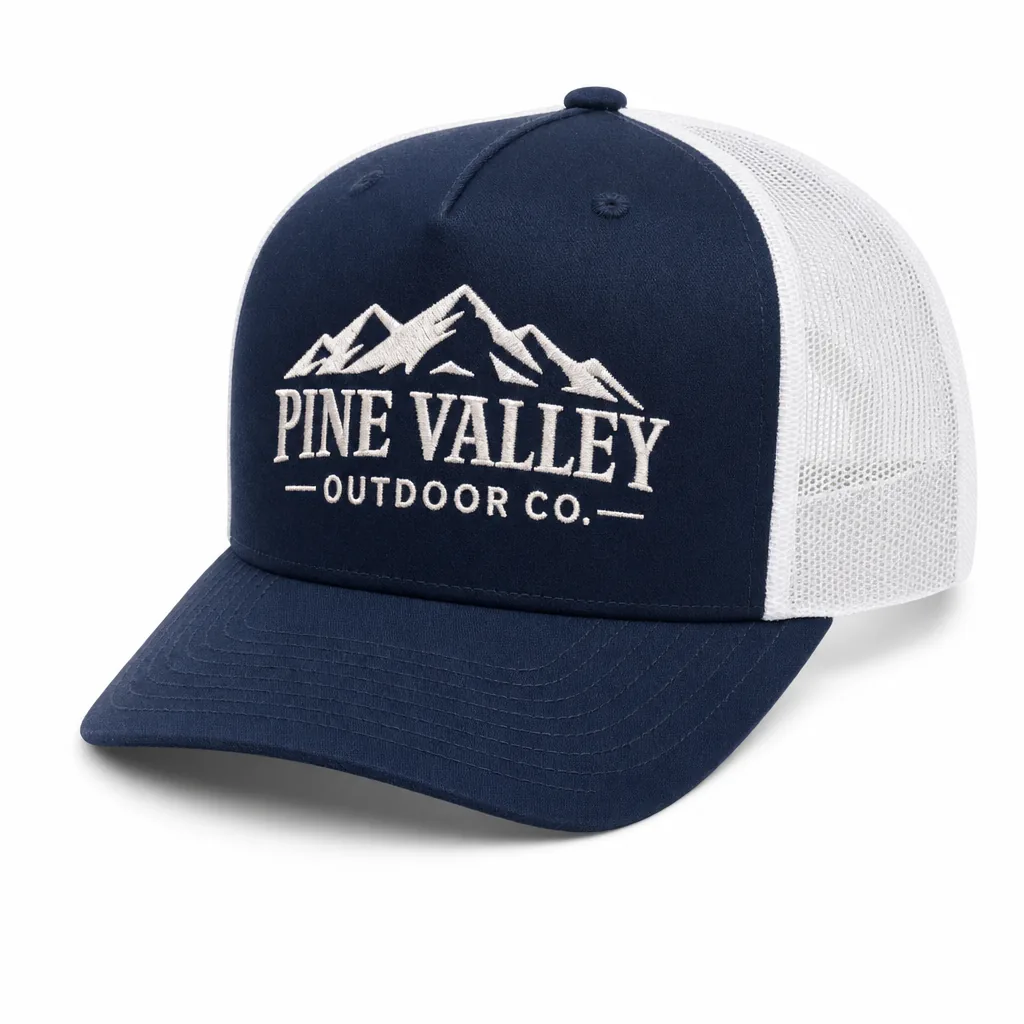
Every week, our sales team answers detailed questions about custom made trucker hat: the 2026 sourcing & manufacturing playbook - supplier checklist - supplier checklist - cost & moq breakdown. We wrote this guide so that wholesalers, streetwear brands, corporate buyers and promotional resellers can compare options with full information, and avoid the traps that show up only after production has started.
Custom Embroidered Hats
Embroidery is still the lowest-risk decoration method for a custom made trucker hat when you need abrasion resistance, colorfastness, and shelf life that survives six months of handling without the logo fraying or flattening out. The make-or-break step is digitizing, not stitching. A file for Tajima, Barudan, or ZSK heads has to be built around the actual front panel substrate: 5 mm EVA foam, hard buckram, or soft brushed cotton twill all need different underlay, pull compensation, edge walk, and stitch density. A satin column that runs clean on a structured 100% polyester front can bury itself on washed cotton or tunnel on 600D poly canvas if the density is too aggressive. Before sampling, lock the crown height, front panel structure, logo size in millimeters, thread brand, backing type, and decoration method—flat embroidery, 3D puff, appliqué, or embroidery over patch—because each one changes runability, strike-off approval, and defect risk in bulk. For color approval, use Pantone TCX or Pantone C as the reference and accept a practical Delta-E of 2.0 to 3.0 under D65 lighting; polyester thread sheen will shift dark navy, bright red, and black more than most buyers expect once the design wraps a curved crown.
Cost on embroidered trucker programs moves more on machine time and handling than on thread consumption alone. For a standard 5-panel or 6-panel cap with 260-300 gsm chino twill front, 120-140 gsm polyester mesh back, PE sweatband, and PVC snap, one front embroidery usually lands around FOB China $2.40-$4.80 at 300-1,000 pieces. Add 3D puff, side logo, rear arch embroidery, printed seam tape, or a suede-look visor and the same custom made trucker hat can realistically move to $5.60-$7.90 depending on stitch count and changeover loss. Most factories set MOQ at 144-300 pieces per colorway; below 100 pieces, setup inefficiency commonly adds $0.40-$1.20 per cap. Digitizing typically runs $20-$60 per logo, and a pre-production sample is usually $35-$85 plus courier. On inspection, hold embroidery placement to ±2 mm, verify thread trims, puckering, registration, and puff edge coverage under AQL 2.5, and check mesh shade, brim curvature, and crown symmetry carton to carton. If the artwork uses gradients, distressed textures, or text under 4 mm cap height, direct embroidery is usually the wrong process; a woven patch, TPU patch, or heat-transfer badge will give better legibility and higher first-pass yield.
Custom Hat Embroidery
Embroidery is where a custom made trucker hat either looks premium or immediately reads as low-grade, especially on a foam-front 5-panel. Foam-backed polyester behaves very differently from cotton twill: needle penetration is less forgiving, tension drifts faster, and weak digitizing will telegraph every mistake. The correct process starts with a file built for the actual machine family—Tajima, Barudan, or ZSK—not a generic DST recycled from a flat garment job. Buyers should give the factory a complete brief: logo size in millimeters, Pantone C or Pantone TCX thread references, technique choice (flat, 3D puff, appliqué plus embroidery), and the usable embroidery field for a 5-panel crown versus a 6-panel cap with center seam interruption. For 3D puff, the technical details matter: 2 mm to 3 mm EVA foam, satin columns usually no narrower than 3 mm, added pull compensation, and digitizing adjusted for high-crown or low-profile shape. If the factory cannot confirm those points, small text under 4.5 mm will close up, puff edges will split, and the front panel will show tunneling or distortion.
Bulk failures are predictable, which is exactly why they should be specified upfront. The common ones are registration drift between color blocks, puckering around the center seam, top-thread looping, exposed foam on puff logos, and crushed embroidery after packing in over-tight cartons. Inspection should not rely on final audit alone; use first-piece approval, in-line checks, and packed-carton review under AQL 2.5. Placement tolerance should stay within ±2 mm from approved artwork, and thread shade should be held to Delta-E below 2.0 against the signed color card under D65 light. On the floor, quality often drops after needle changes, bobbin swaps, or when operators push cap frames past about 750 to 850 stitches per minute on dense fills. Cost is straightforward if the spec is stable: a standard 5,000 to 8,000 stitch front logo usually adds about $0.25 to $0.60 per piece, while 3D puff, side hit, and back arch combinations typically land at $0.60 to $1.20. Digitizing normally runs $20 to $80 per design, and MOQ is commonly 144 to 300 pieces per colorway, rising to 300 to 500 for mixed techniques or multiple placements. Always approve a pre-production sample on final shell material before mass production.
Custom Trucker Hat
The success of a custom made trucker hat is decided by three parts buyers usually under-spec: front panel structure, mesh stability, and closure grade. The low-end market standard is still a 5-panel or 6-panel cap using 3-5 mm polyester foam, 120-160 gsm polyester mesh, and a PE snapback, but that combination generates a disproportionate share of claims. Cheap foam crushes under export carton pressure, shows needle drag during embroidery, and recovers unevenly after steaming; low-grade mesh tears first at the back seam and around the snap opening. For a cleaner retail finish, I would spec a 60/40 cotton-poly twill or 100% poly twill front with 0.6-0.8 mm fused buckram, paired with 75D-100D mesh if airflow matters or 120D mesh if you need better shape retention. “Mid-profile” is not a spec. Put the crown height in centimeters, visor length and pre-curve radius in millimeters, sweatband composition, top button material, eyelet construction, seam tape artwork, and closure resin type directly into the tech pack. The production order also matters more than many buyers realize. On a standard line, the sequence is cutting, fusing, embroidery or patch application, front-panel forming, crown assembly, visor joining, sweatband setting, snapback installation, shaping, loose-thread trimming, and needle control; some licensed programs add full metal detection at the end. If the logo is going on a foam front, I would call out satin-column minimums of 1.2 mm and avoid excessive stitch density that tunnels the surface. CrownsForge’s standard practice is to confirm artwork size in millimeters before digitizing, because even a 3-4 mm change in logo width can alter stitch count, pull compensation, and final cap balance.
Most RFQs for a custom made trucker hat are weak on measurable tolerances, and that is where substitutions, delays, and price creep start. A usable spec sheet should list fabric content, Pantone TCX for every visible component, visor stitch rows, sweatband width, closure color, decoration method, logo placement tolerance, carton packout, and finished cap weight tolerance. If color consistency matters, set Delta-E at 1.5 max for twill and 2.0 max for mesh, because mesh dye lots drift more than brushed woven fabrics. Decoration should be specified by method and machine behavior, not by a generic “embroidered logo” note: Tajima, Barudan, and ZSK heads handle underlay, foam lift, and tight satin columns differently, especially on structured fronts and 3D puff jobs. Pricing needs to be anchored to actual factory math. At 500 pieces, a basic foam-front trucker with one-location flat embroidery typically lands around $2.10-$3.60 FOB China; a twill-front version with a woven patch, printed seam tape, private label set, and matched mesh is more realistically $3.80-$6.20 FOB at 300-1,000 pieces, depending on stitch count, fabric source, and carton ratio. Below 144 pieces, many quotes marketed as factory-direct are just decorated stock blanks. For bulk approval, inspect to AQL 2.5, hold logo placement to +/-2 mm, and check the failures that actually show up in final inspection: back-seam mesh tearing, visor skew beyond 3 mm, brittle snap tabs, sweatband puckering, uneven brim curve, and shade variance between crown, visor, button, and closure. If the order is for retail chains, ask for sedex-audit-cap-supplier-guide.html">BSCI 2.0 or Sedex SMETA 4-Pillar audit status before deposit, not after production starts.
Custom Trucker Hats
The make-or-break decision on a custom made trucker hat is the front panel, because that single spec dictates embroidery definition, crown memory, and how many cartons arrive with crushed faces after 30 to 45 days at sea. A standard promo build is usually a 5-panel cap with a 100% polyester foam-backed front, polyester or nylon mesh back, PE visor board, polyester sweatband, and PP snap closure. That construction is cheap and fast, but it is a poor choice for every logo. If the artwork includes copy under 4 mm, satin columns wider than 7 mm, or badge-style borders that need a clean edge, I would move away from low-density foam and spec 10x10 cotton twill, brushed microfiber, or heavy poly twill at 180 to 220 gsm. Tajima, Barudan, and ZSK cap frames all punish weak digitizing on structured foam; you will see tunneling, edge wobble, and top-panel distortion immediately. To get usable quotations, lock the panel count, crown height, visor curve, mesh denier, foam thickness, closure type, seam tape print, button color, and decoration method. For color-critical programs, submit Pantone TCX for textile body colors, Pantone Solid Coated for prints or patches, and set a Delta-E target under 1.5 where the substrate can realistically hold it.
Cost on trucker styles moves faster than buyers expect; changing a few trims can push the unit price of a custom made trucker hat up 25% to 40% before freight. In Zhejiang and Fujian, a basic ex-works build at 300 to 500 pieces per colorway usually lands around $2.10 to $3.20 with a polyester foam front, 70 to 100 denier mesh, standard snapback, and front embroidery below roughly 8,000 stitches. At 1,000 pieces, that same hat commonly drops to $1.65 to $2.40 if the fabric is stock, the embroidery file is production-ready, and packing stays simple. Switch to cotton twill fronts, recycled mesh, rope detail, sandwich visor, woven flag label, inside seam tape print, TPU or molded silicone patch, and you are more realistically at $3.80 to $6.50 ex-works. MOQ is usually driven by trim setup, dye lots, and packaging materials rather than sewing complexity; 144 to 300 pieces per style-color is workable for stock materials, while branded snaps, custom mesh colors, or private-label boxes often force 500 to 1,000 pieces.
Inspection should stay fixed on the defects customers notice in two seconds: crown symmetry, visor centering, mesh tension, embroidery registration, snap performance, and sweatband attachment. The repeat failures on trucker caps are warped bills from unstable PE inserts, front collapse from foam under about 2.5 mm, off-center top buttons, loose thread tails at the mesh seam, and logo distortion caused by over-dense digitizing on a structured face. Set bulk inspection at AQL 2.5, keep head circumference tolerance within ±0.5 cm, and record logo placement from both center front and visor seam so repeat orders do not drift. A wear test matters as much as a tabletop inspection, because some caps measure correctly but still sit badly due to crown angle or uneven mesh recovery. If compliance is part of the buying decision, ask for current BSCI 2.0 or Sedex SMETA 4-Pillar reports, then confirm the supplier is locking the same material spec, embroidery file, packing method, and carton compression standard across every PO. Saving $0.12 on the first run is meaningless if the second run fits differently.
Hat Trucker Custom
A custom made trucker hat usually fails long before bulk sewing starts; the root cause is a soft BOM and a sample approval based on appearance instead of measurable construction. Lock the build sheet before the first prototype: 5-panel or 6-panel crown, crown height, front panel structure, mesh type, visor profile, closure, sweatband, seam tape, and Pantone TCX for every exposed component. In Zhejiang, the standard entry build is still a foam-front trucker using 3 to 5 mm EVA or sponge foam laminated to polyester tricot, 75D to 150D polyester mesh, a PE pre-curved visor with 6 to 8 rows of stitching, a poly-cotton sweatband, and a 7-hole PP snap closure. Decoration order is not a small detail. Flat embroidery can be done post-assembly, but sublimation, screen print on foam, chenille patches, appliqué, and high-density embroidery are safer on open panels; otherwise you get panel drag, needle deflection, crown distortion, and logos that sink into the foam face. The specs that prevent claims are the ones you can inspect with a ruler, light box, and approved standard, not by eye under showroom LEDs. Call out visor length and curve radius, mesh denier, front panel gsm, stitch density in SPI, embroidery stitch count, backing type, snap resin color, and color tolerance by Delta-E. If you do not define that upfront, bulk can drift beyond Delta-E 2.0 to 3.0 between dyed twill, white-base mesh, seam tape, and injection-molded snaps even when the supplier says it “matches.” Ask what embroidery heads are on the floor—Tajima, Barudan, and ZSK all run foam truckers well, but only if the digitizing, underlay, and thread tension are tuned for raised surfaces. Realistic MOQ for a standard custom made trucker hat is usually 144 to 300 pcs per colorway. FOB China pricing is commonly $2.20 to $3.40 for a basic polyester foam/micro-mesh cap with 5,000 to 8,000 stitches, and $3.80 to $5.50 once you add cotton twill fronts, woven patch application, multi-location embroidery, or retail-ready barcode packing.
Inspection is where weak trucker programs get exposed. The repeat defects are predictable: uneven crown height, visor shape variation inside one carton, skipped sweatband stitching, puckering around foam embroidery, rear mesh splitting at the seam, off-center patches, and snap posts that crack after a few open-close cycles. Write the QC plan around AQL 2.5 and inspect under D65 light if color approval matters. Set tolerances for brim tape, mesh, top button, and snap components separately from dyed fabric, because those parts are often the first place visual mismatch shows up. A front panel can measure within Delta-E 1.5 to the lab dip while the snap and edge tape still look obviously off on a finished custom made trucker hat. The safer supplier is usually the one that can show process control, not the one offering the lowest FOB by $0.15. Ask for inline QC records, needle logs, carton count verification, visor curve jig standards, and current BSCI 2.0 or Sedex SMETA 4-Pillar audit status. If your market requires it, confirm metal detection policy and broken-needle procedure as well. On embroidery-heavy styles, require a bulk pre-production panel test before line launch; that catches bad foam density, poor mesh handfeel, and digitizing problems before they become a 3,000-piece remake. Sample charges in the $45 to $120 range are normal and cheap compared with rework, missed vessel cutoff, or airfreight to recover a delayed launch. In practice, the biggest cost in a trucker order is rarely the quoted cap price; it is the downstream damage from a build that was never engineered tightly enough for repeat production.
Trucker Custom Hat
The make-or-break point on a custom made trucker hat is structure, not decoration. The commercial benchmark is still the 5-panel foam trucker: 2.5-3.0 mm foam-backed 100% polyester front, 75-120 gsm polyester mesh, pre-curved PE visor insert, PVC snap closure, and either cotton twill or self-fabric sweatband. If those inputs are not fixed in the tech pack, the factory will fill the gaps with whatever is on the shelf, and shape consistency disappears fast. A 1.0 cm change in crown height, a softer foam lamination, or a wider mesh aperture is enough to turn a crisp retail silhouette into a cap that looks tired after transit. On the sewing floor, the repeat failure points are front-panel collapse during embroidery, tunneling on the center seam, visor asymmetry, and crowns leaning left or right after packing. Those are production-control issues, not cosmetic bad luck. A usable tech pack should specify Pantone TPX or TCX for every visible component, Delta-E tolerance at 1.5-2.0 for dyed parts, logo placement tolerance at +/-2 mm, visor length and curvature, snap color, seam tape width, and sweatband construction. Decoration method needs the same precision. Flat embroidery on Tajima or Barudan machines is forgiving on foam truckers; 3D puff is not. Once satin columns run past 5 mm or the digitizer pushes density too high, the foam front starts rippling and the logo edges get blunt. Heat-transfer labels, woven patches, and silicone badges also need adhesion tests on the actual foam substrate because low-density foam can telegraph glue shadowing. Our standard practice is to have buyers approve the digitized embroidery file as well as the artwork, because poor punching ruins more trucker fronts than poor sewing.
Most pricing mistakes on a custom made trucker hat come from vague material calls, not hidden margin. In China, a basic 300-500 piece order per colorway usually sits around $2.20-$3.50 FOB with stock white or black mesh, stock PVC snap, one-location flat embroidery, standard visor, and generic care label. Once you add 3D puff embroidery, sublimated underbill, woven loop label, printed seam tape, recycled mesh, custom snap, or contrast sandwich brim, the same hat typically moves into the $3.90-$6.80 FOB range. MOQ is usually driven by trim and color control rather than sewing capacity. A line can physically sew 144 caps without trouble, but if you need custom-dyed front fabric, private branding, and stable mesh shade lot to lot, 300-600 pieces per style is the realistic floor. Supplier quality should be judged at inspection, not at sampling. The failure pattern on trucker programs is predictable: wavy foam fronts, embroidery drifting off center, broken mesh filaments, bill-pair mismatch, scratched snaps, loose seam tape tails, and crushed crowns from poor nesting or weak export cartons. Use AQL 2.5 for final random inspection, and do not limit checks to visual appearance; measure crown depth, bill width, logo centering, snap engagement, and stitch balance across cartons from different production hours. If the order is headed to retail or licensed distribution, confirm inline QC logs, needle policy, metal detection if required by the customer, and current social-compliance status such as BSCI 2.0 or Sedex SMETA 4-Pillar. The cheapest unit price is meaningless if dented fronts trigger chargebacks at the U.S. distribution center.
Working with CrownsForge for custom made trucker hat programs
Sampling discipline is what separates a scalable custom made trucker hat program from a revision loop that burns both calendar and margin. A factory worth using should deliver a blank fit sample in 3 to 5 working days, then a decorated pre-production sample in another 5 to 7 days when the build stays within standard 5-panel or 6-panel mesh-back construction, PP snap, and stock sweatband. Add 2 to 3 working days if you require Pantone TCX fabric matching, a custom underbill print, or a defined Delta-E tolerance below 1.5, because that usually triggers lab dips, trim re-approval, and another material confirmation round. For pilot runs, 48 to 96 pieces per colorway is realistic, but unit economics improve noticeably at 144, 288, and 576 pieces as fabric yield, embroidery setup loss, and master carton utilization normalize. In real production terms, an extra $0.20 to $0.35 per cap on a small trial is cheap insurance if it prevents locking the wrong crown height, front foam density, brim curve, or mesh stiffness into bulk.
Decoration and process control are where most trucker hat programs either hold together or start leaking defects. A custom made trucker hat with a laminated foam front panel does not digitize the same way as brushed cotton twill, polyester chino, or canvas, so stitch density, underlay, pull compensation, and foam height have to be adjusted before bulk. Good factories test logos on Tajima, Barudan, or ZSK heads before sign-off, especially for 3D puff where satin column width, edge coverage, and foam exposure can shift between sample and line production. As a realistic cost range, flat embroidery under 8,000 stitches usually adds $0.45 to $0.90 per piece at volume, while woven patches, TPU badges, or molded rubber patches typically run $0.70 to $1.20 before application. The safe workflow is simple: tech pack review, artwork proof, material confirmation, sealed PPS, inline check, final inspection at AQL 2.5, and shipment release against the approved sample. Once a program carries multiple SKUs or colorways, carton ratios, size stickers, and shipping marks need to be locked before bulk cutting; fixing those mistakes after packing starts is where factories waste time and buyers absorb claims.
Frequently Asked Questions
What is the minimum order quantity (MOQ) for custom hats?
Our standard MOQ is 100 pieces per design and color, with sampling available from 1 piece. For complex multi-color logos or premium fabric upgrades, the MOQ can be lowered with a small per-piece surcharge.
Which shipping methods do you support?
We support FOB, CIF and DDP shipping. Air express for samples and small orders, sea LCL for 100 to 500 pieces, sea FCL for 5,000+ pieces. Door-to-door DDP available for US, EU, UK, Canada and Australia.
Do you support sustainability certifications?
Yes. We work with GOTS organic cotton, GRS-certified recycled polyester, OEKO-TEX Standard 100 fabrics, and are BSCI and Sedex audited. Certification documentation can be provided per order.
Can I order a sample before bulk production?
Yes. We strongly recommend approving a pre-production sample before mass production. Samples are charged at 35 to 60 USD each plus express shipping, fully refundable against confirmed bulk orders over 500 pieces.
What file format should I send for my logo?
Vector files (AI, EPS, PDF) are ideal. High-resolution PNG or JPG at 300 dpi on transparent background works as a fallback. Provide Pantone color references for accurate reproduction.
How does ordering custom hat trucker work?
When evaluating custom hat trucker, the key considerations are construction quality, decoration capability, MOQ flexibility and lead time. Cover everything buyers ask about custom embroidered hats: how it's manufactured, what specs to request from a factory, typical MOQ and pricing, common quality issues to inspect for, and how this ties back to the broader custom made trucker hat sourcing decision. Cover everything buyers ask about custom hat embroidery: how it's manufactured, what specs to request from a…
How does ordering custom embroidered trucker hats work?
When evaluating custom embroidered trucker hats, the key considerations are construction quality, decoration capability, MOQ flexibility and lead time. Cover everything buyers ask about custom embroidered hats: how it's manufactured, what specs to request from a factory, typical MOQ and pricing, common quality issues to inspect for, and how this ties back to the broader custom made trucker hat sourcing decision. Cover everything buyers ask about custom trucker hats: how it's manufactured, what specs to request from a…
How does ordering custom made hats for men work?
When evaluating custom made hats for men, the key considerations are construction quality, decoration capability, MOQ flexibility and lead time. Cover everything buyers ask about custom embroidered hats: how it's manufactured, what specs to request from a factory, typical MOQ and pricing, common quality issues to inspect for, and how this ties back to the broader custom made trucker hat sourcing decision. Cover everything buyers ask about custom trucker hats: how it's manufactured, what specs to request from a…
How does ordering high quality custom trucker hats work?
When evaluating high quality custom trucker hats, the key considerations are construction quality, decoration capability, MOQ flexibility and lead time. Cover everything buyers ask about custom embroidered hats: how it's manufactured, what specs to request from a factory, typical MOQ and pricing, common quality issues to inspect for, and how this ties back to the broader custom made trucker hat sourcing decision. Cover everything buyers ask about custom trucker hats: how it's manufactured, what specs to request from a…
Need a low-MOQ test order?
We help emerging brands launch with as few as 100 pieces. Premium fabric, in-house embroidery, retail-ready packaging.
Start a small orderRelated guides
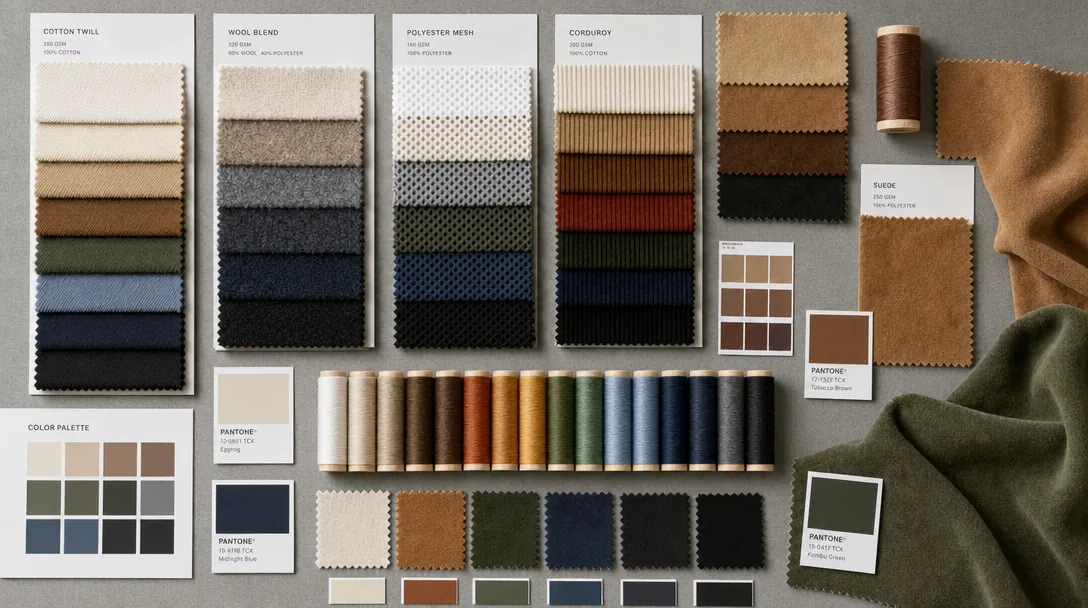
Camouflage Bucket Hat: Properties, Costs and How to Spec It Right (2026 Update)
Read article →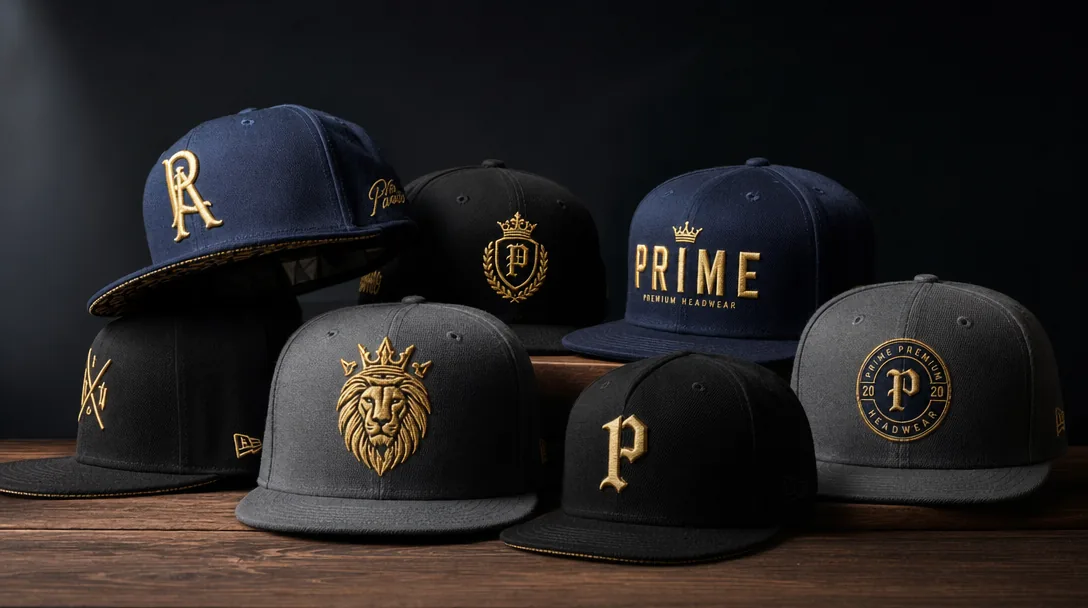
Refreshing a Hat Collection: A Repeat-Order Playbook for Established Brands
Read article →
Embroidery Hats Machine: When to Use It, Costs, and What to Ask Your Factory - Cost & MOQ Breakdown
Read article →We hope this guide demystifies custom made trucker hat: the 2026 sourcing & manufacturing playbook - supplier checklist - supplier checklist - cost & moq breakdown and helps you move forward with confidence. If you have questions specific to your project, our English-speaking sales engineers are one message away.