
Custom Made Trucker Hat: The 2026 Sourcing & Manufacturing Playbook - Supplier Checklist - Supplier Checklist - 2026 Buyer's Guide
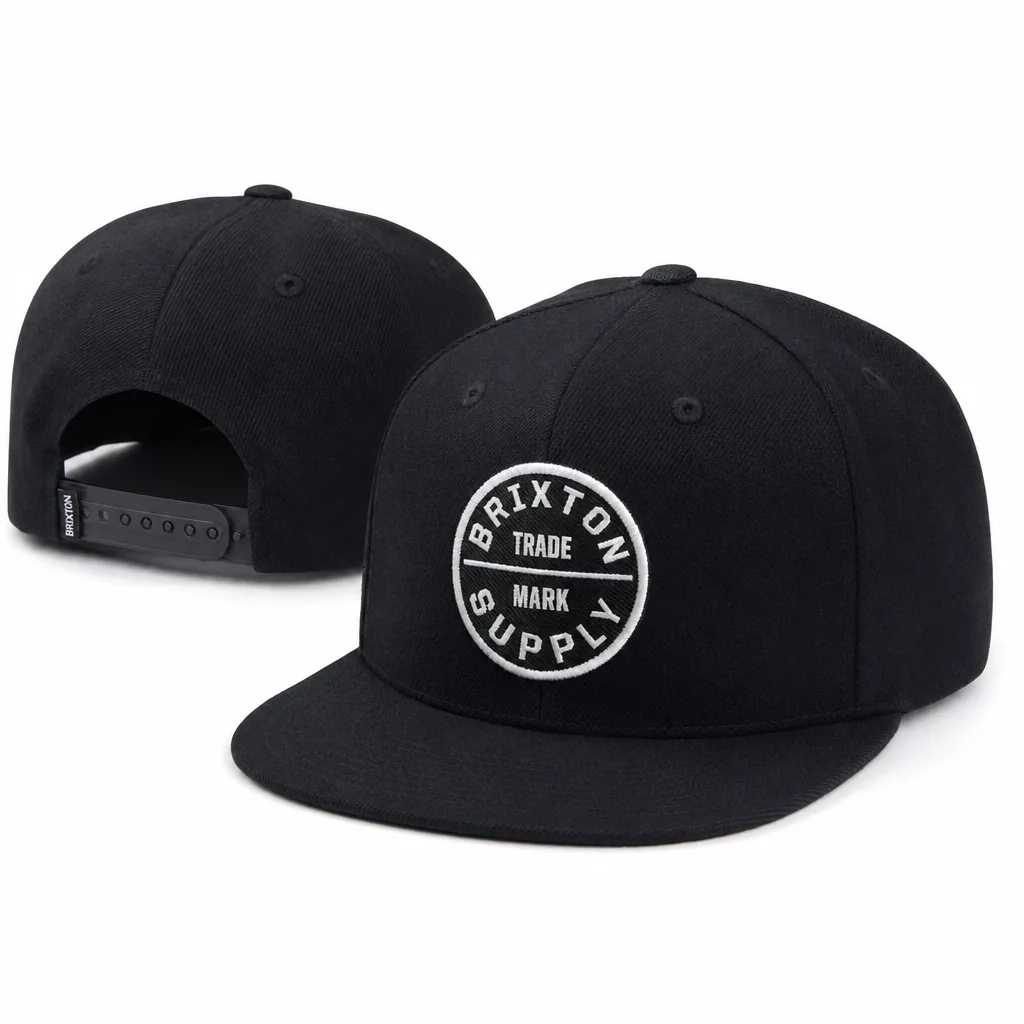
Every week, our sales team answers detailed questions about custom made trucker hat: the 2026 sourcing & manufacturing playbook - supplier checklist - supplier checklist - 2026 buyer's guide. We wrote this guide so that wholesalers, streetwear brands, corporate buyers and promotional resellers can compare options with full information, and avoid the traps that show up only after production has started.
Custom Embroidered Hats
Embroidery quality on a custom made trucker hat is controlled first by the front panel build, not by how polished the vector art looks on screen. Most commercial trucker programs run either a 5-panel high-crown body or a 6-panel mid-profile shell with a 2.5-3.0 mm foam-backed polyester front, 140-220 gsm poly mesh, a PE visor insert, and a PP snap closure. That foam face gives the logo height, but it also amplifies every digitizing mistake: poor underlay, excessive density, or wrong pull compensation will telegraph as puckering and edge distortion. On Tajima, Barudan, and ZSK cap frames, the practical limits are consistent: text below 4 mm height, strokes under 0.8 mm, and tight inside corners do not sew cleanly on a structured trucker crown, even if the proof looks sharp. A usable embroidery spec should ask for finished logo size in millimeters, stitch count, thread brand and weight such as Madeira or Gunold 40 wt polyester, underlay type, density, and whether the file is run on cut panels or finished caps. Color control also needs to be written down, not implied: specify Pantone TPX or TCX references for fabric and thread, and where appliqué or dyed twill is involved, require a visual match under D65 light with Delta-E under 2.0. For 3D puff, call out 2 mm or 3 mm EVA foam and keep stroke widths above 5 mm so the satin column fully wraps the foam edge. A sew-out on the actual cap body matters more than a flat-panel sample because crown curvature changes how fills sit and where outlines drift.
The cost range becomes predictable once you quote the build honestly. In China, a basic custom made trucker hat with one front embroidery hit around 5,000-8,000 stitches typically lands at about $2.30-$3.70 FOB for 144-300 pieces per colorway. Smaller runs at 48-100 pieces usually add $0.25-$0.60 per cap, plus a one-time digitizing charge in the $30-$80 range depending on logo complexity and revisions. Extras compound fast: 3D puff, side embroidery, back arch text, woven loop labels, custom inside taping, or printed seam tape can move the same hat into the $4.50-$6.80 FOB range. Sampling is usually 5-7 calendar days after artwork approval; realistic bulk production is 20-30 days after fabric, mesh, closure, and trims are in-house. The most common inspection failures are not dramatic defects; they are small misses that make the cap look cheap. Watch for logo registration drift above 1.5 mm, exposed bobbin thread, foam-front puckering, mesh needle cuts, visor sandwich offset over 2 mm, and thread shades outside the approved standard. On puff embroidery, collapsed satin columns, uneven foam height, and post-compression foam exposure are the real reject drivers. AQL 2.5 is the right baseline for finished hats, with checkpoints on logo centering, crown symmetry, snapback function, sweatband staining, and carton pack density, because overpacked master cartons can flatten the front face before goods ever reach port. If the artwork depends on gradients, serif microtext, or razor-sharp outlines, embroidery is often the wrong decoration method; woven patches, merrowed twill patches, or silicone heat-transfer badges usually hold edge definition with fewer bulk rejects.
Custom Hat Embroidery
Embroidery is usually the make-or-break decoration on a custom made trucker hat because the front foam or buckram panel behaves very differently from a flat sweatshirt chest. Most factories run logos on Tajima, Barudan, or ZSK multi-head machines after digitizing the art into a stitch file, typically DST or EMB, with underlay, pull compensation, and stitch density adjusted for the panel structure. For trucker caps, buyers should ask for the embroidery width and height in millimeters, stitch count, thread brand, thread sheen, backing type, and whether the logo will be run pre-curved or on an open front panel before cap closing. A standard 3D puff logo needs EVA foam under the satin stitches and usually works best on bold shapes at 2.5 to 3.5 mm column width; fine serif text under 5 mm tall will not hold cleanly. If you are ordering a custom trucker hat with side or back hits, confirm head count limits and thread-change time because a 6-color front plus 2-color side logo can add more labor than buyers expect.
The specs that matter most are simpler than many tech packs suggest: Pantone TCX or coated references for thread matching, acceptable Delta-E tolerance if brand color is sensitive, stitch count range, embroidery position tolerance, backing weight, and whether the cap body is cotton twill, polyester, corduroy, or foam-front mesh. MOQ for embroidered trucker custom hat orders in China is commonly 144 to 300 pieces per colorway, though some factories will sample from 24 to 50 pieces at a surcharge. For mass production, a basic flat embroidery front logo on a hat trucker custom style might add about $0.35 to $0.90 per cap, while clean 3D puff is often $0.80 to $1.50, and side embroidery commonly adds another $0.20 to $0.45 per position. Digitizing is often charged once at $15 to $50 depending on complexity, then waived on repeat orders. CrownsForge standard practice is to quote embroidery by stitch band and location count, because a 6,000-stitch center front run and a 14,000-stitch full crest are not remotely the same production risk.
Inspection should focus on issues that cannot be fixed after sewing: loose trims, exposed bobbin thread, registration drift between colors, sinking on foam panels, cap hoop burn, needle cuts on lightweight poly, puckering around dense fills, and distorted outlines caused by bad digitizing rather than bad operators. On a custom trucker hats order, I would inspect under normal light at about 50 cm distance, then again up close, and use AQL 2.5 as the shipment standard with extra attention on color consistency between lots. Ask the factory to send a sew-out photo beside a ruler and Pantone reference before bulk, and if the logo is critical, request a pre-production sample from the actual shell fabric, not a random twill swatch. This ties directly back to the broader sourcing decision: the cheapest custom made trucker hat supplier is often buying low-density thread, skipping machine maintenance, and overpacking heads to chase output, which is exactly how you get broken top thread, fuzzy edges, and rejected goods at final inspection.
Custom Trucker Hat
The make-or-break point on a custom made trucker hat is the bill of materials, not the mockup. Price it only after the construction is frozen: 5-panel foam front or 6-panel structured crown, 3-5 mm laminated polyester foam or 220-260 gsm cotton twill on the front, 100% polyester mesh or recycled rPET mesh at the side and back, 7-hole plastic snap or self-fabric strap, PE visor with light/medium/heavy pre-curve, brim sandwich color, sweatband content, seam tape color, and top button finish. If color consistency matters, issue Pantone TCX for textiles and Pantone Solid Coated for plastic trims, then write a bulk tolerance into the PO—Delta-E 1.5-2.0 to the approved standard under D65 lighting is realistic for retail programs. Skip that step and you end up with a “black” mesh that reads blue against a “black” twill front once the cap is sewn.
Process choice drives both cost and defect risk. A standard trucker cap is cut panel by panel, foam fronts are laminated or fused, mesh panels are joined, buckram is added on structured builds, and a pre-curved PE visor is sewn into the crown before topstitching and finishing. Decoration must be called out by method: flat embroidery, 3D puff embroidery, woven patch, sublimated patch, screen print, or molded TPU badge all need different front-panel stiffness and sewing allowance. For example, 3D puff on a foam front needs digitizing built for EVA foam, clean underlay, and stable thread tension on Tajima, Barudan, or ZSK heads; otherwise the front panel ripples after steaming and the puff edges collapse. In Yiwu or Dongguan, expect roughly $2.10-$3.20 EXW at 300 pcs for a basic promo build with stock mesh and simple embroidery, while a retail-grade version with puff embroidery, woven flag label, printed inside taping, moisture-wicking sweatband, and custom sandwich brim is more realistically $4.20-$6.80 EXW.
Most failed RFQs come from mood boards instead of cap specs. A workable tech pack should list panel count, finished crown height in centimeters, visor length, brim curve, front-panel material, mesh spec, closure type, logo size in millimeters, estimated stitch count, backing type, label position, carton pack-out, and tolerance standards. For embroidery, specify whether 0.8 mm outlines, satin borders, or small serif text are required, because needle size, stitch density, and digitizing strategy decide whether the logo runs clean or turns fuzzy. Our standard practice is to reject art files that have not been digitized specifically for foam embroidery when the design includes tight corners or stacked lettering.
Inspection is where a custom made trucker hat proves whether the spec was written properly. I would hold bulk to AQL 2.5, keep logo placement within +/-2 mm, check visor symmetry left to right, measure crown height from both top and bottom cartons, verify snap alignment and pull strength, and compare each production lot against the approved sample for hand feel and color. The most common claims are still warped brims, off-center embroidery, cracked puff, and closure failure. MOQ is usually 144-300 pcs per colorway with stock materials, but custom-dyed twill, proprietary camo prints, or branded seam tape normally push the buy to 500-1,000 pcs because mills and trim suppliers will not run small lots economically.
Custom Trucker Hats
Front-panel construction is what separates a disposable promo cap from a retail-ready custom made trucker hat. The weak point is usually the front crown: 3-4 mm foam-backed polyester looks fine on a quotation sample, then collapses after vacuum packing or picks up embroidery puckering once humidity hits 75% RH in transit. For low-cost programs, factories commonly build a 5-panel body with 100% polyester foam front, 120-150 gsm diamond mesh, PE visor insert, and a basic PP snap closure. That build works for event giveaways, but not for brands expecting shelf life. For better shape retention, I would spec a tricot-laminated front, 180-220 gsm warp-knit mesh, and either a structured 6-panel crown with buckram or a high-profile 5-panel crown controlled at 11-12 cm height. If the art is embroidery-led, confirm the supplier is running Tajima, Barudan, or ZSK heads and digitizing specifically for foam fronts. Generic flat-cap files are what cause tunneling, edge distortion, and top-panel ripple. On foam or laminated fronts, 40 wt polyester thread, reduced stitch density, edge-run underlay, and tighter hooping discipline matter more than the machine brand.
Most buyers lose control because the tech pack leaves too much open to interpretation. A proper custom made trucker hat spec should lock panel count, crown profile, front width, visor radius, mesh hole size, mesh shade by Pantone TCX, underbrim color, sweatband fiber content, seam tape print, snap resin type, and finished circumference tolerance at +/-0.5 cm. “Poly mesh” is not a spec; two factories can quote the same phrase and deliver completely different denier, handfeel, and recovery. Stock-material MOQ is usually 144-300 pieces per colorway, but once you add dyed mesh, custom closure color, woven flag label, printed inner tape, or sublimated underbrim, true cut-and-sew minimums typically move to 500-1,000 pieces per style. In Zhejiang, a blank-body trucker with flat embroidery generally lands around $2.20-$3.90 FOB Ningbo at 300-500 units. Retail builds with 3D puff, applique, branded taping, and custom interior labeling are more realistically $5.00-$7.80 FOB, with DDP to the U.S. adding roughly $0.70-$1.50 depending on carton density and season. Final inspection should run at AQL 2.5 with hat-specific checkpoints: visor symmetry within 3 mm, embroidery placement within 2 mm, crown height variance within 3 mm, Delta-E <=1.5 for dyed panels under D65 light, and compression testing to catch foam blistering before shipment. sedex-audit-cap-supplier-guide.html">BSCI 2.0 or Sedex SMETA 4-Pillar helps with compliance, but it does not stop bad shaping, skewed mesh seams, or loose top-button crimping on the line.
Hat Trucker Custom
The front panel construction decides whether a custom made trucker hat runs smoothly or turns into a reject-heavy style after embroidery. The real fork is foam-front versus buckram-backed twill. A traditional high-profile 5-panel trucker usually uses 2.5-3.0 mm EVA foam laminated to the face panel with 75D-120D polyester mesh; that gives the tall vintage silhouette, but it is less forgiving under a Tajima or Barudan head. Stitch density has to be backed off, underlay widened, and pull compensation adjusted, or the needle starts cutting foam and the logo edges go wavy. A retail-clean build is more often 10 oz cotton twill, poly-cotton twill, or brushed polyester twill with buckram support, which holds small text, satin borders, and tighter fill registration much better. Before sampling, lock the bill of materials in actual numbers: crown height in centimeters, visor curve, PE visor board thickness, 6 or 8 rows of brim stitching, mesh denier, sweatband composition, snapback resin grade, seam tape print, and Pantone TCX references for every dyed part. If those details stay vague, the factory will fill in the gaps with whatever is cheapest and fastest that week.
Most buyer problems start with loose spec sheets, not bad sewing. A proper custom made trucker hat tech pack should call out panel construction, shell fabric weight in gsm, mesh hole pattern, closure type, logo size in millimeters, embroidery stitch count, seam SPI, sweatband attachment method, label application, carton pack-out, and tolerances such as crown height ±0.3 cm, bill width ±0.2 cm, and logo placement ±2 mm. For branded programs, I would not accept color control looser than Delta-E 1.5-2.0 on the front panel, visor, and closure tabs, and the pre-production sample should be made from bulk fabric, not lab-dip approximations or substitute stock. In China, a genuine cut-and-sew MOQ is usually 300-500 pieces per colorway; offers at 144 pieces normally mean a stock body with custom decoration only. Current FOB pricing for a standard 5-panel polyester-mesh custom made trucker hat with flat embroidery is typically $2.20-$3.80 at 500 units, while rope trims, woven patches, appliqué, suede visor wraps, or metal hardware can push factory cost to $4.50-$7.50. Final inspection should be set to AQL 2.5, but the real quality gates are in-line: after cutting, after embroidery, and after crown shaping, where off-center logos, visor warp, mesh seam splitting, and inconsistent crown height first become visible.
Trucker Custom Hat
A custom made trucker hat is won or lost in the bill of materials, not the mockup. For a dependable 5-panel build, lock the front panel at 190-220 gsm cotton twill, brushed canvas, or foam-laminated polyester; specify rear mesh as 75D-100D polyester or nylon in the 100-140 gsm range; and call out the crown support clearly—2-3 mm PE foam for a classic high-profile trucker face, buckram for a firmer structured hand, or a foam-plus-buckram combination if you need both loft and shape retention. If those lines stay vague, the factory will pull whatever is sitting in stock, and that is how you end up with visor twist after carton compression, mesh panels that miss shade by an obvious margin, and front panels that buckle after one wear. A clean spec sheet should freeze panel count, crown height, visor curve, brim board thickness, closure type, sweatband composition, seam tape color, top button, underbill color, and logo application method before sampling starts.
Decoration needs its own controls because trucker fronts are less forgiving than full-twill baseball caps. Foam-backed fronts take 3D puff embroidery well, but text below 4 mm cap height and dense fills tighter than about 0.40 mm stitch spacing will pucker fast, especially on cheaper twill. On Tajima or Barudan heads, a 6,000-8,000 stitch front logo is routine; the real problems come from bad digitizing, weak underlay, and sloppy hooping near the mesh break, where 3-5 mm logo drift is still common in careless workshops. Buyers should define Pantone TCX references for fabric and thread, a realistic Delta-E tolerance of 2.5 or better across mixed materials, patch edge finish, embroidery backing, placement datum from the center seam, and carton pack-out. Our standard practice is to hold trucker caps to AQL 2.5 with measurements on crown height, visor length, head opening, and logo position, plus snapback pull testing and a 24-hour recovery check after export-carton compression.
Cost is driven by materials, trims, and decoration complexity far more than by the word custom. In Zhejiang, a practical MOQ for a custom made trucker hat is usually 144-300 pieces per colorway if you are using stock mesh, standard PP snapbacks, and one front embroidery location. Once you ask for custom-dyed mesh, branded seam tape, molded closures, matching underbill fabric, or proprietary labels, 500 pieces is the point where color control and trim consistency become manageable. A realistic FOB China range for a basic 5-panel foam-front cap with stock polyester mesh and one flat embroidered logo is about $2.20-$3.20 at 300 pieces; move to cotton twill fronts, 3D embroidery, woven labels, and upgraded sweatbands, and most factory-direct pricing lands around $3.40-$4.80. Rubber patches, printed underbrims, hangtags, barcode stickers, and individual polybags can add $0.12-$0.90 per piece quickly. The fastest way to separate a real factory from a trading company is to ask for the production data they should already have on hand. A competent supplier can tell you front fabric composition, mesh denier, sweatband width, brim board thickness, snap material, stitch count, carton dimensions, and net/gross carton weight before bulk approval. If they cannot confirm whether the mesh is 75D or 100D, or whether the sweatband is brushed polyester versus cotton terry, they are quoting faster than they are controlling production. Repeatability six months later depends on a stable BOM, recorded machine settings, and repeat inspection points—not on whether the first quotation looked cheap.
Working with CrownsForge for custom made trucker hat programs
The fastest way to de-risk a custom made trucker hat program is to lock the tech pack before the first physical sample leaves the factory. A clean sampling path is usually 3 stages: digital mockup in 24-48 hours, first pre-production sample in 5-7 working days, then one corrective sample in another 3-5 days if crown height, visor curvature, mesh shade, or snapback fit misses target. Most delays come from incomplete buyer inputs, not sewing capacity. A Canva export or 150 dpi PNG is useless for digitizing on Tajima or Barudan heads, especially for 3D puff where pull compensation, satin width, and foam coverage have to be programmed from vector artwork. The factory should receive AI or EPS files, finished logo size in millimeters, Pantone TCX or Pantone Coated references, target cap profile, brim shape, closure type, front-panel material, foam thickness, mesh spec, and any seam-tape or sweatband branding before sampling starts. If those details are fixed upfront, one sample round is often enough to approve construction instead of losing 10-14 days to preventable revisions.
MOQ only matters when it is tied to actual cost drivers. For a fully custom made trucker hat, a realistic opening MOQ is usually 144-300 pieces per colorway because dyed mesh, custom woven labels, branded sweatbands, printed seam tape, and trim setups all carry minimums. A stock-body program with fresh embroidery or a woven patch can start lower, around 48-100 pieces, because the shell is already in inventory. On cost, a 6-panel foam-front/poly-mesh trucker with PVC snap closure, woven flag label, and about 8,000 front stitches typically lands around $2.40-$4.20 EXW at 300 pieces. Add a molded silicone badge, under-visor print, custom internal taping, and a hangtag set, and the same hat can move above $5.00-$5.60. Buyers should always ask for break pricing at 300, 500, and 1,000 units and the exact adder for flat embroidery, 3D puff, woven patch application, or heat transfer. That pricing grid tells you quickly whether to consolidate colorways, swap a rubber patch for embroidery, or keep the fully custom internals.
Decoration control and compliance are where a real cap factory separates itself from a trading company with polished slides. If flat embroidery, 3D puff, woven patch sewing, heat transfer, and screen print are managed in-house or through tightly controlled nominated vendors, lead times are more predictable and rework stays contained. The checkpoints should be measurable: thread shade matched to the approved standard within commercial tolerance, fabric color held within an agreed Delta-E window, stitch density adjusted for foam-front panels so the crown does not tunnel or collapse, and final inspection run to AQL 2.5 before carton sealing. For any custom made trucker hat headed to retail, licensed, or promotional channels, paperwork matters just as much as sewing. Buyers should verify BSCI 2.0 or Sedex SMETA 4-Pillar audit status, basic REACH and CPSIA readiness, carton pack specs, and a production flow that includes tech-pack signoff, raw-material booking, pre-production meeting, inline QC, finished-goods inspection, and shipment planning under FOB, CIF, or DDP terms. That discipline is what keeps a bulk order on schedule after sample approval.
Frequently Asked Questions
What logo decoration techniques do you offer?
3D puff embroidery, flat embroidery, woven patch, leather patch, PVC patch, screen printing, sublimation, applique and laser etching, all in-house with no subcontracting.
Can I order a sample before bulk production?
Yes. We strongly recommend approving a pre-production sample before mass production. Samples are charged at 35 to 60 USD each plus express shipping, fully refundable against confirmed bulk orders over 500 pieces.
What is the minimum order quantity (MOQ) for custom hats?
Our standard MOQ is 100 pieces per design and color, with sampling available from 1 piece. For complex multi-color logos or premium fabric upgrades, the MOQ can be lowered with a small per-piece surcharge.
How long does production take?
Sampling takes 7 to 12 days. Bulk production runs 20 to 30 days depending on quantity, fabric availability and decoration complexity. Inspection and packing adds another 3 to 5 days before shipment.
What file format should I send for my logo?
Vector files (AI, EPS, PDF) are ideal. High-resolution PNG or JPG at 300 dpi on transparent background works as a fallback. Provide Pantone color references for accurate reproduction.
How does ordering custom hat trucker work?
When evaluating custom hat trucker, the key considerations are construction quality, decoration capability, MOQ flexibility and lead time. Cover everything buyers ask about custom embroidered hats: how it's manufactured, what specs to request from a factory, typical MOQ and pricing, common quality issues to inspect for, and how this ties back to the broader custom made trucker hat sourcing decision. Cover everything buyers ask about custom hat embroidery: how it's manufactured, what specs to request from a…
How does ordering custom embroidered trucker hats work?
When evaluating custom embroidered trucker hats, the key considerations are construction quality, decoration capability, MOQ flexibility and lead time. Cover everything buyers ask about custom embroidered hats: how it's manufactured, what specs to request from a factory, typical MOQ and pricing, common quality issues to inspect for, and how this ties back to the broader custom made trucker hat sourcing decision. Cover everything buyers ask about custom trucker hats: how it's manufactured, what specs to request from a…
How does ordering custom made hats for men work?
When evaluating custom made hats for men, the key considerations are construction quality, decoration capability, MOQ flexibility and lead time. Cover everything buyers ask about custom embroidered hats: how it's manufactured, what specs to request from a factory, typical MOQ and pricing, common quality issues to inspect for, and how this ties back to the broader custom made trucker hat sourcing decision. Cover everything buyers ask about custom trucker hats: how it's manufactured, what specs to request from a…
How does ordering high quality custom trucker hats work?
When evaluating high quality custom trucker hats, the key considerations are construction quality, decoration capability, MOQ flexibility and lead time. Cover everything buyers ask about custom embroidered hats: how it's manufactured, what specs to request from a factory, typical MOQ and pricing, common quality issues to inspect for, and how this ties back to the broader custom made trucker hat sourcing decision. Cover everything buyers ask about custom trucker hats: how it's manufactured, what specs to request from a…
Looking for a reliable hat manufacturer in China?
CrownsForge has produced custom hats for 800+ brands across 40 countries. From 100-piece launches to 100,000-piece retail programs, we deliver on time and on spec.
Get in touchRelated guides
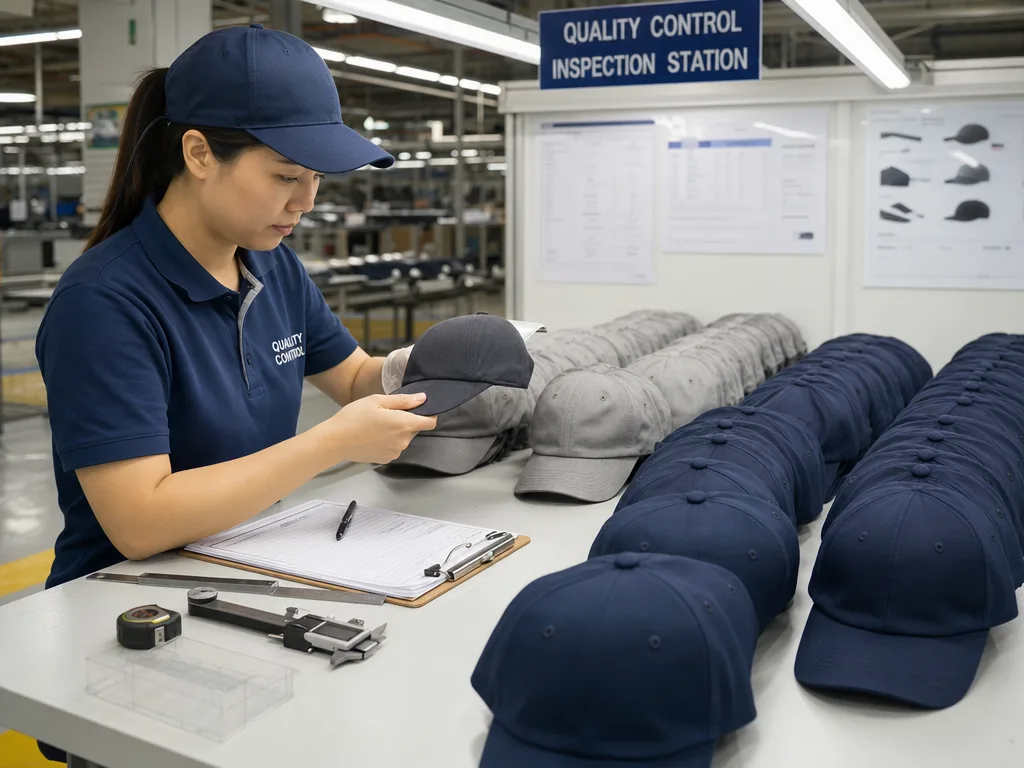
BSCI vs Sedex vs WRAP vs WCA: Compliance Audit Standards Compared (2026 Update) - 2026 Buyer's Guide
Read article →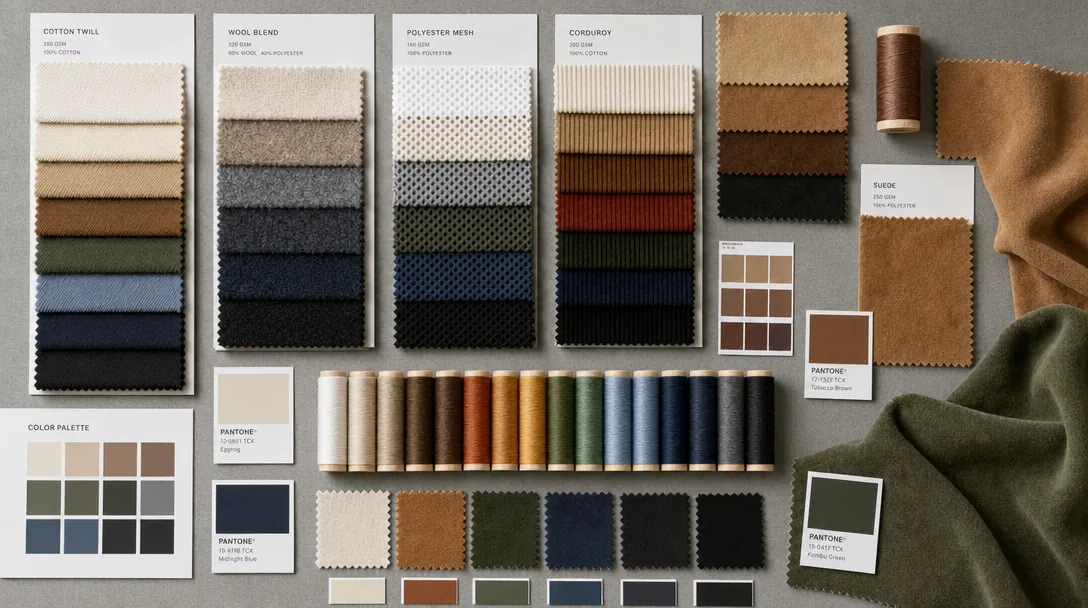
Sustainable Cap Packaging: Options, Costs and Retail-Buyer Demands - 2026 Buyer's Guide
Read article →Bucket Hat Corduroy Fabric And Trim Spec Guide for Custom Hat Buyers
Read article →Sourcing custom hats does not have to be complicated. With the right manufacturing partner, clear specifications and a small upfront investment in sampling, you can launch a retail-quality product in 30 to 45 days.