
Custom Made Trucker Hat: The 2026 Sourcing & Manufacturing Playbook (2026 Update) (2026 Update) - 2026 Buyer's Guide (2026 Update) - 2026 Buyer's Guide
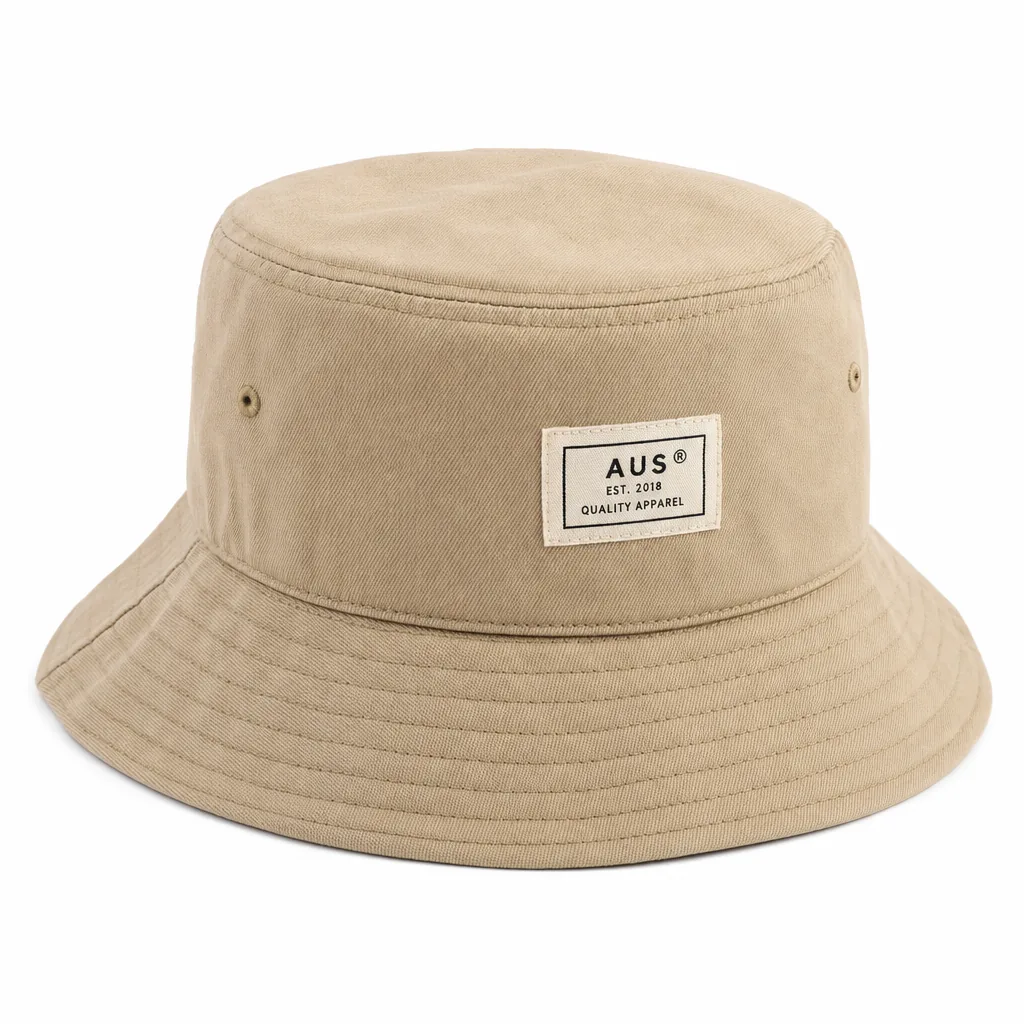
Every week, our sales team answers detailed questions about custom made trucker hat: the 2026 sourcing & manufacturing playbook (2026 update) (2026 update) - 2026 buyer's guide (2026 update) - 2026 buyer's guide. We wrote this guide so that wholesalers, streetwear brands, corporate buyers and promotional resellers can compare options with full information, and avoid the traps that show up only after production has started.
Custom Embroidered Hats
Embroidery is still the safest decoration method for a custom made trucker hat when you need abrasion resistance, clean edge definition, and a retail-ready look, but the result is won or lost in digitizing. A proper supplier converts the artwork into a DST or EMB file for Tajima, Barudan, or ZSK heads, then adjusts stitch density, underlay, pull compensation, cap frame path, and thread sequence on the actual hat body—not on a flat swatch. A structured 5-panel foam trucker behaves very differently from a brushed cotton dad cap: 3D puff on the front panel usually delivers about 2.0 to 3.0 mm loft with EVA foam, while flat embroidery close to mesh requires lower density to avoid tunneling, puckering, and crown collapse. Serious factories will ask for logo size in millimeters, Pantone TPX or TCX reference for nearest thread shade, stitch finish such as satin, tatami, chain stitch, or applique, and whether the artwork crosses the center seam. If they never ask about seam placement, front-panel backing, or crown profile, they are not controlling the outcome—they are guessing.
The spec sheet is where buyers either protect margin or invite defects. For a custom made trucker hat, lock the front-panel material and gsm, mesh type and hole count, visor curvature, snapback resin grade, sweatband composition, logo placement tolerance, and stitch-count ceiling by area. On a standard foam-front trucker, the front logo usually runs 5,000 to 12,000 stitches; once you push beyond 15,000, especially with text below 4 mm cap height, thread breaks, flagging, and registration drift rise fast. In Yiwu and Dongguan, MOQ is often 144 to 300 pieces per colorway on stock bodies, while dyed-to-match mesh, custom patterns, or private-label trims usually start around 500 to 1,000 pieces. For 2026 buying, a basic embroidered trucker with polyester mesh and plastic snap closure typically lands at about $2.10 to $3.80 FOB China; a more engineered version with 3D puff, 12x12 twill, woven loop label, printed seam tape, and individual polybag is more realistically $4.20 to $7.50 FOB.
Inspection is where embroidery programs that looked fine at sample stage get exposed in bulk. The repeat defects are off-center logos, inconsistent thread tension, foam exposure on puff embroidery, needle cuts on the foam front, visor sandwich mismatch, seam-to-logo drift, and thread shade variance against the approved card. I would hold logo placement to ±2 mm, verify thread color under D65 lighting, check crown height and visor symmetry, and inspect finished goods to AQL 2.5 with extra focus on seam alignment, backing show-through, and loose thread ends around the embroidery field. It also pays to test snapback pin retention and mesh brittleness, because those failures appear after wear, not during sewing. The real sourcing lesson is straightforward: a strong embroidery shop is not automatically a strong cap factory. If the supplier cannot control panel cutting, blocking, sweatband attachment, visor shaping, and final pressing, the logo may look sharp while the trucker still fits badly and creates avoidable claims.
Custom Hat Embroidery
Embroidery is where a custom made trucker hat usually passes or fails, because a curved crown exaggerates every digitizing mistake. A cap file for Tajima, Barudan, or ZSK heads needs cap-specific settings: edge-walk and zigzag underlay, stitch angle mapped to crown curvature, pull compensation typically around 0.2-0.4 mm, and a sew sequence that balances the panel instead of dragging it off-center. Buyers should send vector art, finished logo size in millimeters, Pantone Solid Coated or Pantone TCX references, and the exact technique—flat embroidery, 3D puff, appliqué, or mixed media. Material matters more than most buyers realize: a density that runs clean on 260 gsm cotton twill can pucker badly on 3 mm foam-backed polyester, while fine detail that looks sharp on a flat strike-off can close up once mounted on a cap frame. The only approval that means anything is a sew-out on the actual hat body, with the real front backing, mesh, sweatband, and crown profile, because paper-backed swatches hide distortion and registration drift.
Commercially, front embroidery on a custom made trucker hat is usually economical only when the artwork respects the medium. Digitizing generally costs US$15-50 per logo; production embroidery is commonly US$0.80-2.50 per location, rising with stitch count, color changes, metallic thread, or 3D foam. Most workable front logos sit in the 5,000-12,000 stitch range. Above that, machine speed drops, thread breaks climb, and small curved text starts walking toward the center seam, especially on 5-panel builds. MOQ is often 144-300 pieces per colorway, though some factories will accept 48-100 pieces with a setup surcharge if they can gang runs. Smart buyers confirm thread brand or equivalent spec, acceptable color deviation, and machine limits before sampling—Madeira Classic, Gunold Poly, or approved equivalents, plus whether the logo requires center-out sequencing or split runs. Those points affect yield, rework, and true landed cost far more than a headline FOB price.
Inspection has to focus on cap-specific embroidery failure points, not generic sewing defects. The common problems are puckering around the logo, exposed underlay, poor color registration, crushed or uneven 3D puff, loose thread tails, needle cuts at the mesh join, and lettering that shifts left or right after the crown is shaped. Bulk should be checked against the sealed sample under D65 lighting, with thread color judged to the approved Pantone reference and workmanship inspected to AQL 2.5. On production runs, I would always pull hats from the first hour and the last cartons of each line, because embroidery quality drifts as needles heat up, caps frames loosen, and operators push RPM to recover output. If the artwork includes fine serifs, narrow counters, or tonal gradients, embroidery may simply be the wrong decoration method. In those cases, a woven patch, TPU badge, or high-density screen print usually gives a cleaner logo, lower defect rate, and more stable repeatability in bulk.
Custom Trucker Hat
A custom made trucker hat is usually decided before sampling starts: if the tech pack is vague, the factory will substitute trims and construction to hit the target price. Lock the build first—5-panel foam front or 6-panel structured crown, finished crown height in centimeters, foam thickness, mesh type and denier, visor curve, closure style, sweatband content, and decoration method. A mainstream commercial spec is a 100% polyester foam front laminated to 2.5-3.0 mm, polyester or nylon mesh at 75D-150D, a pre-curved PE visor with 6-8 rows of stitching, a 100% polyester sweatband at 160-180 gsm, and a PVC snap with 7 holes. For artwork, send vector files and specify Pantone Solid Coated or Pantone TCX references; on printed foam fronts, I would cap Delta-E at 1.5 against the approved strike-off because reds, fluorescents, and saturated orange tones shift fast on low-density foam. The production flow is simple on paper but unforgiving in practice: cutting, lamination, print or embroidery, crown assembly, visor joining, sweatband setting, closure attachment, steaming, shaping, thread cleanup, and metal detection if the customer’s protocol requires it.
The cleanest pricing comes from RFQs that leave nothing open to interpretation. Call out panel count, fabric composition, gsm, mesh denier, stitch density, visor row count, seam tape print, button color, eyelet construction, embroidery backing, snap resin grade, and packing method down to 25 pcs per inner polybag or carton assortment. On foam fronts, Tajima or Barudan embroidery heads usually run clean at 600-750 spm only if the digitizing uses proper edge-walk and zigzag underlay; wide satin columns on soft foam are the reason cheap caps pucker around the logo. In eastern China, MOQ is typically 144-300 pcs per colorway for a standard custom made trucker hat, while 50-100 pcs is possible with a setup surcharge. Current market pricing for a basic trucker with one-location flat or 3D embroidery is roughly $2.20-$3.80 FOB Ningbo; once you add woven patches, molded PVC patches, rope trims, sublimated fronts, specialty mesh, or custom snap molds, honest quotes usually land around $4.50-$7.00 before separate tooling charges.
Inspection is where weak factories get exposed. For any custom made trucker hat run, I would check crown symmetry, visor centering, seam puckering on the foam front, mesh recovery after compression, snap pull strength, embroidery registration, sweatband joins, loose-thread trimming, and carton assortment accuracy. AQL 2.5 is standard for final inspection, but headwear needs stricter visual judgment than most sewn goods because one crooked logo can make a retail delivery unsellable even if the lot technically passes. The most common failures are foam delamination after heat exposure, needle cuts in 75D mesh, off-center artwork, inconsistent brim curvature, and shade variation between visor fabric, seam tape, and top button. Fit consistency matters just as much: if the head opening drifts by 5-7 mm between production lots, one carton feels correct and the next feels tight. The real sourcing question is not who quotes the cheapest cap, but who can hold repeatable specs, show sedex-audit-cap-supplier-guide.html">BSCI 2.0 or Sedex SMETA 4-Pillar documentation, and provide PP sample, inline, and final QC records without excuses.
Custom Trucker Hats
A retail-grade custom made trucker hat is won or lost on front-panel engineering, not on whether it is called 5-panel or 6-panel. The commercial baseline is a foam-front or buckram-supported crown paired with 8x8 poly mesh or nylon mesh in the 70-120 gsm range, a 65/35 polyester-cotton twill face, and a pre-curved PE visor insert around 1.6-1.8 mm. The build sequence matters because decoration sits on top of structure: panel cutting, foam lamination or buckram fusing, crown sewing, sweatband setting, visor insertion, top button, back closure, embroidery or patch application, shaping, trimming, and, for some retail programs, needle detection and metal control. When the logo is 3D puff, digitizing has to be engineered for foam height, stitch direction, and satin column width before sampling; if you treat it like flat embroidery, the puff collapses after steaming and master-carton compression. On Tajima or Barudan cap frames, clean puff usually needs satin columns above 2.5-3.0 mm, sensible underlay, and pull compensation tuned to the actual cap shell, not copied from a standard baseball cap file.
If you want repeatable bulk, the tech pack has to pin down numbers, not adjectives. A usable custom made trucker hat spec should list panel count, finished crown height, visor length, brim curvature, front support type, shell composition, mesh denier or gsm, sweatband material, snapback resin grade, seam taping, stitch count, logo size, and Pantone TCX references for fabric, thread, and patch colors. For color-sensitive programs, Delta-E under 1.5 on key panels is a realistic control point, but the approval standard should still be a sealed physical sample under D65 lighting, not a phone image. In Zhejiang production, FOB China on a basic 5-panel foam-front trucker typically lands around $2.10-$3.20 at 500 pieces with standard polyester mesh, flat embroidery, and a generic PP snap; a more credible retail build with heavier twill, softer sweatband, printed inside taping, woven label, better mesh recovery, and tighter embroidery tolerance is usually $3.80-$6.50. Add about $0.25-$0.60 for TPU or woven patches and $0.40-$1.20 for dense 3D puff, where machine time and rejection risk rise fast.
Most bulk failures are predictable, which means they should be written into the PO, pre-production sample notes, and final inspection checklist before cutting starts. The repeat offenders are front-panel puckering after embroidery, patch placement drifting over the center seam, visor curve inconsistency, loose sweatband joins, sharp snapback flash, mesh tearing at seam stress points, and thread shade drift versus approved Pantone. AQL 2.5 works for general final inspection, but key branding defects should be zero tolerance: logo off-center by more than 2 mm, wrong embroidery size, exposed puff foam, broken snaps, oil contamination, or a crown profile that does not match the sealed sample. The expensive mistake is approving only the look of the sample while ignoring measurements, closure quality, and pack-out pressure. Any supplier can make one attractive salesman sample; the real test is whether the same custom made trucker hat can be reproduced six months later with the same crown height, handfeel, mesh tension, and embroidery density across the full PO.
Hat Trucker Custom
The front panel decides whether a custom made trucker hat reads like retail product or giveaway stock. Standard promo construction is usually a 5-panel crown with 2.5-3.0 mm polyester foam, 210D-250D mesh, a PE pre-curve visor, and a PVC snap closure; it keeps FOB low, but the crown often creases in transit and the logo field looks unstable once you run dense embroidery. For a cleaner silhouette, I’d spec 10-12 oz cotton twill, brushed canvas, or 14-wale corduroy on the face panel, backed with 60-80 gsm fusible and matched with softer nylon mesh or 300D poly mesh that won’t go brittle after heat exposure. A vague note like “mid-profile” is useless on the factory floor. Put crown height in centimeters, panel count, visor arc, mesh denier, sweatband composition and gsm, button material, closure resin type, and Pantone TCX callouts for shell, mesh, and thread directly into the tech pack. Backing and embroidery setup matter as much as fabric. If the front panel uses foam lamination, call out foam thickness, density, and whether the panel also carries buckram; too much stiffness makes the cap sit boxy, too little lets the logo tunnel after packing. On Tajima or Barudan heads, underlay choice, pull compensation, satin density, and 3D puff height all affect edge sharpness and puckering, especially on wide block lettering. Good factories will also lock down seam tape artwork, visor stitch count, undervisor fabric, and sweatband attachment method before bulk. At CrownsForge, we treat front-panel strike-offs as mandatory whenever the logo exceeds 8,000 stitches or uses puff, because that is where distortion, thread breaks, and crown warping usually show up first.
MOQ and FOB are driven by trim and decoration complexity, not by the trucker shape itself. With stock twill, stock mesh, and one-location flat embroidery, a workable MOQ is usually 144-300 pieces per colorway. Once you add custom-dyed shell fabric, woven patches, TPU badges, molded metal trims, rope inserts, or printed seam tape, most factories will push to 500 pieces so they can absorb dye minimums, mold charges, and setup waste. In China, a basic foam-front mesh-back cap commonly lands around $2.20-$3.50 FOB at 300-500 units. A more retail-ready custom made trucker hat with cotton twill front, 3D puff embroidery, woven flag label, branded inside tape, custom swing tag, and upgraded sweatband is more realistically $4.00-$6.80 FOB, with sampling fees for digitizing, patch strike-offs, and fit revisions billed separately. The common failures are predictable and measurable. Patch placement drifting more than 2 mm off center, visor curve variance between cartons, foam delamination after compression, mesh shade shift outside Delta-E 1.5-2.0, and thread mismatch under D65 light are the issues that trigger claims. Snap closures also crack when low-grade PVC sits too long under load in export cartons, so compression testing matters if you ship LCL or stack pallets high. Buyers should require AQL 2.5 final inspection, confirm carton specs and inner packing before production, and ask whether spare closures, needle detection if required by the retailer, and color approval against Pantone TCX are included in the quote. The cheapest quote usually omits those controls, and that is exactly how a cap that looked fine at sample stage turns into chargebacks and missed launch dates.
Trucker Custom Hat
A custom made trucker hat is a mixed-material build with more failure points than a standard baseball cap, so the spec has to be engineered, not improvised. The front panel is usually 210–260 gsm cotton twill, brushed canvas, or foam-backed 100% polyester; the back crown is typically polyester or nylon mesh in 18x16 or 20x14 constructions; and the visor insert is normally PE or EVA at 2.0–3.0 mm, depending on whether the buyer wants a flat streetwear bill or a softer pre-curve. Sequence matters on the sewing floor. Front panels are fused or foam-laminated first, decorated second, and only then assembled into the crown before sweatband setting, visor attaching, seam taping, snapback installation, and final shaping on heated aluminum blocks. On a structured 5-panel high-crown shape, digitizing has to compensate for the steeper face angle and single uninterrupted front panel; if not, a centered logo can visually spread or pinch by 1–2 mm after blocking. An 8,000–10,000 stitch front embroidery is routine on Tajima or Barudan heads, but 3D puff over foam fronts needs lower RPM, heavier underlay, and tighter tension control or the panel starts warping around the stitch field.
Most sampling delays come from buyers leaving basic decisions open and forcing the factory to guess. For a custom made trucker hat, the tech pack should lock crown height, panel count, visor curve, mesh spec, snapback resin color, sweatband composition, seam tape artwork, top button material, and Pantone references—TCX for textile components, Coated for printed trims. Tolerances should be written in, not discussed casually: logo placement within ±2 mm, visor thickness within ±0.2 mm, color approval to Delta-E 1.5–2.0 under D65 light, and stitch count by position if you have multiple decorations. MOQ is usually 144–300 pieces per colorway when you stay with stock mesh, standard snaps, and common trims. Once you introduce custom-dyed mesh, woven labels, printed seam tape, sublimated underbills, or special visor molds, workable production usually moves to 500–1,000 pieces. In Yiwu or Dongguan, a basic 5-panel foam/mesh cap with flat embroidery typically lands around $2.20–$3.80 FOB; add chenille, appliqué, side and back hits, or premium mesh and the realistic bulk range is closer to $4.50–$7.50 FOB before duty, freight, and destination clearance.
Failure points on trucker programs are predictable, which is why experienced buyers inspect them before they talk about repeat orders. The most common defects are wavy front panels caused by poor fusing temperature, logo misalignment over 3 mm, left-right visor asymmetry, scratchy sweatbands made from low-grade polyester, cracked snap tabs, exposed mesh cut edges, and shade drift between twill, seam tape, top button, and underbill. Mesh is a major weak spot: cheap 70D polyester mesh with brittle finishing tends to split or craze after wear, while softer-finish polyester or nylon mesh holds up better in hot, high-UV markets. Bulk inspection should be run to AQL 2.5 with specific checks for embroidery registration, crown symmetry, visor curve consistency, closure cycle performance, and color matching under both cool white and natural light, because black and navy trims from different mills often miss even when lab dips looked acceptable. Our standard practice is to treat reorder consistency as the real test of a supplier: if they cannot document material lots, hold tolerances across bulk runs, and pass BSCI 2.0 or Sedex SMETA 4-Pillar audits, the low ex-factory quote will cost more than it saves.
Working with CrownsForge for custom made trucker hat programs
A custom made trucker hat program usually goes off track long before bulk production—at tech-pack stage, when the factory is forced to infer details that should have been locked. The spec needs more than silhouette and logo placement: call out 5-panel versus 6-panel build, crown height in centimeters, visor shape and stitch rows, foam thickness at 3 mm or 5 mm EVA, mesh denier, snap closure type, sweatband composition, seam tape artwork, label positions, and point-of-measure tolerances. Color control should separate textile and print standards correctly: Pantone TCX for dyed fabric, Pantone C for ink and transfer graphics, with an agreed Delta-E tolerance if you are matching across mixed materials. One missing note on front-panel backing, buckram stiffness, or visor pitch is enough to trigger another prototype round. In practice, a first sample takes about 5 to 7 working days on stock 12x12 cotton twill and standard polyester mesh, but 10 to 14 working days is more realistic once you add custom dyeing, woven labels, TPU badges, molded rubber trims, or fresh embroidery digitizing.
MOQ is where buyers either protect margin or slowly bleed it. For a basic custom made trucker hat in stock materials, 144 to 300 pieces per colorway is feasible, but the cost curve improves noticeably at 500 to 1,000 pieces because trim utilization, embroidery setup, and carton packing get more efficient. A straightforward 5-panel foam-front cap with stock mesh, plastic snapback, and flat embroidery typically lands around $2.10 to $3.40 FOB Ningbo at 500 pieces; once you add 3D puff embroidery, rope detail, woven patch, printed inside taping, hangtags, barcode stickers, and retail polybags, the same style can move to $4.20 to $6.80 depending on stitch count, patch application method, and handwork minutes. Decoration should be chosen around the artwork, not forced onto the cap. Foam fronts can run clean 3D puff on Tajima, Barudan, or ZSK heads, but fine-line logos often hold better as a woven patch, screen print, TPU badge, or heat-transfer emblem, especially when low-density foam and curved front panels would distort satin columns. The programs that reorder smoothly also control compliance and QC like any serious headwear import: BSCI 2.0 or Sedex SMETA 4-Pillar audit review, REACH or CPSIA checks where applicable, PP sample approval, inline inspection, and final AQL 2.5 before balance payment.
Frequently Asked Questions
What logo decoration techniques do you offer?
3D puff embroidery, flat embroidery, woven patch, leather patch, PVC patch, screen printing, sublimation, applique and laser etching, all in-house with no subcontracting.
Can I order a sample before bulk production?
Yes. We strongly recommend approving a pre-production sample before mass production. Samples are charged at 35 to 60 USD each plus express shipping, fully refundable against confirmed bulk orders over 500 pieces.
What is the minimum order quantity (MOQ) for custom hats?
Our standard MOQ is 100 pieces per design and color, with sampling available from 1 piece. For complex multi-color logos or premium fabric upgrades, the MOQ can be lowered with a small per-piece surcharge.
How long does production take?
Sampling takes 7 to 12 days. Bulk production runs 20 to 30 days depending on quantity, fabric availability and decoration complexity. Inspection and packing adds another 3 to 5 days before shipment.
What file format should I send for my logo?
Vector files (AI, EPS, PDF) are ideal. High-resolution PNG or JPG at 300 dpi on transparent background works as a fallback. Provide Pantone color references for accurate reproduction.
How does ordering custom hat trucker work?
When evaluating custom hat trucker, the key considerations are construction quality, decoration capability, MOQ flexibility and lead time. Cover everything buyers ask about custom embroidered hats: how it's manufactured, what specs to request from a factory, typical MOQ and pricing, common quality issues to inspect for, and how this ties back to the broader custom made trucker hat sourcing decision. Cover everything buyers ask about custom hat embroidery: how it's manufactured, what specs to request from a…
How does ordering custom embroidered trucker hats work?
When evaluating custom embroidered trucker hats, the key considerations are construction quality, decoration capability, MOQ flexibility and lead time. Cover everything buyers ask about custom embroidered hats: how it's manufactured, what specs to request from a factory, typical MOQ and pricing, common quality issues to inspect for, and how this ties back to the broader custom made trucker hat sourcing decision. Cover everything buyers ask about custom trucker hats: how it's manufactured, what specs to request from a…
How does ordering custom made hats for men work?
When evaluating custom made hats for men, the key considerations are construction quality, decoration capability, MOQ flexibility and lead time. Cover everything buyers ask about custom embroidered hats: how it's manufactured, what specs to request from a factory, typical MOQ and pricing, common quality issues to inspect for, and how this ties back to the broader custom made trucker hat sourcing decision. Cover everything buyers ask about custom trucker hats: how it's manufactured, what specs to request from a…
How does ordering high quality custom trucker hats work?
When evaluating high quality custom trucker hats, the key considerations are construction quality, decoration capability, MOQ flexibility and lead time. Cover everything buyers ask about custom embroidered hats: how it's manufactured, what specs to request from a factory, typical MOQ and pricing, common quality issues to inspect for, and how this ties back to the broader custom made trucker hat sourcing decision. Cover everything buyers ask about custom trucker hats: how it's manufactured, what specs to request from a…
Looking for a reliable hat manufacturer in China?
CrownsForge has produced custom hats for 800+ brands across 40 countries. From 100-piece launches to 100,000-piece retail programs, we deliver on time and on spec.
Get in touchRelated guides
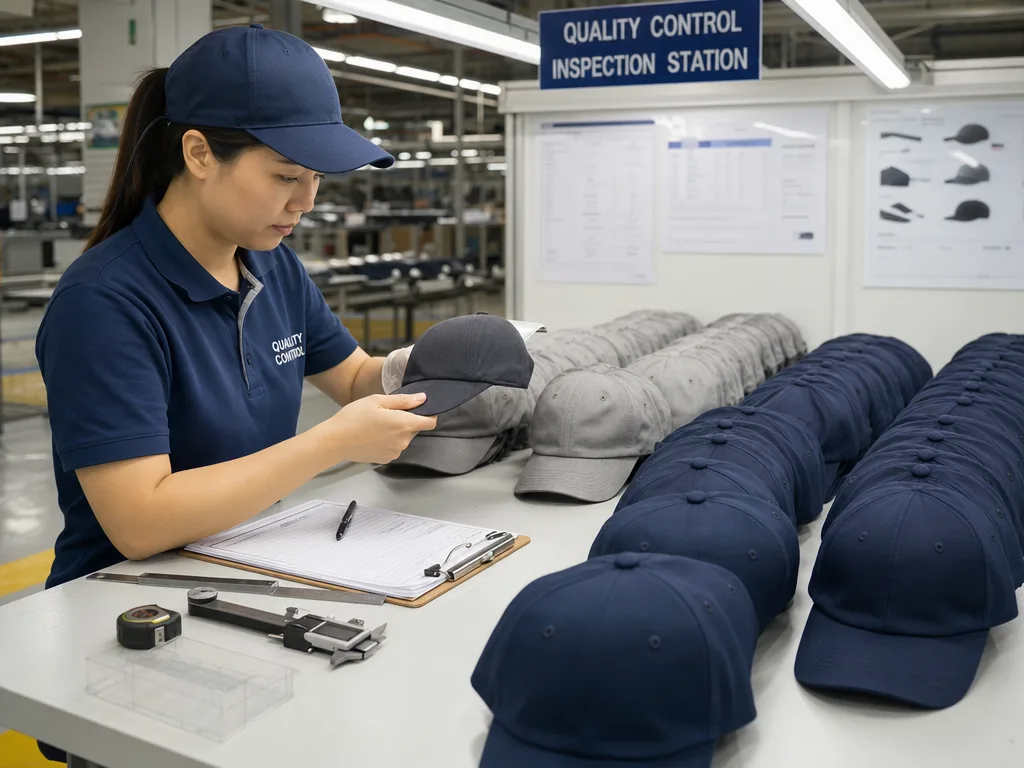
BSCI vs Sedex vs WRAP vs WCA: Compliance Audit Standards Compared (2026 Update) - 2026 Buyer's Guide
Read article →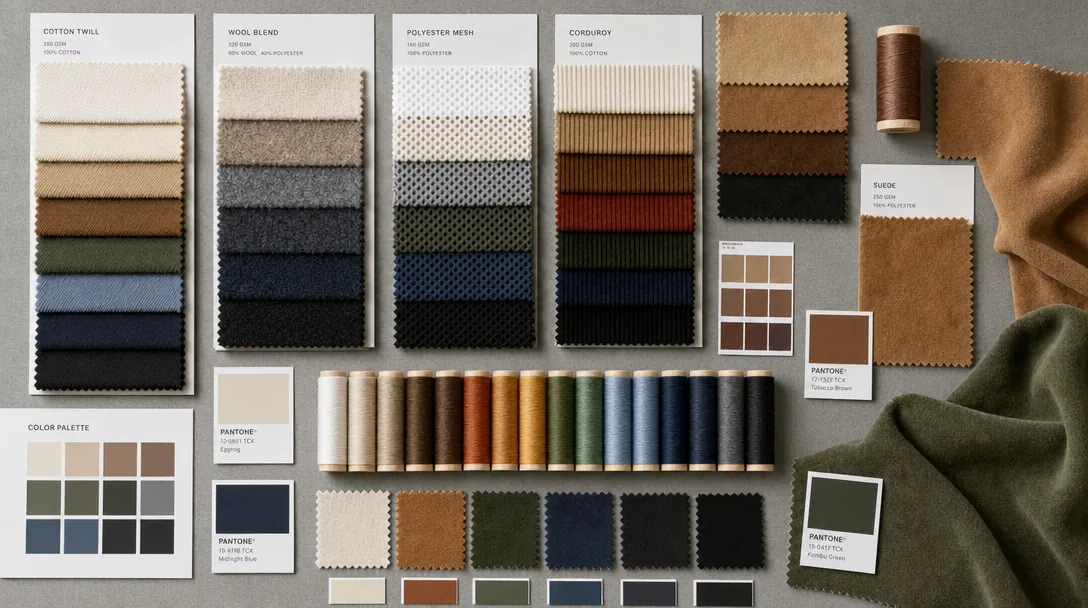
Sustainable Cap Packaging: Options, Costs and Retail-Buyer Demands - 2026 Buyer's Guide
Read article →Bucket Hat Corduroy Fabric And Trim Spec Guide for Custom Hat Buyers
Read article →Sourcing custom hats does not have to be complicated. With the right manufacturing partner, clear specifications and a small upfront investment in sampling, you can launch a retail-quality product in 30 to 45 days.