Custom Made Trucker Hat: The 2026 Sourcing & Manufacturing Playbook - 2026 Buyer's Guide - Supplier Checklist
Custom Made Trucker Hat: The 2026 Sourcing & Manufacturing Playbook - 2026 Buyer's Guide - Supplier Checklist is one of the most-asked questions we receive from international buyers, and for good reason. With dozens of factories competing for your order and an alphabet soup of technical terms in every supplier quote, even experienced importers can feel lost. This guide consolidates what we have learned producing custom hats for clients in 40+ countries.
Custom Embroidered Hats
A custom embroidered hat starts with the blank, not the logo, and that matters even more on a custom made trucker hat. The factory should define the crown build up front: 5-panel or 6-panel, mesh weight around 120 to 180 gsm, foam-front thickness if it is a foam style, and whether the front panel is buckram-backed or soft-structured. Embroidery choice is not cosmetic detail. Flat embroidery is the default for small text and tight logos; 3D puff only holds up on bold shapes with enough satin-column width, usually 3.5 mm or more, and clean underlay support. Ask for panel count, stitch count, backing type, thread brand, and color references in Pantone TCX for fabric, plus a thread chart or Pantone TPX-equivalent reference for embroidery. The common failures are bad digitizing, weak registration on curved front panels, and logos placed too close to a seam, where presser-foot pressure and fabric tension will pull the edge stitches off line.
MOQ and pricing tell you whether a program is real. For a custom made trucker hat with one standard front embroidery hit, 100 to 300 pieces is a normal starting point; fully custom patterns, molded patches, or specialty closures usually move the minimum to 300 to 500 pieces. In China, a basic 5-panel or 6-panel trucker hat with one embroidered logo typically lands around USD 2.20 to 4.80 FOB, depending on mesh quality, crown fabric, stitch count, and closure choice. Add roughly USD 0.30 to 1.20 for woven labels, seam tape, custom sweatband printing, or a private-label hangtag set. Quote samples separately and treat them as a production gate, not a courtesy sample, because thread matching, crown height, and visor shape are hard to judge from flat art alone. CrownsForge’s standard practice is to approve embroidery placement and thread mapping on the pre-production sample before bulk cutting starts.
Inspection needs numbers, not adjectives. For a custom made trucker hat order, check embroidery density for puckering, loose jumps, thread breaks, and backing show-through; verify visor curve, sweatband stitching, mesh alignment, and closure hardware on snapback, Velcro, or metal-buckle builds. I would use AQL 2.5 for major defects and 4.0 for minor defects, then require front, side, and top photos before shipment. On repeat programs, color control is where factories usually slip: hold critical panels to Delta-E under 2.0, and keep embroidery centered within 2 to 3 mm or the hat starts looking wrong even when it is technically within spec. If the factory cannot hold those tolerances across a bulk run, it does not have a stable embroidery or sewing process.
Custom Hat Embroidery
Custom hat embroidery is the first real test of whether a factory can produce a custom made trucker hat, not just quote one. The right workflow is specific: artwork gets digitized into a stitch file, the sample runs on a Tajima, Barudan, or ZSK head, then stitch count, underlay, pull compensation, thread brand, backing, and placement are fixed before bulk. For a custom made trucker hat, I want the native file, exact stitch count, thread ticket, backing type, and placement in millimeters from center front and the crown seam. That matters because a 5 mm foam front, a 10 mm buckram-backed cotton twill front, and a structured polyester front all respond differently to needle penetration and tension. If the supplier cannot identify the panel build, they are guessing at settings. On trucker caps, front panel construction controls the result more than logo width does.
MOQ and pricing are easy to misread if the buyer asks for a vague logo quote instead of a stitch-based quote. For a standard custom made trucker hat with one front logo, a realistic MOQ is 100 to 300 pieces per colorway. Digitizing usually costs $20 to $60 per design, with sewout samples around $15 to $35 depending on complexity. In bulk, a simple 5,000 to 8,000-stitch front hit often lands around $1.10 to $2.40 for embroidery only, before the blank cap; 3D puff, dense satin columns, or multiple thread changes can push it higher fast. Side and back embroidery add labor because cap frames lose efficiency once the design moves off the front panel. The number that matters is stitch count, not logo width in centimeters.
Quality problems are usually obvious if you inspect the right failure points. On a custom made trucker hat, I look for puckering along curved seams, broken stitches in dense fills, crooked placement off the center line, exposed bobbin thread on the underside, and thread shade drift against the approved Pantone TCX reference. Foam fronts need extra attention because too much needle pressure collapses the panel and leaves permanent marks, while light-colored fronts can show stabilizer bleed-through if the backing is wrong. A serious factory should provide a pre-production sample, top-of-cap photo approval, and inline inspection to AQL 2.5 for critical defects such as misregistration and skipped stitches. If the embroidery stays clean and repeatable across 30 to 50 pieces from the same run, the rest of the custom made trucker hat order is usually controllable.
Custom Trucker Hat
A custom made trucker hat is usually a 5- or 6-panel construction built around three variables that actually control quality: the front crown, the mesh back, and the closure. On the factory floor, the mockup art matters less than the spec sheet for panel fabric, mesh denier, crown height, visor board, and seam registration. For a standard program, I would specify 100 percent cotton twill or poly-cotton fronts at 220-260 gsm, polyester mesh around 75-90 gsm, and a mid-profile 6-panel shape unless the fit target calls for something lower. If the front is structured, call out buckram weight or EVA foam thickness; if it is unstructured, say that explicitly. For embroidery, define stitch count, backing, thread type, and placement tolerance in millimeters. A custom made trucker hat that looks fine in a render can still come out crooked if the block shape, crown tension, and front-panel alignment are not controlled.
MOQ for a simple custom trucker hat is usually 300-500 pieces per colorway, while 1,000 pieces is still the point where pricing gets cleaner and surcharge games start to disappear. In China, ex-works pricing for a plain foam-front cap often starts around USD 1.20-1.80, then lands around USD 2.20-3.80 once you add embroidery, woven labels, printed tape, custom hangtags, or polybag inserts. The fastest way to control cost is to lock the panel pattern, sweatband, and closure, then vary only decoration and color. Our standard practice is to separate tooling changes from decoration changes, because every pattern revision adds labor, sampling time, and another chance for crown-height drift on reorder. If the supplier cannot repeat visor curve, mesh tension, and closure pull strength across batches, the quote is too cheap to trust.
The defects that show up most often are crooked front panels, mesh puckering at the side seams, weak foam recovery, loose sweatband stitching, and embroidery tunneling because the backing was matched to the wrong fabric weight. Inspection should check seam allowance consistency, needle holes around the crown, visor board thickness, snapback pull strength, and Pantone TCX color under D65 lighting, not phone photos. A usable control plan includes pre-production samples, top-of-line approval, in-line checks at AQL 2.5, and final random inspection before shipment. For a custom made trucker hat program, that is the difference between a cap that merely ships and one that reorders cleanly without shape loss, color drift, or decoration shift.
Custom Trucker Hats
A custom made trucker hat is simple in parts and unforgiving in execution: front crown, mesh side and back panels, brim board, sweatband, closure, and trim. Most of the perceived value sits in the front panel, where embroidery, woven patches, PVC patches, or screen print land first. The real manufacturing decisions are 6-panel versus 5-panel, structured versus unstructured crown, mid versus high profile, flat versus pre-curved brim, and snapback versus strap closure. For a serious spec, lock crown height in millimeters, front buckram weight, mesh denier, sweatband composition, and stitch density, then require a measured size sheet and pre-production sample before bulk. A competent factory should also send a DST proof from Tajima, Barudan, or ZSK heads, plus thread brand and Pantone TCX references for every color. Without those controls, a custom made trucker hat turns into a guessing game the first time you reorder.
MOQ for a custom made trucker hat is usually 300 to 500 pieces per design if you want normal pricing; smaller runs of 100 to 200 pieces are possible, but you pay for the setup friction. In 2026, a basic build with 1-color embroidery and standard polyester mesh typically lands around USD 2.20 to 4.50 FOB China at 500 pieces. Add applique, woven labels, molded PVC patches, or a more complex closure and the price often moves to USD 4.80 to 7.50, depending on stitch count, patch tooling, and trim choices. Do not ask for only the hat price. Break out sampling fees, plate or mold fees, carton pack, carton count, and freight basis so you can compare offers on the same terms. If you are running a broader cap program, check artwork reusability carefully, because a logo that works on a custom made trucker hat may need a different stitch path or patch build on a dad cap or five-panel.
The defects that matter are usually visible fast: crooked front panels, weak mesh bonding, off-center logos, poor top-button placement, uneven brim curvature, and color drift on repeat orders. I also check for thread puckering around dense embroidery, loose overlock on the sweatband, low-grade snapbacks that crack under flex, and mesh that collapses after one wash because the denier or heat-setting was wrong. A sensible inspection plan is AQL 2.5 for major defects, with fit and appearance checks on every size run and shade control against approved lab dips or Pantone targets. For a buyer building a custom made trucker hat program, the right factory is not the one that says yes to every spec; it is the one that can hold the same crown shape, stitch density, and color tolerance across repeat production without hiding behind vague artisan language. Lock the tech pack before sampling, then treat the first bulk lot as the control standard for later custom trucker hats.
Hat Trucker Custom
A custom made trucker hat should start with the shell spec, not the logo. The front panels are usually cotton twill, brushed cotton, or polyester twill at 180 to 260 gsm, paired with 100% polyester or nylon mesh at roughly 18 to 22 holes per inch. The spec sheet needs the numbers that actually control fit and hand feel: crown height, panel count, visor curve, mesh gauge, sweatband build, closure type, and decoration method. Ask for fiber content, fabric weight, Pantone TCX targets for each panel, visor stitch count, and whether the front uses buckram, foam, or a softer fused insert. The defects I see most are small but costly: front-panel lamination that lifts, a center seam that drifts off grain, loose overlock on mesh edges, or embroidery puckering because backing density was never matched to the fabric.
For a custom made trucker hat program, MOQ is usually 300 to 500 pieces per colorway if you want normal pricing and stable trim control. Some suppliers will accept 100 to 200 pieces, but the unit price rises fast and you lose leverage on closure quality, labeling, and specialty decoration. In China, a basic blank commonly lands around $1.20 to $2.20 EXW, while a finished cap with 3D puff embroidery, woven label, custom taping, and a molded snapback usually sits closer to $2.80 to $5.50 EXW, depending on stitch count and trim complexity. The real decision is not whether the hat looks good in a mockup; it is whether you are buying a one-off or a repeatable SKU. Our standard practice is to freeze the BOM and decoration spec before pilot sampling, because late changes almost always create color drift, trim mismatch, and rework.
Inspection is where most buyers lose money, not at the quote stage. For a custom made trucker hat order, check visor symmetry, mesh tension, front-panel collapse, sweatband alignment, and whether the embroidery sits level on a head form rather than only flat on a table. Use AQL 2.5 for general inspection and measure critical points against a signed gold sample: crown depth, brim length, seam allowance, logo placement, and closure range. The common rejects are predictable if you know the process: glue bleed on appliques, warped visor inserts, thread breaks around dense satin stitches, color mismatch beyond Delta-E 2.0 to 3.0, and cartons that crush the front panel during export packing. A trucker custom order works best when the factory receives the BOM, artwork, and pass-fail limits in writing. That is what turns a custom made trucker hat from a loose design brief into a repeatable production spec.
Trucker Custom Hat
A custom made trucker hat is not a foam-front baseball cap with mesh slapped on the back; the build choices are different enough that sloppy RFQs produce junk quotes. A serious spec should call out 5-panel or 6-panel construction, front substrate, mesh denier, brim insert, sweatband material, and closure type in plain language. Typical front options are 100 to 150 gsm polyester twill, cotton twill, or brushed canvas, with 3 mm PE foam or hard buckram when the crown needs structure. The back mesh is usually 40 to 50 denier polyester mesh, and the visor core is often PE board or recycled PET board, not cardboard if the hat has to survive humid transit. Ask the factory to confirm crown height, seam count, panel lining, and decoration method before you talk price; otherwise you are comparing assumptions, not supplier capability. For embroidery, I want to see the exact machine type, whether it is a Tajima, Barudan, or ZSK head, plus stitch count, thread count, and whether the patch edge is merrowed, laser-cut, or hot-knife finished.
The numbers are usually boring, which is exactly why they matter. For a custom made trucker hat, 100 to 300 pieces is a normal MOQ for simple flat embroidery, while woven labels, inner taping, mixed-color mesh, or custom hangtags often push the first order to 500 pieces or more. Color should be specified in Pantone TCX for fabric and PMS for print or thread reference, then approved against lab dips with Delta-E kept under 2.0 on visible panels. A standard FOB China price in 2026 is roughly USD 2.20 to 4.80 for a clean logo on stock materials, with 3D puff embroidery, PVC patches, or molded TPU badges moving the same hat into the USD 5.50 to 8.50 range. If a supplier cannot explain why a snapback version is cheaper than Velcro, or why foam-front stock costs more than twill, they are guessing at labor and material, not quoting from a real BOM.
Quality failures show up fast if you inspect the right points. Check crown symmetry, front logo centering, mesh tension, brim curve repeatability, sweatband stitching, and loose threads at the inside seam junctions; those are the defects that show up in retail photos and customer returns. Foam fronts telegraph bad needle tension as puckering, weak mesh loses shape after packing, and low-grade closures fail simple pull tests long before the carton reaches a warehouse. Use AQL 2.5 for general inspection, but tighten to 1.5 for logo placement and panel alignment when the order is for retail or licensed distribution. Color drift above Delta-E 2.0 is visible once bulk is laid against the approved standard, so lock materials before cutting and require pre-production top sample approval before bulk starts. That is the difference between a controlled run and a factory hoping the last carton looks like the first sample.
Working with CrownsForge for custom made trucker hat programs
For a custom made trucker hat program, the first gate is sampling discipline, not decoration. A factory should be able to turn a prototype in 5 to 7 working days after artwork and tech pack approval, then issue a PPS sample if the buyer needs Pantone TCX confirmation, patch sign-off, or a locked bill of materials. The sample has to prove crown height, mesh stiffness, brim curve, sweatband hand-feel, and logo legibility at real wear distance before bulk is released. For a first run, 100 to 300 pieces per colorway is a sane MOQ range: enough to validate fit and sell-through, small enough that a bad shade, crown profile, or closure choice does not trap cash in dead stock.
Decoration drives cost and failure rate faster than most buyers expect. A custom made trucker hat can use flat embroidery, 3D puff, woven patches, silicone transfers, or tonal print, but each changes stitch count, cycle time, and reject risk. On Tajima, Barudan, or ZSK heads, a clean front hit around 10,000 to 12,000 stitches in one to three colors is usually the most stable route. 3D puff typically adds $0.25 to $0.60 per piece, while woven patches add about $0.40 to $0.90 depending on size and sew-on labor. For a hat trucker custom order, I would simplify artwork before forcing a crowded mark that triggers thread breaks, needle heat, and QC fallout. Material choice matters just as much: 100% cotton twill fronts at 220 to 260 gsm and polyester mesh at 75 to 100 denier are the practical retail baseline.
Compliance and order control are where a supplier either protects you or creates noise. For licensed or retail custom made trucker hat programs, I want sedex-audit-cap-supplier-guide.html">BSCI 2.0 or Sedex SMETA 4-Pillar on file, plus material declarations where the market requires them. Bulk should be inspected to AQL 2.5 for majors and 4.0 for minors, with color checked under a D65 light box and Delta-E held tight enough that black-on-black or navy-on-navy orders do not drift across cartons. CrownsForge’s standard practice is to keep the workflow boring: one spec sheet, one approved sample, one PO, one carton-label standard, and weekly status updates tied to production stage, not vague promises. That is what keeps a custom made trucker hat order under control when it moves from a 500-piece test run to a 20,000-piece seasonal program.
Frequently Asked Questions
What is the minimum order quantity (MOQ) for custom hats?
Our standard MOQ is 100 pieces per design and color, with sampling available from 1 piece. For complex multi-color logos or premium fabric upgrades, the MOQ can be lowered with a small per-piece surcharge.
Do you support sustainability certifications?
Yes. We work with GOTS organic cotton, GRS-certified recycled polyester, OEKO-TEX Standard 100 fabrics, and are BSCI and Sedex audited. Certification documentation can be provided per order.
Which shipping methods do you support?
We support FOB, CIF and DDP shipping. Air express for samples and small orders, sea LCL for 100 to 500 pieces, sea FCL for 5,000+ pieces. Door-to-door DDP available for US, EU, UK, Canada and Australia.
What file format should I send for my logo?
Vector files (AI, EPS, PDF) are ideal. High-resolution PNG or JPG at 300 dpi on transparent background works as a fallback. Provide Pantone color references for accurate reproduction.
How long does production take?
Sampling takes 7 to 12 days. Bulk production runs 20 to 30 days depending on quantity, fabric availability and decoration complexity. Inspection and packing adds another 3 to 5 days before shipment.
How does ordering custom hat trucker work?
When evaluating custom hat trucker, the key considerations are construction quality, decoration capability, MOQ flexibility and lead time. Cover everything buyers ask about custom embroidered hats: how it's manufactured, what specs to request from a factory, typical MOQ and pricing, common quality issues to inspect for, and how this ties back to the broader custom made trucker hat sourcing decision. Cover everything buyers ask about custom hat embroidery: how it's manufactured, what specs to request from a…
How does ordering custom embroidered trucker hats work?
When evaluating custom embroidered trucker hats, the key considerations are construction quality, decoration capability, MOQ flexibility and lead time. Cover everything buyers ask about custom embroidered hats: how it's manufactured, what specs to request from a factory, typical MOQ and pricing, common quality issues to inspect for, and how this ties back to the broader custom made trucker hat sourcing decision. Cover everything buyers ask about custom trucker hats: how it's manufactured, what specs to request from a…
How does ordering custom made hats for men work?
When evaluating custom made hats for men, the key considerations are construction quality, decoration capability, MOQ flexibility and lead time. Cover everything buyers ask about custom embroidered hats: how it's manufactured, what specs to request from a factory, typical MOQ and pricing, common quality issues to inspect for, and how this ties back to the broader custom made trucker hat sourcing decision. Cover everything buyers ask about custom trucker hats: how it's manufactured, what specs to request from a…
How does ordering high quality custom trucker hats work?
When evaluating high quality custom trucker hats, the key considerations are construction quality, decoration capability, MOQ flexibility and lead time. Cover everything buyers ask about custom embroidered hats: how it's manufactured, what specs to request from a factory, typical MOQ and pricing, common quality issues to inspect for, and how this ties back to the broader custom made trucker hat sourcing decision. Cover everything buyers ask about custom trucker hats: how it's manufactured, what specs to request from a…
Looking for a reliable hat manufacturer in China?
CrownsForge has produced custom hats for 800+ brands across 40 countries. From 100-piece launches to 100,000-piece retail programs, we deliver on time and on spec.
Get in touchRelated guides
Compliance Documentation Checklist for First Hat Import to US/EU (2026 Update)
Read article →
Cap Factory AQL Inspection Plan for Importers
Read article →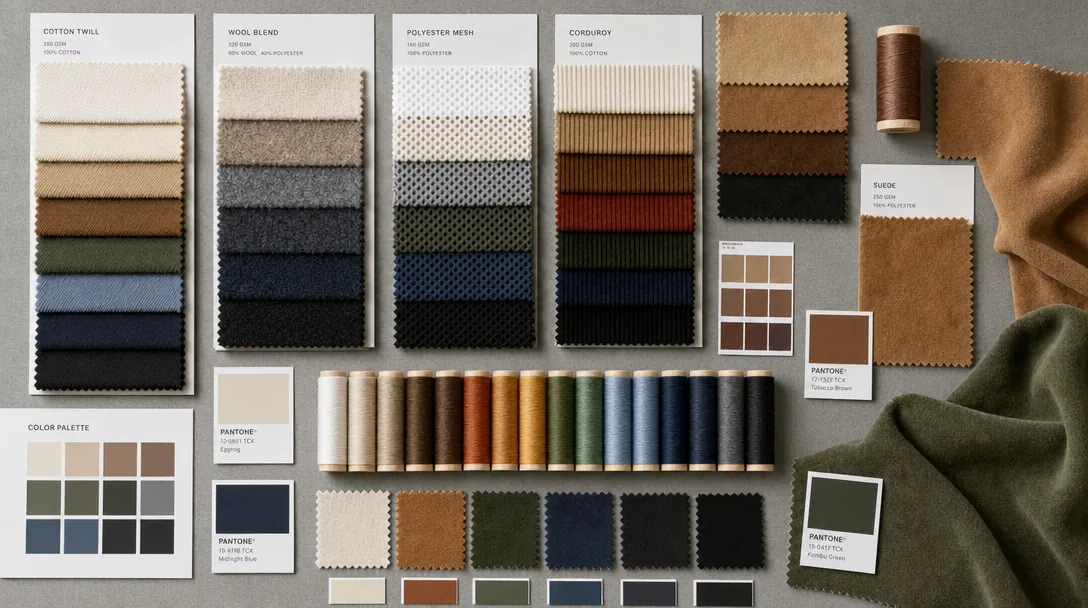
Bucket Hat Corduroy MOQ And Pricing Plan for Custom Hat Buyers
Read article →Sourcing custom hats does not have to be complicated. With the right manufacturing partner, clear specifications and a small upfront investment in sampling, you can launch a retail-quality product in 30 to 45 days.