
Compliance Documentation Checklist for First Hat Import to US/EU (2026 Update)
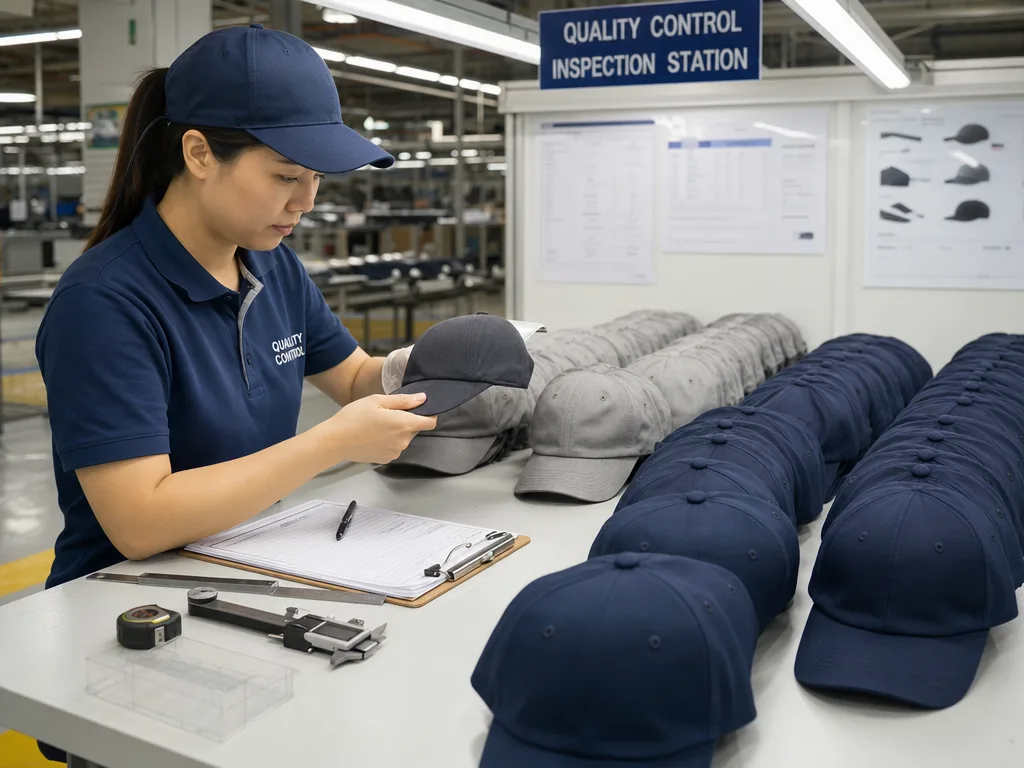
For brand owners, wholesalers and procurement teams entering the custom headwear category, compliance documentation checklist for first hat import to us/eu (2026 update) is one of the highest-leverage decisions you will make. Get it right and your unit economics, retail story and reorder cycle all improve. Get it wrong and you carry the cost for years.
The 7 documents every hat import shipment needs
The commercial invoice is where first-time importers usually create their own delay. Customs brokers compare it line by line against the PO, packing list, booking, and entry data, so the basics have to be exact: seller and buyer legal names, ship-to address, Incoterm 2020 term, currency, payment terms, style code, unit price, total FOB/CIF value, HTS/HS code, country of origin, and a plain-English description such as “100% cotton twill 6-panel baseball caps with 3D embroidery.” For U.S. hats, 6505 is the starting chapter, but the subheading changes with fabric, knitting, and whether the crown is structured or unstructured; guessing is how you invite a CF-28 or a value query. If the invoice says “samples,” “gift,” or shows $0.80 for a structured embroidered cap that actually cost $3.20 FOB, expect a broker correction or post-entry audit. In import documentation hats files, this document has to reconcile to the cent and to the piece count.
The packing list and transport document are the next hard checkpoints, not admin paperwork. A usable packing list shows carton count, pieces per carton, net and gross weight, carton dimensions in cm, CBM, and SKU or color breakdown by carton range; without that, the broker cannot tie physical cargo to the invoice when one PO has black, khaki, and camo caps mixed across 40 cartons. The bill of lading or air waybill must match shipper, consignee, notify party, marks, and master/house numbers exactly. Keep the customs entry record in the same import documentation hats packet as the invoice and B/L, because that is what proves what was actually declared. If the shipment moved under CIF or CIP, add the insurance certificate with insured value, policy number, and claims contact; carrier liability under Hague-Visby or air carriage rules is nowhere near enough to cover a $25,000 cap shipment.
Origin and product compliance are where U.S. and EU requirements start to diverge, and this is where a lot of first hat imports get sloppy. A certificate of origin is not decorative paperwork; it supports origin declarations, preference claims where applicable, and consistency with the country of manufacture shown on labels and invoice. If the caps were cut and sewn in China from Chinese fabric, the COO should say that plainly, not hide behind trading-company language. For the EU, keep REACH declarations for restricted substances used in fabric, sweatband foam, printing ink, metal buckles, and adhesives. If the hat is for children, do not rely on a generic “safe material” statement. Ask for style-specific lab reports tied to the exact BOM, fabric composition, and colorway.
Commercial invoice — what customs checks
Customs starts with the commercial invoice because it is the only document that ties customs value, tariff classification, and origin into one auditable record. For import documentation hats, the invoice needs more than seller and buyer names. It should show full legal entities and addresses, invoice number and issue date, purchase order reference, Incoterm 2020 term and named place, settlement currency, payment terms, and a product description detailed enough for a broker to classify without guessing. “Cap” or “headwear” is not defensible. A workable line is closer to: “6-panel structured baseball cap, woven 100% cotton twill shell 260 gsm, polyester sweatband, pre-curved PE visor insert, front flat embroidery, made in China, HTSUS 6505.00.8090.” Add quantity by style/color, unit price, line value, country of origin, carton count, and net/gross weight. If the shipment is split across styles, each style should carry its own composition and classification; one blended line for 5 SKUs is exactly how entries get kicked back for document review.
HTS errors and valuation gaps are where invoice scrutiny gets expensive. A knit acrylic beanie, a woven cotton dad cap, and a polyester visor may all be “hats” commercially, but they do not share the same tariff logic. Customs and brokers will look at fiber content, knit versus woven construction, presence of a peak, crown structure, lining, and whether trim or embroidery changes the article description. At CrownsForge, we do not freeze the tariff line until shell composition, visor construction, and decoration method are confirmed against the sealed sample. Declared value gets the same treatment. If the invoice says $1.38 per cap but the wire record, assist tooling, or separately billed embroidery pushes the actual customs value to $1.92, that is a predictable undervaluation trigger. The invoice should also align word-for-word with the packing list and broker data: same style codes, same quantities, same currency, same Incoterm. Small inconsistencies—USD on the PO, EUR on the invoice, or FOB Ningbo on one document and FCA Yiwu on another—create avoidable holds in both U.S. and EU clearance.
Packing list — granularity that prevents inspections
The packing list is where first-time importers either look controlled or trigger avoidable scrutiny. For hats, “assorted caps” is the kind of lazy description that gets a file kicked back by a broker or selected for a carton exam. The document needs carton-level detail that ties cleanly to the commercial invoice and shipping marks with no guesswork: style number, SKU, HTS-facing product description, crown/profile, closure type, fabric composition, color, size run, units per carton, carton number range, net weight, gross weight, and master carton dimensions in cm. If CTN 001-040 contains 120 pcs of a 5-panel foam trucker cap, 100% polyester front / nylon mesh back, Black Pantone Black C, and CTN 041-060 contains 96 pcs of the same style in Navy 19-3921 TCX, those are separate lines. If sizes are mixed, show the exact ratio, such as 20 S / 40 M / 40 L, not “assorted.” For import documentation hats, that level of granularity lets CBP or EU customs reconcile declared quantity, carton count, and marks in minutes instead of opening freight. What actually causes delays is mismatch, not volume. A 48-hour release turns into a 3- to 7-day hold when the packing list says 50 pcs, the carton label says 48 pcs, and the invoice total still shows 10,000 pcs. That discrepancy can trigger a document hold, CES exam, or amendment request, and the cost is real: roughly $300-$800 for document correction and exam-related handling on a small shipment, and $900-$1,200+ once demurrage, storage, or devanning charges start stacking at congested ports. The practical rule is simple: one source of truth. Carton sequence, SKU nomenclature, color code, and piece count should match the production packing record, invoice, and bill of lading exactly, including split shipments and replacement units. If a hat factory packs floor-loaded instead of palletized, note that; if pallets are used, add pallet count, pallet dimensions, and cartons per pallet. Customs does not care that headwear programs are operationally messy. It cares whether the mess is documented precisely.
The fastest way to make a packing list inspection-proof is to build it from the final packing record, not from the sales order. Sales teams often describe a cap as “dadhat navy,” while the factory record identifies 6-panel unstructured brushed cotton twill, self-fabric strap with brass buckle, style CF-2417, color 19-4025 TCX, 24 pcs per inner, 144 pcs per master carton. Inspectors, brokers, and warehouse receiving teams work off the second version. Include country of origin at line level when multiple origins are possible, and make shipping marks explicit: PO number, consignee shorthand, carton number, and “Made in China” should appear the same way on the packing list and outer carton. Our standard practice is to print style/SKU, color, carton number, PO, COO, and gross weight on every carton label so an AQL 2.5 inspector or forwarder can trace a carton back to the packing table in under a minute. The document should also flag non-standard cases before someone discovers them at destination. Mixed SKUs in one carton, overset salesman samples, warranty replacements, or balance quantities shipping later under the same PO are not unusual in cap production; leaving them unnoted is what creates problems. If 12 sample units are packed into CTN 060 with bulk goods, state that line separately. If the shipment includes 20 export cartons and 2 sample cartons, do not roll them into a single carton count. For EU entries especially, consistent weights and dimensions matter because customs and carriers compare declared volume against manifest data; a master carton for structured caps might reasonably measure 62 x 45 x 58 cm at 11.8 kg gross, while a foam trucker carton could be lighter but larger. Clean import documentation hats does not mean over-documenting; it means giving every party enough exact data to find, count, and clear the goods without interpretation.
Certificate of origin — when it lowers your duty
A certificate of origin lowers duty only when the destination country offers a preferential tariff and the cap actually satisfies that program’s rule of origin. For China-made headwear entering the United States in 2026, that usually means no duty benefit at all. Most caps fall under HS 6505, and a standard non-preferential CO does not reduce the MFN rate or remove any Section 301 duty if the HTSUS subheading is subject to it. In the EU, the same document also does not create a tariff preference by itself; it mainly supports the declared origin when Customs, the importer of record, or a broker challenges a mixed-country production story. For first-time buyers building an import documentation hats file, that distinction matters because many suppliers still present a chamber-stamped CO as if it were a duty-saving instrument. What Customs actually tests is substantial transformation. If shell fabric is woven in one country, the buckram and sweatband come from another, and cutting, sewing, embroidery, and finishing happen in China, the origin claim has to be supported by factory records, not by a generic stamp. Licensed sports programs and private-label runs draw more scrutiny because the paper trail is often fragmented across trim vendors, decorators, and consolidators. A weak origin file does not just risk questions; it can delay release, trigger a CF28/CF29 review in the U.S., or force the EU broker to amend declarations after entry.
The CO that matters in practice is the ordinary non-preferential certificate issued by CCPIT or a local chamber, and it only works when every data point matches the shipment set exactly. That means consignee name, PO, style number, invoice number, carton count, net and gross weight, HS code, and the precise origin statement must mirror the commercial invoice and packing list line for line. If the CO says “China” but the invoice wording, carton marks, or sewn-in label suggests Vietnam finishing or assembly, you have created a documentary inconsistency that no broker can clean up once the entry is filed. Customs officers are less interested in polished wording than in contradictions between documents. The fix is mechanical discipline. Cross-check the CO against cutting tickets, trim receiving logs, embroidery production records from Tajima, Barudan, or ZSK heads, in-line inspection reports, and final packing reports before cargo release. At CrownsForge, we also compare unit counts back to the sewing and finishing output because mismatched quantities are a common red flag in origin audits. Keep the rule simple: if you want duty relief, verify the preference program and the origin rule first; if no preference applies, use the certificate as supporting evidence inside a consistent import documentation hats package, not as the centerpiece of the compliance strategy.
CPSIA test report (US imports for children)
A clean CPSIA file is not just a chemistry pass; U.S. Customs and Amazon compliance teams routinely reject children’s caps when the paperwork does not match the physical SKU. For hats intended primarily for children 12 and under, you need a Children’s Product Certificate (CPC) backed by CPSC-accepted third-party lab testing, and the report should cover the actual finished hat or a defensible component-testing matrix. For headwear, the usual risk points are total lead in substrate materials under 100 ppm, lead in surface coatings under 90 ppm, and phthalates under 0.1% for any accessible plasticized component such as PVC patches, soft rubber labels, or printed strap tabs. If the product is for children under 3, small-parts evaluation becomes critical: metal eyelets, button tops, detachable pom-poms, and snapback pegs can all trigger additional review after use-and-abuse testing under 16 CFR 1500.50 and 1500.51. Treat age grading as a technical decision, not a sales note on the hangtag.
Tracking-label compliance is where factories still get caught. CPSIA requires permanent, legible marks on the product and, where practicable, the packaging, with enough detail to trace a recall: manufacturer or private labeler name, production date, batch or lot code, and source information tied to factory records. On hats, that usually means an inside woven label or heat-transfer label plus a carton, polybag, or master-case code linked to the cutting lot, trim lot, and sewing line date. Our standard practice is to lock that code to the BOM revision and final inspection record, because a visor board change, ink reformulation, or new Velcro supplier can invalidate the prior test basis. For import documentation hats, keep the CPC, complete lab report, age-grade rationale, commercial invoice, packing list, and SKU photos in one shipment file, and make sure style number, colorway, fiber content, and factory address match exactly across every document. AQL 2.5 inspection will not save a shipment if the paper trail is inconsistent.
REACH SVHC declaration (EU imports)
For EU imports, a REACH SVHC declaration is only useful if it is article-specific and tied to the actual bill of materials. The legal trigger under REACH Article 33 is 0.1% w/w per article component, not a vague statement about the finished cap as a whole. On hats, that means crown shell, sweatband, brim insert, buckram, seam tape, eyelets, snaps, hook-and-loop, buckle plating, patch adhesive, transfer film, screen-print ink, and embroidery backing all need coverage. Buyers often assume a fabric mill letter is enough; it is not. A valid OEKO-TEX Standard 100 certificate for 100% cotton twill does nothing for PU patches, PVC labels, silicone heat transfers, or nickel-plated hardware on the same SKU. For import documentation hats, the declaration should reference the style number, colorway, PO, production window, and supplier lot numbers so the file survives a marketplace audit or a distributor compliance request six months after shipment.
A defensible REACH package reads like production traceability, not sales collateral. At minimum, keep a signed supplier declaration on company letterhead, a full BOM down to trims and packaging-touching components, certificate IDs and validity dates, and targeted lab reports for higher-risk inputs. In cap production, the repeat offenders are soft PVC, synthetic leather, coated webbing, dark print systems, and plated metal trims where nickel release or restricted phthalates can become an issue. Our standard practice is to separate accessory verification from fabric verification because snaps, buckles, transfer films, and patch adhesives fail more often than 12x12 cotton twill or 300D polyester shell fabric. If you are shipping into France, AGEC sits beside REACH, not instead of it: keep SKU-level composition by weight, recycled-content support, packaging specs, and origin traceability. Build that file at sampling stage, before bulk booking, because chasing a subcontractor after production for foam density, plating chemistry, or carton weights usually yields contradictory data and weakens the compliance record.
Customs broker handoff: who does what
Treat the broker handoff as a pre-clearance control point, not an administrative afterthought. For a first shipment, the importer of record appoints the broker at destination; the factory, freight forwarder, and consolidator do not automatically own that role. In the U.S., the broker usually files through CBP ABI and needs a clean import documentation hats set before arrival: commercial invoice, packing list, bill of lading or air waybill, manufacturer MID, HTSUS line basis, country of origin, consignee EIN, and any agreed textile or labeling declarations. In the EU, the same package goes into the member state customs system under the importer’s EORI, with the correct CN code, customs value, and origin statement separated from the invoice narrative. If any of that is missing or inconsistent, expect the usual cost stack: 2 to 5 days of delay, terminal storage, and corrections after cargo has already landed.
Forwarders and brokers get mixed up constantly, but their jobs are different. A forwarder books space ex-Ningbo or Shanghai, issues the HBL, handles drayage or delivery, and may pass manifest data; the broker classifies the goods, prepares the entry, calculates duty and VAT, and answers customs questions on value, fiber content, marking, or origin. Before pickup, lock down three items in writing: who files the entry, who pays duty and taxes, and who is the importer of record. Under DDP, ask whether the seller is using its own brokerage license or a subcontracted clearance agent, because that determines who answers when CBP or EU customs asks for backup. The clean handoff is 5 to 7 days before ETD for ocean and 2 to 3 days before airline uplift for air. A decent broker will line-check invoice descriptions against packing list language, Incoterms 2020, carton counts, and MID/EORI data; a document that says “baseball cap” on one page and “promotional headwear” on another is exactly the kind of mismatch that slows release and invites manual review.
Frequently Asked Questions
Can I order a sample before bulk production?
Yes. We strongly recommend approving a pre-production sample before mass production. Samples are charged at 35 to 60 USD each plus express shipping, fully refundable against confirmed bulk orders over 500 pieces.
What is the minimum order quantity (MOQ) for custom hats?
Our standard MOQ is 100 pieces per design and color, with sampling available from 1 piece. For complex multi-color logos or premium fabric upgrades, the MOQ can be lowered with a small per-piece surcharge.
How long does production take?
Sampling takes 7 to 12 days. Bulk production runs 20 to 30 days depending on quantity, fabric availability and decoration complexity. Inspection and packing adds another 3 to 5 days before shipment.
Do you support sustainability certifications?
Yes. We work with GOTS organic cotton, GRS-certified recycled polyester, OEKO-TEX Standard 100 fabrics, and are BSCI and Sedex audited. Certification documentation can be provided per order.
What file format should I send for my logo?
Vector files (AI, EPS, PDF) are ideal. High-resolution PNG or JPG at 300 dpi on transparent background works as a fallback. Provide Pantone color references for accurate reproduction.
What should buyers know about cotton twill army cap kangol?
When evaluating cotton twill army cap kangol, the key considerations are construction quality, decoration capability, MOQ flexibility and lead time. Per-carton breakdown: SKU, size, color, quantity per carton, gross weight, net weight, carton dimensions. The more granular the packing list, the lower the chance customs randomly inspects (saves you fees and 3-7 days hold time). Always send packing list with cap labels matching factory order. Any cap intended for children 12 and under needs: Children's Product Certificate…
How does ordering custom made trucker hat work?
When evaluating custom made trucker hat, the key considerations are construction quality, decoration capability, MOQ flexibility and lead time. Commercial invoice (CI), packing list, bill of lading (B/L) or air waybill (AWB), certificate of origin (CO or Form A), compliance test reports (CPSIA/REACH as applicable), insurance certificate (for CIF/CIP terms), customs entry summary (filed by your broker). These appear on every shipment regardless of size. Buyer, seller, INCOTERM, HTS classification, country of origin,…
What should buyers know about kangol bucket hat mens?
When evaluating kangol bucket hat mens, the key considerations are construction quality, decoration capability, MOQ flexibility and lead time. Commercial invoice (CI), packing list, bill of lading (B/L) or air waybill (AWB), certificate of origin (CO or Form A), compliance test reports (CPSIA/REACH as applicable), insurance certificate (for CIF/CIP terms), customs entry summary (filed by your broker). These appear on every shipment regardless of size. Buyer, seller, INCOTERM, HTS classification, country of origin,…
How does ordering baseball cap custom made work?
When evaluating baseball cap custom made, the key considerations are construction quality, decoration capability, MOQ flexibility and lead time. Per-carton breakdown: SKU, size, color, quantity per carton, gross weight, net weight, carton dimensions. The more granular the packing list, the lower the chance customs randomly inspects (saves you fees and 3-7 days hold time). Always send packing list with cap labels matching factory order. Any cap intended for children 12 and under needs: Children's Product Certificate…
Looking for a reliable hat manufacturer in China?
CrownsForge has produced custom hats for 800+ brands across 40 countries. From 100-piece launches to 100,000-piece retail programs, we deliver on time and on spec.
Get in touchRelated guides

Custom Corduroy Dad Hat Bulk: A 2026 B2B Sourcing Guide
Read article →
Promotional Caps & Corporate Gifts: Bulk Custom Hats for Brand Events
Read article →Cap Sample Cost Negotiation Without Losing Quality Control
Read article →We hope this guide demystifies compliance documentation checklist for first hat import to us/eu (2026 update) and helps you move forward with confidence. If you have questions specific to your project, our English-speaking sales engineers are one message away.