
Cap Sample Cost Negotiation Without Losing Quality Control
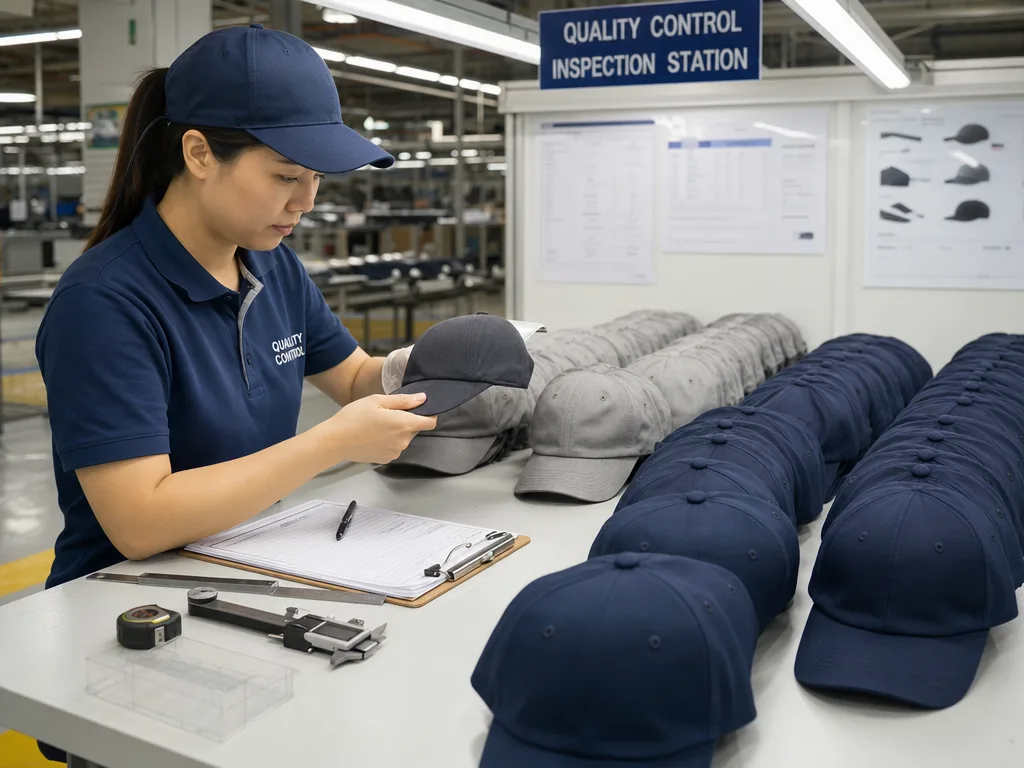
Every week, our sales team answers detailed questions about cap sample cost negotiation without losing quality control. We wrote this guide so that wholesalers, streetwear brands, corporate buyers and promotional resellers can compare options with full information, and avoid the traps that show up only after production has started.
What cap sample cost negotiation means in real production
Cap sample cost negotiation is not just haggling over a $35 or $85 line item; it is the point where a buyer and a custom hat manufacturer agree on what “sample” actually includes. In a real RFQ, the sample price should separate digitizing, pattern work, fabric cutting, thread matching, trims, and shipping. If you are talking to a private label hat supplier or a custom cap factory, ask whether the sample is a true pre-production sample from factory materials or a quick mock-up stitched from stock components. Those are not the same product, and mixing them is how buyers end up approving a sample that cannot be repeated in bulk. For a six-panel structured cap with 3D embroidery, the sample often costs more because one-off embroidery setup, sew-out testing, and Pantone TCX thread matching add real labor.
Before you negotiate, verify the production details that control both quality and cost: crown shape, brim curve, panel construction, closure type, sweatband spec, embroidery size, and artwork file format. A serious headwear factory China side will ask for vector files, a clear Pantone TCX reference, and the exact placement measurements in millimeters, not “center front logo.” You also need to confirm fabric weight, like 280 gsm brushed cotton twill or 108x58 cotton canvas, plus reinforcement details such as buckram stiffness and visor board thickness. If the sample will be made on a Tajima, Barudan, or ZSK machine, ask whether the stitch count is being held to the production target; a sample that uses 18,000 stitches when bulk will run 24,500 is a bad sign.
In cap sample cost negotiation, the real control point is whether the factory is willing to treat the sample as a production standard or just a sales sample. A proper custom hat manufacturer china should state the target construction tolerances up front: crown height within 2-3 mm, embroidery color Delta-E under 2.0 against approved swatches, and sample approval tied to AQL 2.5 language for bulk inspection. That matters because a low sample price can hide later charges for corrected sampling, revised digitizing, or added trims. Our standard practice at CrownsForge is to quote sampling separately from development revisions, because a buyer should know exactly when a change becomes a new sample. If the supplier refuses to itemize, you are not negotiating sample cost — you are accepting undefined scope.
Specs to request before a quote
If you want a serious quote, do not start with “how much per sample.” Start by locking the spec sheet down to the things that actually move labor and material cost: crown height in millimeters, brim curve, panel count, front panel reinforcement, closure type, and exact fabric construction. A 6-panel low-profile cap in 100% cotton twill at 270 gsm is a different animal from a structured 5-panel in 100D polyester ripstop with sandwich visor; the cutting loss, fusing, and sewing time are not comparable. For cap sample cost negotiation, you also need tolerances written clearly: panel seam tolerance within ±2 mm, logo placement within ±3 mm, brim centerline within ±1.5 mm, and color target by Pantone TCX or Pantone C if the factory is doing yarn-dyed or printed parts. A capable custom hat manufacturer should quote from a tech pack that includes flat sketches, stitch counts, thread color references, and size specs, not from a vague product photo.
Decoration files are where many buyers accidentally invite rework. Ask for the logo file format the factory prefers for embroidery, usually AI, EPS, or vector PDF, plus a DST or EMB digitized file if the pattern is already approved. A professional custom hat manufacturer china should show the stitch map, underlay choice, thread density, and estimated stitch count per panel, because a 12,000-stitch 3D puff front is not priced like a 4,000-stitch flat embroidery. For carton requirements, specify inner polybag thickness, dozen pack or single pack, master carton dimensions, gross/net weight target, and whether you need carton marks for UPC, style code, and carton ratio. If the factory is a real private label hat supplier, they should also provide pre-production evidence: fabric swatches with lab dip approval, bill of materials, machine sample photos from Tajima, Barudan, or ZSK heads, and a measured sample sheet showing actual dimensions against spec.
Do not accept a quote without quality and inspection terms written into it. State the AQL level up front; for most cap programs, AQL 2.5 for critical and major defects is normal, with a tighter check on decoration misplacement, broken stitches, and shade variation if you are buying for retail. A competent headwear factory china should be able to show you past inspection records, needle policy, inline QC checkpoints, and if asked, third-party audit evidence such as sedex-audit-cap-supplier-guide.html">BSCI 2.0 or Sedex SMETA 4-Pillar. For a custom cap factory, the quote should also separate sample charge from bulk cost, and say whether the sample fee is refundable after order confirmation. In real cap sample cost negotiation, the strongest leverage is not pushing the price down blindly; it is forcing the supplier to prove they understand the spec well enough to quote accurately the first time.
Factory risks and quality checks
The real cost in cap sample cost negotiation is not the sample itself; it is the rework that happens when the factory guesses instead of confirming specs. The usual failures are easy to spot if you know where to look: crown panel mismatch by 3-5 mm, visor curve not matching the tech pack, stitch density drifting below 8-9 stitches per centimeter, misplaced embroidery by even 2-3 mm, and color off by more than Delta-E 2.0 against Pantone TCX. On structured caps, I also check buckram stiffness, seam allowance, sweatband attachment, and whether the front panel buckles after steaming. A decent custom hat manufacturer or private label hat supplier should be able to flag these before shipment, not after a buyer opens a box in Los Angeles or Rotterdam.
At the sample stage, the inspection sequence should be boring and documented: confirm artwork scaling, thread chart, panel pattern, back closure, label placement, and packing method before anyone runs production. For embroidery, I want a sew-out on the actual fabric, not just a file preview, because a Tajima or Barudan head will show underlay issues that a mockup hides. For woven labels, heat transfer, and PU patches, check wash resistance and edge lift. In a headwear factory china, we normally treat the first sample as a pre-production control point, then issue a redline sheet with measurements, photos, and pass/fail notes. If the buyer changes crown height from 11.5 cm to 12 cm after approval, that is not a minor tweak; it is a new pattern and usually a new sample charge.
The best way to prevent late shipment is to lock the approval chain early and make the factory own the checklist. Our standard practice at CrownsForge is to require sign-off on physical sample, lab dip or fabric swatch, embroidery file, and carton marking before bulk materials are cut. That cuts down the classic failure mode in a custom cap factory: bulk fabric arrives in the wrong shade, then production stalls while the supplier argues over who pays for replacement. A serious custom hat manufacturer china should also run in-process checks at 20%, 50%, and 100% completion under AQL 2.5 for visual defects and a tighter critical-defect rule for broken stitching, dirty panels, or wrong size. If sample cost is pushed too low, the factory will recover it elsewhere by skipping testing or recycling rejected parts, which usually shows up as a quality miss and a freight delay.
MOQ, lead time, and cost drivers
MOQ is the first lever in cap sample cost negotiation because the sample price is rarely the true cost; it is a partial recovery of setup time, machine calibration, and labor interruptions. A custom hat manufacturer will usually quote a low piece price only when the order spreads out the fixed work: digitizing, thread color matching to Pantone TCX, pattern correction, and first-round QC. If you ask a custom cap factory for just 20 samples with 6-row stitching, sandwich trim, woven labels, and metal buckle closures, the labor content can easily outweigh the fabric itself. In a headwear factory China, one extra change—say from flat embroidery to 3D puff or from self-fabric strap to leather back strap—can add 8 to 20 minutes per cap, which matters more than a 30-cent difference in cotton twill.
Trim choices drive unit economics harder than most buyers expect. A private label hat supplier can make the same crown look cheap or premium by changing one component: a plastic snapback may run $0.18 to $0.30, while a matte metal buckle with embossed logo can jump to $0.75 to $1.20, and custom taping inside the crown adds another $0.20 to $0.40 depending on print coverage. The same logic applies to panels and visor structure: 100% cotton twill at 260 gsm behaves differently from recycled polyester at 240 gsm, and structured front panels need more fusing, more pressing, and more rejection if the buckram is inconsistent. If you’re working with a custom hat manufacturer china, ask for the BOM line by line; otherwise the quote hides the real cost in vague “accessories” and “workmanship” lines.
Testing, packaging, and shipping often get ignored until the invoice lands. Color approval and dimensional checks should not be treated as free, especially if the buyer wants Delta-E under 2.0, pull testing on seams, or AQL 2.5 inspection with defect photos. Simple polybags cost almost nothing, but individual hang tags, tissue stuffing, barcode stickers, and carton dividers add labor that can push packaging from $0.06 to $0.35 per unit. Freight is equally unforgiving: a 200-unit air shipment can cost more per cap than the hats themselves, while sea freight rewards higher MOQs but punishes small runs with documentation fees, origin handling, and destination charges. The practical rule in cap sample cost negotiation is to separate sample-making cost from production cost, then price every added labor step, test, and carton requirement before you accept the quote from any custom hat manufacturer or private label hat supplier.
How CrownsForge manages this order type
At CrownsForge, cap sample cost negotiation starts with separating what is truly a development sample from what is a production-ready pre-production sample. A simple logo placement on a 280 gsm brushed cotton twill with one color flat embroidery should not be priced like a full tech-pack rebuild with custom dyeing, woven labels, taping, and wash tests. For a serious buyer, the sample quote should spell out stitch count, panel count, crown profile, visor construction, and any special trims so there is no confusion later. On our side, we keep the sample BOM visible: fabric spec, thread type, sweatband material, closure, and whether the sample uses a standard blank or a dedicated cut path. That is the only way cap sample cost negotiation stays clean instead of turning into a guessing game between a custom hat manufacturer and a buyer trying to compare quotes from three factories.
Our sampling process is built like a small production run, not a hobby project. A first sample normally goes through pattern check, embroidery digitizing on Tajima or Barudan heads, then a hand inspection for symmetry, puckering, and backstrap alignment before it ever leaves the floor. If the buyer asks for logo matching, we record Pantone TCX references and target Delta-E tolerance, usually under 2.0 for critical brand colors; for tone-on-tone work we still verify thread contrast under daylight lamps because store lighting hides defects. For buyers comparing a private label hat supplier or a headwear factory china offer, I always advise asking for the same documentation we keep internally: sample photos of every angle, stitch count confirmation, trim swatches, and a written list of deviations from the final bulk spec. That documentation matters more than shaving a few dollars off the sample fee.
Reorder support is where a custom cap factory earns trust or loses it. If a buyer approves a sample, we lock the approved spec into a repeatable file: CAD pattern, embroidery DST, color standards, sewing tolerances, and packing instructions so the next run matches the first one instead of “close enough.” For bulk reorders, we can usually reduce sample charges or waive them if the same construction is repeated, but only when the buyer keeps the approved trims and decoration unchanged. Our standard practice is to keep a sample archive with physical swatches and QC notes, which helps when a sports licensee or promotional reseller needs the exact same cap six months later from a custom hat manufacturer china source. That archive also shortens dispute resolution: if a later run drifts on visor curve, crown height, or label placement, we can compare against the approved sample instead of arguing about memory.
Frequently Asked Questions
How long does production take?
Sampling takes 7 to 12 days. Bulk production runs 20 to 30 days depending on quantity, fabric availability and decoration complexity. Inspection and packing adds another 3 to 5 days before shipment.
What is the minimum order quantity (MOQ) for custom hats?
Our standard MOQ is 100 pieces per design and color, with sampling available from 1 piece. For complex multi-color logos or premium fabric upgrades, the MOQ can be lowered with a small per-piece surcharge.
Can I order a sample before bulk production?
Yes. We strongly recommend approving a pre-production sample before mass production. Samples are charged at 35 to 60 USD each plus express shipping, fully refundable against confirmed bulk orders over 500 pieces.
Which shipping methods do you support?
We support FOB, CIF and DDP shipping. Air express for samples and small orders, sea LCL for 100 to 500 pieces, sea FCL for 5,000+ pieces. Door-to-door DDP available for US, EU, UK, Canada and Australia.
Do you support sustainability certifications?
Yes. We work with GOTS organic cotton, GRS-certified recycled polyester, OEKO-TEX Standard 100 fabrics, and are BSCI and Sedex audited. Certification documentation can be provided per order.
How do I find a reliable custom waterproof cap manufacturer?
When evaluating custom waterproof cap manufacturer, the key considerations are construction quality, decoration capability, MOQ flexibility and lead time. Explain cap sample cost negotiation in the context of a custom headwear RFQ, with the production details a buyer should verify before sampling. Cover dimensions, materials, tolerances, decoration files, carton requirements, AQL level, and the evidence a capable factory should provide.
How much does branded bills custom hat cost typically cost?
When evaluating branded bills custom hat cost, the key considerations are construction quality, decoration capability, MOQ flexibility and lead time. Explain cap sample cost negotiation in the context of a custom headwear RFQ, with the production details a buyer should verify before sampling. Cover dimensions, materials, tolerances, decoration files, carton requirements, AQL level, and the evidence a capable factory should provide.
How do I find a reliable custom hat manufacturer usa?
When evaluating custom hat manufacturer usa, the key considerations are construction quality, decoration capability, MOQ flexibility and lead time. Explain cap sample cost negotiation in the context of a custom headwear RFQ, with the production details a buyer should verify before sampling. Cover dimensions, materials, tolerances, decoration files, carton requirements, AQL level, and the evidence a capable factory should provide.
How does ordering custom made trucker hat work?
When evaluating custom made trucker hat, the key considerations are construction quality, decoration capability, MOQ flexibility and lead time. Explain cap sample cost negotiation in the context of a custom headwear RFQ, with the production details a buyer should verify before sampling. Cover dimensions, materials, tolerances, decoration files, carton requirements, AQL level, and the evidence a capable factory should provide.
Ready to start your custom hat project?
Send us your tech-pack, sketch or even just an inspiration photo. We will respond with a detailed quotation and digital mock-up within 24 hours.
Request a free quoteRelated guides
Reflective Trim Running Cap Bulk: A 2026 B2B Sourcing Guide
Read article →BSCI vs Sedex vs WRAP vs WCA: Compliance Audit Standards Compared
Read article →
Wholesale Hats Suppliers: Properties, Costs and How to Spec It Right
Read article →If you are ready to take the next step on cap sample cost negotiation without losing quality control, our team can put a tailored quotation and digital mock-up in your inbox within 24 hours. Send the inquiry form on our contact page or message us directly on WhatsApp.