
Bucket Hat Corduroy MOQ And Pricing Plan for Custom Hat Buyers
Bucket Hat Corduroy MOQ And Pricing Plan for Custom Hat Buyers is one of the most-asked questions we receive from international buyers, and for good reason. With dozens of factories competing for your order and an alphabet soup of technical terms in every supplier quote, even experienced importers can feel lost. This guide consolidates what we have learned producing custom hats for clients in 40+ countries.
Why bucket hat corduroy moq and pricing plan needs a separate sourcing plan
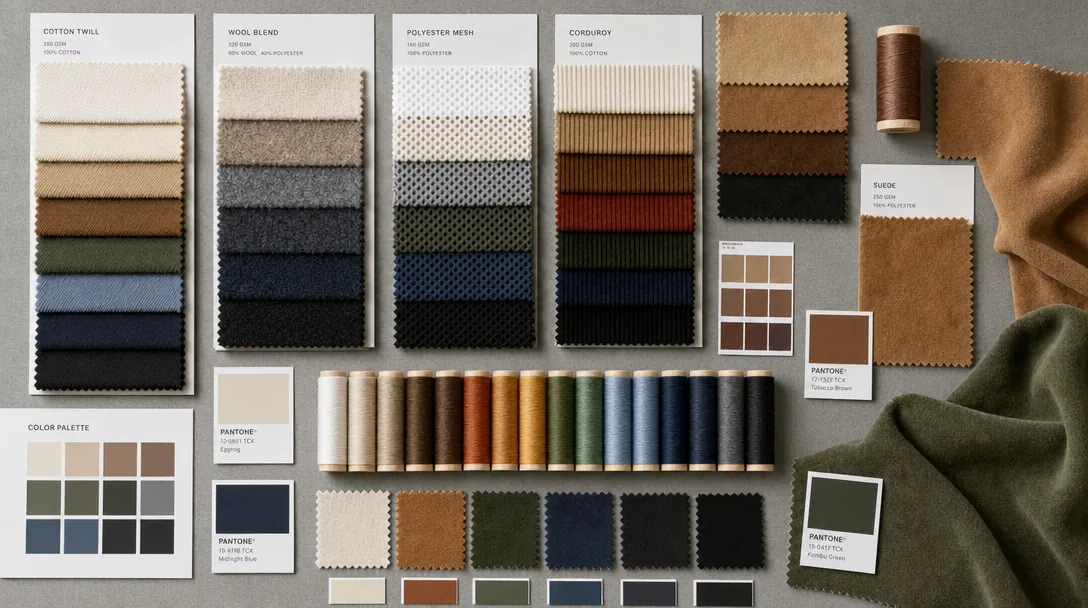
A buyer searching for a bucket hat corduroy moq and pricing plan is usually not asking for a generic cap quote; they are trying to understand whether corduroy can fit their launch quantity, margin, and delivery window without creating fabric waste. Corduroy bucket hat production behaves differently from twill baseball caps because the wale direction, pile height, and fabric shrinkage affect cutting efficiency and panel matching. A 6-wale or 8-wale cotton corduroy at 280–340 gsm gives a richer hand feel, but it also increases consumption and rejects if the nap runs inconsistently around the brim. For a basic bucket hat corduroy style, I normally treat 300 pieces per color as the practical starting point, while 500–800 pieces per color gives better fabric utilization and reduces unit cost by roughly $0.25–$0.60 depending on lining, eyelets, and label treatment.
The sourcing plan changes again when the buyer wants seasonal color depth, such as corduroy hat brown, forest green, wine, or washed black. Stock corduroy can sometimes support 100–200 pieces per color, but custom dyeing to Pantone TCX usually needs 300–500 meters, and the mill will quote tolerance around Delta-E 1.5–2.0 unless the buyer pays for tighter shade control. That matters because a bucket hat has visible top, side, and brim panels; shade bands that might pass on cotton beanie men styles look obvious on corduroy pile. Organic cotton hat claims add another layer: GOTS or OCS fabric requires certificate matching, transaction certificates, and segregated storage, which can add 7–14 days before cutting. If the buyer needs sedex-audit-cap-supplier-guide.html">BSCI 2.0 or Sedex SMETA 4-Pillar factory compliance for retail onboarding, confirm it before sampling, not after bulk approval.
Cost decisions sit in three buckets: fabric, decoration, and compliance risk. A plain corduroy bucket hat with cotton lining, woven label, and metal eyelets may land around $2.60–$3.80 FOB Yiwu at 500 pieces per color; add 3D embroidery on Tajima or Barudan heads and the price can move to $3.40–$4.80, especially if the logo uses dense satin fills over uneven pile. Washed corduroy needs pre-production shrinkage testing because a 2–4% dimensional change can distort brim circumference and make AQL 2.5 inspection fail on fit consistency. Our standard practice at CrownsForge is to lock fabric weight, wale count, Pantone target, decoration method, care label content, and carton packing before quoting final bulk price, because changing any one of those after salesman sample approval can reset lead time by 5–10 working days.
Factory capability checks before quoting
Before quoting, I also check whether the factory understands compliance and communication pressure. For promotional work, AQL 2.5 general inspection may be enough; for licensed sports or retail, I expect BSCI 2.0, Sedex SMETA 4-Pillar readiness, needle control records, metal detection logs, and fabric test reports for colorfastness, azo, formaldehyde, and nickel if metal trims are used. Closure options on bucket hats are limited but still matter: adjustable chin cord, toggle, removable drawstring, snap-up side brim, and inner sweatband sizing all change labor minutes and defect risk. Our standard practice at CrownsForge is to verify sample room response time, English tech-pack accuracy, photo reporting quality, and whether the merchandiser can explain FOB Ningbo, DDP air, and carton CBM without asking production later. That tells you if the bucket hat corduroy moq and pricing plan is engineered or just copied from last year’s quote sheet.
MOQ, pricing and sample approval
The practical MOQ for a bucket hat corduroy program is usually 300 pieces per color, but pricing behaves very differently across bands. At 300–499 pieces, expect a 6-wale or 8-wale cotton corduroy bucket hat to land around US$4.80–6.20 FOB Ningbo/Shanghai, depending on lining, brim stitching, and whether the fabric is stock-dyed or piece-dyed. At 500–999 pieces, the same cap often drops to US$4.10–5.30 because cutting loss, trim purchasing, and machine setup are spread wider. At 1,000–2,999 pieces, US$3.55–4.80 is realistic for a clean corduroy bucket hat with woven label and standard polybag. Organic cotton hat fabric adds roughly US$0.35–0.70 per piece if certified yarn and transaction documentation are required. A corduroy hat brown color can be cheap if stock fabric matches, but custom dyeing below 800–1,000 yards is where buyers get surprised by surcharge and shade-risk cost.
Decoration and trim setup should be treated separately from unit price in any bucket hat corduroy MOQ and pricing plan. Flat embroidery on Tajima or Barudan heads normally has a US$35–60 digitizing fee per logo, then US$0.25–0.80 per piece depending on stitch count; a 7,000-stitch front logo is standard, while dense 14,000-stitch fills can distort corduroy ribs if backing and pull compensation are wrong. Woven labels usually need US$45–90 mold/setup and perform better than tiny embroidery on high-wale corduroy. Metal eyelets, branded snaps, drawcord stoppers, and custom wash-care labels each add small costs, but they complicate QC because placement tolerance on a soft bucket crown is tighter than on a structured cap. Packaging ranges from a basic OPP bag at US$0.05–0.08 to FSC paper belly bands or retail cartons at US$0.25–0.60. Do not price a corduroy bucket hat like cotton beanie men programs; the cutting direction and pile shading create more fabric waste.
PPS approval is where a custom hat project is either controlled or becomes a guessing game. Our standard practice at CrownsForge is to submit one pre-production sample with approved fabric, trims, embroidery, care label, packaging, and size spec before bulk cutting; buyer approval by photo only is faster, but physical PPS approval is safer for corduroy because handfeel, wale direction, and shade cannot be judged accurately on screen. Pantone matching should be specified as Pantone TCX for fabric and Pantone C/U for print or label artwork, with a Delta-E target under 1.5 for lab dips when possible and under 2.0 for bulk tolerance. Lead time is usually 7–10 days for prototype sampling, 10–14 days for PPS after comments, and 25–35 days for bulk production after deposit and PPS approval. Add 7–12 days if custom dyeing or organic certification paperwork is involved. Final inspection should use AQL 2.5 for major defects and AQL 4.0 for minor defects before shipment.
Quality inspection and shipping risk
Quality risk on a bucket hat corduroy order usually shows up in three places: uneven panels, shade mismatch, and decoration defects. For bulk inspection I use AQL 2.5 for major defects and AQL 4.0 for minor defects, with 100% checking on metal trim, drawcord stoppers, and branded woven labels if the order is for retail. Measurement tolerance should be written before cutting: crown height ±0.3 cm, brim width ±0.3 cm, circumference ±0.5 cm, and side seam alignment within 0.4 cm. Corduroy pile makes small sewing errors more visible than twill, especially on a corduroy bucket hat where the brim topstitching runs in circles. If your bucket hat corduroy moq and pricing plan assumes only a final inspection, add a mid-line check after the first 80–120 pieces; catching a wrong brim gauge at final AQL usually means rework, not repair.
Colorfastness must be tested more seriously on bucket hat corduroy than on flat cotton canvas because rubbing against the pile can release dye, especially on dark shades like corduroy hat brown, black, forest green, and navy. I want dry rubbing at grade 4 minimum, wet rubbing at grade 3–4, and washing color change at grade 4 under ISO 105 or AATCC equivalent. For organic cotton hat programs, the buyer should also lock the Pantone TCX target and accept a realistic Delta-E tolerance, usually under 1.5 for lab dips and under 2.0 for bulk fabric. Embroidery inspection is separate: check thread breaks, loose backing, puckering, skipped stitches, and logo placement within ±2 mm. Tajima, Barudan, and ZSK heads all run cleanly on corduroy if the digitizing reduces dense satin fills; cheap digitizing is why small lettering sinks into the wale.
Shipping risk is mostly paperwork discipline. Carton markings should match the purchase order, SKU, color, size ratio, carton number, gross weight, net weight, and country of origin; mismatched cartons create chargebacks faster than a loose thread. Our standard practice at CrownsForge is to photograph the master carton mark, inner polybag label, packed carton layout, and final random units before sealing, then attach them to the inspection file with the approved pre-production sample, fabric lot number, embroidery tape file, Pantone reference, and packing list. FOB Ningbo or Shanghai works when the buyer controls freight and insurance; DDP is cleaner for small brands but the quote must include duty, U.S. MPF/HMF where applicable, last-mile delivery, and customs bond handling. Keep reorder documentation tight: if a buyer orders cotton beanie men in winter and repeats bucket hats in spring, old artwork approvals should not override the latest bucket hat corduroy moq and pricing plan.
Buyer checklist for the next RFQ
A firm quote starts with a complete tech pack, not a mood board. For a bucket hat corduroy moq and pricing plan, send the crown panel shape, brim width, side height, top circumference, size grading, and whether the hat is reversible or lined. Corduroy is not one material: specify wale count, such as 8-wale chunky corduroy or 14-wale fine corduroy, fabric weight in gsm, fiber content, and target Pantone TCX color. If you want a corduroy hat brown, do not write “coffee brown”; send Pantone 19-1118 TCX or a physical swatch, because dye lots can drift Delta-E 1.5–2.5 between mills. Include clear photos of the front, side, inside seam, sweatband, label position, and brim stitching. If you have a reference sample, ship one early; photos rarely show whether the brim needs soft drape, medium hand, or fused structure.
Artwork files decide both price and production risk. Send embroidery in DST if already digitized, but also include the original AI, PDF, or SVG so the factory can correct stitch density, pull compensation, and thread direction for Tajima, Barudan, or ZSK heads. For woven labels, provide label size, fold type, yarn colors, and placement tolerance, normally plus or minus 2 mm. For a corduroy bucket hat with front embroidery, small lettering under 4 mm height often fills in because corduroy ridges lift the thread path; chenille, felt applique, or 3D puff may need a test sew-out. If the range also includes an organic cotton hat or cotton beanie men style, separate the BOMs instead of mixing them in one RFQ, because MOQ, shrinkage, and dyeing routes are different. Our standard practice at CrownsForge is to quote sampling, bulk unit cost, mold or digitizing fees, and packaging separately so buyers can compare FOB and DDP cleanly.
Quantity and compliance details must be stated before any factory can give a defensible number. List target order quantity by color and size, expected reorder volume, delivery window, Incoterm, destination ZIP or port, and packaging method: bulk polybag, individual recycled polybag, barcode sticker, hangtag, carton mark, or Amazon FBA carton limit. A realistic bucket hat corduroy moq and pricing plan changes sharply at 100, 300, 500, and 1,000 pieces because fabric cutting loss, dye minimums, and embroidery setup are spread differently. Tell the supplier whether you need BSCI 2.0, Sedex SMETA 4-Pillar, OEKO-TEX, GOTS for organic cotton, or CPSIA testing for kids’ sizes. For inspection, request AQL 2.5 major / 4.0 minor and define critical points: seam slippage, brim symmetry, label placement, color tolerance, loose threads, and carton drop-test requirements. Without these details, the cheapest quote is usually just the least complete quote.
Working with CrownsForge
A practical bucket hat corduroy moq and pricing plan starts with fabric width, wale count, and color risk, not with a pretty mockup. For bucket hat corduroy programs, we usually quote 500 pieces per color when using stocked 8-wale or 11-wale cotton corduroy, and 1,000–1,500 pieces per color for custom-dyed lots because the mill has to run one dye vat and one shrinkage test. A corduroy hat brown sounds simple, but brown is where buyers get Delta-E arguments: we match to Pantone TCX under D65 light and normally accept Delta-E under 1.5 for lab dips, under 2.0 for bulk fabric. Sampling takes 7–10 days for a blank fit sample and 12–18 days when embroidery, woven labels, or washed finishing are included. At CrownsForge, our standard sample approval pack includes crown depth, brim width, seam allowance, head circumference, fabric gsm, and a decoration placement sheet, because vague approvals are what create production disputes later.
Decoration changes the price faster than most buyers expect. A plain corduroy bucket hat in stocked fabric may sit around USD 2.20–3.10 FOB Ningbo at 1,000 pieces, while front embroidery on Tajima or Barudan heads adds roughly USD 0.18–0.55 depending on stitch count, thread changes, and backing. Chenille patches or felt appliqué can add USD 0.70–1.40, and metal eyelets add USD 0.06–0.12 per hat. If the buyer wants an organic cotton hat story, GOTS or OCS-certified corduroy pushes fabric cost up 15–35% and usually raises MOQ because certified greige stock is not always sitting in Yiwu or Shaoxing warehouses. We also separate tooling costs clearly: embroidery digitizing is usually USD 30–60 per logo, woven label mold or setup USD 40–80, and custom paper hangtag setup around USD 25–50. That is very different from cotton beanie men programs, where yarn count and knitting time drive the quotation more than brim structure or panel sewing.
QC for corduroy hats must focus on pile direction, shade consistency, and brim symmetry, because those defects show up immediately in retail photos. We inspect bulk under AQL 2.5 for major defects and AQL 4.0 for minor defects, with added checks for nap direction across crown panels, puckering at the top button seam, loose embroidery threads, label position tolerance within ±2 mm, and head circumference tolerance within ±0.5 cm. For washed bucket hats, we run pre-production shrinkage tests because corduroy can lose 3–5% if the fabric was not properly sanforized. Export coordination is built into the bucket hat corduroy moq and pricing plan: carton size, polybag type, barcode labeling, FOB or DDP route, and buyer compliance requirements are confirmed before bulk cutting. For promotional buyers, we often use 100 pieces per inner carton and 200 pieces per export carton; for streetwear, individual dust bags or FSC paper bags are more common. BSCI 2.0 or Sedex SMETA 4-Pillar documentation should be requested before deposit, not after goods are packed.
Frequently Asked Questions
What logo decoration techniques do you offer?
3D puff embroidery, flat embroidery, woven patch, leather patch, PVC patch, screen printing, sublimation, applique and laser etching, all in-house with no subcontracting.
What file format should I send for my logo?
Vector files (AI, EPS, PDF) are ideal. High-resolution PNG or JPG at 300 dpi on transparent background works as a fallback. Provide Pantone color references for accurate reproduction.
Can I order a sample before bulk production?
Yes. We strongly recommend approving a pre-production sample before mass production. Samples are charged at 35 to 60 USD each plus express shipping, fully refundable against confirmed bulk orders over 500 pieces.
How long does production take?
Sampling takes 7 to 12 days. Bulk production runs 20 to 30 days depending on quantity, fabric availability and decoration complexity. Inspection and packing adds another 3 to 5 days before shipment.
Do you support sustainability certifications?
Yes. We work with GOTS organic cotton, GRS-certified recycled polyester, OEKO-TEX Standard 100 fabrics, and are BSCI and Sedex audited. Certification documentation can be provided per order.
What should buyers know about organic cotton bucket hat?
When evaluating organic cotton bucket hat, the key considerations are construction quality, decoration capability, MOQ flexibility and lead time. Explain the buyer intent behind bucket hat corduroy moq and pricing plan, when it differs from generic hat sourcing, and what decisions affect cost, lead time and compliance. Describe how CrownsForge manages bucket hat corduroy moq and pricing plan programs with sampling, decoration, QC and export coordination.
What should buyers know about brown corduroy bucket hat?
When evaluating brown corduroy bucket hat, the key considerations are construction quality, decoration capability, MOQ flexibility and lead time. Explain the buyer intent behind bucket hat corduroy moq and pricing plan, when it differs from generic hat sourcing, and what decisions affect cost, lead time and compliance. Describe how CrownsForge manages bucket hat corduroy moq and pricing plan programs with sampling, decoration, QC and export coordination.
What should buyers know about bucket hat men nike?
When evaluating bucket hat men nike, the key considerations are construction quality, decoration capability, MOQ flexibility and lead time. Explain the buyer intent behind bucket hat corduroy moq and pricing plan, when it differs from generic hat sourcing, and what decisions affect cost, lead time and compliance. Describe how CrownsForge manages bucket hat corduroy moq and pricing plan programs with sampling, decoration, QC and export coordination.
What should buyers know about acrylic beanie hat?
When evaluating acrylic beanie hat, the key considerations are construction quality, decoration capability, MOQ flexibility and lead time. Explain the buyer intent behind bucket hat corduroy moq and pricing plan, when it differs from generic hat sourcing, and what decisions affect cost, lead time and compliance. Describe how CrownsForge manages bucket hat corduroy moq and pricing plan programs with sampling, decoration, QC and export coordination.
Ready to start your custom hat project?
Send us your tech-pack, sketch or even just an inspiration photo. We will respond with a detailed quotation and digital mock-up within 24 hours.
Request a free quoteRelated guides
Rave Bucket Hat: A Vertical-Specific Sourcing Guide
Read article →
Custom Made Trucker Hat: The 2026 Sourcing & Manufacturing Playbook
Read article →
Promotional Caps & Corporate Gifts: Bulk Custom Hats for Brand Events
Read article →Sourcing custom hats does not have to be complicated. With the right manufacturing partner, clear specifications and a small upfront investment in sampling, you can launch a retail-quality product in 30 to 45 days.