
Custom Made Trucker Hat: The 2026 Sourcing & Manufacturing Playbook - 2026 Buyer's Guide - 2026 Buyer's Guide - Supplier Checklist
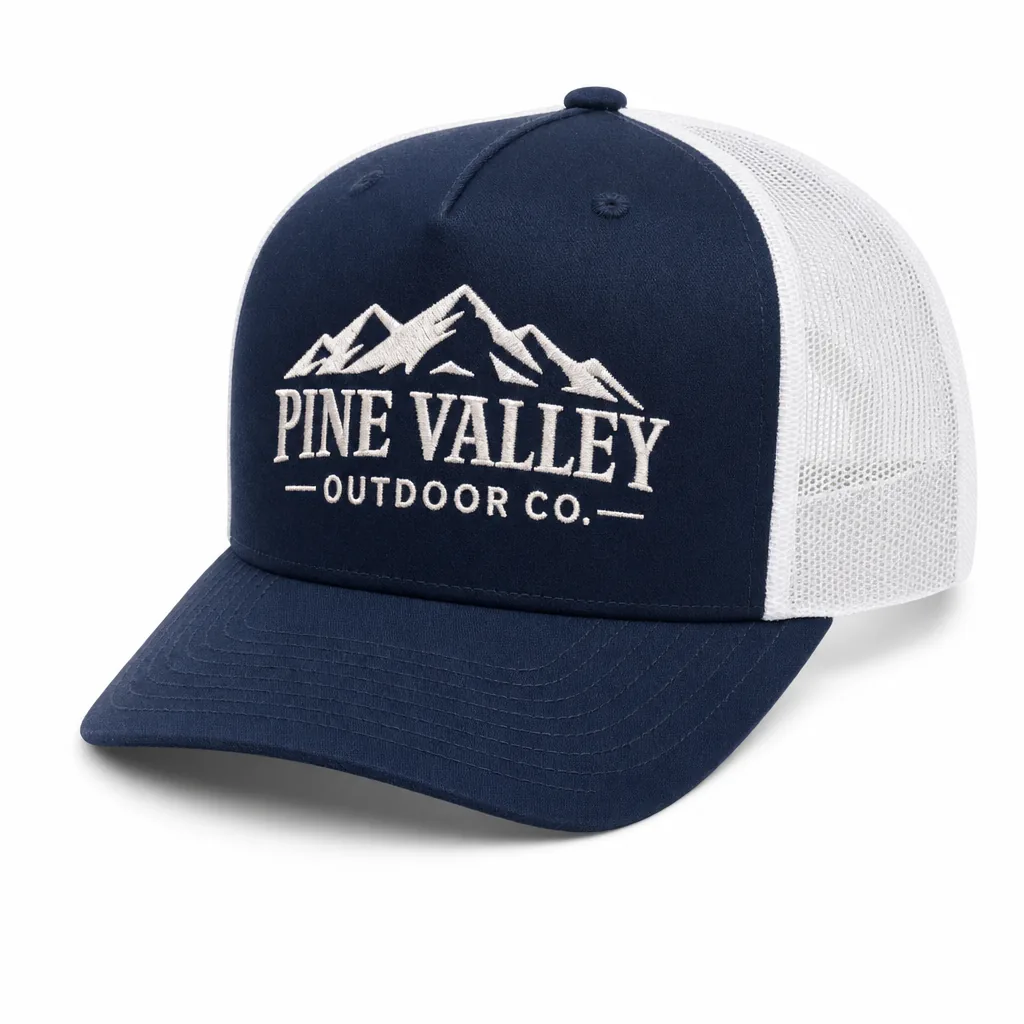
Custom Made Trucker Hat: The 2026 Sourcing & Manufacturing Playbook - 2026 Buyer's Guide - 2026 Buyer's Guide - Supplier Checklist is one of the most-asked questions we receive from international buyers, and for good reason. With dozens of factories competing for your order and an alphabet soup of technical terms in every supplier quote, even experienced importers can feel lost. This guide consolidates what we have learned producing custom hats for clients in 40+ countries.
Custom Embroidered Hats
Embroidery still delivers the highest perceived value on a custom made trucker hat, but it is also where buyers leave too much to factory judgment. The make-or-break step is digitizing, not sewing: stitch type, underlay, pull compensation, travel path, and sequence must match the actual front panel build. On a structured 5-panel foam trucker, 3D puff usually runs best with 2.0-3.0 mm EVA and satin columns at least 2.5-3.0 mm wide; go too dense and you get foam exposure, thread breaks, and pinched edges, too open and the logo collapses after packing. On cotton twill, canvas, or brushed poly fronts, flat fills with edge-run and zigzag underlay usually hold shape better than heavy satin coverage because they reduce tunneling and stop the crown from buckling. Machine brand matters less than tuning, but most export lines are on Tajima, Barudan, or ZSK heads, and all three will struggle with copy under 4 mm letter height, tight inside corners, or faux-gradient fills if the file is poorly built. Ask for the native digitizing file, total stitch count, embroidery area in millimeters, thread brand and spec such as Madeira or Gunold 40 wt polyester, and confirmation that the sample was sewn on the finished cap shell rather than a flat strike-off.
A usable spec sheet ties decoration to cap construction. Lock down front panel material and weight, such as 100% polyester foam at 220-260 gsm or cotton twill at 240-280 gsm, plus mesh type, foam thickness, snapback resin grade, sweatband composition, visor sandwich color, seam tape print, and Pantone TCX references for both fabric and thread. Dyed shell fabric should be checked under D65 lighting with a realistic Delta-E target of 1.5-2.0 against the approved standard, because embroidery thread is often accepted visually while the cap body drifts. For embroidery, state maximum logo size, 2D or 3D puff, side and back logo positions, backing finish, and whether the inside backing must be covered to avoid forehead abrasion. In Yiwu and Dongguan, a fully custom trucker program commonly starts at 144-300 pieces per colorway, while a stock-body cap with logo-only embroidery can open at 48-100 pieces. A basic foam-front trucker with 5,000-8,000 stitches typically lands around $2.20-$3.60 FOB; add metallic thread, heather fabric, woven labels, or puff front plus side embroidery and the number usually moves to $4.20-$6.80 FOB before duty, brokerage, and final-mile freight.
Most embroidery failures are inspection failures first. The recurring defects are off-center placement, distorted circles on curved crowns, loose trims, thread breaks, foam showing through puff, needle cuts on light panels, and thread shade drift from the approved submit. For a custom made trucker hat, logo placement tolerance should be written at +/-2 mm from centerline, with bulk inspection at AQL 2.5 for appearance and extra checks on first-run and last-run cartons, where tension drift and registration shift usually show up. Inspect the inside as hard as the face: backing should be heat-cut cleanly, not jagged, and sweatband stitching must not trap the embroidery backing or create pressure points at the forehead. A pre-production sample made from bulk materials is the only reliable gate before line launch, because embroidery quality sits at the intersection of crown shape, fabric stability, stitch count, and packing pressure. If the artwork is too fine for the panel build, a woven patch, printed twill patch, or heat transfer often gives a cleaner export result than forcing detail the cap cannot physically hold.
Custom Hat Embroidery
Embroidery is the first hard limit on a custom made trucker hat because it decides whether artwork can be run on flat panels before sewing or must be stitched on finished caps, where registration is less forgiving and visor strikes become expensive. For large front graphics on structured 5-panel or 6-panel truckers, flat-panel embroidery is the safer route; finished-cap embroidery works for smaller center hits, but once you push height on a high-profile crown, distortion shows up fast. Lock the spec before sampling: logo size in millimeters, target stitch count, technique mix (flat, 3D puff, appliqué, or combo), thread line such as Madeira Classic 40 or Gunold Poly 40, Pantone TCX reference with approved thread conversion, foam thickness at 2 mm to 3 mm for clean puff edges, and whether the front panel uses buckram plus woven fusible backing. If your art has gradients, strokes under 0.8 mm, or serif text below 4 mm cap height, a competent digitizer will simplify it; if they do not, the sew-out will fill in, chatter, or lose edge definition.
Pricing should follow stitch count, density, and machine conditions, not vague terms like "basic logo." In real production, digitizing usually lands at $25 to $80 per file, and front embroidery on a custom made trucker hat typically adds about $0.35 to $1.20 per unit for 5,000 to 12,000 stitches at workable density. Once a logo climbs past roughly 15,000 stitches on structured poly-cotton twill or 100% polyester fronts, run speed drops on Tajima, Barudan, or ZSK heads, thread-break frequency increases, and puckering starts if underlay and compensation are not dialed in. Add-ons like metallic thread, side hits, back arch embroidery, or 3D puff can push unit cost up another $0.15 to $0.60 depending on coverage and color changes. MOQ for embroidery programs is commonly 144 to 300 pieces per colorway, though 48 to 100 pieces can work with a setup surcharge when the factory can nest your order into an existing thread setup.
Inspection should target process failures that actually create claims: color-block registration drift, missed trims on jump stitches, foam exposure along 3D puff edges, hidden thread breaks inside dense fills, needle cuts on lighter front fabrics, and logo warp after crown forming because the panel lacked enough stability. A clean flat-panel strike-off is not enough; the same embroidery can shift after the front seam is closed and the cap is shaped, so both flat panels and finished caps need to be checked. AQL 2.5 is the practical export baseline, and placement tolerance should be written into the spec at plus or minus 2 mm, or 3 mm at most on larger front placements. For licensed or brand-sensitive orders, require a pre-production sample plus a bulk embroidery strike-off, then verify thread color under a consistent light source against the approved standard. On reds, oranges, and royal blues especially, even a small Delta-E shift can be visible enough to trigger rejection once the hats land.
Custom Trucker Hat
A custom made trucker hat is decided in the BOM, not in the rendering. Buyers who want clean quoting need to lock the construction spec before asking for FOB numbers: 5-panel foam front or 6-panel structured crown, front panel in 120-220 gsm foam-backed polyester or 8 oz cotton twill, rear mesh in 18 x 14 or 20 x 16 polyester, visor shape and PE insert thickness, sandwich brim yes or no, snapback resin grade, sweatband fiber blend, seam tape color, and main label position. Decoration must also be assigned by panel because 3D puff embroidery, flat embroidery, woven patch, TPU badge, sublimation patch, and foam-front screen print each carry different stitch limits, reject risks, and labor time. On the factory floor, the process is usually cutting, foam lamination, embroidery on Tajima, Barudan, or ZSK heads, crown assembly, visor attaching, sweatband closing, snapback setting, steaming, trimming, and final shaping on cap frames. If Pantone TCX references, logo dimensions, stitch count ceilings, and carton packout are still open, two suppliers are not quoting the same hat even if the spreadsheets look identical.
Pricing separates quickly once the spec gets real. For stock materials, MOQ is commonly 144-300 pieces per colorway, but a custom made trucker hat with dyed-to-match mesh, custom seam tape, woven labels, and molded rubber or silicone patches is usually a 500-1,000 piece program. In Yiwu or Dongguan, a basic promotional build in stock colors often sits around US$2.10-US$3.40 FOB China at 300 pieces; a retail-grade cap with 3D puff embroidery, branded inside taping, heavier sweatband, and a cleaner pre-curved visor is more realistically US$3.80-US$6.20 FOB before freight, duty, and upgraded packaging. If color matching matters, request lab dips against Pantone TCX and agree Delta-E tolerance before bulk; below 1.5 is excellent, below 2.0 is usually workable for production. The real cost control point is inspection: common failures are embroidery puckering from weak underlay or low-density foam, mesh tearing at rear seam joins, cracked snapback pegs, visor curvature variation above 5 mm, loose threads inside the sweatband, and off-center top buttons that make the cap sit crooked. A pre-production sample plus bulk inspection at AQL 2.5 with measurable checkpoints, including logo placement tolerance of plus or minus 2 mm, does more to protect margin than shaving a few cents off the quote.
Custom Trucker Hats
A good custom made trucker hat is won at the spec stage, not in the render. The three decisions that drive retail quality are crown structure, mesh denier, and closure durability. Most factories cut trucker bodies on 5-panel or 6-panel blocks using 180-260 gsm cotton twill, poly/cotton canvas, or foam-backed polyester fronts, then pair them with 120D-210D polyester or nylon mesh. Crown profile should be locked before logo development: high profile gives the cleanest embroidery field for 3D puff or large flat fills, mid profile is the safest commercial shape, and low profile only works when you accept reduced logo height. Front construction matters just as much. Laminated foam fronts can ripple after high-stitch-count embroidery if underlay and tension are wrong, buckram-backed fronts hold shape better for licensed or promotional programs, and unstructured fronts wear softer but expose every sewing inconsistency. On the floor, standard cap embroidery usually runs on Tajima or Barudan cap frames; chenille, woven, PVC, and sublimated patches need separate heat application and edge stitching if they sit near mesh seams where lift is common.
Most trucker failures come from vague tech packs, not bad sewing. A usable spec sheet should call out crown height in millimeters, visor length and curvature, brim stitch rows, mesh hole pattern, seam tape color, button wrap, sweatband composition, snapback resin grade, and Pantone TCX for every visible component. MOQ also changes fast once you leave stock bodies: 144-300 pieces per colorway is normal for a stock shell with one-location embroidery, but custom-dyed mesh, custom closure molds, or proprietary crown patterns usually push the run to 500-1,000 pieces. In Yiwu or Dongguan, a stock-body custom made trucker hat with flat front embroidery typically lands around $2.20-$3.80 FOB China at 300 pieces; add rope trim, woven patch, underbrim print, or private-label taping and the workable range becomes $4.20-$6.50. QC should be set at AQL 2.5 with logo placement within +/-2 mm, brim curve checked against the sealed sample, and Delta-E held under 1.5 across front fabric, mesh, and closure when color consistency matters. The defects worth rejecting are predictable: wavy front panels after dense embroidery, side-seam mesh splits, brittle snap tabs, off-center patches, and crushed crowns from weak carton support.
Hat Trucker Custom
The bill of materials determines whether a custom made trucker hat can be repeated cleanly across reorders or becomes a QC problem after the first PO. Lock the shell spec before you argue about artwork. A 5-panel foam-front build is still the cheapest and most forgiving option for promo volume, typically using 2.5-3 mm EVA foam laminated to polyester interlock. A more retail-driven 6-panel build in 10x10 cotton twill or brushed chino at 240-280 gsm gives a cleaner profile, but panel matching, crown symmetry, and visor alignment have to be held tighter. Standard back mesh is usually polyester at 140-180 gsm, while documented recycled programs should specify rPET content and traceable yarn certification, not just a vague sustainability claim. Structure matters just as much as fabric: buckram-backed fronts take satin stitch embroidery more cleanly, while unstructured fronts with light fusing show more needle pull, waviness, and fill distortion on larger logos.
A usable tech pack for a custom made trucker hat should read like a production control sheet, not a mood board. Call out crown height, visor length, visor curve, sandwich or rope detail, snapback specification, sweatband fiber content, seam tape print, top button wrap, and shell color by Pantone TCX or TPX where relevant. Decoration specs should include logo size in millimeters, embroidery height limits, stitch count range, patch border type, and file format such as DST, EMB, or AI for applique layout. On commercial terms, most factories in China will quote MOQ at 144-300 pieces per colorway for a basic cap, but trim efficiency and freight packing improve noticeably from 500 pieces upward. A foam-front cap with one-location flat embroidery commonly lands around $2.10-$3.20 FOB; move into brushed chino fronts, woven patches, rope across the visor, printed seam tape, custom labels, or insert-card packaging, and realistic FOB is more often $3.80-$6.50. Ask what embroidery platform they actually run—Tajima, Barudan, or ZSK cap frames—because text under 4 mm and narrow satin columns will expose weak digitizing immediately.
Most bad trucker-hat orders fail in the same places, and none of them are hard to predict. The usual defects are embroidery puckering on foam fronts, off-center patches, visor curves that do not match from piece to piece, visible mesh seam joins, loose top-button wrapping, cracked 7-hole PE snap closures, and sweatbands that twist after carton compression. AQL 2.5 may be fine for a broad promotional run, but retail programs should add measurable tolerances: logo placement within +/-2 mm, left-right crown symmetry checked on a head form, stitch density consistency across the lot, and carton compression standards strong enough to keep the front panel from collapsing in transit. Odor control also matters more than many buyers admit, especially on low-grade foam and aggressive adhesives.
Supplier approval should be tied to process control, not just the opening quote. Color needs approved lab dips or strike-offs with a defined Delta-E tolerance, especially where front fabric, seam tape, and woven labels need to visually match under D65 light. Social compliance should be verified early for licensed or chain-store business, typically through sedex-audit-cap-supplier-guide.html">BSCI 2.0 or Sedex SMETA 4-Pillar. More important on the factory floor, ask for incoming material inspection records, embroidery in-line checks, and repeat-order performance over at least three POs. A supplier that holds mesh shade lot to lot, keeps visor shape stable, and prevents stitch distortion on repeat runs is usually cheaper in practice than the factory that wins by cutting 20 cents off FOB and burns that savings back in claims, rework, and missed delivery windows.
Trucker Custom Hat
For a custom made trucker hat, the tech pack decides the outcome long before the logo file does. A standard 5-panel build usually uses a 3-5 mm PU or polyester foam front laminated to tricot, 75D-100D polyester mesh on the back panels, and a pre-curved PE visor board. That construction is inexpensive and light, but it wrinkles in ocean transit and needle-cuts fast when the embroidery density is too aggressive. If the program needs cleaner shape retention, upgrade the front to 260-320 gsm cotton twill, brushed canvas, or 65/35 poly-cotton with buckram behind the face panel. Lock the specification before sampling: crown height in cm, visor length and curvature, panel count, snap closure type, sweatband material, seam tape print, top button finish, and logo size in mm. For color-critical orders, call out Pantone TCX or Pantone C and write the tolerance into the PO; Delta-E under 1.5 is achievable on dyed fabric, while plastic snaps and visor sandwich trims usually need closer to 2.0 because resin lots shift.
Cost on a custom made trucker hat is driven more by materials, decoration, and MOQ than by the trucker silhouette itself. In Yiwu or Dongguan, a foam-front cap with one-location flat embroidery typically lands around $2.10-$3.20 FOB China at 300-500 pcs per colorway. A better twill-front version with 3D embroidery, woven flag label, printed seam tape, custom hangtag, and tighter finishing is more often $3.60-$5.80 FOB. Stock fabrics can keep MOQ at 144-300 pcs per style-color, but custom-dyed mesh, molded PVC patches, or proprietary snapbacks usually move the minimum to 500-1,000 pcs because dye-lot control and trim setup create waste. Ask what the factory actually runs on the floor—Tajima, Barudan, or ZSK heads—and whether the logo is embroidered on cap frames after assembly or applied flat before run-and-sew; poor digitizing on a stiff trucker front will pull the crown off-center quickly.
Most trucker-hat defects are predictable, so they should be controlled in the order documents instead of debated after shipment. The recurring failures are off-center embroidery, wandering visor topstitch, mesh-to-side-panel puckering, weak snap engagement, cracked PVC patches, and twisted sweatband joins that distort fit. Require a sealed pre-production sample, an inline check after the first 30-50 pieces, and final inspection at AQL 2.5. Put measurable tolerances in writing: logo placement within +/-2 mm, crown height and visor width against the approved spec, and color assessment under D65 or TL84 light conditions depending on the market standard. Carton loading matters too; once foam-front truckers are packed above roughly 120-150 pieces per master carton, crushed crowns and permanent panel dents become common. A reliable supplier should be able to explain process controls, show stable embroidery QC, and meet BSCI 2.0 or Sedex SMETA 4-Pillar requirements when compliance is part of the program.
Working with CrownsForge for custom made trucker hat programs
Lock the specification before artwork is digitized; that is where a custom made trucker hat program usually stays on schedule or starts leaking time and money. The real production delays are rarely the logo file. They come from buyers changing crown height from low to mid profile, switching visor curl after the sample is cut, upgrading from stock PE snapback to nylon web closure, or adding custom seam tape after materials are booked. A realistic calendar is 3 to 5 working days for a clean mockup, 7 to 10 days for a first sample, and another 5 to 7 days if the revision changes pattern, fabric, or trim. For first runs, 144 to 300 pieces per colorway is workable if you stay with stock foam, standard polyester mesh, and in-line twill colors. Once the brief moves to custom-dyed 100% cotton twill, molded PVC patches, woven sweat labels, or printed interior taping, the efficient MOQ usually jumps to 500 to 1,000 pieces because dye lots, trim minimums, and setup waste start driving unit cost more than sewing labor.
FOB pricing only makes sense when the build sheet is locked. A basic 5-panel foam-front custom made trucker hat with 3 mm PE foam, 100% polyester mesh, one front embroidery position, and a standard snap closure usually lands around $2.20 to $3.80 FOB China at 300 pieces. Add 3D puff embroidery, a side hit on Tajima or Barudan heads, sandwich visor contrast, woven loop labels, or custom inside tape and you are more realistically at $4.20 to $6.50 FOB. Quotes far below that are usually buying margin back through lighter mesh denier, weaker snap resin, lower foam density, or subcontracted decoration with inconsistent stitch quality. CrownsForge typically locks panel material, foam thickness, stitch count, patch method, and closure grade on the PP sheet so bulk cannot drift from the approved sample.
The fastest way to tell whether a supplier actually runs factory controls is to look at decoration engineering and pre-production discipline. 3D puff needs a stable foam-front panel and enough satin coverage to avoid edge collapse; fine text below 3 mm is usually cleaner in a woven patch than direct embroidery; PVC patches outperform embroidery for fishing and outdoor programs; and leather or PU patches need tightly controlled heat-press temperature and dwell time to prevent glossing or crown warping. For color-critical orders, approve against actual fabric and thread lots using Pantone TCX or coated Pantone references, because thread sheen can create visible shifts even when instrumental Delta-E is under 1.5. The PP checklist should cover BOM, needle size, stitch count, embroidery placement, barcode position, carton assortment, and tolerances for crown height, brim width, and finished circumference. Serious buyers should also ask for BSCI 2.0 or Sedex SMETA 4-Pillar audits, azo-free and REACH-aware material controls, and final inspection to AQL 2.5. Bulk lead time is typically 18 to 35 days, with delays more often caused by trim sourcing, embroidery capacity, or color approvals than by sewing itself.
Frequently Asked Questions
How long does production take?
Sampling takes 7 to 12 days. Bulk production runs 20 to 30 days depending on quantity, fabric availability and decoration complexity. Inspection and packing adds another 3 to 5 days before shipment.
Can I order a sample before bulk production?
Yes. We strongly recommend approving a pre-production sample before mass production. Samples are charged at 35 to 60 USD each plus express shipping, fully refundable against confirmed bulk orders over 500 pieces.
What file format should I send for my logo?
Vector files (AI, EPS, PDF) are ideal. High-resolution PNG or JPG at 300 dpi on transparent background works as a fallback. Provide Pantone color references for accurate reproduction.
Do you support sustainability certifications?
Yes. We work with GOTS organic cotton, GRS-certified recycled polyester, OEKO-TEX Standard 100 fabrics, and are BSCI and Sedex audited. Certification documentation can be provided per order.
What logo decoration techniques do you offer?
3D puff embroidery, flat embroidery, woven patch, leather patch, PVC patch, screen printing, sublimation, applique and laser etching, all in-house with no subcontracting.
How does ordering custom hat trucker work?
When evaluating custom hat trucker, the key considerations are construction quality, decoration capability, MOQ flexibility and lead time. Cover everything buyers ask about custom embroidered hats: how it's manufactured, what specs to request from a factory, typical MOQ and pricing, common quality issues to inspect for, and how this ties back to the broader custom made trucker hat sourcing decision. Cover everything buyers ask about custom hat embroidery: how it's manufactured, what specs to request from a…
How does ordering custom embroidered trucker hats work?
When evaluating custom embroidered trucker hats, the key considerations are construction quality, decoration capability, MOQ flexibility and lead time. Cover everything buyers ask about custom embroidered hats: how it's manufactured, what specs to request from a factory, typical MOQ and pricing, common quality issues to inspect for, and how this ties back to the broader custom made trucker hat sourcing decision. Cover everything buyers ask about custom trucker hats: how it's manufactured, what specs to request from a…
How does ordering custom made hats for men work?
When evaluating custom made hats for men, the key considerations are construction quality, decoration capability, MOQ flexibility and lead time. Cover everything buyers ask about custom embroidered hats: how it's manufactured, what specs to request from a factory, typical MOQ and pricing, common quality issues to inspect for, and how this ties back to the broader custom made trucker hat sourcing decision. Cover everything buyers ask about custom trucker hats: how it's manufactured, what specs to request from a…
How does ordering high quality custom trucker hats work?
When evaluating high quality custom trucker hats, the key considerations are construction quality, decoration capability, MOQ flexibility and lead time. Cover everything buyers ask about custom embroidered hats: how it's manufactured, what specs to request from a factory, typical MOQ and pricing, common quality issues to inspect for, and how this ties back to the broader custom made trucker hat sourcing decision. Cover everything buyers ask about custom trucker hats: how it's manufactured, what specs to request from a…
Looking for a reliable hat manufacturer in China?
CrownsForge has produced custom hats for 800+ brands across 40 countries. From 100-piece launches to 100,000-piece retail programs, we deliver on time and on spec.
Get in touchRelated guides
Compliance Documentation Checklist for First Hat Import to US/EU (2026 Update)
Read article →
Ball Caps for Men: A 2026 Sourcing Playbook for International Buyers - Cost & MOQ Breakdown
Read article →
BSCI vs Sedex vs WRAP vs WCA: Compliance Audit Standards Compared (2026 Update) (2026 Update) (2026 Update)
Read article →Sourcing custom hats does not have to be complicated. With the right manufacturing partner, clear specifications and a small upfront investment in sampling, you can launch a retail-quality product in 30 to 45 days.